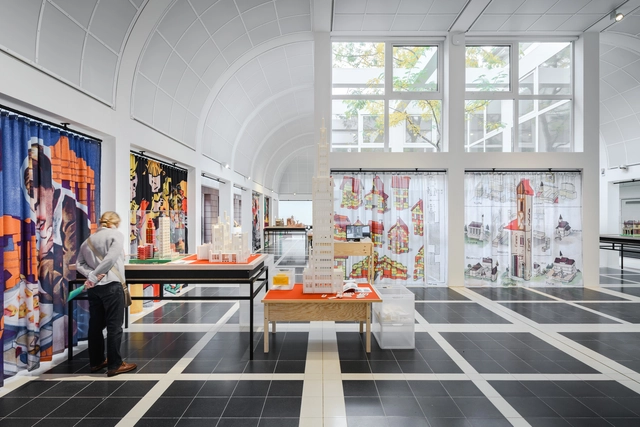
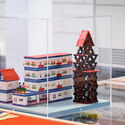
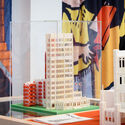
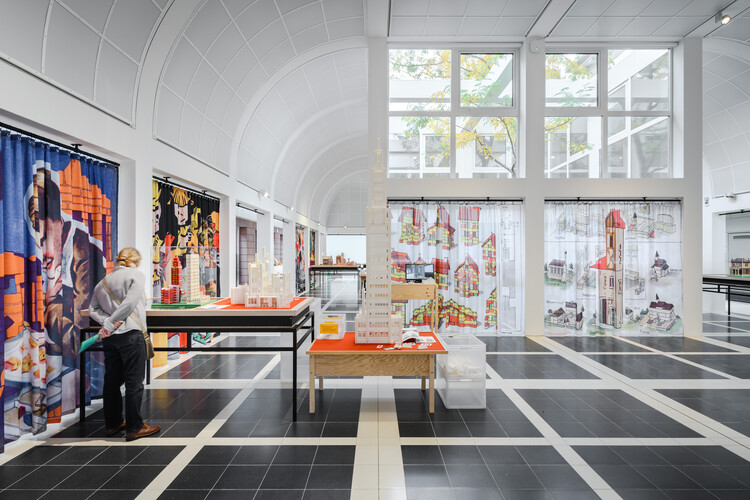
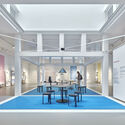
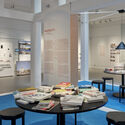
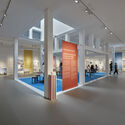
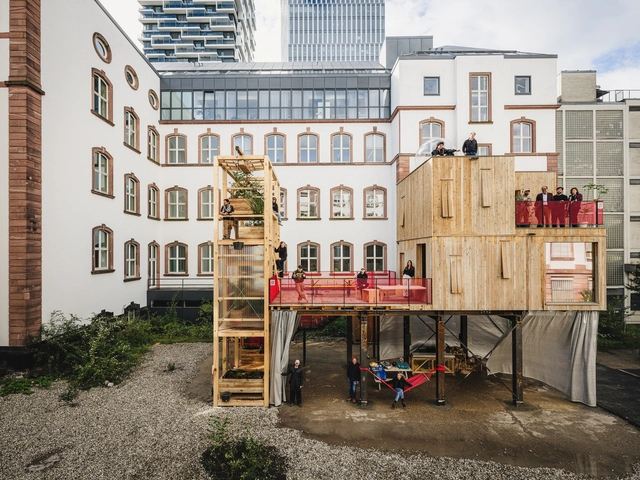
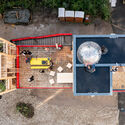
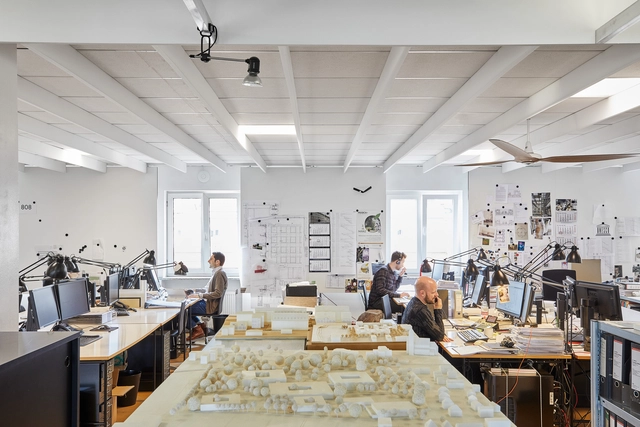
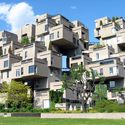
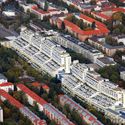
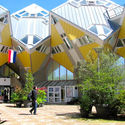
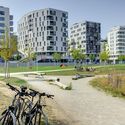
The Deutsches Architekturmuseum (DAM) in Frankfurt, Germany, has opened a new interactive exhibition, on view from October 25, 2025, to February 8, 2026, presenting 100 years of architectural construction kits. Developed in collaboration with graphic designer Claus Krieger, Professors Andreas Kretzer and Philipp Reinfeld from the Stuttgart University of Applied Sciences (HFT), their students, and the wider DAM team, the exhibition brings together around 80 construction kits produced between 1890 and 1990. Many of these systems have been recreated at an enlarged scale so visitors can test their assemblies at eight central play stations. Additional digital features include VR model worlds programmed by HFT students. Dozens of completed models illustrate the range of architectural ideas represented across the kits, and the full collection is documented in an accompanying catalogue. The exhibition is accompanied by a public competition titled How Small Can Architecture Be?, which invites participants to submit miniature architectural models for display.
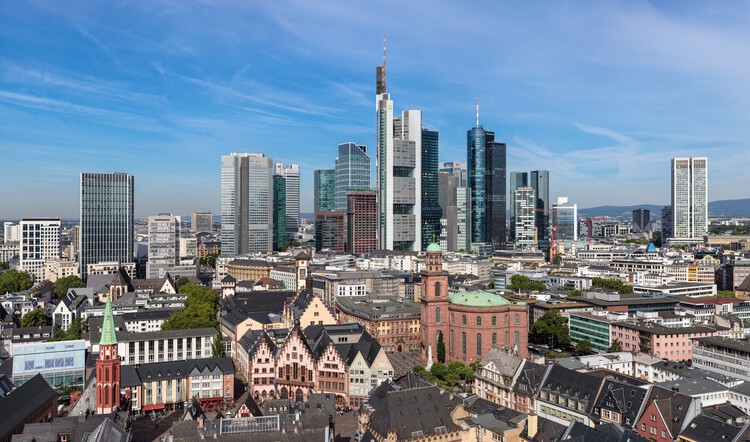
Frankfurt is often recognised for its distinctive skyline, a rare feature in European cities. Towering glass skyscrapers mark its role as a global financial hub, yet beneath this vertical image lies a city layered with centuries of history, destruction, and reconstruction. From medieval timber-framed houses to post-war modernism and contemporary high-rises, Frankfurt has consistently reinvented itself through architecture, producing a built environment where different periods coexist in dialogue.
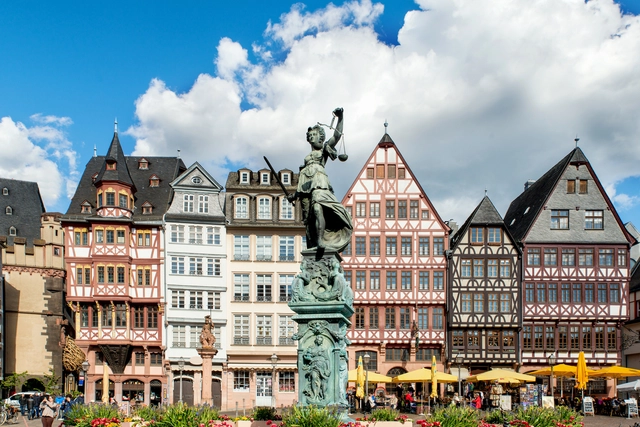
The city's transformation accelerated after World War II, when much of its historic core was destroyed and planners sought to balance rapid economic growth with the need for cultural reconstruction. Landmarks such as the Römerberg square were meticulously rebuilt, while modernist interventions and infrastructural projects introduced new scales and languages. More recently, projects by internationally renowned offices have reshaped the riverfront and business districts, adding architectural icons that express Frankfurt's global role.
The Deutsches Architekturmuseum (DAM) in Frankfurt has launched its new exhibitionArchitecture and Energy: Building in the Age of Climate Change on June 14, which will be open to visitors until October 5, 2025. Developed in collaboration with engineer and sustainability advocate Werner Sobek, the exhibition explores the intersections of architecture, energy, and climate, focusing on the environmental impact of the built environment and the role of architecture in mitigating climate change. By framing architecture as both a challenge and an opportunity in the context of the climate crisis, the exhibition seeks to contribute to a broader shift in thinking, one that positions design as a vital component of a sustainable future.
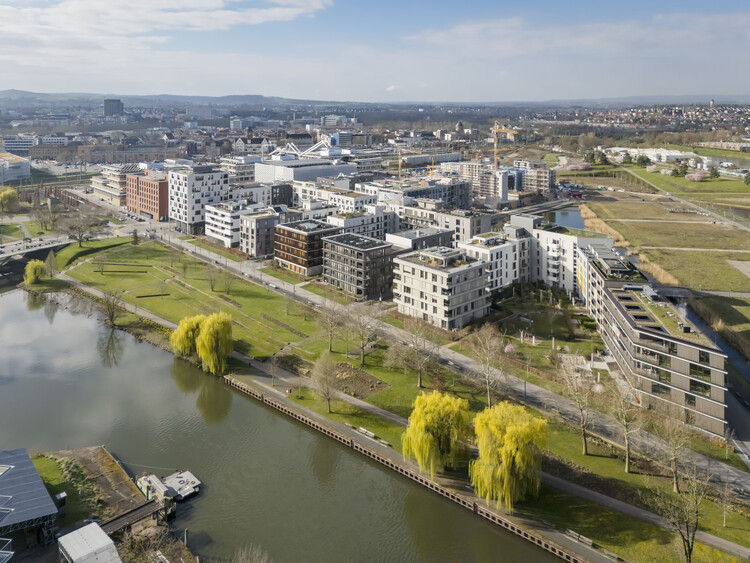
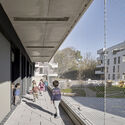
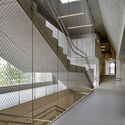
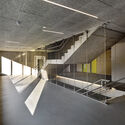
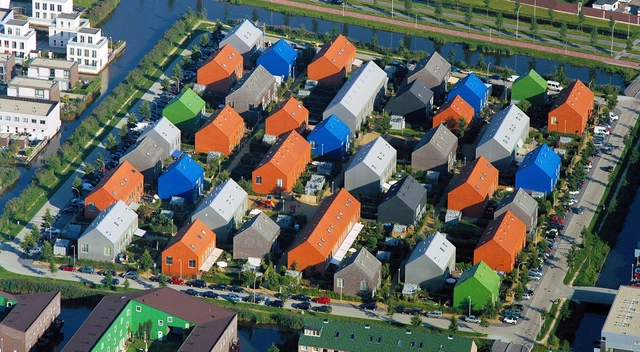
The Deutsches Architekturmuseum (DAM) in Frankfurt has opened a new exhibition titled Building Cities Today?, examining the complexities of developing new urbanneighborhoods in Germany. Running from June 28 to November 2, 2025, the exhibition brings together nine projects that reflect diverse approaches to newurban planning, with a focus on sustainability, social integration, and long-term adaptability. Referencing the legacy of the "Neues Frankfurt" housing program of the 1920s, the exhibition opens with the Römerstadt estate, one of Germany's early experiments in functional and standardized housing. From there, it transitions to eight urban developments from the 1990s to the 2020s, presenting case studies that include HafenCity in Hamburg, Bahnstadt in Heidelberg, Neckarbogen in Heilbronn, City of Wood in Bad Aibling, and Messestadt Riem in Munich.
Theaters, concert halls, and opera houses are more than just venues — they are meticulously orchestrated environments where architecture, technology, and human emotion converge. Unlike conventional buildings, these spaces must accommodate a dynamic interplay between acoustics, sightlines, stage mechanics, and audience engagement, all while maintaining an architectural identity that resonates with performers and spectators alike. Whether it is the immersive embrace of a vineyard-style concert hall or the grandeur of a proscenium theater, every design decision shapes how performances are experienced and remembered.
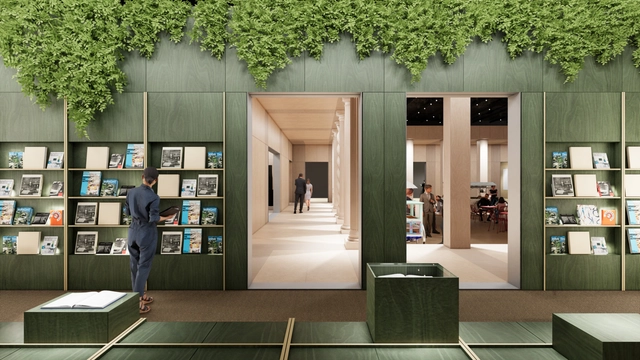
Stefano Boeri has designed a cultural square at the heart of the Italian pavilion for the 76th edition of the Frankfurt Book Fair. With Italy returning as Guest of Honor after 36 years, the book fair is the largest and most significant event in the publishing world and will be held from October 16-20, 2024. The Italian pavilion, designed by Stefano Boeri, seeks to celebrate Italian cultural heritage and publishing, aligning with the theme “Roots in the Future.”
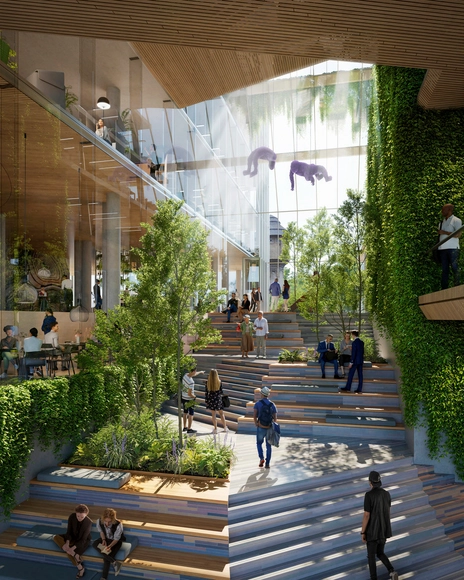
Interior view to the Lobby . Image Courtesy of UNStudio
Incorporating the Environmental, social, and corporate governance objectives, the 45,000 m2 Office Tower in the Europaviertel in Frankfurt aims to be one of Germany's most sustainable office buildings. Designed by UNStudio in partnership with Groß & Partner in collaboration with OKRA landscape architects, the project focuses on environmental and social sustainability as an integral part of Frankfurt's green network. The ecological agenda includes a low-carbon load-bearing structure and recyclable construction materials. The architecture program offers a public urban space to add value to its surroundings to encourage communication and gathering.
The architectural identity and urban fabric of the old city of Frankfurt has grown organically over centuries. Shops, bars, and craftsmen's workshops have always attracted a lot of visitors to the area between the Cathedral, or "Dom" in German, and the Römer, the main square in the center of Frankfurt. Historically, the area included buildings of many different styles, such as Gothic, Renaissance, Baroque and Classical architecture, which most locals only knew about from black and white photographs, the town’s famous miniature model in the historic museum, or stories passed down through generations.
However, the quarter’s picturesque buildings and alleyways, were almost entirely destroyed during the Second World War, but the collaborative work of the community and local authorities have made it seem as though time before the war stood still. The entire quarter was reconstructed exactly as its original plans, bringing Frankfurt’s medieval history back to life and creating what is now known as the Neue Alstadt, a project considered by some to be controversial.
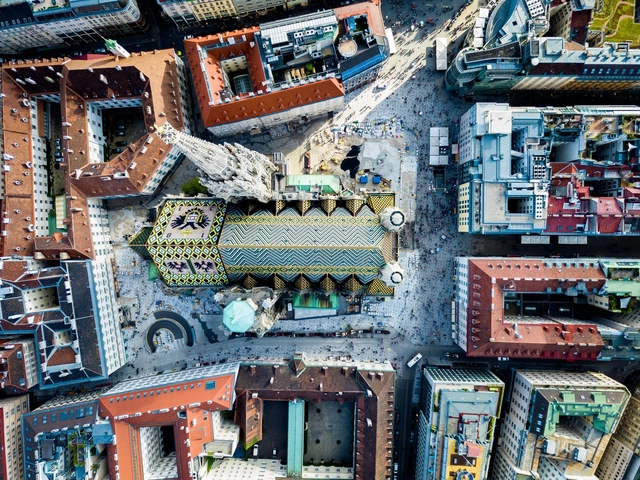
Vienna in Austria has topped the rankings of The Economist Intelligence Unit (EIU) 2022 Global Liveability Index, gaining back its previous position from 2019 and 2018, mostly for its stability and good infrastructure, supported by good healthcare and plenty of opportunities for culture and entertainment. Western European and Canadian cities dominated the top positions with Copenhagen, Denmark in second place and Zurich, Switzerland, and Calgary, Canada in third place. Adding 33 new cities to the survey, one-third of which are in China, bringing the total up to 172 cities, the classification excluded this year the city of Kyiv, due to Russia’s invasion of Ukraine.
Classified across 5 categories, stability, healthcare, education, culture and the environment, and infrastructure, the index was largely driven by the covid-19 pandemic. While covid-19 restrictions have eased in big parts of the world, liveability rankings started resembling “those seen before the pandemic”, however, the global average score remained below the pre-pandemic time. Although covid-19 has receded, a new threat to liveability emerged when Russia invaded Ukraine this year.
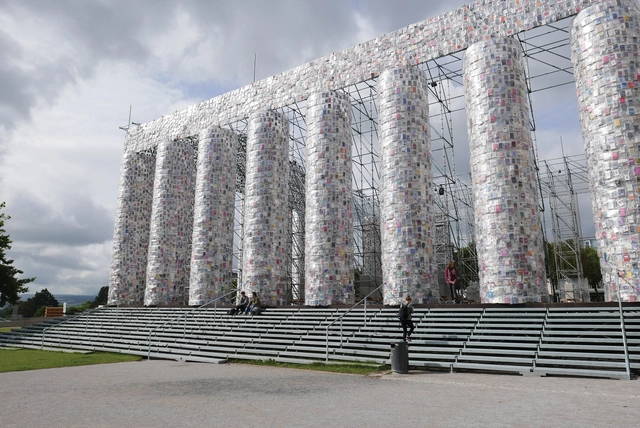
Marta Minujín, Parthenon of Books, Dokumenta 14, Kassel, Germany, 2017. Image by Anne-Catrin Schultz.. Image Courtesy of Real and Fake in Architecture–Close to the Original, Far from Authenticity?
The term “fake” has been in the media frequently in the early 21st century, referring to headlines and fictional statements that are perceived as real and are influencing public opinion and action. Replacing the historically more common term “propaganda,” fake news aims at misinformation and strives to “damage an agency, entity, or person, and/or gain financially or politically, often using sensationalist, dishonest, or outright fabricated headlines.” Tracing fake news and differentiating “real” information from personal opinions and identifying intentional (or unintentional) deceit can be complicated. It is similarly complex to trace the duality of fake and real in the built world. To explore the larger context of fake statements in architecture and environmental design, a look at the definition of fake and related terms might be necessary.
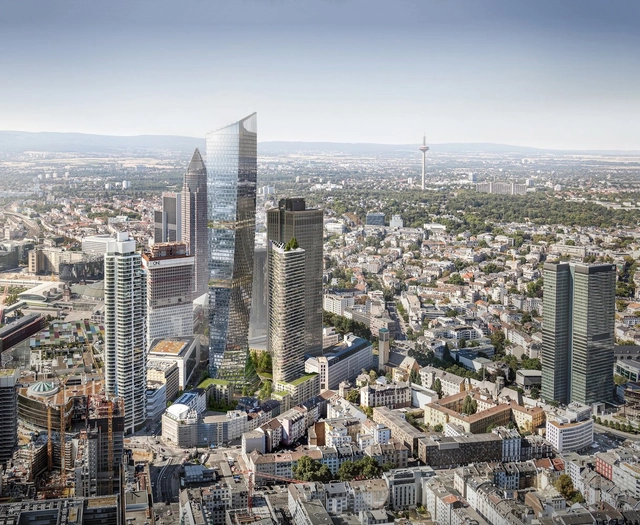
Ferdinand Heide Architekt have been selected to develop a high-rise complex in Frankfurt, Germany, following an international design competition. Titled “Millennium Areal”, the winning proposal features two twisted glass towers with a large public space at the ground level, responding to the particularities of the dense site, which include maximization of green areas and unobstructed views for apartments and offices. The project is expected to be complete in 2030 and upon completion, will be Frankfurt's tallest structure.
In this week's reprint, author Walter Jaegerhaus explores the U.S. housing challenge, drawing a timeline of the evolution of different architectural solutions, from around the world. Seeking to "inspire designers today to create new housing options", and hoping "that the U.S can again embrace its experimental origins and try out new ideas and methods", the article highlights examples from Europe and the Americas.