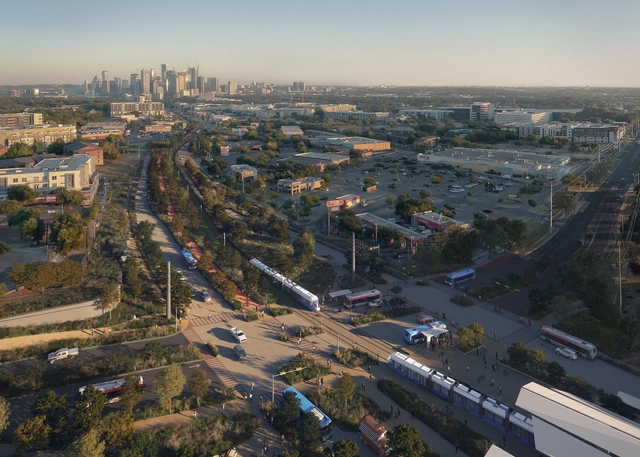
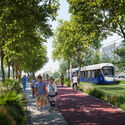
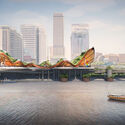
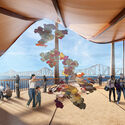
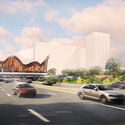
In March 2023, the AustinTransit Partnership (ATP) announced the selection of UNStudio, HKS, and Gehl to lead the architecture and urban design of Project Connect, an expansion of Austin's public transportation system in Texas, United States. Led by ATP, the system aims to connect communities, enhance public spaces, and integrate with the city's evolving urban fabric. The design framework, developed by the four entities, establishes the foundation for how the light rail will interact with Austin's neighborhoods. The design team states that the project's priorities are in people-first infrastructure and the creation of dynamic public spaces, which they seek to reflect in the newly unveiled images. As a voter-approved initiative, Project Connect actively encourages public participation, allowing Austin residents to provide feedback throughout its development.
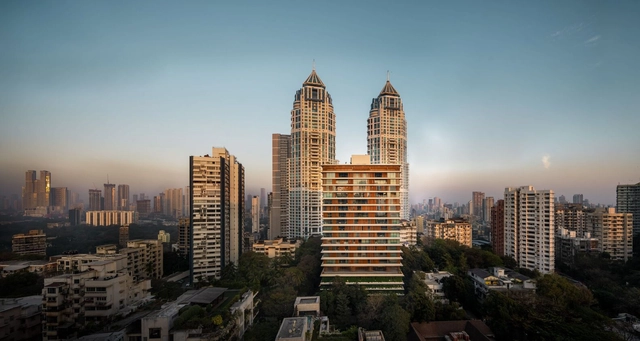
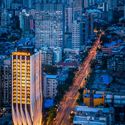
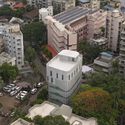
To a first-time visitor, Mumbai presents itself as a kaleidoscope of sensory overload. Architecturally, the peninsula city is host to numerous styles. Mumbai's architectural identity emerges from centuries of cultural exchange and colonial influence. What makes the experience unlike that of other historical cities is the density and the proximity in which juxtapositions occur.
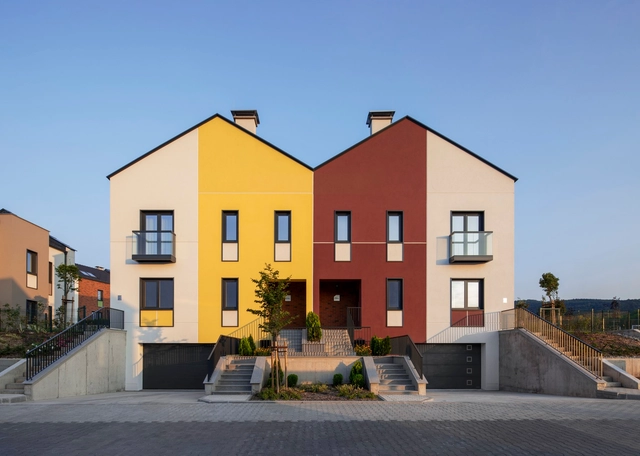
Architecture evolves, particularly in how it reflects the relationships between people, their behavior, and the environment. Even subtle variations in these dynamics can influence how we think and live in our communities. According to the World Bank, 56% of the population currently lives in urban environments, and it is estimated that by 2050 this number will reach 70%. This projection echoes the speed and magnitude of urban growth, posing challenges for architects and design firms, from the viability of buildings to the sustainability of the built environment, encompassing residential architecture and other typologies that influence daily life.
https://www.archdaily.com/1027788/case-studies-in-community-centered-living-innovative-residential-designEnrique Tovar
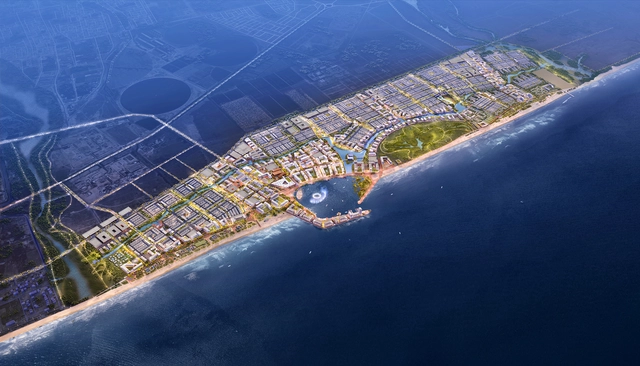
Overall Framework Render. Image Courtesy of Sasaki
Salalah is Oman's largest logistics port and its second-largest city. Located within a two-hour flight from Dubai and a 90-minute flight from Muscat, the city attracted over one million tourists in 2024. As part of the Oman Vision 2040 investment plan, Oman's Ministry of Housing and Urban Planning has commissioned Sasaki to develop a master plan for redesigning the city's waterfront. The plan includes renovating the city's coastal public spaces and constructing new housing and infrastructure to accommodate projected growth. The project is part of a broader initiative to double tourism's contribution to the nation's GDP by 2030, with on-site construction set to begin later this year, in 2025.
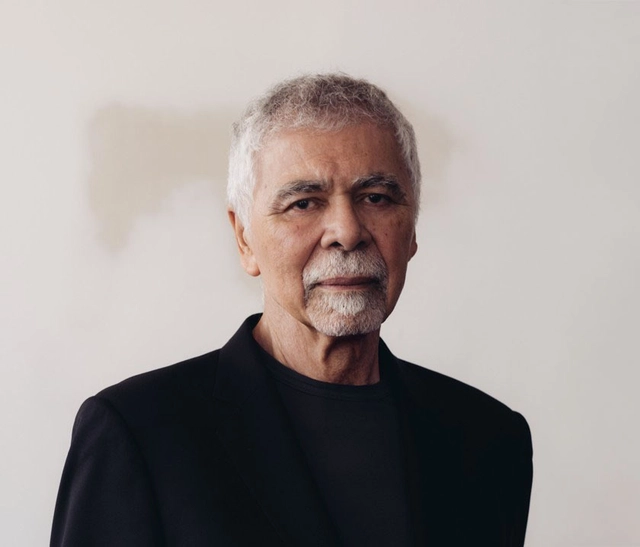
Portrait of Ricardo Scofidio. Image via Diller Scofidio + Renfro
Ricardo Scofidio, a distinguished figure in the world of architecture, passed away on March 6, 2025, at the age of 89. Born in New York City in 1935, Scofidio co-founded the influential architecture firm Diller Scofidio + Renfro (DS+R) with his partner Elizabeth Diller in 1979. Together, they brought to the profession a conceptual art sensibility, influencing the design of globally recognized cultural landmarks and public spaces. Among their most notable projects are the High Line in Manhattan and the transformation of Lincoln Center, each reflecting the studio's ambition of challenging conventional architectural premises.
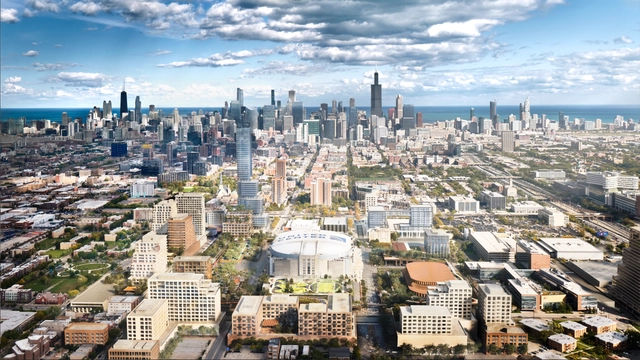
The United Center arena in Chicago, designed by HOK Sport (now Populous), Marmon Mok, and W.E. Simpson Company, was built between 1992 and 1994. With a capacity of over 20,000 seats for sports and general events, it includes more than 6,000 parking spaces in lots surrounding the arena. These parking lots span approximately 55 acres (over 22 hectares) in Chicago's West Side (1901 W. Madison Street). A new master plan, named the 1901 Project, aims to transform this space into a mixed-use neighborhood. Led by design collective RIOS, with contributions from landscape architecture studio Field Operations, this long-term, multi-phase project aims to connect neighborhoods by creating new public spaces and infrastructure on a metropolitan scale. The proposal recently received approval from the Chicago Plan Commission.
Design disciplines, like user experience (UX) design, have evolved to excel at devising experiences that make digital interfaces navigable. They accomplish this through a deep understanding of user needs and by mapping user journeys with meticulous attention to detail. The city represents a physical interface experienced by multiple users - residents, tourists, people of various ages and genders each experiencing it uniquely. In a time where digital interfaces are crafted for frictionless user experiences, why do many cities remain challenging to navigate?
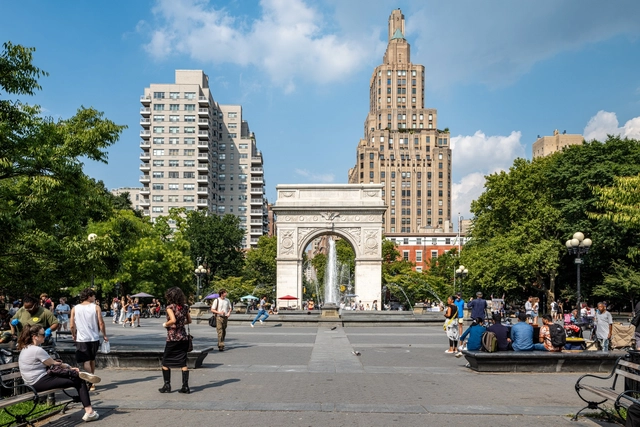
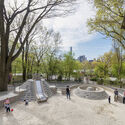
Washington Square Park, New York, NY, 2024. Photo by Barrett Doherty, courtesy The Cultural Landscape Foundation
Protests, civil disobedience, and dissent are not only a defining part of our shared history since the colonial era, they also continue to the present day on campuses, at political conventions, and elsewhere. In this context, some historic marches, sit-ins, and other actions are enshrined in our collective narrative, while others have faded from memory; however, the cultural landscapes that served as stages where these events occurred still exist. These places are the focus of Landslide 2024: Demonstration Grounds and a portal for re-engaging with the stories of little-known or even forgotten events that were pivotal in USA history. The thirteen different sites across the country, represented in the new report and digital exhibition from The Cultural Landscape Foundation (TCLF), touch on events that shaped individuals and sparked movements.
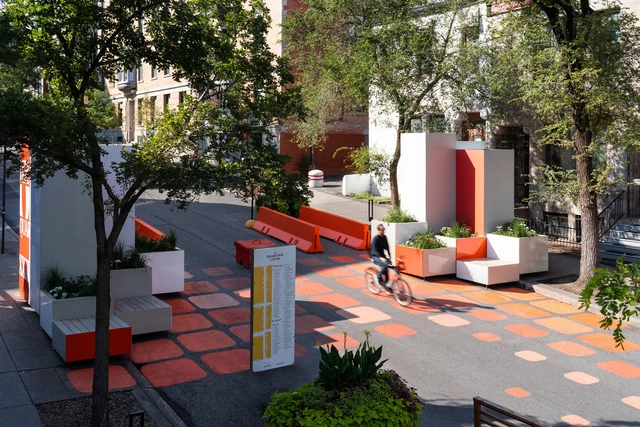
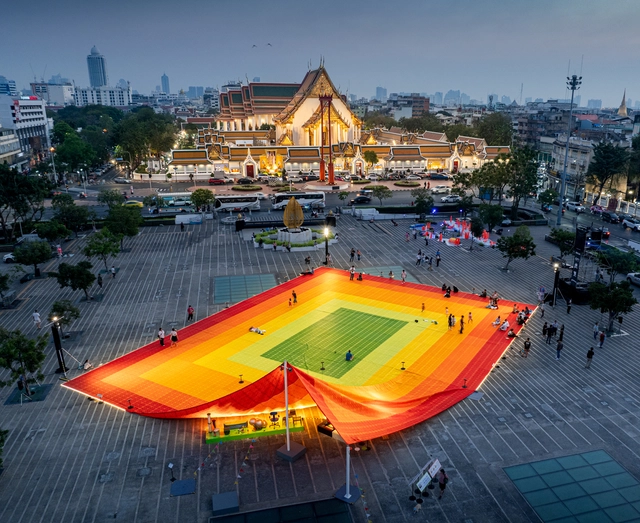
MVRDV has recently completed Mega Mat, a temporary installation for public gatherings and performances made from recycled plastic mats. Created for Bangkok Design Week, the joint goal of the architects and the Thai Creative Economic Agency was to design a space that also raises awareness about plastic waste and recycling in Thailand. The result is an infographic public space that, in addition to featuring bright, eye-catching colors, follows a color-coded system to organize information about the country's plastic waste processing. Mega Mat takes recycled plastic to reinterpret an everyday household item: the Sua, or mat, on which Thai families have been sitting for generations. This fresh take on a familiar object showcases the potential of using recycled plastic in daily life, embodied in a versatile public space now installed in the heart of Bangkok.
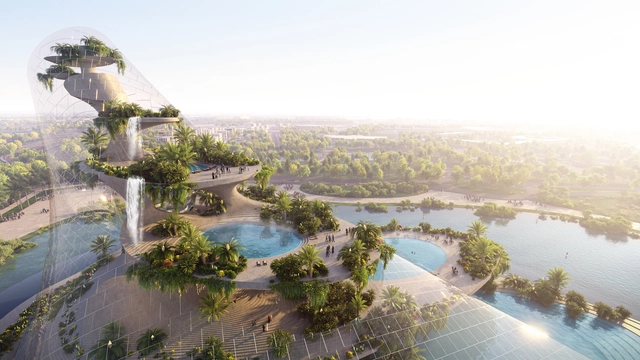
Diller Scofidio + Renfro has unveiled the design for Therme Dubai – Islands in the Sky, a new urban wellbeing destination set to be developed in Zabeel Park, United Arab Emirates. The project, created in collaboration with Therme Group and Dubai Municipality, has been approved as part of Dubai's Quality of Life Strategy 2033, which aims to enhance the city's landscape through innovative and sustainable infrastructure.
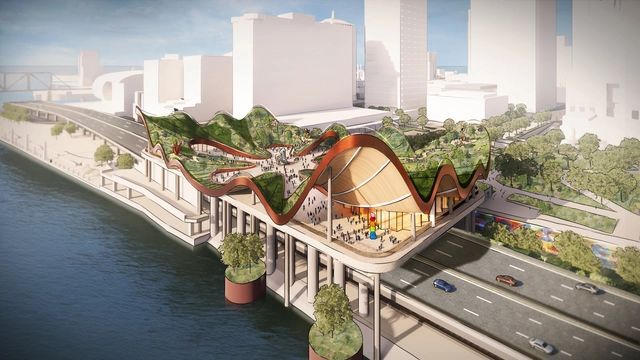
Heatherwick Studio has unveiled an ambitious vision to transform the Belvedere, a historic elevated riverfront space in downtown Louisville, Kentucky, into a reimagined public park in the United States. The project aims to breathe new life into the site, enhancing its connection to the Ohio River and creating a welcoming environment for both residents and visitors.
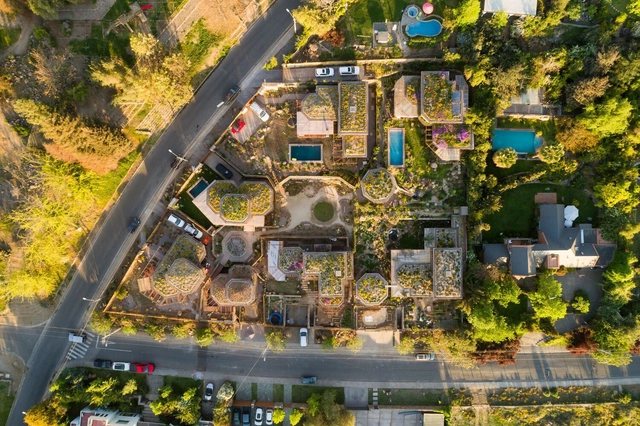
Social fragmentation and economic divides have fractured the fabric of urban environments. In this context, ecovillages emerge as influential remedies to societal and ecological crises, microcosms where sustainable living, social cohesion, and economic resilience drive urban growth. Rooted in environmental stewardship and circular systems, ecovillages offer a scalable model to inspire the development of regenerative urban neighborhoods across the world. Traditional urban and suburban development has led to sprawl and social isolation which have had detrimental effects on community cohesion and the environment. Alongside this phenomenon, cities have become inhumane, characterized by anonymity, unaffordable housing, traffic congestion, and pollution. The lack of access to nature solidifies these issues, leaving many urban dwellers disconnected from elements that promote well-being and a sense of belonging.
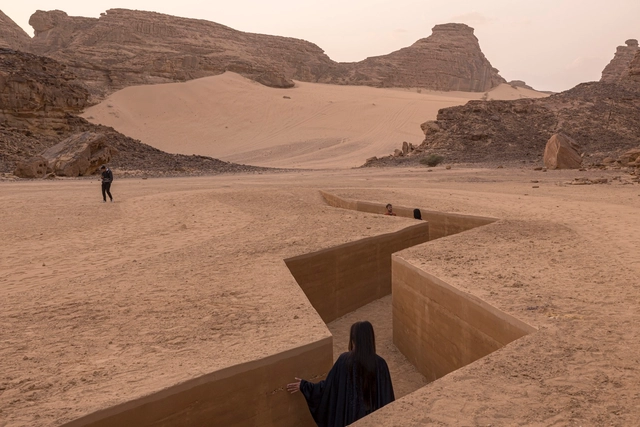
Saudi Arabia has just announced its participation in the 19th International Architecture Exhibition-La Biennale di Venezia with the National Pavilion presenting The Um Slaim School: An Architecture of Connection. Designed by Syn Architects, the Riyadh-based practice, and curated by Beatrice Leanza, the pavilion offers an exploration of contemporary urban conditions in Saudi Arabia through spatial practice and alternative architectural pedagogy. Syn Architects was selected as one of ArchDaily's Best New Practices of 2024, recognized for its engagement with local architectural heritage and contemporary spatial practices.
In a recent interview with Louisiana Channel,ecoLogic Studio discusses a new approach to architecture that explores the relationship between nature and urban design. Claudia Pasquero and Marco Poletto, the studio's lead architects, explain that modern architecture should be rethought to adapt to the changing environment and to serve as a connection between urban life and natural systems. The architects compare the current transformation in the field to the period of the Renaissance, when architecture evolved in response to the needs of society. Today, they argue, there is an opportunity for architects to learn from nature and design urban spaces that are both sustainable and functional.
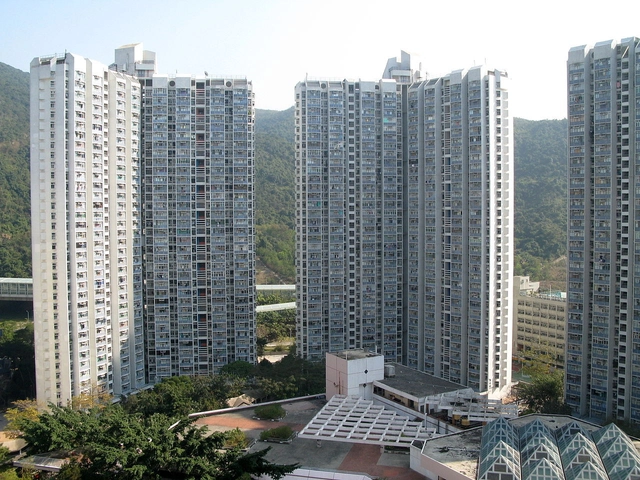
When discussing modernist living, several iconic private residential projects may first come to mind—Le Corbusier's Villa Savoye, the Case Study Houses, most notably by Richard Neutra, Pierre Koenig, and Charles and Ray Eames, as well as the glass houses by Mies van der Rohe and Philip Johnson. Most of these projects exemplified an idealized vision of modern living, set in picturesque landscapes and characterized by experimentation with new construction methods, materials, and spatial concepts. Their designs embraced openness, blurring the boundaries between private and public spaces, largely unburdened by constraints such as density, efficiency, accessibility, public transit integration, or communal considerations.
While these modern homes remain influential in contemporary residential design, they also—perhaps unexpectedly—laid the groundwork for high-density housing principles. Concepts such as the interplay between public and private space, modular construction, and prefabrication, initially explored in these private residences, have been adapted to the vastly different constraints of social housing.
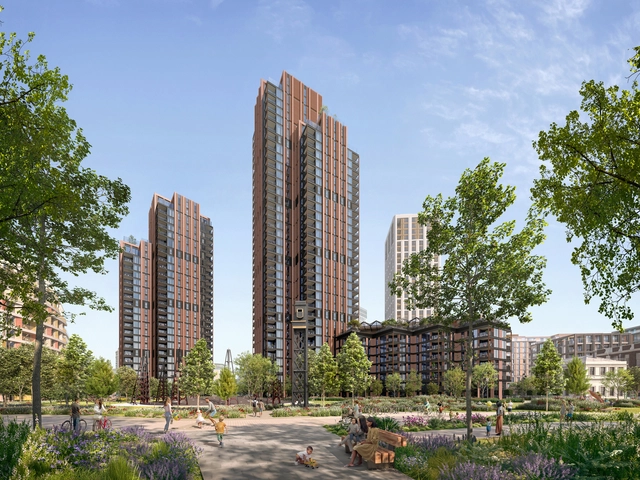
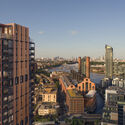
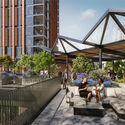
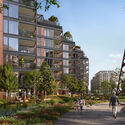
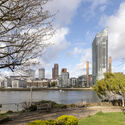
Phase four of the King's Road Park masterplan, designed by Foster + Partners for St William, has received detailed planning permission. The design, located in the London Borough of Hammersmith & Fulham, comprises two residential towers of 28 and 38 stories, a seven-story podium building, and 1.9 acres of new parkland and public open space, totaling 357 new homes. The residential buildings incorporate communal spaces, including a ground-level amenity and a rooftop garden sheltered by a louvered canopy. The towers' slender profiles are intended to complement the existing urban skyline, featuring terracotta paneling in a nod to local architectural styles.
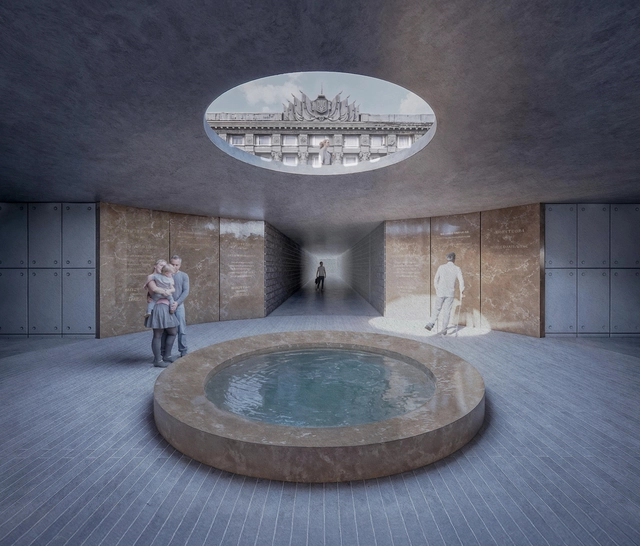
The city of Kharkiv has faced significant challenges due to its proximity to the Russian border. Amidst these circumstances, Kharkiv's Mayor, Ihor Terekhov, underscored the need for a new landmark during the United Nations' Second Forum of Mayors—a project that could embody renewal, resilience, and hope. The Freedom Square International Competition was launched as part of this vision, inviting local and international experts to propose innovative designs for Freedom Square and the Kharkiv Regional State Administration Building.
This competition is part of the broader Kharkiv Masterplan Concept, an initiative led by the Kharkiv City Council in collaboration with the United Nations Economic Commission for Europe (UNECE), the Norman Foster Foundation, Arup, and local architects and experts. The Masterplan Concept seeks to guide Kharkiv's regeneration by fostering a vibrant, inclusive, and forward-looking urban environment while honoring the city's historical identity.
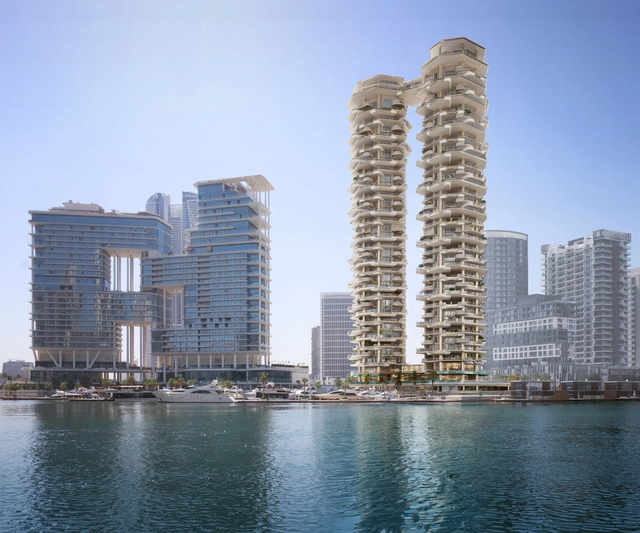
In recent weeks, a series of significant architectural developments have been unveiled, highlighting the work of diverse architecture studios across the globe. These projects, announced between late September 2024 and early 2025, focus on transformative masterplans, housing solutions, and public spaces. Prominent firms such as Foster + Partners, ACPV ARCHITECTS Antonio Citterio Patricia Viel, and fjcstudio are at the forefront of these initiatives. In Dubai, Foster + Partners revealed the Regent Residences, a pair of residential waterfront towers. Meanwhile, ACPV ARCHITECTS announced three projects in Taichung, Taiwan, combining Italian design with Eastern philosophies to create green, community-focused urban spaces. In Sydney, fjcstudio's masterplan for Midtown aims to reshape the city's urban core with two 80-storey mixed-use towers, enhancing connectivity and public engagement. These projects demonstrate the diverse scales and contexts in which architects continue to innovate, shaping cities and communities worldwide.