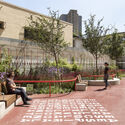
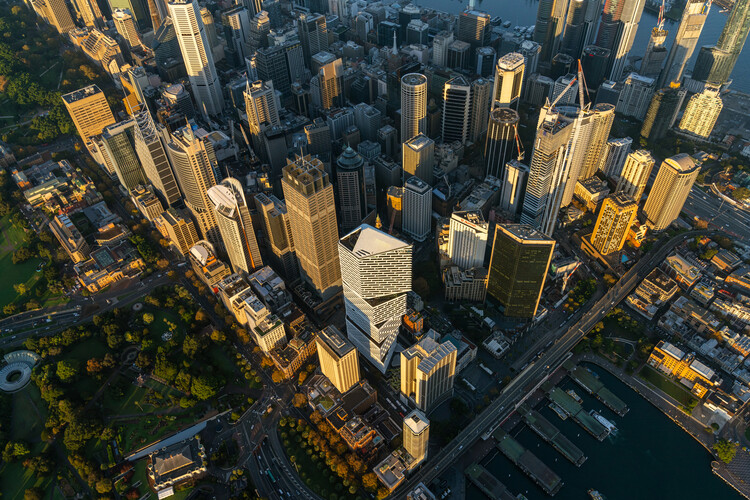
In much of China, concrete remains the dominant construction material. Despite growing concerns over its environmental impact, concrete continues to align with the priorities of many developers and clients—it is fast, cost-effective, and highly durable. As a result, most building types in China still rely heavily on concrete. This reliance is further reinforced by China's position as the world's largest producer of Portland cement. A deeply entrenched supply chain, rooted in raw material manufacturing and economic infrastructure, ensures that concrete remains the default choice in the construction industry.
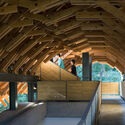
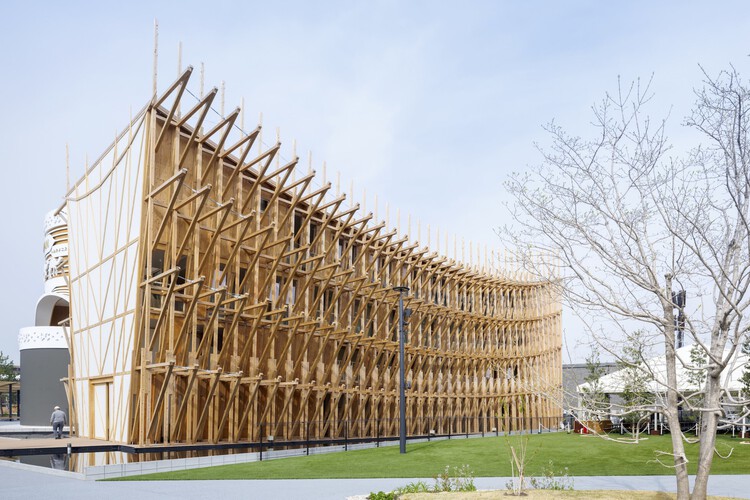
Yet historically, Chinese architecture was built upon a rich tradition of timber construction. The Forbidden City is a prime example: not only is it emblematic of China's architectural heritage, but it also remains one of the largest and best-preserved collections of ancient wooden structures in the world. This legacy prompts an important question: does timber construction have a meaningful future in China's contemporary building industry?
Generative AI (Gemini / Google DeepMind). Concept: Eduardo Souza / ArchDaily
Few plants have accompanied humanity as closely as cannabis. Used for millennia to make textiles, paper, and medicines, it has quietly shaped everyday life and built environments alike. Hemp, its non-psychoactive variety, is one of the earliest cultivated crops and a material of remarkable versatility: strong, breathable, and renewable. From ropes and sails to insulation and biocomposites, hemp’s fibers have been helping humans build for thousands of years.
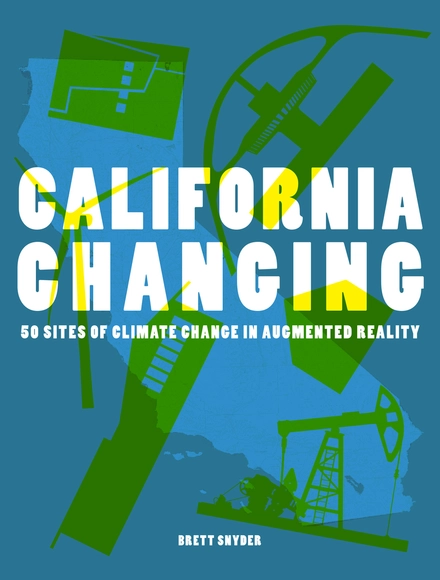
The state of California has emerged as a pioneering force in designing for climate change, yet it has also faced the devastating impacts of numerous climate-related disasters, including droughts, wildfires, and rising sea levels. This book offers a unique climate change tour, delving into architectural scale sites across the state. From innovative houses using sustainable techniques to historical locations ravaged by the combined forces of drought and wildfire, the book explores a range of poignant examples. The main visual contents are a set of architectural site illustrations that are each enhanced by an augmented reality component showcasing the interplay between past, present, and future scenarios. The publication caters to architects, landscape architects, planners, design enthusiasts and general audiences alike, fostering a curiosity about climate change and its relevance to our daily lives.
In 2025, the architectural field has been marked by a dense calendar of exhibitions, a measured slowdown in construction across multiple regions, and a period of reflection that scrutinizes the impact of intelligence (artificial and natural)—both on professional practice and workplace culture, as well as its use as a pedagogical tool. Over this calendar year, ArchDaily has published more than 30 interviews in a range of formats—Q&As, in-person conversations, video features, and more. These exchanges have engaged themes of sustainability and nature, housing and urban development, AI and intelligence, adaptive reuse and public life, and have closely followed major exhibition platforms including the Venice Biennale, Expo 2025 Osaka, Milan Design Week, Concéntrico, and others.
The phenomenon known in biology as convergent evolution describes how distant species can develop similar structures when confronted with comparable challenges. Dolphins and ichthyosaurs, for example, are separated by millions of years of evolutionary history, yet both evolved nearly identical hydrodynamic bodies. Architecture has its own parallels: A-frame structures emerged independently in both the European Alps and Japan, even without direct cultural exchange, as spontaneous responses to snow, wind, and material scarcity.
https://www.archdaily.com/1037027/converging-trends-in-2025-architecture-circularity-biomaterials-and-carbon-conscious-designArchDaily Team
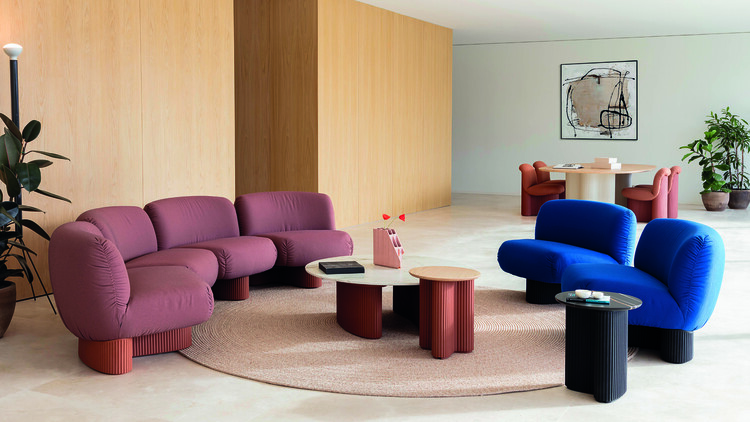
Bolete Lounge BIO®. Image Courtesy of Andreu World
What is the current global outlook on the recyclability of materials used in architecture? To what extent are contemporary societies truly committed to reducing environmental impact? In the effort to live in balance with nature, replacing fossil fuels with renewable energy sources is one of the key strategies for cutting greenhouse gas emissions and addressing global warming. Looking to nature for inspiration as a way to protect it means creating designs that incorporate sustainability, circularity, and recyclability from the very first sketch. From building systems to surface finishes, the use of biomaterials in architecture reflects a mindset rooted in long-term responsibility for a material's full life cycle.
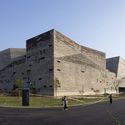
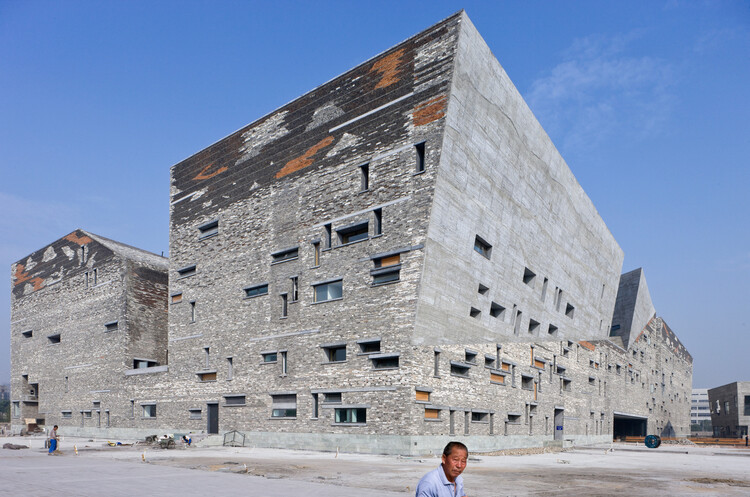
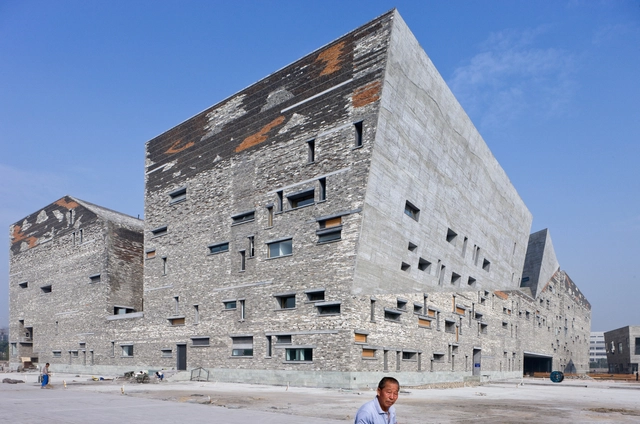
Amateur Architecture Studio, Ningbo History Museum, 2008. Image Courtesy of Louisiana
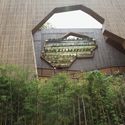
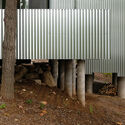
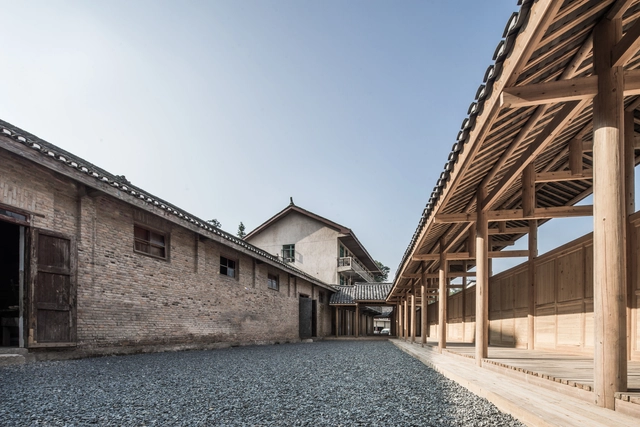
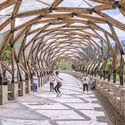
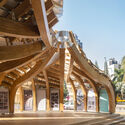
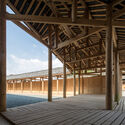
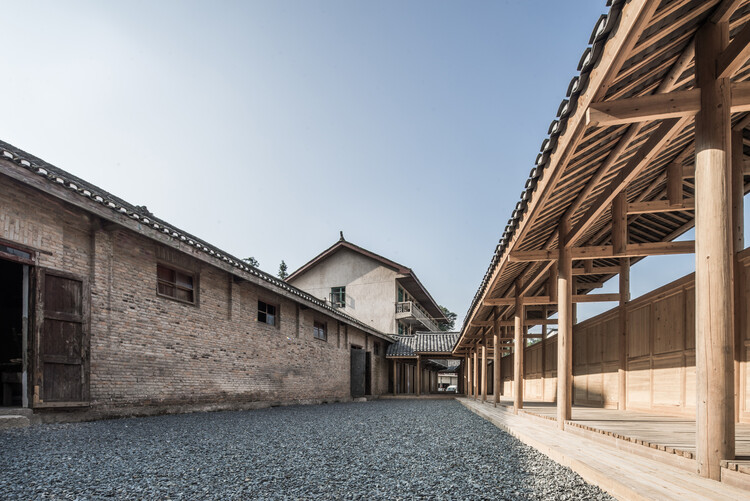
Born in 1963 in Urumqi, Xinjiang, China, architect Wang Shu has dedicated his career to defining a contemporary approach to building that is deeply rooted in China's cultural and material history. In 2012, he was recognized with the Pritzker Prize, becoming the first Chinese citizen to receive the distinction. The award jury acknowledged his body of work "for the exceptional nature and quality of his executed work, and also for his ongoing commitment to pursuing an uncompromising, responsible architecture arising from a sense of specific culture and place." In 2027, along with his wife Lu Wenyu, Wang Shu will be a curator for the Venice Architecture Biennale.
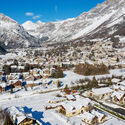
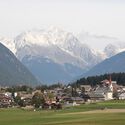
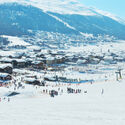
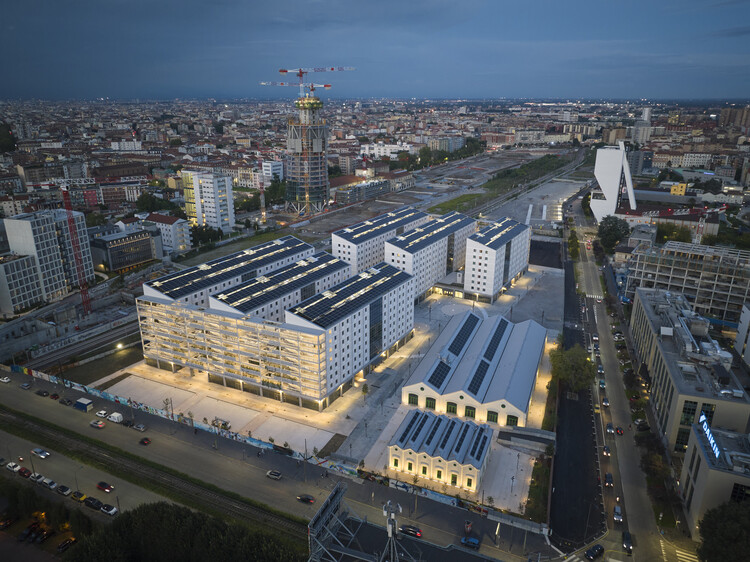
As preparations advance for the Milano Cortina 2026Olympic Winter Games, set to take place from February 6 to 22, 2026, this edition introduces one of the most geographically wide-ranging configurations ever implemented for the Winter Olympics. Extending across two cities, two regions, and two autonomous provinces, the competitions will be staged over more than 22,000 square kilometres of Northern Italy. Metropolitan venues in Milan are paired with longstanding Alpine centres in Cortina d'Ampezzo, Livigno, Bormio, Anterselva, and Val di Fiemme, creating a framework that bridges urban and mountain contexts. More than 90 per cent of the venues are existing or temporary facilities, reflecting a strategy centred on adaptive reuse, selective upgrades, and long-term integration into regional sport and cultural infrastructures. Nearly 2,900 athletes will compete in 116 events, including the debut of ski mountaineering and several new mixed-gender formats that signal evolving approaches to winter sports programming.
Specificity has re-emerged as a central language in architectural discourse. In an increasingly globalized field, where projects often follow familiar models regardless of context, architects are now turning toward approaches rooted in the particularities of each site. This renewed attention to context reflects broader social, climatic, and political pressures: cities are facing extreme heat, ecological challenges, shifting demographics, and new forms of collective life that demand responses grounded in their immediate conditions.
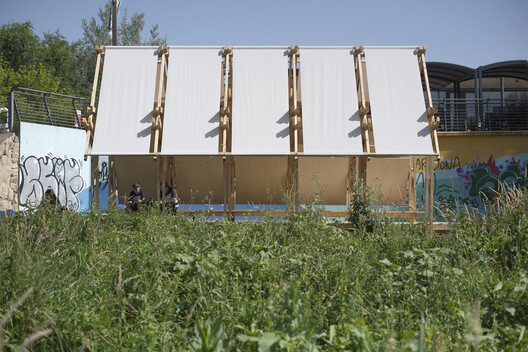
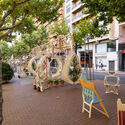
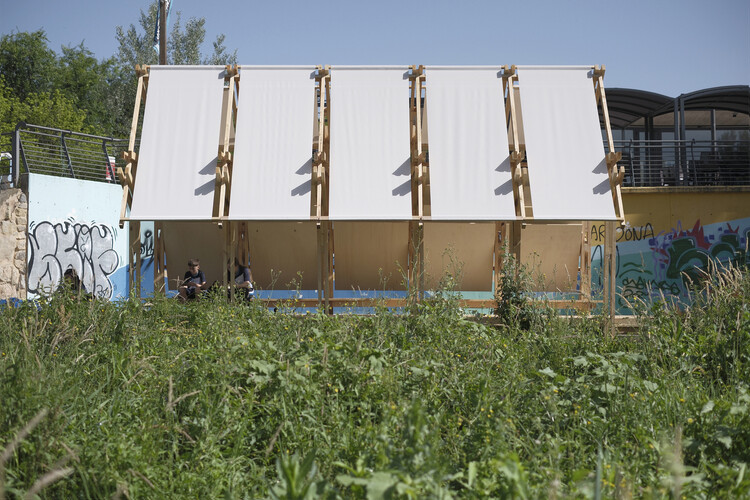
Situated architecture describes this shift. It refers to design approaches in which form, program, and materiality emerge from the specific environment that produces them: its microclimates, cultural structures, and everyday rituals. Rather than beginning with universal templates, these practices start with observation, prototyping, and direct engagement with local dynamics. This logic is visible in the climatic and material experiments of TAKK in Spain, such as Portable Garden and 10k House, which operate as lightweight prototypes tuned to thermal and ecological gradients; in Studio Ossidiana's Art Pavilion M, shaped by layered soils and ecological cycles in the Netherlands; in Izaskun Chinchilla's reinterpretations of vernacular objects and her later experiments with 100 Sillas and 3 Salones Urbanos; in the narrative-driven domestic spaces explored by Common Accounts; and in Raumlabor's urban interventions that respond directly to the specificities of post-industrial Berlin.
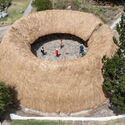
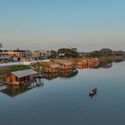
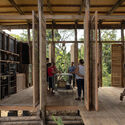
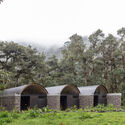
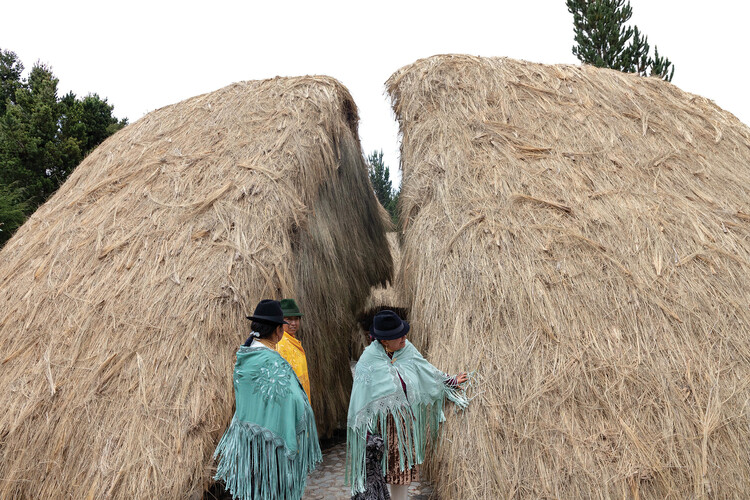
Between the Andes, the coast, and the Amazon, Ecuador's architecture has evolved as a reflection of its layered geography, a place where climate, topography, and culture unite. Throughout the territory, architecture has been an act of adaptation: from vernacular traditions rooted in collective labor and local materials to the colonial and modernist influences that reshaped its cities. This diversity has produced distinct constructive systems, from bamboo and cane structures along the coast to earth and stone constructions in the Andes, forming an archive of adaptive design that continues to influence contemporary practice.
Yet in the past decade, Ecuadorian architecture has undergone a quiet but deep transformation. New academic programs and international references have encouraged a growing awareness of climate and social justice. Emerging architects are redefining practice through workshops, collective studios, and on-site experimentation that blurs the line between design and activism. No longer focused on architecture as an object, a new generation of architects is approaching design as a process. One focused on collaboration, sustainability, and cultural identity. Their questions have shifted the design language from what to build to with whom.
Modern residential construction in the UAE demonstrates the need for advanced thermal envelope solutions in hot, arid climates where cooling can account for up to 70% of peak electricity consumption. Image Courtesy of Terraco
Terraco, a global leader in Exterior Insulation Finishing Systems, has demonstrated through independent studies that when planning building renovations, it is essential to adopt a deep retrofit strategy that includes energy-efficient measures, such as thermal insulation of external walls and roofs.
The studies show that cooling energy use in buildings can be reduced by up to 47% annually in Middle Eastern and South Asian climates, directly as a result of installing the combined Terraco EIFS and Roof Insulation Finishing Systems, compared to leaving external walls and roofs uninsulated.
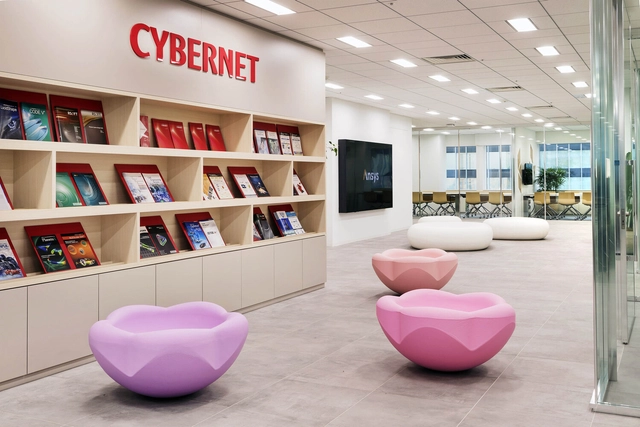
The new headquarters for Cybernet Systems was designed around the Japanese architectural concept of flexibility, promoting well-being, collaboration, and productivity. As a global leader in Computer-Aided Engineering, supporting industrial production through advanced digital solutions, the headquarters, located in the Fuji Soft Akihabara Building in Tokyo, embodies the company's commitment to creating a dynamic, technology-driven community.
Developed by MB-AA (Matteo Belfiore Architect & Associates) and Shukoh, in collaboration with Cybernet Systems, the project translates corporate values into spatial design. Minimalism, natural light, and openness define the environment. Transparent partitions and adaptable layouts foster communication while allowing each employee to personalize their workspace. Well-being, creativity, flexibility, and technology form the core of the project.
While adaptive reuse has been increasingly acknowledged as a vital architectural strategy worldwide, its discourse and implementation in Asia are still expanding—driven by growing ecological awareness and a shifting understanding of architectural knowledge. Rather than accelerating a developmentalist model centered on demolition and new construction, architects today are confronted with a different approach to the built environment: treating the existing structure as a resource—an archive of materials, spatial organizations, and informal histories.
Adaptive reuse is often associated with the preservation of historic buildings and culturally significant heritage. Yet the vast field of seemingly 'less-valued' structures—abandoned houses, standard yet old dwellings, non-conforming office buildings, and overlooked urban voids—has become ground for experimentation. These sites challenge architects and designers to reconsider prevailing standards of efficiency and market-driven development, and to imagine spatial and ecological practices that avoid the continual loss of embodied material and cultural knowledge inherent in constant rebuilding.
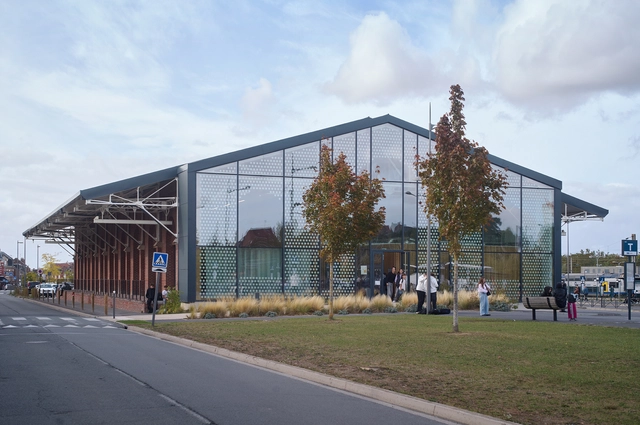
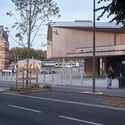
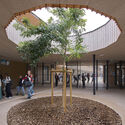
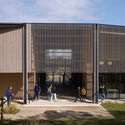
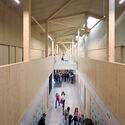
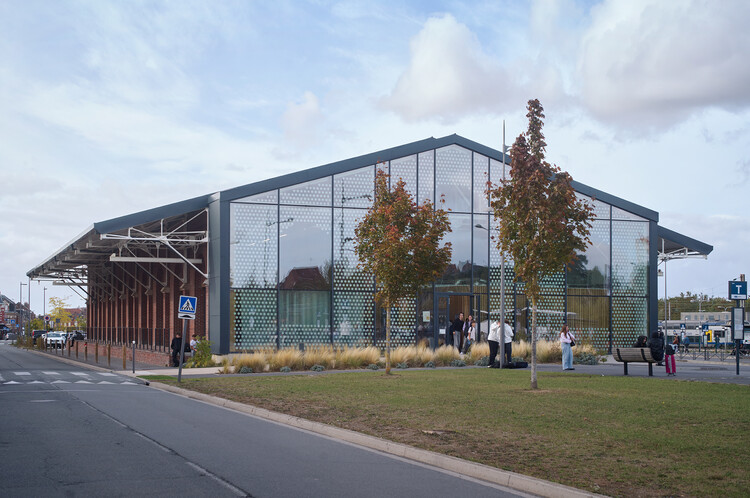
Coldefy, in collaboration with Relief Architecture, has completed the Robert Badinter Secondary School, the first timber-framed school in northern France. Designed to accommodate 650 students, the project is situated on a former railyard adjacent to the city's train station and within walking distance of the town center. The new school forms part of a wider urban renewal strategy aiming to consolidate transportation links and introduce new civic amenities to the area.
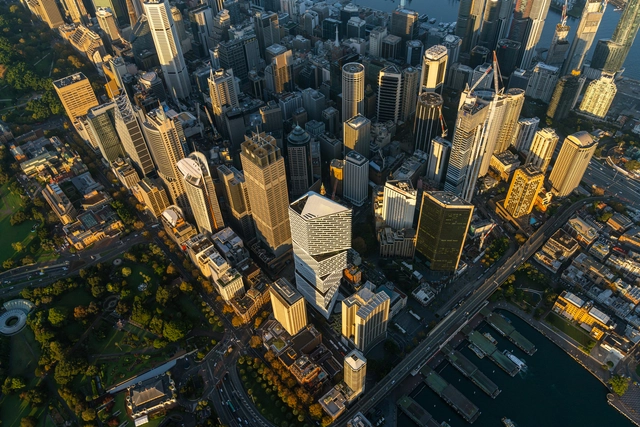
From building codes to mobility restrictions and new diplomatic roles within city governments, climate policy is increasingly being shaped at the local level through a widening range of legislative and institutional tools. Cities as varied as Sydney, Boston, New York, Paris, Miami, and dozens across Latin America are adopting targeted strategies that reflect their distinct environmental pressures and governance structures. These initiatives range from all-electric and net-zero construction requirements, to traffic-control measures designed to curb the social costs of private vehicle use, to emerging forms of urban diplomacy that coordinate responses to rising temperatures and biodiversity loss. Together, these approaches illustrate how territorial management is evolving in response to the accelerating climate crisis, and how local governments are experimenting with regulation and collaboration to confront challenges that are at once global and deeply place-specific.
Jurong Lake Gardens is one of Singapore's newest national gardens, a 90-hectare urban oasis for the community. Elevate’s PondGard EPDM membrane was used to waterproof the pond. Image Courtesy of Holcim
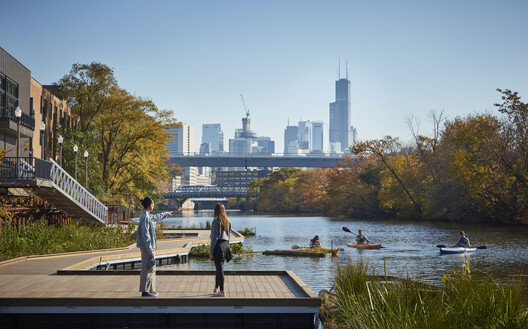
The future of urban planning and architecture is promising if the world, collectively, looks beyond the concept of mere sustainability and instead embraces a nature-positive approach. As global population growth drives rapid urbanization—requiring humanity to build the equivalent of a city the size of Madrid every week for decades to come—the construction sector faces a defining challenge: how to build durable, energy-efficient, and resilient urban environments in harmony with natural ecosystems.
The project brings together architects, artists, researchers, scientists, and social workers, the project explores how embodied, material, and technological practices can help us rethink our relationship with the planet’s energy infrastructures.











.jpg?1478078308 "Hangzhou Xiangshan Campus. Image © Iwan Baan")