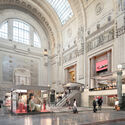
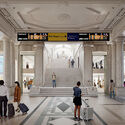
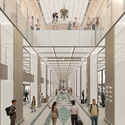
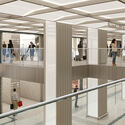
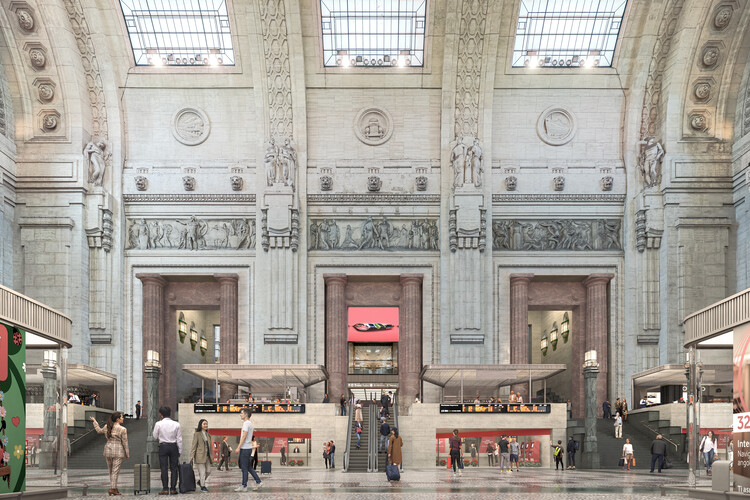
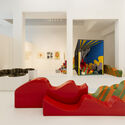
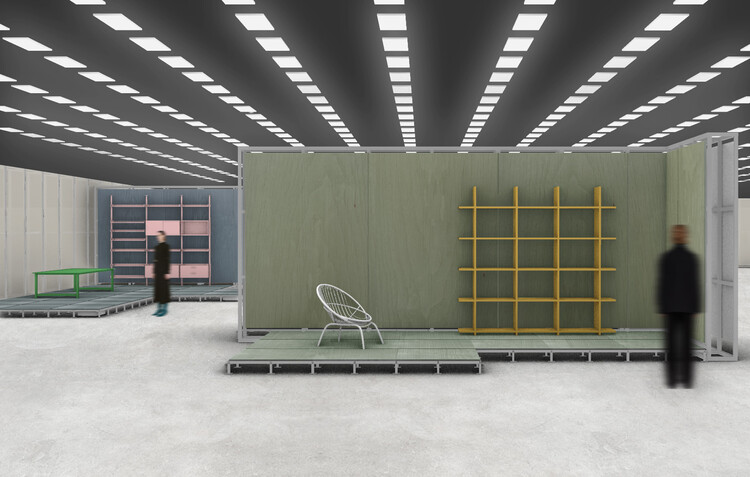
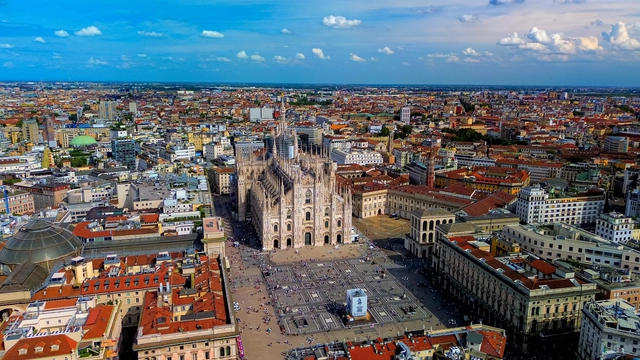
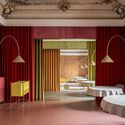
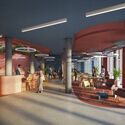
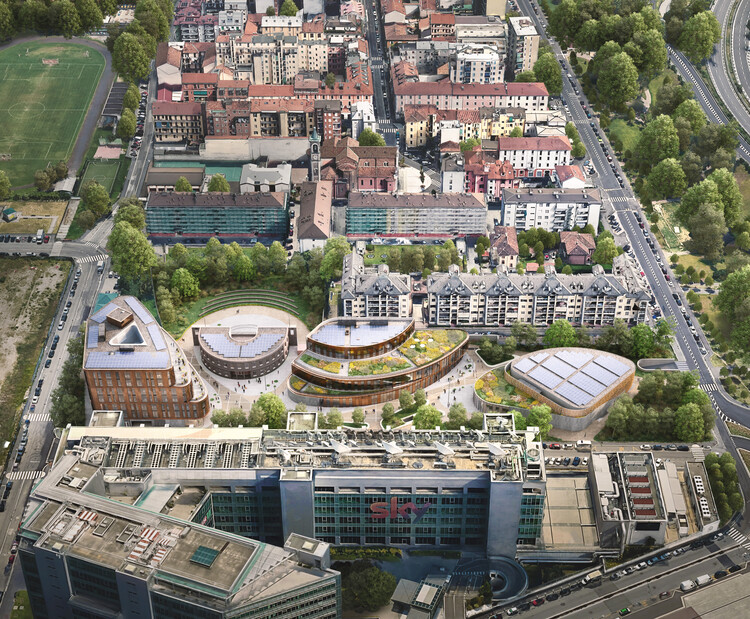
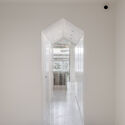
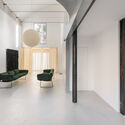
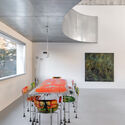
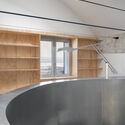
Milano Centrale is the main train station in northern Italy and the second-largest station in Italy behind Roma Termini. The building was officially opened on July 1, 1931, replacing the city's first central station, which opened in 1864. The construction was intended to showcase the power of then-Prime Minister Mussolini's fascist regime, with a notorious scale, massive arches, and an imposing facade. Following a private competition promoted by Grandi Stazioni Retail, Park, an Italian interdisciplinary collective, was selected to redesign the station's ground floor and mezzanine levels, transforming the historic city landmark into a contemporary urban platform.
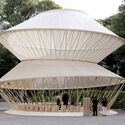
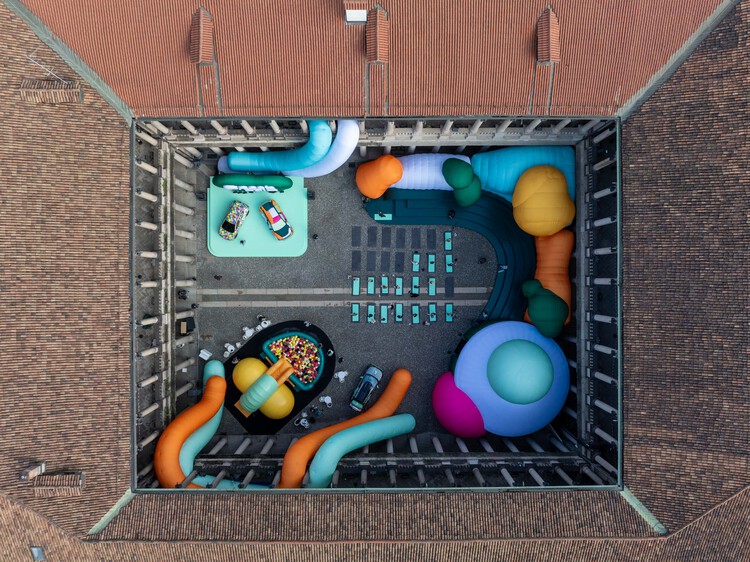
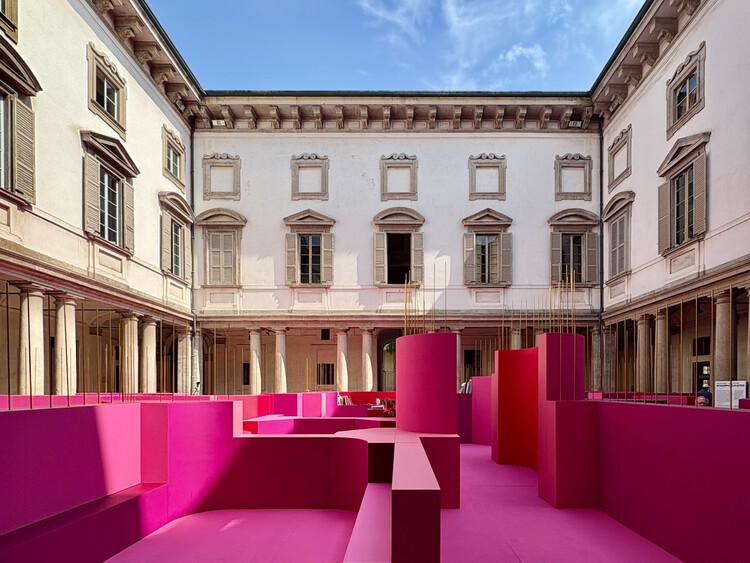
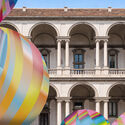
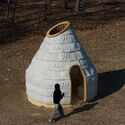
Ooooh, that's EpiQ! By Ricardo Orts Ulises, Milan Design Week 2026. Image Courtesy of Skoda
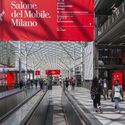
Bringing together a week of exhibitions, installations, and industry exchange, Milan Design Week 2026 and the 64th edition of Salone del Mobile.Milano concluded on April 26, following six days of programming across the fairgrounds and the city. Held from April 20 to 26, this year's events reaffirmed Milan's central role within the global design calendar. The Salone itself drew over 316,000 visitors from 167 countries. With 1,900 brands represented and a strong international presence, the week once again operated as both a cultural platform and an economic engine, navigating a context marked by market uncertainty while maintaining its capacity to convene designers, institutions, and industry leaders at a global scale.
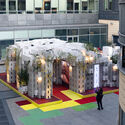
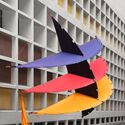
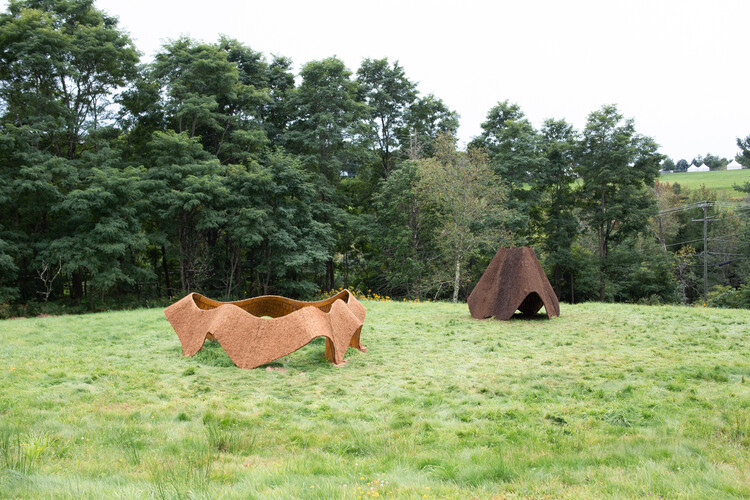
Metamorphosis in Motion by Lina Ghotmeh. Image Courtesy of ArchDaily's editors on-site in Milano
Milan reactivates its role as a global design capital this week as Milan Design Week 2026 has began on April 20, followed by the opening of the 64th edition of Salone del Mobile.Milano on April 21 at Fiera Milano, Rho. Rather than a single event, the week unfolds as a layered system in which the fair and the city operate through different temporalities and spatial conditions. From early openings across urban districts to the formal start of the fairgrounds program, the staggered calendar reinforces a continuous flow of activity that extends across institutions, infrastructures, and public space.
As major cultural events, institutional transformations, and new architectural commissions unfold across different geographies, this week's discourse highlights how architecture operates at the intersection of public life, creativity, and long-term adaptation. With Milan Design Week 2026 foregrounding process, experimentation, and citywide participation, the projects and initiatives emerging this week point to a broader shift toward openness, accessibility, and experiential engagement across disciplines and urban contexts. Ongoing investments in cultural infrastructure, from new museums to large-scale renovations and competition-winning proposals, further underscore how institutions continue to recalibrate their spatial and social roles in response to evolving environmental, technological, and cultural demands.
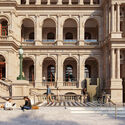
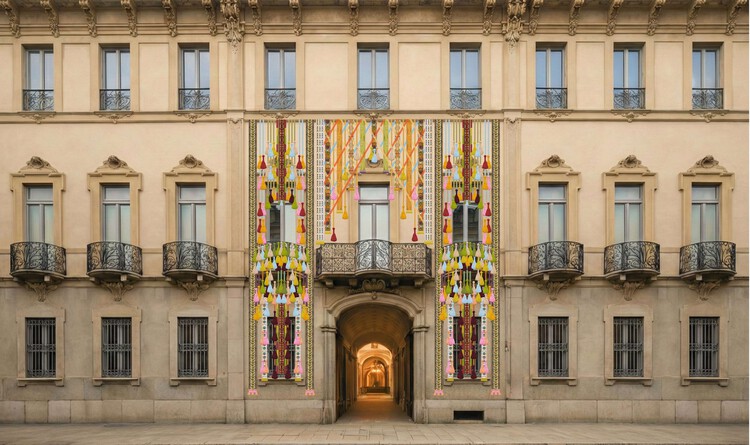
Entrance to Palazzo Citterio, indicative render. Image Courtesy of ACDF and Bethan Laura Wood Studio
From April 20 to 26, Milan Design Week 2026 returns as a citywide platform where design operates as both a cultural practice and a form of exploration. Framed by the Fuorisalone theme "Be the Project," this year's edition shifts the focus from outcome to process, positioning design as a dynamic, human-centered act shaped by intuition, responsibility, and transformation. Installations and exhibitions across the city foreground making as an open-ended condition, one that embraces error, temporality, and experimentation as integral to creative production. Within this context, design becomes a space of exchange between disciplines, materials, and intelligences, reflecting broader conversations around sustainability, emerging technologies, and the evolving relationship between the physical and the digital.
From April 21 to 26, the 64th edition of Salone del Mobile.Milano returns to Rho Fiera Milano, bringing together over 1,900 exhibitors across more than 169,000 square meters of sold-out exhibition space. Yet beyond its scale, the 2026 edition signals a more structural shift through collaborations with figures such as Rem Koolhaas and David Gianotten (OMA) and Formafantasma, the Salone continues to reposition itself as an evolving cultural infrastructure rather than a conventional trade fair. This year introduces new curatorial and strategic layers, most notably the preview phase of Salone Contract and the debut of Salone Raritas, alongside immersive installations and exhibitions, while the Salone's footprint across Milan grows further through city-wide interventions during Milan Design Week.
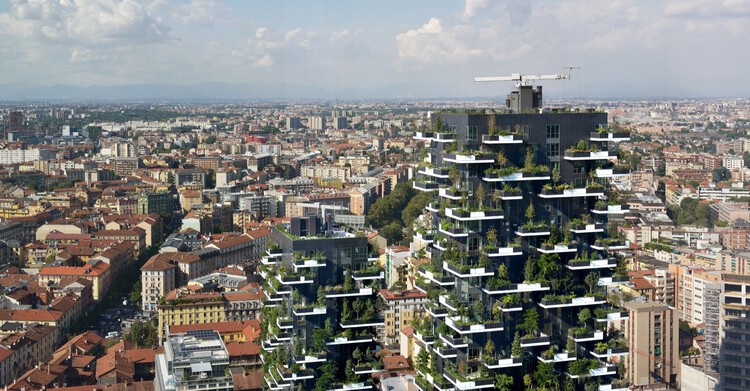
Milan, a global hub of fashion and finance, increasingly asserts itself as a leading center for architecture and design. Its status as Italy's second-largest city underpins its vibrant cultural scene, attracting both established and emerging creative talent. Additionally, Milan is home to esteemed educational institutions recognized for their focus on heritage preservation and conservation. Its cultural and design significance is increasingly pronounced, as a growing number of creators are relocating to establish their presence in this vibrant creative hub.
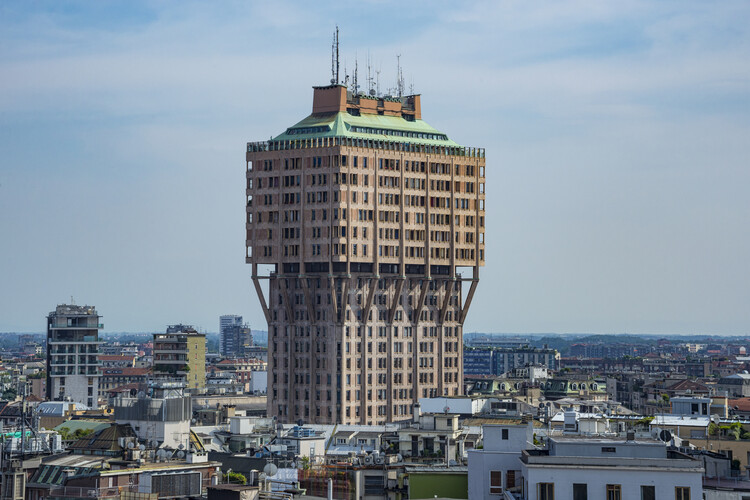
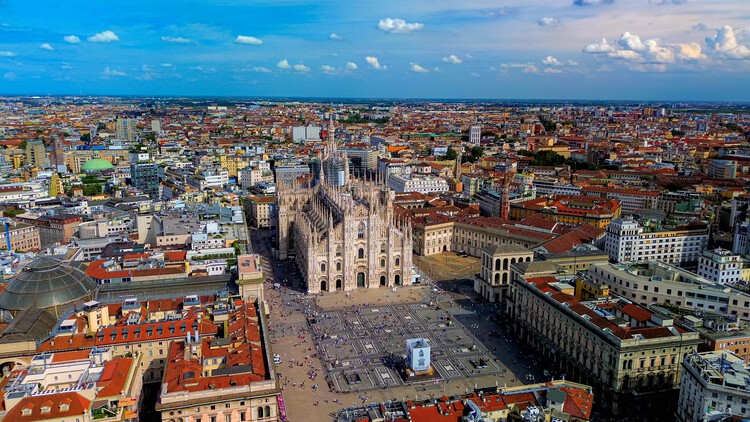
Among Milan's most iconic landmarks are the flamboyant Gothic Duomo di Milano, the historically and artistically significant Santa Maria delle Grazie, and the ornate Galleria Vittorio Emanuele II, along with numerous Renaissance and Baroque sites. The city also boasts some of the most innovative modern and contemporary architecture, showcasing a unique dialogue between tradition and modernity. This synergy is exemplified by the contributions of architects like Aldo Rossi,Gio Ponti,Stefano Boeri, Mario Cucinella, Zaha Hadid, Grafton Architects, Herzog & de Meuron, and Foster and Partners.
The following guide highlights key historical landmarks alongside exemplary contemporary architecture curated by ArchDaily. This guide serves as an indispensable resource for those planning to explore Milan during the 2026 Design Week, presenting a blend of essential sites designed by renowned local and international architects.
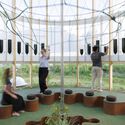
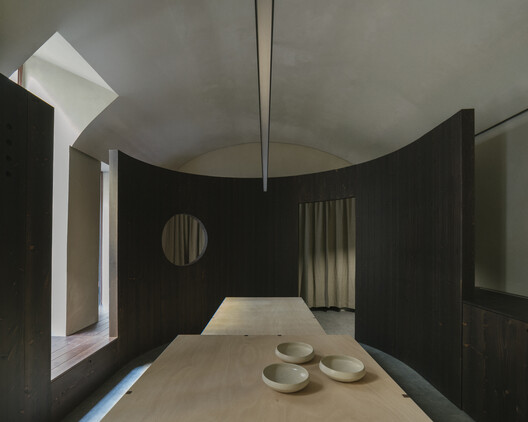
At a time of ecological emergency, architecture cannot be separated from the extractive systems on which it depends. As the technosphere expands, linking material flows, energy consumption, and digital infrastructures, design becomes increasingly entangled in these processes. How can design practice intervene in anthropocentric systems and transform the architectural process and aesthetics through an investigation of material intelligence? More broadly, how does architecture engage with the agency and intelligence of non-human entities to rebalance the environmental burden?
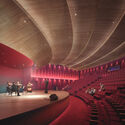
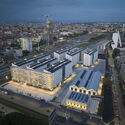
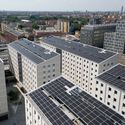
The architecture firm Settanta7 has begun the construction of Bosco della Musica, a new campus for the Conservatorio Giuseppe Verdi in Milan. The site is located in Rogoredo, a former industrial area in the southeastern part of the city, currently under scrutiny due to incidents of violence and public safety concerns. The area is therefore the focus of development initiatives by the Italian Ministry of Transport and Infrastructure, including the competition for this project, which was awarded to Settanta7 in 2022. The firm is responsible for the design and is overseeing the coordination of all disciplines as lead consultant for the construction of the entire project: a broader urban regeneration program that includes the redevelopment of the 17,400 sqm site and the adaptive reuse of the "Ex Chimici" industrial building, alongside the construction of four new buildings, three dedicated to educational activities and one intended for student housing.
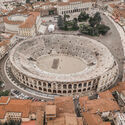
The Milano Cortina 2026 Winter Olympics officially opened on Friday, February 6, with a ceremony staged across four locations in northern Italy. The main opening event took place at San Siro Stadium, one of Milan's most significant modernist landmarks, and combined dance and performing arts, referencing Italian culture with performances by international artists, including pop star Mariah Carey. Although several competitions had already begun on February 4, the opening ceremony marked the start of a broader programme of sporting, social, and cultural events distributed across Milan and the three Alpine host areas: Cortina d'Ampezzo, Valtellina, and Val di Fiemme. The Games are scheduled to run until February 22, concluding with a closing ceremony at the Verona Arena, ahead of the Paralympic Games, which will take place from March 6 to 15. As a large-scale international event, the Olympics place significant demands on sports infrastructure, transportation networks, accommodation, and tourism capacity, offering early indications of the longer-term urban, architectural, and territorial impacts the Games may leave behind.
Nearly one week before the start of the Milano Cortina 2026 Winter Olympics, the organizing committee has released official information on the event's Cultural Olympiad: an arts and culture programme accompanying the Olympic and Paralympic Games. The programme is recognized by the IOC as one of the three pillars of the Olympic Movement, alongside sport and education. Conceived as a widespread platform involving territories, institutions, and communities across Italy, the Cultural Olympiad aims to highlight the Italian Alps and Milan's cultural heritage while promoting Olympic values through art, history, and participation beyond the official sports venues.
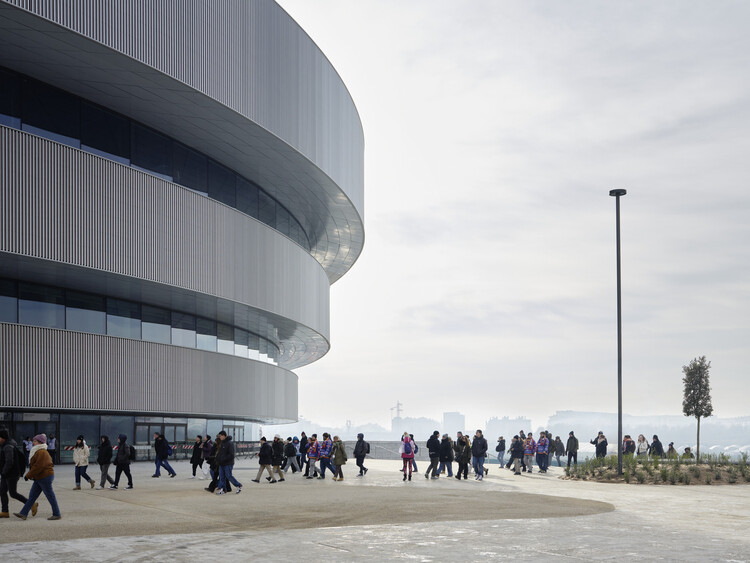
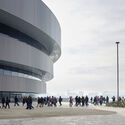
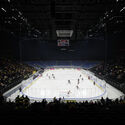
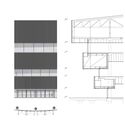
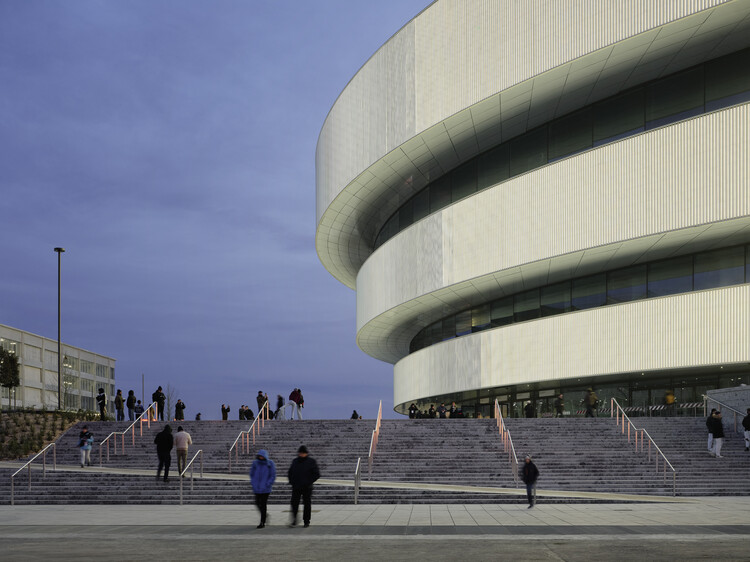
David Chipperfield Architects has released new images of the Ice Hockey Arena in Milan, one of the host sports venues for the 2026 Milano Cortina Winter Olympics. The project, currently in its testing phase, was commissioned to Arup and David Chipperfield Architects in 2021. The first images of the elliptical amphitheatre arena were released in 2022, ahead of the start of construction in 2023, which was scheduled for completion in 2025. The new sports and cultural events venue has a capacity of 16,000 spectators, 12,000 seated and 4,000 standing, and is a centrepiece of a broader urban redevelopment project originally designed by Foster + Partners for Milano Santa Giulia, a district in the south-east of Milan, just a few kilometres from the city centre and connected to the high-speed rail network and motorway.
One month remains until the Opening Ceremony of the Olympic Winter Games Milano Cortina 2026, with competitions set to run from February 4 to 22, 2026. The Opening Ceremony will take place on February 6 at the Milano San Siro Olympic Stadium and will bring together approximately 2,900 athletes from around the world competing across 16 sports, with 116 gold medals to be awarded. The Olympic Winter Games return to Italy twenty years after Torino 2006 and seventy years after Cortina 1956. This edition, however, adopts a markedly different approach, proposing a shift away from the traditional high-cost, high-waste model toward adaptive reuse, renewable energy, and long-term regional development. The most geographically dispersed Winter Games in history plan to rely on 92% existing or temporary venues, build on regions with established tourism industries, avoid major environmental disruption, and implement circular design and recycling strategies, the results of which will become evident in the coming months. The Milano Cortina 2026 Winter Paralympics will follow, taking place from March 6 to 15, 2026.
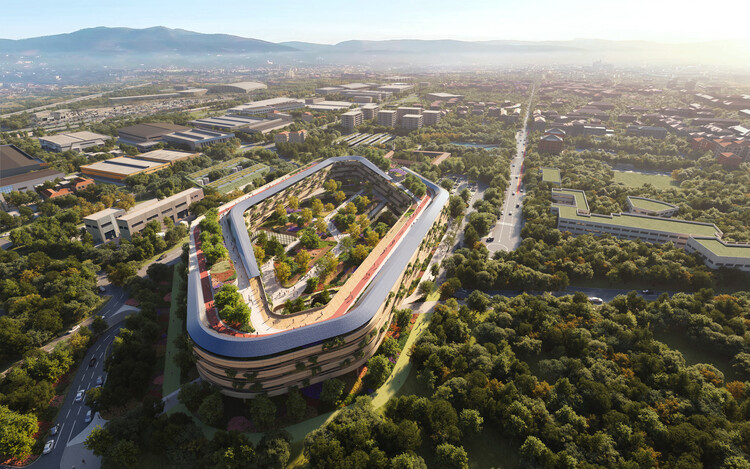
Zaha Hadid Architects, in collaboration with RINA as team leader, Studio Plicchi, WSP, STI Engineering, and BC Building Consulting, has won the international competition to design Malpensa Hospital (Grande Ospedale della Malpensa) in Italy. Commissioned by the Lombardy Regional Health Authority, the project will consolidate the existing Gallarate and Busto Arsiziohospitals into a single medical campus serving the area between Milan and Varese, with a catchment of nearly one million residents.