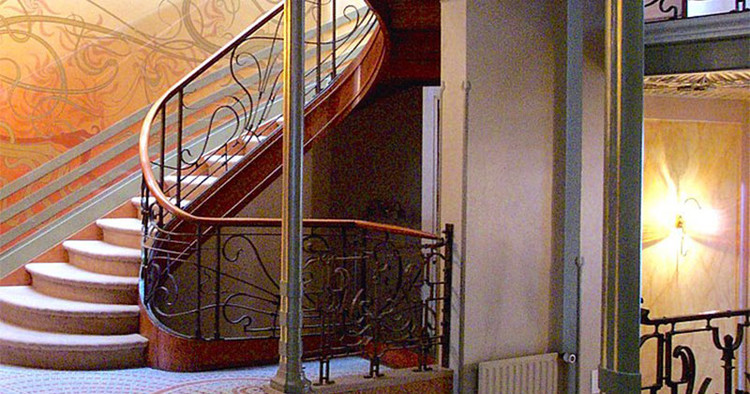
Situated throughout Brussels, Victor Horta's architecture ranges from innocuous to avant-garde. While many of his buildings were completed in the traditional Beaux Arts style, it is Horta’s Art Nouveau works—most of them built as townhouses for the Belgian elite—that are most beloved. Emerging from the decorative arts tradition and, in some ways, anticipating the coming onslaught of modernism, Horta’s Art Nouveau buildings were erected during a fleeting decade: roughly 1893 to 1903.
In the ambit of architecture, much of the twentieth century is marked by a production that reads, in general, as modern. The foundations of this work have been the subject of discussion for at least six decades, bringing together conflicting opinions about the true intention behind the modern gestalt.
Surrounded on all sides by "business blocks of architectural beauty and metropolitan dimensions," the intersecting planes of Pershing Square in Los Angeles provide a modernist retreat for many Angelinos in the downtown area. While to some, the square's large stucco tower and aqueduct-like water feature serve as a cultural landmark, the park has drawn negative press due to its lack of green space and abundance of drug-related activity. John Moody purposefully concentrates on the perception, memory, and identity of the space in his documentary Redemption Square—winner of the Best Urban Design Film 2017 at the New Urbanism Film Festival. Using the voice of strangers, residents and those who used to call it home, Moody guides you from the park’s formation in 1866 to its impending renewal: a “radically flat” redesign courtesy of Agence Ter and Gruen Associates.
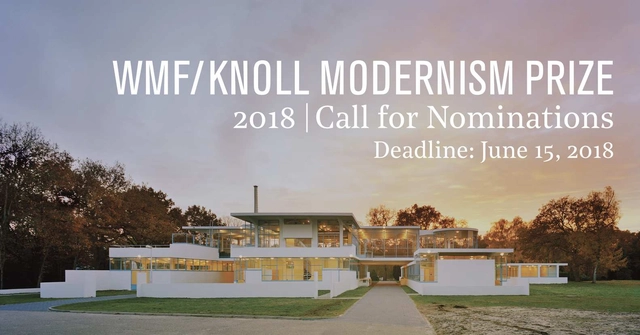
Nominations are now open for the 2018 World Monuments Fund/Knoll Modernism Prize. Celebrating its tenth anniversary, the prize recognizes architects or designers that have demonstrated innovative solutions to preserve or save threatened modern architecture.
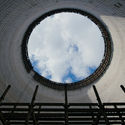
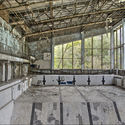
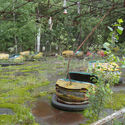
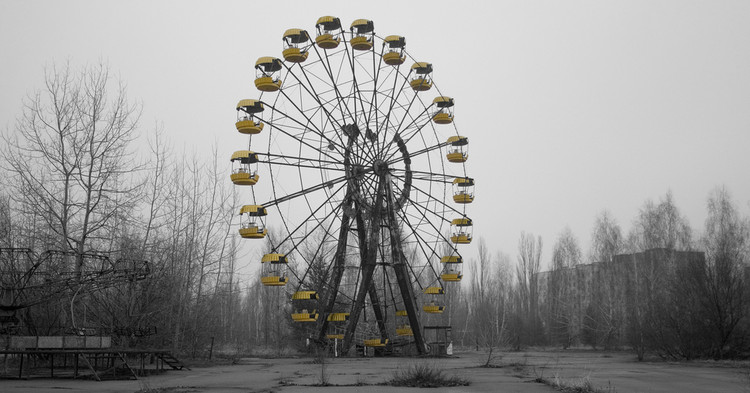
As the anniversary of the disaster and its fallout passes, we have explored the past, present, and future of the architecture of Chernobyl, charting the journey of a landscape which has burned and smoldered, but may yet rise from the ashes.
Cape Town native Alexis Christodoulou is a winemaker by day but also dabbles in the art of 3D visualization. His Instagram (@teaaalexis) is a striking composition of intricate spaces rich with color, light, and materiality. Crafted entirely from scratch, each of Christodoulou's digital worlds appears to be influenced by many of the modernist masters. In a recent interview with Curbed, Christodoulou lists Aldo Rossi, David Chipperfield and Le Corbusier among his inspirations.
Much has been said about the new "Instagram aesthetic." Put that together with the emerging role of Instagram and other social media platforms in the design process, and the result is a new type of digital art form. Christodoulou's page is the creative collection of a year-long personal challenge to regularly create and publish images of his own fantasy worlds, which has resulted in a community of nearly 20K followers.
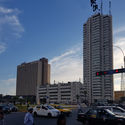
As tends to occur in various Latin American capitals, the historical center of Lima —also known as Cercado de Lima— faces simultaneous processes of deterioration, conservation and transformation. Wandering through its streets, its neo-colonial and republican architecture mixes with some major architectural projects which came about during Peru's modernist movement: "golden age" of public architecture during the mid 20th century.
In 1947, the invasion of Agrupación Espacio, the remodeling Lima's Plaza de Armas and the widening of streets such as Tacna Avenue and Wilson Avenue kickstarted Peru's entrance into the modern movement. In Lima's historic center the works of Enrique Seoane Ros and Walter Weberhofer introduced a new formal and structural language to the streets, with projects that reveal the city's structural elements, functional designs, windows, terraces and commercial buildings, exemplified by an optimistic vision of the future. Despite initial reluctance, all of these projects were backed by a state that enthusiastically focused on planning for over two decades in the design of its cities and the construction of large neighborhood units, such as PREVI and the San Felipe Residential.
Architects Alejandra Acevedo and Michelle Llona explain that despite its undisputed legacy, the modernist movement in Peru is not legally protected. As authors of the important text CAMMP, the two aforementioned architects authored a book that informed the approach of this article. In this new addition to our Spanish-language guides of modern Latin American architecture, we present 16 historical projects from the historic center of Lima, complete with a map and suggestion for a 3-hour walking tour.
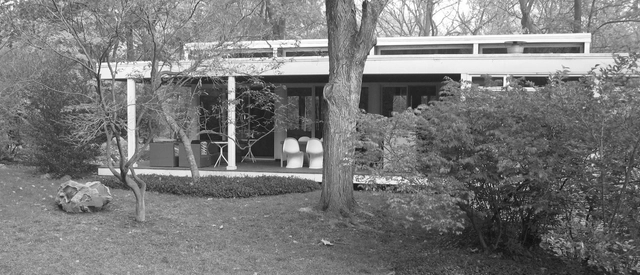
Elizabeth W Garber’s new book, Implosion: A Memoir of an Architect’s Daughter (She Writes Press), tells the story of growing up in a glass house, designed by her father, Woodie Garber, once called “Cincinnati’s most extreme, experimental, and creative Modernist architect.” The memoir, which will be released in June, focuses on a family caught in a collision between modern architecture, radical social change, and madness in the turbulent 1960s in Cincinnati. Recently I talked to Garber about the book, the strictures of Modernism, and why she couldn’t live in a glass house today.
Urban Summer School: Open form poster. Design: Magda Ostapiuk
Urban Summer School: Open Form – Lublin 2018 26 August 2018 - 08 September 2018 Application deadline: May 7, 2018 www.uss.niaiu.pl
Completed works by one of the most discussed architectural tandems in post-war Poland, Oskar (1922-2005) and Zofia (1924-2013) Hansen, will become a testing ground for the duration of the Urban Summer School, that is, for two weeks. This international and interdisciplinary project is yet another instalment of the “Visions and Experiences” summer school, initiated by the Centre for Urban History of East Central Europe in Lviv, and devoted to urban issues. We welcome undergraduate and postgraduate students, researchers and young professionals operating
Depicted in banner: The Glass House (Philip Johnson) and Manitoga (Russel Wright and David Leavitt)
Modernism on the East Coast – Philip Johnson and the Harvard Five
Our 2018 Iconic Houses Conference and House Tours will explore the East Coast of the USA, retracing the root taken by Modernism when it arrived from Europe. In particular, the New Canaan area has an impressive number of high-quality Modernist homes, because the architects who taught at Harvard built houses for themselves and their friends here. New Canaan is naturally mainly associated with the Glass House. And many of the other masterpieces are the work of Philip Johnson and the Harvard Five. In the 1940s, a group of five
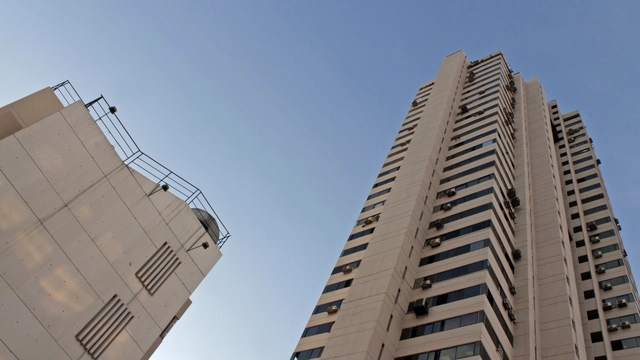
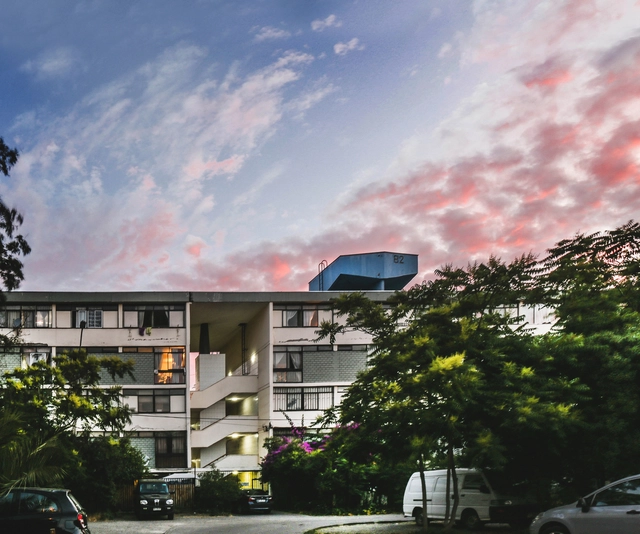
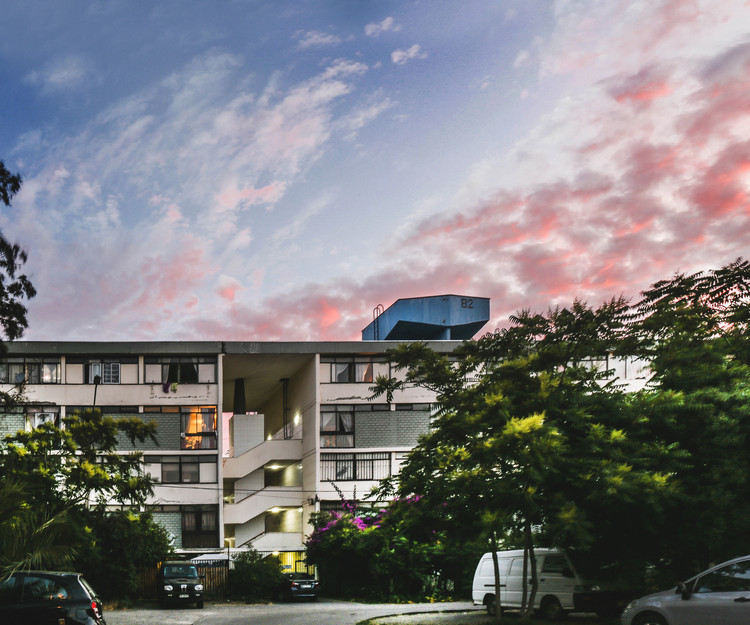
The modern movement was a key player in the cultural construction of Chile in the 20th century. Although the first projects came from the private sector, their urban and landscape principles were adopted by the modernizing project of the welfare state that began to be built after the social conflicts that exploded in the 1920s.
During chile's industrialization process, the State's housing construction incorporated concepts such as liveability, and universal access to housing and sanitation, which were put to the test early on in the reconstruction of cities such as Chillán after the 1939 earthquake. As Chile is a country that is familiar with earthquakes, it was necessary to readjust the concepts of the modern movement to national structural requirements, that is, resizing the reinforced concrete sections, which gave them a heavier visual expression than in Brazil or Argentina.
From the daring vision of Sergio Larraín García-Moreno and Jorge Arteaga in the Oberpaur building - the first of the modern movement - to the urban visions of BVCH in the Villa Portales, or the first exercises in height in the upper middle class sectors, the modern movement has left its mark on our society and in our cities. However, only one of the projects presented here is declared a historical monument.
In this edition of the architectural guides, we present you twenty chronologically ordered projects that reflect the evolution of the modern movement in Santiago, Chile.
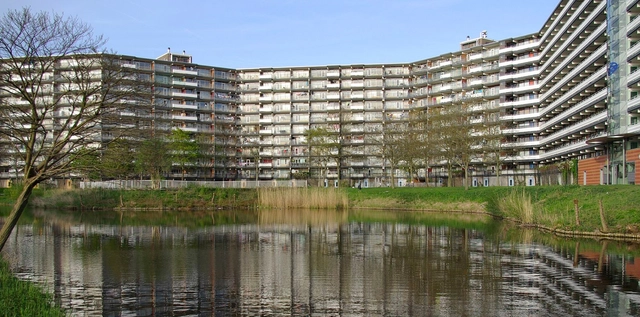
How can we plan a better city? The answer has confounded architects and urban planners since the birth of the industrial city. One attempt at answering came in the form of a spectacular modernist proposal outside of Amsterdam called the Bijlmermeer. And, as a new two-part episode by 99% Invisible reveals, it failed miserably. But, like all histories, the story is not as simple as it first appears.
The argument, made by architectural historian Charles Jencks in the introduction for the recently released book Postmodern Design Complete, that Postmodern styles never truly left the architectural profession is stronger than ever. The movement from the late 70s and 80s which began as a reaction against the utopian canon of modernism has recently been re-entering the architecture scene and defining our present moment of architectural culture.
This brings up an important question: What is the current movement of architecture? And what came directly after postmodernism? If anything, it was an immediate cry of “No more Po-Mo,” followed recently by a wave of “save Po-Mo” perhaps best demonstrated by the rallying to save Philip Johnson’s AT&T Tower from a Snøhetta makeover. Even Norman Foster claimed that although he was never a fan of the postmodern movement, he understood its importance in architectural history. Postmodernism is making its recursive return with Stirling-esque rule-breaking jokes and pictorial appearances.
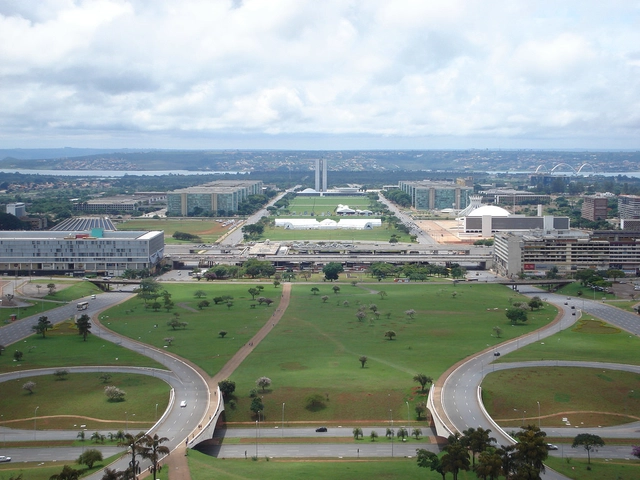
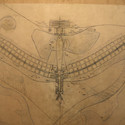
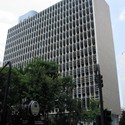
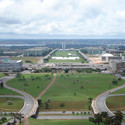
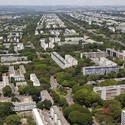
Brazilian planner, preservationist and modernist thinker Lúcio Costa (27 Feburary 1902 – 13 June 1998) is best known for his 1957 plan of Brasília that shaped the Brazilian capital into a monument to utopian modernism. A resolute and often controversial figure in the Brazilian establishment, Costa’s contributions to Brazilian architecture helped to shape the distinctive modernism that was practically Brazil’s official style until the 1980s.
The Getty Conservation Institute has announced a workshop to address the care and conservation of three museums designed by Le Corbusier. The three museums are the only museums designed by the prolific architect. The workshop will be held in India, where two of the three museums are, with municipal corporations from Ahmedabad and Chandigarh serving as hosts for the event. The Foundation Le Corbusier, located in Paris, will also be assisting with the workshop.
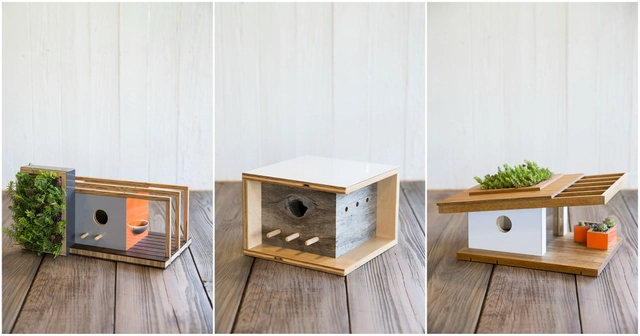
Douglas Barnhard, the owner of the home decor company Sourgrassbuilt, designs and builds birdhouses. Built out of repurposed materials, his designs are inspired by mid-century modernism and pay homage to the likes of Frank Lloyd Wright, Joseph Eichler and the Bauhaus School in Germany yet mix with Barnhard's experience of the rich surf and skate scene in Santa Cruz.
Villa Malaparte, Adalberto Libera's modern Italian classic, is featured as the backdrop in Saint Lauren's spring 2018 campaign starring modern English classic, Kate Moss. The video for the campaign, directed by Nathalie Canguilhem, positions Moss on the dramatic and monumental steps of the villa, an architectural promenade that seems to lead directly to the sky.
From Portuguesearchitectural photographerFernando Guerra comes imagery of MAD's Huangshan Mountain Village in China. This residential design, comprising ten housing blocks that mimic the mountain range they are embedded in, is just one piece of the Taiping Lake tourism master plan; architecture and nature blend together to create modern apartments with differing panoramic views.




.jpg?1529708839 "© <a href=‘https://www.flickr.com/photos/martinehrenhauser/8085701304'>Flickr user Martin Ehrenhauser </a> licensed under <a href='https://creativecommons.org/licenses/by/2.0/'>CC BY 2.0</a>")