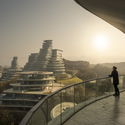
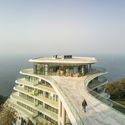
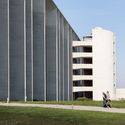
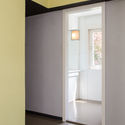
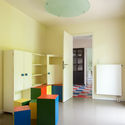
From Portuguesearchitectural photographerFernando Guerra comes imagery of MAD's Huangshan Mountain Village in China. This residential design, comprising ten housing blocks that mimic the mountain range they are embedded in, is just one piece of the Taiping Lake tourism master plan; architecture and nature blend together to create modern apartments with differing panoramic views.
As a trailblazer of Brazilian Modernism, Oscar Niemeyer is celebrated for his bold, sinuous forms, and his use of the “the liberated, sensual curve.” Paul Goldberger described it best when he wrote that “Niemeyer didn’t compromise modernism’s utopian ideals, but when filtered through his sensibility, the stern, unforgiving rigor of so much European modernism became as smooth as Brazilian jazz.”
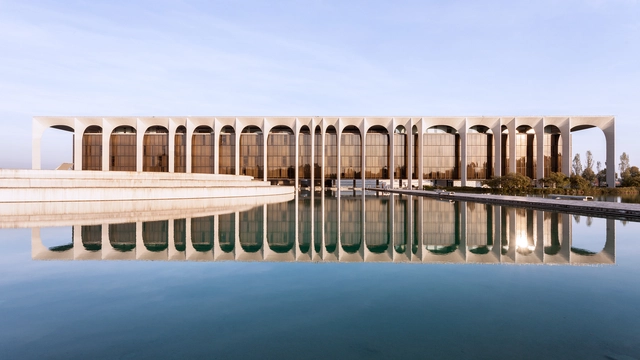
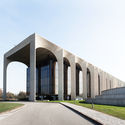
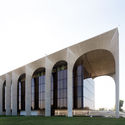
When Georgio Mondadori, chairman of the Italian publishing house Mondadori, commissioned Niemeyer to design the company’s new headquarters in 1968, he wanted the building to look like the Itamaraty Palace (also known as Palace of the Arches) in Brasília. Niemeyer agreed, but given his playful spirit, he deliberately deviated from the earlier design and proceeded to build what he would later identify as his favorite of the projects he completed in Europe. Read on to see a striking set of sixteen photographs of the Mondadori building by Milan-based photographer and visual artist Karina Castro, who was commissioned by Mondadori to capture their headquarters over 40 years after the building's completion.
This essay by Space Popular references an installation currently on display at Sto Werkstatt, in London. You can experience it in virtual reality, here.
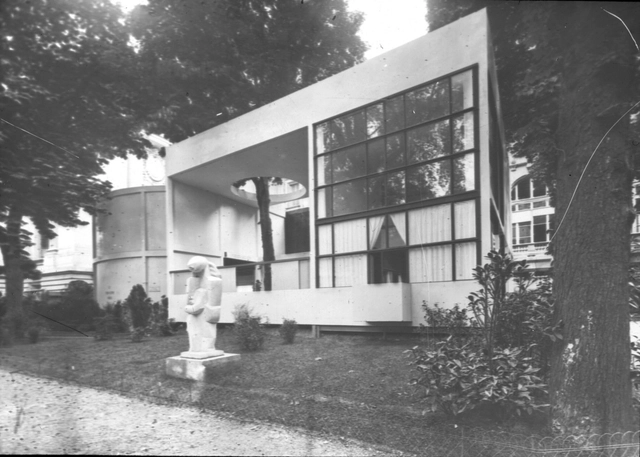
The Glass House has no purpose other than to be beautiful. It is intended purely as a structure for exhibition and should be a beautiful source of ideas for “lasting” architecture but is not intended as such. According to the poet Paul Scheerbart, to whom it is dedicated, the Glass House should inspire the disillusion of current architecture’s far-too-restricted understanding of space and should introduce the effects and possibilities of glass into the world of architecture.
Bruno Taut [above] described his Glashaus for the 1914 Werkbund Exhibition in Cologne, Germany, as a "little temple of beauty"; as "reflections of light whose colors began at the base with a dark blue and rose up through moss green and golden yellow to culminate at the top in a luminous pale yellow.”[1] The Glass Pavilion, designed based on its potential effects on those who perceived it, was supposed to create vivid experiences. The site was the human mind.
"The Glass Chain" (Die Gläserne Kettein its native German) was an exchange of written letters initiated by Bruno Taut in November 1919. The correspondence lasted only a year, and included the likes of Walter Gropius, Hans Scharoun, and Paul Gösch. In the letters, the penfriends—thirteen in all—speculated and fantasized about the possibilities of glass, imagining, in the words of Fredrik Hellberg and Lara Lesmes (Space Popular), "fluid and organic glass follies and colourful crystal cathedrals covering entire mountain chains and even reaching into space."
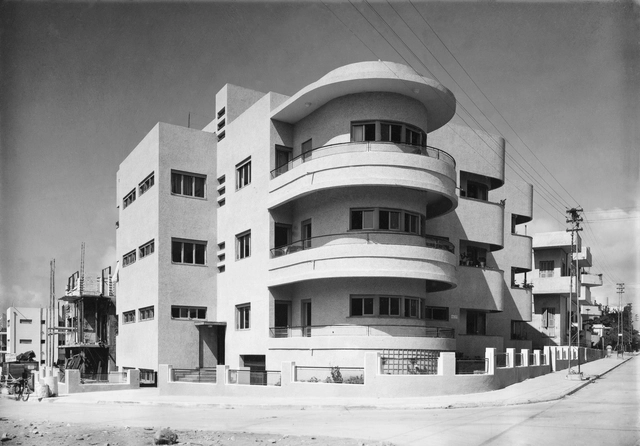
The exhibition Social Construction: Modern Architecture in British Mandate Palestine, tracing the influence of international Modernism on the architectural vernacular that developed in Palestine during 1917–48, is on display at the Yale Architecture Gallery from August 31to November 18, 2017. Originally organized by the Israel Museum, in Jerusalem, the show draws inspiration from the extensive research of architects Ada Karmi-Melamede and Dan Price, whose accompanying book, Architecture in Palestine during the British Mandate, 1917–1948, explores not only the functional aspects of this new architecture but also the social values that shaped the defining language of this new architectural style. The original exhibition was curated and designed by Oren Sagiv, chief of exhibition design at the Israel Museum, with Eyal Rozen.
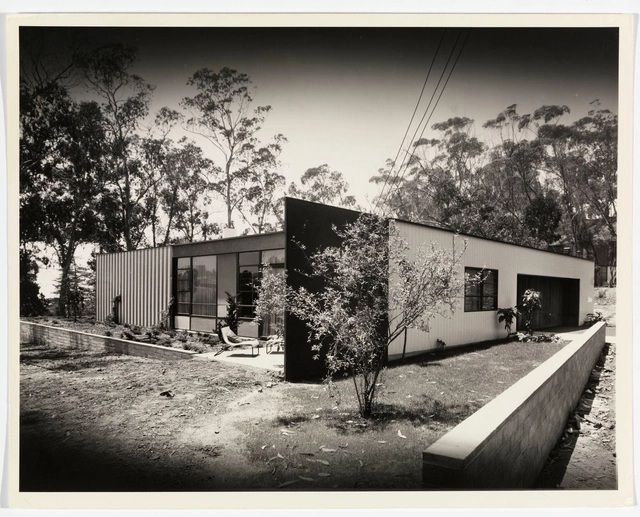
Nestled in the verdant seaside hills of the Pacific Palisades in southern California, the Entenza House is the ninth of the famous Case Study Houses built between 1945 and 1962. With a vast, open-plan living room that connects to the backyard through floor-to-ceiling glass sliding doors, the house brings its natural surroundings into a metal Modernist box, allowing the two to coexist as one harmonious space.
Like its peers in the Case Study Program, the house was designed not only to serve as a comfortable and functional residence, but to showcase how modular steel construction could be used to create low-cost housing for a society still recovering from the the Second World War. The man responsible for initiating the program was John Entenza, Editor of the magazine Arts and Architecture. The result was a series of minimalist homes that employed steel frames and open plans to reflect the more casual and independent way of life that had arisen in the automotive age.[1]
The Getty Foundation has selected 12 significant 20th century buildings to receive 2017 grants as part of its Keeping It Modern initiative, which aims to advance the understanding and preservation of modern architecture through a focus on conservation planning and research. Since its founding in 2014, the program has supported the preservation of 45 projects from around the globe.
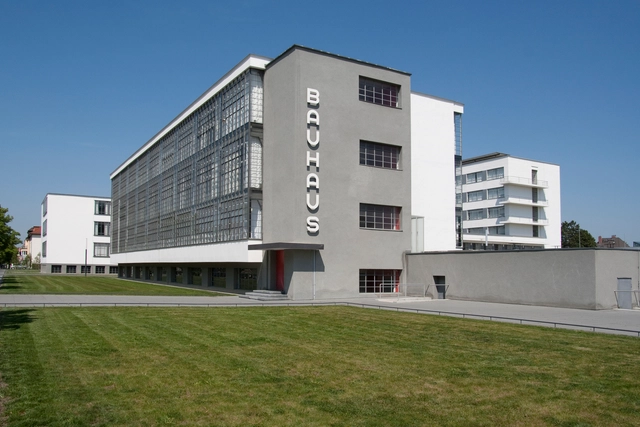
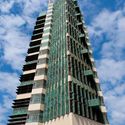
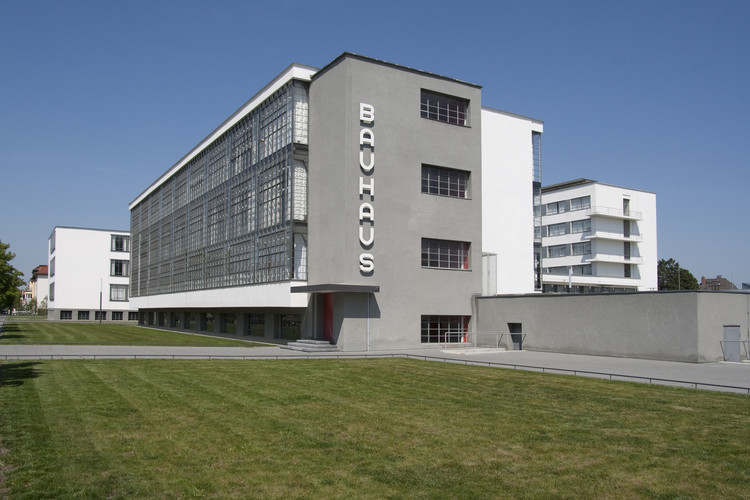
This year $1.66 million in grants were awarded to recognizable projects including the Walter Gropius-designed Bauhaus Building in Dessau; the Melnikov House in Moscow (the first Russian project to receive a grant); and Frank Lloyd Wright’s only skyscraper, Price Tower.
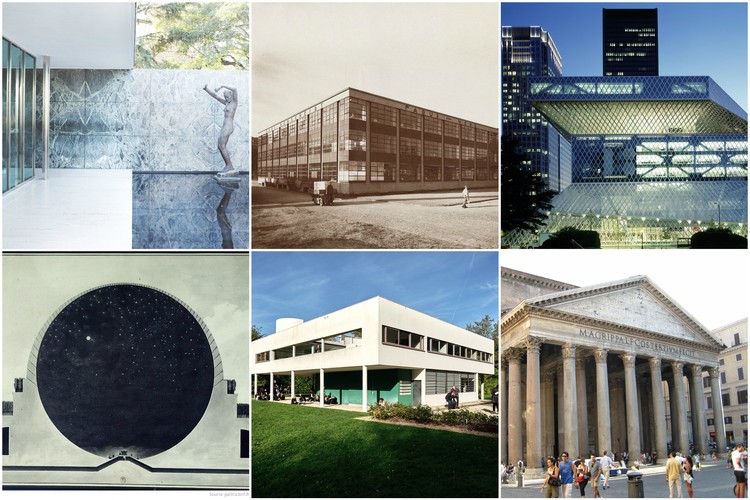
You’re a chipper young first-year student, still soft and tender in the early stages of your induction into the cult of architecture. Apart from fiddling with drafting triangles and furiously scribbling down the newfound jargon that is going to forever change how you communicate, you often find yourself planted in a seat, eyes transfixed to a projector screen as your professor-slash-cult-leader flashes images of the architecture world's masterpieces, patron saints, and divine structures.
Soon, you develop a Pavlovian response: you instinctively recognize these buildings, can name them at once and recite a number of soundbites about their design that have lodged themselves in your brain. Your professor looks on in approval. Since we here at ArchDaily have also partaken in this rite of passage, here are 15 buildings that we all recognize from the rituals of architecture school.
On Thursday 29 of June, Jan Gehl the Danish architect and urban planner, spoke at the Conference “Thinking urban: cities for people” organised by UN-Habitat and the Official Architects College of Madrid (COAM as it is abbreviated in Spanish) about the urban transformations that have occurred in Copenhagen as a result of the errors of the modernist movement and the challenges facing the cities in the 21st century.
In a prior discussion with José María Ezquiaga (dean of COAM), and José Manuel Calvo (councilor of the Sustainable Development Area at the Madrid city council) at the Conference, Gehl highlighted the urban paradigm at the time of his student years, which is referred to as the Brasilia syndrome.
In this visual essay, Greek filmmaker Yiannis Biliris documents the all-pervasive pall of glass that covers the modern city. The three-and-a-half-minute-long film, produced by Visual Suspect and shot entirely in Hong Kong, captures the vivid reflections seen in the facades of the city’s buildings, as Biliris selectively pans and zooms his camera to instill a strong sense of urgency in the viewer’s mind.
The essay, beautifully haunting in its imagery, might be seen as a reflective commentary on the state of our built environment today. Inspired by Albert Einstein’s general theory of relativity, which states that mass causes a distortion in space and time, it seems to subtly ask if our understanding of reality is warped itself. Describing the video as "a visual essay about perception and knowledge as [a] reflection of our reality," Biliris comments that "mass curves space and time, while the observer has his own perspective."
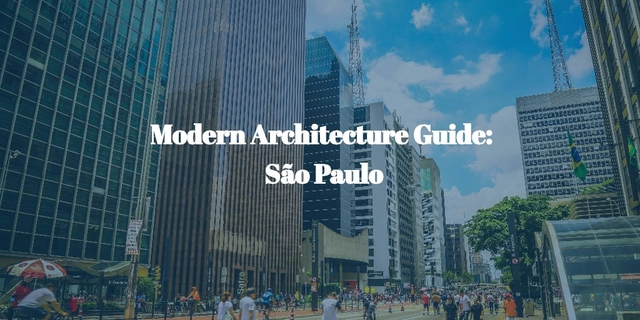
There are many ways to get to know a city. There are those who, when commenting on a particular city they have visited, remember the gastronomy and restaurants they frequented. Other travelers will remember the music and the parties; others will remember specific markets or events. You, a keen ArchDaily reader, probably took careful note of the architecture above anything else.
Each of these means of knowing a city keeps specificities and riches, but none of them alone can recreate a faithful mental landscape of the real city. There is no problem in this, after all, the same city can be very different for two people who live in it or who are visiting it. Among these ways of getting to know a city, we focus on architecture, more specifically, the modern architecture of São Paulo, in an attempt to offer our readers a look at one of the largest city in South America from an architectural approach
In 1919, at a time in which Germany was still in upheaval over its defeat in the First World War (and compounded by the loss of its monarchy), the Academy of Fine Arts and School of Applied Arts in Weimar, Germany, were combined to form the first Bauhaus. Its stated goal was to erase the separation that had developed between artists and craftsmen, combining the talents of both occupations in order to achieve a unified architectonic feeling which they believed had been lost in the divide. Students of the Bauhaus were to abandon the framework of design standards that had been developed by traditional European schools and experiment with natural materials, abstract forms, and their own intuitions. Although the school’s output was initially Expressionist in nature, by 1922 it had evolved into something more in line with the rising International Style.[1]
Videos
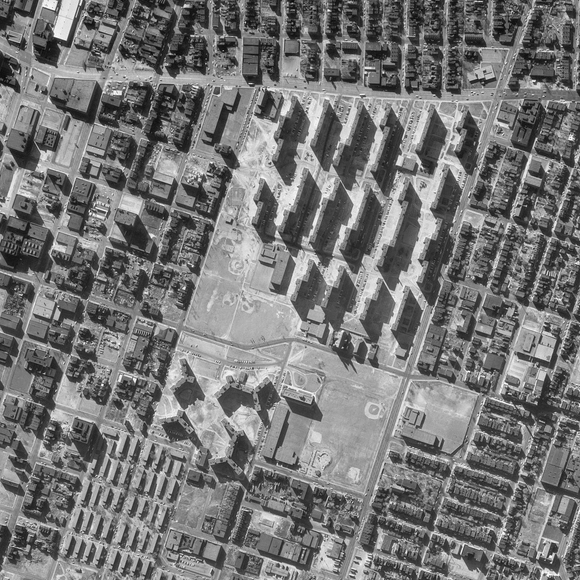
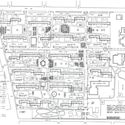
An aerial photo by the US Geological Survey compares the narrow, monolithic blocks of Pruitt-Igoe with the neighboring pre-Modernist buildings of St. Louis. ImageCourtesy of Wikimedia user Junkyardsparkle (Public Domain)
Few buildings in history can claim as infamous a legacy as that of the Pruitt-Igoe Housing Project of St. Louis, Missouri. Built during the height of Modernism this nominally innovative collection of residential towers was meant to stand as a triumph of rational architectural design over the ills of poverty and urban blight; instead, two decades of turmoil preceded the final, unceremonious destruction of the entire complex in 1973. The fall of Pruitt-Igoe ultimately came to signify not only the failure of one public housing project, but arguably the death knell of the entire Modernist era of design.
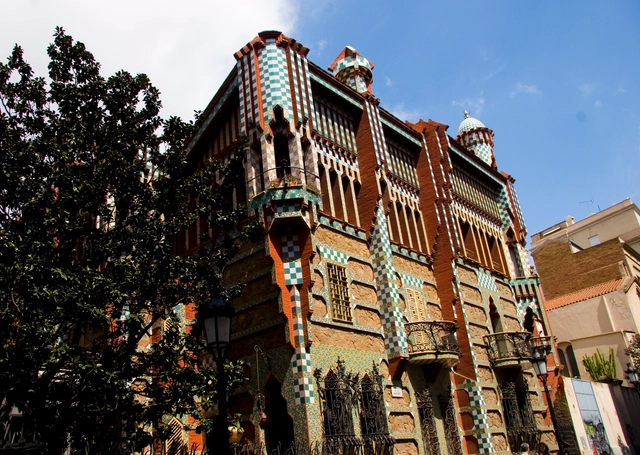
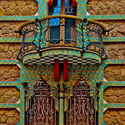
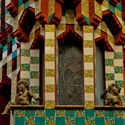
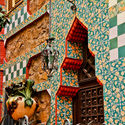
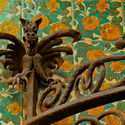
It has been confirmed that the museum opening date for the Casa Vicens in Barcelona has been rescheduled for the second half of 2017. Originally scheduled for the second half of 2016, the reopening of Gaudi's first house was not able to be completed due to the complicated and labor intensive renovations. This will be the first time the house, declared World Heritage site, will be open to the public without it being a residential or private space.
The Casa Vicens, located on 24 Carolines Street, was the first house ever designed by Antoni Gaudí. In 1883 Manel Vicens, promoter of the project, commissioned the architect to build what would be his summer home. At that time Gràcia, now a cosmopolitan neighborhood, was a separate town. Therefore, the project did not contemplate the possibility of other buildings being built around it, and so to this day, it remains a completely freestanding building in a neighborhood characterized by its compact character, narrow streets, and high density of population.
If I had to guess, I would say that it has been forty years since Columbus, Indiana, was the hot topic of cocktail conversations at design-related get-togethers in New York City. In those days, it was the supercharged patronage of industrialist J. Irwin Miller and his relationships with designers like Eero Saarinen and Alexander Girard that spurred a wave of innovative and provocative architecture in the small Midwestern town. Columbus, with a population of 45,000, has a Robert Venturi fire station, a John Johansen school, a park by Michael Van Valkenburgh, and several buildings by Eliel and Eero Saarinen, including the younger’s iconic Miller House.
It can sometimes feel as if the world is divided into two camps: those who do not listen to podcasts (probably because they don’t know what a podcast is) and those who listen to podcasts, love podcasts, and keep badgering their friends for recommendations so they can start listening to even more.
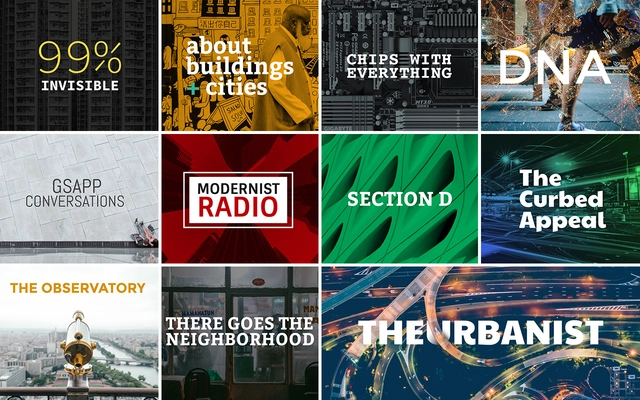
Unlike other media, it’s notoriously difficult to discover and share podcasts – even more so if you’re looking for a podcast on a niche subject like architecture, design or urbanism. To help you in your hour of need, Metropolis’Vanessa Quirk (author of Guide to Podcasting) and ArchDaily’sJames Taylor-Foster(whose silvery tones you may have heard on various architecture and design audio stories) have come together to compile this list of eleven podcasts you should subscribe to.