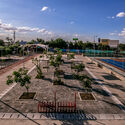
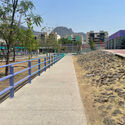
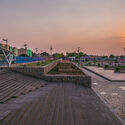
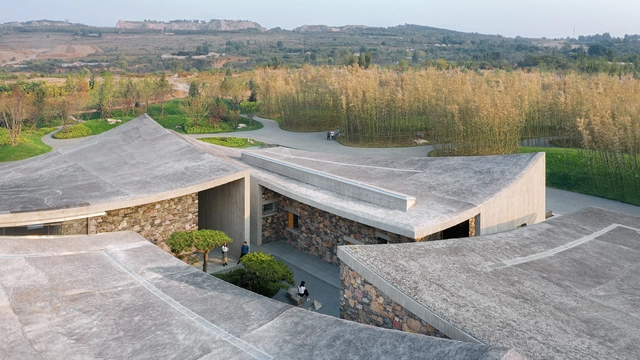
Oct Art Center, Photo by Xia Zhi. Image Courtesy of Zhu Pei Studio
“This is going to be amazing! I feel so excited,” says Zhu Pei about his now under-construction Majiayao Ruins Museum and Observatory in Lintao, Gansu province. The Beijing-based architect designed his building like a deeply embedded cavernous space evoking a giant fragment of ancient pottery, resembling an archaeological site from the Neolithic Age discovered here a century ago. The building is so unusual that it cannot be described in common architectural terms. For example, a vast cast-in-place concrete hyperbolic shell lies prone on the ground, blocking the cold wind from the northwest in winter. The architect used the sand and gravel from the local Tao River to produce a special rough concrete with horizontal scratches on the surface, symbolizing the traces of thousands of years of erosion. All of Zhu’s buildings are quite remarkable. Yet, despite their novelties, they are rooted in culture, nature, and climate. They are designed based on his architectural philosophy, Architecture of Nature, articulated in five fundamental points: incomplete integrity, sponge architecture, cave and nest, sitting posture, and structure and form.
On October 23, 2023, during the closing of the Line Exhibition in Riyadh, Saudi Arabia, ArchDaily’s Editor in Chief, Christele Harrouk spoke to Tarek Qaddumi, Executive Director of The Line Design at NEOM, asking questions that probe into both the conceptual aspects and the technicalities of The Line project. In this video interview, the conversation addresses notions such as accessibility, transportation, and sustainability, while also exploring the concept of Cognitive Cities and the intended phasing of the project.
https://www.archdaily.com/1019840/building-the-line-as-a-three-dimensional-city-in-conversation-with-tarek-qaddumi-executive-director-of-the-line-design-of-neomArchDaily Team
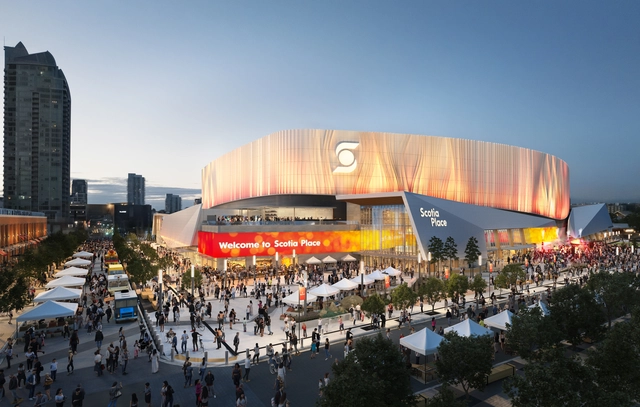
DIALOG and HOK have just revealed the redesign of Scotia Place, Calgary’s new event center in Canada. Set to become a hub of community and culture, Scotia Place is inspired by Indigenous ancestral lands and cultural significance, integrated these perspectives with the natural beauty of Calgary. Commissioned by the City of Calgary and the Calgary Sports and Entertainment Corporations, Scotia Place seeks to bring people together and activate the public realm.
For decades, the construction industry followed a familiar rhythm: design came first, materials followed. The pressing need for sustainable buildings has shattered this routine. Material selection is no longer an afterthought, but a critical decision made at the outset, with the potential to dramatically reduce a project's environmental footprint. This shift is even more crucial given the construction industry's appetite for raw materials – a staggering 3 billion tons extracted annually. To navigate this new landscape, digital material libraries and data-driven evaluation are emerging as powerful tools, creating a culture where materiality takes center stage to shape a more sustainable built environment.
New York City’s skyline tells the tale of the region’s dated relationship with architectural innovation and style. Among the many materials that cloak the city’s built environment, terracotta has a distinct significance. The clay-based material was a prominent feature in buildings from the late 1800s to the 1920s and, after a brief pause, is experiencing a resurgence with contemporary design. The revival pays homage to The Big Apple’s architectural heritage while leading a movement for sustainable materials in the city.
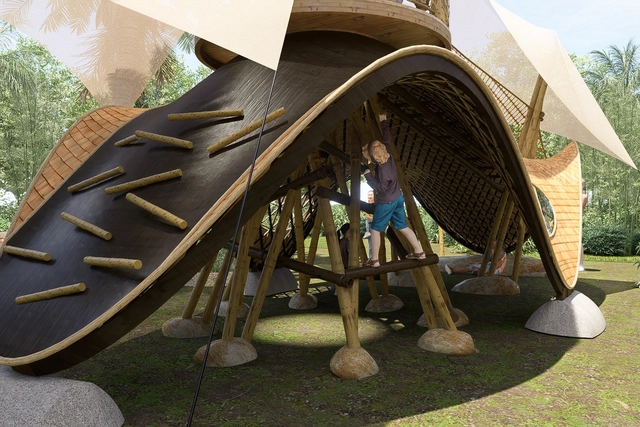
Early this year, Bamboo U and IBUKU launched The Bamboo Playground Design Contest, inviting architects, designers, and creative minds to submit innovative proposals for a sustainable and visually captivating playground for children exclusively constructed using bamboo. The aim of this contest was to explore the versatility of bamboo as a construction material, showcasing its potential for sustainable, aesthetically pleasing, and functional designs.
Bamboo U is an education enterprise that has grown out of the center of the world's bamboo-building movement in Bali, Indonesia. Together with renowned design firm IBUKU, they have been pioneering bamboo architecture for 10+ years, sharing everything they know about bamboo design and sustainable architecture.
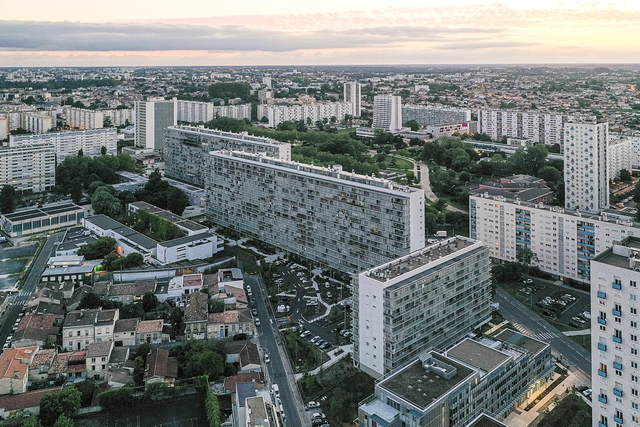
World War II was pivotal in human history, leaving a profound political and social impact. Its conclusion marked a significant turning point, leading to post-war suburbanization and the baby boom. These phenomena resulted in rapid urban growth and a surge in housing construction, which peaked in the 1960s and continued to flourish throughout the following decades, gradually slowing down until the present day. Currently, we are facing a very different scenario in which a backlog of affordable housing, combined with a challenging economic outlook and a climate agenda, have led to the need for a transformation of the built environment into a cleaner and more resource-efficient one, in line with the Paris Agreement.
Thus, with the ever-increasing demand for housing, combined with policy initiatives such as the European Green Deal, the post-war model of hyper-production is becoming unsustainable. Consequently, refurbishing derelict or redundant buildings has emerged as a viable alternative. Unlike the scheme of demolition and new construction, this approach offers opportunities for energetic retrofitting, which helps mitigate environmental obsolescence, extend the lifespan of buildings, and revitalize the existing and dilapidated stock—including postwar housing—while improving people's quality of life.
https://www.archdaily.com/1018781/refurbishment-vs-demolition-enhancing-housing-for-sustainable-energy-efficiencyEnrique Tovar
Refurbishment is an increasingly common and fundamental practice in contemporary architecture. More than a trend, it represents a crucial strategy for reducing resource consumption and minimizing waste generation, providing clear advantages over brand-new constructions. In the Latin American context, this philosophy stands out for its unique characteristics. It intricately weaves circularity and climate action with local materials, addressing economic challenges while harmonizing Indigenous, colonial, and contemporary influences.
Housing plays a crucial role in this context, where traditional materials and construction techniques define each project's distinctiveness and integrate it into the community's social fabric. Throughout Latin America, regional identities are deeply embedded in refurbishment efforts, ranging from restoring facades and repurposing wood to reimagining the use of demolition waste. The adaptation of spaces in these projects is influenced by their unique identities and geographic conditions, rooted in social and cultural expressions.
https://www.archdaily.com/1019030/housing-refurbishment-in-latin-america-10-projects-that-excel-in-the-use-of-materialsEnrique Tovar
Evolving urban conditions call for an evolving builtscape, and retrofits have been a key mechanism to allow buildings to adapt and respond to new needs. Amidst global environmental concerns, climate retrofits have become a popular strategy to upgrade buildings based on improved operational efficiency. Global decarbonization plans have even called for city-wide retrofits, such as in the case of London, to meet civic goals. While such upgrades significantly reduce energy consumption, they often come with a hidden cost - embodied carbon in retrofit materials and the potential for future waste.
These days, it is common to hear multiple voices addressing the diverse issues of contemporary architecture. The topics are numerous, ranging from sustainability and inclusion to social justice and the crisis in land use. At first glance, there is no common ground where all these concepts can coexist transversally. However, if we look back, we can see that beyond the formal architectural concepts, the true purpose of architecture (probably) lies in the people and the lives that develop within it.
Thus, many would argue that life is likely more important than architecture, which could open up a broad debate. What is certain is that currently, narratives and voices are emerging and consolidating, aimed at renewing architectural tools and languages. This transformation seeks to turn the built environment into a space that promotes a more equitable and optimistic future for all. One of these voices is that of Tatiana Bilbao, recognized for her process-centered approach where life and human interactions play a crucial role in defining habitats.
https://www.archdaily.com/1018888/life-changes-in-seconds-but-architecture-never-changes-in-conversation-with-tatiana-bilbaoEnrique Tovar
Deutsches Architekturmuseum (DAM) has announced the International High-Rise Award 2024/25. Selected from more than 1,000 new high-rises worldwide dating from the past two years, the nominated projects are located in 13 counties from 5 continents. In autumn, the five finalists will be announced, followed by the winner announcement scheduled for November 12, 2024. The main objective of the award is to highlight good practices in the ongoing trend of mixed-use high-rises.
With the increase in the construction of high-rises, special features such as the introduction of greenery in the design, unusual shapes, or the construction of clusters of towers, have become the new normal. DAM’s research this year also shows a growing eco-awareness, as the focus in high-rise construction is increasingly on the use of existing buildings. While the majority of tall buildings continue to be erected in China, followed by the USA, Australia, and Singapore have emerged as new hubs of high-rise architecture.
Increasing urbanization, excessive waste production, excessive consumption of material goods, and exploitation of natural resources. There are many factors that contribute to the environmental impact of humans on Planet Earth. Scarcity of raw materials and the use of non-renewable resources is already the reality of some locations, and nature can no longer reclaim renewables at the same pace as it is exploited. The impact of human activities is so remarkable that scientists have pointed out that we are living in the new geological age of the Anthropocene (the Greek word for “the recent age of man”). The construction industry in particular is a major resource consumer and waste generator. In the European Union, the construction and use of buildings represents about 50% of all resource extraction and energy consumption, and about one third of all water consumption. [1] In 2014, 52% of all waste was attributed to the construction sector. [2].
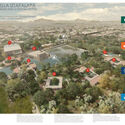
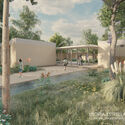
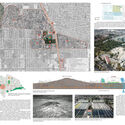
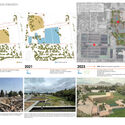
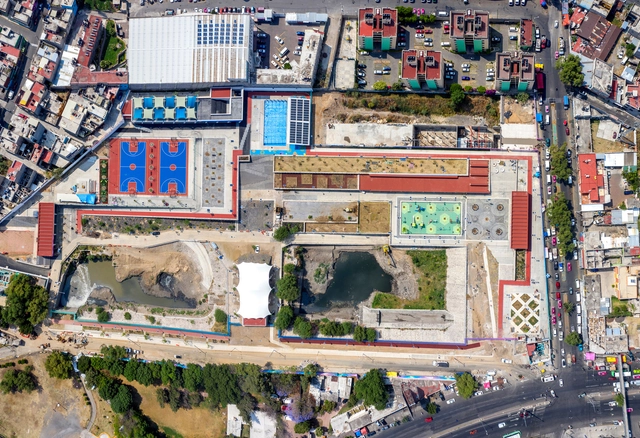
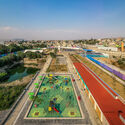
Located in Mexico City, the municipality of Iztapalapa has some of the most densely populated areas within the metropole. Serving a population of 1,800,000 people, many of them with lower incomes, the municipality struggles to provide sufficient public spaces and amenities. In an effort to correct this, the administration set out to take underutilized and abandoned plots of land and transform them for public use. Utopia Estrella is one of these initiatives. Located near Mexico City’s largest water treatment plant, the project combines a socially engaging architectural program with a pedagogical approach to the role of water infrastructures in the larger ecosystem. Designed by Cano Vera Arquitectura, the project has been recognized as the Gold Prize Winner of the Holcim Awards 2023 for Latin America. In a video interview for ArchDaily, Juan Carlos Cano of Cano Vera Arquitectura discusses the impact of this project, its goals, and the unique conditions that led to its development.
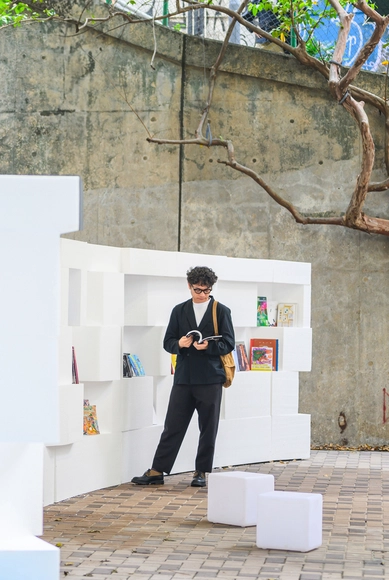
Ladder Street Cultural Space. Image Courtesy of Francesco Rossini
As we near its 100th anniversary, expanded polystyrene (EPS) has become widely used in various industries and applications, especially in construction. Since 1970, EPS has been used in building construction due to its thermal insulation properties, lightweight closed-cell structure, durable strength, and long-term integrity. However, while these qualities make it highly useful and easy to recycle, they have also sparked debate due to recurring discussions about its degradation processes and environmental impact from various perspectives.
While the debate rages on, many improvements and alternative approaches have emerged around this material, highlighting that achieving sustainable construction involves using the right material for the right job from the outset. Thus, over time, innovations have brought new options for the recycling and use of EPS beyond traditional building applications such as infill blocks or partition panels. This demonstrates that rather than stigmatizing it as a problematic or “simple” material, it is essential to consider its qualities through design, technology, and developing methods for responsible and sustainable management.
https://www.archdaily.com/1018325/how-are-innovations-changing-expanded-polystyrene-epsEnrique Tovar
At the initiative of the Surf Ghana Collective, architects Glenn DeRoché and Jurgen Strohmayer, the co-founders of DeRoché Strohmayer, set out to transform a small waterfront plot in Busua, a surfing hotspot on Ghana’s western coast. The result is a dynamic community hub, complete with amenities for local surfers, but also providing spaces for the entire community to gather in and off-season. The project has been recognized as the winner of the Gold Prize of Holcim Awards 2023 for the Middle East and Africa commended for the profound local impact and the resourceful approach to construction techniques.In a video interview for ArchDaily, architects Glenn DeRoché and Jurgen Strohmayer discuss the development of this initiative and the innovations that shaped it.
Within the framework of implementing green infrastructure projects for water management in the Basin of Mexico, utilizing existing public spaces, La Quebradora Water Park emerges as the first proposal for hydro-urban acupuncture. The project, developed by the team from the Institute of Social Research at UNAM, coordinated by Manuel Perló Cohen and Loreta Castro Reguera Mancera, aims to transform the site's infiltration into a landmark of good water management, public space creation, and strengthening of the social fabric through four levels: infrastructure, park, city, and viewpoint. Addressing part of the water and social issues facing the area, the proposal transforms urban infrastructure into a public and recreational space for the community in a densely populated area with scarce public spaces.
Alarming cases of climate disasters are a constant presence in world news. Last month's floods in southern Brazil gained special attention from heat waves and forest fires to droughts and cyclones. This tragedy, which left over half a million people homeless, was understood to be the result of a combination of factors, including human actions that have devastated ecosystems to create environmentally irresponsible cities.
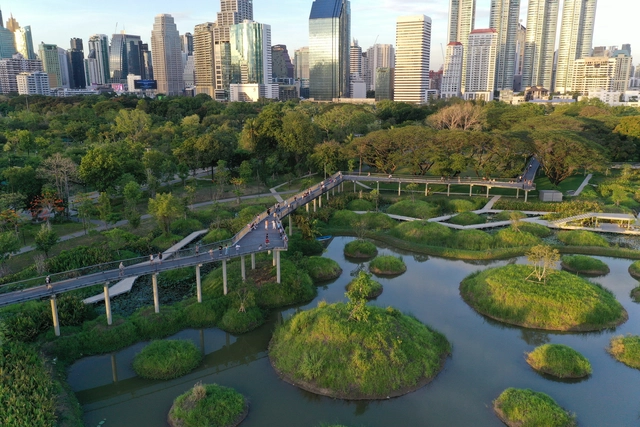
In this context, the work of Beijing-based architect Kongjian Yu, founder of the landscape architecture firm Turenscape, has gained international visibility and recognition, which included receiving the 2023 Cornelia Hahn Oberlander International Landscape Architecture Prize (“Oberlander Prize”). His "sponge cities" concept, designed to address and prevent urban flooding in the face of accelerated climate change, was adopted as national policy in China in 2013. This approach prioritizes large-scale nature-based infrastructures such as wetlands, greenways, and parks.





















_Jakob_Schoof.jpg?1575315045&format=webp&width=640&height=580)