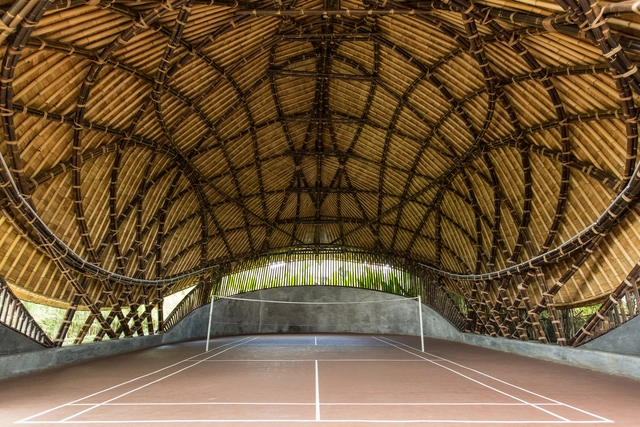
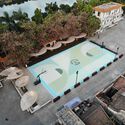
As awareness of sustainable development grows, bamboo is emerging as an attractive alternative to traditional construction materials. This innovative material is making significant inroads in the construction of sports facilities, showcasing how sustainable practices can shape a greener future.
Bamboo stands out as an eco-friendly substitute for wood, concrete, and steel. Its application in sports facility construction markedly reduces environmental impact and enhances sustainability. The use of locally sourced bamboo in certain regions further decreases carbon emissions associated with transportation. The advantages of bamboo extend beyond its environmental benefits. This material is not only strong and durable but also lightweight and flexible, making it ideal for modern construction demands.
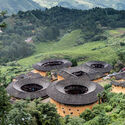
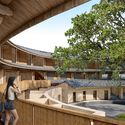
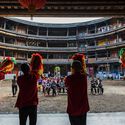
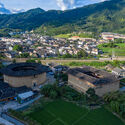
In the mountain valleys of China’s Fujian Province, thousands of large, rammed earth fortresses lay abandoned. Once used for both defense and collective housing, the tulou typology is an integral part of the region’s cultural heritage, with 46 of them being recognized by UNESCO as World Heritage Sites. Despite this, the rural communities surrounding them have struggled to find new roles and purposes for these buildings. Going beyond the need for conservation, architect Xu Tiantian of DnA_Design and Architecture set out to develop and adapt this heritage to reintroduce it into community life. The Fujian Tulou | Adaptive Reuse project recently won the Gold Prize of Holcim Awards 2023 for Asia-Pacific, recognized for creating “an exemplary model for building conservation initiatives.”In a video interview for ArchDaily, Xu Tiantian discusses the principles that underpin this initiative and the potential outcomes of adaptive reuse in rural communities.
The concept of permaculture refers to a design system capable of creating sustainable human environments based on an ethic and a series of ecological, environmental, and resilience design principles. In contact with plants, animals, buildings, and infrastructures such as water, energy, and/or communications, permaculture analyzes the possible relationships between these elements based on their position in the landscape. Its 12 design principles can be applied in multiple architecture projects of varying scales and programs, contributing, for example, to the dissemination of new ways to reduce energy consumption in homes, save water through rainwater harvesting or the recycling of greywater for sanitary systems, gardens, and more, and participate in food production, among other matters.
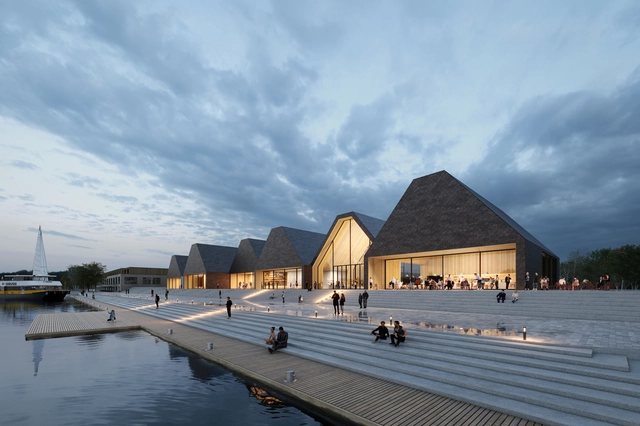
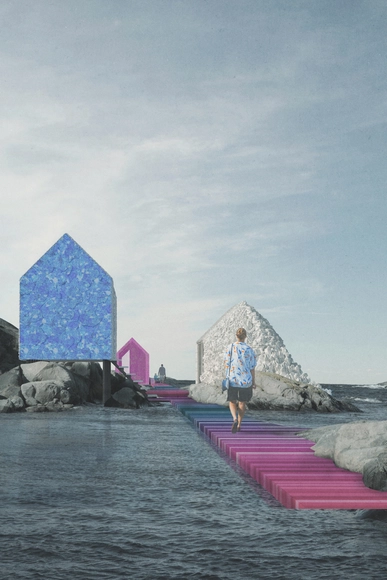
Squama Museum building from the Aura river. Image Courtesy of Sigge Architects
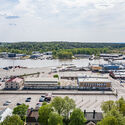
Finnish office Sigge Architects has been announced as the winner of the international competition for the design of the Museum of History and the Future in Finland's oldest city, Turku. The proposal, selected out of over 400 entries, creates a permeable structure along the waterfront, acting as a catalyst for the regeneration of the area. The museum aims to showcase the most innovative scientific research through a wide variety of exhibitions, audio-visual installations, and educational spaces. Construction is expected to start in 2027 and be completed by 2029, with a public opening scheduled for 2030.
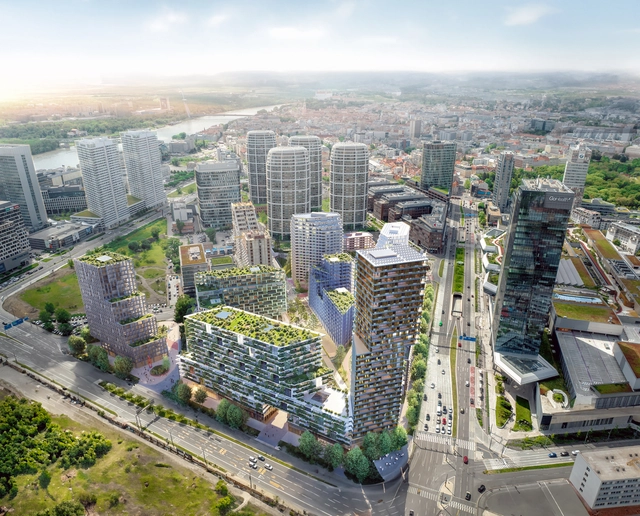
Stefano Boeri Architetti has been declared the winner of the international competition for the redevelopment of a former industrial site in downtown Bratislava. The project includes the transformation of one of the largest abandoned areas in the Slovak capital, with the aim of creating an active new central hub for the city, complete with parks and public spaces, residential units, and a variety of amenities. Stefano Boeri Architetti’s master plan proposal, titled “Urban Oasis,” has been appreciated by the jury for integrating familiar typologies, creating a “European matrix” of medium-density developments organized around accessible public spaces.
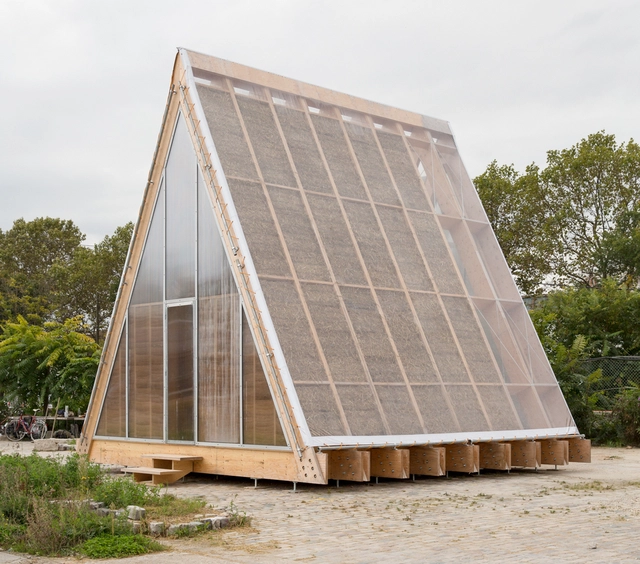
A Trombe wall is a passive solar building feature that enhances thermal efficiency. Positioned on the sun-facing side of a structure, it consists of a wall made from materials like brick, stone, or concrete, and a glass panel or polycarbonate sheet placed a few centimeters in front of it. Solar radiation penetrates the glass during daylight hours and heats the masonry wall. This wall then slowly releases the stored heat into the building during the cooler nighttime hours, maintaining a more consistent indoor temperature without the need for active heating systems.
Today, interconnected and fast-paced lifestyles, future mobility trends and constant material innovation puts pressure on a slow-moving building industry. How can architecture keep up with this trend? Following dynamic and nomadic lifestyles, architects must explore new structural systems that should be able to reach multiple locations, as well as be adaptable and reusable in the future. By applying revolutionary technology for circular, scalable components and carbon-negative buildings, UrbanBeta –a spatial innovation studio designing strategies, building concepts, predictive tools and platforms for creating transformative spaces– has developed BetaPort, a robotic construction system powered by artificial intelligence and automation.
Based on the principles of a circular economy, Urban Beta and BetaPort create a sustainable construction plan, ready to grow and change over time. The studio conceives sustainable on-demand architecture systems for flexible buildings based on a kit of parts.
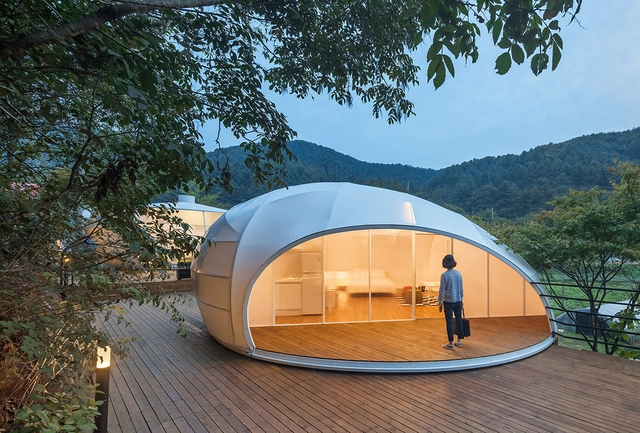
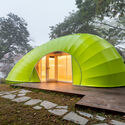
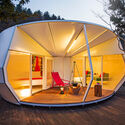
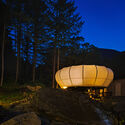
Camping, as defined in dictionaries, involves temporarily staying outdoors, setting up makeshift accommodations, and settling in natural surroundings. In architecture, tents symbolize these aspects, representing a typology that has endured across centuries and cultures, often linked with notions of impermanence and vulnerability.
In light of this common understanding, the term 'glamping' emerged in the early 2000s, blending 'camping' with 'glamour,' suggesting a fusion of camping with luxurious amenities. However, despite its recent popularization, the concept is far from original. Camping has not always been seen as the antithesis of luxury.
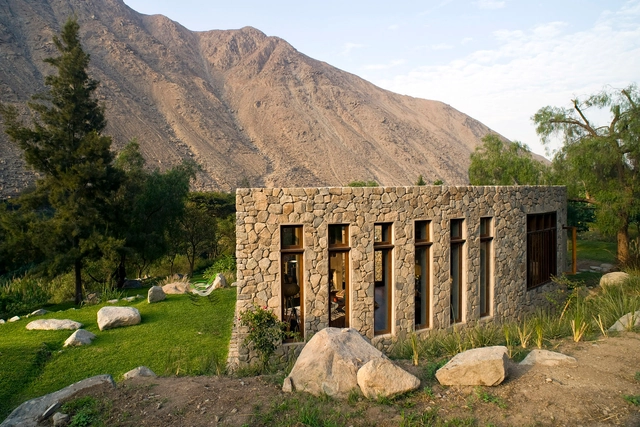
Organizing, shaping, stacking. Transforming raw materials from the soil into architecture. This is a challenge that many Latin American architects embrace, demonstrating that scarcity can be daunting but also a rich opportunity to unleash creativity.
The use of materials extracted from the local soil serves a dual purpose. In regions with limited industrialization, using locally sourced materials makes economic sense because industrial materials such as concrete and steel are expensive and often require long-distance transportation, adding to their cost. Environmentally, choosing locally sourced materials from the start of a project reduces transportation needs and carbon emissions, supporting sustainability efforts.
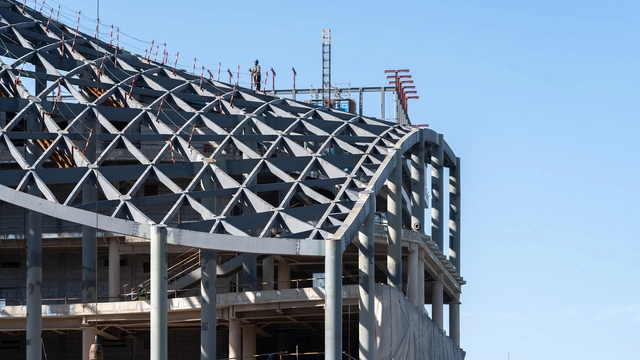
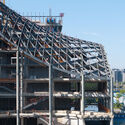
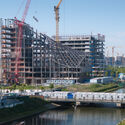
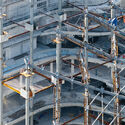
In 2021, MVRDV unveiled the design of a terraced office building created for the agriculture company Lankuaikei. Set within a rapidly developing area of Shanghai, the 11-storey structure is covered by a curved technological roof that follows the stepping structure. The project is conceived as a showcase of the company's vision of food production, with an extensive sustainability agenda encompassing various strategies. These include extensive use of greenery, integration of renewable energy, and the use of low-carbon materials. The construction process is now captured by StudioSZ Photo / Justin Szeremeta, revealing an intermediary state where the bare-bone structure begins to reveal the shape and scale of the building. Structural construction details are also visible at this stage,
Limited resources are becoming an increasingly common challenge in architecture. Today, regardless of the region, projects are affected by the availability of resources, which are now compounded by environmental considerations. This situation, far from being restrictive, prompts us to explore new possibilities in how we conceive the built environment. In this context, it is crucial to understand that resources are not only limited to the economy but also include technological, material, and spatial aspects. Thus, we can enhance our creativity and efficiency by broadening our considerations when approaching architectural design and its challenges, doing more with less.
At the community level, the challenge becomes even more significant when we consider that our projects must not only be designed to overcome these "constraints," but also to positively impact their communities. Therefore, contemporary projects must present different strategies to overcome limited resources and materials depending on the context, always aiming to achieve a positive impact and become powerful and ingenious proposals while democratizing access to architecture.
https://www.archdaily.com/1016682/community-growth-through-architecture-maximizing-limited-resources-for-positive-impactEnrique Tovar
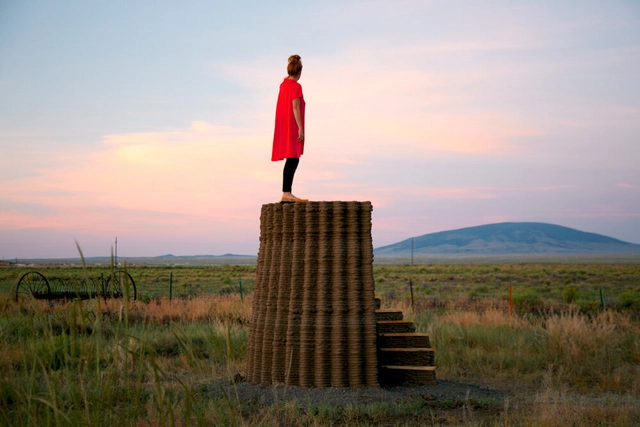
Mud Frontiers. Image Courtesy of Rael San Fratello
Understanding a discipline from multiple perspectives and intersections is essential for acquiring a deep understanding of it. In architecture, the diversity of approaches to its study enriches our perception by allowing us to appreciate its complexity from different angles. For students and professionals alike, exploring aspects such as history, sources of materials and products, construction processes, implementation of new technologies, and contemporary social challenges is crucial. These aspects intertwine and expand the conventional notion of "architecture," transcending the mere creation of buildings or the definition of spaces.
Ronald Rael, an architect and the Eva Li Memorial Chair in Architecture at the University of California, Berkeley, exemplifies this vision through his practice, which spans from research to connecting indigenous and traditional material practices with contemporary technologies and issues. As an activist and designer, Rael's research interests explore additive fabrication, border-wall studies, and earth construction. Co-founder of Rael San Fratello, Emerging Objects, and Forust, his practice shows an approach to architecture that is highly relevant in contemporary times.
https://www.archdaily.com/1016555/we-can-transform-the-profession-by-rethinking-how-we-might-serve-society-a-conversation-with-ronald-raelEnrique Tovar
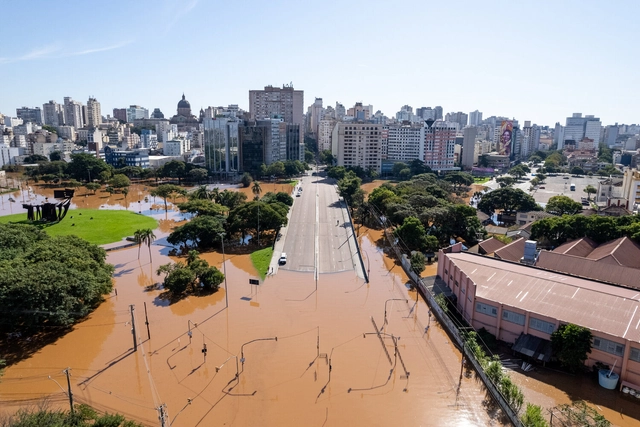
PORTO ALEGRE, RS, BRAZIL, 05/07/2024 - General photos of floods, Av Loureiro da Silva, CAFF and region. Photos: Gustavo Mansur/ Piratini Palace. Flickr user licensed under CC BY-NC 2.0 DEED Attribution-NonCommercial 2.0 Generic
The world has changed, and accepting this fact is no longer a matter of choice but survival. Our rainfall patterns, periods of drought, average temperatures, sea levels—everything is in constant flux. The denialist stance of many countries, including Brazil, has led to catastrophic situations like the one we are facing now.
The floods that devastated the southern region of the country in recent days cannot be considered isolated incidents. Due to global warming, climate events like this will become increasingly frequent. In other words, unfortunately, we cannot prevent them from happening, but we can—and must—make our cities more resilient to these situations.
Recycled Ceramic Washbasin. Image Courtesy of VitrA
Producing sustainable materials and products demands constant analysis of how we conserve resources and manage waste effectively. This unfolds within a scenario where the environmental impacts of global warming and the climate crisis are becoming increasingly evident. In that context, sustaining the dialogue on waste disposal is fundamental to positively impacting our environment and maximizing circular economy opportunities.
Embracing this perspective and demonstrating a commitment to sustainability through waste reduction and resource conservation, VitrA has created an entire washbasin with 100%* recycled waste materials, including discarded ceramics from its production process. This innovative product has been designed to have a minimal environmental impact and reduce the global warming potential of its production by 30% per product, transforming materials once considered waste into valuable resources.
https://www.archdaily.com/1016103/repurposing-discarded-waste-materials-into-a-100-percent-star-recycled-washbasinEnrique Tovar
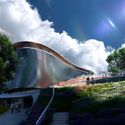
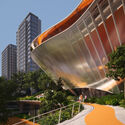
Ma Yansong/MAD Architects has unveiled their design for the Cloud 9 Sports Center, a 6,000-square-meter athletic complex in the city of Shijiazhuang, China. The venue is proposed to become the focal point of CBD's Central Park, marking the public space surrounded by residential, commercial, and recreational amenities. The center is designed to showcase a soft and fluid exterior to fit into its surroundings, mirroring the landscaped park while offering a range of facilities including a gym, indoor and outdoor tennis courts, and commercial spaces. The new sports center broke ground in March this year and is expected to be completed in 2025.
Plastic Island. Image Courtesy of Emily-Claire Goksøyr
As you read this, you may notice that you are surrounded by several items made of plastic. This omnipresence is no coincidence; the versatility of plastic has made it suitable for a variety of applications, and was described by its inventor—Leo Baekeland— as “the material of a thousand uses.” However, when it comes to environmental impact, the problem lies in its very qualities: it is so durable, adaptable, and easy to produce (430 million tons per year) that, according to UN data, the equivalent of 2,000 garbage trucks full of plastic are dumped into the oceans, rivers, and lakes every day.
In the built environment, plastic has been incorporated into various materials, products, and construction systems, contributing to an environmental crisis that seriously affects the well-being of millions of living beings. Faced with this problem, one possible direction is to shift away from utilizing it. The search for plastic-free alternatives is marking a path toward a future where architecture is progressively disassociating itself from these polluting materials, promoting sustainable solutions that reduce our dependence on it and contribute to preserving the environment.
https://www.archdaily.com/1016334/making-the-case-for-plastic-free-architecture-innovative-solutions-for-the-present-and-futureEnrique Tovar
Videos
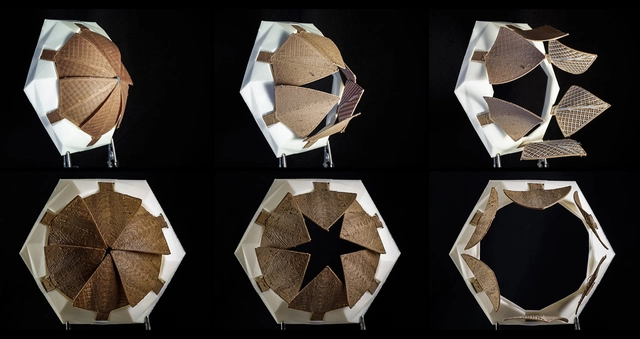
Fused filament fabrication for multi-kinematic-state climate responsive aperture. Image Cortesia de David Correa / Achim Menges
While we are still trying to understand the possibilities and limits of three-dimensional printing and additive manufacturing, a new term has emerged for our vocabulary. 4D printing is nothing more than a digital manufacturing technology -3D printing- which includes a new dimension: the temporal. This means that the printed material, once ready, will be able to modify, transform or move autonomously due to its intrinsic properties that respond to environmental stimuli.
The concept was popularized by researcher Skylar Tibbits, who coordinates the Massachusetts Institute of Technology (MIT) Self-Assembly Lab, in collaboration with Stratasys and Autodesk. The technology is still quite new, but it is expected to be used in many fields, from construction, infrastructure, automobile and aeronautics and even for healthcare, combined with bioprinting.
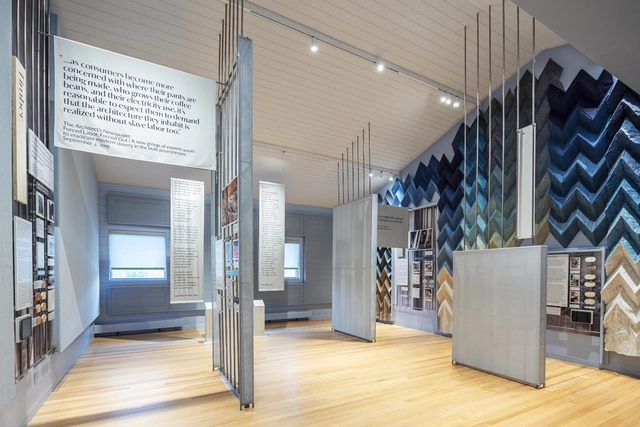
On May 4, 2024, cultural center Grace Farms opened a new long-term exhibition that aims to shed light on the inner workings of the building industry, offering insights into the methods of producing and distributing building materials, as well as the pervasive practices of forced labor happening in the materials supply chain worldwide. The exhibition also presents the work of “Design for Freedom,” a collaborative global movement launched in 2020 at Grace Farms. The initiative aims to change architecture by raising awareness of these issues and helping disrupt forced labor in the construction industry. Titled “With Every Fiber,” the exhibit is free to visit both at its physical location in New Canaan, Connecticut, and online as a virtual exhibition.