1. ArchDaily
  2. Interviews

Interviews: The Latest Architecture and News

"Architecture Is Not Just the Provision of Space:" Andrés Jaque on the Roles of Architecture in Louisiana Channel Interview

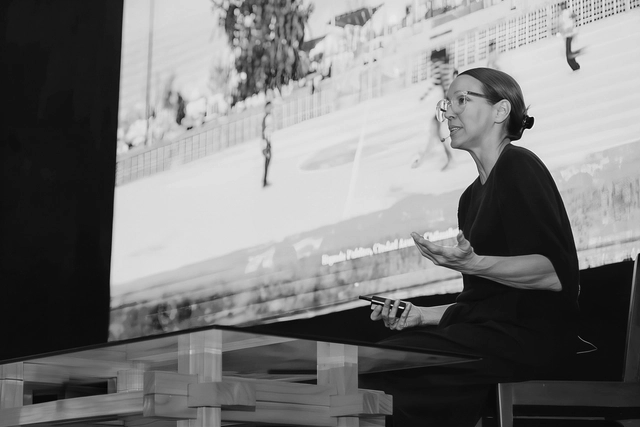
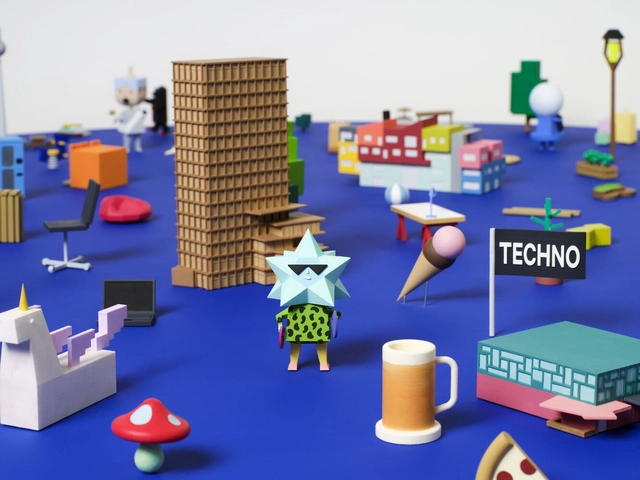
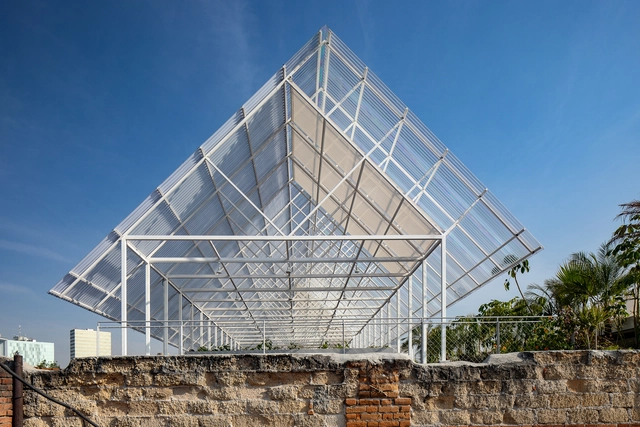
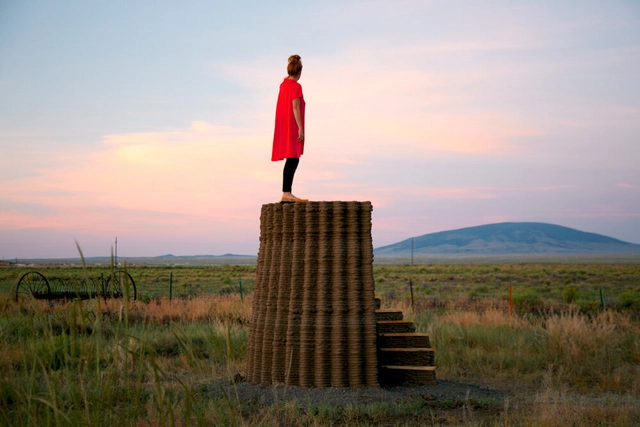
In the interview conducted by Louisiana Channel, architect Andrés Jaque discusses his foundational interest in architecture and his perspective on its role in shaping society. Jaque, founder of the Office for Political Innovation, emphasizes the creative potential of architecture to intervene in reality and reconnect all elements of the environment. He also goes into perspective on the political aspect of architecture, an interest from which the name of his office derives, as well as his perspectives on the true meaning of sustainability.

"Architecture Is Not Just the Provision of Space:" Andrés Jaque on the Roles of Architecture in Louisiana Channel Interview - Image 1 of 4"Architecture Is Not Just the Provision of Space:" Andrés Jaque on the Roles of Architecture in Louisiana Channel Interview - Image 2 of 4"Architecture Is Not Just the Provision of Space:" Andrés Jaque on the Roles of Architecture in Louisiana Channel Interview - Image 3 of 4"Architecture Is Not Just the Provision of Space:" Andrés Jaque on the Roles of Architecture in Louisiana Channel Interview - Image 4 of 4Architecture Is Not Just the Provision of Space: Andrés Jaque on the Roles of Architecture in Louisiana Channel Interview - More Images+ 3

Designing for Two Worlds: How Space Exploration is Shaping the Future of Architecture on Earth

Subscriber Access | 

Space exploration isn’t merely a testament to human ambition or a quest for new territories and resources. Our ventures beyond Earth’s atmosphere are driven by a deeper purpose: to understand better our place in the cosmos and to pioneer innovations that can transform life on our home planet.

While venturing beyond our planet captures the imagination, the true impact of space exploration may be felt much closer to home. Public perception often frames space exploration as a distant endeavor with limited relevance to terrestrial challenges. However, this perspective overlooks the substantial contributions of space programs to our world. By driving technological innovation, expanding our scientific knowledge, and inspiring future generations, space exploration has proven to be an invaluable catalyst for addressing global issues.

Designing for Two Worlds: How Space Exploration is Shaping the Future of Architecture on Earth - Image 1 of 4Designing for Two Worlds: How Space Exploration is Shaping the Future of Architecture on Earth - Image 2 of 4Designing for Two Worlds: How Space Exploration is Shaping the Future of Architecture on Earth - Image 3 of 4Designing for Two Worlds: How Space Exploration is Shaping the Future of Architecture on Earth - Image 4 of 4Designing for Two Worlds: How Space Exploration is Shaping the Future of Architecture on Earth - More Images+ 30

“I Let Architecture be Deeply Rooted in a Specific Culture": In Conversation with Zhu Pei

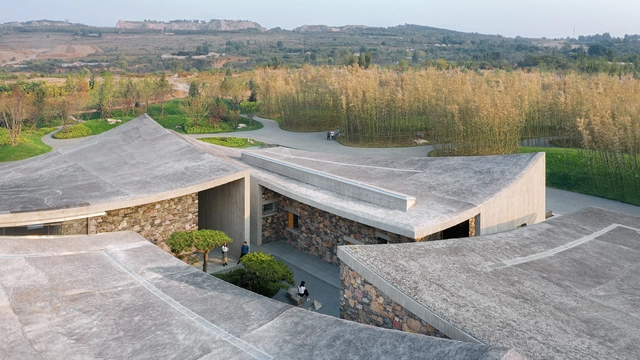
“This is going to be amazing! I feel so excited,” says Zhu Pei about his now under-construction Majiayao Ruins Museum and Observatory in Lintao, Gansu province. The Beijing-based architect designed his building like a deeply embedded cavernous space evoking a giant fragment of ancient pottery, resembling an archaeological site from the Neolithic Age discovered here a century ago. The building is so unusual that it cannot be described in common architectural terms. For example, a vast cast-in-place concrete hyperbolic shell lies prone on the ground, blocking the cold wind from the northwest in winter. The architect used the sand and gravel from the local Tao River to produce a special rough concrete with horizontal scratches on the surface, symbolizing the traces of thousands of years of erosion. All of Zhu’s buildings are quite remarkable. Yet, despite their novelties, they are rooted in culture, nature, and climate. They are designed based on his architectural philosophy, Architecture of Nature, articulated in five fundamental points: incomplete integrity, sponge architecture, cave and nest, sitting posture, and structure and form.

“I Let Architecture be Deeply Rooted in a Specific Culture": In Conversation with Zhu Pei - Image 1 of 4“I Let Architecture be Deeply Rooted in a Specific Culture": In Conversation with Zhu Pei - Image 2 of 4“I Let Architecture be Deeply Rooted in a Specific Culture": In Conversation with Zhu Pei - Image 3 of 4“I Let Architecture be Deeply Rooted in a Specific Culture": In Conversation with Zhu Pei - Image 4 of 4“I Let Architecture be Deeply Rooted in a Specific Culture: In Conversation with Zhu Pei - More Images+ 22

"Building the Line as a Three-Dimensional City:” In Conversation with Tarek Qaddumi, Executive Director of The Line Design of NEOM

Subscriber Access | 

In early 2021, Saudi Arabia unveiled the Line, a 170-kilometer-long linear city, part of the NEOM project. NEOM has since expanded with proposals for the region, including a ski destination set to host the 2029 Asian Winter Games, a floating port city at Oxagon, and cliffside hotels at Leyja. However, the Line continues to be one of the most debated of the proposals due to its scale and unprecedented design. According to the official releases, the city would measure 170 kilometers in length, 200 meters in width, and 500 meters in height, making it the 12th highest skyscraper in the world. In its final phase, it is expected to welcome 9 million residents, nearing the size of London or New York’s five boroughs.

On October 23, 2023, during the closing of the Line Exhibition in Riyadh, Saudi Arabia, ArchDaily’s Editor in Chief, Christele Harrouk spoke to Tarek Qaddumi, Executive Director of The Line Design at NEOM, asking questions that probe into both the conceptual aspects and the technicalities of The Line project. In this video interview, the conversation addresses notions such as accessibility, transportation, and sustainability, while also exploring the concept of Cognitive Cities and the intended phasing of the project.

"Building the Line as a Three-Dimensional City:” In Conversation with Tarek Qaddumi, Executive Director of The Line Design of NEOM - Image 1 of 4"Building the Line as a Three-Dimensional City:” In Conversation with Tarek Qaddumi, Executive Director of The Line Design of NEOM - Image 2 of 4"Building the Line as a Three-Dimensional City:” In Conversation with Tarek Qaddumi, Executive Director of The Line Design of NEOM - Image 3 of 4"Building the Line as a Three-Dimensional City:” In Conversation with Tarek Qaddumi, Executive Director of The Line Design of NEOM - Image 4 of 4Building the Line as a Three-Dimensional City:” In Conversation with Tarek Qaddumi, Executive Director of The Line Design of NEOM - More Images+ 5

DIALOG and HOK Redesign Calgary's Scotia Place: A Celebration of Community and Indigenous Heritage in Canada

DIALOG and HOK have just revealed the redesign of Scotia Place, Calgary’s new event center in Canada. Set to become a hub of community and culture, Scotia Place is inspired by Indigenous ancestral lands and cultural significance, integrated these perspectives with the natural beauty of Calgary. Commissioned by the City of Calgary and the Calgary Sports and Entertainment Corporations, Scotia Place seeks to bring people together and activate the public realm.

DIALOG and HOK Redesign Calgary's Scotia Place: A Celebration of Community and Indigenous Heritage in Canada - Image 1 of 4DIALOG and HOK Redesign Calgary's Scotia Place: A Celebration of Community and Indigenous Heritage in Canada - Image 2 of 4DIALOG and HOK Redesign Calgary's Scotia Place: A Celebration of Community and Indigenous Heritage in Canada - Image 3 of 4DIALOG and HOK Redesign Calgary's Scotia Place: A Celebration of Community and Indigenous Heritage in Canada - Image 4 of 4DIALOG and HOK Redesign Calgary's Scotia Place: A Celebration of Community and Indigenous Heritage in Canada - More Images+ 7

Refurbishment vs. Demolition: Enhancing Housing for Sustainable Energy Efficiency

World War II was pivotal in human history, leaving a profound political and social impact. Its conclusion marked a significant turning point, leading to post-war suburbanization and the baby boom. These phenomena resulted in rapid urban growth and a surge in housing construction, which peaked in the 1960s and continued to flourish throughout the following decades, gradually slowing down until the present day. Currently, we are facing a very different scenario in which a backlog of affordable housing, combined with a challenging economic outlook and a climate agenda, have led to the need for a transformation of the built environment into a cleaner and more resource-efficient one, in line with the Paris Agreement.

Thus, with the ever-increasing demand for housing, combined with policy initiatives such as the European Green Deal, the post-war model of hyper-production is becoming unsustainable. Consequently, refurbishing derelict or redundant buildings has emerged as a viable alternative. Unlike the scheme of demolition and new construction, this approach offers opportunities for energetic retrofitting, which helps mitigate environmental obsolescence, extend the lifespan of buildings, and revitalize the existing and dilapidated stock—including postwar housing—while improving people's quality of life.

International High-Rise Award 2024/25: Discover the 31 Nominated Projects

Deutsches Architekturmuseum (DAM) has announced the International High-Rise Award 2024/25. Selected from more than 1,000 new high-rises worldwide dating from the past two years, the nominated projects are located in 13 counties from 5 continents. In autumn, the five finalists will be announced, followed by the winner announcement scheduled for November 12, 2024. The main objective of the award is to highlight good practices in the ongoing trend of mixed-use high-rises.
With the increase in the construction of high-rises, special features such as the introduction of greenery in the design, unusual shapes, or the construction of clusters of towers, have become the new normal. DAM’s research this year also shows a growing eco-awareness, as the focus in high-rise construction is increasingly on the use of existing buildings. While the majority of tall buildings continue to be erected in China, followed by the USA, Australia, and Singapore have emerged as new hubs of high-rise architecture.
International High-Rise Award 2024/25: Discover the 31 Nominated Projects - Image 1 of 4International High-Rise Award 2024/25: Discover the 31 Nominated Projects - Image 2 of 4International High-Rise Award 2024/25: Discover the 31 Nominated Projects - Image 3 of 4International High-Rise Award 2024/25: Discover the 31 Nominated Projects - Image 4 of 4International High-Rise Award 2024/25: Discover the 31 Nominated Projects - More Images+ 29