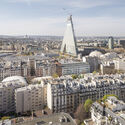
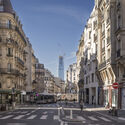
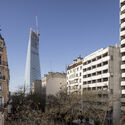
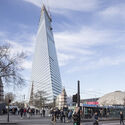
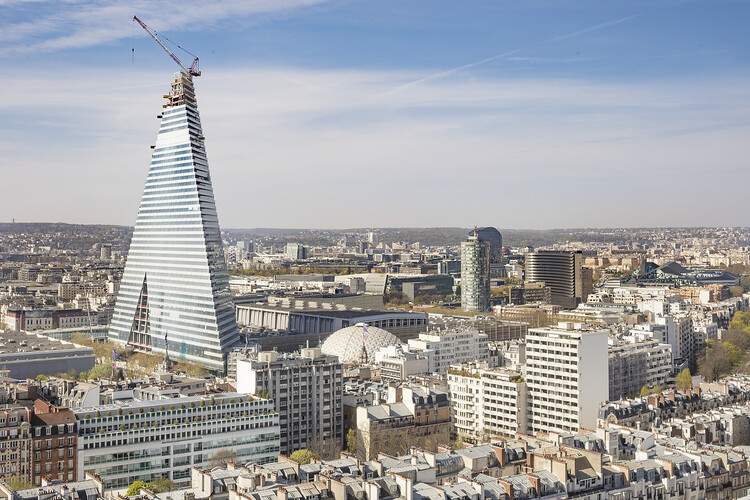
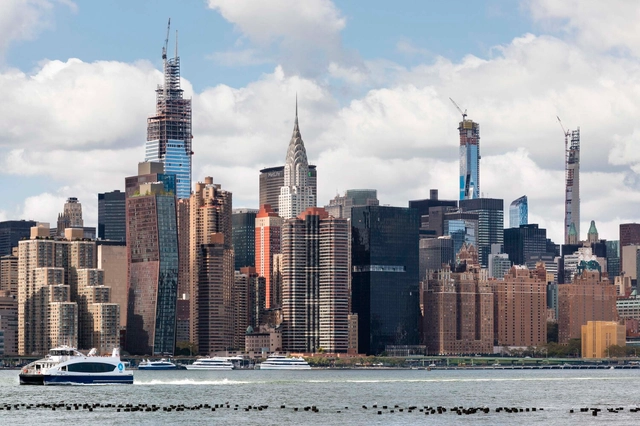
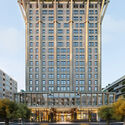
Twenty years after its ideation, Herzog & de Meuron's controversial Tour Triangle in Paris is reaching completion. The triangular, all-glass tower located in the city's 15th arrondissement topped out at 42 stories on April 24, 2026. The project's progress was marked by opposition, financial roadblocks, and legal disputes before construction began in 2022. The 180-meter tower is now the third-tallest building within Paris city limits, behind the 330-meter-tall Eiffel Tower, the 231-meter-tall The Link in La Défense, and the 210-meter-tall Tour Montparnasse. The building will retain this title indefinitely due to a skyscraper ban reinstated in 2023 by Mayor Anne Hidalgo, following persistent opposition to tall buildings in the city. The recent progress was documented by photographer Stefano Candito, ranging from an urban view of the building to a close-up look at its nearly completed structure.
Le Corbusier's Unité d'Habitation imagined a "vertical neighborhood," a building able to integrate housing, commerce, leisure, and collective spaces within a single structural organism. Around the same time, Jane Jacobs argued that diversity of use is what produces safety, identity, and social life at the street level. Later, Rem Koolhaas, in Delirious New York, described the skyscraper as an early experiment in "vertical urbanism," capable of stacking incompatible programs under one roof. In cities like Tokyo and Hong Kong, this ambition matured into complex hybrid buildings where different uses, such as transit hubs, retail, offices, hotels, and housing, coexist and interact continuously.
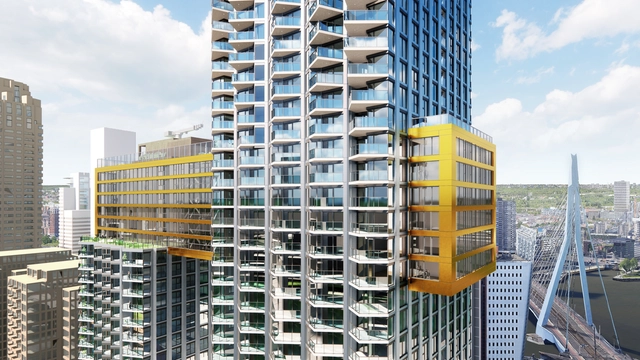
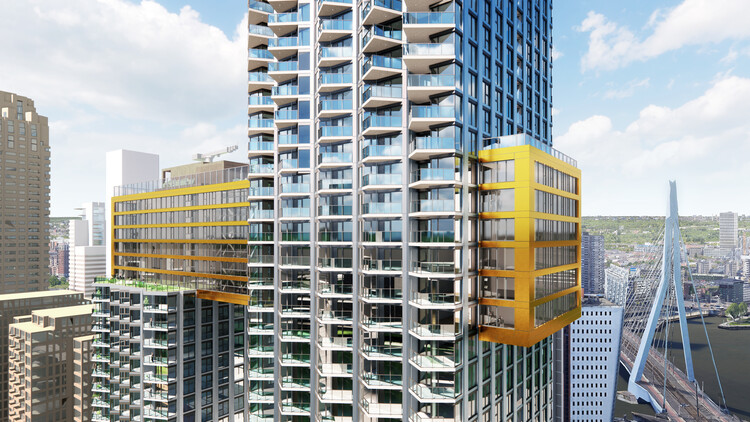
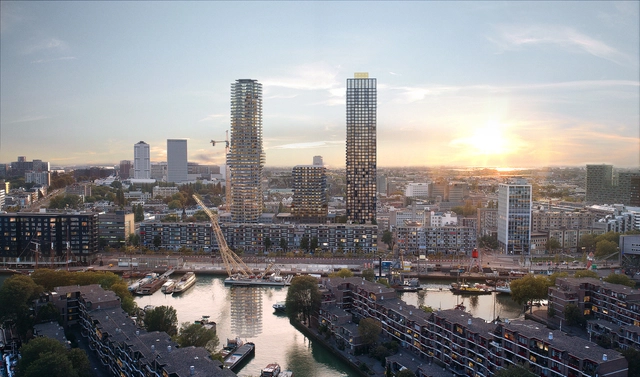
The Sax residential towers by MVRDV. Render. Image Courtesy of MVRDV
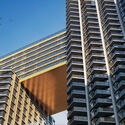
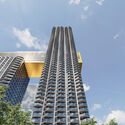
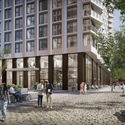
The City of Rotterdam, developers BPD and Synchroon, and architecture firm MVRDV have officially begun construction on The Sax, a major residential project located on Rotterdam's Wilhelminapier. Designed to contribute to the city's ongoing densification efforts, the development will deliver 916 apartments within two interconnected towers. Once completed, The Sax will make Wilhelminapier the most densely populated area in the Netherlands, making the project an example of compact urban growth. The design comprises two towers, combining a wide mix of housing types and shared amenities with strong connections to public transport and sustainable mobility solutions, including parking for 1,800 bicycles and a fully automated car garage. With its silver façade and undulating balconies, the building's form echoes the shape of a saxophone, reflecting the character of Rotterdam.
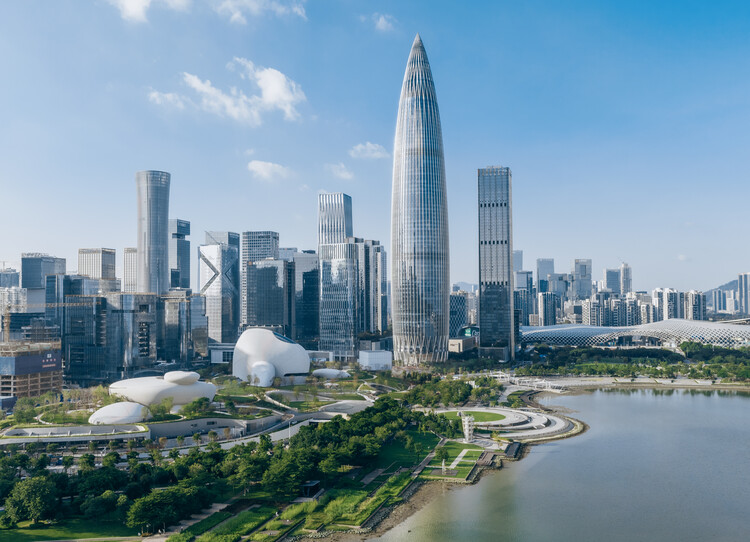
Shenzhen is China's first Special Economic Zone(SEZ), serving as a window for China's Reform and Opening-up and an emerging immigrant city. It has evolved into an influential, modern, and international metropolis, creating the world-renowned "Shenzhen Speed" and earning the reputation of the "City of Design." Architectural design stands as the most intuitive expression of Shenzhen's spirit of integration and innovation. Over the past decade (2015-2025), the development of urban architecture in Shenzhen has closely integrated with its open and inclusive urban character, ecological advantages of being nestled between mountains and the sea, and the local spirit of blending traditional culture with innovative technology, showcasing Shenzhen's unique charm and robust vitality across multiple dimensions.
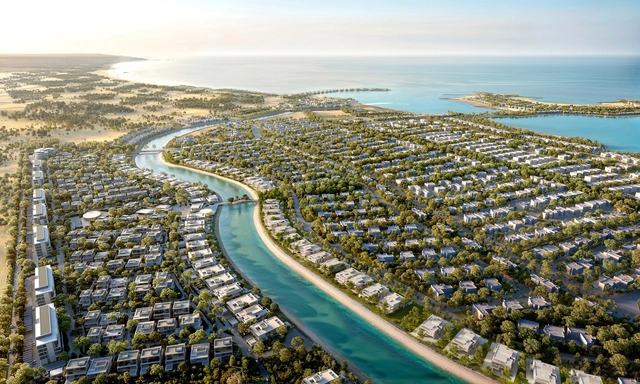
A series of recently announced projects across Europe, Asia, the Middle East, and North America reflects an ongoing shift in architectural thinking toward approaches that integrate buildings with their landscapes, programs with public life, and design with long-term environmental goals. In Nantes, France, a healthcare campus redefines medical education through climate-conscious planning, while in San Antonio, Texas, a new arboretum transforms a former golf course into a research-driven public landscape. Residential towers are rising beside Bangkok's Lumphini Park, a new coastal community is underway in the UAE, and an expansion to the Nelson-Atkins Museum in Kansas City reconsiders how cultural institutions connect with their surroundings. Together, these announcements point to a growing interest in projects that embed architecture within broader ecological and civic systems, proposing new models of spatial integration, accessibility, and resilience.
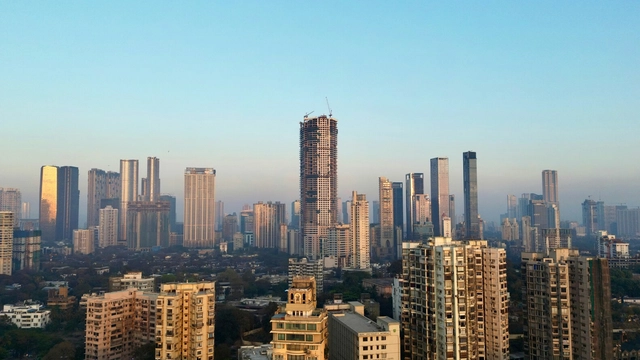
India finds itself a watershed moment with its urban evolution. With the United Nations projecting urbanization to reach 68% by 2050, the country's metropolitan regions needs to adapt to increasing populations while maintaining equity and quality of life. India's urban population is expected to exceed 600 million by 2030, drawing attention to both urban density and sprawl. As an emerging player in the domain of high-rise development, India is restructuring how it engages with urban growth by shifting from horizontal sprawl to vertical expansion.
Prefabrication is one of the most transformative innovations in architecture and construction, redefining how buildings are designed, manufactured, and assembled. While not a new concept, its application has evolved to offer a broader range of advantages. Traditionally valued for its precision and quality, prefabrication is now equally recognized for its cost and time efficiencies, particularly in leveraging regional differences in labor and production. This shift has fueled its resurgence across high-end, design-driven projects and large-scale, cost-efficient public buildings.
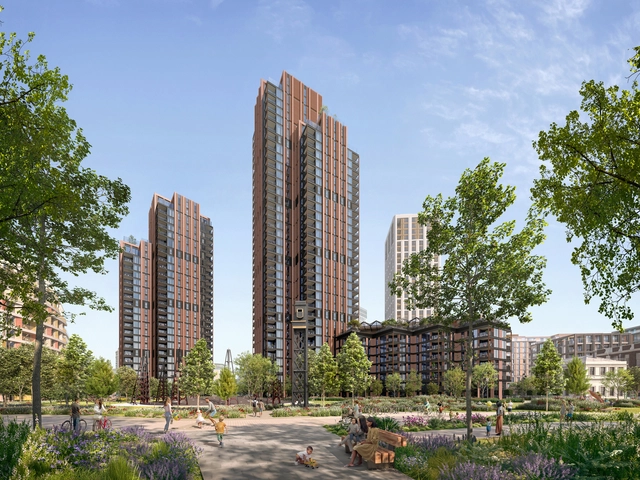
Kings Road Park, Fulham. Image Courtesy of Foster + Partners
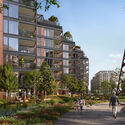
Phase four of the King's Road Park masterplan, designed by Foster + Partners for St William, has received detailed planning permission. The design, located in the London Borough of Hammersmith & Fulham, comprises two residential towers of 28 and 38 stories, a seven-story podium building, and 1.9 acres of new parkland and public open space, totaling 357 new homes. The residential buildings incorporate communal spaces, including a ground-level amenity and a rooftop garden sheltered by a louvered canopy. The towers' slender profiles are intended to complement the existing urban skyline, featuring terracotta paneling in a nod to local architectural styles.
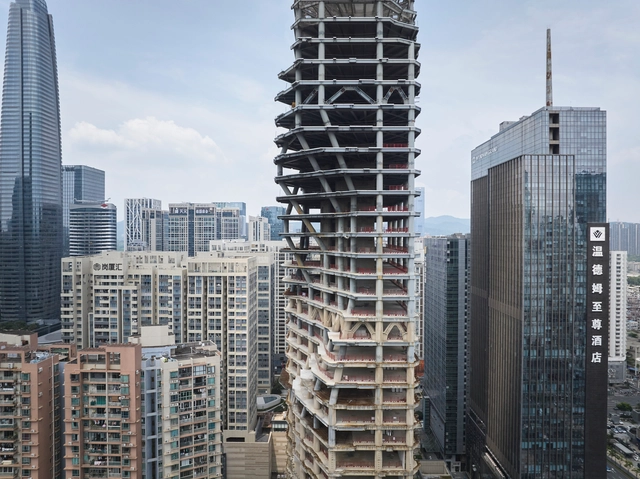
Construction has commenced on the Shenzhen Institute of Financial Technology tower, a 46-story building designed by Zaha Hadid Architects. Its design, situated on a narrow site in Shenzhen's Futian district, aims to respond to its urban context. The building's form, measuring 199 meters in height, incorporates setbacks placed to maximize sunlight penetration to surrounding streets and public areas. This design decision is further reflected in the façade's varying transparency and color, created by vertical and angled glazing mullions in black and bronze. Recent construction photographs reveal the topped-out tower, waiting to receive its envelope while temporarily showcasing openly its structure and interior organization.
Humanity has become obsessed with breaking its limits, creating new records only to break them again and again. In fact, our cities’ skylines have always been defined by those in power during every period in history. At one point churches left their mark, followed by public institutions and in the last few decades, it's commercial skyscrapers that continue to stretch taller and taller.
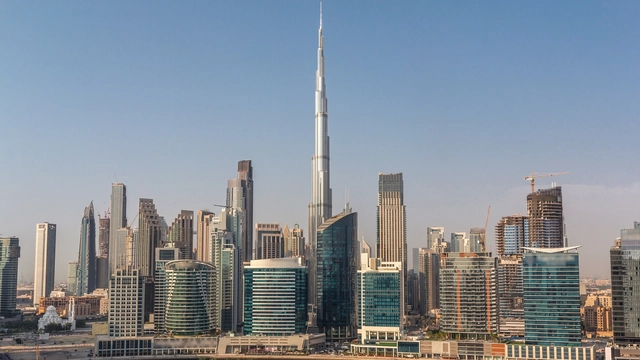
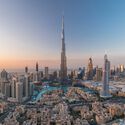
The Council on Tall Buildings and Urban Habitat (CTBUH) has developed its own system for classifying tall buildings, stating that the Burj Khalifa (828 m.) is the world’s tallest building right now. Read on for the 25 tallest buildings in the world today.
Our contemporary society has been witnessing a surge in skyscraper construction in urban centers worldwide for various reasons—including engineering advancements, increased urban density, space constraints, and, arguably, a competitive drive for building the tallest structures. The allure of all-glass facades and the pursuit of curtain walls with larger panes of continuous glass have often come at the cost of functionality.
In these towers, operable windows are sacrificed for aesthetics and expansive views, with a central core layout that maximizes 360-degree views while creating architectural "solar heat-gain monsters." Without natural or cross ventilation, these glass skyscrapers trap significant heat from solar radiation within habitable spaces, relying almost exclusively on mechanical HVAC systems to cool these spaces. This raises the question: is passive ventilation strategy becoming obsolete in high-rise design, or can operable systems be integrated effectively into our high-tech towers?
grabowski.spork architektur is designing "The Change," Eschborn, Germany's first timber-hybrid high-rise office building, on behalf of PE Merhenthaler GmbH—a joint venture between Bauwens and Ampure, two of Germany's largest property development companies. The project's BIM process exemplifies how these smart digital workflows contribute to exceptional design outcomes.
Situated in Hangzhou's Central Business District, the Euro American Innovation City is a mixed-use development designed by Foster+Partners to become a dynamic addition to the city. The 346,450 square-meter project includes two 200-meter-high office towers and four high-rise apartment buildings, complemented by a public plaza, an IT incubator, and a retail mall on the lower levels. Construction is currently progressing in phases, with the first phase nearing completion next month and the second set to finish by year-end, while the entire project aims for completion in September 2025.
Deutsches Architekturmuseum (DAM) has announced the International High-Rise Award 2024/25. Selected from more than 1,000 new high-rises worldwide dating from the past two years, the nominated projects are located in 13 counties from 5 continents. In autumn, the five finalists will be announced, followed by the winner announcement scheduled for November 12, 2024. The main objective of the award is to highlight good practices in the ongoing trend of mixed-use high-rises.
With the increase in the construction of high-rises, special features such as the introduction of greenery in the design, unusual shapes, or the construction of clusters of towers, have become the new normal. DAM’s research this year also shows a growing eco-awareness, as the focus in high-rise construction is increasingly on the use of existing buildings. While the majority of tall buildings continue to be erected in China, followed by the USA, Australia, and Singapore have emerged as new hubs of high-rise architecture.
Designed by Powerhouse Company, the BaanTower has started construction in the remodeled Baan Quarter neighborhood of Rotterdam. The residential tower strives to promote a sustainable architecture based on the well-being of its residents. Upon completion, the high-rise will house 427 apartments available for rent. Seven years after the original draft, the project has recently received its building permit, and is expected to be completed by 2026.
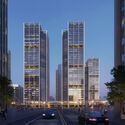
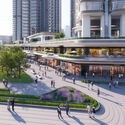
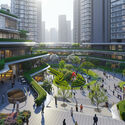
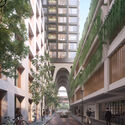
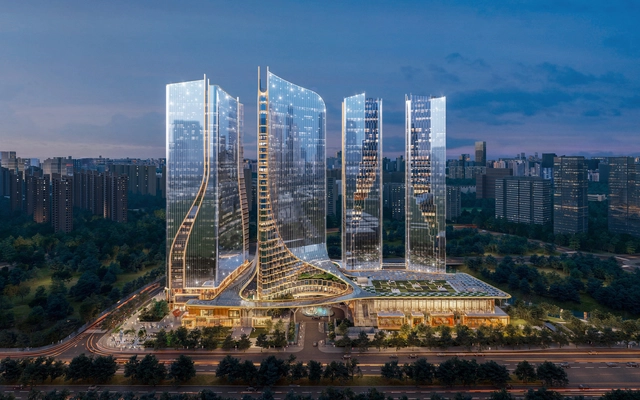
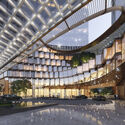
On a site that also hosts the Olympic Sports Centre, the 2023 Asian Games complex, UNStudio has unveiled the design of the new Hiwell Amber Centre, a complex of four high-rise towers planned to add a mix of offices, apartments, hotels, art spaces and retail to the city center of Hangzhou, China. Responding to the area’s rapid economic and cultural growth, the new development aims to provide a wide range of services to residents and visitors alike. To open up towards the city, the smooth glass curtain wall of the towers peels apart to reveal a tapestry-like facade that envelops the main plazas and civic spaces, creating an ‘urban living room.’
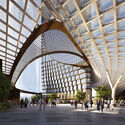
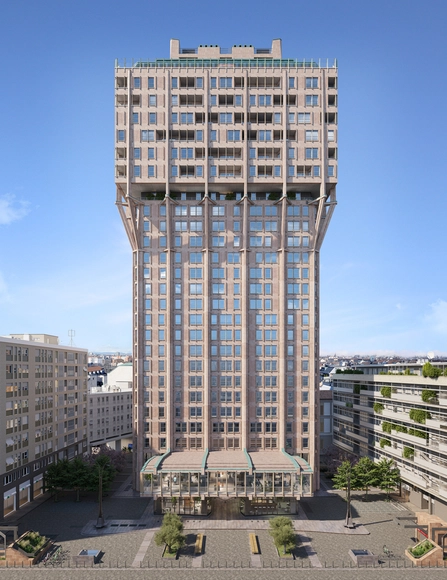
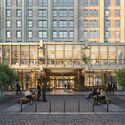
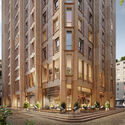
Torre Velasca, the renowned 1950s skyscraper by BBPR in Milan, Italy, is currently undergoing an extensive renovation process led by Asti Architetti and developed by Hines. After completing the work on the facades and with the extensive restoration of the interiors under way, the office has made public the project for the redesign of the Piazza Velasca, the square surrounding the tower. By turning it into a meeting and social gathering place, the architects hope to restore the status of the complex as a symbol of Milan’s architectural heritage. Pedestrian access to the building, and the renovation of previously disused adjacent spaces will open up the area for public access and will restore the original meaning of “piazza,” or square. The project is scheduled for completion by early 2024.