As the anticipation builds for the XXXIII Olympic Games in Paris, the city is preparing to host a global sporting event and embark on a journey of urban renewal. In a departure from traditional stadium-centric hosting, Paris 2024 embraces a new approach to the Olympic experience. Sports architecture has the ability to transcend functionality and become a space of collective experience and shared joy. In that sense, it invites individuals from diverse backgrounds to forge connections while celebrating athleticism. This month’s curated collection focuses on diverse forms of sports architecture, stadiums, venues, and landscaping projects, dissecting what components come together to form different sports architecture experiences.
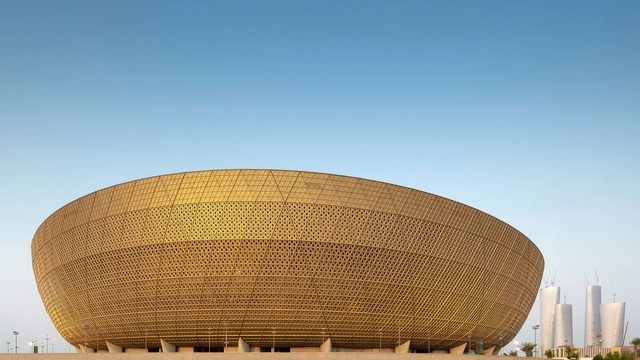
For the Qatar World Cup in 2022, Foster + Partners designed the iconic and more traditional Lusail FIFA stadium. In India, M:OFA Studios designed the National Institute of Water Sports, breaking away from the pragmatic norms of government institutions. In Hangzhou, China, the 2022 Asian Games featured a new Cricket Field by AZUT, emerging as an integration of sports infrastructure with the natural landscape. Meanwhile, in Order City, China, PLAT ASIA transformed an existing urban square into a Smart Sports Park, promoting community wellness and interaction. Finally, Opsis Architecture’s University of Idaho Arena serves as a main gateway to the University campus, celebrating the spirit of athleticism and community.
The Second Studio (formerly The Midnight Charette) is an explicit podcast about design, architecture, and the everyday. Hosted by Architects David Lee and Marina Bourderonnet, it features different creative professionals in unscripted conversations that allow for thoughtful takes and personal discussions.
A variety of subjects are covered with honesty and humor: some episodes are interviews, while others are tips for fellow designers, reviews of buildings and other projects, or casual explorations of everyday life and design. The Second Studio is also available on iTunes, Spotify, and YouTube.
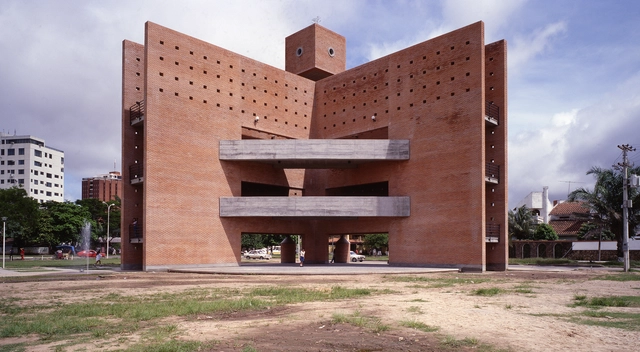
Santa Cruz de la Sierra is located on the eastern plains of Bolivia, on the banks of the Pirai River. Being the most populous city in the country, it reveals an extreme social and cultural complexity surrounded by extensive pampas and plains. Additionally, it represents one of the most developed cities in Bolivia, with a high municipal indicator of sustainable development. Delving into the importance of community architecture, popular appropriation, the character of urbanity, and other concepts, this article explores the history behind the Summit of the Americas Monument through a series of narratives, documentations, drawings, and images captured by Pino Musi.
Courtesy of [applied] Foreign Affairs, Institute of Architecture, University of Applied Arts Vienna
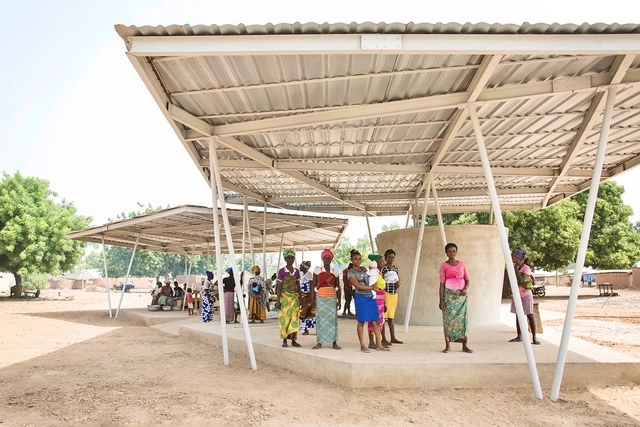
Public Markets are complex cases that beautifully combine an engineering exploration with the instigation of a beneficial public function. In fact, it doesn't take much to designate an open and accessible commercial hub that would encourage commercial exchange and economic development for small or local businesses. All one needs is a lot and a sheltering roof. However, many designers and architects have chosen to take this exercise beyond the social level and into further material and technical exploration.
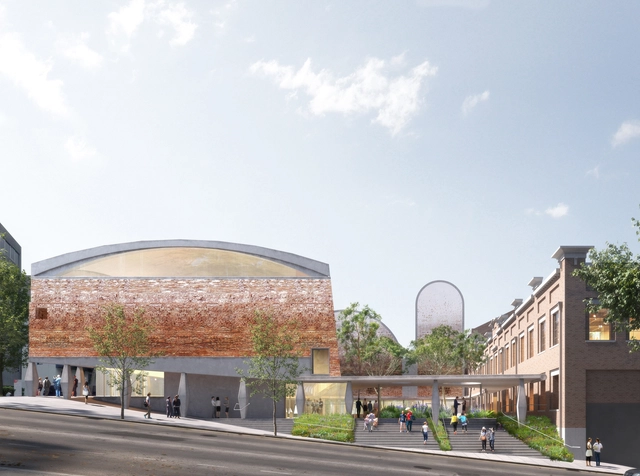
Powerhouse, Australia’s largest museum institution dedicated to applied arts design, and technology, has revealed the plans for a comprehensive restoration of its three sites located in Sydney, Australia, in addition to the opening of a new site in Parramatta in Western Sydney in 2025. The Powerhouse Ultimo site contains two heritage-listed buildings: the Ultimo Powerhouse and the Ultimo Post Office. The project for the renovation of this heritage location is led by a team of architects, Durbach Block Jaggers working in partnership with Architectus, Youssofzay + Hart, and landscape architects, Tyrell Studio.
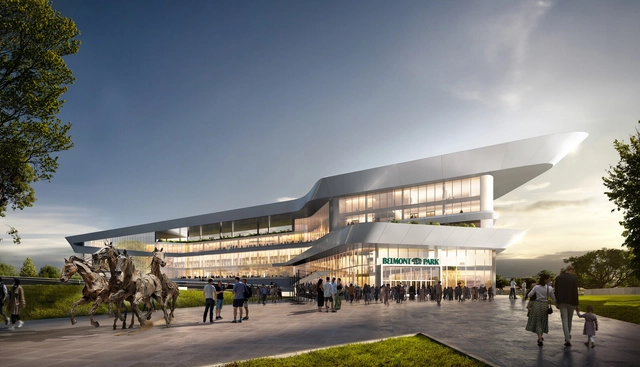
Populous has just unveiled a comprehensive design for the new Belmont Parkmodernization project. Situated in the iconic venue in Nassau County known for hosting the Belmont Stakes, the project seeks to usher in significant economic benefits, including the creation of thousands of jobs. Under the oversight of the New York Racing Association (NYRA), the project is set to be completed in the fall of 2026.
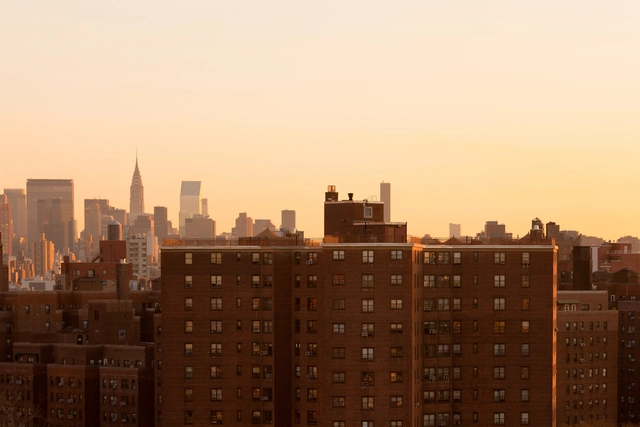
The U.S. has a long tradition of republicanism and laissez-faire capitalism that has not favored strong federal housing policy or intervention in the housing market. Policymakers have believed that private enterprise could best provide sufficient housing and that, as with healthcare and education,[1] government involvement would bring in “socialism” and undesirable control of the free market. There are two major exceptions to this tradition: the 1937 National Housing Act, a result of the devastation of the Great Depression, and the “war on poverty,” initiated by the Johnson administration in the mid-1960s.[2] Successful as these programs were, subsequent federal housing policy has mostly been aimed at undermining them, through either malice or neglect. Instead, federal policy has mainly sought to promote home ownership, the American dream, but that approach was eviscerated by the collapse of financing due to the subprime loan crisis and its aftermath. The result is that there is currently virtually no cogent federal housing policy. Thirty-five million Americans live in substandard housing; a much larger number devote 50% of their income to a roof over their heads. Housing construction is at a historic low, and construction costs have risen so high that they are well beyond the means of the average citizen.
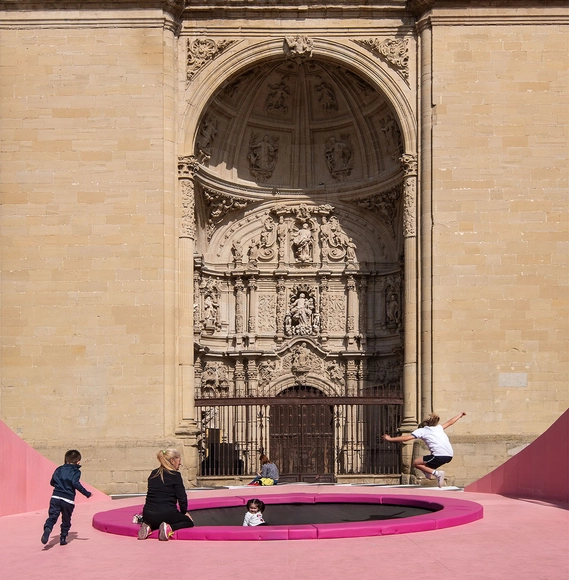
Architecture and Design Festival Concéntrico celebrates its 10th anniversary from 25 April to 1 May 2024 with an edition that aims to reflect on the impact of the annual festival upon the city of Logroño, Spain, as well as to consider how the city continues to evolve. Through installations, exhibitions, lectures, performances, workshops, and activities, Concéntrico proposes a reflection of the urban environment, welcoming architects and designers to intervene and challenge it while opening conversations about pressing matters.
While the official theme of the festival focused on the future of cities, the invited architects and designers took this suggestion further. Several overarching themes and subjects emerged during this year’s event, from the incorporation of concepts of time, an unusual element to be tacked through temporary installations, to the desire to engage more honestly with a wider public, to listen to their needs and create platforms where diverse perspectives can take center stage.
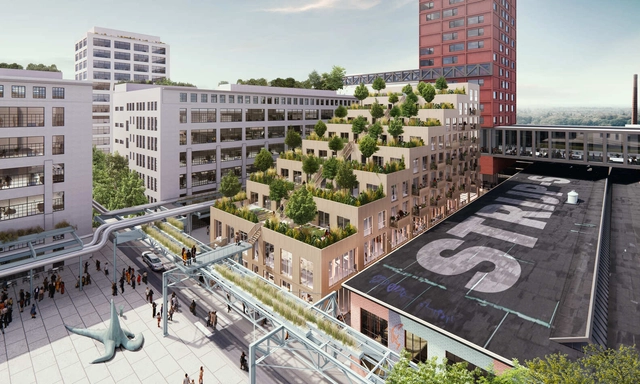
MVRDV has unveiled its design for a new mixed-use building in Eindhoven, The Netherlands. Situated in the heart of the vibrant Strijp-S district, the design was created in collaboration with the Trudo housing association. Titled “The Tribune,” the architecture boasts a stepped tribune-like structure, offering residents and visitors access and views onto the public square below.
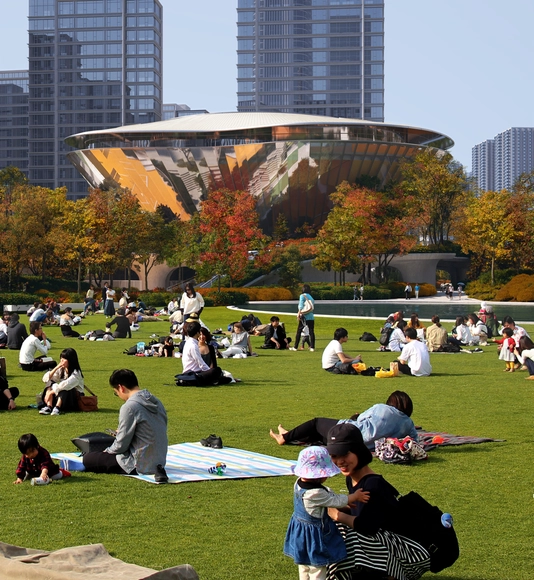
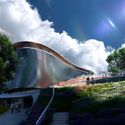
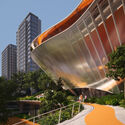
Ma Yansong/MAD Architects has unveiled their design for the Cloud 9 Sports Center, a 6,000-square-meter athletic complex in the city of Shijiazhuang, China. The venue is proposed to become the focal point of CBD's Central Park, marking the public space surrounded by residential, commercial, and recreational amenities. The center is designed to showcase a soft and fluid exterior to fit into its surroundings, mirroring the landscaped park while offering a range of facilities including a gym, indoor and outdoor tennis courts, and commercial spaces. The new sports center broke ground in March this year and is expected to be completed in 2025.
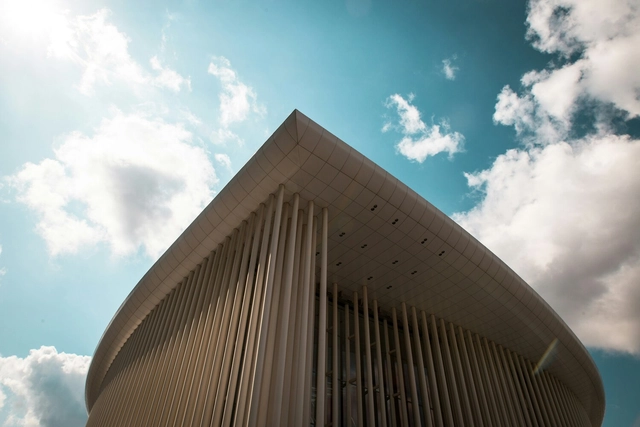
For those seeking remarkable architecture in Europe, Luxembourg stands as a special destination not to be missed. Nestled between Belgium, France, and Germany, this pint-sized country packs a punch with its rich history, stunning landscapes, and vibrant architecture. Small, yet culturally rich, Luxembourg offers a delightful array of architectural wonders waiting to be explored. From ancient castles to modern marvels, Luxembourg’s diverse architectural landscape promises a journey through time and style.
Carlo Ratti, the curator of the 19th International Architecture Exhibition - La Biennale di Venezia, along with The President of La Biennale di Venezia, Pietrangelo Buttafuocco, have just revealed highly anticipated details for the upcoming edition. Titled "Intelligens," the exhibition will be running from May 24th to November 23rd, 2025 in Giardini, the Arsenale, and various landmark locations throughout Venice.
Videos
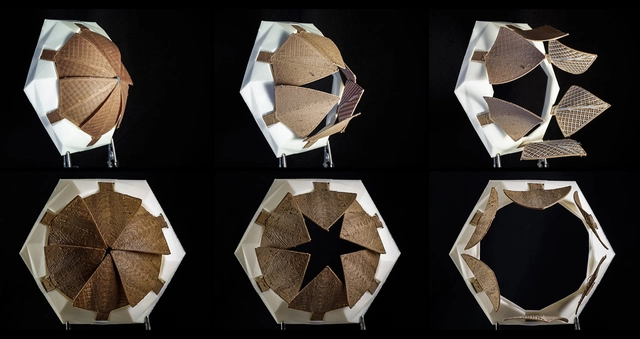
Fused filament fabrication for multi-kinematic-state climate responsive aperture. Image Cortesia de David Correa / Achim Menges
While we are still trying to understand the possibilities and limits of three-dimensional printing and additive manufacturing, a new term has emerged for our vocabulary. 4D printing is nothing more than a digital manufacturing technology -3D printing- which includes a new dimension: the temporal. This means that the printed material, once ready, will be able to modify, transform or move autonomously due to its intrinsic properties that respond to environmental stimuli.
The concept was popularized by researcher Skylar Tibbits, who coordinates the Massachusetts Institute of Technology (MIT) Self-Assembly Lab, in collaboration with Stratasys and Autodesk. The technology is still quite new, but it is expected to be used in many fields, from construction, infrastructure, automobile and aeronautics and even for healthcare, combined with bioprinting.
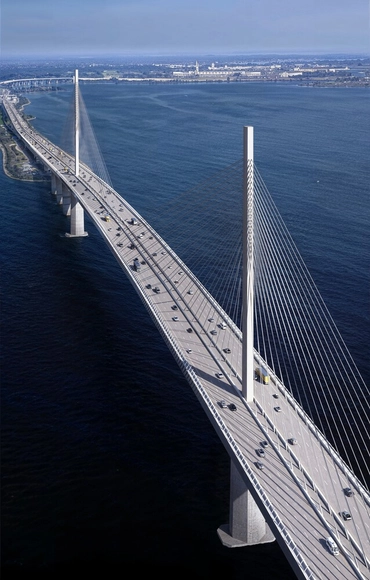
Following the collapse of the Francis Scott Key Bridge in Baltimore, Maryland, construction group WeBuild, in collaboration with design office CRA-Carlo Ratti Associati and engineer Michel Virlogeux, has revealed an updated design for a replacement bridge. The new cable-stayed design aims to redefine the entrance to the Baltimore Harbor and offer an improved version of this symbol of the city.
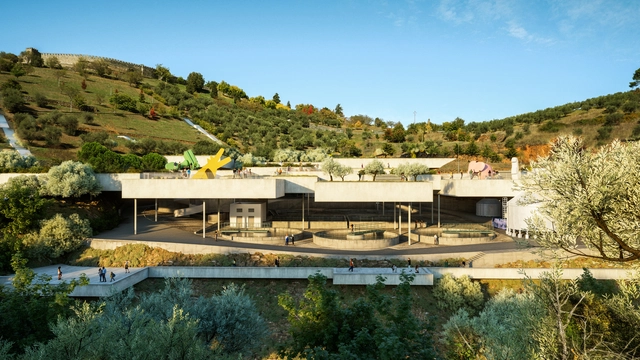
MASSLAB has just won the competition for the new roof of Bragança's Water Treatment Plant in Portugal. Integrating public use of this infrastructure, which until now only serves a functional purpose, the project showcases adding value to existing infrastructure by rethinking them. Blending architecture, landscaping, and urban design to transform this structure into a vibrant public space, MASSLAB seeks to change the perception of water treatment facilities in urban settings. By reimagining the roof as a livable infrastructure, the project transforms the purely functional roof into an engaging and integral part of the urban fabric.
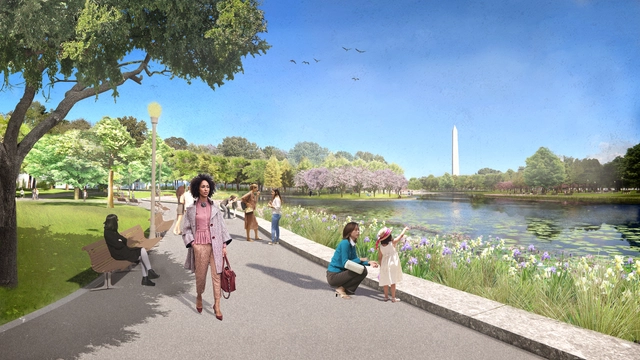
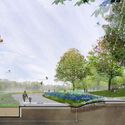
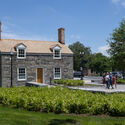
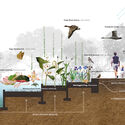
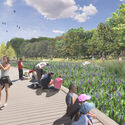
“Constitution Gardens will become a biodiversity hotspot on the National Mall,” said Adam Greenspan, FASLA, design partner at PWP Landscape Architecture. “We will create a garden, based in nature, while respecting the historic design.” Constitution Gardens in Washington, D.C. opened in 1976 to commemorate the bicentennial of the American revolution. Concepts outlined in the McMillan Plan and designs by Dan Kiley and SOM shaped the landscape.
But over the past forty years, the gardens fell into disrepair and became a pass-through site on the way to other more popular destinations on the mall. Now, the second phase of a three-phase plan to revitalize the garden has been approved by the Commission of Fine Arts and National Capital Planning Commission. The design by PWP Landscape Architecture and Rogers Partners Architects will create a “new ecological landscape” designed for people and hundreds of plant and animal species.
Architecture praxis has traditionally focused on customized, project-based services – a well-established model continually favored by industry professionals. While this approach yields remarkable built environments, it struggles to achieve scalability and longevity. The architectural industry has shown little interest in exploring alternative practices, processes and business models, considering that the traditional mode is equally vulnerable to market cycles as other industries are. Bespoke design solutions, the cornerstone of conventional practice, make standardizing processes and scaling services challenging. This focus also leads to fragmented workflows among firms and stakeholders. The stability and establishment of traditional practices can breed a risk-averse culture, hampering disruptive innovations within the industry.
Water is fundamental to human life on several levels, and encompasses a spectrum of meanings that transcend the biological sphere, reaching the cultural and spiritual spheres. Biologically, it is indispensable, making up approximately 70% of our bodies and playing a central role in our physiological functions, from temperature regulation to vital cellular processes. Culturally and spiritually, water has deep significance, symbolizing purification, renewal and spiritual rebirth in a multitude of rituals and ceremonies performed in different cultures over the centuries.
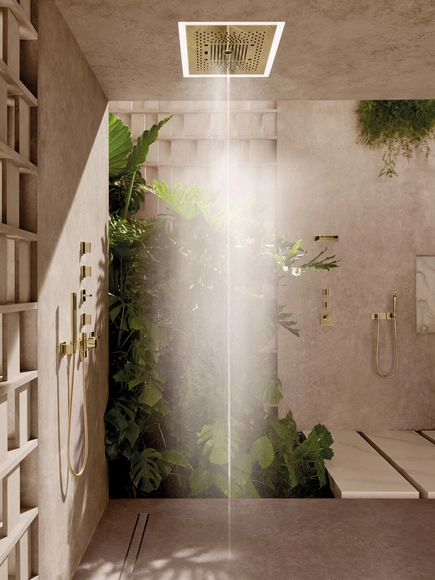
In architecture, the presence of water is equally important, going beyond its basic cleansing function to encompass a rich diversity of meanings and influences. From the majestic Roman baths, where water was used for hygiene and also represented social status, offering moments of entertainment and relaxation; to contemporary bathrooms, where water is skillfully integrated to create luxurious and invigorating spa experiences. Its presence goes beyond the functional aspect and is also deeply symbolic. Evoking feelings of purification, renewal and serenity, water enriches architecture with an emotional and aesthetic dimension that transcends the boundaries of time and culture.