February 17 is Mardi Gras, or “Fat Tuesday,” traditionally a Catholic holiday that celebrates the last night of indulging in guilty pleasures before participating in the penitential season of Lent. Celebrated around the world with elaborate parties, parades, dancing, and other frivolities, its festivities are most famously celebrated within the United States today in the city of New Orleans, Louisiana, the site of the first American Mardi Gras.
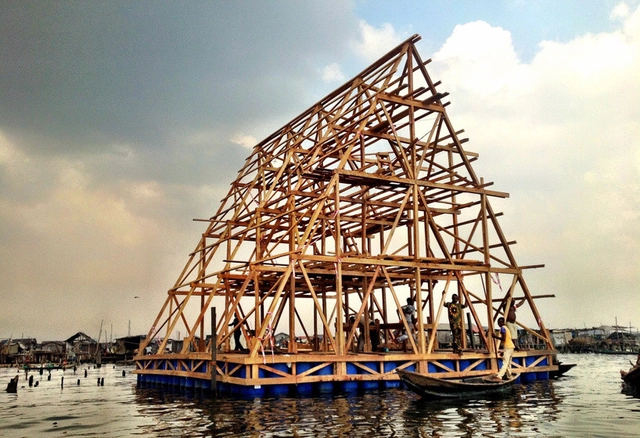
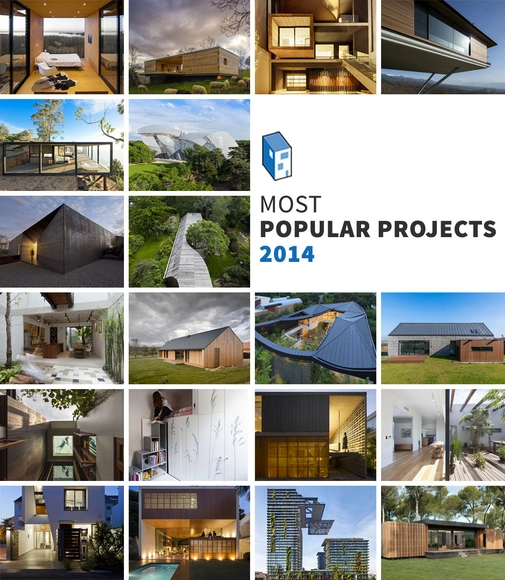
If you needed any more proof that 2014 was a good year for houses, this might be it. Among our 20 most viewed projects this year are no fewer than 17 private residences, which share the limelight with an apartment interior, a residential skyscraper, and a museum which no doubt received a boost in its exposure thanks to a certain jet-lagged octogenarian and his middle finger. From Frank Gehry to Studio MK27—who make the cut with not one but two projects—here are the 20 most popular projects of 2014.
https://www.archdaily.com/582695/the-most-popular-projects-of-2014AD Editorial Team
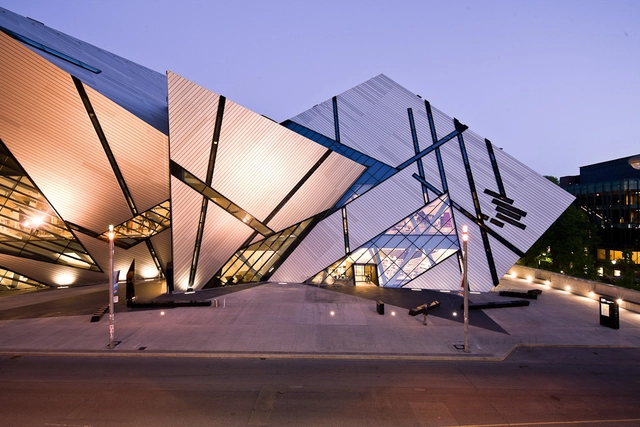
Today marks Canadian Thanksgiving, and to celebrate the occasion we've rounded up some of Canada's best architecture. Our five selections represent five Canadian cities, each with a unique architectural sensibility. We begin in Toronto with the Royal Ontario Museum addition by Studio Daniel Libeskind, a striking intervention using prisms of glass and steel fused to a 102-year-old museum structure; next we go to Montréal for Habitat 67 by Moshe Safdie, an interlocking modular housing project designed for the World Exposition of 1967; to Calgary for Santiago Calatrava's understated Peace Bridge, a stunning glass-encased red lightning bolt spanning the city's widest waterway; then to Winnipeg's Old Market Square Stage by emerging firm 5468796 Architecture, a chameleonic performance space wrapped by a mesh curtain of steel cubes; and finally to the outskirts of Vancouver for the Richmond Olympic Oval, a masterpiece of engineering and the centre of attention during the 2010 Vancouver Winter Olympics. Enjoy, eh.
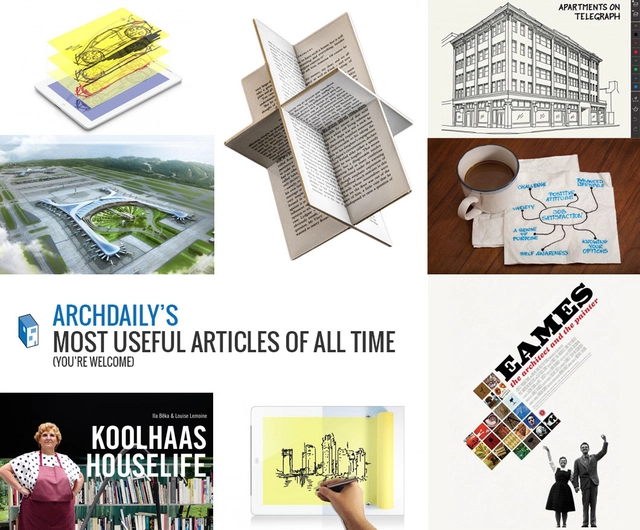
As summer draws to an end and we enter into the last quarter of 2014, we decided to round-up a selection of the most useful articles we've published over the past three years. Ranging from The 40 Architecture Documentaries to Watch in 2014 to The 10 Most Overlooked Women in Architectural History, we've also brought together app guides, career tips, and city guides. Alongside links to open-source CAD files and cut-out people, we've also featured book recommendations, study tips, and links to our complete coverage of some of the world's major architectural events and prizes. Delve into our collection and discover what our readers have found most useful!
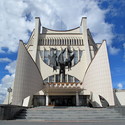
During the Soviet Union’s relatively brief and tumultuous history, the quest for national identity was one that consumed Russian culture. The decadence of Czarist society was shunned, and with it, the neoclassical architecture the Czars so loved. Communism brought with it an open frontier for artistic experimentation, particularly where public buildings were involved. It was on this frontier that Russian Constructivism was born, and some of Russia’s greatest buildings were built. This article on EnglishRussia.com compiles a list of some of the “best of the best” in Soviet architecture—and we liked it so much that we’ve compiled our own top ten list! See all of our favorite Soviet projects, after the break!
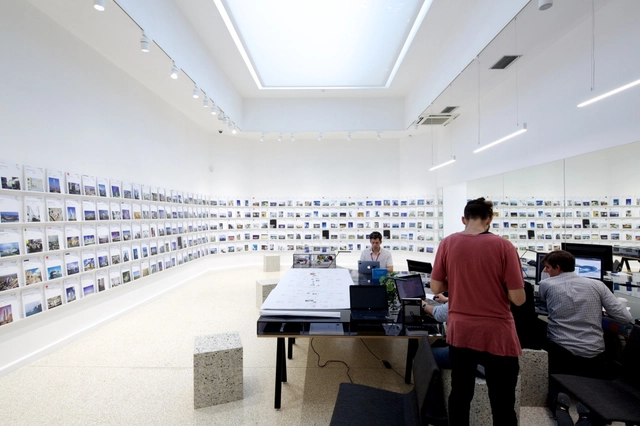
Responding to Rem Koolhas’s theme of “Absorbing Modernity," OfficeUS, the US's National Pavilion at this year's Venice Biennale, launched as an experimental architecture firm with a mission to revisit, rethink and re-evaluate one thousand American architectural projects from the last century. The Giardini Pavilion was transformed by New-York based firm Leong Leong into a multi-functioning and interdisciplinary office, run by the six “partners" who were hand-picked for the job. Assigned with the ongoing task of producing models, drawings, and engaging in workshops and lectures throughout the duration of the Biennale, the partners and their collaborators in Venice and around the world attempt "to construct an agenda for the future production of architecture."
Focused mainly on exported architecture, the projects vary from nuclear plants to US embassies, residential typologies and museums and are lined on the pavilion’s walls within research booklets, available for the use of the partners and the public.
Care to join in? Check out 15 of the projects investigated by OfficeUS, after the break…
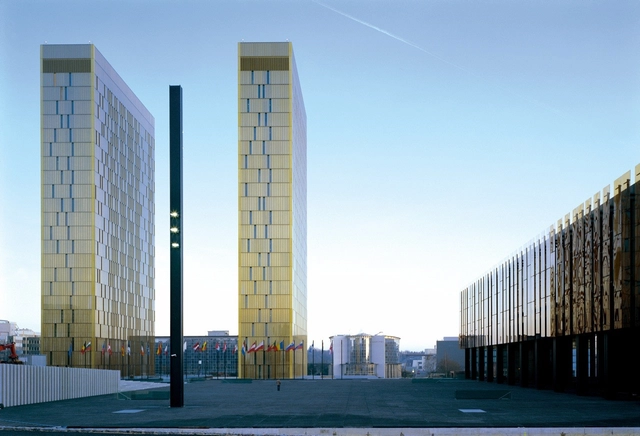
Today is Europe day in the EU, and to celebrate we're rounding up some of the best Europe-inspired architecture. First, two buildings designed for European institutions, the Court of Justice of the European Communities by Dominique Perrault and the Council of Europe by Art & Build Architect. Next, we've got a building which celebrates the achievements of Europeans, the Cultural Centre of European Space Technologies. Finally, two buildings which promote the very notion of Europe: the EU Pavilion by Senat Haliti, a message of hope for the 72% of Kosovans who wish to join the EU; and Le Monolithe by MVRDV, which has the first article of the European Constitution imprinted on the facade - expounding a belief in "a society in which pluralism, non-discrimination, tolerance, justice, solidarity, and equality between women and men prevail."
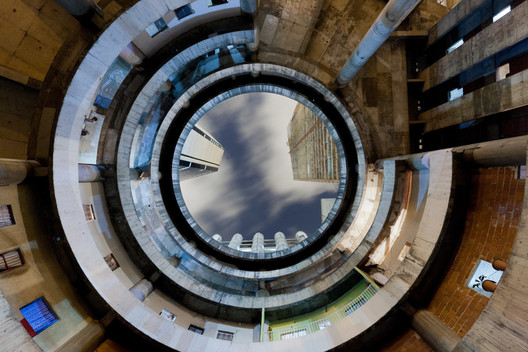
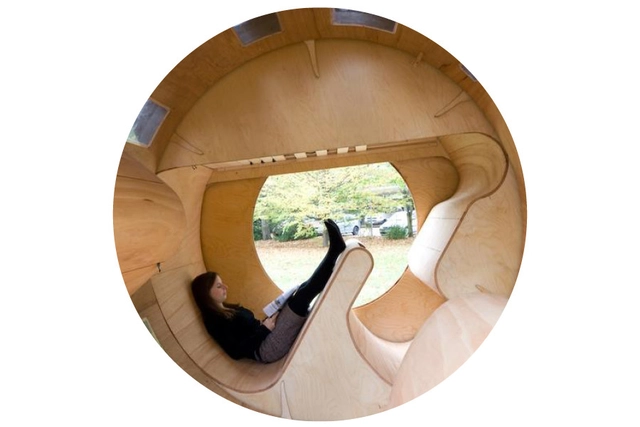
Happy Pi Day everyone! To celebrate the circle and its influence on architecture, we've decided to round up some rounded structures. First up, Roll It, a cool experimental house/cylinder. Second, Villa Vals, the hobbit-like neighbor of Zumthor's Therme Vals (designed underground to maintain the bath houses' extensive views). Then, the stacked, rounded form of the Kauffman Center for the Performing Arts, designed by Moshe Safdie for optimal sound reflection. Next up, Galaxy Soho, designed by the queen of curvature, Zaha Hadid. And - last but not least - the "mothership" itself, Foster + Partners' design for Apple's new campus, scheduled for completion in 2016.
There are few topics that stir up more controversy on ArchDaily than that of women in architecture. From those of you who vociferously advocate for women in the field to those who steadfastly purport that gender has no place in architecture at all, you, our readers, represent a wide spectrum of viewpoints and opinions on the subject.
And so, in honor of International Women's Day, we've decided to take a look back at some of our past comment-stirring articles (even more after the break):
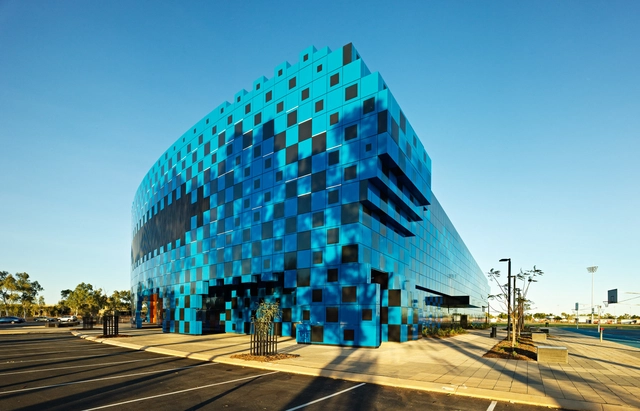
In honor of the 48th annual NFL Super Bowl, we at ArchDaily are rounding up 5 astounding arenas for your viewing pleasure (way more captivating than those silly commercials): the lavishly leviathan Lasesarre Football Stadium by NO.MAD, the curiously colossal BBVA Compass Stadium by Populous, the daintily dolloped Ice Dome Bolshoy by SIC Mostovik, the tetragonally titanic Olympic Tennis Centre by Dominique Perrault Architecture, and the whimsically whopping Wanangkura Stadium by ARM Architecture. For more Stadium Round Ups, follow this link.






.jpg?1406738918 "Amalir Sports and Concert Complex. Image via boxingscene.com")