Although societies have transformed through the ages, wealth never truly seems to go out of style. That said, the manner in which it is expressed continually adapts to each successive cultural epoch. As a consequence of evolving social mores and emerging technologies, the ideal of “luxury” and “splendour” sees priorities shift from opulence to subtlety, from tradition to innovation, and from visual ornamentation to physical comfort.
AD Classics are ArchDaily's continually updated collection of longer-form building studies of the world's most significant architectural projects. In these ten examples of "high-end" residences, which represent centuries of history across three separate continents, the ever-changing nature of status, power and fine living is revealed.
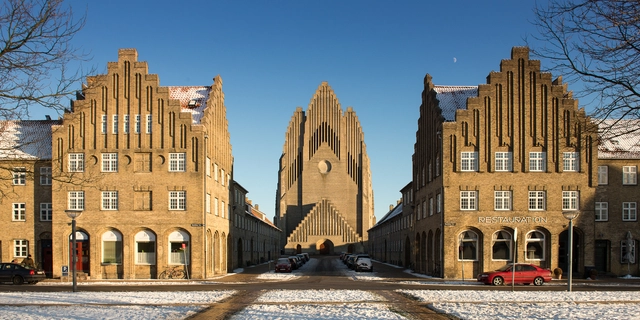
Courtesy of Flickr user Flemming Ibsen under CC BY-NC 2.0
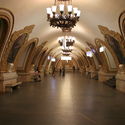
Religion, in one form or another, has formed the core of human society for much of our history. It therefore stands to reason that religious architecture has found equal prominence in towns and cities across the globe. Faith carries different meanings for different peoples and cultures, resulting in a wide variety of approaches to the structures in which worship takes place: some favor sanctuaries, others places of education and community, while others place the greatest emphasis on nature itself. Indeed, many carry secondary importance as symbols of national power or cultural expression.
AD Classics are ArchDaily's continually updated collection of longer-form building studies of the world's most significant architectural projects. The collection of sacred spaces collated here invariably reveal one desire that remains constant across all faiths and cultures: shifting one’s gaze from the mundane and everyday and fixing it on the spiritual, the otherworldly, and the eternal.
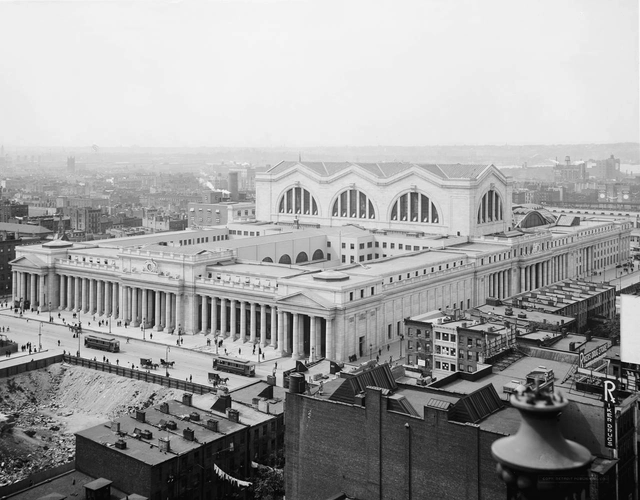
Courtesy of Detroit Publishing co. via US Library of Congress (Public Domain)
Architecture inherently appears to be at odds with our mobile world – while one is static, the other is in constant motion. That said, architecture has had, and continues to have, a significant role in facilitating the rapid growth and evolution of transportation: cars require bridges, ships require docks, and airplanes require airports.
In creating structures to support our transit infrastructure, architects and engineers have sought more than functionality alone. The architecture of motion creates monuments – to governmental power, human achievement, or the very spirit of movement itself. AD Classics are ArchDaily's continually updated collection of longer-form building studies of the world's most significant architectural projects. Here we've assembled seven projects which stand as enduring symbols of a civilization perpetually on the move.
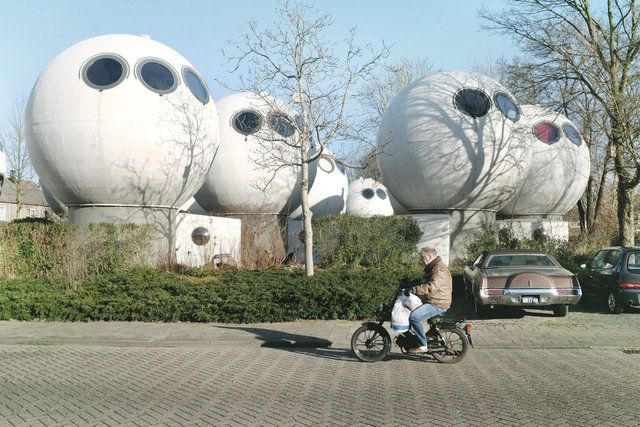
AD Classicsare ArchDaily's continually updated collection of longer-form building studies of the world's most significant architectural projects. Here we've rounded-up ten groundbreaking residential projects from this collection, ranging from a 15th century Venetian palazzo to a three-dimensional axonometric projection. Although some appear a little strange, all have been realised and have made lasting contributions to the wider architectural discourse. You can study residential cubes, spheres and inverted pyramids—plus projects by the likes of OMA, Álvaro Siza, and Richard and Su Rogers—after the break.
https://www.archdaily.com/792326/ad-classics-ten-groundbreaking-residential-projectsAD Editorial Team
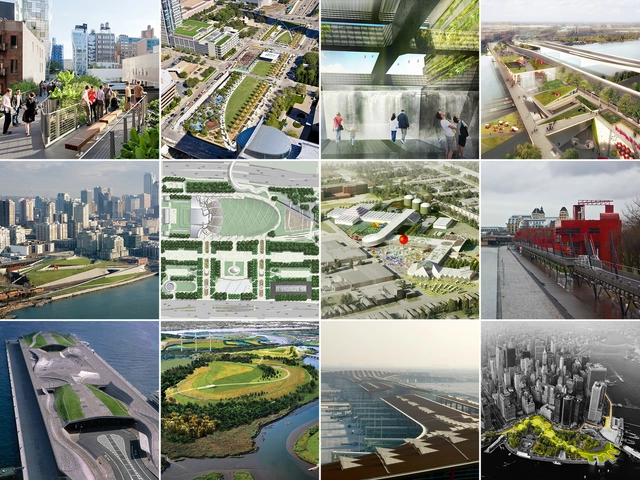
In his new book Landscape as Urbanism, Charles Waldheim, the John E. Irving Professor and Chair of Landscape Architecture at Harvard University’s Graduate School of Design, argues that in order to understand the twenty-first century metropolis, “a traditional understanding of the city as an extrapolation of architectural models and metaphors is no longer viable given the prevalence of larger forces or flows. These include ruptures or breaks in architectonic logic of traditional urban form as compelled by ecological, infrastructural, or economic change.”
In other words, spatial constructions in urban environments should no longer be attached to intractable functions or intent on isolation, but should instead integrate into the fabric of the city. These types of projects must be flexible to the inevitable changes in functionality and purpose that are byproducts of economic change and evolutions in land-use intentions. The dozen projects featured here are exemplary of such practices, both in how they adapt to past interventions and in how they move beyond the notion of a static future for urban conditions that are perpetually in flux.
Alvar Aalto was born in Alajärvi in central Finland and raised in Jyväskylä. Following the completion of his architectural studies at the Helsinki University of Technology he founded his own practice in 1923, based in Jyväskylä, and naming it Alvar Aalto, Architect and Monumental Artist. Although many of his early projects are characteristic examples of 'Nordic Classicism' the output of his practice would, following his marriage to fellow Architect Aino Marsio-Aalto (née Marsio), take on a Modernist aesthetic. From civic buildings to culture houses, university centers to churches, and one-off villas to student dormitories, the ten projects compiled here—spanning 1935 to 1978—celebrate the breadth of Aalto's œuvre.
Some of the most integral parts of a building are related to light and air. Windows, for example, can help transform a project into a more liveable or better space, providing natural light or connecting the building’s users with their surroundings.
From windows inserted into historic structures, to windows meant to give the building a distinct, landmark look, these nine projects utilize windows as a primary feature. View the nine creative uses of windows after the break.
Most residential projects must include parking spaces, but only few cases are notably innovative. Your vehicle's resting place can be more than just a required space; it may even become the backbone of the design itself.
The integration of parking, interior spaces and facades can deliver extremely intriguing and unique results.
Here we present 8 cases in which the humble parking space has assumed a main role in the design, while integrating new functions such as exhibition spaces, or structural features and versatile technology.
Over time, an endless spectrum of materials has become available for use within the realm of architecture. However, one material that seems underrepresented is plastic, a versatile and malleable compound that can be used for a wide variety of purposes. In light of the many applications of plastics in architecture, we have compiled a list of 12 projects that utilize plastic: from repurposing plastic bottles to the use of translucent plastic siding, these projects represent just a few of the many ways that plastic can be used as a primary material.
In the past eight years the world has seen important changes – stemming from natural catastrophes, global warming, war, diseases, political and economic crisis among other things – all of which have a direct impact on the way we inhabit our planet and therefore how architects and planners are managing context-related designs for community living.
The importance of socially engaged architecture was highlighted by this year's Pritzker Prize winner Alejandro Aravena, whose work appeals to the idea of an active, committed architect who seeks for a democratic urban environment. This development also resonates strongly with ArchDaily's mission statement "to improve the quality of life of the next 3 billion people that will move into cities in the next 40 years, by providing inspiration, knowledge and tools to the architects who will have the challenge to design for them."
Therefore, in celebration of ArchDaily's 8th birthday, our Projects Team curated a selection of 24 exemplary projects divided into 3 categories. Each of these projects published over the past 8 years dedicate their design to find greater social, community, civil and humanitarian needs.
https://www.archdaily.com/783459/a-look-back-8-years-of-social-and-urban-projectsAD Editorial Team
If there's one word that sums up our most popular projects of 2015, it's "diversity." The list features architects ranging from old favorites such as SANAA, Diller Scofidio + Renfro and OMA down to newer names like Sculp[IT] and Tropical Space; it also includes everything from museums to multi-family housing and spa retreats to chapels - along with the usual smattering of private residences. Interestingly, this year's list also shows the symbiosis between great architecture and great photography, with no less than 4 projects also appearing in our most bookmarked images from this year's World Photo Day. But despite their diversity, there's one thing all of these 20 projects have in common: great architecture. So settle in, relax and read on - here's our 20 most popular projects of 2015.
https://www.archdaily.com/779474/the-20-most-popular-projects-of-2015AD Editorial Team
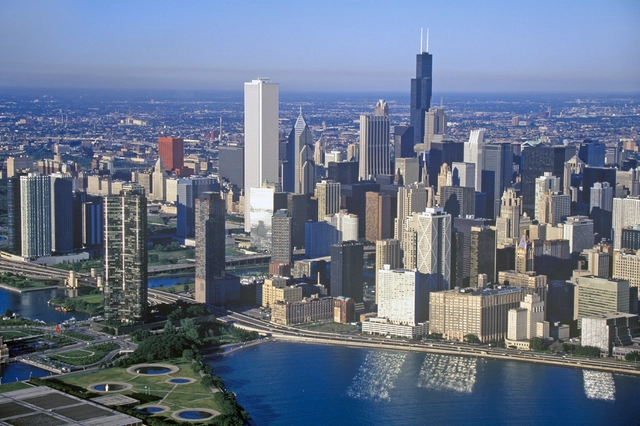
Chicago has long been known for distinctive architecture, and this year’s inaugural Chicago Architecture Biennial has only furthered that reputation. Although it is nearly impossible to narrow down the countless iconic structures, in celebration of the Biennial, we have compiled five Chicago buildings that highlight the many phases of the city’s architectural history.
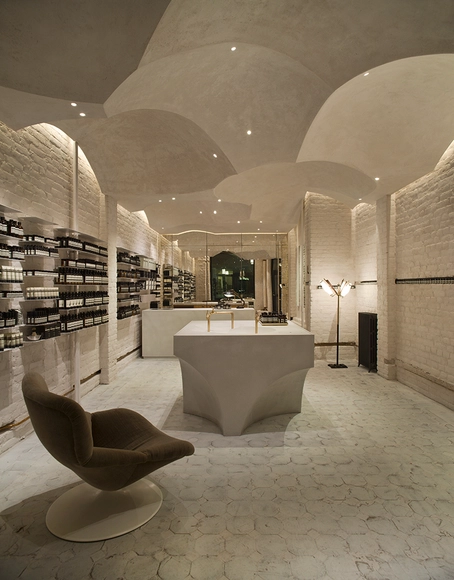
To pay "tribute to the creative processes, materials and features" that characterize each of its store designs, Aesop has a launched a new website called Taxonomy of Design. Inspired by the compendium, we’ve rounded up some of the best Aesop store designs, each of which is distinctly developed, largely by local designers who are inspired by the location of the store. Read on for nine Aesop shops that revitalize architectural simplicity.
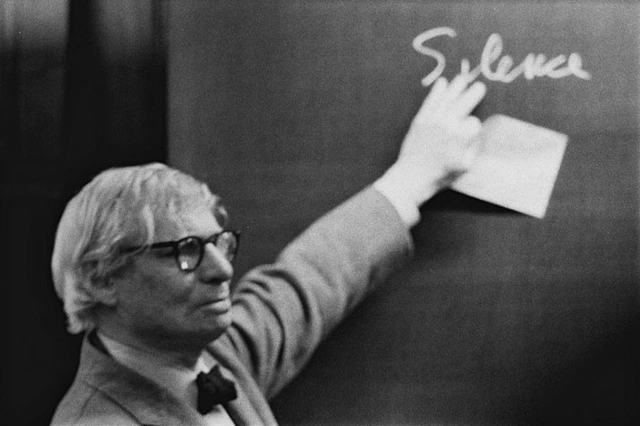
The online lecture, similar to the podcast, is an easy, often entertaining way of absorbing knowledge and the opinions of thinkers and practitioners from around the world. We've gathered together some of our favourite sources for watching architectural lectures online. Ranging from Barbaralee Diamonstein-Spielvogel's famous American Architecture Now interviews with Frank Gehry in 1980 and Robert Venturi and Denise Scott-Brown in 1984, to Sir Peter Cook speaking at Frankfurt's Staedelschule in 2012, these open-source films provide invaluable insights into architects and architects throughout recent history.
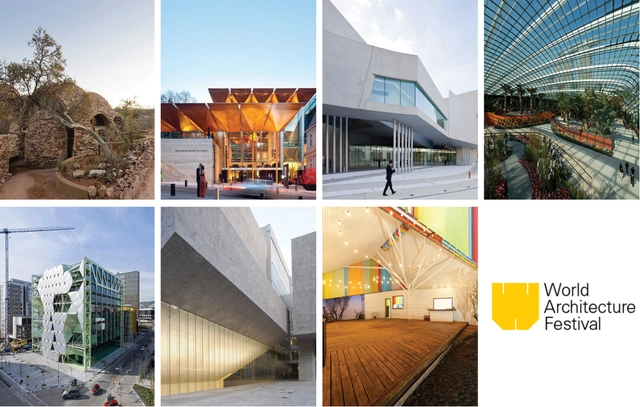
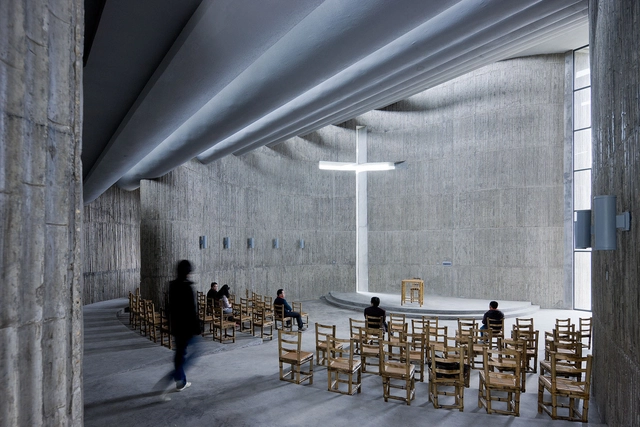
Deemed “the biggest architectural awards programme in the world,” the World Architecture Festival (WAF) annually awards and recognizes inspiring and innovative built projects from around the globe. The awards have been held over the past seven years, honoring buildings across 30 categories and ultimately selecting the World Building of the Year. From Grafton Architects' School of Economics at the Universita Luigi Bocconi — the first Building of the Year awarded in 2008 — to A21 Studio’s The Chapel — the most recent winner — the awarded projects have included everything from a chapel to an art gallery and even a public garden, spanning the world from South Africa to Vietnam, Italy and Spain.
This year WAF will be held from November 4-6, featuring three days of conferences, exhibitions and lectures in addition to the awards ceremony. As the 2015 award ceremony nears closer we look back at the World Building of the Year winners from the past seven years. See who has taken home the award after the break and learn how to submit your project here. Projects can be submitted for consideration until May 22nd. Use the code ARCHDAILY10 to receive a discount.
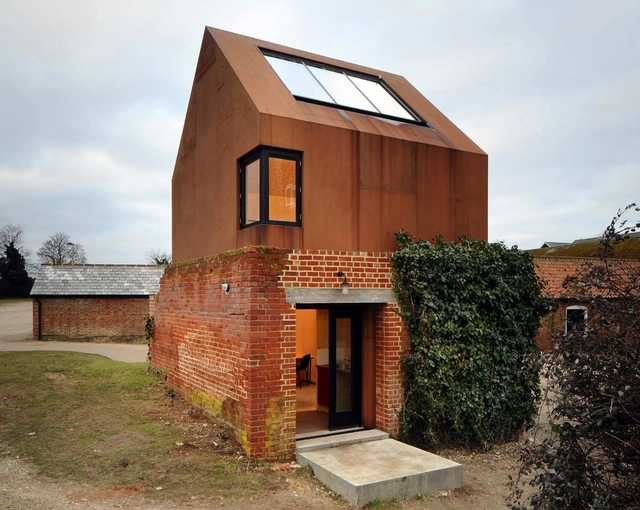
One of the most interesting trends in architectural materials of recent years is the increase in use of weathering steel - more commonly referred to by its trademark name, Cor-Ten. Thought the material has been around for decades, first being used for architectural purposes in the Eero Saarinen-designed John Deere Headquarters in 1964, the material has seen a surge in popularity in the last decade or so, being used in everything from individual houses and tiny kiosks, to SHoP's design for the Barclays Center in Brooklyn, which used a staggering 12,000 weathering steel panels.
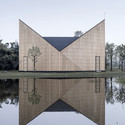
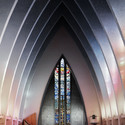
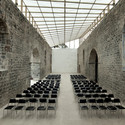
In the spirit of Easter Sunday, we've rounded up a compilation of ten glorious sacred spaces from our Religious Architecture Pinterest board. Ranging from traditional, reverent congregation halls to unexpected ultra-modern chapels, these spectacular places of worship are bound to inspire. Get a dose of these divine works after the break...
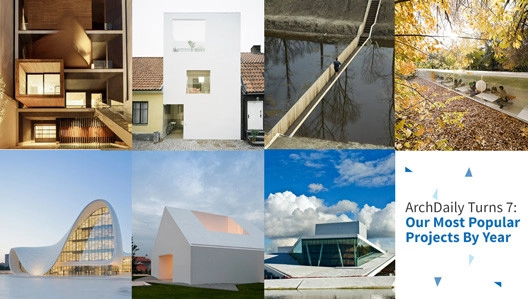
Today, ArchDaily is celebrating its seventh birthday (check out our letter to our readers and our infographic "7 Years of ArchDaily"). Our seventh birthday is a chance to reflect on our story, and to thank the readers that have helped to shape our course over the years, but of course there is one more ingredient that has helped to make us the world's most visited architecture website: great projects from talented designers all over the world. In fact as of press time, we have published 15,942 projects in total, an astonishing number that demonstrates the sheer quantity of architects out there working for a better world.
Which of these thousands of projects have had the biggest impact on you, our readers? Join us after the break as we look back at seven buildings that rose above the fray to become the most-viewed project in each of our seven years.
https://www.archdaily.com/607325/archdaily-7-years-7-most-popular-projectsAD Editorial Team


.jpg?1472236051&format=webp&width=640&height=580)


.jpg?1472236051)