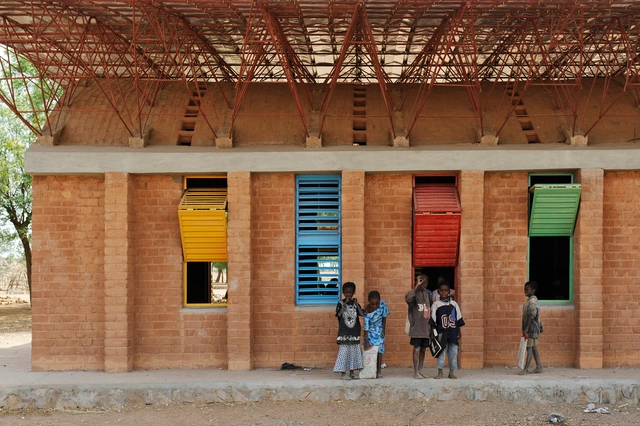
Hard times bring people together. In recent years we have seen how collective work can be a driving force to help those affected by natural or man-made disasters. After a disaster or displacement, a safe physical environment is often essential. Therefore, the need for coordination becomes a key factor in assisting people in times of need.
Architects, as "Shelter Specialists", play an important role in creating safe and adequate environments, whether it is individual housing, public buildings, schools, or emergency tent camps. But as architect Diébédo Francis Kéré says, "When you have nothing and you want to convince your community to believe in an idea, it may happen that everybody starts working with you, but you need to keep fighting to convince them."
Casa SB. Image Courtesy of Esrawe Studio by Joel Flores & Emanuel Miramontes
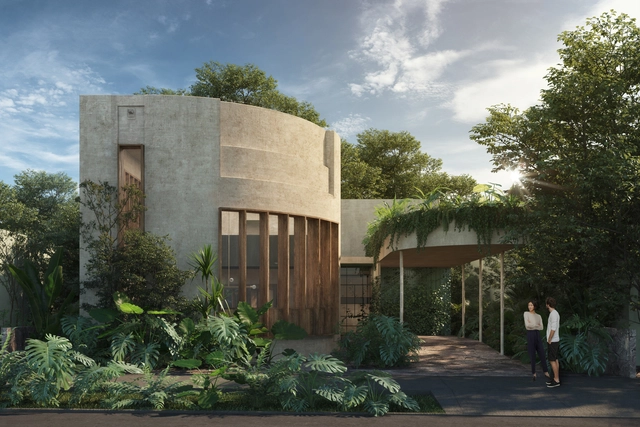
This week’s curated selection of Best Unbuilt Architecture highlights private residential projects submitted by the ArchDaily Community. From cabins in woods to oceanfront villas, this article explores private residential retreats and presents projects submitted to us from all over the world.
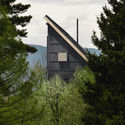
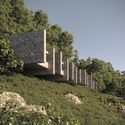
Featuring a house nestled in the Swiss forests, a private LA hillside house, and a hidden family house in the Lebanese mountains, this roundup explores how architects have merged landscape and contemporary architecture, and tucked away private residences, giving them the privacy and serenity they need. This round up also includes a collection of houses in Armenia, Mexico, Kenya, and El Salvador, each responding to different contexts, spatial needs, and topographies.
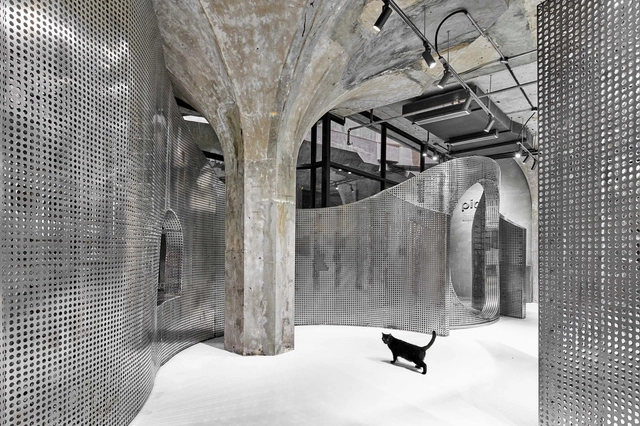
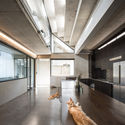
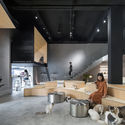
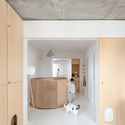
Cats just don’t care. They don’t care if you bought them gourmet food. They don’t care if you got them customized furniture or luxury cardboard boxes, and they definitely don’t care if they are barging into an architectural photo shoot (although, we do think it’s their way of being the center of attention).
Don't believe us? Here's a collection of photographs collected from our projects database where cats are clearly not trying to steal the spotlight.
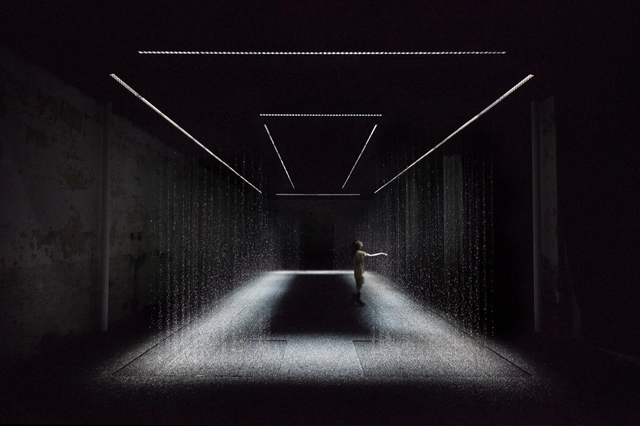
The use of light and shadow in architecture can have several nuances. The traditional Japanese culture stands out for working with spaces of dim light, kind of dull. On the other hand, modern architecture and minimalism work along with illuminating spaces through the use of white spaces and reflection of light as a recurring resource.
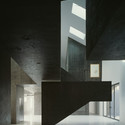
Even so, black, dark spaces and minimalism also converse in the same language that provides new possibilities for lighting design and use of new materials. We now present you a selection of the best contemporary interior spaces that use black as the protagonist element, generating introspective but dramatic environments at the same time.
In order to explain projects and design decisions properly, architects must use often rely on creative representation techniques instead of words. It’s part of the job. The quality of drawings - simple, complex, or anything in between - is fundamental for the correct reception of the ideas. Digital media has enabled new ways of representation including animation and adding a new dimension in a single image: processes.
Animated gifs can provide the same amount of information in constructive terms as a section, program distribution as a diagram and main decisions as a master plan, while at the same time showing the progress and chronology of the project.
The following 30 projects use animated gifs as a tool to represent the design process, construction details, use of layers and interior spatial sequences.
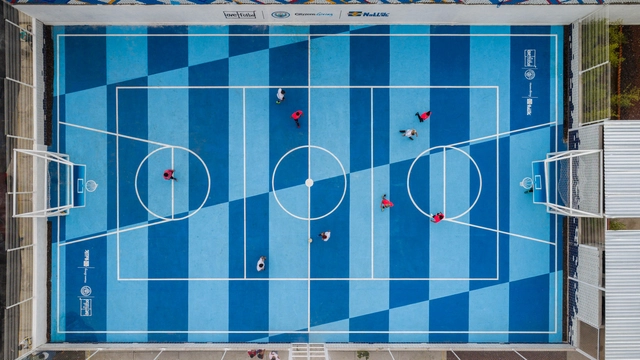
People often gather around sports activities, whether they are the ones exercising or the ones cheering. This internationally recognized social interest brings everyone together seamlessly, regardless of their background, gender, culture, ethnicity and so on.
Urban regeneration can take different aspects, and one of the most prominent and efficient solutions that can reconcile a community with itself and its surroundings is a sports function. In fact, this purpose encourages people to reclaim their fundamental right to public spaces and regenerate demoted, hostile or forgotten areas.
Read on to discover examples from all over the world, where physical activities made an urban impact on the neighborhood and the community.
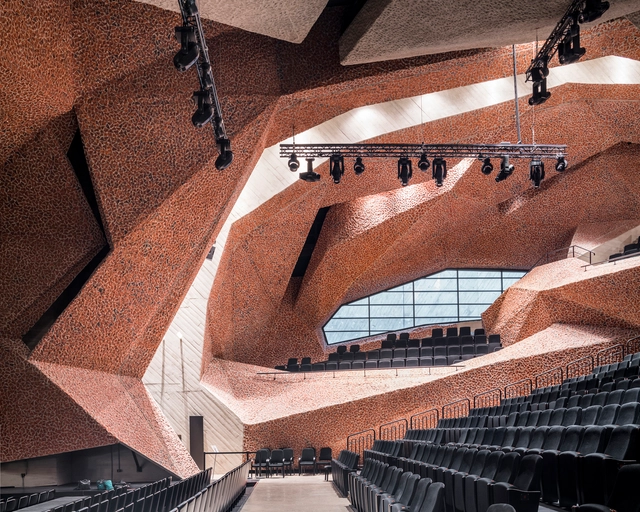
When we think about a perfect match between acoustics and good design it may not be as easy as it seems. A number of technical decisions in order to make an interior space acoustically efficient -and to achieve its programmatic purpose correctly- can make some of the architect's design intentions fade and be replaced by standard and prefabricated panels.
In this article, we present a selection of architecture projects that are able to create a memorable visual impact as well as an impeccable interior solution for acoustics. These are our favorite 14 music venues that fascinate inside and out.
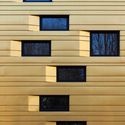
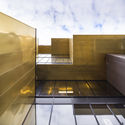
Since its discovery in 8700 B.C., copper has been one of the most used metals in the history of humankind. It has a variety of uses from coins and weapons to statues and even architecture. One of its first architectural uses was in Ancient Egypt for the massive doors of the temple to Amen-Re at Karnak in 300 B.C.
The versatility of the material continues in architecture to this day, allowing for a variety of unique designs and uses. The innovative, efficient, and lightweight material is versatile in its use, ranging from facades to roofs, interior applications, and high tech solutions. Sustainable in its natural form, the material is 100% recycled. As the state of architecture becomes more focused on sustainability, copper becomes the ideal material for the buildings of today.
Below, we’ve selected 7 projects that use architecture's original bling.
https://www.archdaily.com/907537/copper-facades-architectures-original-blingMartita Vial della Maggiora
ArchDaily and Airbnb were both founded in 2008, but for two very different reasons. Since then, ArchDaily has amassed a vast database of tens of thousands of buildings, located in cities and countries all around the world. Meanwhile, Airbnb has revolutionized the way in which we explore these countries, and use these buildings, even if just for one night.
March 22 is World Water Day, an annual international celebration launched and organized by the United Nations. The goal of the day is to raise awareness about a wide range of water-based issues from around the world. This year’s theme is “Nature From Water”, which invites everyone to think about how nature can provide solutions to the water challenges we face today.
To celebrate World Water Day this year, we’ve rounded up 20 of our favorite projects that utilize water as a central design feature. Whether it be Zumthor'sThermal Vals or Chritso and Jeanne-Claude'sFloating Piers, water has been playing an important role in architectural design and in demarcating the boundaries of nature against our built environment.
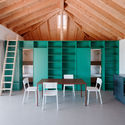
Over the centuries green has signified many emotions; love, jealousy, health, and more recently the environment. Particularly in the middle ages, it was used to suggest wealth and riches, being used by Leonardo da Vinci as the color of Mona Lisa’s dress. It has also been part of the important tradition to wear green on St. Patrick’s Day as part of the celebrations, a custom in Ireland that dates as far back as 1640.
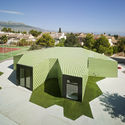
When it comes to architecture, green color buildings stand out in cities that are usually abundant with brick, concrete and steel and their monochrome palette. In 2017 we saw the revitalizing shade of green, ‘greenery’, being named Pantone’s Color of the Year so it’s no wonder that there are copious numbers of buildings and interiors adorning such a refreshing tone.
Is green the new black? It’s up to you to decide as you scroll through the 18 gorgeous projects below featuring green with such pride.
Recycling material in architecture is becoming increasingly valued in order to enable the creation of sustainable projects. Certainly, naval containers have been one of the elements that have gained prominence in recent years for the design of private and public buildings that respect the environment. In addition to the ecological appeal, containers are a viable choice due to the speed and ease of assembly, the option of a cleaner construction site, or even the different design solutions that this material provides. With their standardized sizes, it becomes possible to create a modular structure that allows infinite possibilities of intervention, so that it suits different uses.
We have gathered here 20 examples of works that adopt the use of containers and some tips that will certainly help you on your next project.
Housing is certainly one of the most interesting themes that present itself to the architect, after all designing a residence allows the study of the usage and customs of human beings according to their culture, desires and daily life. Each project brings a new customer and, with it, an unprecedented challenge.
Through the ten selected projects, it is possible to see the inventiveness of the architects and how each work distinguishes itself from the other through the colors, geometry, relation with surroundings or even the way in which it innovates when proposing a new daily life to its inhabitants.
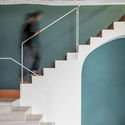
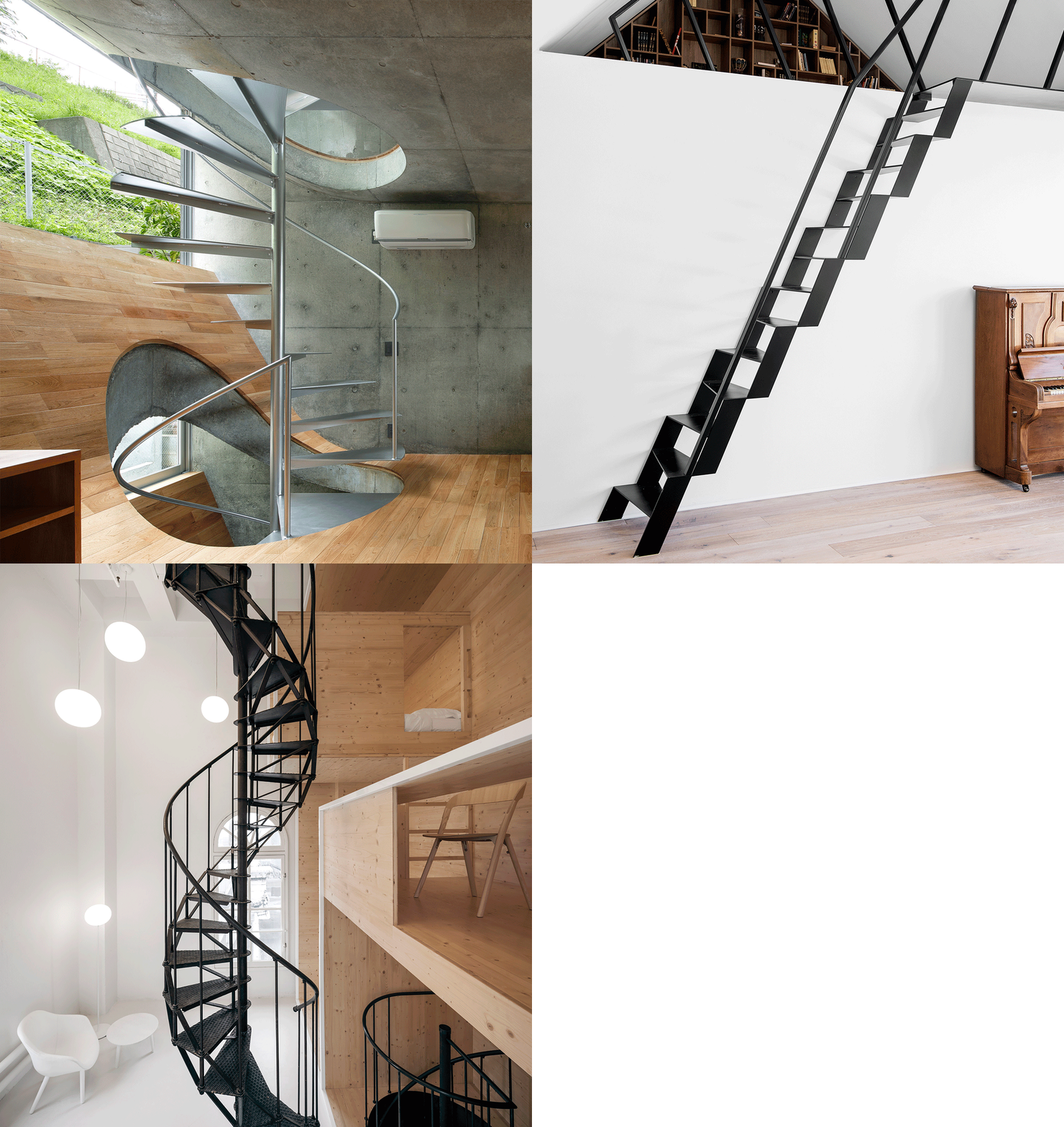
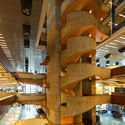
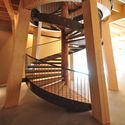
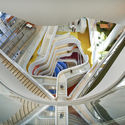
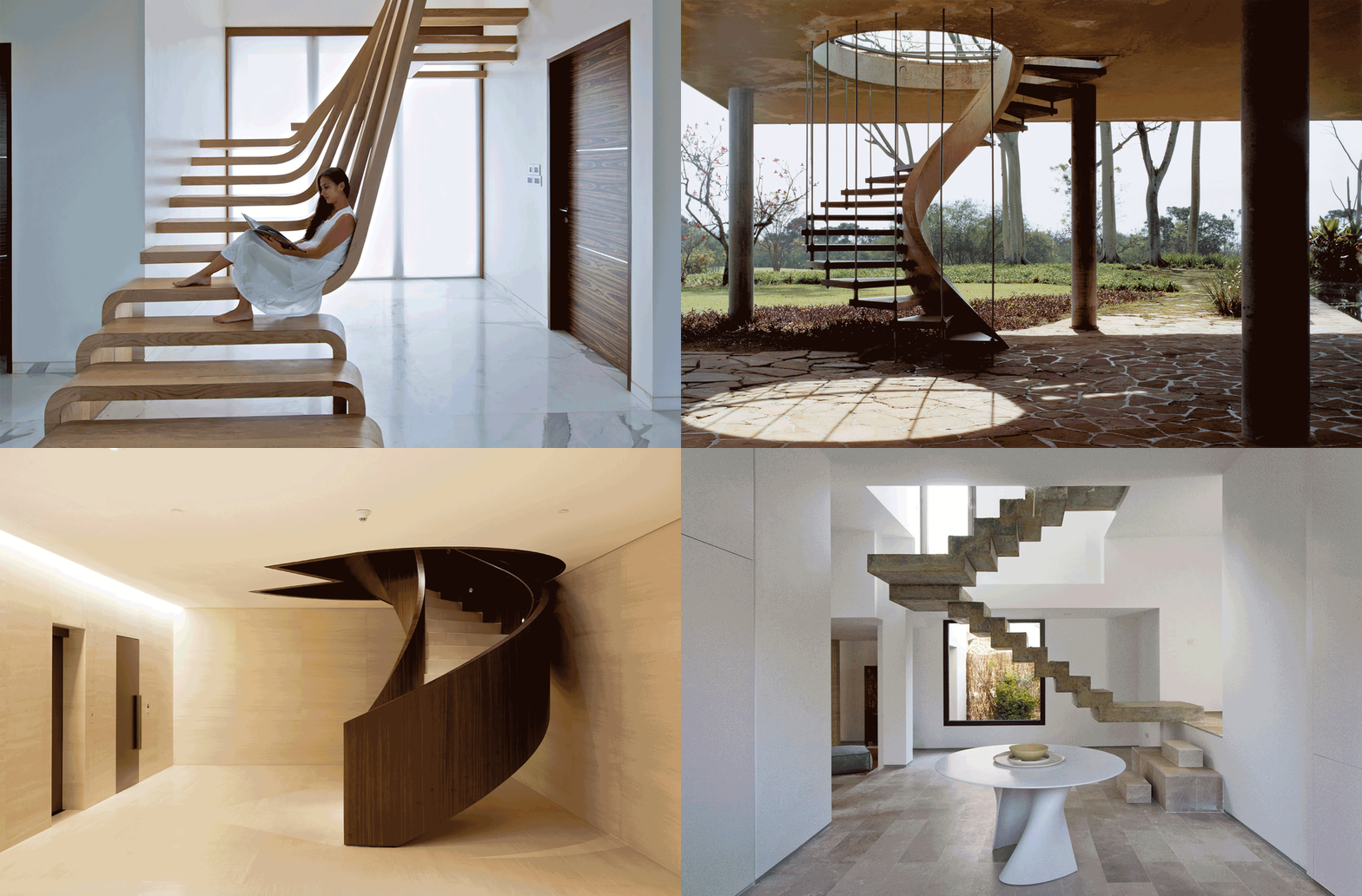
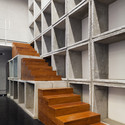
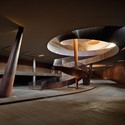
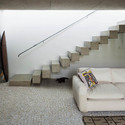
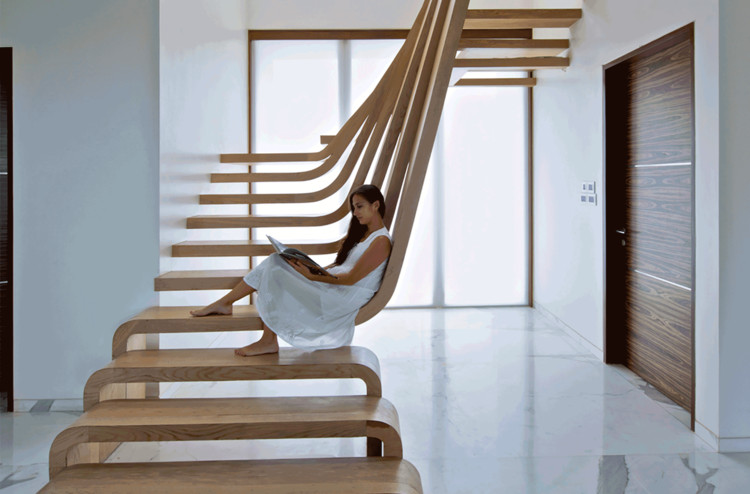
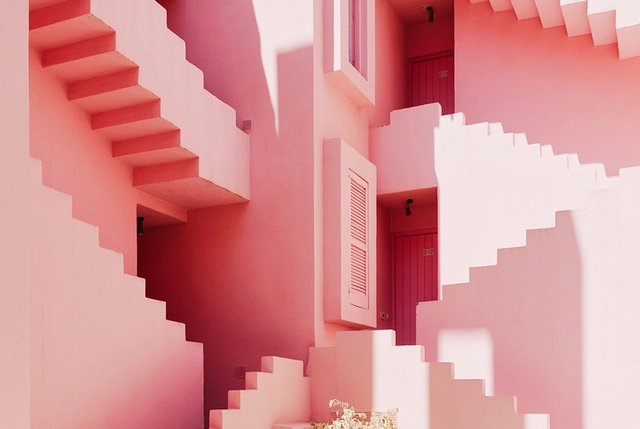
We’ve already presented a selection of staircases made from beautiful materials, and are back for round 2! With different types of materials and support techniques, some stairs give us the feeling of being suspended in the air, while others play with the exposed elements that sustain them. In this round-up, we’ve got some seriously spiraling stairs, both in public and private buildings. We’re also showcasing some unique metal staircases so thin they look almost see-through – a feat of architecture and structural design.
Check out ten more unique staircases from our archive below:
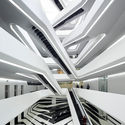
Stairs do more than take you up a floor; they represent a journey the architect wants you to travel. The act of ascending and descending extends beyond planning. Projects like Herzog and De Meuron’s expressive staircases in VitraHaus, Sou Fujimoto’s inhabited stairs in Musashino’s Library and even MVRDV’s giant urban staircase allowed individuals to achieve entirely new perspectives of their surroundings or even city. Staircases hold their own as elements of architectural expression. Some blend in; others puncture a space with their unique shape and materials.
This month marks the 150th anniversary of the birth of acclaimed American architect, visionary, and social critic Frank Lloyd Wright -considered by many to be one of the greatest architects of his time.
As a pioneer of the term 'organic architecture', one of his most iconic representative works is Fallingwater, set upon a waterfall in rural Pennsylvania. From its unveiling, the scheme has evoked enduring reflection on the relationship between man, architecture, and most prominently in Frank Lloyd Wright's mind - nature.
Like a reader hooked on a bestselling thriller, the design of libraries has enthralled architects and the general public for centuries. From the classical mahogany grandeur of the world-famous Long Room at Trinity College Dublin to the post-war, brick modernism of the British Library in London, the important role of libraries in our lives has historically demanded a degree of architectural thought and consideration.
In recent times, however, that historic role has changed. With the digital age revolutionizing how we access, research, and communicate information, libraries are no longer reserved exclusively for books. Libraries today must act as ‘information hubs’, with the flexibility to accommodate a diverse range of media and arts. Architects have responded to the challenge of a new era, reimagining how libraries are built, experienced, and utilized, without entirely throwing away the rule book.
Below, we have rounded-up 12 libraries from around the world, all with architecture from the top shelf.
As we celebrate World Animal Day, take a look at 20 stunning projects we have previously published that do just that, celebrate animals #WorldAnimalDay.
Whether the space was designed for them or these animals were simply photobombing, these inspiring project images illustrate our quadruped, furry friends enjoying architectural spaces.
See the 20 projects where humans are not the only users.










.gif?1463188521)


.jpg?1557252548 "© Ema Peter")




.jpg?1533734642 "VillaLóla / ARKÍS architects. Image © ARKÍS architects")