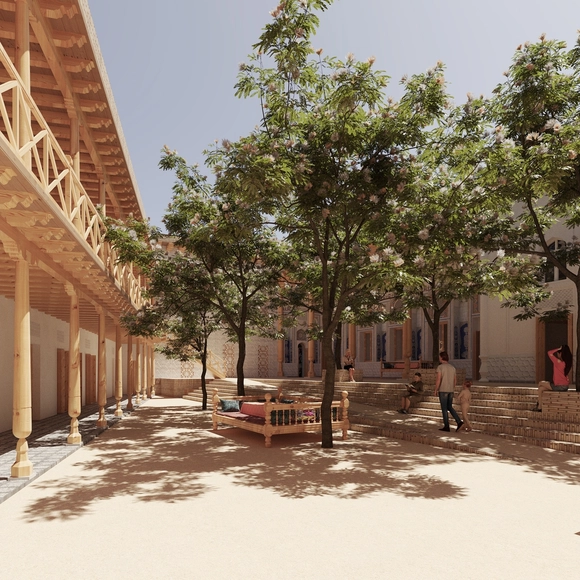
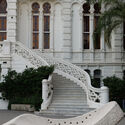
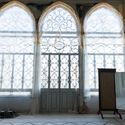
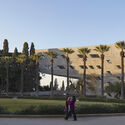
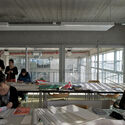
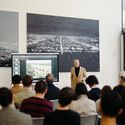
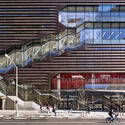
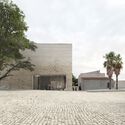
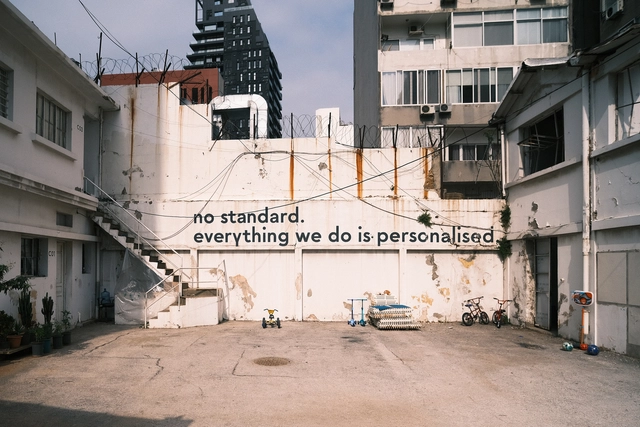
The Sharjah Architecture Triennial (SAT) has released the full documentary films from A Journey into Architecture Archives: Baghdad, Damascus, Tunis online. Curated by George Arbid, the project is part of SAT's long-term research program focused on documenting and safeguarding architectural archives across the Arab world. The three films, filmed on location in Baghdad, Damascus, and Tunis, combine archival research with fieldwork and oral histories, examining how architectural histories are constructed, preserved, and revisited over time.
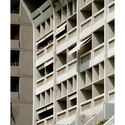
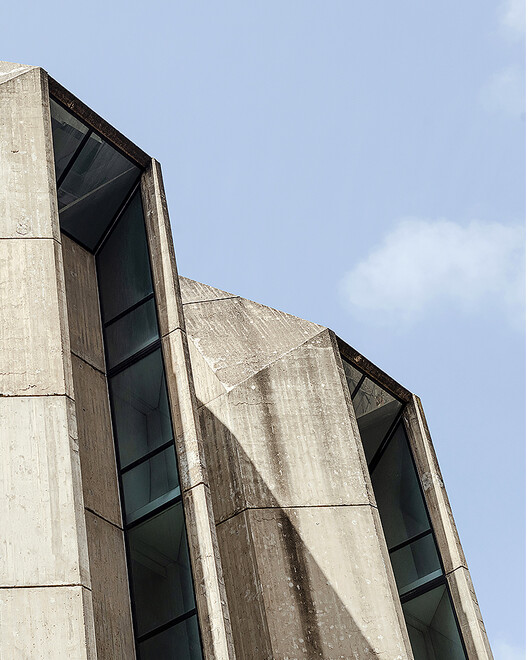
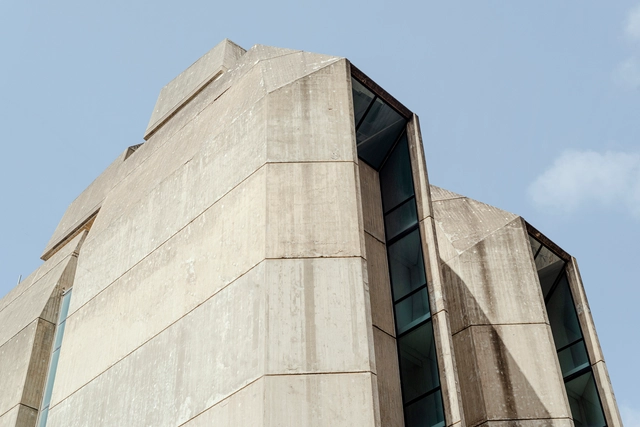
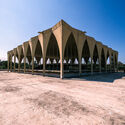
The history of Brutalism has largely been written from a Western perspective. Brutalist Asia by Blue Crow Mediaoffers a different view, examining how architects across Asia adopted, questioned, and transformed the architectural language associated with the movement in response to radically different political, climatic, and cultural conditions. Spanning 28 countries, from Japan and Southeast Asia through South and Central Asia to the Middle East, Iran, and Lebanon, the book brings together 140 buildings and more than 150 photographs, placing internationally recognized works by architects including Kenzo Tange, Paul Rudolph, Balkrishna V. Doshi, Raj Rewal, Charles Correa, Kim Swoo Geun, Leandro V. Locsin, and Le Corbusier alongside important but lesser-known works that expand our understanding of post-war architecture across the continent.
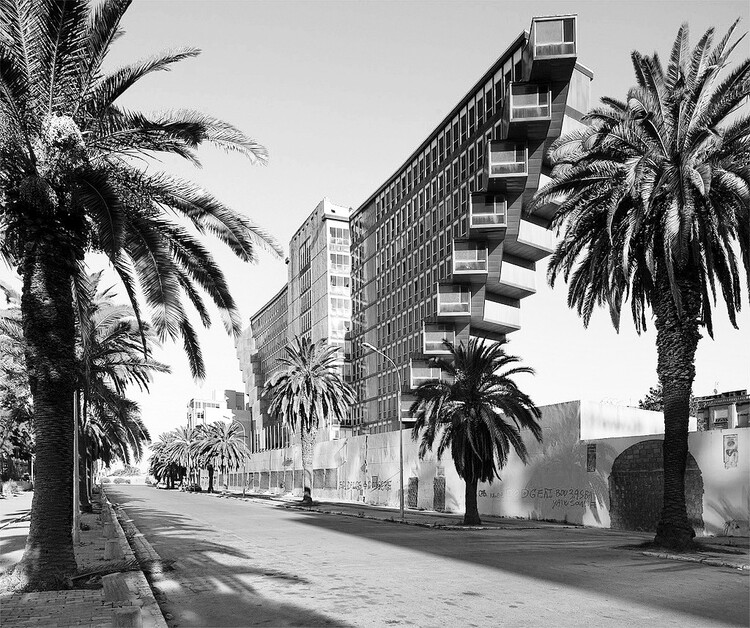
Within this broader geography, one particular history unfolds in Lebanon, where the ambitions of Modernism became inseparable from a country undergoing profound social, political, and urban transformation. Read on for an excerpt from ArchDaily Editor-in-Chief Christele Harrouk's chapter in Brutalist Asia, tracing the rise of Brutalism in Lebanon, the architects and buildings that gave it a particular local expression, and the rupture that left this Modernist project unfinished.
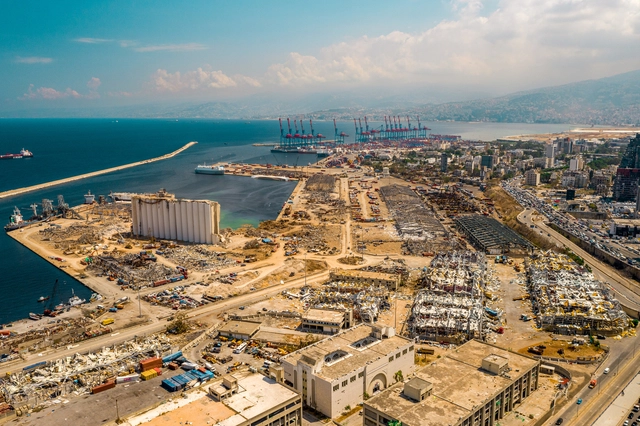
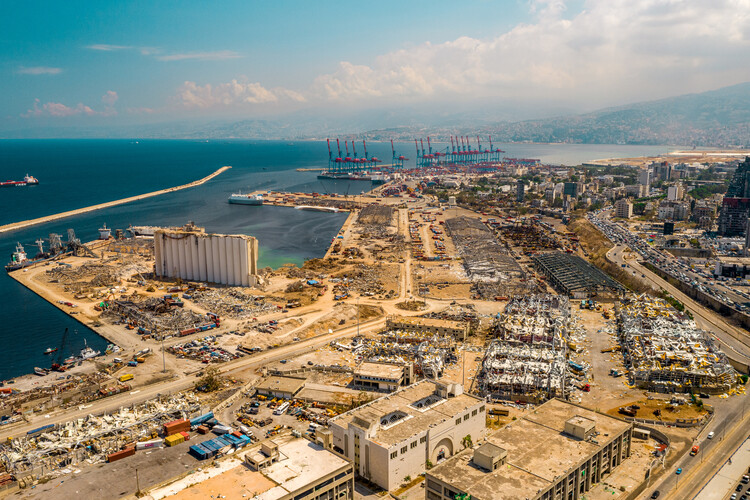
A blast destroyed 40% of the city of Beirut on August 4, 2020. Five years after the port explosions, the UNESCO Director-General visited Lebanon to assess the institution's work in the capital city. UNESCO's efforts have been based on the recognition that the explosion destroyed numerous buildings and historic neighborhoods that were home to a community of cultural professionals, leaving a void in the city's cultural landscape and economy. The organization mobilized international efforts to restore, reactivate, and safeguard Beirut's heritage buildings, schools, museums, and cultural institutions, seeking to provide a comprehensive response to protect the city's cultural fabric. During the visit in September, new restoration and reconstruction programs were announced, including the rehabilitation of the Mar Mikhael train station and Beirut's Grand Theatre, as well as support for cultural industries in Tyre and Baalbek.
Architectural Classics featured on ArchDaily serve as a record of significant works that have influenced the evolution of architecture and design. These projects represent a range of styles, purposes, and contexts, offering insight into how architecture responds to cultural, social, and environmental factors. By revisiting these influential works, one can better understand the principles and ideas that have shaped the built environment globally over time. These classics highlight moments of design innovation while also providing a broader perspective on architecture's role in reflecting and shaping the world around us.
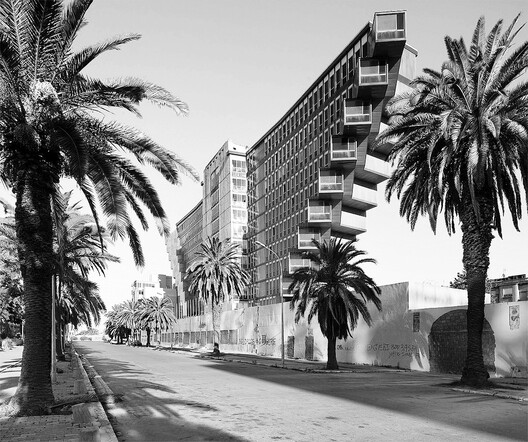
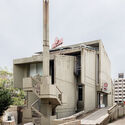
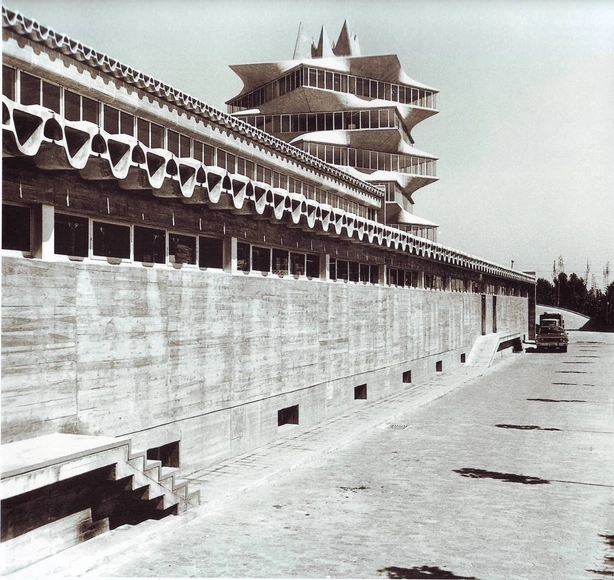
In Beirut, a city marked by transformation, the Interdesign Building echoes the vision of an architect steadfast in his conviction. Designed by Lebanese architect Khalil Khouri in 1973 during a period of economic growth, the building took 23 years to build, a process halted by the onset of the Lebanese Civil War. By the time it was completed in 1996, the urban landscape that surrounded it had changed. The structure has stood largely unused since, as a relic of hopeful modernity. While its design is singular in its narrative and expression, this structure illustrates the tension between aspiration and struggle throughout its complex history.
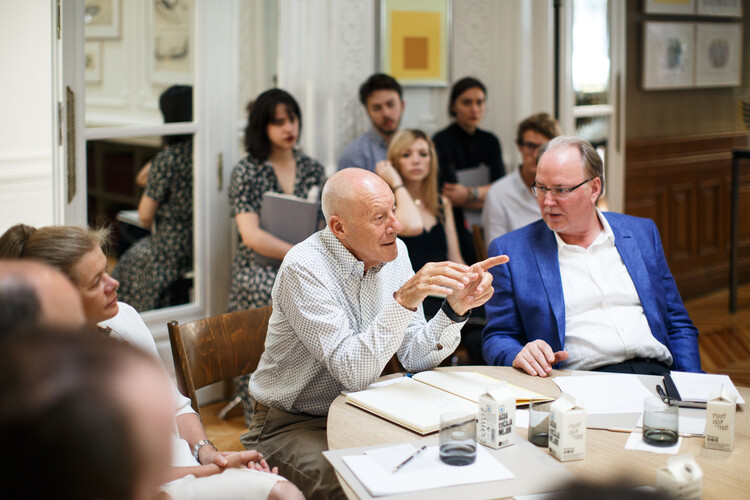
In Beirut, the Interdesign Building stands as a striking yet enigmatic structure. Never used since its conception in 1973, the building was designed by Lebanese architect Khalil Khouri and, in some ways, it represents a physical testament to the region’s hopes and struggles. During the inaugural edition of We Design Beirut, the exhibition “All Things Must(n't) Pass: A Subjective Recount Of Khalil Khouri’s Life And Career As A Designer” opened the building to the public, aiming to tell the story of its architect, Khalil Khouri, through the lens of his son and grandson, Bernard and Teymour Khoury. On this occasion, ArchDaily’s Editor in Chief, Christele Harrouk sat down with Bernard Khoury at his DW5 office to discuss the life of his father and a little-known chapter of Lebanese architectural history.
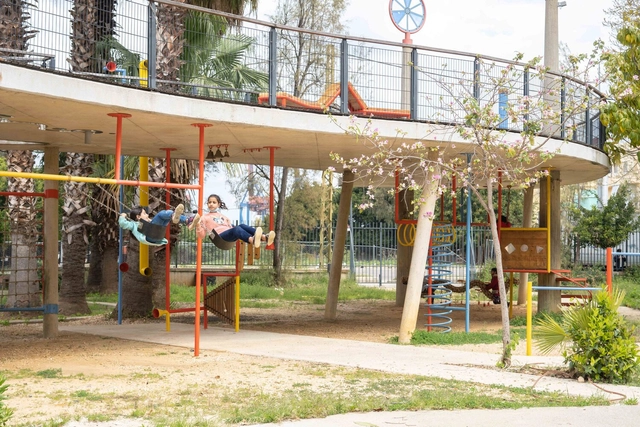
Karantina Public Park 2020-2023. Image Courtesy of CatalyticAction
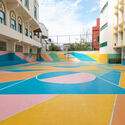
Public spaces are not always shaped by planning but by the practices they host. Their existence stems from our inherent need for connection with others. As spaces of encounter, these urban, open, and accessible areas reflect how we interact with our surroundings and each other while offering places for exercise, play, socializing, and recreation.
Recognizing that public spaces are more than just physical environments, CatalyticAction is dedicated to fostering a sense of community, safety, and belonging, especially for children, who are among the most vulnerable in society. Their mission is not only to create spaces where children can play and grow but also to empower them, ensuring they have a voice in shaping their surroundings. To learn more about their work, Christele Harrouk, ArchDaily's Editor-in-Chief, spoke with Joana Dabaj, Co-founder and Director of Programmes at CatalyticAction.
Throughout history, stone has been a vital building material because of its strength, beauty, and inherent appeal. Stone has been used to build long-lasting constructions for ages, from historic monuments to contemporary residences. Because of its resilience, it is suitable for both interior and exterior design projects, providing a diverse array of appearances. There are numerous varieties of stone, each with a distinct texture and color, including marble, granite, and limestone. Because of this diversity, stone may be creatively used by architects and builders to create accents or entire buildings. This curated selection of Unbuilt Architecture,submitted by the ArchDaily community, showcases how stone is still a dependable and adaptable building material that can combine old-world craftsmanship with contemporary style.
We Design Beirut, Lebanon’s four-day design experience will take place from May 23-26, 2024. This multidisciplinary event aims to showcase and celebrate design and creativity through a varied program, including showcases, installations, talks, and workshops. Founded by Mariana Wehbe in collaboration with industrial designer Samer Alameen, the event seeks to foster a global conversation on design and sustainability through programs in the fields of interior design, architecture, furniture, product design, functional art, ceramics, and home accessories.
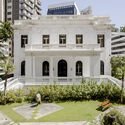
More than ten thousand kilometers away from the capital Brasilia, a jewel of Brazilian modern architecture overlooks the Mediterranean Sea. Located in another Brasilia, a district in Beirut named after the Brazilian capital, the Residence of the Ambassador of Brazil in Lebanon, designed by Olavo Redig de Campos, combines tropical modernism with elements of Middle Eastern culture.
For the first time, the house will be open to the public through guided tours focused on historical heritage. Geared towards architecture, design, and art professionals and students, the visits will be guided by Dr. George Arbid, director of the Arab Center for Architecture, a renowned institution in modern architecture in the region.
As farmers water crops by moonlight, undocumented children head to school and villagers scan the sky for surveillance airplanes—these are glimpses of a complex culture that emerges in south Lebanon after dark. In collecting some of these nightly practices, Mohamad Nahleh—lecturer in architecture and urbanism at MIT—journeyed across the landscapes of Jabal ‘Amil hoping to build a new alliance between architecture and the night. His "Path of Nightrise" research has turned into a construction to revive a forgotten river path and was published by Places Journal. The interview with Nahleh argues for a new nocturnal imagination in design and reveals, not only how the night has changed in Lebanon over time, but also how he has changed alongside it.