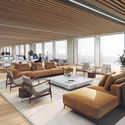
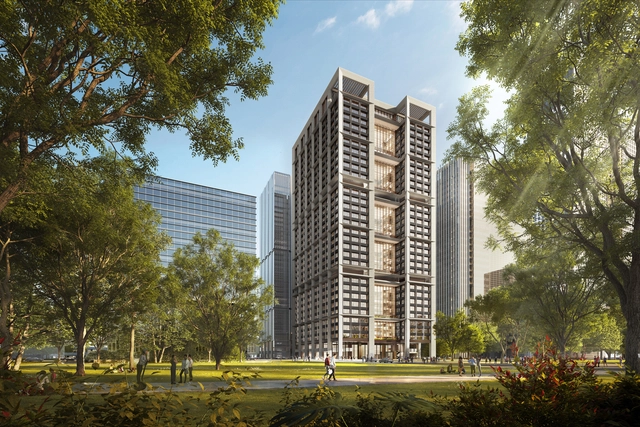
Located in the heart of Beijing’s Central Business District, the Z6 tower, designed by Foster + Partners, has become China's first high-rise office building to achieve “Net Zero Carbon Outstanding” certification. The project received this recognition by passing the “Net Zero Carbon Building Evaluation System,” which was developed by the British Research Establishment (BRE) and TÜV Rheinland Greater China, based on BREEAM standards.
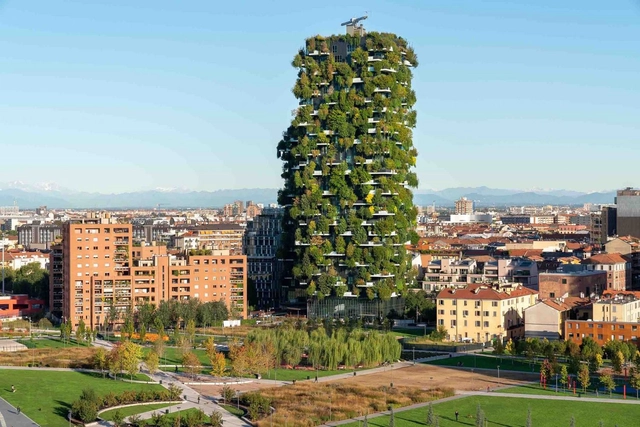
Milan’s urban fabric has long been defined by change. In a city known for its historic monuments, from the Piazza Duomo and Milan Cathedral to works like Velasca Tower, contemporary architecture must balance many existing contexts. Emerging as a global center for design and culture, Milan has become home to new buildings and structures addressing this condition as iconic landmarks and expressive forms. Actively building upon its legacy, Milan has turned its attention to the sky.
The Saudi Arabian government has revealed the design for the Mukaab, a cube-shaped supertall skyscraper that will become the center of the New Murabba district in downtownRiyadh. The Mukaab aims to become the largest built structure in the world, measuring 400 meters in height, width, and length. The building will be situated in the North West of Riyadh, in a 19 square kilometers area that will become one of the largest downtown developments in the world. The Mukaab skyscraper and the Murabba district were announced by His Royal Highness Crown Prince Mohammad bin Salman bin Abdulaziz, Prime Minister and Chairman of the New Murabba Development Company (NMDC).
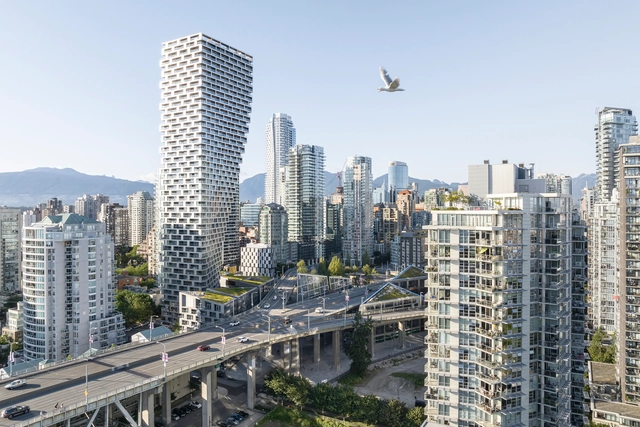
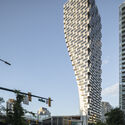
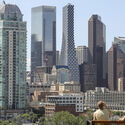
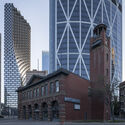
BIG – Bjarke Ingels Group has released a photo series of the Vancouver House and the Telus Sky towers, captured for the first time since their opening in 2020 during the pandemic. In a sort of "yin and yang," both skyscrapers are shaped by a curvilinear silhouette that involves the surrounding like a giant curtain revealing the building to the skyline.
The 220-meter-tall Telus Sky tower, and the 149 meters high Vancouver House, accommodate mixed-use offices and residential spaces, with connections to cycling and pedestrian pathways in their platforms. Moreover, both hold the highest level of Energy and Environmental Design. Vancouver House is the city's first LEED Platinum building, and TELUS in Calgary now occupies the largest LEED Platinum footprint in North America, with 70,725 square meters.
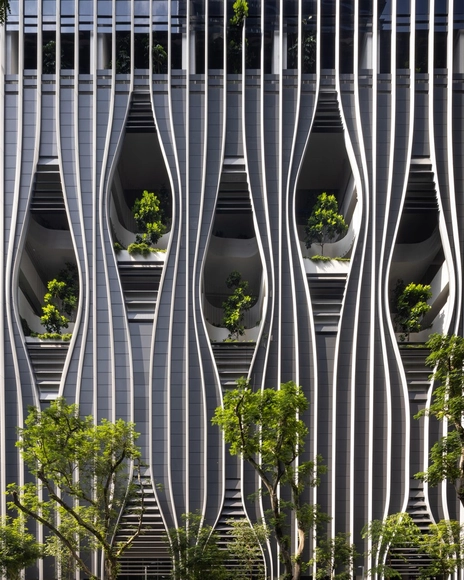
Designed by BIG-Bjarke Ingels Group and CRA-Carlo Ratti Associati, CapitaSpring is Singapore’s latest addition to its skyline. Recently completed after four years of construction, the 280-meter-tall high-rise oasis, considered among the city’s tallest structures, is a mixed-use high-rise with abundant sky gardens and rooftop park, office space, a serviced residence, a hawker center, restaurants, and public spaces.
The biophilic skyscraper, aligned with “the city’s pioneering vertical urbanism” and Singapore’s reputation as a garden city, is located at the heart of the financial district on the site of a former public car park and a hawker center. Comprising 80,000 plants, translating to a total landscaped area of more than 140% of its site area, the tower puts in place a “new green breathing space in the high-density CBD for the neighboring tenants and passersby”.
Many urban planners predict that by 2050, more than 6 billion people will live in cities, and in places where building outwards isn't an option, the only way to keep up with the growing density is to build up. Building taller always comes with numerous challenges and also a not-so-subtle competition for architecture firms to have their name tied to the biggest buildings. Almost as fast as a building is named one of the tallest in the world, another one makes its way to the drawing board, a few years later taking the title. While the sky’s the limit, how does this impact the constructability of projects, and what feats of construction methods and materials have enabled us to build into the clouds?
Almost a century ago, the world was introduced to a new architectural typology that changed the entire construction industry. Starting off with the Home Insurance Building in 1885, leading to the Empire State and Chrysler Buildings in Manhattan, skyscrapers became a symbol of power and financial abundance. Soon enough, they were being constructed in almost every city across the world with state-of-the-art designs that defy engineering norms. But with all the changes taking place in the architecture practice, what does the future hold for these heavily criticized yet constantly developed buildings?
The International High-Rise Award 2022/23 has nominated 34 outstanding projects from 13 different countries to compete for this year’s edition. Selected by the Deutsches Architekturmuseum (DAM), the shortlisted buildings were picked from more than 1,000 new high-rises worldwide dating from the past two years. As in previous years, a considerable decline in high-rises completed was to be observed.
The jury of international experts for this year’s High-Rise Award was chaired by architect Sven Thorissen (MVRDV) and included architects, engineers, architectural critics, and representatives of DekaBank, the City of Frankfurt, and Deutsches Architekturmuseum (DAM). In the fall, five finalists will be announced in the second step of the process, and the winner will be released on November 8, 2022.
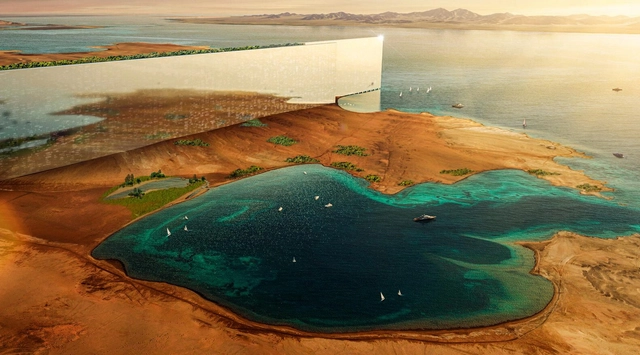
The Saudi Arabian government has released visuals of a 170-kilometer-long skyscraper as part of the NEOM project. Announced by crown prince Mohammed bin Salman, The Line is a reimagined urban development linking the coast of the Red Sea to the mountains and upper valleys of northwest Saudi Arabia. The compact structure, 200 meters wide, represents a social and economic experiment. The city aims to be zero-carbon, through the elimination of carbon-intensive infrastructures like cars and roads, and will operate on 100% renewable energy, including the operations of its industries.
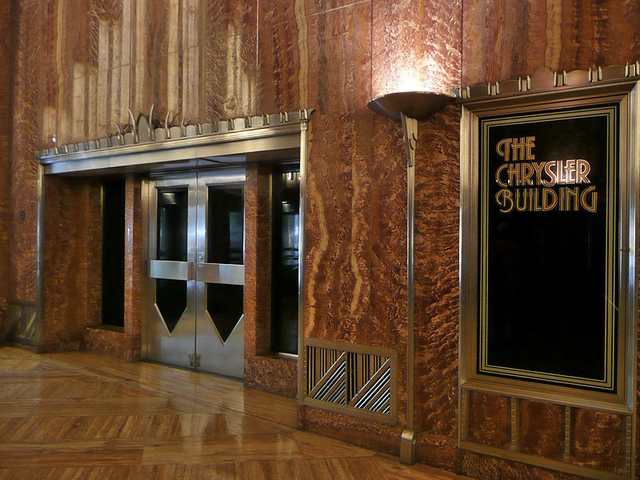
The Chrysler Building interior, Manhatten, New York . Image Courtesy of Dorff / Wikicommons CC BY-SA 3.0
Art Deco or Arts Décoratifs originated in the 1920's, following the Exposition Internationale des Arts Décoratifs et Industriels Modernes held in Paris (1925). However, it wasn’t until the 1930’s that the movement gained momentum across both Europe and the US, broadening Art Deco to cover all elements of decorative art including furniture, interior design, jewelry and architecture. Its popularity stems from its unique origins. Rather than a design movement driven by political or philosophical forces, it was created for the desire of glamorous and alluring change, a reflection of the golden age in Hollywood and a widespread economic boom.
Characterized by its decadence, rich application of color, and geometrical shapes, the movement is dramatically influenced by the discovery of the artifacts of ancient civilizations, and the introduction and admiration of the automobile. A movement heavily influenced by aspects in vogue it sought to create a form of luxury modernism, a step away from a more traditional architecture. It put an emphasis on handcrafted and individually designed elements, rarely to be mass produced.
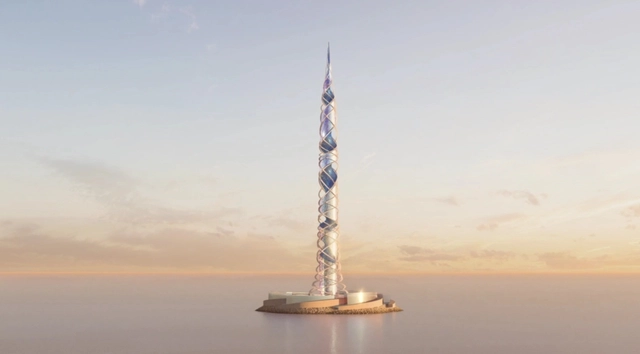
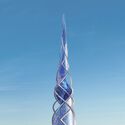
Scottish architecture firm Kettle Collective has revealed plans for a 703-metre skyscraper in St. Petersburg, making it the second tallest building in the world after Dubai’s Burj Khalifa. The Lakhta Centre II will have the highest occupied floor, and while the exact site is yet to be confirmed, it will sit alongside Lakhta Centre, currently the tallest building in Europe and the headquarters of energy firm Gazprom.
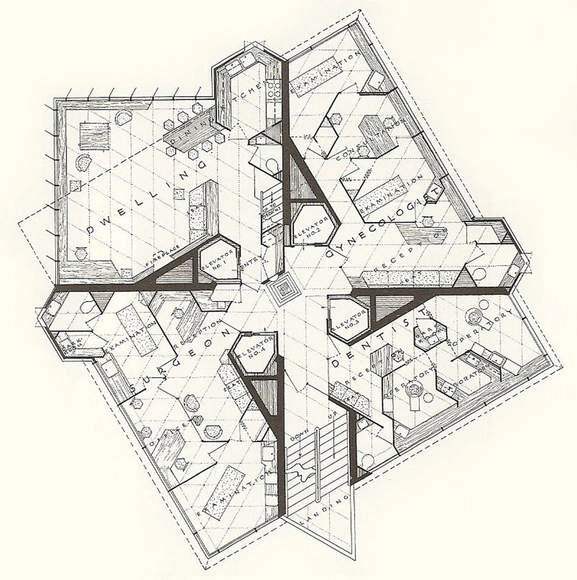
Frank Lloyd Wright’s Price Tower is the famous American architect’s only realized high-rise building and one of his only extant vertically-oriented designs. Located in the plains of Bartlesville, Oklahoma and commissioned by the local oil and chemical firm H. C. Price Company, the mixed-use tower is significant not only for its singularity within Wright’s oeuvre, but because of its unique materials and structural design. Some of Wright’s innovations, which were novel in the mid-twentieth century, remain useful even today.
https://www.archdaily.com/958989/the-tree-that-escaped-the-crowded-forest-lessons-from-frank-lloyd-wrights-price-towerLilly Cao
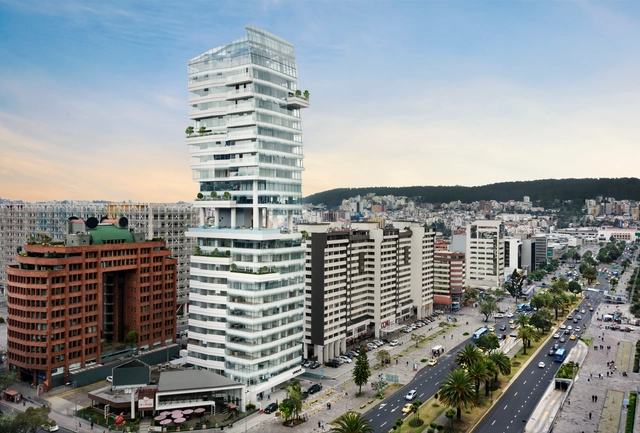
Architect Carlos Zapata has unveiled a new, mixed-use residential tower in Quito, Ecuador. Located on the northern edge of La Carolina Park, the design has become one of the city’s tallest buildings. The 24-story tower is defined by a three-story opening at its midpoint that creates an communal pool and lounge area, as well as a series of vertical gardens. The new tower was made to embrace Quito’s open sky and striking views of the Andes mountains.
The 462-meter-high Lakhta Center in St. Petersburg, Russia has been awarded the Emporis Skyscraper Award. Designed by GORPROJECT and RMJM, it is the fourteenth tallest building in the world. As the northernmost supertall skyscraper, the building regulates extreme temperatures through a double skin façade. The winner was chosen by an international jury from over 700 skyscrapers completed in 2019 with a minimum height of 100 meters.
Foster + Partners have begun construction on Avenida Cordoba 120, a new 35-story office tower in Buenos Aires. Sited between the traditional city center and the main entrance to the Puerto Madero harbor area, the project is designed to become a landmark building along the city's skyline. Balancing structure and nature, the tower is made to create a new standard for office design in Argentina and the larger region.
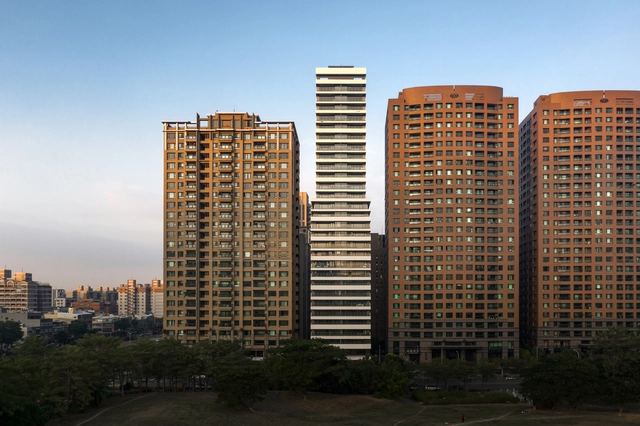
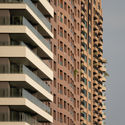
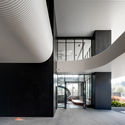
Taiwan's One More residential tower by Spatial Practice has been captured through a series of new photographs by Kris Provoost. The 100 meter tall concrete tower is composed of 53 two-bedroom units with open kitchen and living room views toward the nearby park. The design was made to break from the monotony of the neighboring typical residential typology with simple bands that vary in height.
Pitt Street Over Station Development, Sydney. Image Courtesy of Foster + Partners
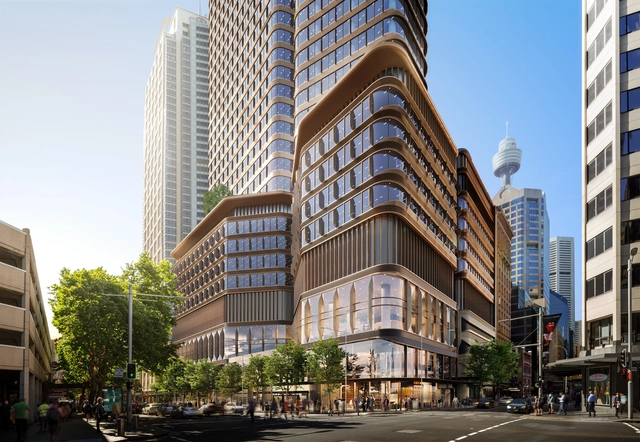
Foster + Partners has revealed visuals for its Pitt Street OSD and metro station design in Sydney, Australia. Stretching out underground across an entire city block, the over station development in the center of the city puts in place a 39-story office building and “creates a vibrant mixed-use hub offering flexible space with an elevated lobby and retail plaza in the heart of Sydney’s retail, dining, and entertainment precinct”.






_Nick_Merrick_for_Hedrich_Blessing_(10).jpg?1637696683 "Burj Khalifa by SOM. Image © SOM")


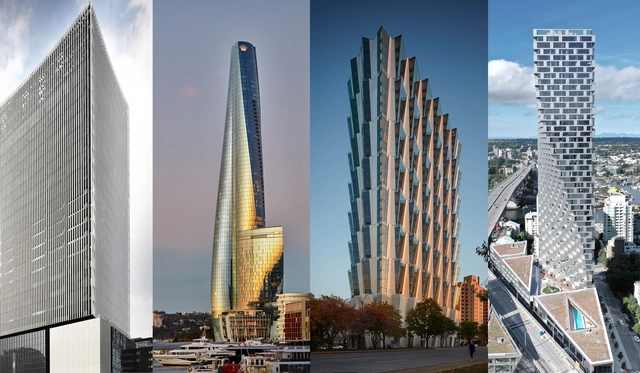













.jpg?1606323402 "Courtesy of Carlos Zapata")

GORPROJECT.jpg?1605053828&format=webp&width=640&height=580)
GORPROJECT.jpg?1605056165 "© GORPROJECT")
GORPROJECT.jpg?1605055665 "© GORPROJECT")
GORPROJECT.jpg?1605054092 "© GORPROJECT")
GORPROJECT.jpg?1605053870 "© GORPROJECT")
GORPROJECT.jpg?1605053828)