Take a peek into Japanese architect and theorist Arata Isozaki’s studio in the first of PLANE—SITE’s new video series, Time-Space-Existence. In this inaugural film, Isozaki discusses the Japanese concept of the space and time that exists in-between things, called "ma." Especially inspiring is Isozaki’s refusal to be stuck in one architectural style, as he describes how each of his designs is a specific solution born out of the project’s context.
Videos
Arata Isozaki on "Ma," the Japanese Concept of In-Between Space
https://www.archdaily.com/882896/arata-isozaki-on-ma-the-japanese-concept-of-in-between-spaceLindsey Leardi
Berlin in Miniature: Tilt-Shift Video Transforms Perspective on the German Capital
MiniLook Berlin from Okapi on Vimeo.
When we get wrapped up in everyday life, it can be easy to take the place we live for granted. In the MiniLook Berlin video, Okapi Creative Studio takes a step back to show the beauty of daily life in the city of Berlin via a stop-motion, tilt-shift technique that makes the city appear as if in miniature. The video highlights everyday street scenes and picturesque shots of nature, while some famous buildings make appearances as well.
https://www.archdaily.com/909298/berlin-in-miniature-tilt-shift-video-transforms-perspective-on-the-german-capitalMegan Schires
'The Hyperloop Suburb': Louise Braverman on the Future of Suburban Living
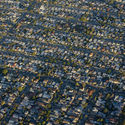
How do we want to live? Should we lean towards a turbulent metropolitan life with an all-inclusive advantage, or should we favor the composed suburban life with sufficient services? What if architects and urbanists were able to implement some of these all-inclusive services into disregarded areas of the suburbs? In the latest installment of PLANE—SITE’s short video series of the Time-Space-Existence exhibition, Louise Braverman Architect, a New York-based firm, explores the utopic and dynamic vision of the future of suburbs, and how Hyperloop technology could breathe a new life into these often overlooked places.




https://www.archdaily.com/896397/the-hyperloop-suburb-louise-braverman-on-the-future-of-suburban-livingDima Stouhi
SUMMARY Presents a Concrete Installation at the 2016 Venice Biennale
Text description from the architects. At the 15th edition of the Venice Biennale, Alejandro Aravena invited us to look at new fields of action, projects that intend to improve life quality and stories of success that are worth getting to know. Thus, Samuel Gonçalves, founder of the SUMMARY studio, the youngest studio invited, was selected to present his work “infrastructure-structure-architecture” with the purpose of showing the concept behind his project Gomos System.
https://www.archdaily.com/895846/summary-presents-in-the-venice-biennale-a-concrete-installationRomullo Baratto
How Ila Bêka Puts People's Emotional Responses to Space On Film
Celebrated for their unique, lively, and intimate take on architecture, in their films Ila Bêka and Louise Lemoine break with the traditional representation of architecture, choosing instead to follow people living inside buildings, focusing on them instead of capturing empty structures. In a new video, Louisiana Channel interviews the Italian filmmaker and architect Ila Bêka, in which he discusses the rhythm of everyday life within contemporary architecture projects, and their importance in triggering emotions.
We felt that the movement inside architecture is very important to understand how the architecture works.
– Ila Bêka
https://www.archdaily.com/895582/how-ila-beka-puts-peoples-emotional-responses-to-space-on-filmDima Stouhi
Eva Franch i Gilabert on the Meaning of Architecture
Architecture isn’t just about big names and big buildings but about all kinds of social practices.
In the latest video from NOWNESS' Design Futures series, Eva Franch i Gilabert walks the streets of New York as she discusses the role of architecture and its potential for the future. Franch i Gilabert is a Catalan architect, educator, and curator. She is also London's Architectural Association's youngest, and first woman director.


https://www.archdaily.com/894976/eva-franch-i-gilabert-on-the-meaning-of-architectureYiling Shen
"See-Through:" Video Explores the Spatial Dynamics Fostered by Lina Bo Bardi's Glass Easels
Architectural photographer and filmmaker Romullo Fontenelle of Studio Flagrante shared his latest video featuring Lina Bo Bardi's concrete and glass easels and the spatial dynamics they create in the São Paulo Museum of Art (MASP). The easels, first introduced in 1968, were brought back to life after a redesign by Metro Arquitetos.
https://www.archdaily.com/894549/see-through-video-explores-the-spatial-dynamics-fostered-by-lina-bo-bardis-glass-easelsEquipe ArchDaily Brasil
Take a Deep Dive into Hong Kong's Unique, Chaotic Urban History Through this Documentary Series

Hong Kong is a unique city. With its unlikely history as a British Colony, its position as a global hub city, and its spectacular geography, the dense, lively streets of Hong Kong feature a variety of urban phenomena that can't be found anywhere else in the world. In this series of video essays, New Office Works probes the urban character of Hong Kong with stunning depth, uncovering histories and explanations that bring new intrigue to an urban fabric that is, both literally and figuratively, already heavily layered.
The title of the series, Middle Man, references Hong Kong's status as a city that mediates between east and west, calling back to the "compradors" that helped the city to grow in the 19th century by translating for traders—middlemen in the most literal sense. Rooted in this history, the urban environment is not one built on grand schemes or overarching ideals, says New Office Works: "The combination of a growing population and limited land has cultivated an instant-fix mentality. There is neither time nor space for architectural ideologies, only pure pragmatism."
https://www.archdaily.com/893502/take-a-deep-dive-into-hong-kongs-unique-chaotic-urban-history-through-this-documentary-seriesRory Stott
Is This the Most Beautiful Ghost Town Ever? Drone Video Captures Chinese Village Reclaimed by Nature
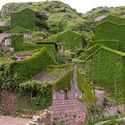
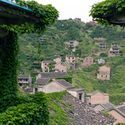
As the shadows of the past loom around what’s left of the overgrown houses and pathways, videographer Joe Nafis has perfectly captured the rare charm of the abandoned fishing village of Houtouwan using his drone. From above, you can appreciate the extent of the foliage carpeting the walls, roofs, and openings. It was the promise of this unlikely setting that first led Nafis to visit the village as part of a fashion shoot.



https://www.archdaily.com/891872/is-this-the-most-beautiful-ghost-town-ever-drone-video-captures-chinese-village-reclaimed-by-natureElla Thorns
Time-Lapse Follows the Demolition of Over 25 Buildings (And it is Even More Satisfying Than You Think)
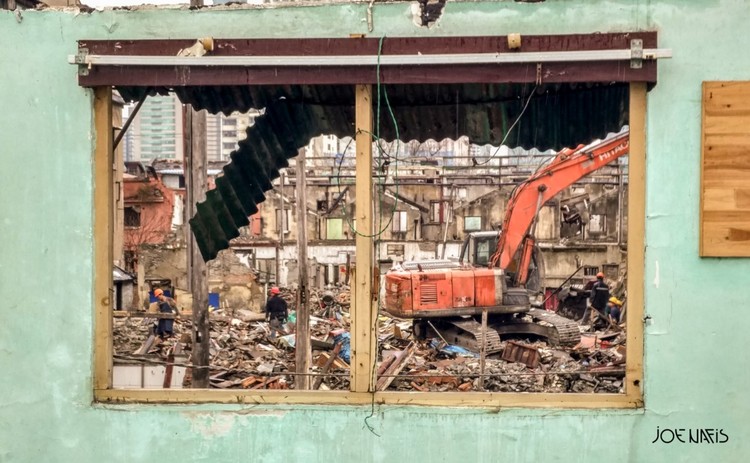
As Shanghai works hard to become an international economic, financial, trade and shipping center of the world, the city powers behind to keep up with the ever-growing needs. Joe Natis’ video follows the demolition of the buildings that didn’t quite make the cut for the fast-paced 21st century living as soaring skyscrapers and developments take their place.




https://www.archdaily.com/891777/time-lapse-follows-the-demolition-of-over-25-buildings-and-it-is-even-more-satisfying-than-you-thinkElla Thorns
“Doshi”: Documentary Explores the Pritzker Prize-Winning Career of A Modern Indian Architect
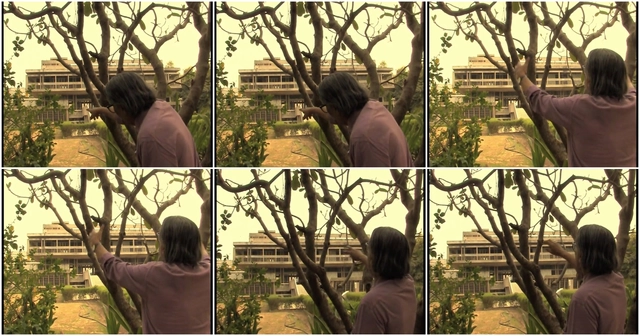
Balkrishna Doshi, despite his vast number of completed projects, is a little-known name in the Western world. Directed by Premjit Ramachandran, the documentary "Doshi" allows the viewer to appreciate the vision of this important Indian architect, probing his thoughts while getting to know a number of his projects. Filmed in a frank style of conversation, the documentary reveals an original and creative human being who, even in old age, remains passionate about architecture as well as life and learning.
The film becomes a roundtable with Doshi, his alumni, his contemporaries and even family members, all within the context of his architecture. The camera follows its protagonist through spaces designed by him, while he narrates, recalls and explains his processes of creation. It also reveals how he makes his philosophy an intrinsic part of his own life.
https://www.archdaily.com/890243/doshi-documentary-explores-pritzker-prize-winning-career-modern-indian-architectAD Editorial Team
Architecture as Experiential Marketing: The Surprisingly Bright Vantablack Olympic Pavilion in PyeongChang

Much has been said about the darkest building in the world, designed by Asif Khan, for Hyundai's Winter Olympic pavilion this year. What’s more surprising about this blackest-of-black pavilion is really how bright it is inside. The imposing facade of Vantablack VBx2 encloses a series of radiant, playful rooms and the entire project is part of a joint effort by Hyundai and Asif Khan to use architecture and design principles to bring delight to Olympic visitors in Pyeongchang this year.



https://www.archdaily.com/888808/architecture-as-experiential-marketing-the-fascinating-hyundai-pavilion-designed-by-asif-khan-for-pyeongchang-2018Keshia Badalge
See the Progress of Zaha Hadid Architects' World Cup Stadium in Qatar, Set to Open This Year
Construction of Zaha Hadid Architects’ Al Wakrah Stadium for the 2022 World Cup in Qatar is marching forward, with an opening date anticipated by the end of 2018. As shown in a video released by the Supreme Committee for Legacy & Delivery, the stadium’s concrete lower bowl has been poured and its massive roof pillars have been successfully installed.
https://www.archdaily.com/889401/see-the-progress-of-zaha-hadid-architects-world-cup-stadium-in-qatar-set-to-open-this-yearPatrick Lynch
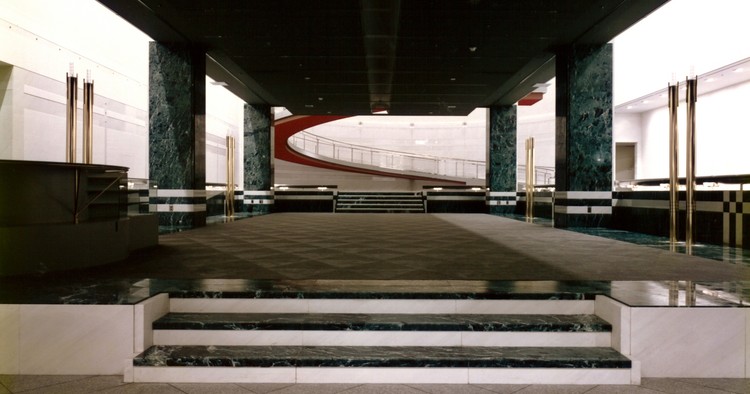
Fumihiko Maki On The Importance of Conscious Decision-Making in Design
Begin to understand the inner workings of Fumihiko Maki's architectural mind in PLANE—SITE’s latest short film from their Time-Space-Existence series. Each film focuses on the different principles which drive the practice of famous architects. Maki is known for being experimental with materials and fusing east and west culture.



https://www.archdaily.com/889045/fumihiko-maki-on-the-importance-of-conscious-design-making-in-designLindsey Leardi
A Trip Inside Álvaro Siza Vieira's University of Alicante Rectory Building in Spain
In 1998, Pritzker Prize-winning Portuguese architect Álvaro Siza Vieira completed the University of Alicante Rectory Building in Alicante, Spain. Twenty years later, ArcDog captures the building in their latest film. The Rectory Building fights the harsh Spanish heat with its fortress-like form. Two carefully proportioned courtyards become the focus of this design and, consequently, of the film.
https://www.archdaily.com/889044/a-trip-inside-alvaro-siza-vieiras-university-of-alicante-rectory-building-in-spainLindsey Leardi
'Tuscanyness' Film Explores the Detachment of Modern Italian Architecture and the Fight to Restore Faith in Design
Following the evolution of architecture in Tuscany, this documentary maps out the decline of the region in the shadow of Brunelleschi and Alberti. From the 14th century onwards, Italy underwent a cultural rebirth that changed the entire world, bearing the architectural mastery of the Renaissance. However now, there appears to be a detachment within modern architecture and little work for the many architects who are being forced to emigrate.
https://www.archdaily.com/888940/tuscanyness-film-explores-the-detachment-of-modern-italian-architecture-and-the-fight-to-restore-faith-in-designElla Thorns
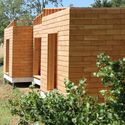
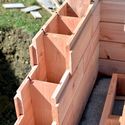
Innovative 'Wooden Bricks' System Cuts Building Time to Just a Few Days
Brikawood is an intuitive and logical construction system of wooden bricks that allows the rapid construction of an entire house without the use of nails, screws or adhesives.
Each unit is totally recyclable and consists of four pieces of wood –two lateral elements and two transversal spacers– which are assembled to the general frames of the building by interlocking, achieving total rigidity when working together. The resulting structure presents thermal, mechanical, acoustic and anti-seismic properties and is designed to be used without cladding or membranes, adding only an anti-return valve specific to Brikawood, in order to increase the performance and tightness of the construction.



https://www.archdaily.com/887541/innovative-wooden-bricks-system-cuts-building-time-to-just-a-few-daysJosé Tomás Franco
What Makes The Barbican The Perfect Setting for Music Videos?
Musicians of all ages and genres feature the Barbican in their music videos. Youtuber Phil Gyford’s playlist “The Barbican in Music Videos” compiles songs from artists including British rapper Skepta, UK rock band Coldplay, the infamous electronic musician Moby, and guitarist James Morrison. Even modern pop artist Dua Lipa strut her stuff through the Barbican while singing her song, “Blow Your Mind (Mwah).”
But what makes the Barbican the perfect set for a professional music video? Perhaps artists were attracted to its remarkable Brutalist style. Maybe the architecture was used for it’s historical or political significance.
https://www.archdaily.com/887372/what-makes-the-barbican-the-perfect-setting-for-music-videosLindsey Leardi