Afastado de Quem Fala is a diptych short film about Adega Baía da Arruda, a project by the Portuguese-Swiss studio Barão-Hutter, built on Pico Island in 2017.
Videos
Far from the Speaker: Video Art on the Adega Baía da Arruda Project in the Azores
https://www.archdaily.com/1113903/far-from-the-speaker-video-art-on-the-adega-baia-da-arruda-project-in-the-azoresRomullo Baratto
Proyecto Habitar unveils the trailer for a documentary exploring how Chileans live.
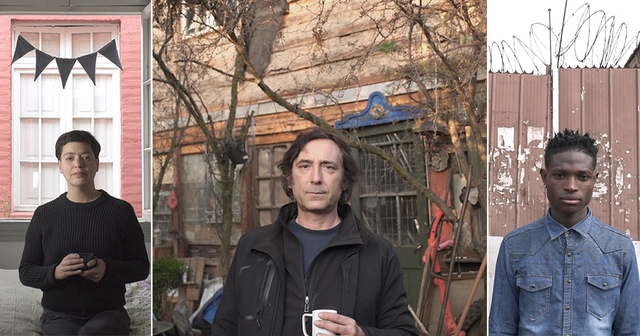
"How do Chileans live?" is the question directors Joaquín Mora and Verónica Wüst seek to answer in the series Habitar, which portrays the current reality of housing in Chile through the intimacy of their homes.
On October 22, the nine-episode series will launch on the official website of Proyecto Habitar and on ArchDaily en Español. It will also premiere on Thursday, October 26, as part of the Arqfilmfest programming.
https://www.archdaily.com/1114113/proyecto-habitar-unveils-the-trailer-for-a-documentary-exploring-how-chileans-liveNicolás Valencia
ruestungsschmie.de transforms a church facade in Prague with a video mapping projection
Dresden-based architecture collective ruestungsschmie.de has shared another large-scale video mapping project, this time on the facade of the Church of St. Ludmila in Prague. Titled NUCLEUS³, the project uses audiovisual media to raise the question: what do we expect for the future?
https://www.archdaily.com/1113979/ruestungsschmie-transforms-a-church-facade-in-prague-with-a-video-mapping-projectionRomullo Baratto
Lorenzo Mammì: Readings and Interpretations Based on Works of Art and Architecture

The graduate program Architecture, Education, and Society hosted philosophy professor Lorenzo Mammì to discuss the development of interpretations of works of art and architecture.
Lorenzo Mammì approaches the interpretation of architectural works from a perspective related to philosophy, music, and the visual arts, which are key areas of interest. The discussion addresses the varying readings of works, as well as the relationship between these analyses and the production process.

https://www.archdaily.com/1113779/lorenzo-mammi-readings-and-interpretations-based-on-works-of-art-and-architectureRomullo Baratto
XV TSL Puno: Latin American Architecture at an Altitude of 3,800 Meters

At the end of March, 250 students from across Latin America gathered to reflect, share, design, and build three projects in the town of Chucuito, Peru. This was the 15th edition of the Latin American Social Workshop (TSL), a workshop organized by the Latin American Coordinator of Architecture Students (CLEA) and partnered on this occasion with the Peruvian Organization of Architecture Students (OPEA).
Over ten days, the students worked intensively alongside architects Enrique Villacís (ENSUSITIO, Ecuador), Juliana López and Daniel Buitrago (Ruta 4, Colombia), Jhony Chávez (Peru), and Lucio Torres (Peru). Divided into three teams, the students and workshop leaders addressed issues related to heritage restoration, landscape, and public space, while also learning about the places, traditions, and inhabitants of the region known as the folklore capital of Peru.
https://www.archdaily.com/1113813/xv-tsl-puno-latin-american-architecture-at-an-altitude-of-3800-metersNicolás Valencia
Columbus, Kogonada's directorial debut, pays homage to an architectural gem of a city.
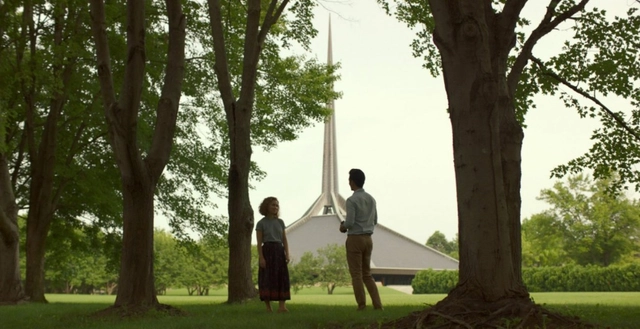
Throughout the history of cinema, there are numerous examples of a close and deep relationship between film and architecture. The film 'Columbus', recently released in Spain and the feature debut of South Korean director Kogonada, is a magnificent example of how significant architecture can be an essential factor in the development of a film project. Set in the American city of the same name, the film serves as a genuine and wonderful tribute to its architecture and urban environment.
In the 1950s, through the Cummins Foundation and in collaboration with the city of Columbus, industrialist J. Irwin Miller launched a program to subsidize the construction of public buildings designed by prominent architects. In this way, Columbus, Indiana, became a sort of open-air museum, eventually coming to be regarded as a mecca of modern architecture. During those years, more than 60 buildings were constructed by great masters of the Modern Movement, such as Harry Weese, Cesar Pelli, I.M. Pei, Eero and Eliel Saarinen, Richard Meier, Robert Venturi and James Stewart Polshek, to name a few.



https://www.archdaily.com/1113828/columbus-kogonadas-directorial-debut-pays-homage-to-an-architectural-gem-of-a-cityJavier García Librero
Wandenkolk Tinoco: Regionalist Modernism in the Northeast
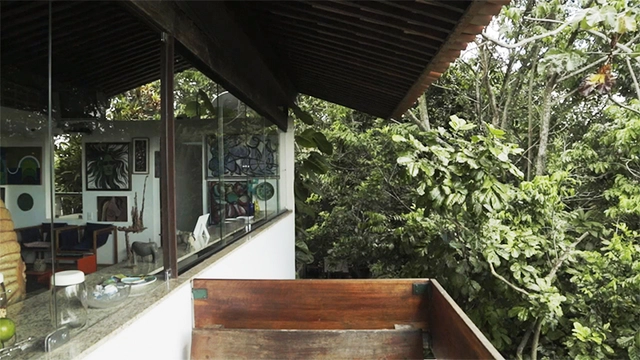
Wandenkolk Tinoco designed numerous projects after graduating in the late 1950s from the School of Fine Arts of Pernambuco: residences, institutional and residential buildings, as well as paintings and sculptures. Beyond his active practice, Wandenkolk taught for several years at the School of Architecture of Recife, which later became part of the Federal University of Pernambuco.
https://www.archdaily.com/1113729/wandenkolk-tinoco-regionalist-modernism-in-the-northeastBruno Firmino
What does Bogotá sound like?
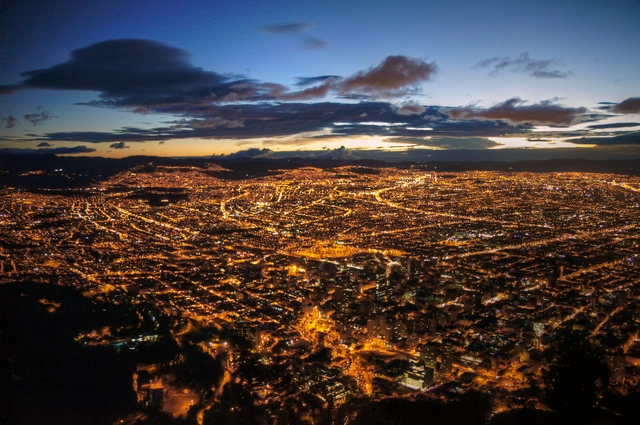
The identity of cities lies not only in their name, geographic location, or development. It is also found in the haptic perception we have of them as inhabitants—that is, how our senses interpret the elements within the city.
In this video, photographer Óscar Iván Núñez presents “How Does Bogotá Sound?”, an audiovisual compilation of both natural and artificial urban sounds from the Colombian capital. In it, he invites viewers to explore an area of the city in a different way, identifying everyday sounds that shape this capital's soundscape.
https://www.archdaily.com/1113731/what-does-bogota-sound-likeStefania Alvarez
Drawing and expressionism at the Bauhaus
The Architecture, Education, and Society graduate program at Escola da Cidade invited Rodrigo Mendes de Souza to present research on the pedagogical program of the Bauhaus Vorkurs during the directorship of Walter Gropius.
Through the theories of Pure Visibility (Sichtbarkeit) and Objectivity (Sachlichkeit), Rodrigo Mendes de Souza addressed Walter Gropius's pedagogical program for the Bauhaus, drawing on various authors—such as K. Fiedler, A. Riegl, H. Wölfflin, and G. Semper—to better understand the school's pedagogical theory and practice.

https://www.archdaily.com/1113883/drawing-and-expressionism-at-the-bauhausRomullo Baratto
Debate at Escola da Cidade on Jan Gehl and life in the city
In March of this year, Escola da Cidade, in partnership with Editora Perspectiva, hosted the launch of the book How to Study Public Life by Danish architects Jan Gehl and Birgitte Svarre, alongside a panel discussion with architects Sergio Kon, Fernanda Barbara, Nabil Bonduki, and journalist Leão Serva.
https://www.archdaily.com/1113890/debate-at-escola-da-cidade-on-jan-gehl-and-life-in-the-cityRomullo Baratto
Brasília From Above: Aerial Videos by Joana França
If you haven't gotten a chance to visit Brasília, Joana França's photographic projects offer a comprehensive interpretation of the capital of South America's most populous country. França has dedicated a significant part of her career as an architecture photographer to the pursuit of amassing an impressive archive of images of the city planned by Lúcio Costa and Oscar Niemeyer.
We recently published an exceptional selection França's aerial photographs of Brasília divided by scale - residential, monumental, gregarious and bucolic. These overhead views solidify what, in theory, is already evident: the city lacks human scale, or the human scale of Brasília is just vast and (perhaps) not very human at all.
https://www.archdaily.com/876975/brasilia-from-above-aerial-videos-by-joana-francaRomullo Baratto
Blending Hygiene with Style: Discover GROHE Sensia Arena
| Sponsored Content
Experience a new standard of personal hygiene with GROHE Sensia Arena. More comfortable, hygienic and soothing than using paper, the Sensia shower toilet offers innovative, personalised functions at the bush of a button – and with award-winning style, too.
https://www.archdaily.com/978064/blending-hygiene-with-style-discover-grohe-sensia-arenaRene Submissions
Living with Sky-Frame: Where Boundaries Fade Away
| Sponsored Content
Sky-Frame Swiss-made frameless windows and sliding doors continue to revolutionize the transition between indoors and outdoors, by providing unbounded spatial experiences with spectacular vistas.
https://www.archdaily.com/968368/living-with-sky-frame-where-boundaries-fade-awayOlivia Bartolini
'Body Absent', a Temporary Memorial to Raise Awareness About Human Rights
Human Rights Day is celebrated every year on the 10th of December. After visiting numerous sites that commemorate the scenes of regrettable crimes against humanity and violence, one common observation can be made: the place of memory is not only a building. In fact, it is more about the encounter, the appropriation, and the gesture.
https://www.archdaily.com/953498/body-absent-a-temporary-memorial-to-raise-awareness-about-human-rightsFabian Dejtiar
Remota Lodge by Germán del Sol Through the Lens of Pablo Casals-Aguirre
Chilean architecture has a strong relation to the unique geography and climate of the country. Germán del Sol is recognized as one of the most prolific Chilean architects working with these demanding conditions, with projects across the country that enhance and rediscover the natural landscape, through architecture that uses natural materials, local techniques, and a profound sense of the place.
Photographer and filmmaker Pablo Casals-Aguirre revisits the Remota Lodge in Patagonia, one of the most celebrated projects by Germán del Sol, in a video that is able to transmit not only the static relationship with nature, but also the experience of inhabiting the landscape from the building.
The wild landscape of the Patagonian plains covers also the roofs of the buildings. The roofs concrete slabs are coated with the same synthetic asphalt membrane and a carpet of wild grasses 2 feet high [...] The ever changing light of Patagonia enters the building through the sequence of vertical cuts of the windowpanes. Then it surrounds big concrete or wooden pillars, and slides along the ceilings wooden trellises that hang well under the concrete slab. - Germán del Sol
https://www.archdaily.com/933221/remota-lodge-by-german-del-sol-through-the-lens-of-pablo-casalsDavid Basulto
Marble Quarrying Looks Even More Awesome Than You Imagined
In this video from NOWNESS, an excerpt from Yuri Ancarani's documentary "Il Capo" (The Chief), the filmmaker captures the mesmerizing business of Marble extraction in the hills of Northwest Italy. The prized delicacy of the Carrara stone's surface is juxtaposed against the dramatic size and weight of the blocks they are removing, which eventually fall with an earth-shattering thud. Similarly the rugged power of the excavators is in marked contrast to the precise, understated gestures of the chief himself, who directs his workers with a complex series of predetermined hand signals.
"Marble quarries are places so unbelievable and striking, they almost feel like they are big theaters or sets," explains Yuri Ancarani. "I was so taken by the chief, watching him work. How he can move gigantic marble blocks using enormous excavators, but his own movements are light, precise and determined."
This article was originally published on February 25, 2015.
https://www.archdaily.com/602739/marble-quarrying-looks-even-more-awesome-than-you-imaginedRory Stott
How To Create 3D Environments From Images Taken With Drone
This video tutorial will teach you how to create detailed, 3-D environments from images taken by drones, using Photogrammetry to better contextualize our architectural projects.
The video covers the entire process, from flying the drone to using the RealityCapture software, including identifying plants and trees through an application for mobile phones and lastly viewing the architecture in 3D using Lumion.
https://www.archdaily.com/916230/how-to-create-3d-environments-from-images-taken-with-droneArchDaily Team
Why Arata Isozaki won the Pritzker Prize 2019
Named 2019 Pritzker Prize Laureate, Japanese architect Arata Isozaki is incredibly prolific and influential among his contemporaries. Deeply aligned with the period of change and reinvention that Japan experimented after Second World War and Allied Occupation, Isozaki has developed a solid career on a truly global scale, avoiding being labeled in a specific style throughout his life.
https://www.archdaily.com/912736/why-arata-isozaki-won-the-pritzker-prize-2019Nicolás Valencia