“How do you bring architectural stories to life?”—this is the question the AIA asks annually in their I Look Up Film Challenge. This year’s theme, Blueprint for the Better, challenges architects and filmmakers to collaborate and tell the stories of architects making a positive impact on the community.
Videos
AIA Announces People's Choice Winner for the 2017 I Look Up Film Challenge
https://www.archdaily.com/882719/aia-announces-peoples-choice-winner-for-the-2017-i-look-up-film-challengeAlya Abourezk
Giving People Agency in Public Space: The Artwork of Rafael Lozano-Hemmer
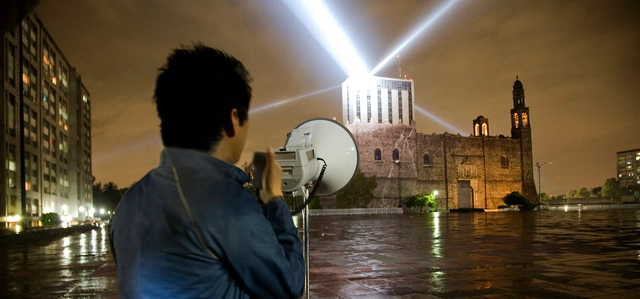
In the past, cities were often constructed in the likeness the public--the built environment reflected citizens and local culture. It is questionable whether this can be said of the modern world. Much construction today is a product of capitalism, generating buildings and areas in which local people have no attachment or sense of agency over. Artist Rafael Lozano-Hemmer believes this to be a fundamental crisis within our cities, and he is committed to reestablishing the relationship and representation of people within urban space. His work is examined in a new short film by PLANE-SITE, titled Public Interruptions.
A building today does not represent a citizen, a building today represents capital.
https://www.archdaily.com/881937/giving-people-agency-in-public-space-the-artwork-of-rafael-lozano-hemmerAlya Abourezk
Why Are Architects Needed? 8 Speakers Give Their Answers During Rising Architecture Week 2017
With the objective of developing new solutions to the societal challenges of tomorrow, the RISING Architecture Week 2017 was held in Aarhus, Denmark, between the 11th and 15th of September. It consisted of a series of events, exhibitions, and the RISING Exchange Conference, focusing on how architecture and construction can help to rethink existing paradigms.
During our visit to the city, we had the opportunity to talk with Jan Gehl, Pauline Marchetti, Ruth Baumeister, Daan Roosegaarde, John Thackara, Jacques Ferrier, Stephan Petermann, and Shajay Bhooshan – some of the speakers who shared their visions on these issues. We posed the question, "Are architects really needed?" to prompt them to reflect on a future in which different actors will be relevant in addressing such challenges.
Every time you put any brick down anywhere, you manipulate the quality of life of people. (...) If you just make form, it's sculpture. But it becomes architecture if the interaction between form and life is successful. – Jan Gehl.
You can watch the video above to see their responses and find pictures of their lectures on the official Facebook of the event.
https://www.archdaily.com/881418/why-are-architects-needed-8-speakers-give-their-answers-during-rising-architecture-week-2017José Tomás Franco
Can You Guess Which Cities These Music Videos Were Filmed In?
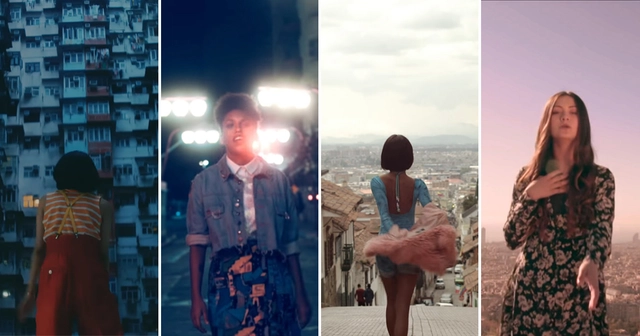
In the age of green screen backgrounds, hyperrealistic renderings and the endless run of superhero movies that rely heavily on special effects, some directors are still betting on turning cities into protagonists of their music videos. In the nineties, Michael Jackson visited Brazil and filmed They Do Not Care About Us in one of the most dangerous neighborhoods in South America – but do you remember which city it was?
Here we compiled ten music videos where the cities, their neighborhoods and their inhabitants serve as the stage for actors, singers, and dancers to display their art around the world.
Can you recognize the cities where these music videos were filmed? Take the test below and find out.
https://www.archdaily.com/881515/can-you-guess-which-cities-these-music-videos-were-filmed-inNicolás Valencia
From Cubicles to Hot-Desks, Here Are the Origins of the Open-Plan Office
Some love them, some loath them: open-plan office spaces are either conducive to conversation and collaboration or nothing more than noisy environments defined by distractions. Much, for instance, has been questioned recently about the "innovative" open working environments in Apple's new Cupertino campus. In a new series by Vox, overlooked, misrepresented, and overrated phenomena are put under the microscope. By exploring the work of Frank Lloyd Wright, Herman Miller, and others, this episode posits that open office spaces are, contrary to popular assumption, "misunderstood for their role in workplace culture."
Where did open offices and cubicles come from, and are they really what we want?
https://www.archdaily.com/881479/understanding-the-origins-of-the-open-plan-office-spaceAD Editorial Team
Fly Through the SHL and James Turrell-Designed Addition to ARoS Art Museum in Aarhus
New details have been revealed of the €40 million extension of ARoS Art Museum in Aarhus, Denmark. Designed by Schmidt Hammer Lassen Architects in collaboration with artist James Turrell, the expansion project includes a new 1,400-square-meter (15,070-square-foot) underground gallery and two site-specific installations by Turrell that represent his largest museum project to date.
Named The Next Level, the project begins on the ground level of the museum, extending downward beneath the adjacent Officerspladsen plaza. The addition has been designed to work naturally with the flow of the existing building, which already serves as a bridge between the Aarhus River and the nearby Aarhus Music Hall. A 120-meter-long hallway will stretch down into the Earth connecting visitors the larger of the two Turrell installations, The Dome.
https://www.archdaily.com/881240/fly-through-the-shl-and-james-turrell-designed-addition-to-aros-art-museum-in-aarhusPatrick Lynch
Frank Lloyd Wright Upholds Egotist Reputation in Interview
Early on in my career I had to decide between honest arrogance and hypocritical humility. I chose honest arrogance and have seen no occasion to change.
Frank Lloyd Wright is the household name of architects in the United States, with stories of his ego as widespread as his prolific work. Watching Frank Lloyd Wright at 83 years old is not your typical history lesson. The interview aired on NBC Chicago in 1958 and captures Frank Lloyd Wright telling stories to Hugh Downs about his education, early career with Louis Sullivan, an inspiration for Taliesin and Taliesin West and his own innovations in architecture (let's just say this question didn't get a humble response).
https://www.archdaily.com/881027/frank-lloyd-wright-upholds-egotist-reputation-in-interviewSamantha Buckley
MAD Architects' Emotional Architecture is Shaping the Future of China's Growing Skyline
Architecture has to be organic… we need to create a space for people to connect, to coexist - MAD Architects.
As the demographic of China’s buildings changes, one architect is fighting the “artificial” straight lines and tower blocks that are plaguing the skyline. In the government’s mass urbanization, skyscrapers are having to be built constantly for all the people that are flocking to the cities.
Ma Yansong, the founder of MAD Architects explains “They often deal with efficiency, the function, the structure. There's no nature. People love to go closer to nature and other people, so we need to create environments that let people have these emotional connections."
https://www.archdaily.com/881013/mad-architects-emotional-architecture-to-shape-the-future-of-chinas-growing-skylineElla Thorns
Welded Steel Wigwam by studio:indigenous Connects Past to Present at Exhibit Columbus
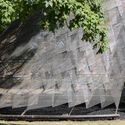
In this video, Spirit of Space visits Exhibit Columbus to see Wiikiaami, a parametrically designed structure by studio:indigenous. Beginning in 2016, Exhibit Columbus is an annual event which invites people to travel to the small, but architecturally fascinating Midwestern town of Columbus, Indiana. Free and open to the public through November 26th, Exhibit Columbus displays 18 unique, site-responsive architectural installations.


https://www.archdaily.com/880957/welded-steel-wigwam-by-studio-indigenous-connects-past-to-present-at-exhibit-columbusLindsey Leardi
These Are Jan Gehl's Methods For Building Good Cities
We now know that first, we form the cities, but then the cities form us.
Meet 81-year-old Danish architect Jan Gehl who, for more than fifty years, has focused on improving the quality of urban life by helping people to “re-conquer the city.” Gehl has studied the relationship between life and form since the mid-1960s, when he started questioning the modernist approach of looking at the architectural model from above instead of from the inside. The architecture of that time was very often "an obsession with architecture for architecture’s sake," and took very little interest in the inhabitants.
https://www.archdaily.com/880923/jan-gehl-puts-forward-methods-toward-building-a-good-cityAD Editorial Team
See New York's Old Kosciuszko Bridge Implode in This 360 Video
In the latest in their Daily360 series, the New York Times takes a look at this past weekend's demolition of the old Kosciusko Bridge on Newton Creek between the boroughs of Brooklyn and Queens. Built in 1939, the steel truss bridge had become a major bottleneck for traffic over the past 8 decades, prompting the state government to invest in a new cable-stayed design. The first span of that bridge opened in April, with a second span to be built over the path of the former bridge.
“This is an area that was polluted from the industrial manufacturing economy,” said New York State Governor Cuomo. “We’re cleaning it up, but I think the crown jewel is going to be that new Kosciuszko bridge.”
https://www.archdaily.com/880858/see-new-yorks-old-kosciuszko-bridge-implode-in-this-360-videoPatrick Lynch
2017 Chicago Architecture Biennial's "Labyrinth" Demonstrates Novel Approaches to Design and Cities
On the ground floor of the Chicago Cultural Center, Labyrinth—a cluster of installations and exhibitions occupying a warren of rooms as part the 2017 Chicago Architecture Biennial—serves as the visitor's introduction to participants' responses to the theme, Make New History. In this short film, architects including Jürgen Mayer H., Freek Persyn (51N4E) and Philip F. Huan (Archi-Union) present their projects and reflect on their work, process, and involvement in North America's largest architectural event.
https://www.archdaily.com/880467/a-labyrinth-of-projects-at-2017-chicago-architecture-biennial-demonstrate-novel-approaches-to-design-and-citiesAD Editorial Team
How Architects in Chicago Are Making New History
"We are at a moment of great cultural transition," Jorge Otero-Pailos argues. "The kinds of objects that we look to to provide some sort of continuity in that transformation is often times architecture, [...] one of the most stable objects in culture." This short film, in which an number of participants of the 2017 Chicago Architecture Biennial reflect on their work and those of others, tackles the theme conceived by artistic directors Sharon Johnston and Mark Lee: Make New History.
https://www.archdaily.com/880402/how-architects-in-chicago-architecture-biennial-2017-are-making-new-historyAD Editorial Team
In "Horizontal City," 24 Architects Reconsider Architectural Interiors at 2017 Chicago Architecture Biennial
Horizontal City is one of two collective exhibitions (the other being Vertical City) at the 2017 Chicago Architecture Biennial. 24 architects were tasked by artistic directors Sharon Johnston and Mark Lee to "reconsider the status of the architectural interior" by referencing a photograph of a canonical interior from any time period.
Their challenge was in considering the forms and ways that their selection "might extrapolate out from the cropped photographic frame into a spatial and lifestyle construction across a larger, horizontal site" – in this case, a field of plinths, the size and positioning of which is a direct reference to the footprint of Mies van der Rohe's 1947 plan for the IIT Campus in Chicago.
https://www.archdaily.com/880306/in-horizontal-city-24-architects-reconsider-architectural-interiors-at-2017-chicago-architecture-biennialAD Editorial Team
Hiroshi Sambuichi Reflects Upon His Hometown of Hiroshima, And Why It Became Green Again
When a city really becomes one with the air, water and sun I am sure that people will feel the vitality of this. To create cities where this is not lost is a very important message I want to convey to the world.
In this video from the Louisiana Channel, Japanese architect Hiroshi Sambuichi reflects on the Japanese city of Hiroshima—his home town—and the ways in which it has undergone a radical transformation following the atomic bombings of the Second World War. Known primarily for his interest and work in the field of sustainable design and building, Sambuichi describes how "the power of nature"—allowing flora and foliage, water and air to rapidly reclaim swathes of the built environment—has been central to the city's recent urban success.
https://www.archdaily.com/880130/hiroshi-sambuichis-reflections-of-his-hometown-of-hiroshima-and-why-it-became-green-againAD Editorial Team
"Strong Relationships Between Engineers and Architects": SOM at the 2017 Chicago Architecture Biennial
An engineer should design a structure that an architect would be ashamed to cover up.
In this video produced by PLANE—SITE and Spirit of Space for ArchDaily, two of SOM’s great minds take us through the firm’s most recent exhibition, "SOM: Engineering x [Art + Architecture]," currently on display in conjunction with the 2017 Chicago Architecture Biennial. Focusing on the intersection between engineering and architecture, the exhibition reveals the design process behind some of the firm’s greatest achievements through a range of sketches, models, sculptures and visuals.
https://www.archdaily.com/880066/strong-relationships-between-engineers-and-architects-som-at-the-2017-chicago-architecture-biennialAD Editorial Team
Zaha Hadid Architects' Light Projection Show Transforms 18th Century Baroque Palace in Germany

An 18th century baroque palace in Karlsruhe, Germany has become the canvas for a dazzling light mapping projection in the latest project by Zaha Hadid Architects.
Named “Behaviour Morphe,” the projection display was created in collaboration with composer Max Cooper and leading digital artists Andy Lomas and Mubbasir Kapadia for the city’s 2017 Schlosslichtspiele Festival, exploring how digital spatial concepts could shape the living spaces of the future.
https://www.archdaily.com/879886/zaha-hadid-architects-light-projection-show-transforms-18th-century-baroque-palace-in-germanyPatrick Lynch
Drone Video Shows Off Singapore's Stunning Architectural Sights
Diverse, green and dynamic, in this video Singapore is shown through a new kind of lens, one that exists above the city, pans down it, rolls over it and offers a view of its architecture from an alternative angle. André Eckhardt's drone hyperlapse video takes us onto the street, up in the air, and down by the sea as the weather shifts and changes, and as people go about their day to day lives. Using clever speed adjustments, Eckhardt switches between the fast-paced movements of the city up-close and moments of pause as he takes us up over it. Picking out architectural works including the iconic Bayside projects of Moshe Safdie, PARKROYAL on Pickering and the Oasia Hotel by WOHA, the Gardens by the Bay, and the Helix Bridge, Eckhardt brings Singapore's colorful skyline to life.
https://www.archdaily.com/879714/drone-video-shows-off-singapores-stunning-architectural-sightsTessa Forde