

Produce personalized presentation boards that distill complex concepts into simple visual representations with a few helpful tools and effects.
Editor's Choice
How to Create Architectural Presentation Boards
| Sponsored Content
https://www.archdaily.comhttps://www.archdaily.com/catalog/us/products/37234/how-to-create-architectural-presentation-boards-lumion
Critical Round Up: OMA's Garage Museum of Contemporary Art
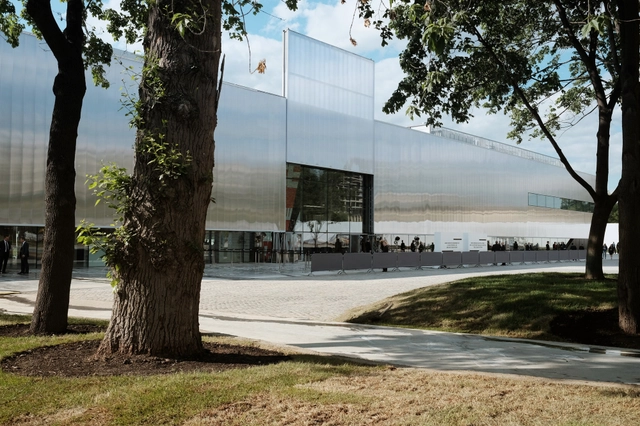
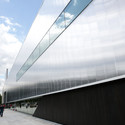
Founded in 2008 and named after the constructivist bus shelter that was its first, temporary home, the Garage Museum of Contemporary Art is Russia's first private, non-profit art foundation. Relocating from a semi-industrial neighborhood on the northern edge of Moscow to Gorky Park, the Garage Museum's conversion of a Soviet era canteen and social club into Museum of Contemporary Art by OMA has so far been overshadowed by its more glamorous OMA counterpart which opened last month, the Milanese distillery conversion for Prada. Nevertheless, since opening last Friday the Garage Museum has attracted attention for Rem Koolhaas' shift towards preservation, something that has startled the critics. Find out more about what they thought after the break.

https://www.archdaily.com/643448/critical-round-up-oma-s-garage-museum-of-contemporary-artDario Goodwin
99 Dom-Ino: How Le Corbusier Redefined Domestic Italian Architecture
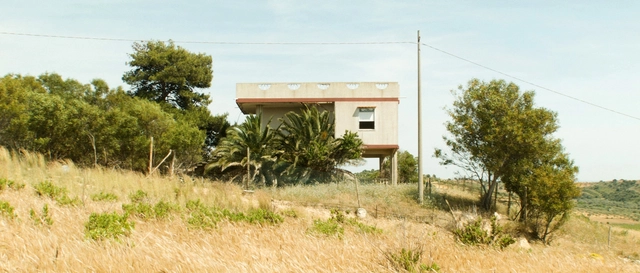
Last year, for the centennial of the publication of Le Corbusier's design for the Maison Dom-Ino, Space Caviar traveled the length of the Italian peninsular in pursuit of ninety-nine reinforced concrete houses. Along the way they created ninety-nine short films. Their research, a survey of Italian domesticity and its relationship to the surrounding landscape over the past century, demonstrated that "few inventions have been as transformative of Italy as the concrete frame": simultaneously a symbol of wealth "generated by a building industry that rebuilt Italy from the rubble of the Second World War" and "the primary instrument of abusivismo," or the unregulated construction on the landscape. It is, as the team describe it, "the ultimate symbol of the architect’s extraordinary power — and enduring helplessness."


https://www.archdaily.com/642879/99-dom-ino-how-le-corbusier-redefined-domestic-italian-architectureJames Taylor-Foster
Welcome to Your Upgraded ArchDaily!
.gif)
Dear Readers,
Over the last 7 years we have built and maintained a huge database of thousands of buildings to provide you with the inspiration and knowledge that you need for your next project - an important part of our mission.
However this tremendous database lacked the structure that would allow you to use it with that purpose. Sure, you could navigate by building type or by country, you could use the My ArchDaily section to bookmark your favorite projects for reference, or you could browse an endless photo gallery. But this lack of a proper structure prevented us from delivering what you needed, and what you were constantly asking us for via emails or our contact form: a way to easily find the projects that inspire you.
But because ArchDaily started out by using an open-source CMS, we were confined to its features, and all of our ideas to deliver a better ArchDaily to you had to deal with that. So a few years ago we started working on our own platform, designed with the architect in mind. Buildings became objects, typologies became facets, and our database started to take shape. These features have been available at ArchDaily México and ArchDaily Brasil for a while now, but we had to overcome several other issues before migrating ArchDaily.com to our platform. As you can understand, dealing with hundreds of thousands of visitors who view millions of pages every day is no easy task, especially when you move them to a new platform with many new features.
But that day has finally come, and it will enable us to deliver new features and tools as we continue to develop them, without having to worry about legacy platforms. We are now in full control of our database, and we will continue to work to make it useful and accessible to you. At first, you won't see many differences, but under the hood is a completely new system.
What you will see over the coming days is a new faceted search that will allow you to quickly browse our buildings database, and a new version of My ArchDaily.
So in the next few hours some things won't work as expected, or might not work at all. But our development and editorial teams will be working around the clock to make sure that everything gets fixed quickly, and for that we need your help. Any errors that you find, missing images or drawings, messy text, missing videos, etc, please use the form below.
Thank you for trusting ArchDaily as your source of inspiration and knowledge, and rest assured that we will work as hard as we can to continue bringing you new features and tools to help you in the important duty of designing our built environment.
- David Basulto, Founder & Editor in Chief of ArchDaily
https://www.archdaily.com/641696/welcome-to-your-upgraded-archdailyDavid Basulto
An Interview with Xu Tian Tian, DnA Design and Architecture
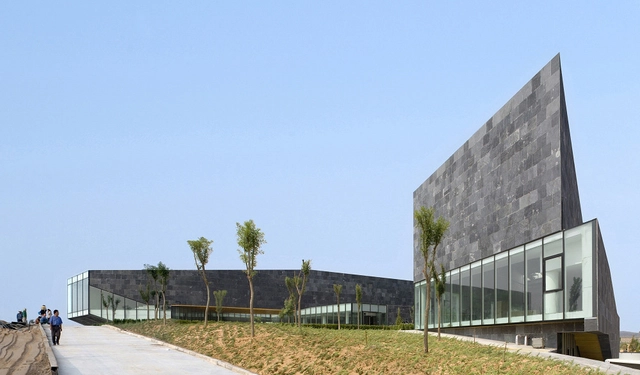
"In China there’s history but there’s no existing context. All the contexts are made for the future. Most of the designs, most of the buildings are only designed for a planning scenario lasting five or ten years. And in that case, first of all, you need to accommodate functions for the future, for the planned purpose. I’d say even though the current project is in a very rural area, it could soon, let’s say in just one or two years, become a populated area. So that’s a different challenge here when you are designing in China."
- Xu Tian Tian, Beijing 2013
Spontaneous Artist Community
Xu Tian Tian: What condition is Songzhuang in, in general? I haven’t been there for quite a while.
Pier Alessio Rizzardi: Songzhuang is developing very rapidly, everything was under construction, and especially in the areas around your three projects the residential buildings were growing fast… I must say that all the projects you designed [Songzhuang Artists’ Residence, Museum and Cultural Centre] were extremely damaged.
Xu Tian Tian: That’s quite disappointing...
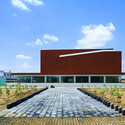
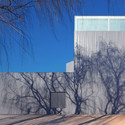
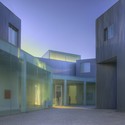

https://www.archdaily.com/642625/an-interview-with-xu-tian-tian-dna-design-and-architecturePier Alessio Rizzardi
The Architectural Monograph is Here to Stay

The monograph is a popular platform for dissemination and debate in the art and design world, yet architectural monographs are often treated with suspicion – viewed more as a self-serving PR exercise. But do monographs actually have a more substantive role within the practice of architecture? This was the backdrop for a discussion entitled ‘Why a Monograph?’ held at Waterstones Piccadilly as part of this year’s London Festival of Architecture. The participants included Jay Merrick, architecture correspondent of The Independent; Simon Henley of Henley Halebrown Rorrison (HHbR); David Grandorge, architectural photographer and Senior Lecturer at London’s CASS; and Ros Diamond of Diamond Architects. The session was chaired by ArchDaily Editor James Taylor-Foster.
https://www.archdaily.com/640615/the-monograph-is-here-to-stayMrinal Rammohan
Thomas Heatherwick on People, Plants, Buses and Buildings
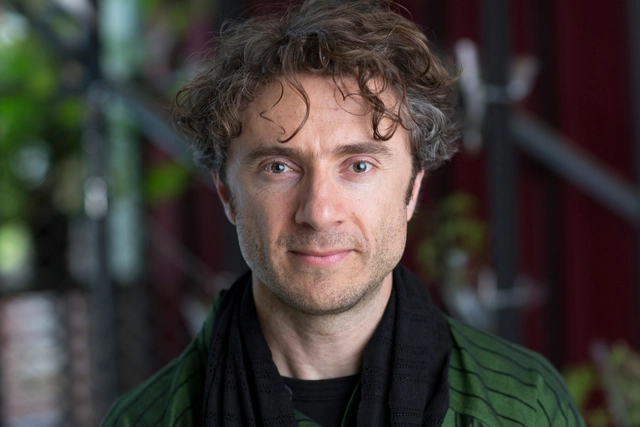
In an exclusive hour-long interview with British designer Thomas Heatherwick, Monocle's Andrew Tuck discusses building a business in the world of design and architecture, the process behind revamping the iconic red London bus, and the inspiration behind placing people – and plants – at the heart of the River Thames. Heatherwick leads London-based Heatherwick Studio, a multidisciplinary design practice who have recently completed a distillery in England and a learning hub in central Singapore, They are currently collaborating with BIG on the new Google Campus in San Francisco having been recently labelled as among the top ten most innovative architectural practices of 2015 by FastCompany.
Listen to the interview in full below:
https://www.archdaily.com/642207/thomas-heatherwick-monocleJames Taylor-Foster
Margot Krasojevic Turns Snow Cave Shelters into Practical, Impossible Art
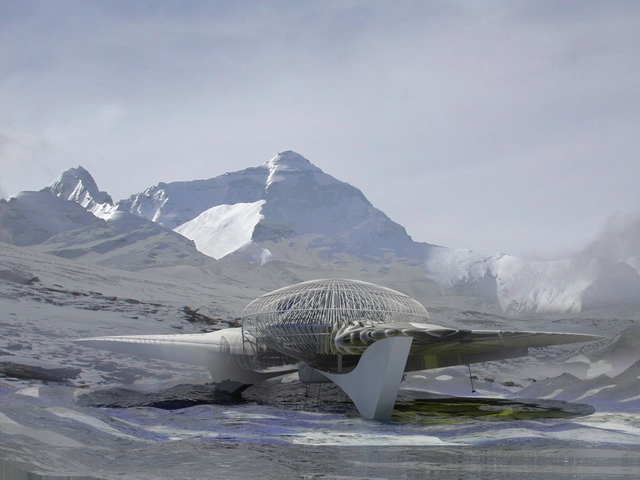
The question "what is the point of all this?" has dogged architecture for as long as anyone cares to look, but since the millenniumthe purely theoretical yet theoretically possible designs of Margot Krasojevic have taken this question as a challenge. Her latest proposal, a mesh shelter that takes the concept of snow caves and applies it to an artificial structure, is built for an eminently practical purpose: a built emergency shelter for climbers and others caught in extreme conditions. Yet the elaborate, high tech and naturally contoured structure is as much a thought experiment as it is a serious architectural proposal.


https://www.archdaily.com/639640/margot-krasojevic-turns-snow-cave-shelters-into-practical-impossible-artDario Goodwin
Between Intuition and Pragmatism: Peter Clegg on Holistic Sustainability
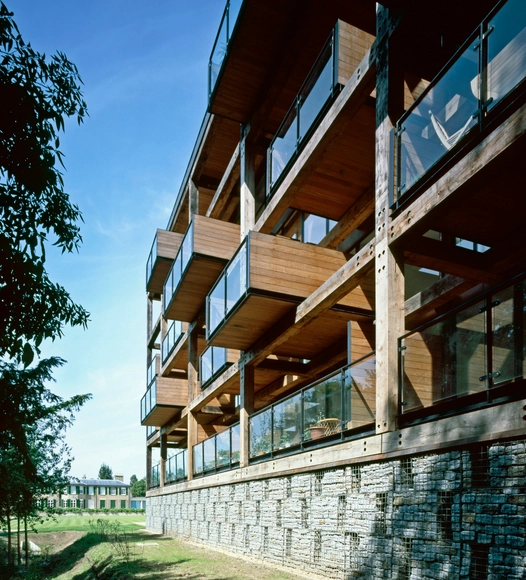
Founded in 1978, Feilden Clegg Bradley Studios has spent over thirty years refining its approach to sustainability, and is now regarded as one of the UK's leading practices in low-energy design. Yet their work still resonates on many other levels, bringing them multiple awards including the 2008 RIBA Stirling Prize for the Accordia Housing Project which they completed alongside Alison Brooks Architects and Maccreanor Lavington. In this interview from Indian Architect & Builder's May 2015 issue, Peter Clegg talks about the principles behind their work, explaining the concept of holistic sustainability which makes their designs so successful.
Indian Architect & Builder: The Yorkshire Sculpture Park, The Southbank Centre and many other projects desire to involve the social aspects for the larger good of the community. How would you describe the incorporation of these into the design process?
Peter Clegg: Architecture is an art form but also social science and we have a duty not only to work with our current client base and generate ideas collaboratively, but also think ahead and envisage the needs of future generations who are our ultimate clients. Our most creative work comes from working closely with creative clients who are more prevalent in the creative and cultural industries.




https://www.archdaily.com/639632/between-intuition-and-pragmatism-peter-clegg-on-holistic-sustainabilityIndian Architect & Builder
7 Leading Architects Defend the World's Most Hated Buildings
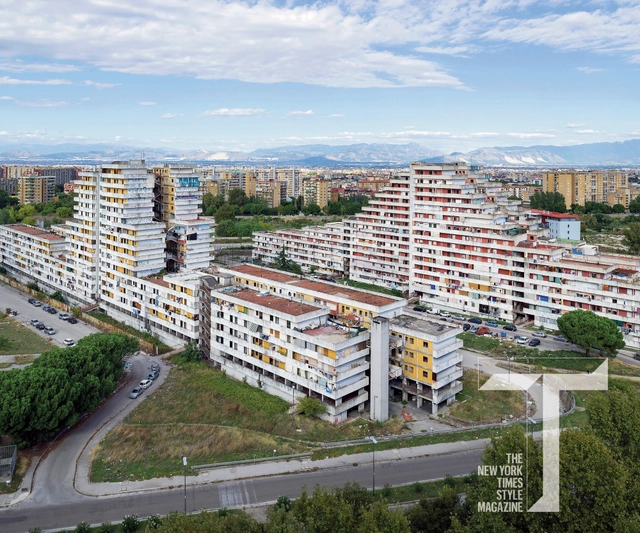
From Paris' most abhorred tower to New York's controversial government center, seven renowned architects have stepped up in defense of the world's most hated buildings in a newly published article on T Magazine. As told to Alexandra Lange, the article presents direct quotes from Zaha Hadid, Daniel Libeskind, Norman Foster and four others regarding controversial architecture whose importance goes beyond aesthetics.
See what hated building Norman Foster believes to be a "heroic" structure, after the break.
https://www.archdaily.com/639525/7-leading-architects-defend-the-world-s-most-hated-buildingsKarissa Rosenfield
CatalyticAction's Playground Puts Children at the Center of Relief Efforts for Syria
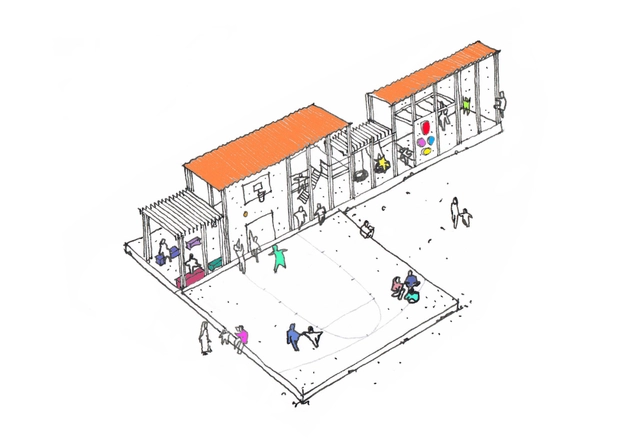
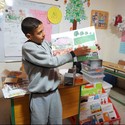
The international response to the Syrian War has often struggled to deal with the sheer scale of the disaster; huge numbers of refugees find it difficult even to source the barest essentials for life in the enormous refugee camps that have sprung up in Jordan, Lebanon, and elsewhere. Alongside the overwhelming need for basics, longer term care for displaced Syrian citizens is also proving difficult, but CatalyticAction, a not-for-profit design studio who are in their own words "a group of young graduates who believe that small changes can realize a big impact," believe that this long-term provision is equally important, especially for children.
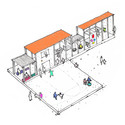
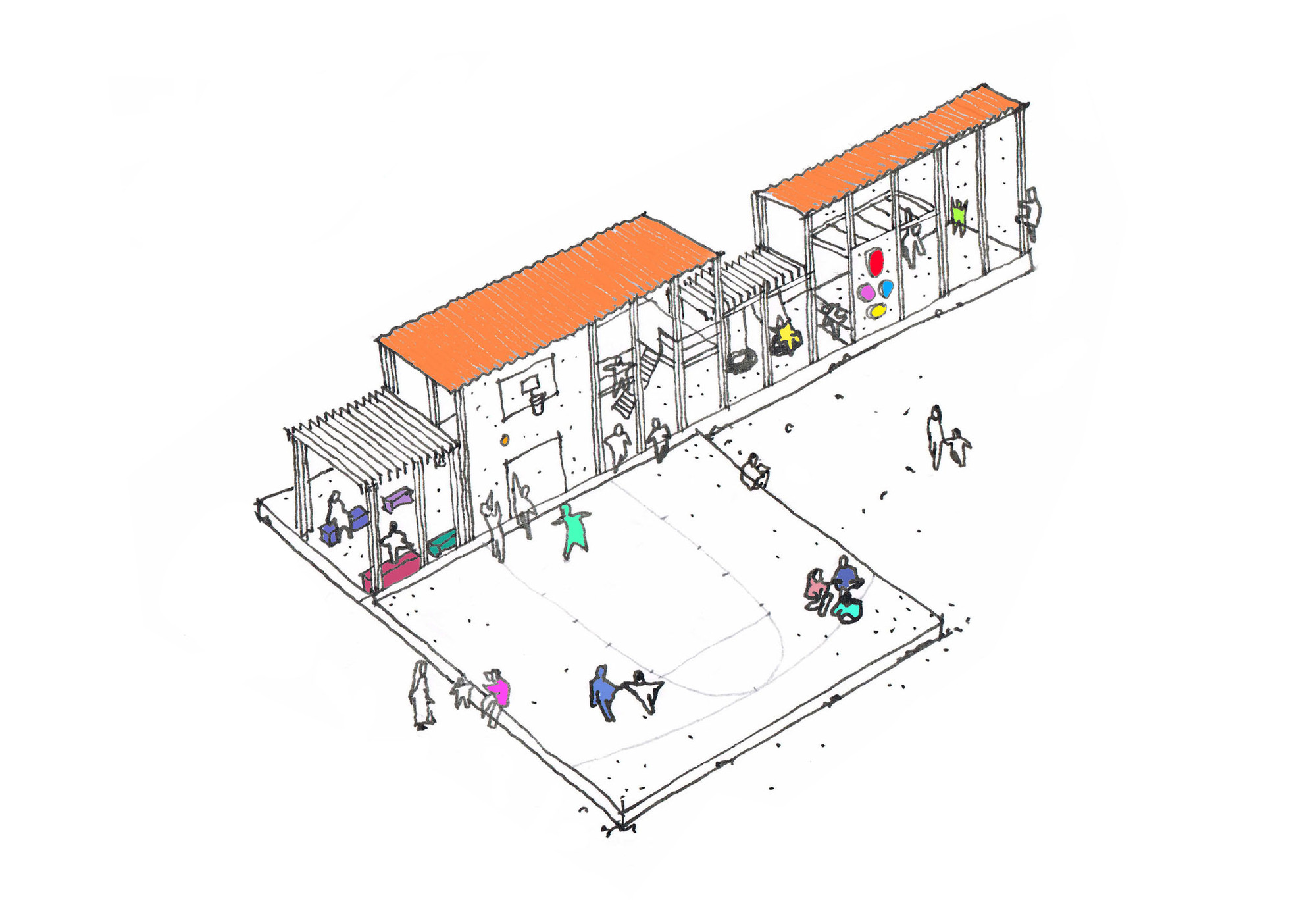
Providing a sense of normal life for children in the refugee camps is absolutely essential to helping them, and their families, to recover and cope with life as refugees, which this why CatalyticAction have begun crowdfunding the construction of a playground - designed with the help of refugee children - in the Lebanese town of Bar Elias. The playground would allow children to learn through play, provide a sense of normality and, importantly, should create a space that they feel safe in.


https://www.archdaily.com/639465/catalyticaction-s-playground-puts-children-at-the-center-of-relief-efforts-for-syriaDario Goodwin
Video: Renzo Piano Reveals the Story Behind the Whitney Museum on Charlie Rose
Said to be the most long-awaited museum of the 21st century, the new Whitney Museum of American Art by Renzo Piano officially opened its doors in New York this May after a 30 year endeavor to expand its capacity. An unusual scenario, Charlie Rose sat down with Piano and the museum's director Adam Weinberg to discuss the "remarkable story" behind the expansion and how its design incorporates, what Piano believes to be, seven elements that represent the essence of architecture: social life, urbanity, invention, construction, technology, poetry and light.
We've provided a clip of the talk above. Watch the full 30-minute discussion, after the break.
https://www.archdaily.com/639272/video-renzo-piano-reveals-the-story-behind-the-whitney-museum-on-charlie-roseKarissa Rosenfield
From Tokyo to Milwaukee: Sou Fujimoto and His Impact on Students at the University of Wisconsin

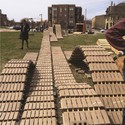
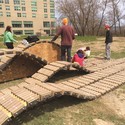
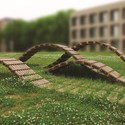
With the award of the $100,000 Marcus Prize to Sou Fujimoto in 2013, graduate students at the University of Wisconsin-Milwaukee’s School of Architecture were offered the rare opportunity to learn from one of Japan's most respected architectural practitioners. Through a semester-long connection to the studio - which he led alongside University of Wisconsin-Milwaukee Associate Professor Mo Zell - Fujimoto and his students have realized a small architectural installation on an unused lot in Milwaukee's East side entitled faBRICK.
In this interview conducted in Tokyo last year, University of Wisconsin-Milwaukee student Robert Guertin speaks with Fujimoto about the ideas and themes of his work. In an attempt to shed light on the influence he had in the design of faBRICK, his answers are presented alongside images of the resulting installation.

https://www.archdaily.com/639253/from-tokyo-to-milwaukee-sou-fujimoto-and-his-impact-on-students-at-the-university-of-wisconsinRobert Guertin
Material Masters: The Traditional Tiles of Wang Shu & Lu Wenyu
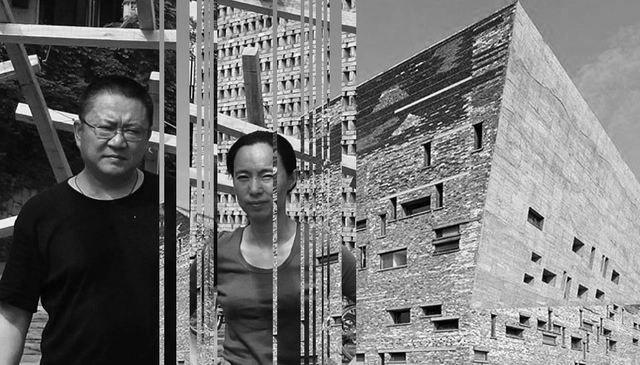
Wang Shu and Lu Wenyu of Amateur Architecture Studio are known for their distinctly contextual attitudes towards design which prize tradition and timelessness above anything else. In many cases, their use of materials is governed by local availability of salvaged building elements. Tiles, in particular, represent a material used repeatedly by Amateur Architecture studio and for Wang Shu, who won the 2012 Pritzker Prize, they offer a political as well as an architectural message.

https://www.archdaily.com/638948/material-masters-amateur-architecture-studio-s-work-with-tileEvan Rawn
Why I Created a Database to Document African Vernacular Architecture
_of_one_of_the_big_families_of_Niongono_(submitted_by_Daniel_Schumann).jpg?1433337453&format=webp&width=640&height=580)
Architecture is a unique component of a country's culture just as much as its language, music, art, literature or food. Architecture is also the most visual of those cultural components; the pyramids in Egypt, skyscrapers in New York, a temple in Japan, and onion domes in Russia all convey a unique image. This is called “genius loci,” the “spirit of a place”. Every country has its own genius loci, its own uniqueness. Vernacular architecture is composed of local materials and derived from local customs, techniques that have been passed on from generation to generation. But vernacular architecture in most (if not all) African countries is disappearing, being abandoned for western materials and techniques.
.jpg?1433337502 "Rwanda - Kings Hut interior. Image © Larsen Payá")
.jpg?1433337430 "Ethiopia - chicken coop constructed with woven reeds. Image © Abby Morris")
.jpg?1433337423 "Benin - a Tata Somba. Image © Lafia Yarou")
.jpg?1433337546 "Zambia - thatch stored in bundles being applied to roof. Image © Jon Sojkowski via Zambia Architecture")
_of_one_of_the_big_families_of_Niongono_(submitted_by_Daniel_Schumann).jpg?1433337453)
https://www.archdaily.com/638933/why-i-created-a-database-to-document-african-vernacular-architectureJon Sojkowski
New Site Revealed for BIG and Heatherwick-Designed Google HQ Expansion
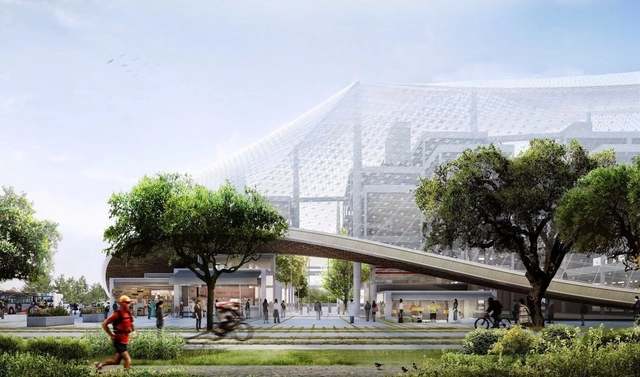
Google has found another way to realize its futuristic Mountain View headquarter's expansion. As the San Jose Mercury News reports, the search engine giant revealed plans to utilize a vacant site just east of their existing Googleplex that was approved by the city almost a decade ago to host nearly 600,000 square-feet of office and commercial space. The approval occurred prior to the city implementing strict legislation that restricts office expansions in the North Bayshore district, therefore Google's entitlement is essentially "grandfathered in."
https://www.archdaily.com/637773/new-site-revealed-for-big-and-heatherwick-designed-google-hq-expansionKarissa Rosenfield
How to Drastically Improve Your Architectural Renderings
.jpg?1433130355&format=webp&width=640&height=580)
These days, the production of architectural renderings is something of a digital arms race, as the more sophisticated visualization becomes, the more of a disservice you do to your designs if you're not able to present clients with increasingly photo-realistic imagery. In this post, originally published by ArchSmarter as the first in their "Pro Smarts" series which features tips and tricks from seasoned professionals, Jonn Kutyla from PiXate Creative describes his seven-step process for creating more realistic renders.
Creating photo-realistic architectural renderings requires careful planning and attention to detail. Adding minor details to your renderings can be time consuming, but it is certainly worthwhile. Some of the smallest details have the greatest impact on the realism of the rendering. Today we’re going to focus on the site around your building. This isn’t going to be a tutorial for specific software, but rather a guide to using nature to make your renderings more believable.

https://www.archdaily.com/637474/how-to-drastically-improve-your-architectural-renderingsJonn Kutyla
10 Highlights from Guardian Cities' "History of Cities in 50 Buildings"
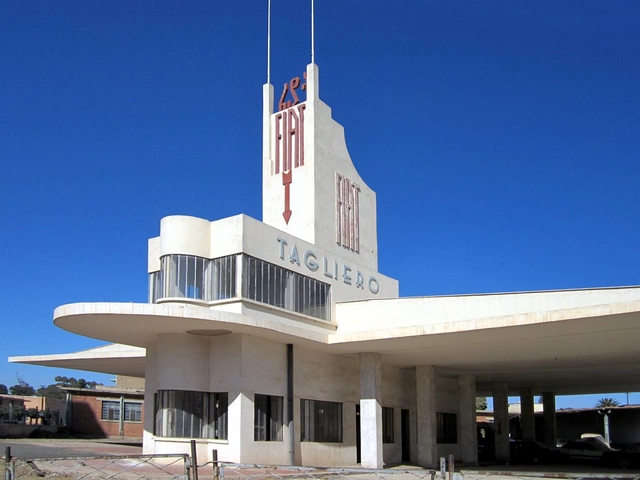
All good things must come to an end, and Guardian Cities' excellent "History of Cities in 50 Buildings" series is sadly no exception, with only a few more left to be published before they hit 50. The whole series is definitely worth the read, bringing in the best of academic and architectural writing from guest authors and the Guardian's own Cities team, but if you're strapped for time - and if you're an architect, it's fairly likely that's true - we've rounded up 10 highlights from the list to get you started.



https://www.archdaily.com/637387/10-highlights-from-guardian-cities-history-of-cities-in-50-buildingsDario Goodwin
Can We Make New Office Buildings As Cool As Warehouses?

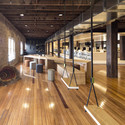
We are rapidly running out of old warehouse buildings to renovate, and selling space in the glassy towers of the central business district is difficult as corporate buildings become less and less attractive. We need a new building that is attractive to companies who cut their teeth in co-working incubators before seeking their own digs.
We are a society obsessed with the new. We want to look eternally young, drive the latest car, wear runway-fresh clothes and have up-to-the-minute technology at our fingertips. We do not care if the battery in our phones cannot be changed, because we are happy to simply get a newer phone. The American pursuit of life, liberty, and happiness is a glittering glare of polish and gloss, all sparkling and new.
That is, unless we’re talking architecture.



https://www.archdaily.com/636790/can-we-make-new-office-buildings-as-cool-as-warehousesRobert Benson