The Constructivist Project / Natalia Melikova

© Natalia Melikova

In , hundreds upon hundreds of buildings are endangered. The work of making sure they don’t become extinct? That’s in the hands of a tireless few.

One of these crusaders is Natalia Melikova, the author of The Constructivist Project, an on-line web site that seeks to preserve the memory – and hopefully inspire the protection of – Russia’s avant-garde architecture. Although it began as her thesis project, it’s steadily become one of her life passions. In Melikova’s words, “By sharing photographs (my own and others), articles, events, exhibitions, and other resources on the topic of the avant-garde, The Constructivist Project unites common interest and appreciation of Russian art and history and makes it accessible to an international English-speaking audience. This is a way to initiate discussion not only of the perilous situation of Russian avant-garde architecture but also of cultural and urban development in general.”

See 10 of Melikova’s images, snapshots into a part of Russian history quickly being forgotten, with her descriptions, after the break.

The Moscow Affair

Currently, many of ’s motorways are occupied more as motorways than public space. Image via shutterstock.com

has madly, passionately (and not a little blindly) fallen in love. And, as with any love affair worth its salt, this one will have its fair share of consequences when the honeymoon ends.

The object of Russia’s affection? The good, old-fashioned automobile.

It started fast and has only gotten faster. In 2005, Russia’s auto industry grew 14%; in 2006, 36%; and, in 2007, a whopping 67% – an exponential growth that attracted foreign investors, particularly after 2009, when the country welcomed companies like GM & Ford with open arms. Today, the ninth largest economy in the world is the seventh-largest car market, positioned to surpass Germany as the largest in Europe by 2014.

Nowhere is this love affair more evident, more woven into the city itself, than in Moscow. The city has a reputation (perhaps rivaled only by Beijing’s) for traffic, pollution, and downright hostility to pedestrians. And, ironically, because of its epic congestion, the city continues to expand its highways and parking spaces.

We’ve heard that story before, and we know how it ends – for that matter, so does Moscow. But passion, by nature, is blind – and stopping a love affair in its tracks is far from easy.

International Competition for Zaryadye Park

Courtesy of for Media Architecture and Design

Officially launched this month by Strelka Institute for Media Architecture and Design, the International Competition for Zaryadye Park in , Russia is challenging participants to develop an Architecture and Landscaping Design Concept that will form the basis for the creation of a contemporary Park with a high quality infrastructure that will be open for the public all year round. Zaryadye is a unique historic district in downtown Moscow, and after the demolition of Hotel Russia, the site has remained abandoned for over 6 years. In late January, 2012, Prime Minister and President-Elect Vladimir Putin proposed to turn this 130 000 sq. m area into a multi-functional public park. The application deadline is May 22. For more information, please visit here.

Office+Showroom for DK / Megabudka

Courtesy of Megabudka

Architects: Megabudka
Location: ,
Сredits: Kirill Gubernatorov, Andrey Samonaev, Artem Ukropov, Daria Listopad, Svetlana Tverdova
Constructor: Igor Zavarov
Year: 2013
Photographs: Courtesy of Megabudka

Famous Architects Petition to Save the Melnikov House

© ArchDaily instagram user, dbasulto

Peter Eisenman, Steven Holl, and Rem Koolhaas are among the many architects who have signed a letter pleading for the of one of Konstantin Melnikov’s greatest works, the .

As we reported in December of last year, the Melnikov’s house 83-year old foundations have weakened considerably since the onset of neighboring construction. Unfortunately, the situation has only worsened “significantly” over the last few months.

Read more about the state of the Melnikov House, and what architects are doing to try and prevent its deterioration, after the break…

AD Interviews: Alexander Mamut

The construction of the city is something that goes beyond architects and planners. It involves the government, the citizens and the private sector. For the ArchDaily Interview series we have interviewed many architects with very different backgrounds, and we have started to include people outside the field that have played an important role either for our profession or the city.

During our last trip to Moscow, we had the opportunity to interview , businessman and investor who is involved in projects such as the Pioner Cinema, the Waterstone book chain, the blogging service LiveJournal  and other projects related to culture, media and the city. He is also one of the founders of the Strelka Institute, a post graduate school located at the Chocolate Factory in the heart of Moscow and using the city as a laboratory, with an ambitious plan to raise the quality of architectural education in the country.

The founders of Strelka (who also include Sergey Adonyev, Dmitry Likin, Ilya Oskolkov-Tsentsiper and Oleg Shapiro) invited Rem Koolhass to design the curriculum for this new school, who under the AMO research arm prepared the educational programme for Strelka, with a research agenda based on design, energy, , public spaces and thinning. The institute brings together professionals from different disciplines to have a comprehensive approach to city and architecture, from architects to urbanists, writers, designers, scientists, and journalists.

The city of Moscow is facing tremendous challenges, due to the growth and changes it has undergone in the past few years, which will only accelerate as the result of its vibrant economy. The city is expected to double its population in the coming years, and many competitions, including the masterplan for the city’s expansion, are being held with this objective in mind.

Courtesy of Strelka

In this scenario, architecture education is key in order to form the new generation of professionals that wil face the critical issues of contemporary Russia. And this is why we wanted to include Alexander Mamut, whose passion for the city led him to invest in the city in a particular way, in our interview series. He is a good example of what can be done from the private sector to develop cities with a long-term vision.
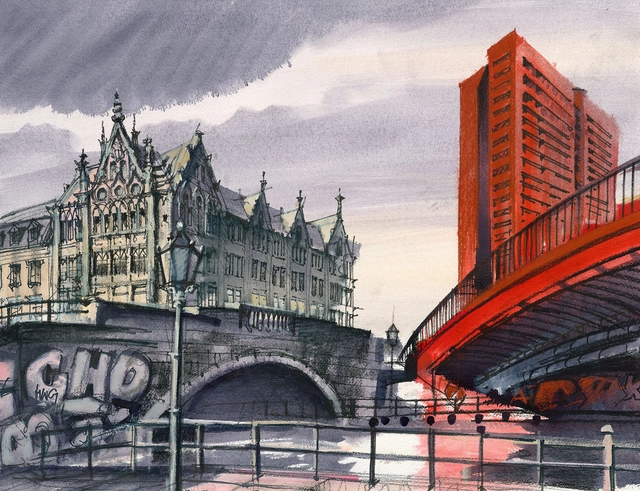
During the interview, we discuss with Alexander Mamut the future of Moscow, how education can improve the quality of life of its habitants, the importance of the private sector in the development of cities, and more.

Moscow Polytechnic Museum and Educational Center Competition Entry / 3XN

Courtesy of

With the aim to be a meaningful building beyond its iconic form, the new Museum & Educational Center (MEC), designed by 3XN, is about connecting with people, while opening up the world of science, technology, innovation and ’s extraordinary achievements in these domains. Through both an internal and external architectural expression of flexibility, this proposal, which was a finalist in the international competition, recognizes that architecture shapes behavior. More images and architects’ description after the break.

Moscow Polytechnic Museum – Education Center Proposal / Leeser Architecture

Courtesy of

Designed by Leeser Architecture their design concept for the Polytechnic Education Center takes its cues from the rich history of modern Russian architecture of the early part of the twentieth century. Located in the Lenin Hills section of Moscow, which play an important role in the history of Moscow as a place of radical experimentation, the new institute symbolizes this incredible energy and conflation of future inventions with past achievement as a new symbol of global importance. More images and architects’ description after the break.

Museum and Educational Center of the Polytechnic Museum and Lomonosov Moscow State University Design Competition Results

first prize / Courtesy of MASSIMILIANO FUKSAS Architetto and SPEECH

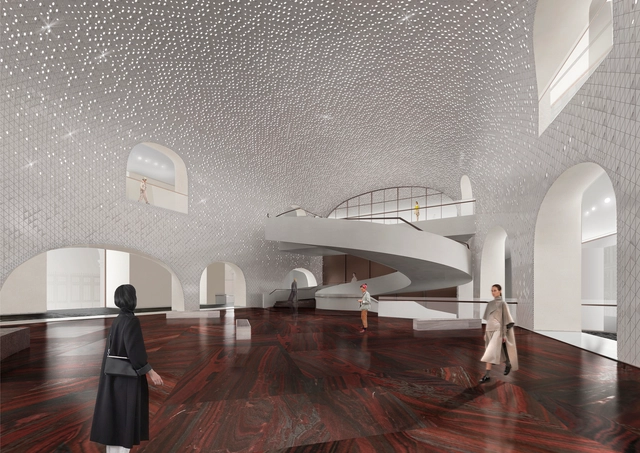
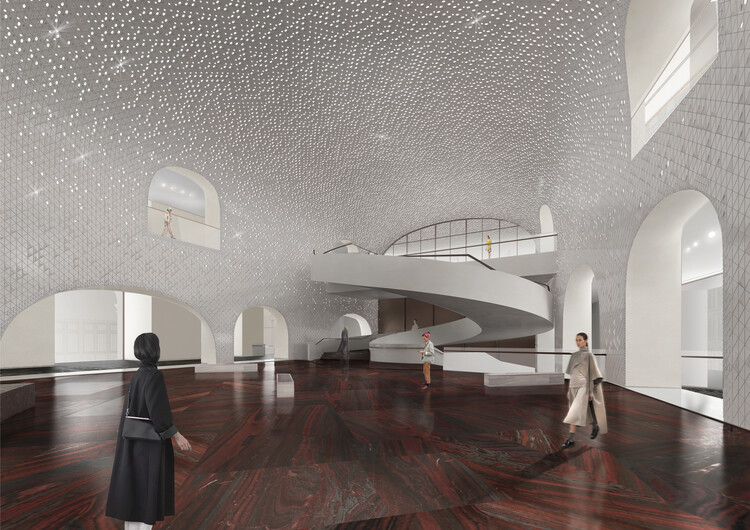
Organized by the Polytechnic Museum Development Foundation, the team of MASSIMILIANO FUKSAS Architetto (Italy) and SPEECH () was recently announced the winner of Architectural Concepts Competition for the Museum and Educational Center of the Polytechnic Museum and Lomonosov Moscow State University. The challenge was to create a museum and educational center for demonstrating most recent scientific and technological discoveries using state-of-the-art multimedia technologies for accommodating multiple displays and exhibitions as well as for conducting scientific educational programs. More images and information on the winning team and finalists after the break.

Nordic Wood Festival of Wooden Architecture

Courtesy of Central House of Architects

Between March 15th and March 27th 2013 the Central House of Architects will host the Nordic Wood festival of wooden architecture in where the most interesting examples of wooden architecture in Scandinavia, the Baltic states and will be on display. The festival is being produced by the nationwide ARCHIWOOD project. The main event of the festival is the photographic exhibition. Works by recent winners and runners-up of prizes for wooden architecture from Norway, Finland, Denmark, Estonia, Latvia and Russia will be on show, along with other works by architects building in wood from these countries. More images and information on the event after the break.
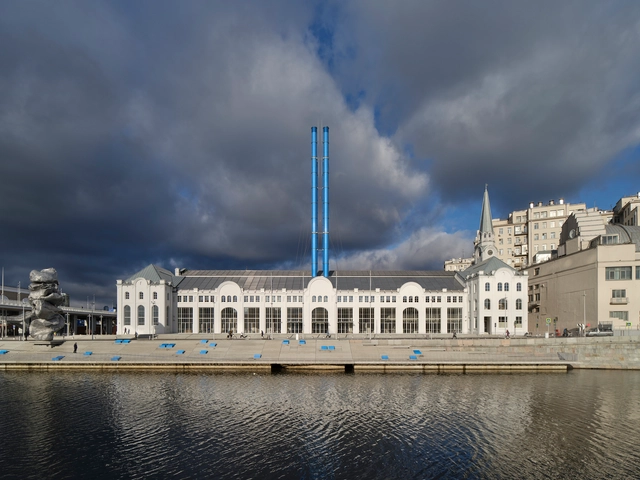
MARCH & British / PANACOM

© Anton Demidov

Architects:
Location: , Russia
Project Authors: Nikita Tokarev, Mary Saxon (Chief Architect), Arseny Leonovich
Project Management: British HigherSchool of Art&Design
Area: 1,100 sqm
Year: 2012
Photographs: Anton Demidov

Dupont Innovation Centre Russia / Arch group

© Arch group

Architects: Arch group
Location: ,
Design Team: M. Krymov, A. Goryainov, I. Kochuk
Area: 182 sqm
Year: 2012
Photographs: Arch group-Ilya. Ivanov

Six Teams Shortlisted for Museum and Educational Center in Moscow

Aerial

A shortlist of six international teams has been chosen to advance to the second stage of the architectural competition for the Museum and Educational Center of the Polytechnic Museum and Lomonosov State University.

The competition’s objective is to create a Museum and Educational Center that will compliment the historic Moscow Polytechnic Museum – one of the largest and oldest technical museums in the world – on the new territory of the Moscow State University (MSU). The new center is envisaged as a meeting point for the Russian and international scientific community. It will demonstrate the most recent scientific and technological discoveries using state-of-the-art multimedia technologies, for accommodating multiple displays and exhibitions as well as for conducing scientific educational programs for over 1.3 million annual visitors.
The shortlisted design teams are:

Time Running Out for Melnikov House

Courtesy of ArchDaily Instagram

The Melnikov House, the unusual, cylindrical classic of Constructivism which was ’s residence and studio, is on the brink of collapse.
The Independent reports that nearby construction (which visibly moves the ground the building sits on) has weakened the 83-year-old foundations dangerously. Konstantin Melnikov’s grand-daughter (and current resident of the house), Ekaterina Karinskaya, further told The Independent that, due to broken heating pipes, the wooden house spent more than 50 days without heating in what were often sub-zero temperatures.

Although there have been interests expressed to turn the house into a museum, a tense legal debate between Ms. Karinskaya and a developer has put any plans on stand-still. Meanwhile, time is running out for the architectural icon.

More on the Melnikov House debate, after the break…

Museum and Educational Center of the Polytechnic Museum and Lomonosov Moscow State University Design Competition

Courtesy of Polytechnic Museum Development Foundation

The Polytechnic Museum Development Foundation recently announced the international architectural design competition for the Museum and educational center of the Polytechnic Museum and Lomonosov Moscow State University. The project provides for a total project area of 35,000 square meters on the land plot with a total area of 1 Ha located on the new territory of the Lomonosov State University. The objective is to create a museum and educational center for demonstrating most recent scientific and technological discoveries using state-of-the-art multimedia technologies for accommodating multiple displays and exhibitions as well as for conducting scientific educational programs. The deadline to register and for submissions is November 19. For more information, please visit here.

Kuntsevo Centre / The Jerde Partnership

Courtesy of

The Kuntsevo Centre, designed by The Jerde Partnership, will provide a new stage for dynamic public activity and distinct commercial offerings in central . The pedestrian-oriented center will establish a vibrant leisure, shopping, business, and residential complex reconnecting the urban fabric of the historic Kuntsevo district, while creating a new landmark for the city. Delivering a modern community gathering destination rooted in art, nature, and urban connectivity, the project’s design enhances its potential to become a continuously active public realm. More images and architects’ description after the break.

Zukovka-21 / Asadov Architectural Studio

© Andrey Asadov

Architects: Asadov Architectural Studio
Location: Moscow,
Architect In Charge: A.Asadov, AAAsadov, O.Grigoreva
Year: 2011
Area: 5,980 sqm
Consultant: S.Kulish
Engineer: G.Karklo
Interiors: Laboratory of Virtual Architecture – D.Kulish, A.Karpova
Photographs: Andrey Asadov 

Video: 24 Hours in Moscow


Widely accepted as one of the most beautiful and architectural capitals in the world, is the heart of Mother , radiating Slavic grandeur and a sense of things to come. Here, TV presenter Martyn Andrews takes Crane.tv on a tour of the Red Square, which houses everything from St Basil’s Cathedral to Lenin’s Mausoleum.

Badoo Development Office / za bor Architects

Courtesy of

Architects: za bor Architects
Location: , Russia
Project Year: 2012
Project Area: 1,100 sqm
Photographs: Courtesy of za bor Architects

Winning Team Announced for Moscow Expansion

Courtesy of CCPG

An international jury has selected Capital Cities Planning Group (CCPG), an Anglo-American team including Gillespies, John Thompson & Partners and Buro Happold, as winners for the design and planning of the new Federal District in Moscow.

Earlier this year, the Russian Federal Government announced that it was doubling the territory of Moscow to enable it to grow into a competitive 21st century world capital. In response, Genplan, Moscow’s city planner, earmarked an area of 155km2 to the south-west of the city for a new Federal Government Centre, aiming to relieve inner-city congestion through the relocation of the capital’s major employer. Ten international teams were invited to develop strategies and designs for the region during a six month, three stage competition. Continue reading to learn more.

Sberbank Corporate University / Erick van Egeraat

Courtesy of

Dutch architect Erick van Egeraat recently won the international competition for the new 32.000m2 Sberbank corporate University. As ’s largest and oldest state run bank with over 250.000 employees and 20.000 branch offices in the country, the new Sberbank University will provide education, seminars, and team building programs to the company’s top professionals to continuously improve their performance within the corporate standards. The Sberbank University is expected to be completed in 2013. More images and architects’ description after the break.