After Frida Escobedo, Yana Peel and Hans Ulrich Obrist officially presented the 2018 Serpentine Pavilion on Monday, June 11 at Kensington Gardens in London, we had the opportunity to interview Mexican architect Frida Escobedo exclusively for ArchDaily. Escobedo shared with us with us the importance that designing pavilions has had in her career, the relevance of working on public spaces, and offered her thoughts on the perception of the Mexican context outside of Mexico. She also spoke further about the details of the pavilion itself and revealed where she would like the pavilion to be moved after completing its 4-month stay at Kensington Gardens.
The 2018 Serpentine Pavilion opens to the public on June 15th and will remain in place until October 7th, 2018.
https://www.archdaily.com/896242/frida-escobedo-on-the-2018-serpentine-pavilion-mexican-architecture-is-an-architecture-of-layeringAD Editorial Team
There are few things in this world better than books on architecture, especially when they're available to download for free! Following on from our ever-popular post from 2014, we've gathered up ten more books that cover a broad range of interesting topics—including advice to architecture students from Herman Hertzberger, a look at what sparks the formation and growth of a city, and even a book that offers an in-depth architectural analysis of Alfred Hitchcock's films. Check out the list below!
For many, summer brings a sharp increase in time spent outdoors. Whether that be a dip in the pool after a long day at work or a casual stroll to the office, the summer months are best enjoyed outside. Admittedly, there are times when the summer heat can be too intense, and A/C is needed, but why not enjoy the great outdoors while you're at it?
Architecture provides the unique opportunity to meld the comfort of the indoors with the experience of being outdoors. Selected from our project archives, these nine houses offer the perfect combination of indoor/outdoor spaces ripe for summer living.
At first glance, The Stealth Building looks like a pristinely-restored cast iron apartment building. That’s because technically, it is. But upon closer inspection, the Lower Manhattan building is rife with innovative restoration and renovation practices by WORKac.
As part of our 2018 Venice Architecture Biennale coverage, we present Freestanding, an exhibition in the Biennale's Central Pavilion. Below, the team describes their contribution in their own words.
https://www.archdaily.com/896171/freestanding-exhibition-shows-the-power-and-poetry-of-sigurd-lewerentzs-architectureAD Editorial Team
Honored by this year’s jury as the winner of the Golden Lion for best national participation, the Swiss Pavilion actively defies conventional representation while exploring a specific point of contact between architecture and society: the house tour.
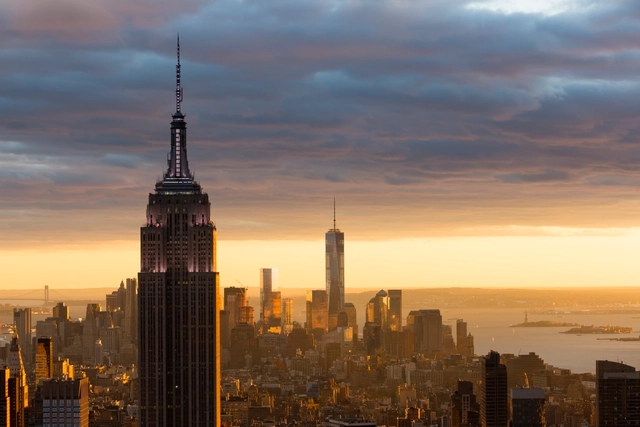
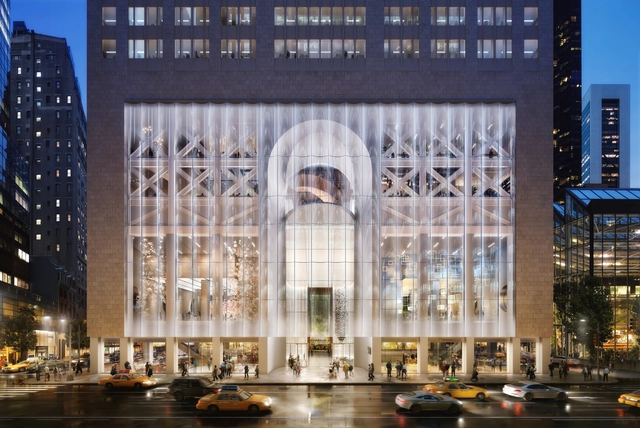
3 World Trade Center, designed by Rogers Stirk Harbour + Partners, has opened for business in Lower Manhattan, New York City. At 1079 feet tall, and 80 floors, the scheme is the fifth-highest in New York, and the penultimate tower to be opened on the World Trade Center site. Construction of the tower saw over 4,000 union workers apply millions of hours.
Lasting for close to two decades now, the annual Serpentine Gallery Pavilion Exhibition has become one of the most anticipated architectural events in London and for the global architecture community. Each of the previous eighteen pavilions have been thought-provoking, leaving an indelible mark and strong message to the architectural community. And even though each of the past pavilions are removed from the site after their short summer stints to occupy far-flung private estates, they continue to be shared through photographs, and in architectural lectures. With the launch of the 18th Pavilion, we take a look back at all the previous pavilions and their significance to the architecturally-minded public.
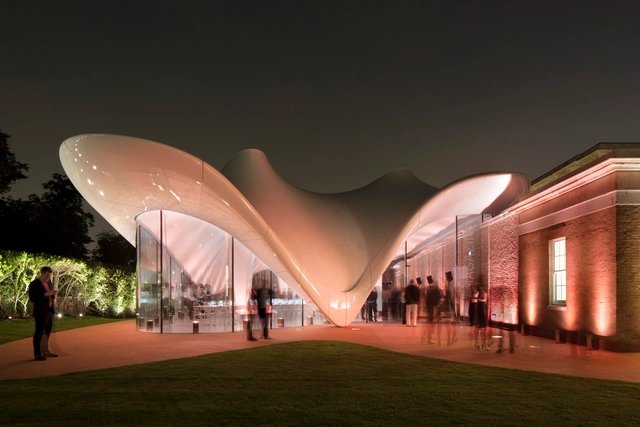
The 2018 Serpentine Gallery Pavilion, designed by Frida Escobedo, was unveiled today in London's Hyde Park. Escobedo's design, which fuses elements typical to Mexican architecture with local London references, features a courtyard enclosed by two rectangular volumes constructed from cement roof tiles. These tiles are stacked to form a celosia, a type of wall common to Mexican architecture which is permeable, allowing ventilation and views to the other side.
The pavilion representing the United States at this year’s biennale brings together the work of seven different transdisciplinary teams who each prepared an installation addressing the concept of citizenship at a different scale. Entitled Dimensions of Citizenship, the exhibition is intended to challenge the definition and conception of citizenship, examining issues and citing examples on the scale of the citizen, civitas, region, nation, globe, network and cosmos. The pavilion was commissioned on behalf of the US Department of State’s Bureau of Educational and Cultural Affairs by the School of the Art Institute of Chicago and the University of Chicago.
Kéré Architecture has recently completed the scenography for “Racism. The Invention of Human Races,” an exhibition at the Deutsches Hygiene-Museum, Dresden. The atmospheres within each of the three spaces are unique yet harmonious, aiming to connect “the rooms’ architecture with the rooms’ theme.” Using a variety of high-quality materials and engaging structures, the journey hopes to show a conflict between people’s desires for stability and the organic need for social transformation, emphasizing the charm of the temporary and importance of conversation.
Bee Breeders have announced the winners of the Iceland Northern Lights Rooms competition, where entrants were tasked with designing a series of guest houses that framed the beauty of the surrounding context. In response to the delicate landscape, Mývatn Lake in Iceland, the brief outlined a number of restrictions. These included no permanent construction within 200m from the lake, and that all guest houses were to be movable. Shared themes throughout all the successful proposals were specific material experimentation, “distinct interaction with the site and sky,” scalable design, irand cost-conscious solutions.
In the latest installment of PLANE—SITE’s short video series Time-Space-Existence, French architect Odile Decq gives this advice to young designers: be bold. “If you want to build and create the new century, you have to have people who have people who have specific personalities. I love when people express themselves strongly and very clearly.”
If you stand in Manhattan Avenue Park in Brooklyn’sGreenpoint neighborhood, you’ll see the Long Island City skyline across a small creek. On the Greenpoint side of the creek, a historic neighborhood of row houses and industrial sites is rapidly growing. On the Long Island City side, high-rise apartments and hundreds of art galleries and studios line the East River. Just a stone’s throw away, Long Island City can feel like a world apart from Greenpoint. That’s in large part due to the fact that only one bridge connects the neighborhoods—and it’s meant more for cars than pedestrians or cyclists. Isn’t there a better way? Architect Jun Aizaki thinks so. For the past few years, he and his team at CRÈME Architecture and Design have been working on the so-called “Timber Bridge at Longpoint Corridor."
The Sharjah Architecture Triennial will open in November 2019 as "the first major platform for dialogue on architecture and urbanism in the Middle East, North Africa, East Africa and South Asia." Curator Adrian Lahoud has announced the theme of the Triennial as the Rights of Future Generations, aiming to fundamentally challenge traditional ideas about architecture and introduce new ways of thinking that veer from current Western-centric discourse.
Architecture, in its realized form, is neither the vision or the labor of a singular person. It is a practice which is inherently group and firm-oriented in its processes. But architecture as we know it is only celebrated after it is completed, and is very rarely celebrated for how it gets made. Few awards recognize the vast network of people that enables those at the very top of the field to put their name to completed works.
The pavilion coincides with the launching of Il Makiage’s new 800-piece makeup collection, and was designed to convey the label’s “characteristically bold graphic identity.”