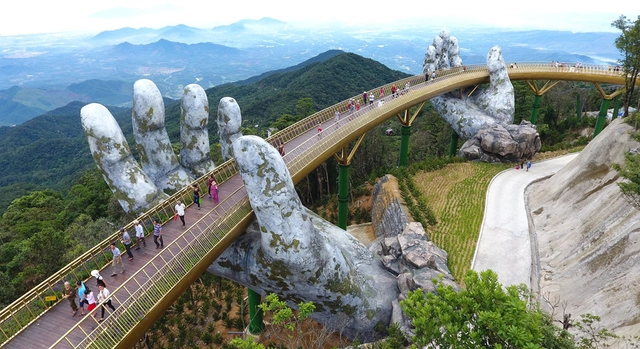
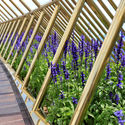
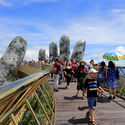
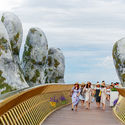
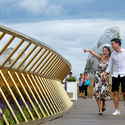
In the mountains above Da Nang, Vietnam sits a unique piece of bridge design. Winding its way around a 150-meter course lined with flowers, a golden bridge shimmers against the Ba Na Hills, supported by a pair of giant hands.
The Golden Bridge opened to visitors in early June, in the tourist retreat of Thien Thai Garden. The bridge sits 1,400 meters above sea level, an altitude which creates the illusion of a silk strip hiding in the clouds above Da Nang.
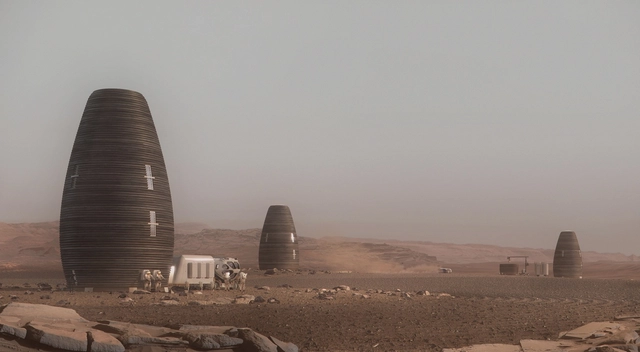
AI SpaceFactory has released details of their proposed cylindrical huts for the Planet Mars, designed as part of the 3D Printed Habitat Challenge organized by NASA. Project MARSHA (Mars HAbitat) was endorsed by NASA with a top prize of almost $21,000, one of five designs selected from a field of seventeen.
The competition asked participants to design an effective habitat for a crew of four astronauts to be located on the Red Planet, using construction techniques enabled by 3D printing. The submitted schemes were then ranked based on their innovation, architectural layout, and level of detail in BIM modeling.
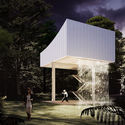
A skyscraper in Guiyang, China, has attracted headlines thanks to a daring water feature built into its facade. On one side, the 121-meter (397-foot) tall Liebian Building in Guiyang, China, features a spectacular waterfall, providing a dramatic spectacle from the plaza below. At 108-meters (350-feet), the waterfall is among the tallest artificial waterfalls in the world—and easily the largest artificial waterfall located in an urban area, with other record breakers being artificial additions to river and canal networks.
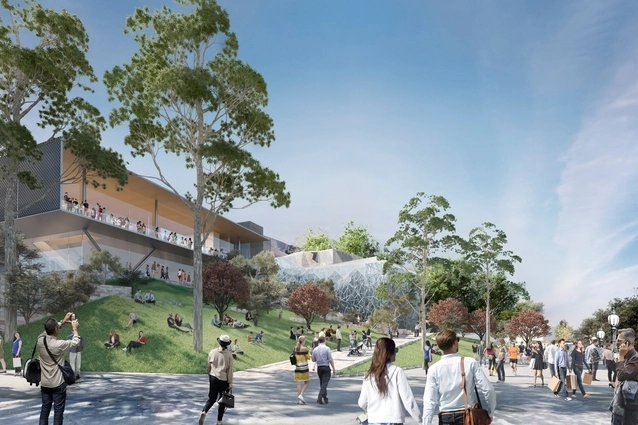
The revised scheme has been the result of workshops involving Fed Square Management, the Victorian Government, the City of Melbourne, and Apple, with input from Donald Bates, chair of architectural design at the University of Melbourne.
https://www.archdaily.com/898830/foster-plus-partners-revises-design-for-apples-melbourne-store-following-pizza-hut-pagoda-backlashNiall Patrick Walsh
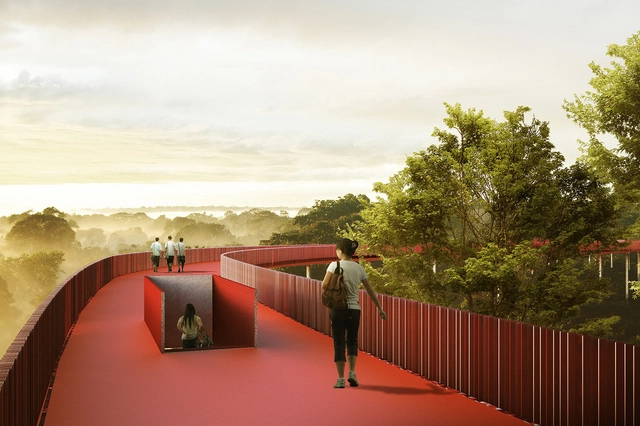
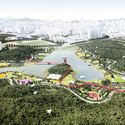
The winning collaboration saw off competition from JCFO, SWA, and TCL, with the competition jury praising the scheme for its “fresh approach and [for] being highly attentive to local ecology [while] meanwhile incorporating romantic techniques and realistic urban visions.”
The fall of the Iron Curtain in 1991 came not only with political, economic, and social implications but also left behind a distinctive style of architecture. This architecture, under the Soviet regime, was a system that relied on quantifiable targets, such as the Five Year Plan. These quotas forced architects to evaluate building projects in terms of material and labor costs, number of units, volume of skilled and unskilled labor, and so forth. As a result, architecture across these regions became an industrial commodity, an outward flex of power and technological innovation, and a collective of architects executing a Stalinist vision.
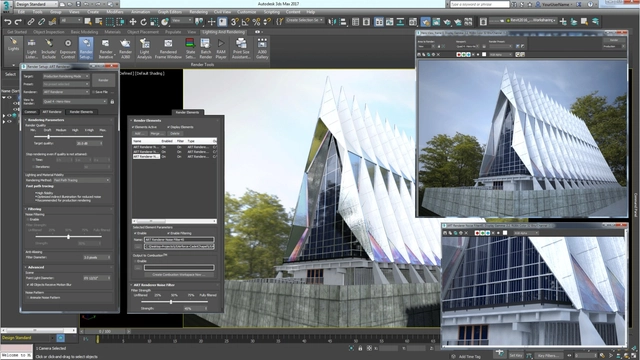
When you think of the age of hand drafted architecture drawings, what images come to mind? Is it the iconic plans of the Palladian Villas? Fast forward to present day, where architecture software is favored over hand drawings due to its efficiency and ability to create increasingly innovative structures. With all of the software available to architects, have you ever wondered which one might be the "best"? Luckily, TechRadar has just released their list of leading architecture software for this year.
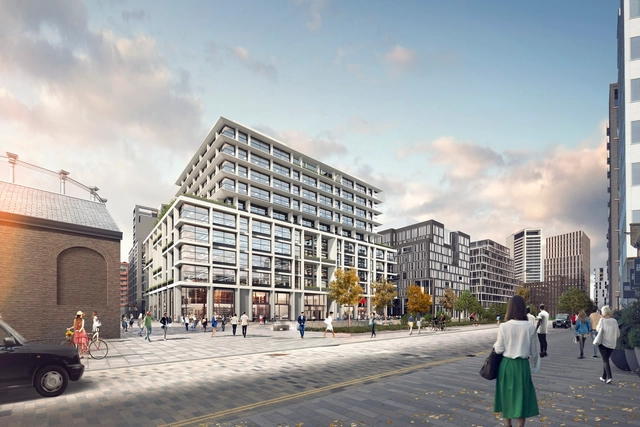
Facebook is moving into new offices in London’s King’s Cross. The announcement from King’s Cross details the social media giant’s commitment to take over 600,000 square feet (55,000 square meters) of office space across three buildings, namely 11 and 21 Canal Reach by Bennetts Associates, and P2 by Allford Hall Monaghan Morris.
The July 23rd deal between Facebook and King’s Cross Central Limited Partnership (KCCLP) represents one of the most significant such commitments in London in the last decade, encompassing around 15% of King’s Cross’ 4-million-square-foot (370,000 square meters) commercial portfolio.
https://www.archdaily.com/898752/facebook-set-to-occupy-london-offices-in-kings-cross-by-ahmm-and-bennetts-associatesNiall Patrick Walsh
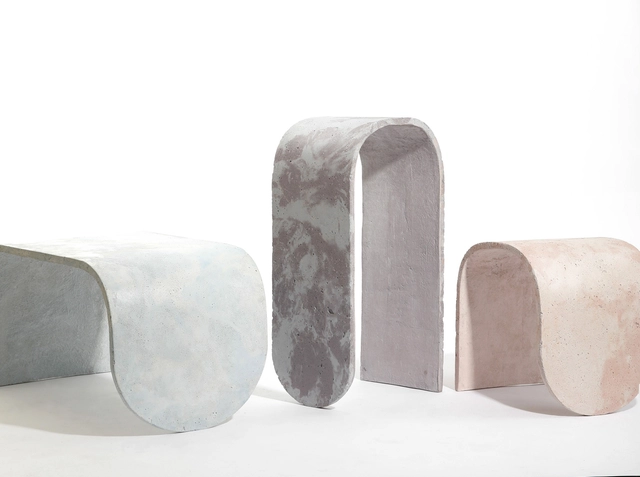
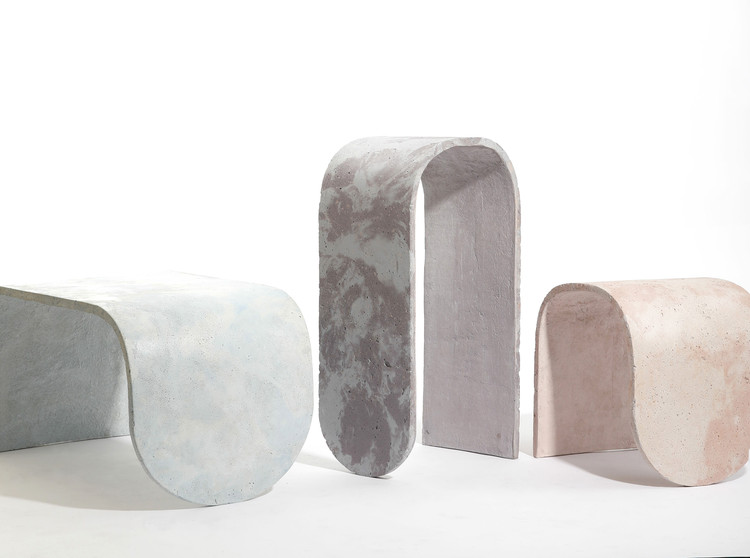
Architects and designers are turning into their very own version of Midas, everything they touch turns into concrete. With products like concrete coffee machines, concrete garden gnomes, and even concrete jewelry, designers are finding remarkable ways of experimenting with the material, proving that concrete is a lot more than just a bulky, building component.
Los Angeles based architect-designer J.Byron-H, known for his playfulness with material and unexpected forms, have experimented with concrete and glass-fiber and created contemporary, light-weight pieces of furniture, inspired by skateboards and architectural brutalism.
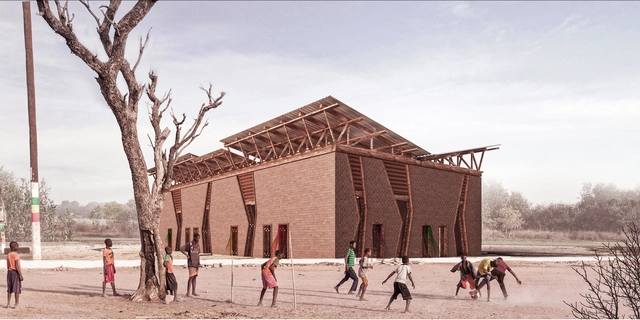
AMKNA, the Dubai-based studio, has been shortlisted for the 2018 World Architecture Festival, in recognition of their design proposal of a cultural center in Sedhiou, Senegal. The proposed “Sedhiou Cultural Center” will provide citizens with a rich cultural, social, and educational experience, all while sustaining the surrounding environment and keeping African heritage alive.
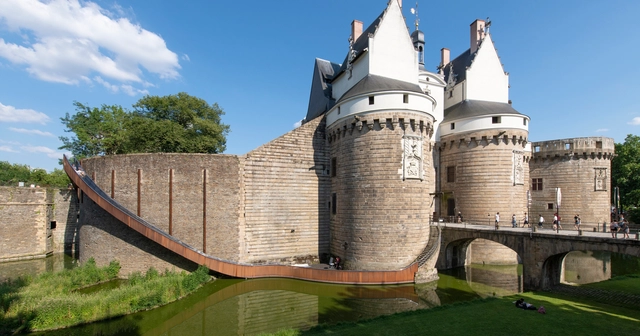
Situated in the Loire region of France, Nantes could be regarded as a “tale of two cities” from many angles. Once a bustling node for European shipping, former vast, industrial warehouses have become a hotbed of cultural and artistic expression. Meanwhile, divided by the Loire river flowing towards the Atlantic, a maze of Haussmann-style terraces, ornate cathedrals, and monumental museums sit in contrast to an island of outlandish mechanical contraptions, and young, modern, free-spirited innovation.
The sheer variety of artistic and architectural wonders alone make Nantes a destination for architects and designers. Merged with culinary excellence, highly-instagrammable hotels, and a determination by public and private officials to maintain and expand on the city’s vibrant, playful design scene, and Nantes becomes a must-see, undiscovered architectural gem.
The projects span commercial, interior, public, residential, and small architecture, with winners hailing from across Asia and the Pacific, including three in Singapore.
Located in a small village in Poland, this proposed music center honors the birthplace of famous Polish composer and pianist, Frédéric Chopin. Designed by ELEMENT as a part of an international competition, the Chopin Music Center captures the picturesque landscape of endless forests through "leisure and relaxation."
The Center integrates with the park through window views of Frédéric Chopin's birth house and the surrounding landscape. The proposed international music center utilizes a combination of natural materials and glazing to create a seamless connection with its site. The existing park can be reached by pathways and bridges near the building, prompting visitors to experience the outdoor area.
Adaptive reuse, the process of refashioning a defunct structure for a new purpose, is ubiquitous these days—so much so that hearing a phrase like “converted warehouse” or “repurposed factory” barely causes one to blink an eye. However, a new project from a cohort of Dutch architecture firms highlights the innovative nature of adaptive reuse with a scheme that reimagines disused cargo ships as houses. With their fully intact exterior shells, the ships remind residents and visitors of their industrial, seafaring past.
As marketing shifts away from its earlier, more traditional format, it’s almost unthinkable that a company solely try to reach potential clients though conventional ads. And if we’re talking about reaching architects, this is even more unimaginable.
As we’ve seen in previous articles, in addition to valuing price and quality, architects chose the products they will work with based on the technical information that they can obtain from the manufacturer. It’s of vital importance for them to understand the installation process and the product’s performance over time. In addition, they need to be able to access and reference other works of architecture that have used the same material.
https://www.archdaily.com/898592/how-to-generate-content-thats-interesting-for-architectsPola Mora
First Prize: Photography by Massimo Graziani, Italy. Image Courtesy of IPPAWARDS
The iPhone Photography Awards (IPPAWARDS) has announced the winners of the 2018 edition of the annual competition. Founded in 2007, the same year as the release of the first iPhone, IPPAWARDS is the first and longest running iPhone photography competition. Now in its 11th year, the awards continue to select the best images taken by iPhone, iPad or iPod touch from a variety of categories including Landscape, Animals, People, Still Life and Architecture.
This year’s architecture category was won by Massimo Graziani from Italy for a shot “Rampage,” taken at the Via Allegri in Rome. Second prize was awarded to KuangLong Zhang from China with an image of one of the oldest mosques in Iran, while third prize went to Nasra Al Sharji from Oman with an early-morning shot of the Burj Khalifa in Dubai.
https://www.archdaily.com/898570/the-best-architectural-iphone-photos-of-2018-revealed-by-ippawardsNiall Patrick Walsh