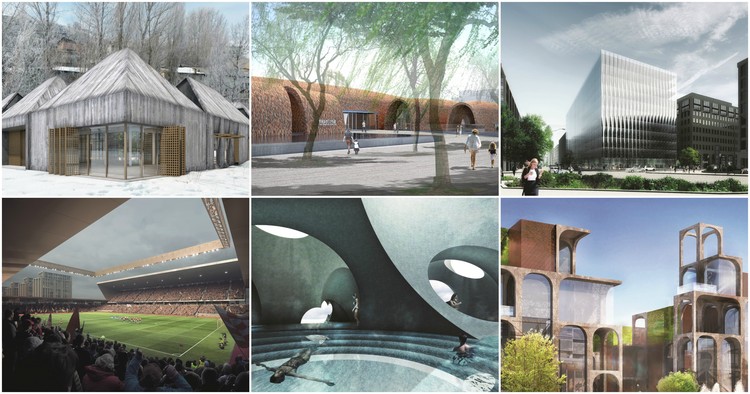
Photorealistic renderings today are the standard. They can be done quickly, cheaply, and clients expect them. But are these renderings truly accomplishing what they set out to do? Those on the forefront of new 3D design techniques argue that, as an industry, we’ve gotten stuck on conveying information, when what we should really bring to the table is emotion. Now that the playing field has evened in terms of technological capability and hyper-realism, what’s the next step? By introducing an emotional layer and creating a sense of place, renderings can provide even more value to a project, firm, client, and community.
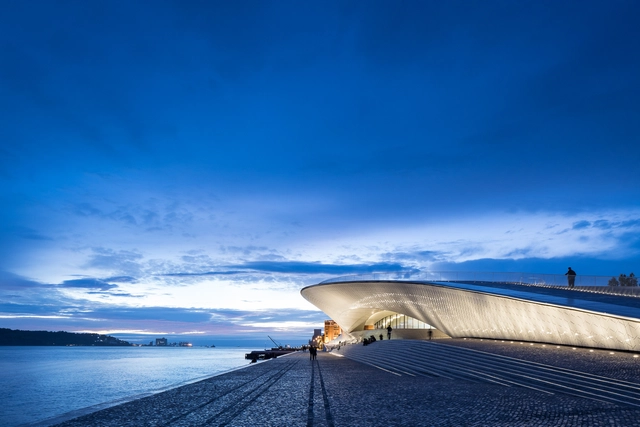
British architect Amanda Levete has been selected as the recipient of the 2018 Jane Drew Prize, recognizing “an architectural designer who, through their work and commitment to design excellence, has raised the profile of women in architecture.”
Founder of London-based practice AL_A, Levete rose to promise as one half of Stirling Prize-winning practice Future Systems, which she ran with then-husband Jan Kaplický. Together, they completed paradigm-shifting and critically acclaimed works such as the Birmingham Selfridges and the Lord’s Media Centre, winner of the 1999 RIBA Stirling Prize.
The winners of the 2017 Architectural Review MIPIM Future Project Awards have been announced. Prizes span across 11 categories and were awarded to projects from eight countries, from projects under construction to competition entries and conceptual designs.
"Successful projects this year include a thermal bath and resort in the Baltic, a new ecclesiastical library for the Church of England, a rural women’s community center in Turkey and a ‘dematerializing’ office building in the US Capitol city, all demonstrating the dynamism and creativity at the heart of the architectural professional internationally," explained the awards organizers in a press release.
The winners of the 2017 Architectural Review MIPIM Future Project Awards are:
ArchDaily is continuing our partnership with The Architectural Review, bringing you short introductions to the themes of the magazine’s monthly editions. In this introduction to the December – January 2017 issue—the magazine's celebration of its 120th anniversary—Editor Christine Murray discusses the legacy that comes from more than a century being one of architecture's most respected magazines, and looks forward to the future of the publication. "Looking forward, we are committed to doing things differently – which, paradoxically, is what we’ve always done," she explains.
The archive of The Architectural Review is a great cabinet of curiosities – a cacophony of voices, styles, illustrations and photographs, Outrages and Delights, personalities and proclivities, polemics, failures and fetishes. In creating this anniversary edition celebrating 120 years of criticism, we wanted to capture the diversity and eccentricity of this ongoing architectural conversation. As such, the archive content is organized not chronologically, but in perennial themes that have echoed and evolved across the decades, from technology to education – forces that have shaped the profession.
ArchDaily is continuing our partnership with The Architectural Review, bringing you short introductions to the themes of the magazine’s monthly editions. In this introduction to the February 2017 issue, Editor Christine Murray discusses craft. Seeking to find parallels between the processes of creating their own magazine and of designing a building, she argues that "there are easier ways to make a magazine, but along paths we choose not to take."
The magazine you hold in your hand is the product of many: 16 writers, 48 photographers, plus illustrators, jellymakers, 3D printers, 10 editors and an art director; and at the press, 15 people for its printing and binding.
You may imagine that the contemporary magazine-making process has lost its need for expertise through automation – push a button and the printer spits it out. But as AR Head of Production, Paul Moran says, "Machines may have taken on some of the front-end work, but every element of the printing process is a skill."
Artist Rachel Whiteread has won the 2017 Ada Louise Huxtable Prize, which recognizes individuals working in the wider architectural industry who have made a significant contribution to architecture and the built environment. Whiteread was selected by respondents to the Architectural Review’s Women In Architecture: Working in Architecture survey.
Scott Brown’s receipt of the prize is a culmination of the grassroots drive to see her contribution to the profession adequately recognized – a movement that sprung from the Women in Architecture campaign in 2013–a quarter of a century after her partner Robert Venturi was awarded the Pritzker.
“Things have happened which have made me very happy in my old age and one of those is this prize,” said Scott Brown.
The Architectural Review has recently published an article celebrating the 50th anniversary of Robert Venturi’s book, Complexity and Contradiction in Architecture, which is regarded as one of the most important writings about architecture since Le Corbusier’s Vers une Architecture. In the article, Martino Stierli—Chief Curator of Architecture and Design at the Museum of Modern Art—delves into the significance of Venturi’s work, the motivation behind it, its continuing impact, and more. Read the full article at the Architectural Review, here.
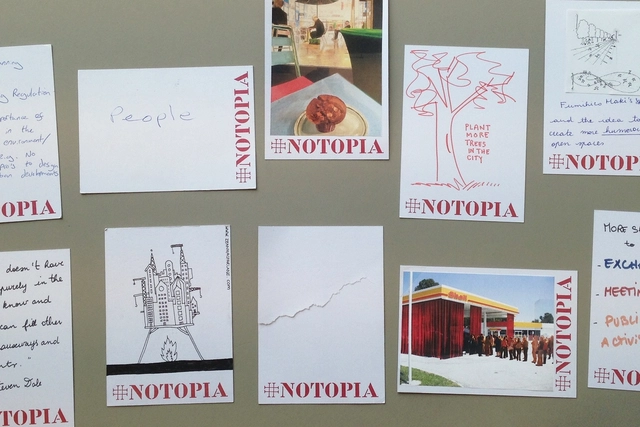
In its recent issues, The Architectural Review has been on a mission, highlighting a phenomenon that they have named "Notopia." Characterized by a "loss of identity and cultural vibrancy" and "a global pandemic of generic buildings," Notopia is - in overly simplistic terms - a consequence of the cold logic of market forces combined with a disinterested populace. The AR's campaign therefore aims to analyze this "thing of terror" and push back by raising public awareness and by proposing alternatives. And they need your help.
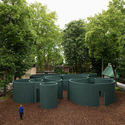
For Mauricio Pezo and Sofía Von Ellrichshausen, the architect's job is about much more than dealing with functional issues, as well as social issues, sustainability, and safety. “Of course architecture from its very essence is solving problems, and the problems constantly change,” says von Ellrichshausen in this interview with The Architectural Reviewoutside their Vara Pavilion at the 2016 Venice Biennale. “But probably the life span of architecture is many times larger than the problem that it addresses initially. Therefore we think of architecture more in terms of this larger span and hopefully it might embody a set of values and not necessarily propose a solution.”
The Architectural Review has announced the final winners in its 2016 Women in Architecture awards, awarding Mexican architect Gabriela Etchegaray with the Moira Gemmill Prize for Emerging Architecture, and Jeanne Gang with the Architect of the Year award. In honoring Gang and Etchegaray, the AR noted that both "have demonstrated excellence in design and a commitment to working both sustainably and democratically with local communities." The pair join other Women in Architecture Award winners Odile Decq and Julia Peyton-Jones, who last week received the 2016 Jane Drew Prize and Ada Louise Huxtable Prize, respectively. Read on for more about the awards.
Eleven women are being considered for the Moira Gemmill Prize for Emerging Architecture prize for their "use of innovative architecture to effect positive social change." Read on to see them all.
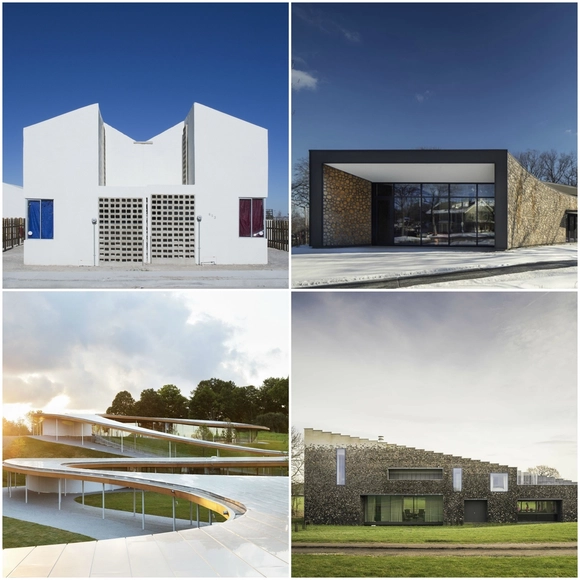
The award is given to completed projects, with entries consisting of buildings, interiors, landscaping, refurbishment, urban projects, temporary installations, furniture and product design. For its 17th year, the jury was comprised of architects Odile Decq, David Adjaye and Sir Peter Cook, and together they searched for what they referred to as the most “resistant” design.
Read on to see this year’s Emerging Architecture Award winners and a video with the jury on the selection process.
For its fall season of architecture events, the Royal Academy’s working theme is “Architecture and Freedom: a changing connection,” in a program conceived and organized by Architecture Programme Curator, Owen Hopkins. One of these events was a recent lecture by Patrik Schumacher, Director of Zaha Hadid Architects, and ardent promoter of Parametricism. In his lecture, what starts out with a brief exercise in damage control over the barrage of criticism recently endured by the firm, emerges as an impassioned discussion of architectural politics, design philosophies, and social imperatives.