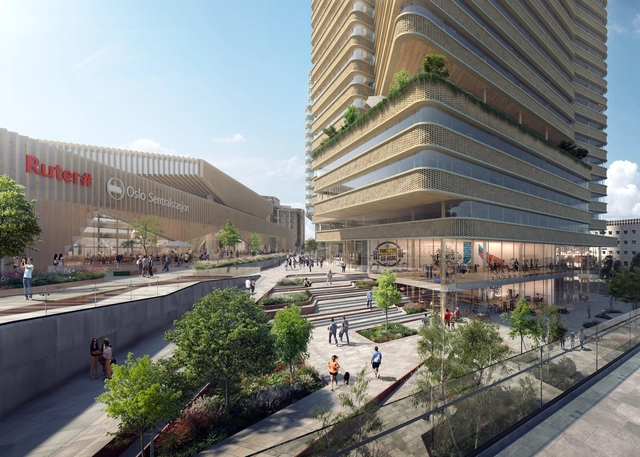
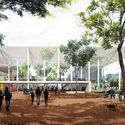
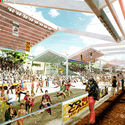
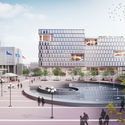
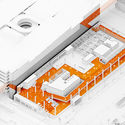
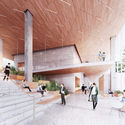
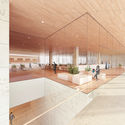
C.F. Møller Architects have collaborated with Kristin Jarmund Architects and Rodeo Architects in the design of a new urban realm at Oslo Central Station in Norway, comprising a square, hotel, and high-rise building. The scheme seeks to create an attractive recreational area around the transport hub, connecting different areas and terrain differences in an organized, efficient flow.
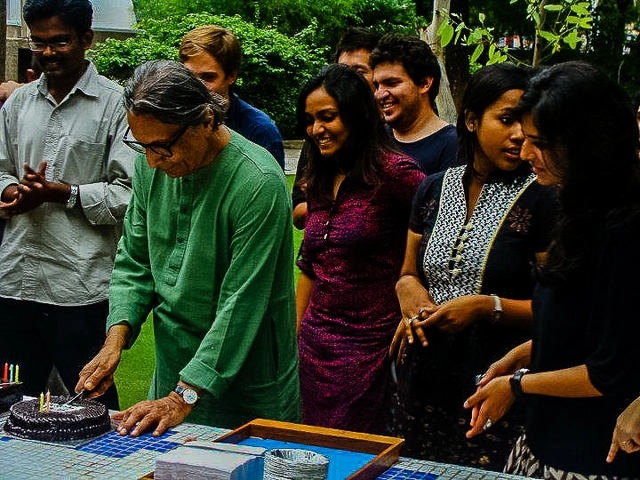
Earlier this year, the jury of the Pritzker Prize chose the Indian architect Balkrishna Doshi, also known as B.V. Doshi, or Doshi, as the winner of the 2018 Pritzker Prize. In recent weeks a lot of information has come to light about the winning architect's practice who, as you probably already know, was an apprentice and collaborator of Le Corbusier and Louis Kahn. Being the first Indian architect to receive Architecture's most prestigious award, Doshi has had an active career of more than 70 years, with a poetic architectural style that is based on oriental cultural influences, creating a production that "covers all socioeconomic classes, in a wide spectrum of typologies, since the 1950s," according to the jury's record.
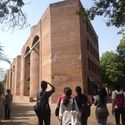
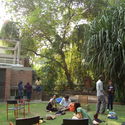
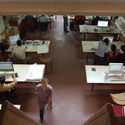
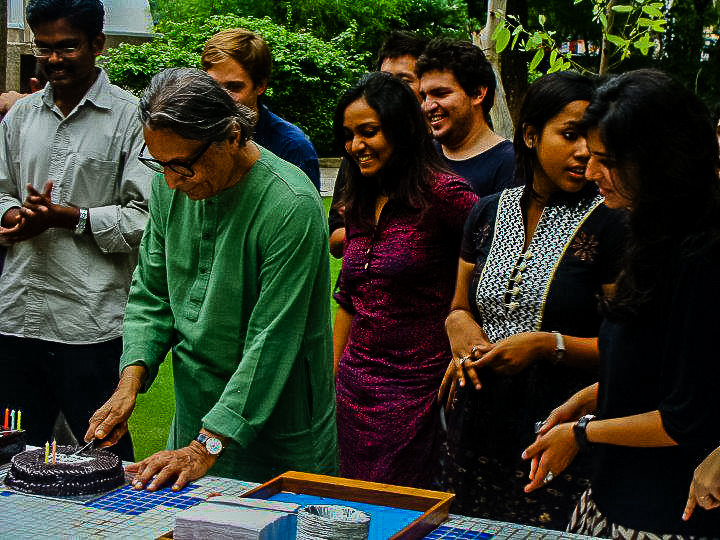
But, can you imagine what it's like to work with Doshi in his firm? We talked with four alumni from the School of Architecture, Art and Design from Tecnológico de Monterrey, who some years ago had the opportunity to travel to India to work directly with Doshi through a professional internship program promoted by the same university. Arturo Acosta, Jeimi Cuendulain, Airam Moreno and Giovanni Llamas tell us about their experience working in the firm, as well as anecdotes that marked them both professionally and personally that helped them see and experience architecture beyond the obvious. Here are their testimonies below:
Hiroshi Sambuichi's approach to a site entails long-term study and reflection upon the qualities and forces of nature embedded within. His understanding is “deeper and with a finer grain,” explains American architect and member of The Daylight Award jury James Carpenter as one of several reasons why Sambuichi was recently announced as the latest laureate of the nearly 50-year-old Daylight Award in 2018. In Sambuichi's hands, “light becomes timeless, fluid and rich.”
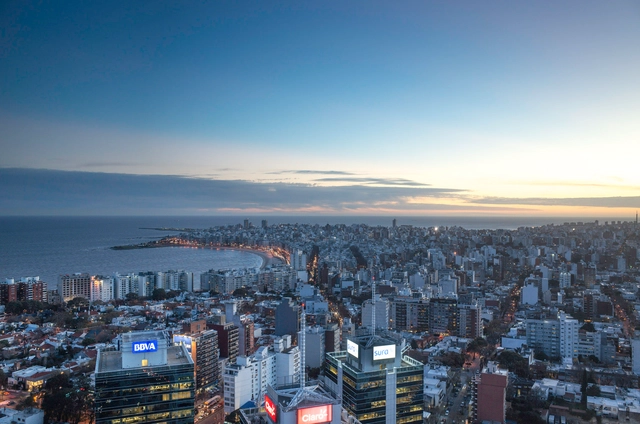
So, what is happening in Latin America? Montevideo, the capital of Uruguay, once again occupies the top position. "Although they are challenged by economic and political turmoil," experts at the consultancy explain, "cities in emerging markets are catching up with major cities, after decades of investment in infrastructure, recreational facilities, and housing for the purpose of attracting talent and multinational businesses," they add.
In its twentieth edition, the consultancy, which specializes in advising multinational companies in employee transfers, evaluates more than 450 cities around the world, analyzing 39 factors divided into 10 categories, including political and economic environment, socio-cultural status, hygiene, educational institutions, leisure, housing, the market, and natural disasters.
After 2 weeks of voting in our first ever Refurbishment in Architecture Awards, our readers have narrowed down over 450 projects to 15 finalists, representing the best architectural refurbishment projects ever published on ArchDaily. With finalists from five continents, this award developed in partnership with MINI Clubman clearly demonstrates the global importance of refurbishment architecture as a method of achieving sustainable development and flexible, living cities.
Now that the finalists have been selected, the second stage of the Award is now underway to narrow down these 15 projects to just three winners. Read on and use the links below to cast your vote for the overall winner, or visit the award website here.
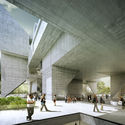
Museo Nacional de la Memoria / MGP + estudio.entresitio. Image Cortesía de MGP Arquitectura y Urbanismo / estudio.entresitio
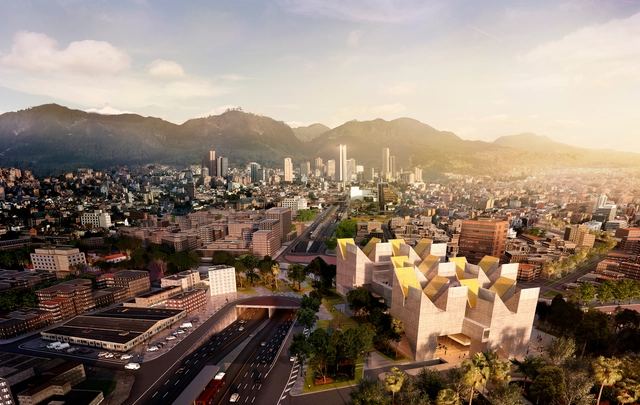
Colombia is a country whose architecture continues to surprise us with projects that seek to improve the quality of life of its residents, which in turn tends to attract individuals to learn and contribute to proposals that generate and create much more vibrant cities.
The city's advances in architecture and urbanism in recent years have materialized in a series of programs and projects in other cities, awakening the interest of professionals and academics from architecture and global urbanism.
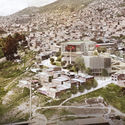
The development of projects such as the Metro Cable in Medellín, TransmiCable in Bogota, or the series of parks and libraries that have been built throughout the country after the success achieved in the first two cities, makes the idea of betting on much more innovative projects a more attractive prospect, which dares citizens and designers of all kinds to dream, stoking the spirit of entrepreneurship throughout the country and much of Latin America. To reflect this, we have chosen 6 projects that will undoubtedly change and improve the quality of life in Colombia.
With its monumental form, swept diagonal lines and elevated concrete walkways, the Issam Fares Institute building at the American University of Beirut by Zaha Hadid Architects emphasizes movement, evoking the speed of contemporary life as it presides over a connecting system of pedestrian walkways. Begun in 2006 and completed in 2014, Hadid’s award-winning concrete and glass building makes a bold statement with its prominent 21-meter, two-story-tall cantilever, which creates a covered courtyard and reduces the footprint of the building to avoid blocking circulation routes. The elevated walkways carry pedestrians through the branches of huge Cypress and Ficus trees, many of which significantly predate the building at 120 to 180 years old.
As part of our 2018 Venice Architecture Biennale coverage we present the proposal for the Australian Pavilion. Below, the participants describe their contribution in their own words.
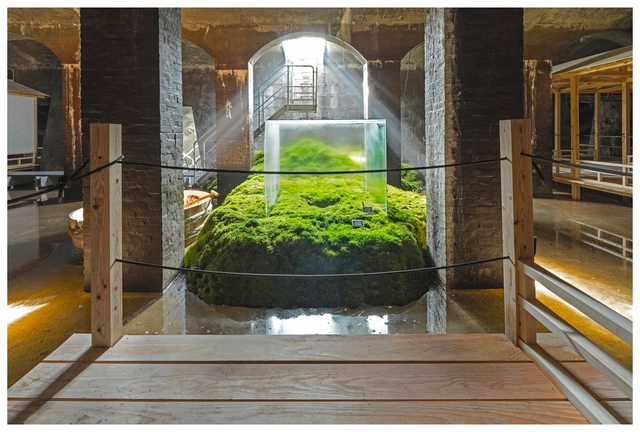
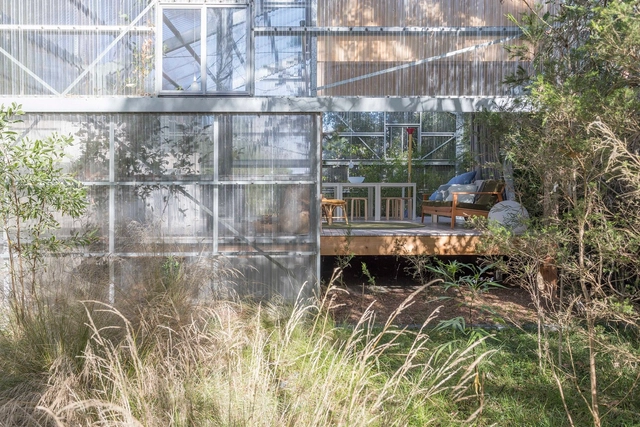
The Royal Australian Institute of Architects (RAIA) will present Repair at the Australian Pavilion during the 16th International Architecture Exhibition – La Biennale di Venezia. Creative Directors Mauro Baracco and Louise Wright of Baracco+Wright Architects, in collaboration with artist Linda Tegg, have curated a multi-sensory living installation for the Pavilion, designed to disrupt the viewing conditions through which architecture is usually understood.
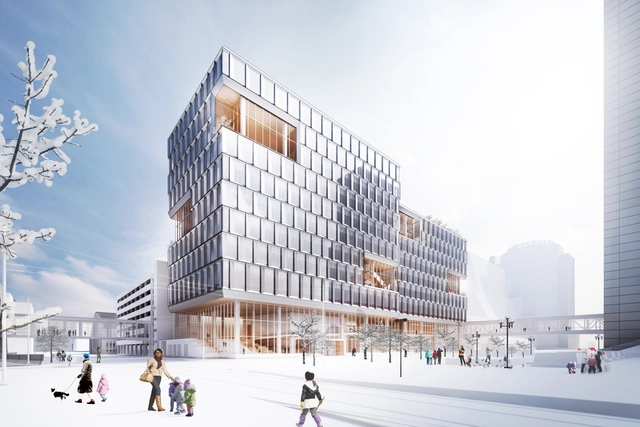
Designed by Henning Larsen and MSR Design, the New Public Service Building for the city of Minneapolis aims to consolidate several departments, currently found across multiple different sites, into one unified building. The scheme promotes the health and well-being of its 1,300 employees through maximizing daylight and green space throughout, integrating a significantly sustainable remit within the 385,000 square foot, 11 story proposal. Located diagonally across from the existing city hall, Henning Larsen brings a “knowledge-based Scandinavian design approach” to the high-performance office space, hoping to set a “new architectural agenda in North America."
The global architects at Benoy have announced their design for The Hangzhou Canal Art Center — a new, green hub for local cultural events and art exhibitions. Located in the revitalizing, Gongshu district in Hangzhou, China, the art center will occupy the former site of a thermoelectric power plant.
The Council on Tall Buildings and Urban Habitat (CTBUH) has recently released a new research study titled "Tallest Demolished Buildings" that examines 100 of the tallest buildings ever to have been dismantled by their owners. The report confirms that, if JPMorgan Chase continues with their plans, SOM's 270 Park Avenue in New York City would become the tallest building ever conventionally demolished, as well as the first over 200 meters in height.
The study showed that in most cases, the buildings were torn down to make way for newer high-rises, as was the case for the current tallest building ever to be demolished, the Singer Building in New York City. The Singer Building stood 187 meters and 41 stories tall until it was torn down in 1968 to make way for One Liberty Plaza.
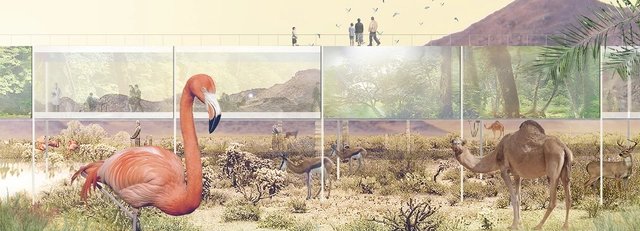
Archstorming have announced the winning projects of "Coexist: Rethinking Zoos," their recent competition to design a concept for the zoo of the 21st century. The call for entries asked participants to redefine the traditional zoo and transform the space from something that is not only an exhibition of animals, but also an educational tool, and a place for research and conservation. The team of international jurors selected three winners from more than 40 countries that submitted ideas.
The site for the proposal was the zoo in Barcelona, which has committed itself to prioritizing the welfare of its animals. To promote the well-being of the animals and nature, the winning teams designed imaginative alternatives to the traditional zoo methods of interaction, such as non-intrusive paths and even 3D virtual animals. The winners show that there are new ways for visitors to understand animals that are both ecologically friendly and sustainable.
Check out the winning submissions after the break.
MVRDV has unveiled its vision for transforming the Communist-era “Tirana Pyramid” in Albania into a center for technology, art, and culture. Under the plans, the abandoned structure will be revitalized as a multifunctional technology education center for Tirana’s youth, with the existing dark interior becoming open, bright, and green.
The Tirana Pyramid was opened in 1988 as the Enver Hoxta Museum, designed in honor of Albania’s former communist leader. Since then, the building has transitioned into a NATO base during the Balkan Wars, a nightclub, and an event space. Though now in decay, the building remains a popular spot for young people keen to climb on its roof. As a nod to this unique appropriation, MVRDV has made the roof officially available for all visitors.
https://www.archdaily.com/894779/mvrdv-to-transform-communist-era-pyramid-into-center-for-art-and-technology-in-albaniaNiall Patrick Walsh
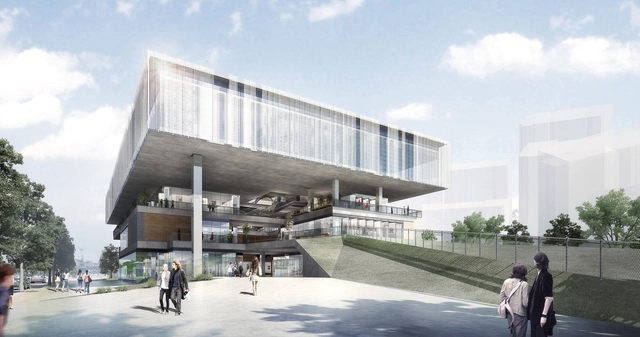
Diller Scofidio + Renfro has won an international competition for the design of a new V&A collection and research center to be located in the Queen Elizabeth Olympic Park in East London.
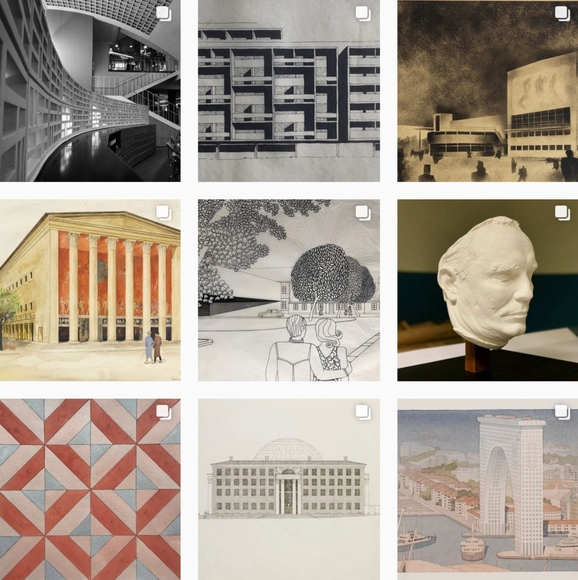
ArkDes, the Swedish Centre for Architecture and Design, have launched a new Instagram account showcasing “surprising objects” and never-before-seen gems from Sweden’s national architecture collection. ArkDes Collections, which presents an eclectic mix of drawings, models, and photographs by architects including Ralph Erskine, Gunnar Asplund, Sigurd Lewerentz and Bernt Nyberg, has also highlighted significant work by lesser-known practitioners, such as Léonie Geisendorf and Mariana Manner.
With four million objects, the museum cares for one of the largest collections of architectural objects in Europe. Covering Swedish architecture from the mid-19th Century up to the present day, with an emphasis on the first half of the 20th Century, objects posted on the account are selected by curators, architects, designers, and thinkers.
https://www.archdaily.com/894761/arkdes-launches-new-instagram-uncovering-hidden-objects-from-swedens-national-architecture-collectionAD Editorial Team
As part of our 2018 Venice Architecture Biennale coverage, we present the proposal for the Israeli Pavilion. Below, the participants describe their contribution in their own words.
In Statu Quo: Structures of Negotiation is the theme of the Israeli Pavilion at the 16th International Architecture Exhibition, La Biennale di Venezia. Curated by Ifat Finkelman, Deborah Pinto Fdeda, Oren Sagiv and Tania Coen-Uzzielli it traces the complex mechanism of the 'Status Quo' within shared holy places in Israel-Palestine, which functions as a controversial and fragile system of coexistence.
Solar Egg Public Sauna by Futurniture and Bigert & Bergström - Golden A' Design Award Winner for Architecture, Building and Structure Design Category in 2018. Image Courtesy of A' Design Award & Competition
A’ Design Award & Competition, the world’s largest and most diffuse international design awards, has announced results of their 2017–2018 design awards, featuring 1,962 Winners from 100 countries in 99 different design disciplines. Entries were evaluated by an internationally influential jury panel composed of established scholars, prominent press members, creative design professionals and experienced entrepreneurs who carefully analyzed each entry.
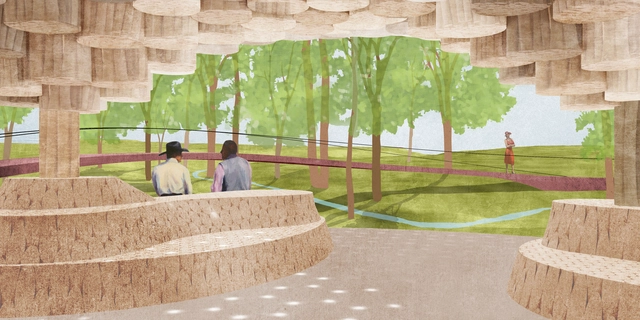
Interior view of Pavilion designed by Francis Kéré at Tippet Rise Art Center in Montana. Image Courtesy of Kéré Architecture
Tippet Rise Art Center has announced the commissioning of architect Francis Kéré to design a 1,900-square-foot pavilion for the center’s 10,000-acre grounds in Montana, USA. Envisioned as a “communal gathering space nestled among a cluster of aspen and cottonwood trees,” new renderings by Kéré Architecture depict the scheme featuring a locally-sourced log canopy.
From a shortlist of 93 buildings, 61 London projects have been awarded the 2018 RIBA LondonAwards for architectural excellence, the city's most prestigious design honor. The winners include 14 housing schemes, 8 schools, and a city farm. All of these designs will be further considered for the RIBA National Awards, to be announced in June. The winners of the national award will then create a shortlist for the RIBA Stirling Prize – the highest award for architecture in the UK.
https://www.archdaily.com/894688/61-winners-announced-for-2018-riba-london-awardsNiall Patrick Walsh
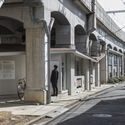
A +100 meter stretch of land beneath a train overpass in Koganecho, a district of Yokohama, Japan, underwent a progressive refurbishment in which seven different types of community space, each designed by a different architect, were built within a pre-set spatial grid. Historically there were many social issues in the area, largely in relation to its profitable but dangerous black market and red-light district. Once the illegal activity was eradicated in 2005, the underpass presented a great opportunity for social re-development, and the resultant project - the Koganecho Centre - emphasized an age-old Japanese cultural commitment, where what was once broken is used to make something new.
Kjellander Sjöberg Architects have won the competition for Nacka Port, a new sustainable and dynamic urban block. The award-winning architecture firm, which is one of the leading architectural offices in Scandinavia will build the project in an area between Nacka and Stockholm, Sweden.
Out of the three architecture offices who were invited to compete, the latter being held in discourse with the Nacka Municipality and Architects Sweden, Kjellander Sjöberg’s proposal contributes to a “vibrant urban context with an inviting and varied program."
Colombian professor Francisco Sanin and South Korean architect Lim Jaeyong were appointed as co-directors for the 2019 Seoul Biennale of Architecture and Urbanism. The announcement is followed by an inaugural edition held in 2017 with 460,000 visitors in total.
Born in Medellin, Colombia, Sanin earned his degree at the Universidad Pontificia Bolivariana. He had a crucial role in Medellin's urban transformation, working alongside former governor of Antioquia Sergio Fajardo, and was co-commissioner of the Korean Pavilion at the 2008 Venice Biennale. Currently, Sanin is an architecture professor at Syracuse University School of Architecture. Also, a practicing architect with works in Colombia, South Korea, and China.
Balkrishna Doshi, the 90-year-old architect who became the first ever Indian winner of the architecture world's most prestigious award earlier this year, will present his Pritzker Prize Laureate Lecture entitled "Paths Uncharted" on Wednesday 16th May at 6:30 pm ET. The event is hosted by The University of Toronto’s John H. Daniels Faculty of Architecture, Landscape, and Design, at the school's new home in the Daniels Building at One Spadina Crescent. The lecture will be one of the first events at the new building and marks the 40th anniversary of the Pritzker Prize. 2018 will also be the first year that the award is presented in Canada.
https://www.archdaily.com/894485/watch-balkrishna-doshis-live-pritzker-prize-laureate-lectureAD Editorial Team
Propuesta: Acceso. Image Courtesy of Consejo Nacional de la Cultura y las Artes
As part of our 2018 Venice Architecture Biennale coverage we present the proposal for the Chilean Pavilion. Below, the participants describe their contribution in their own words.
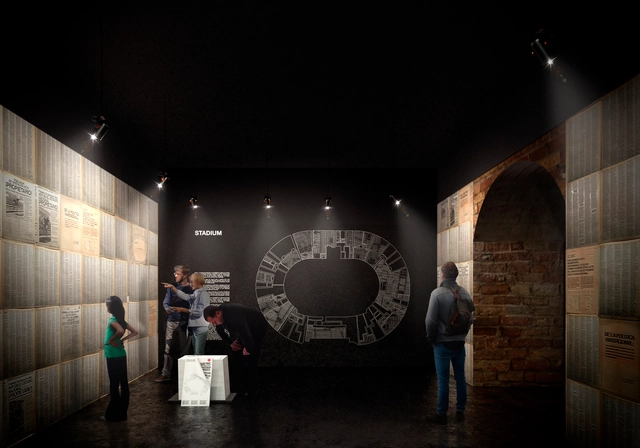
At the centre of Sala dell’Isoloto stands a large-scale model of a building made of rammed earth. On closer examination, the sixty pieces that comprise the building’s oval shape appear less to be made of earth as carved in it. Layers of soil with slight variations in colour and texture recall that it is land what is at stake at the Chilean Pavilion. The layering of the pavilion’s pieces is the footprint of an artisanal process of production by which a fragile, discrete material—soil, bare earth—is transformed into a stable, monolithic object. Simultaneously heavy and fragile, these objects are in turn symbolic fragments of another transmutation: one by which slum dwellers were transformed into property owners in an event at Chile’s National Stadium, and one by which a city that grew unplanned becomes visible and fixed in a plan, that of a building able to narrate its own history.
https://www.archdaily.com/894633/chilean-pavilion-at-2018-venice-biennale-to-recreate-physical-model-of-national-stadium-to-illustrate-the-politics-of-housingAD Editorial Team











.jpg?1526579450)
.jpg?1526579373 "© Bahaa Ghoussainy")
.jpg?1526578916 "© Bahaa Ghoussainy")
.jpg?1526579342 "© Bahaa Ghoussainy")
.jpg?1526578946 "© Bahaa Ghoussainy")
.jpg?1526816206)


_MVRDV.jpg?1526659703)
_MVRDV.jpg?1526659742 "Courtesy of MVRDV")
_Gent_Onuzi.jpg?1526659725 "© Gent Onuzi")
_MVRDV.jpg?1526659753 "Courtesy of MVRDV")
_MVRDV.jpg?1526659703 "Courtesy of MVRDV")
_MVRDV.jpg?1526661234)
.jpg?1526657351&format=webp&width=640&height=580)




__the_Wailing_Wall__1980%E2%80%9382._Source_'Metaphors_and_Allegories-_Superstudio_Firenze'__Israel_Museum_Jerusalem__spring_1982.jpg?1526437624 "Courtesy of Metaphors and Allegories- Superstudio Firenze")