Produce personalized presentation boards that distill complex concepts into simple visual representations with a few helpful tools and effects.


Produce personalized presentation boards that distill complex concepts into simple visual representations with a few helpful tools and effects.
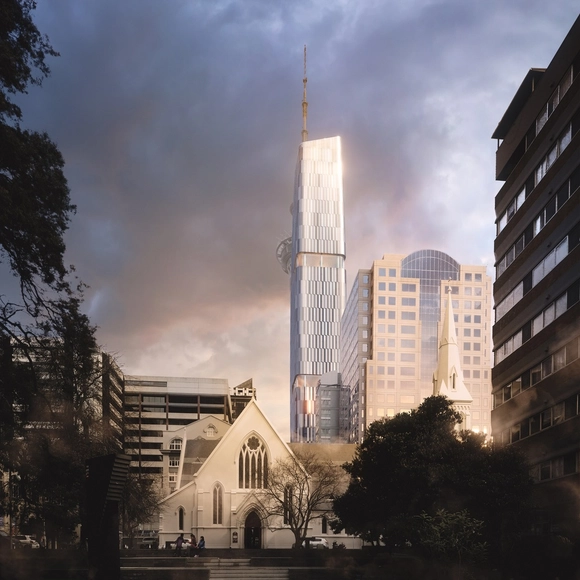
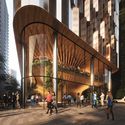
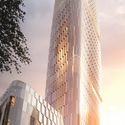
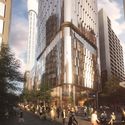
Woods Bagot and Peddle Thorp have been announced as the winners of the international competition to create a new high-rise tower in central Auckland. Drawn from five finalists including Warren and Mahoney, Cox Architecture, Zaha Hadid Architects, and Elenberg Fraser, the winning design will stand 180m high. The building design is inspired by New Zealand’s natural landscape and the country’s unique geology and fauna.
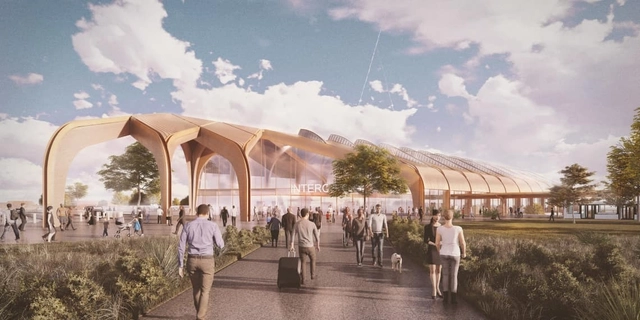
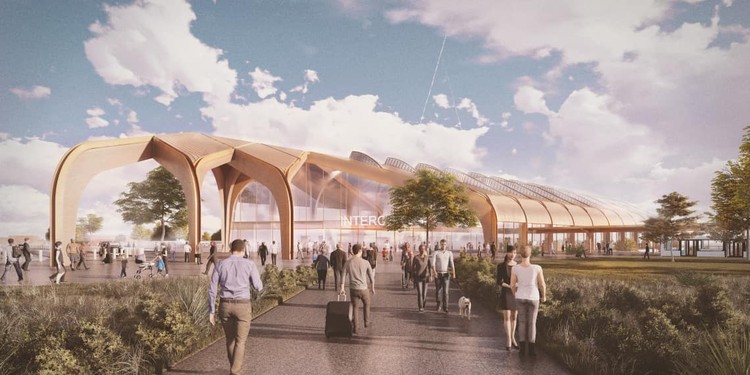
New images have been published of Grimshaw and Arup-designed stations for the UK’s ”High Speed 2” railway system. Connecting London to the British Midlands, the mega-infrastructure project will be the UK’s second high-speed rail system, with HS1 already connecting London and the South East to the Channel Tunnel.
The Grimshaw and WSP-designed Curzon Street station in Birmingham will be the first brand new intercity station to be built in Britain since the 1800s, while Interchange Station, designed by Arup, will serve as a gateway station to the West Midlands and Birmingham Airport.
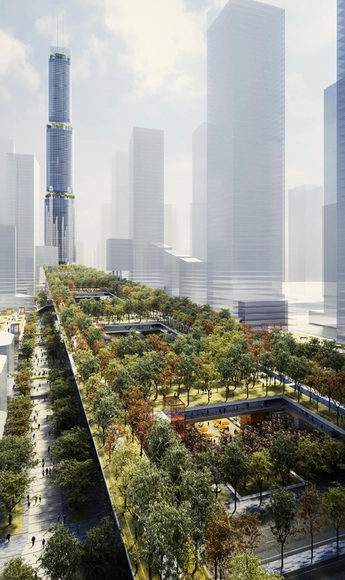
Rogers Stirk Harbour + Partners has been confirmed as designers for an “Urban Living Room” masterplan in the Qianhai area of Shenzhen, China. Formed on already existing reclaimed land, the scheme will feature a 1.2-kilometer elevated sky garden.
The scheme is envisioned as a “heart and a new horizon against which people can orientate themselves” in an emerging urban center.
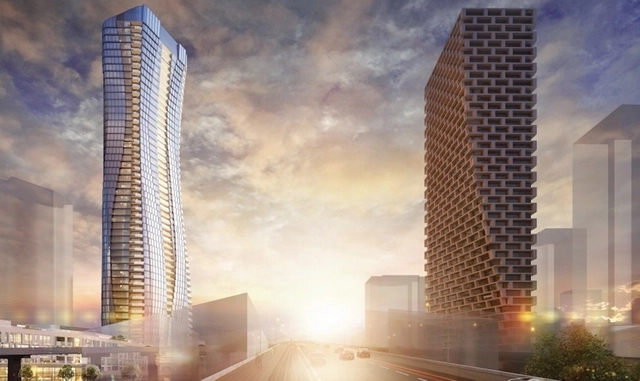
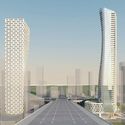
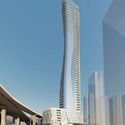
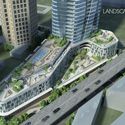
Shanghai-based JYOM Architecture and GBL Architects have released new renderings of 601 Beach Crescent, the 'Gateway Tower' counterpart to Bjarke Ingels Group's Vancouver House project. As the Daily Hive reports, developer Pinnacle International recently submitted its formal rezoning application to develop the vacant site on the north end of the Granville Street Bridge in downtown Vancouver. Conceptually, the tower was designed to replicate the motions of the dancing female form.
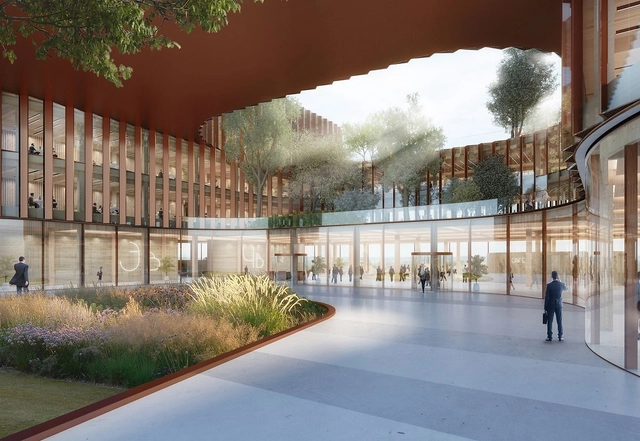
Bjarke Ingels Group has been selected to design the Skypark Business Center South as part of Luxembourg's new Airport City plan. Located just outside of Luxembourg City, the project is the first development within the masterplan, and is expected to start construction during 2019. The new airport district aims to become an economic hub comprised of four floors of shops, restaurants, fitness activities, and offices. The news of Skypark Business Center South comes two years after the presentation of the airport district’s master plan.
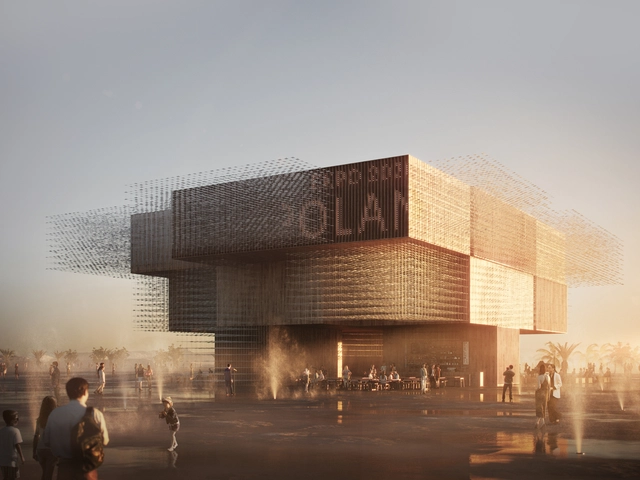
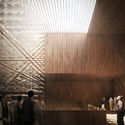
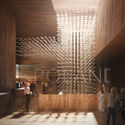
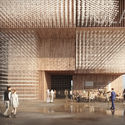
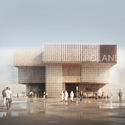
WXCA and Bellprat will design the Polish Pavilion for Expo 2020 Dubai, having overcome more than 30 other proposals. The winning scheme seeks to create an “open, tree-like modular structure” inspired by Poland’s rich wildlife.
The pavilion will feature an integrated exhibition with “kinetic flocks of birds floating over visitors’ heads,” referring to the many migratory birds which settle in Poland each year “inspiring legends, connecting minds, and creating the future.”
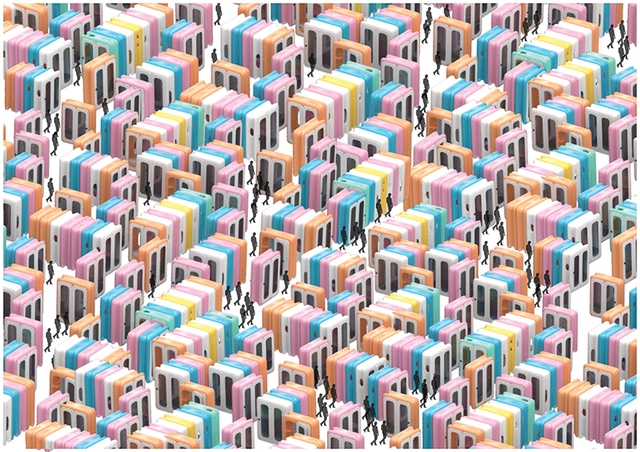
Iranian architect and concept designer Nasim Sehat has developed an alternative living module driven by adaptability for the gig economy. SLICE is described as a “sustainable, people centric, connected, self-contained, and flexible plug’n-play urban solution” targeted at future city dwellers.
SLICE consists of a layered module of functional plugins, combined to create basic spatial configurations. In tandem with the design of SLICE’s spatial profile, Shanghai-based Sehat has proposed a shared, on-demand digital service for module rental, maintenance, and payment.

Andres Gallardo, the self-taught Spanish photographer, recently traveled to Paris to capture the city’s urban architecture, documenting the spirit of the buildings, the city’s rich architectural history, and international design influence.
Gallardo describes the city as “magical,” which he chooses to document in both monochrome and color photographs, incorporating overall perspectives and small structural details that often obscure the structures’ overall identity.
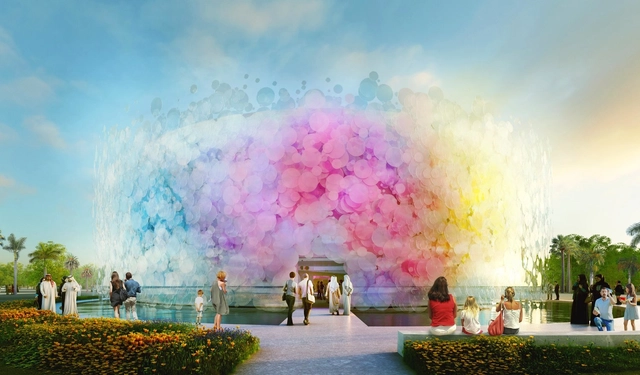
British designer Paul Cocksedge's ‘impossible’ living watercolor design was selected as a finalist for the UK National Pavilion during Expo 2020 in Dubai. Every color in the pavilion comes from the flag of a nation exhibiting at the event, expressing unity, partnership and possibility. The overlapping shades reflect the theme of the Expo – Connecting Minds, Creating The Future. At the heart of the building, a sculptural centerpiece envelops visitors in color and light, giving the sense of an ‘impossible’ structure.
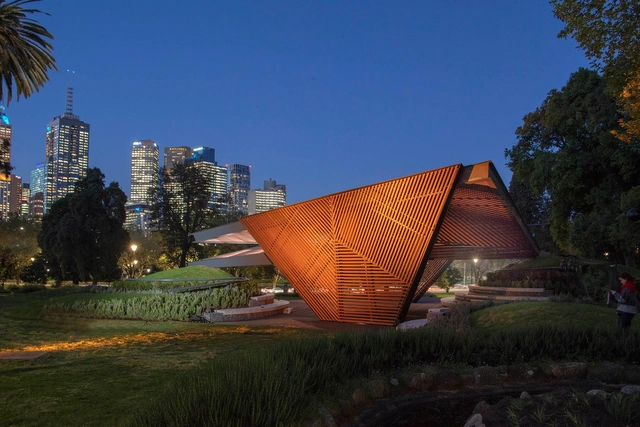
After a season packed with significant architecture news, Melbourne has announced the opening of the 2018 MPavilion designed by Carme Pinós. The pavilion is widely considered to be the southern hemisphere’s answer to the Serpentine Pavilion, and has featured designers such as Rem Koolhaas, Bijoy Jain, and Amanda Levete.
This year’s design, from Spanish architect Carme Pinós, takes its inspiration from origami, with wings opening out to welcome the city into the pavilion itself. The roof, made of two distinct halves, is perched upon three mounds incorporating public seating.
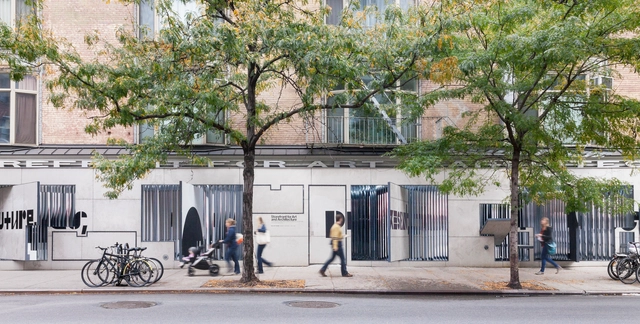
José Esparza Chong Cuy has been appointed as the new Executive Director and Chief Curator at Storefront for Art and Architecture. Following the departure of former director Eva Franch i Gilabert to London as the new Director of the Architectural Association, the extensive international search to fill her shoes began. An architect, curator, and writer, originally from Mexico, Esparza Chong Cuy was named and will assume the position starting November 1st.
Storefront, a non-profit organization based in New York City, engages in the advancement of design and architecture with interdisciplinary dialogue through exhibitions and projects that aim to transcend geographic and ideological boundaries. Charles Renfro, President of Storefront's Board of Directors, remarks, "We are thrilled to welcome José to the helm of Storefront, the very institution where he began his curatorial career over a decade ago."

The tale began with a simple idea - a toy that every child, regardless of age and ability, can play, dream, and learn with. But things turned out less than simple. Fights, lawsuits, and even a death all mark the road it took to make a now-ubiquitous toy a reality. The object in question? Lego.
It’s tales such as this one that Alexandra Lange explores in her new book, The Design of Childhood: How the Material World Shapes Independent Kids. Some may scoff at the seemingly trivial subject matter. Surely children, with their boundless imaginations and appetite for play, can discover ways to find fun in anything.

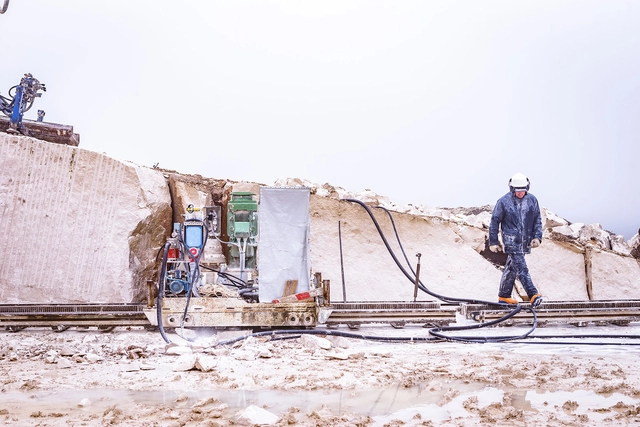
The mastery of stone is one of the most impressive features of Portuguese architecture. From the precise cut in fittings to beautiful floor designs, Portuguese architecture carries in its womb an almost born talent to manipulate one of -- if not the oldest material used in the history of construction.
In celebration of this material, experimentadesign, a research project focused on design and architecture founded in Lisbon, developed Primeira Pedra, or First Stone. This multimedia platform explores the characteristics and qualities of Portuguese stone.
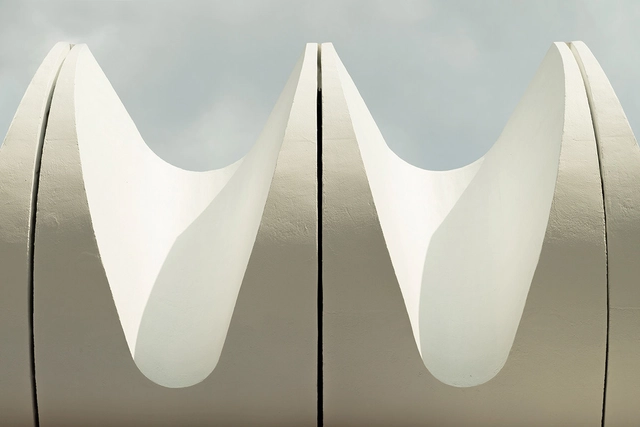
In the next chapter of his ongoing Urban Geometry project, self-taught Spanish photographer Andres Gallardo captures the elements of color, form, and materiality of post-war architecture in Berlin. This photo series, with installments featuring the modern marvels of Beijing, Seoul, Copenhagen, and Tallinn, among other cities, has become representative of Gallardo's personal growth from his humble start in his career as a professional photographer.
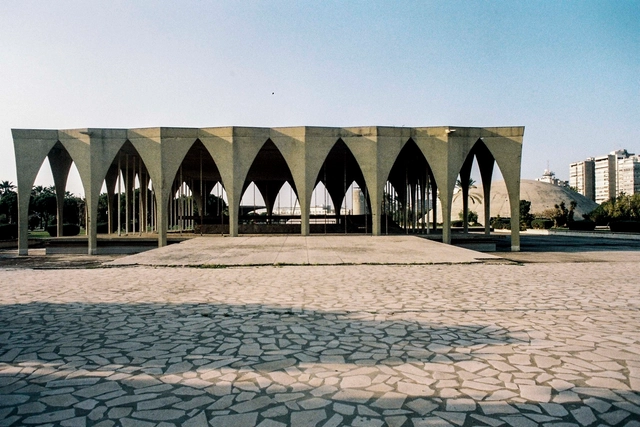
The unfinished Tripoli International Fair, designed by Oscar Niemeyer for the Lebanese capital, could become a UNESCO's World Heritage Site. Conceived in the 1960s at the request of the then President Fouad Chéhab, the fair remained a symbol of projected modernity for the country.
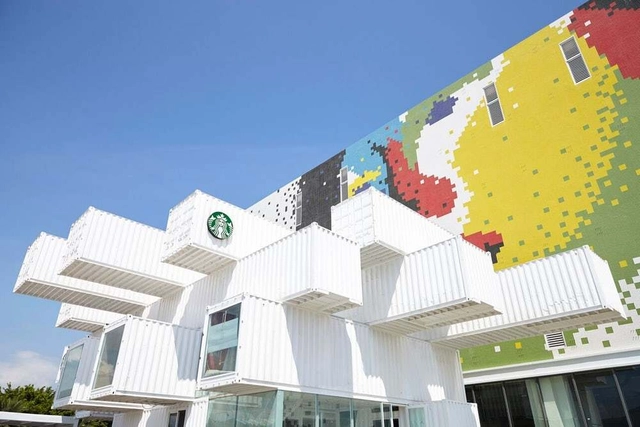
Hot on the heels of its lavish breakthrough Milan store, Starbucks has opened yet another striking and innovatively-designed coffee house. However, Japanese architect Kengo Kuma's design associates an entirely different mood with the company's coffee beverages.
Starbucks Taiwan the company’s first location in the Asia Pacific, consists of 29 white shipping containers, shifted and stacked in a grid-like formation. Within the containers’ 3,444 sqft (320 sqm) of space are a variety of intimate and comfortable spaces. A drive-thru is also incorporated into the design to maximize the store’s convenience to its customers.
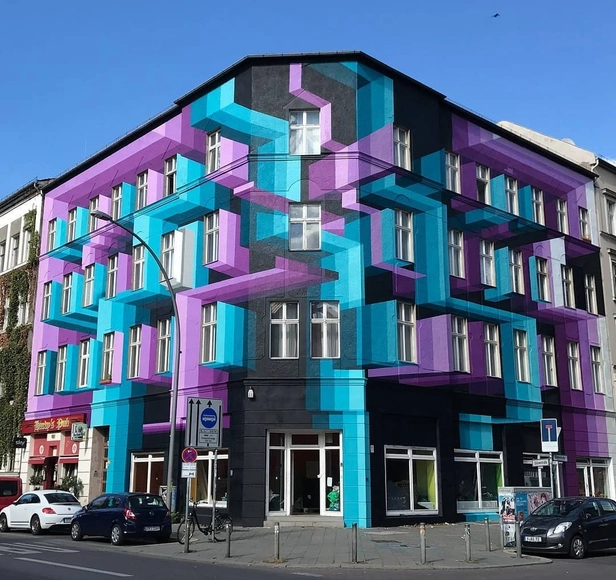
Artist David Louf, aka Mr. June, has earned a reputation for creating striking urban art, most recently using three-dimensional murals that play off architectural elements. As Colossal reports, within the last year Mr. June's geometric abstractions have become increasingly architectural as they aim to challenge viewer’s perceptions. Producing work since 1985, Mr. June recently completed a 130-foot diameter dome in North Carolina and a 3D mural for Urban Nation in Berlin.
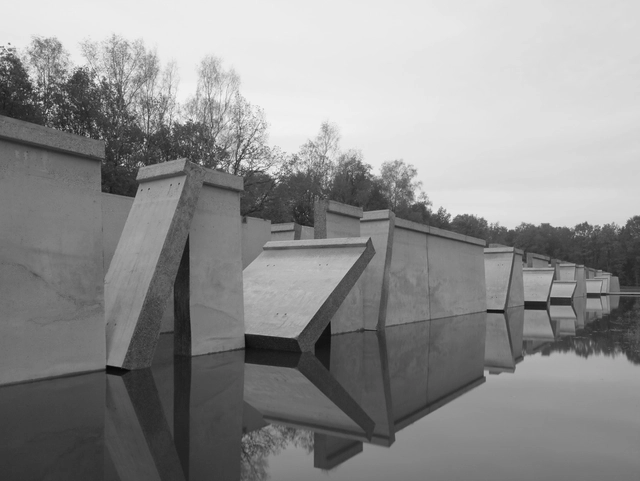
Amsterdam-based RAAAF and Atelier de Lyon have completed an imposing Dutch monument paying tribute to the country’s centuries-old flood defense systems. “Deltawerk //” appropriates the enormous decaying test models in the Waterloopbos national monument, a former Dutch Hydrodynamics laboratory.
Deltawerk //, which opened September 27th, is envisioned as a “tribute to the majesty and seemingly indestructible power of the Dutch delta works,” shedding new light on the “practice of preserving cultural heritage.”

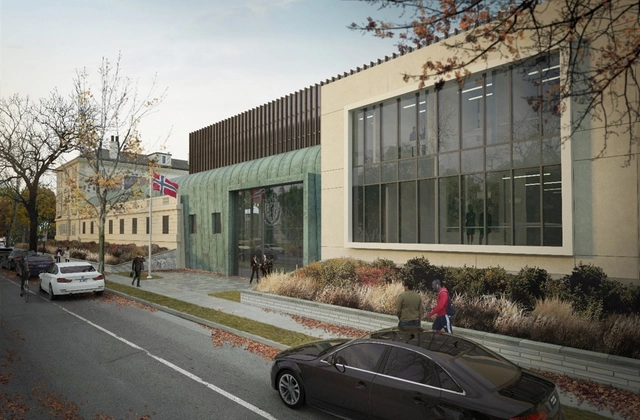
Fentress Architects has revealed their design for the expansion of the Norwegian Chancery in Washington D.C. A prominent new addition to the embassy’s Washington D.C. campus. The scheme expands the architectural language of the existing embassy buildings, embracing contemporary design techniques within the context of traditional bureaucratic architecture.
Fentress’ design integrates materials of Norwegian cultural significance as prominent features of the façade. The use of Norwegian spruce timber, Oppdal stone, and patinated copper pay homage to the country’s traditions in shipbuilding and woodworking, as well as their abundance of natural resources.
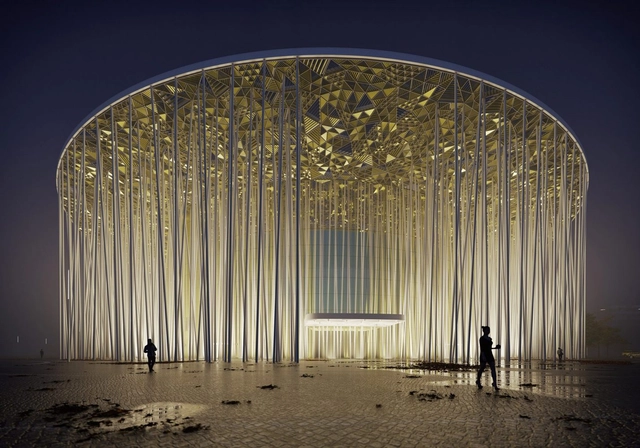
Steven Chilton Architects has designed a forest of white columns and a latticed metallic roof around the Wuxi Show Theater in China. The screen of angled columns surrounding the circular building was inspired by the Sea of Bamboo, a national park with one of the biggest bamboo forests in the country. Opening in December 2019, the design will provide a permanent home for Belgian theatre director Franco Dragone's show, the House of Dancing Water.
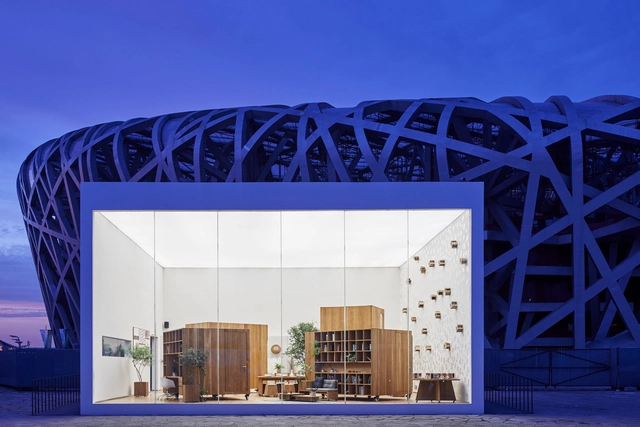
House Vision China 2018 has opened with 10 futuristic residential designs by architects like Penda, Open Architecture and MAD. Located outside the Bird's Nest stadium in Beijing's Olympic Park, House Vision is a cultural research project initiated with the concept of “new life in the future”. Together with architects and enterprises, the exhibition aims to build cultural research around the future home at a 1:1 ratio. House Vision features a range of home designs, from a shelter for life on Mars to a Living Garden.

Japan’s Advanced Industrial Science and Technology Institute have created HRP-5P, a humanoid robot that can perform common construction tasks, including installing drywall. As TechCrunch reports, HRP-5P uses environmental measurement, object detection and motion planning to perform various tasks. The robot may help in Japan's rapidly aging society where declining birth rates meets a lack of skilled construction workers.
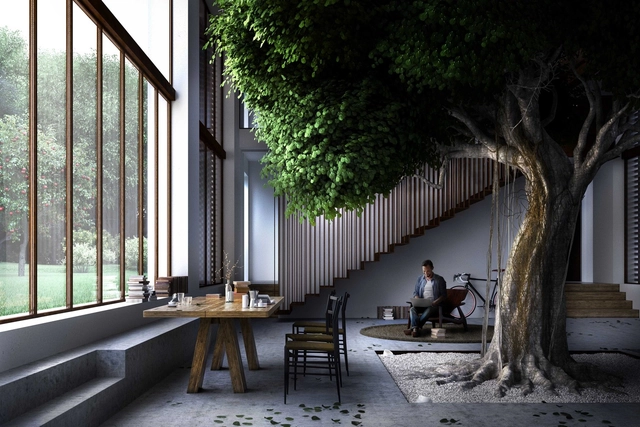
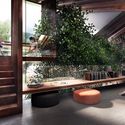
Carlo Ratti Associati has unveiled the "Greenary," a renovated farmhouse designed around a 10-meter-high tree in the countryside near Parma, Northern Italy. The scheme marks the first step of CRA’s winning 2017 masterplan for the Mutti tomato company, driven by a closer integration between nature and the built environment.
The 50-year-old Ficus tree, situated within the main living area, is encircled by stepped areas rising to the treetop, creating six domestic spaces. The house will be coupled with a factory developed in close architectural continuity, due to their physical proximity.