In a slim volume with a yellow-edged cover, recently published by the Porto-based imprint Circo de Ideias, the architect Paulo Martins Barata (a founding partner of Promontório) makes a deceptively bold claim that the architecture produced in Europe since the Great Recession belongs to neither of the two camps that structured the twentieth century's fiercest disciplinary debate.
The Language of Metamodern Architecture borrows its title, with evident irony, from Charles Jencks' 1977 The Language of Post-Modern Architecture, the book that famously declared modern architecture dead at 3:32 pm on July 15, 1972, with the demolition of Pruitt-Igoe. His wager is that another death, never officially certified, occurred somewhere around 2008, and that architecture has been living, mostly unaware, in what grew up around the grave.
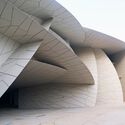
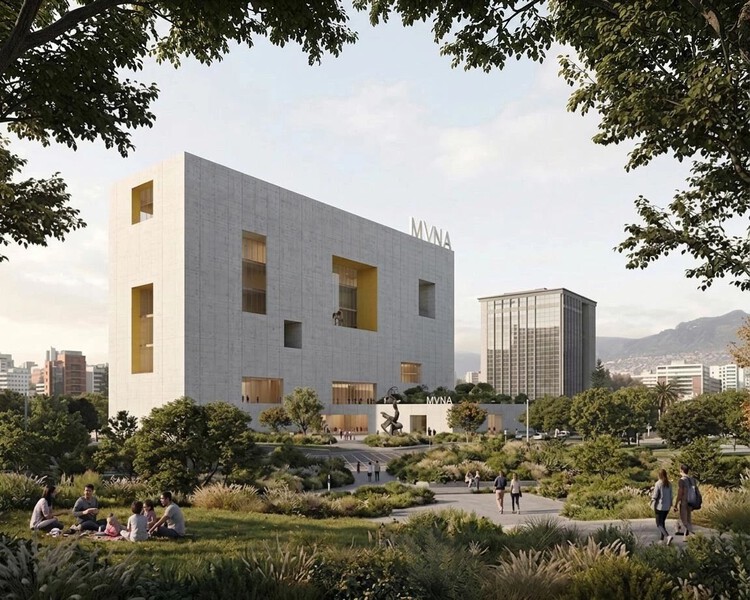
National Museum of Ecuador Proposal (MuNA). Image Courtesy of Studio Campo Baeza
The announcement of the winning proposal for Ecuador's new National Museum (MuNA) sparked one of the country's most significant architectural debates in recent years. The public response has since reshaped the competition itself while also raising broader questions about how a national museum gives architectural form to an interpretation of a nation. While the discussion began with a single design, it exposed a challenge that extends far beyond Ecuador.
National museums are not simply asked to represent a nation. They are asked to give it architectural form. Yet identity cannot be built directly. Before it becomes architecture, it must first be interpreted and translated through architectural decisions.
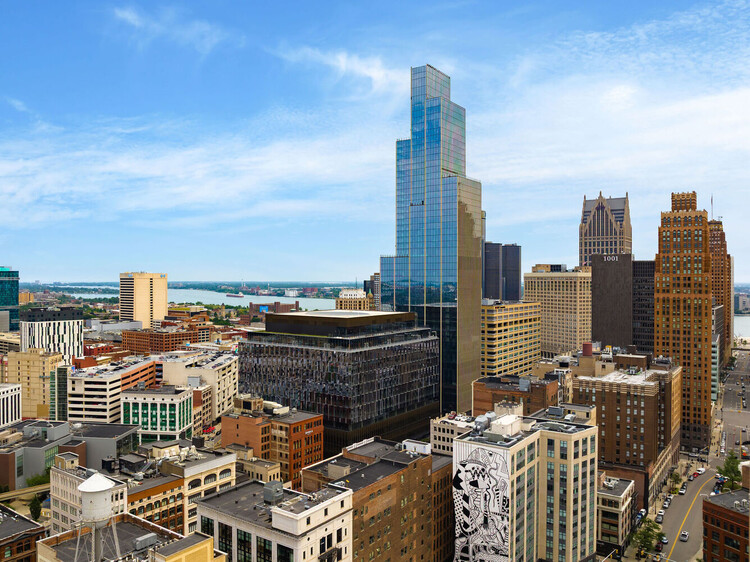
Hudson's Detroit mixed-used development. Aerial view.. Image Courtesy of Bedrock
Urban planning is often confused with adjacent disciplines: urban design, environmental policy, civic strategy, local politics, or data analytics. Moreover, the overlap in training and responsibilities between planning and urban practices makes the field difficult to define clearly. In practice, it is often easier to recognize the consequences of bad planning than to articulate the outcomes of good planning. When planning is working well for residents, it should disappear altogether. It should remove friction from daily life so that people would not think to credit a discipline at all. At its core, urban planning is the relationship people have with their environments, and when that relationship is functioning, the mechanics of housing, transportation, affordability, access, and inclusion should feel ordinary and expected.
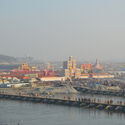
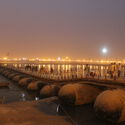
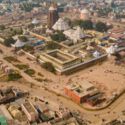
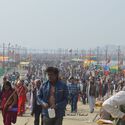
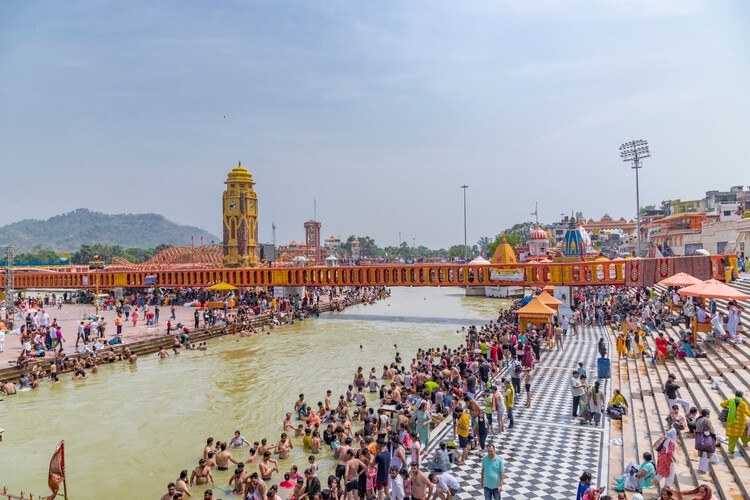
At the helm of architectural discourse on sacred architecture, attention almost always settles on the monument. Temples, mosques, monasteries, and churches dominate architectural histories, design criticism, and photography alike, becoming the physical symbols through which faith is understood. For millions of pilgrims across India, the most consequential architectural experience begins long before the shrine comes into view. It unfolds across mountain roads, river ghats, shaded streets, temporary camps, queue systems, bridges, water kiosks, medical stations, and countless ordinary pieces of infrastructure through which pilgrimage actually takes place. The architectural work of pilgrimage may lie less in the shrine itself than in the environments that allow millions of people to reach it.
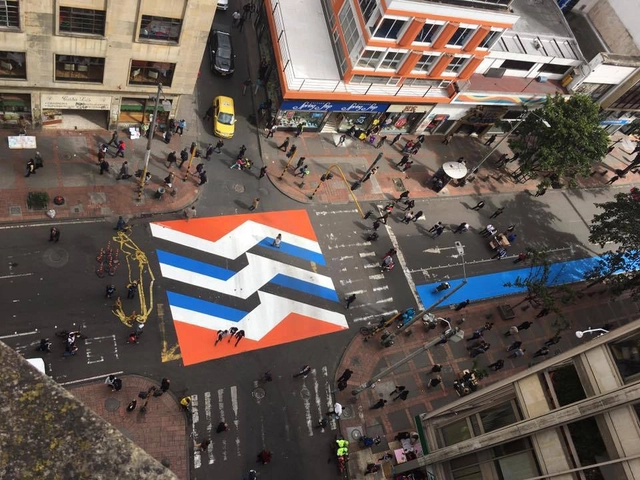
17 x 17. Image: Courtesy of Sharon Figueroa / Camilo Amézquita (Colectivo Microurbanismo)
Tactical urbanism, a practice that has gained prominence in recent years, has proven to be an appealing strategy for activist collectives, architects, urban planners, and designers worldwide. By proposing low-cost, micro-scale, targeted urban interventions, it aims to promote the right to the city. This approach to thinking about public spaces in the city operates through a non-hierarchical logic, where civil society (whether or not in collaboration with the state and/or private enterprises) proposes alternatives to the traditional design process in the urban sphere.
An informal vendor selling balloons along La Séptima in the Plaza de Bolívar. "Bogota, Colombia" by szeke is licensed under CC BY-SA 2.0
This article is the winning entry of the Epistle Writing Prize 2025, an annual competition dedicated to recognizing outstanding writing on design, architecture, and the environment.
It's wet season, but this morning's downpour does little to deter the rhythm along La Carrera Séptima. Cyclists and pedestrians weave past ambulatory vendors with carts of avocados, ginger sweets, and phone cases. Toy cars, lightbulbs, and hand-beaded jewelry glisten with raindrops, arranged neatly on tarps that demarcate vendors' territories. Police officers approach a recycler gathering bottles; a tourist bargains for a jacket; two women find each other in the middle of the road, embracing as their coats grow heavy with rain.
La Séptima, or Bogotá's Seventh Avenue, is the most emblematic road in Bogotá, traversed by more than two million people every day. Along this single road — part marketplace, part protest route, part transportation hub — Bogotá's history unfolds. For nearly a year, I traced its rhythms as a pedestrian, commuter, inhabitant, and researcher. In all these moments and their historical incarnations, one image endured: the road is a living body. It is imagined as Bogotá's backbone, its vital artery, its heart. It bleeds, bears scars, and demands care.
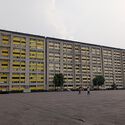
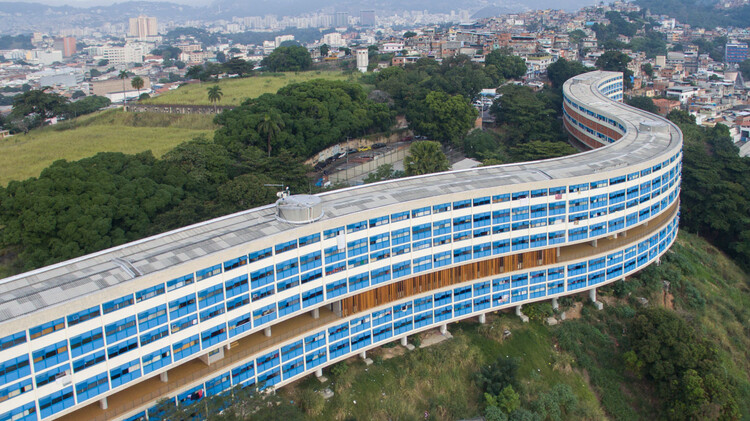
Modern housing was one of the places where modernism made its boldest promise: that architecture could reshape not only the city, but the way people lived within it. As Argentine architectural historian Ramón Gutiérrez has argued, popular housing is "the great unresolved subject, one that usually does not appear in histories of architecture." In Latin America, this absence is significant. Across the 20th century, expanding cities turned housing into one of the clearest ways to imagine urban change, and modernism entered not only plans and drawings, but apartments, neighborhoods, streets, and domestic routines.
Yet once built, these projects entered cities shaped by politics, memory, inequality, and changing ways of occupation. Their meanings no longer belonged only to the original plan, but to the ways they were inhabited, altered, and transformed over time. What this history reveals is not adaptation, but friction: the moment when architecture stops being an ideal model and meets the city it cannot fully control.
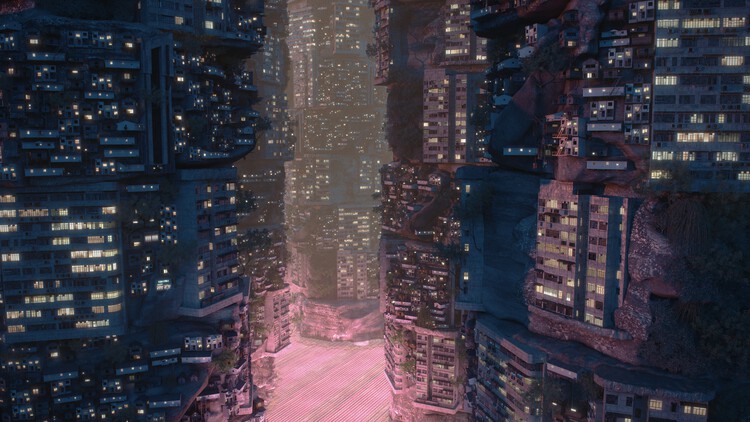
In Other Worlds Film still from Planet City (2021) by Liam Young. Image Courtesy of Liam Young
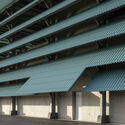
The Barbican Centre has announced In Other Worlds, a major immersive exhibition by speculative architect, filmmaker, and artist Liam Young, opening from May 21 through September 6, 2026. Occupying three distinct locations within the Barbican complex, the Silk Street Entrance, The Curve gallery, and Car Park 5, the exhibition will transform the Brutalist cultural landmark into a sequence of cinematic environments examining architecture, infrastructure, climate futures, and planetary urbanism. Developed in collaboration with writers, scientists, filmmakers, musicians, and performers, the project brings together large-scale projections, LED installations, sound environments, graphic narratives, costumes, and speculative artifacts to explore how fiction and spatial storytelling can shape conversations around environmental and technological change.
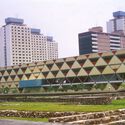
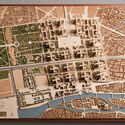
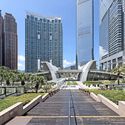
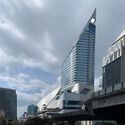
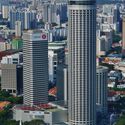
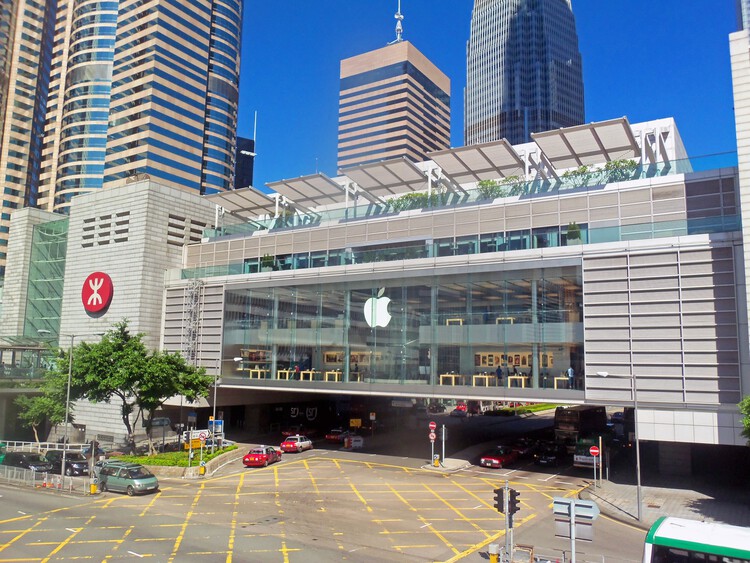
Southeast Asia is often narrated as a kind of architectural playground—an arena where modern and contemporary ideals have been tested at full scale through singular, iconic buildings. One can trace an easy lineage through names that have helped shape the region's skyline imagination: Paul Rudolph's Lippo Centre in Hong Kong and The Concourse in Singapore, I.M. Pei's OCBC Centre and Hong Kong's Bank of China Tower, Norman Foster's Supreme Court of Singapore and the HSBC Main Building in Hong Kong, Ron Phillips' Hong Kong City Hall, Moshe Safdie's Marina Bay Sands. Yet this familiar history—told through objects, colonialism, authorship, and signature forms—risks missing a deeper, more consequential layer of influence: the planning logics and infrastructural frameworks that have quietly structured how these cities expand, densify, and distribute everyday life.
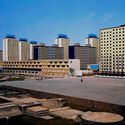
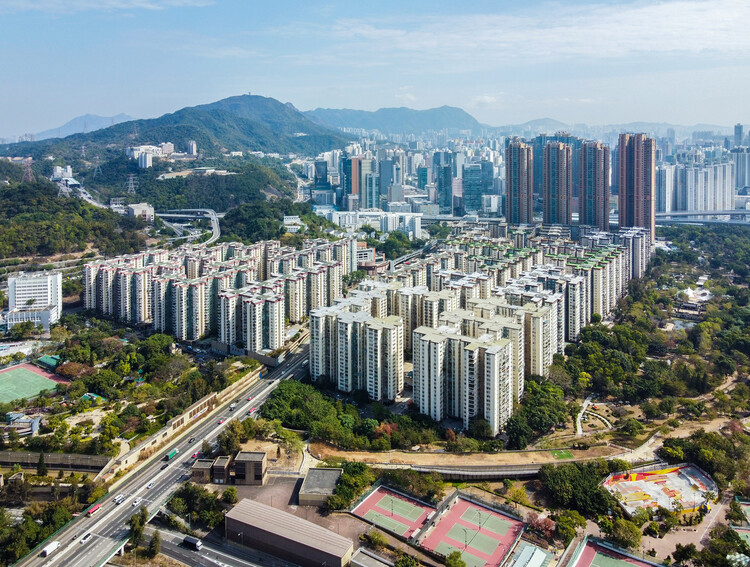
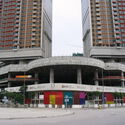
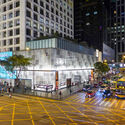
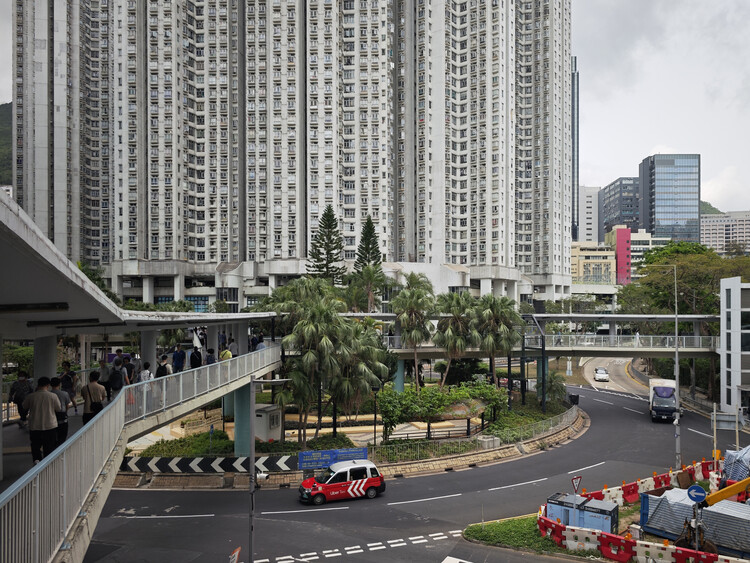
If elevated networks reveal a city that increasingly walks above the street, the podium–tower is the typology that often makes that condition feel inevitable. Across Southeast Asia, podium–tower projects have become one of the dominant languages of metropolitan growth: a system that concentrates housing, jobs, retail, and transit connections into highly legible and managed parcels. From an urban planning perspective, the model can be remarkably effective—absorbing congestion, formalizing circulation, and delivering density quickly. Yet as it spreads, the typology also raises a quieter question: what does it optimize for, and what does it erode—especially at the level of the street, where urban life is meant to be negotiated rather than curated?
At its simplest, the podium–tower is a hybrid structure consisting of a high-coverage, low-rise podium supporting one or more slender vertical towers. The podium typically carries the logistical and commercial weight of the development—retail, parking, loading, drop-offs, back-of-house services, and often amenity decks—while the tower stacks private programs above, whether residential, office, hotel, or mixed use. The promise is twofold: maximize urban density while maintaining a "human-scaled" street wall, and separate the messy logistics of city life from the quieter domain of living and work.
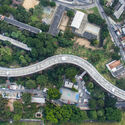
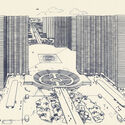
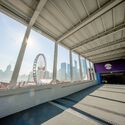
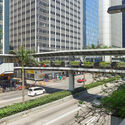
In 2012, Cities Without Ground: A Hong Kong Guidebook offered one of the clearest documentations of a condition that many residents experience intuitively but rarely name: Hong Kong's dependence on elevated, second-storey urbanism. Through drawings and careful mapping, the book captured how the city's pedestrian networks are routinely lifted above the street—separating people from traffic, extending commercial frontage beyond ground level, and negotiating a hilly topography where "flat" circulation is often an engineered achievement. Since its publication, these systems have only grown in prominence—not only for their sheer spatial complexity, but for the way they recast public space as something continuous yet selective, connective yet curated.
This fascination, however, has always carried a parallel unease. Elevated passages can be generous and effective, offering sheltered movement and reliable connectivity. Yet they also raise persistent questions: where do these routes lead, who gets to connect, and what kinds of programs are invited—or excluded—by this "privileged" level of circulation? The second-storey city does not simply bypass vehicles; it can also bypass the street as a civic stage. Over time, it risks shifting architectural attention away from ground-level public life, relieving designers from having to negotiate pedestrian scale, frontage, and the messy reciprocity of the street. In its worst moments, the result is a landscape of podium clusters and sealed megastructures—buildings that perform connectivity at Level 2 while remaining indifferent to the neighborhood at Level 0.
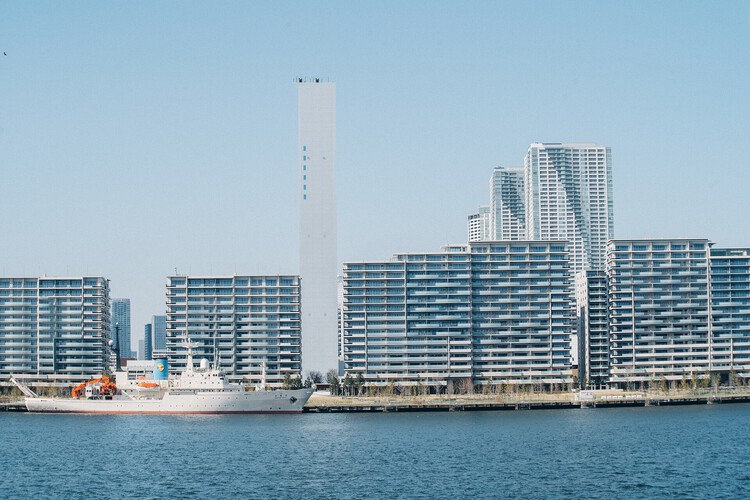
Tokyo 2020 Olympic Games- Athletes Village (HARUMI FLAG). Image via Wikimedia Commons CC 2.0
With the Milano–Cortina 2026 Winter Olympics underway, it is worth looking back at how the Olympic Village has evolved from a purely functional solution into a strategic urban project. From improvised housing compounds to key pieces of urban regeneration, Olympic Villages have repeatedly functioned as large-scale experiments in how parts of the city can be built within a short period of time.
Designed under intense time pressure and for a highly specific population, these environments reveal shifting ideas about housing, collective life, and the urban legacy of mega-events. Across different editions, the Olympic Village reflects broader ways in which events, housing, and cities intersect under conditions of urgency.
Today, 20 February, the United Nations marks World Day of Social Justice under the theme "Renewed Commitment to Social Development and Social Justice." This year's observance takes place in the aftermath of the Second World Summit for Social Development in Doha and the adoption of the Doha Political Declaration, renewing the commitments first articulated in the 1995 Copenhagen Declaration: poverty eradication, full and productive employment, decent work for all, and social inclusion as interdependent pillars of development. At a moment defined by widening inequalities and accelerating environmental and technological transitions, the 2026 commemoration calls for translating political affirmation into measurable, cross-sectoral implementation.
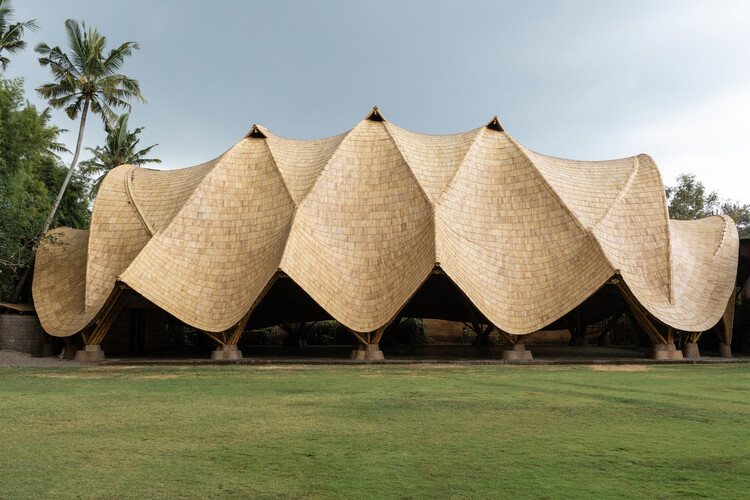
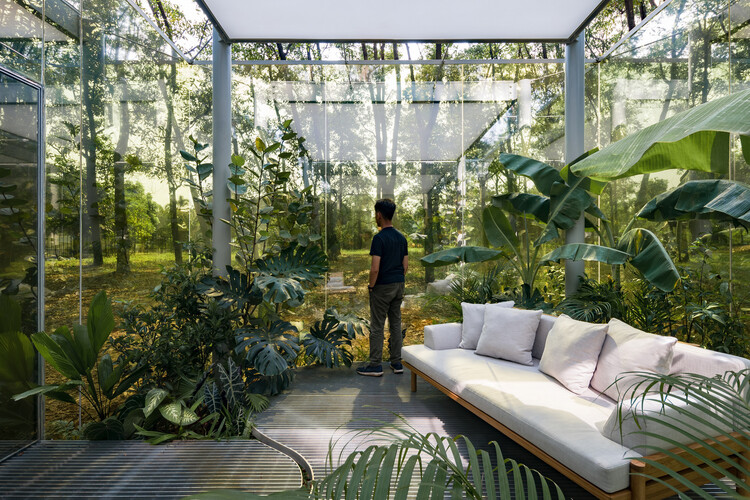
Architecture is increasingly asked to do less, not more. In environments shaped by constant movement, noise, and expectation, spaces that allow people to stay, pause, and be present have become both rarer and more necessary. Many public and semi-public places are designed to keep people moving, consuming, or reacting, leaving little room for lingering, observation, or simply being without a reason.
In response, a growing body of work is shifting attention away from activation and toward presence. Rather than asking users to interact or participate, these spaces create conditions that support staying. Comfort, continuity, and openness allow people to remain without pressure or obligation, making presence a spatial quality rather than an activity.
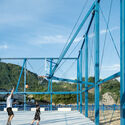
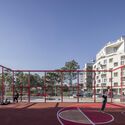
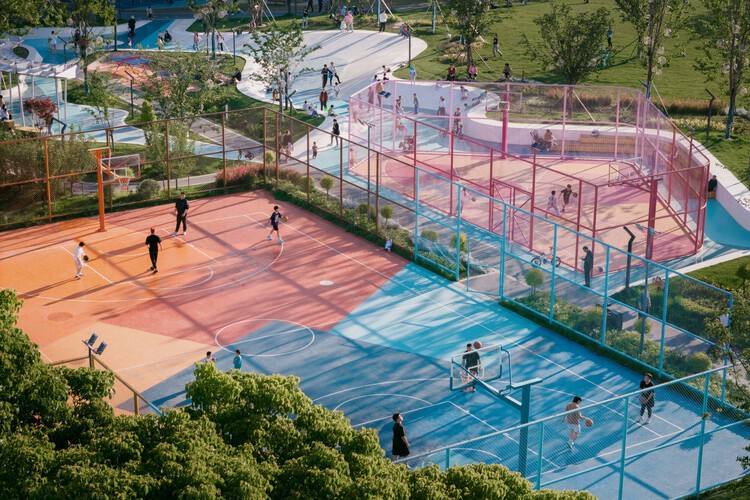
Unlike most popular sports, the origin of basketball has a precise year and creator: it was invented in 1891 in the United States by Canadian physical education instructor James Naismith as an indoor sport for athletes at Springfield College during the winter, after the end of the football season. The sport quickly expanded beyond U.S. borders, being included in the Olympic Games in 1936 and achieving international popularity after the Second World War. As basketball became more widespread, it also left the controlled environment of gymnasiums and began occupying a wide range of locations: playgrounds, public plazas, school courtyards, driveways, and backyard patios became informal courts for play and community life, reinforcing the role of physical activity as a catalyst for social interaction and neighborhood regeneration.
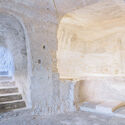
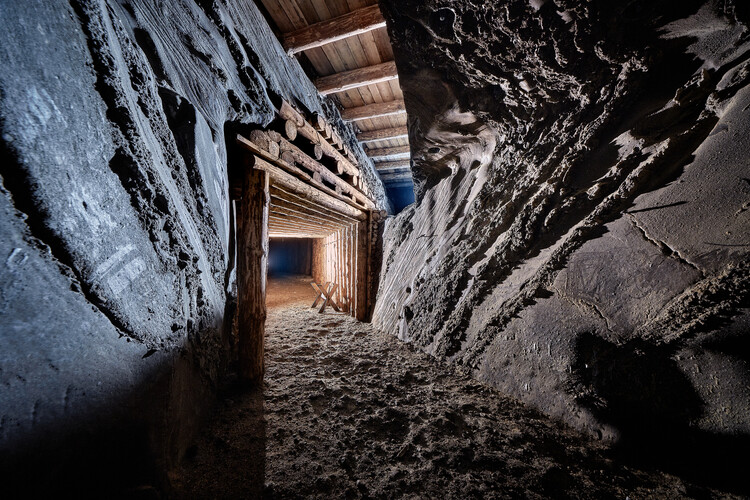
Beneath the visible surface of cities lies an invisible architecture. Subways, tunnels, water systems, data cables, and bunkers form a dense network that sustains urban life while remaining largely unseen. The ground beneath our feet is not a void but a complex territory that holds the infrastructures, memories, and anxieties of our age. In recent years, as land becomes scarce and climate pressures intensify, architects and urbanists have turned their gaze downward, rediscovering the subterranean as both a physical and conceptual frontier. To design underground is to engage with the unseen mechanisms that shape the world above.
The subterranean has long been a site where architecture intersects with politics, technology, and belief. From the catacombs of Rome to the industrial subways of modernity, descent has symbolized both protection and exposure. Twentieth-century urbanism transformed this gesture into a system: metros, shelters, and utilities redefined the city section as an instrument of governance. Beneath the promise of efficiency and progress, the underground absorbed the anxieties of an era of war, surveillance, and collapse. Its evolution reveals not only how societies build, but also how they fear.
Today, the ground has become the new frontier of urban expansion and ecological adaptation. As digital infrastructures, energy systems, and climatic buffers migrate below grade, architecture confronts a space both technical and metaphysical — essential yet marginal, invisible yet decisive. To think in sections rather than in plan is to recognise that contemporary cities no longer exist solely in their skylines but also in their depths. The challenge for architecture is not only to occupy that space, but to render it legible, to turn the unseen into knowledge, and the hidden into a new terrain of design.