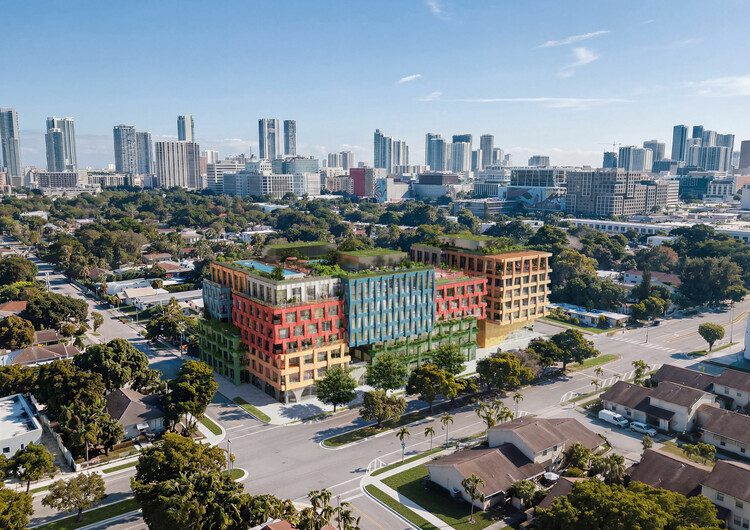
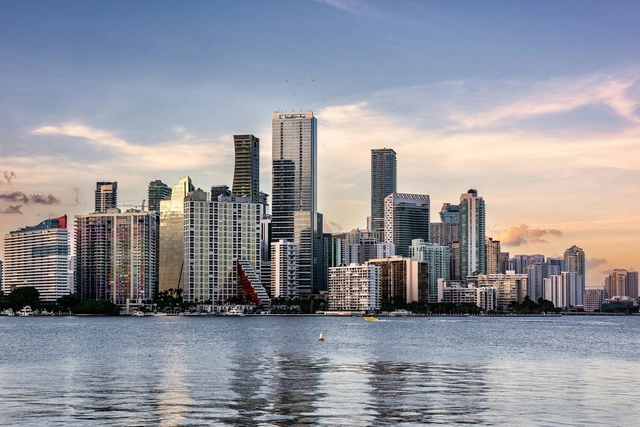
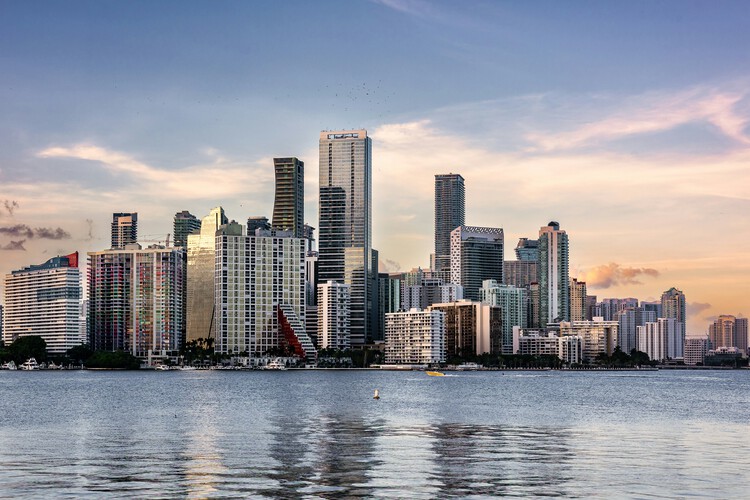
Stretching along the Atlantic coast at the southern tip of Florida, Miami is often introduced through postcard views of beaches, palm trees, and glass towers facing the water. Yet, behind this familiar image lies a city shaped by migration, tourism, and real estate cycles, where architecture has repeatedly been used to project new identities and reinvent the urban landscape. From early resort hotels and the Art Deco façades of South Beach to experimental high-rises and cultural institutions on the bay, the built environment offers a way to read how Miami negotiates climate, economy, and everyday life.
Over the past century, the city has grown through successive layers of development that remain visible in its streets and skylines. The streamlined geometry and pastel colors of the historic Art Deco District coexist with the exuberant forms of Miami Modern (MiMo) motels and postwar infrastructure along Biscayne Boulevard. Downtown and Brickell have transformed from low-rise business districts into dense clusters of residential and office towers, many designed by international firms working alongside local practices. At the same time, neighborhoods such as Little Havana, Allapattah, and Wynwood reveal how diasporic communities, industrial heritage, and creative industries occupy and adapt existing fabrics, often in contrast with the image-driven waterfront.

The ultimate accolades of World Building of the Year supported by GROHE, World Interior of the Year, Future Project of the Year and Landscape of the Year were announced today as hundreds of architects from across the world convened at a grand finale Gala Dinner at Miami Beach Convention Center in Florida. A host of Special Prizes, including the American Beauty Prize supported by the Royal Fine Art Commission Trust, were also announced at the closing event to celebrate the eighteenth edition of the festival. The announcement follows the final day of WAF, in which prize winners across all 43 categories have been competing for the winning titles.
https://www.archdaily.com/1036083/world-building-of-the-year-and-interior-of-the-year-revealed-at-world-architecture-festival-2025Enrique Tovar
In total, the three-day festival will see over 460 live pitches from the 2025 finalists, presented to more than 160 international judges. Today has seen shortlisted projects from around the world compete for 21 award categories within Completed Buildings, Future Projects, and Interiors. Award winners include OMA, Sordo Madaleno, Studio Arthur Casas, and NIKKEN SEKKEI.
https://www.archdaily.com/1036039/world-architecture-festival-2025-day-two-winners-announcedEnrique Tovar
In total, the three-day festival will see over 460 live pitches from the 2025 finalists in front of over 160 international judges. Today has seen shortlisted projects from around the world compete for 22 award categories within Completed Buildings, Future Projects, and Interiors. Award winners include WOW Architects, BIG-Bjarke Ingels Group, Batlleiroig, and Perkins&Will.
https://www.archdaily.com/1035985/world-architecture-festival-2025-day-one-winners-announcedEnrique Tovar
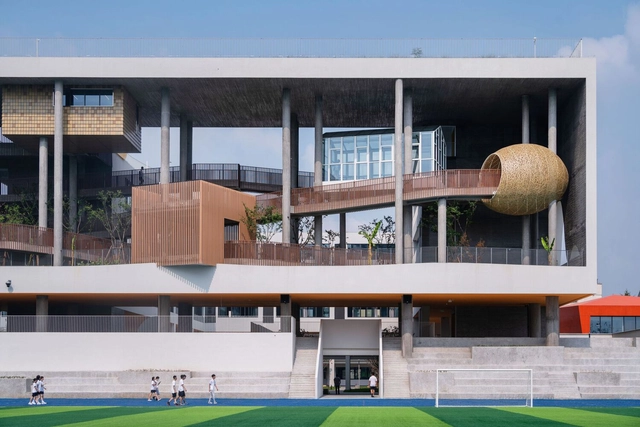
Huizhen High School by Approach Design Studio - Zhejiang University of Technology Engineering Design Group Co.,Ltd_Huizhen High School by Approach Design Studio. . Image Courtesy of WAF23
The World Architecture Festival (WAF) is set to host its 17th edition in Miami, marking the event's first appearance in the United States. This year's festival theme, announced as Hearts and Minds, will explore the intersection between rational design strategies and emotional resonance. Through a series of talks and panel discussions, speakers will examine how architecture operates both as an intellectual pursuit and a sensory experience, engaging perception, memory, and affect. Scheduled from November 12-14 at the Miami Beach Convention Center in Florida, the festival will gather architects and designers from around the globe for a three-day program featuring talks, awards, exhibitions, and fringe events. The event will highlight international practices, showcase new projects, and facilitate discussions on key issues shaping the built environment.
In recent weeks, a series of notable architectural projects have been announced, reflecting a broad spectrum of design approaches aimed at enhancing urban life, infrastructure, and environmental sustainability. From cultural venues to large-scale masterplans and infrastructural advancements, these developments highlight how architecture continues to shape cities and communities. Among them, Knight Architects' Kruunusillat Bridge in Helsinki marks a milestone as Finland's tallest and longest bridge, designed to support sustainable mobility. Meanwhile, Unibail-Rodamco-Westfield's masterplan for Croydon sets out a vision for a vibrant mixed-use district, integrating historic preservation with contemporary urban renewal. At Kew Gardens, Mizzi Studio's Carbon Garden introduces a new permanent installation that explores carbon cycles through landscape design. This collection of recent announcements underscores the evolving priorities in architecture, from connectivity and urban regeneration to climate-conscious interventions.
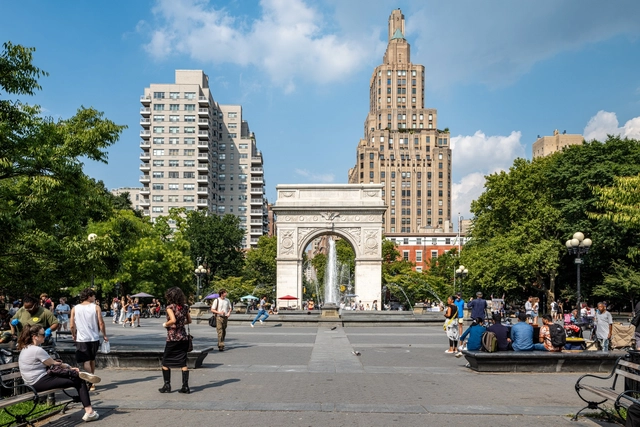
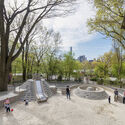
Washington Square Park, New York, NY, 2024. Photo by Barrett Doherty, courtesy The Cultural Landscape Foundation
Protests, civil disobedience, and dissent are not only a defining part of our shared history since the colonial era, they also continue to the present day on campuses, at political conventions, and elsewhere. In this context, some historic marches, sit-ins, and other actions are enshrined in our collective narrative, while others have faded from memory; however, the cultural landscapes that served as stages where these events occurred still exist. These places are the focus of Landslide 2024: Demonstration Grounds and a portal for re-engaging with the stories of little-known or even forgotten events that were pivotal in USA history. The thirteen different sites across the country, represented in the new report and digital exhibition from The Cultural Landscape Foundation (TCLF), touch on events that shaped individuals and sparked movements.
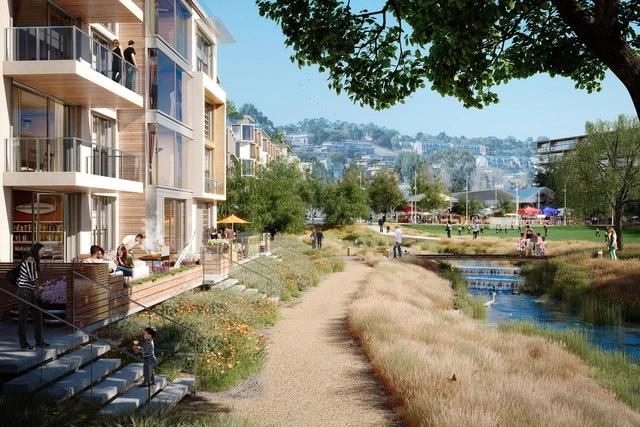
This month, architecture has addressed a wide array of themes, from preserving cultural heritage to designing for adaptability. Around the world, architects are responding to changing needs with solutions that aim to prioritize both functionality and the environment. Notable examples include Gehl, SOM, and Bionic's ambitious redevelopment of San Francisco's India Basin waterfront, which reimagines urban living in harmony with nature, and VOID Studios' collaboration on Kenya's Masai Mara Conservation Centre, a project deeply rooted in ecological and cultural sensitivity. Elsewhere, Nokken and BIG unveiled their "Softshell structure," offering a flexible option for hospitality and residential markets. Meanwhile, the transformation of The Raleigh in Miami Beach by Peter Marino aims to preserve the site's heritage while introducing new standards. These projects, among others, reflect the ever-evolving priorities of the field. Read on to discover the latest news shaping the architectural world.
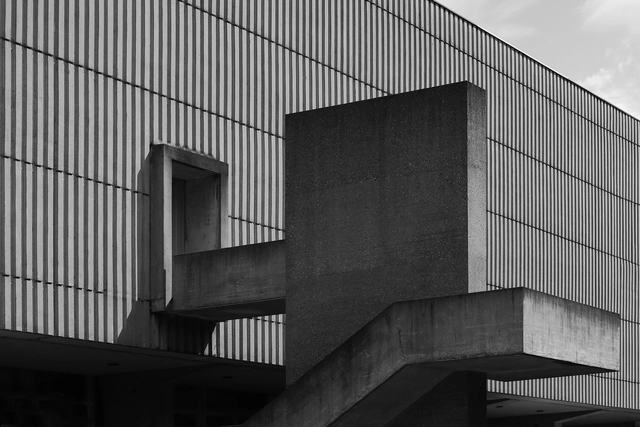
In his latest photographic journey, Paul Clemence explores the architectural essence of SwissMuseums at Le Salon Suisse, Miami Art Week. Delving into the architectural artistry of the region and the museum's significance in today's urban landscape, the photographer showcases a comprehensive exhibition. Titled "Shapes, Rhythm, Abstraction: Swiss Museums," the photo series includes Geneva, Lausanne, Basel, Zurich, and St. Gallen.
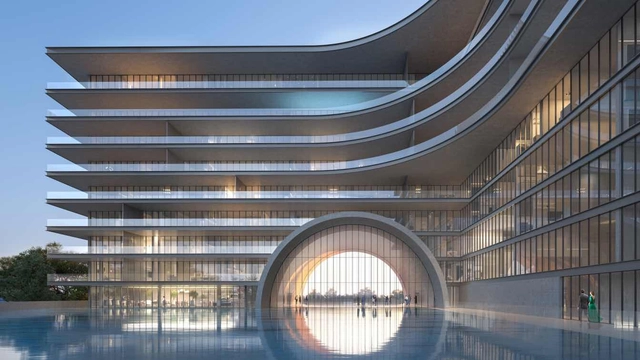
Foster + Partners has revealed the design of a new 54-story mixed-use tower to take shape in Miami. Set to become the new headquarters for the hedge fund Citadel, the tower is expected to feature 34 floors of office space and 212 hotel rooms on its upper levels, in addition to supporting retail spaces. In addition to Foster + Partners listed as the design architect, AAI Architects is the architect of record, and Field Operations is the landscape architect. The tower is expected to break ground in 2025, according to Citadel.
Metropolitan cityscapes come with the appeal of sophistication, luxury, and exclusivity. Their glittering skylines and vibrant energy attract thousands of tourists and residents seeking luxurious experiences every year. Catering to this market, several renowned brands and real estate firms have teamed up to offer "branded residences" – a modern typology that elevates hotel-like living into a daily delight.
The concept of branded residences can be traced back nearly a century to 1927 when New York City's Sherry-Netherland Hotel and Apartments joined forces with the famous Sherry's restaurant. Over the past decade, the trend has witnessed a 230% growth with over 580 developments from 133 brands equating to nearly 100,000 residential units established worldwide. The drive for this demand goes beyond aesthetics and architectural grandeur. World-class services and amenities such as spas, fitness centers, private cinemas, and concierge services offered by luxury housing developments build on a sense of indulgence.
In the early 2000s, an abandoned rail line in Manhattan sat decaying - a memory from a time when freight trains traveled straight through the city. To most citizens, it was a site destined for demolition. However, a few visionary residents saw an opportunity in this neglected space and advocated to transform it into a public green space for the community. The success of the project seemed to spark a "High Line Effect", inspiring other American cities to pursue civic infrastructure on outdated railways, roadways, and industrial sites.
OMA has just revealed The Perigon, a new residential tower in Miami Beach, United States. Situated in the vibrant Mid Beach Neighborhood, the project is a collaboration between Mast Capital and Starwood Capital Group. The Perigon offers dual-waterfront living, characterized by a series of towers strategically rotated to maximize views toward the Atlantic Ocean.
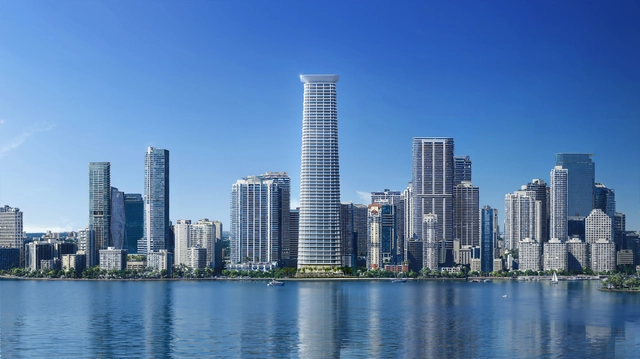
KPF’s “Tower 36,” has received unanimous approval in Miami, Florida. The building features an office space, set to become the tallest in the region at 193 meters. Emphasizing occupant well-being, the tower is designed by integrating the surrounding landscape and increasing access to outdoor areas.
The tower serves as the northern entryway to Miami’s high-rise zone, at the intersection of Biscayne Boulevard and 36th Street. Acting as a gateway to the neighborhood, the scheme connects Miami Beach with the mainland of Miami. To complement the office floors, the building’s podium boasts ground-floor retail, bicycle, car parking, and a restaurant on the landscaped roof.
Kengo Kuma and Associates has just unveiled the designs of a new mixed-use project in Miami, Florida. Standing as the first mixed-use initiative by the architect in the United States, the scheme is set to become a popular attraction in the city. “MIRAI Design District” is comprised of retail spaces, office spaces, and commercial units.
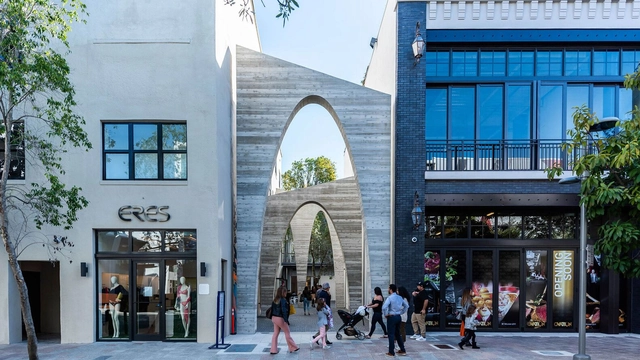
Foster + Partners has unveiled the plans for a new multi-purpose design in the heart of Miami Beach. “The Aalton” is a six-story building encompassing ground-level retail, offices, and residential spaces. Positioned at the intersection of Aalton Road and Lincoln Road, the renowned pedestrian shopping street, the building embraces Florida’s architectural heritage.