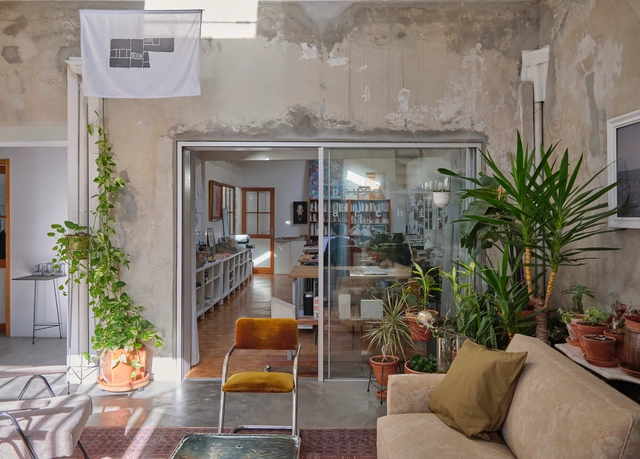
Porto's architectural legacy has long been shaped by the weight of history and the clarity of form. From the work of Álvaro Siza to the dense network of studios emerging from the city's schools, Porto offers a unique blend of continuity and reinvention. Here, architecture is not only a matter of design but often one of endurance — of working within constraints, of drawing with precision, and of navigating a built environment marked by permanence and resistance to spectacle.
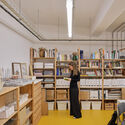
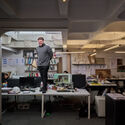
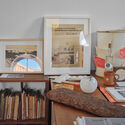
Yet within this persistent context, a new generation of architects has been reshaping the field with quiet determination. Often formed in shared spaces, these practices balance autonomy with collaboration and meticulous detailing with broader urban concerns. Their studios tend to reflect this ethos: modest in scale, defined by adaptive reuse, and rooted in the material reality of the city. In these workspaces, architecture unfolds as a process — sometimes speculative, sometimes grounded — but always reflective of a practice that is deeply local and increasingly global.
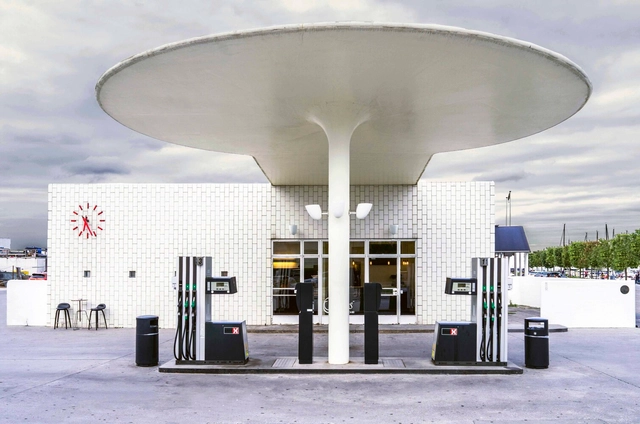
The gas station is an architectural typology that has undergone significant transformations since its inception. Initially, these structures were simple roadside refueling points designed for functionality rather than aesthetics. As automobile culture expanded, gas stations evolved to accommodate new technologies, shifting urban landscapes and changing consumer behaviors. Over time, they became more than just utilitarian stops — they developed into service hubs, integrating restaurants, motels, and leisure spaces, responding to contemporary transportation increasing demands.
By the late 20th century, however, the widespread standardization of gas stations led them to be perceived as "non-places", a concept defined by anthropologist Marc Augé to describe transient spaces that lack social or cultural significance. With uniform designs and a focus on efficiency, gas stations became interchangeable, reinforcing their role as purely functional infrastructure rather than meaningful architectural interventions. This standardization also departed from the era when fuel stations served as recognizable landmarks, contributing to a homogenized landscape devoid of local identity.
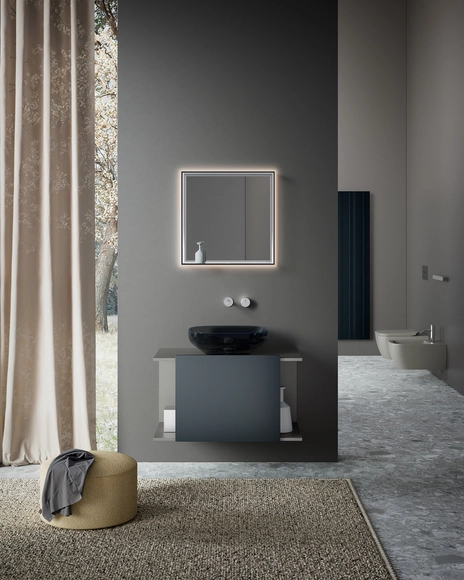
Every detail in the construction of an environment has a significant impact. The layout, composition, furniture, color range, and materials work together to create a cohesive and immersive experience in the perception of space. In bathroom design, this integration extends beyond aesthetics, aiming to ensure that every choice— from materiality to the form of furniture— contributes to economically viable, functional spaces with an aesthetic that doesn't rely on exclusivity. Architects and designers can shape diverse settings without sacrificing quality or visual coherence by focusing on cost-effectiveness and well-resolved solutions. In this sense, a democratic approach to design becomes a tool for creating environments where quality, functionality, and affordability are core principles.
https://www.archdaily.com/1028204/next-gen-living-customizable-high-quality-bathroom-design-within-reachEnrique Tovar
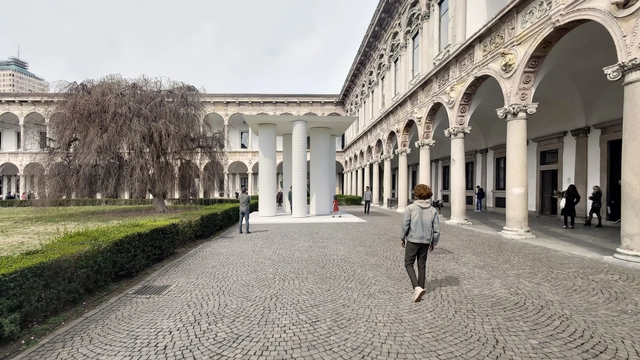
Milan Design Week 2025 is one of the most significant events in the design world, taking place from April 8 to April 13. Following in the previous years' tradition, the city of Milano will host a variety of exhibitions, installations, and discussions throughout its diverse districts, each offering a unique atmosphere and thematic focus. Alongside the renowned Salone del Mobile 2025 at the expansive Rho Fiera exhibition grounds, numerous activities and initiatives will be featured, all coordinated under the Fuorisalone agenda. This article will help navigate the many events by highlighting key venues and installations, ranging from the major fair to vibrant design districts and distinctive locations, such as historic courtyards and revitalized industrial spaces.
"Steven Holl – Drawing as Thought," an extensive exhibition of the American architect's original watercolors, is now on view at the Tchoban Foundation Museum for Architectural Drawing in Berlin. It reveals insights behind some of Holl's key projects and design methodology. The selected drawings range from early unbuilt winning competition entries to some of the latest visions now under construction in Europe and the United States. Occupying the museum's two levels, the show opened on February 6 with a conversation between Holl and the museum's founder and architect Sergei Tchoban, as well as addresses by Kristin Feireiss, the exhibition's curator and founding director of the next-door Aedes Architecture Forum, and Diana Carta, an architect and scholar from Rome. The show, which can be visited until May 4th, is accompanied by a catalog that states, "The work of internationally renowned US architect Steven Holl is distinguished not only by his extraordinary buildings, with a focus on cultural and public structures such as museums, art centers, concert halls, libraries and universities worldwide, but also by his artistic oeuvre, which today comprises more than 50,000 sketches, black-and-white drawings, and watercolors. […] While exhibition visitors will only encounter a small portion of his extensive body of work, each drawing should be explored and studied individually, in keeping with Holl's intent."
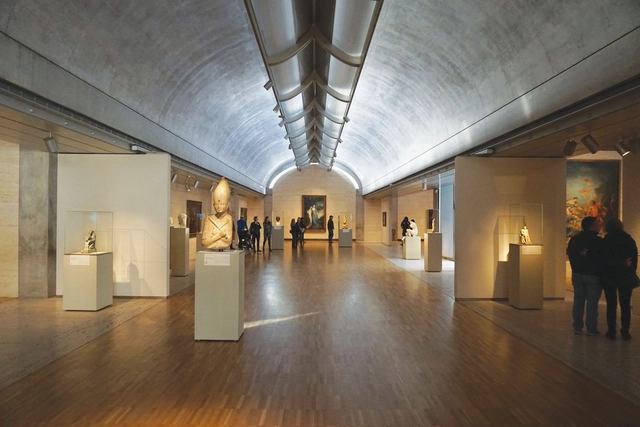
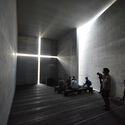
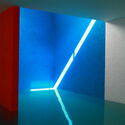
Architecture is often defined by its physical form, materials, and structural elements, but light and shadow truly shape the experience of space. These elements influence perception, guide movement, and evoke emotional responses, transforming static structures into dynamic environments. Throughout history, architects have harnessed the interplay of light and shadow, using it as a fundamental design tool to create atmosphere and meaning.
I love putting together lists of original manifesto-like statements by architects perpetually searching for breaking new ground. They provoke us to imagine possibilities we haven't dared to consider before. Questioning conventions should be a critic's primary objective to engage in a conversation with a creative. Otherwise, what is there to discuss, really? That's why speaking with Elizabeth Diller about her studio's work and intentions is like a breath of fresh air, especially nowadays when so many architects are happy to align themselves in pursuing what's expected. In one of our previous conversations, Diller put it bluntly: "We don't take professional boundaries seriously. Every time we are handed a program, we tear it apart and continuously ask new questions. Nothing is fixed." This time, we spoke about Diller Scofidio + Renfro's new monograph, "Architecture, Not Architecture." The book, a project in itself, aims to rethink the very limits of architecture. It reinvents what a book can be in the process. During our 1-1/2-hour discussion over Zoom, which I prefer for its frontal dual recording, she said eagerly, "We were always critiquing; we were always throwing grenades at things."
Sustainability in architecture is often framed as a universal challenge, leading to standardized solutions that prioritize efficiency over context. However, architecture is inherently tied to its environment — buildings interact with climate, topography, and cultural history in ways that demand specificity. Instead of relying on standardized sustainability checklists, how can architecture embrace site-specific solutions? This conversation is deeply connected to the concept of Genius Loci, or the spirit of a place, introduced by Christian Norberg-Schulz and embraced by architects advocating for designs that resonate with their surroundings. It suggests that architecture should not be imposed upon a site but rather emerge from it, informed by its materials, climate, and cultural significance. This philosophy challenges the widespread application of generic sustainable technologies, instead proposing that sustainability must be inherently tied to the location in which it operates.
This International Women's Day, we celebrate the contributions of women in architecture, a field traditionally dominated by men. While dominant narratives may overlook their significant impact, as the history of architecture is replete with examples of women subtly but powerfully shaping the profession. When limited to a draftsman position, Ester McCoy took a step back not to disengage but to better observe. She became the first architectural critic and historian to notice the unique flavor of Modernism developing along the West Coast during the 1950s, bringing names such as Richard Neutra, or Luis Barragan to the forefront of architectural discussions. Similarly, the name Aline Louchheim may not be a widely recognized one among architects, but, because of her, the name Eero Saarinen surely is. The profession of architectural publicist also emerged through this collaboration. These stories remind us that recognizing women's achievements in architecture is not about celebrating gender, but about acknowledging a historical bias that has hindered the entire field's progress.
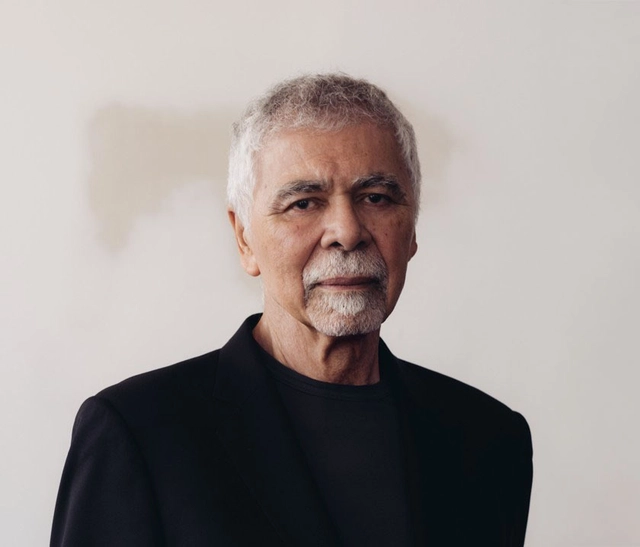
Portrait of Ricardo Scofidio. Image via Diller Scofidio + Renfro
Ricardo Scofidio, a distinguished figure in the world of architecture, passed away on March 6, 2025, at the age of 89. Born in New York City in 1935, Scofidio co-founded the influential architecture firm Diller Scofidio + Renfro (DS+R) with his partner Elizabeth Diller in 1979. Together, they brought to the profession a conceptual art sensibility, influencing the design of globally recognized cultural landmarks and public spaces. Among their most notable projects are the High Line in Manhattan and the transformation of Lincoln Center, each reflecting the studio's ambition of challenging conventional architectural premises.
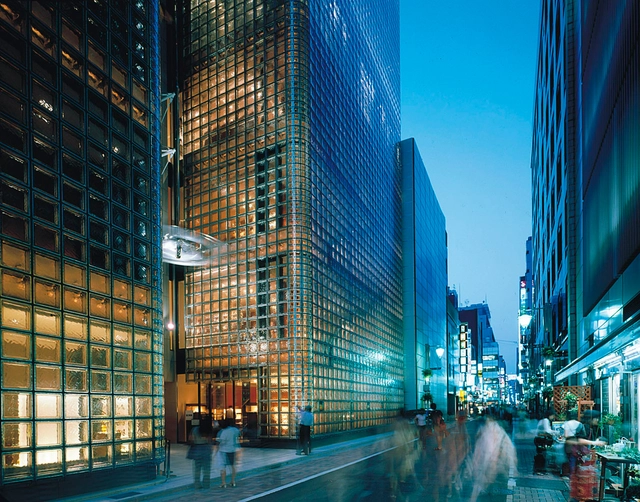
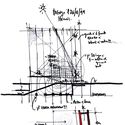
In Tokyo's bustling Ginza district, where tradition and modernity converge, the Maison Hermès emerges as a luminous architectural icon. Designed by Renzo Piano Building Workshop and completed in 2001, the 15-story structure serves as the Japanese headquarters of Hermès, the renowned French luxury brand celebrated for its craftsmanship and timeless elegance. Beyond its function as a commercial hub, the building encapsulates Hermès' ethos, transforming its urban site into a dialogue between light, materiality, and context.
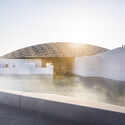
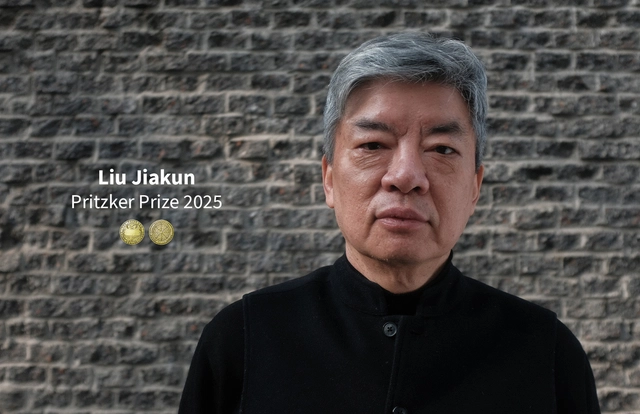
Chinese architect and educator Liu Jiakun has been announced as the laureate of the 2025 Pritzker Architecture Prize, the highest honor in the architecture field. This prestigious award recognizes Jiakun, founder of Jiakun Architects (established 1999), for his ability to blend traditional Chinese elements with contemporary design and for his commitment to social equity in the built environment. Born in Chengdu, China, where he continues to live and work, he becomes the second Chinese architect to receive the accolade, following Wang Shu (2012). Jiakun joins a distinguished list of previous laureates including Riken Yamamoto in 2024, David Chipperfield in 2023, and Francis Kéré in 2022. The award ceremony will be held this spring at the Jean Nouvel-designed Louvre Abu Dhabi, with a global video release of the presentation this fall, followed by the 2025 Laureates' Lecture and Symposium in May.
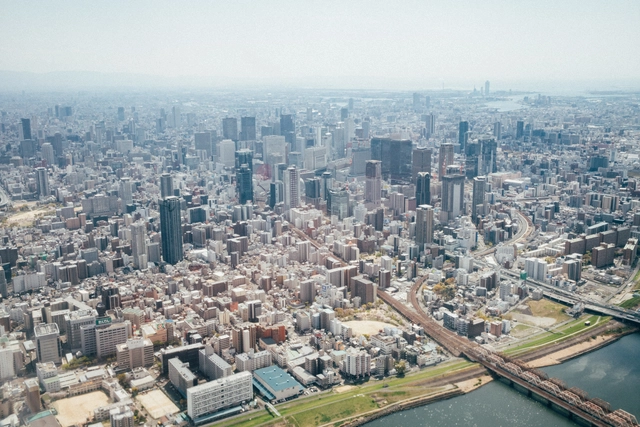
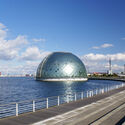
Osaka, Japan's third-largest city, is a vibrant blend of tradition and modernity, making it a compelling destination for architecture enthusiasts. Known historically as the "nation's kitchen" for its role as a mercantile hub, Osaka is also a city of cultural and architectural diversity. Its landmarks range from the historic Osaka Castle to striking contemporary developments, each reflecting Japan's evolving urban identity.
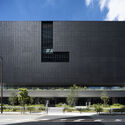
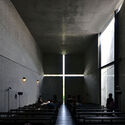
As the host city for the highly anticipated Expo 2025, Osaka is poised to showcase its architectural prowess on a global stage. The city's skyline features innovative works by renowned architects and urban planners, including cutting-edge cultural centers, transportation hubs, and waterfront redevelopments. With contributions from celebrated Japanese architects such as Tadao Ando, Kengo Kuma & Associates, and Takenaka Corporation, alongside international figures like Dominique Perrault, Renzo Piano Building Workshop, and Pelli Clarke & Partners, Osaka seamlessly blends modernity with tradition, creating a unique architectural identity that reflects its past while looking boldly to the future.
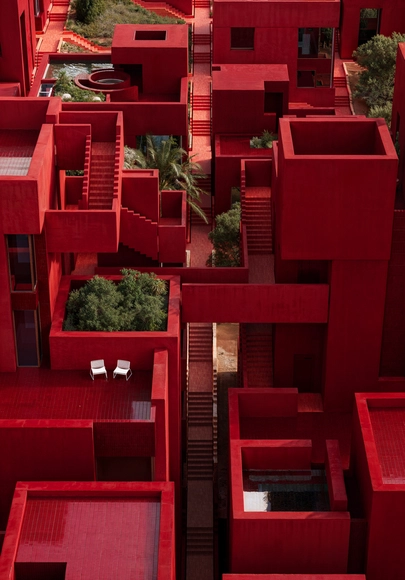
Red Sol Resort in Dhërmi. Image Courtesy of Ricardo Bofill Taller de Arquitectura
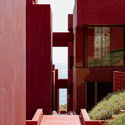
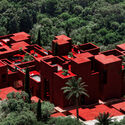
Architecture has been at the center of a transformation process in Albania, particularly significant in Tirana, its capital city. In 2017, the winning project for the Tirana 2030 Masterplan was unveiled, designed by Stefano Boeri Architetti, UNLAB, and IND [Inter.National.Design] as part of a competition organized by the Ministry of Urban Development. Aiming to give Tirana a new metropolitan dimension while promoting and preserving green spaces, the strategy integrates a system of open spaces, natural elements, and strategic projects at key points in the city. The multidisciplinary Catalan firm Bofill Taller de Arquitectura has contributed to this transformation with two mixed-use towers in Tirana and a resort project in the coastal town of Dhërmi, reflecting the distinctive aesthetic of Ricardo Bofill's work.
In my 2008 interview with Kengo Kuma in Manhattan—the Tokyo-based architect was in town for a lecture at Cooper Union and to oversee the construction of a house renovation in nearby Connecticut— he summarized the intention of his work for me, "The closest image to the kind of architecture I try to achieve is a rainbow." The architect designs his buildings as a chef would prepare a salad or a florist arrange a bouquet of flowers—by carefully selecting ingredients according to their size, shape, and texture. He then tests whether they should touch, overlap, or keep a distance to let the airflow pass through. The process is closer to a trial-and-error scientific experiment rather than an artistic exercise in projecting visionary forms and images. Although his buildings surely look strikingly artistic and utterly breathtaking. They are both precise and loose, primitive and refined, material and transient. The architect's fascination with materiality is startling, and despite having completed many dozens of buildings all over the world over the course of his distinctive career, in our conversation last month over Zoom, Kuma told me, "I stand at the beginning of a long process of material exploration."
Doors are part of our daily routine, opening and closing so naturally that we rarely consider how they work. That is why, when discussing innovations in their design, many might think, "If it ain't broke, don't fix it." However, just because something functions well doesn't mean it can't be improved. Doors are no exception—their components can be optimized for better performance without changing their fundamental nature. Instead of sticking to the familiar, why not open the door for enhancement? Pivot doors are a clear example. In addition to offering aesthetic versatility and nearly endless design possibilities, their opening system on a central axis allows for fluid and controlled movement, especially indoors. However, a challenge remains in their design: making them hold steady at different angles.
https://www.archdaily.com/1026629/and-yet-it-holds-a-pivot-hinge-system-that-keeps-doors-at-every-90-degrees-angleEnrique Tovar
Modernism, a movement that sought to break away from traditional forms and embrace the future, laid the groundwork for many technological and digital advancements in contemporary architecture. As the Industrial Revolution brought about mass production, new materials, and technological innovation, architects like Le Corbusier, Walter Gropius, and Mies van der Rohe championed the ethos of "form follows function" and a rational approach to design. Their principles resonate in the digital age, where computational design and high-tech materials redefine form and construction.
The 20th century's modernist ideals — efficiency, simplicity, and functionality — created a foundation for architects to experiment with structural clarity and material honesty. High-tech architecture, which emerged in the late 20th century, evolved from these principles, merging modernism's clean lines with advanced engineering and technology. This paved the way for parametricism and algorithm-driven design processes, revolutionizing architecture and enabling complex forms previously thought impossible.
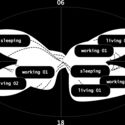
In 1993 a young professional couple with two toddlers and a large suburban lot in Naarden, a town less than half an hour's drive southeast of Amsterdam, approached Ben van Berkel to design an unusual house. They envisioned it as progressive and innovative in every way possible. More than that, they wanted a kind of building that "would be recognized as a reference in terms of renewal of the architectural language." Before settling on the architect, they spoke to several candidates, including Rem Koolhaas. They chose van Berkel who five years earlier, together with his then-wife Caroline Bos co-founded their eponymous practice, because as he told me, "I went to the site and studied it carefully and already had ideas about what I called the four quadrants of the landscape. I knew what kind of house it would be. I could see clearly where different rooms would go, how they would be shaped, and how they would relate to each other." The couple couldn't resist. Yet, there would be no rush on the project which took five years to complete, most time was invested in its design, going through many iterations and refinements, all based on the Möbius loop.