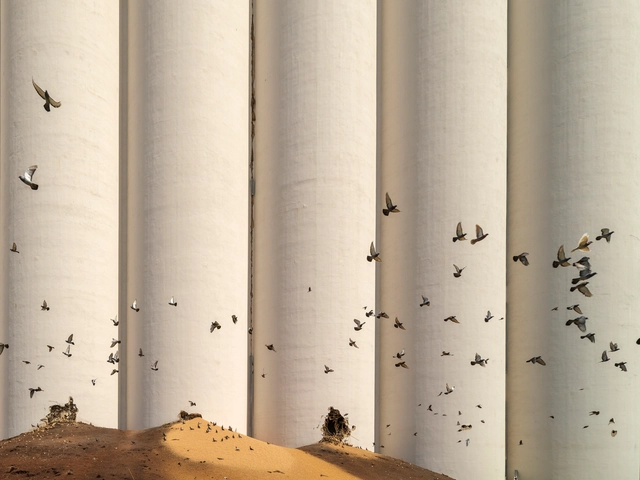
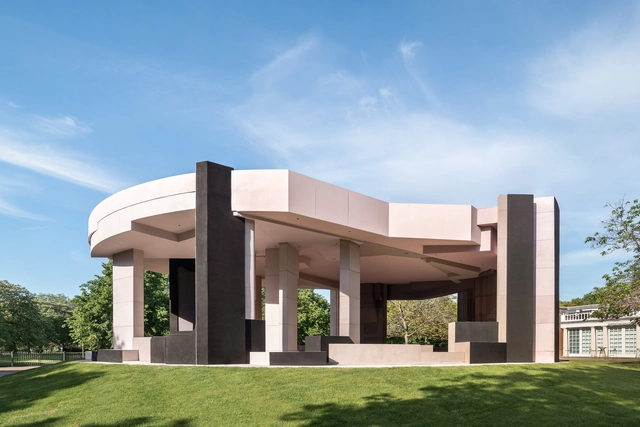
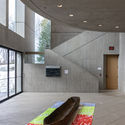
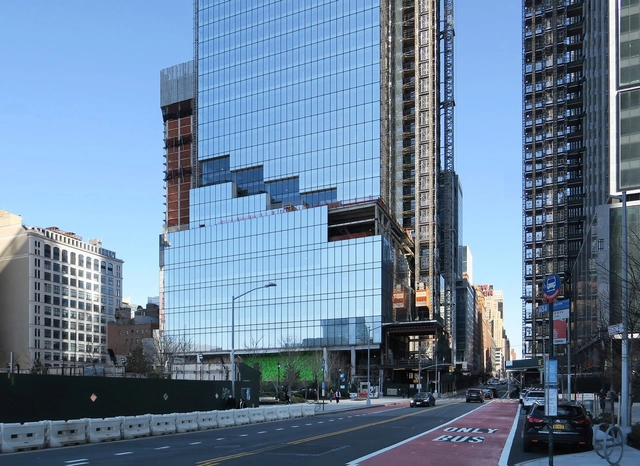
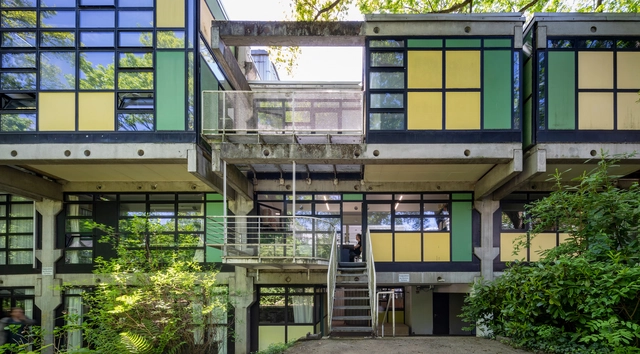
Whether glass and sky, asphalt and sand, steel and trees: the merging of architecture and landscape has always been an inevitable factor in building. In particular the buildings made of glass, steel and concrete have had an immaterial connection to their natural surroundings since the 19th century. The superimposition of structures, reflections, filters and transparencies becomes an important design element and fascinates with its ambiguous representation of reality.
The tenth edition of the Architectural PhotographyAwards has announced its shortlist, selected from entries from 64 different countries. The photographs are divided into six categories: Exterior, Interior, Sense of Place, Buildings in Use, Mobile, with Bridges being this year’s theme, and Portfolio, focusing on the theme of Transport Hubs. The photographs will be displayed at the World Architecture Festival (WAF) Lisbon in Portugal from 30th November - 2nd December. The winners, two per category, will be announced by the end of the festival.
In a new show at Kunst Haus Wien in Vienna, the Austrian artist continues his investigation of architecture where few civilians tread.
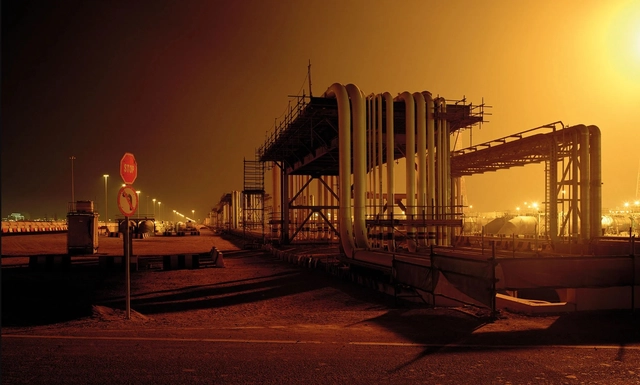
Gregor Sailer’s quest for unusual structures and buildings takes him to some of the most extreme reaches of human civilization — from military field exercise centers in the USA and Europe to a mining center near Chuquicamata in the Atacama Desert to Arctic snow fields.
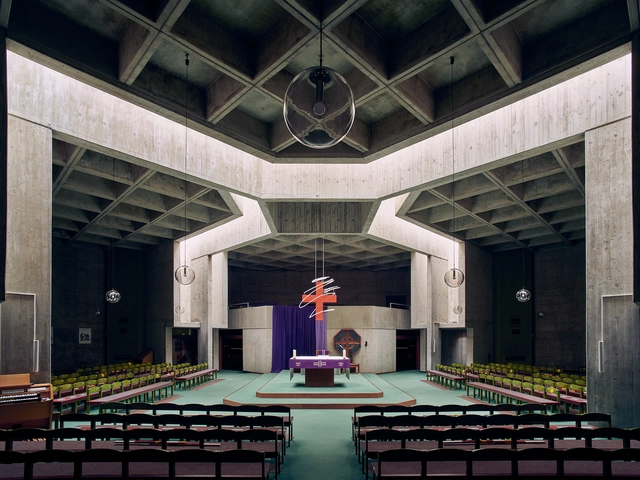
If one were asked to picture a Catholic Church, the first image to come to mind would probably resemble a medieval gothic cathedral with buttresses, pointed arches, and a spire pointing toward the sky. On second thought, many more styles could easily be identified as catholic architecture: the simple yet grandiose structures of the Romanesque or maybe the ornate styles of Baroque and Rococo. An image more difficult to associate with sacred architecture is that of Modernism. The Roman Catholic Church is a particularly conservative establishment. Modernism, on the other hand, is revolutionary; it is rational, functional, and technical; it rejects ornaments and embraces innovation. Surprisingly, in the years after the end of the Second World War, places of worship defied expectations. Blocks of concrete, raw materials, angular shapes, and exposed structures have all been employed to break from tradition and create churches that barely resemble a church. This article will explore Modernist mid-century Church architecture with the support of images from Jamie McGregor Smith.
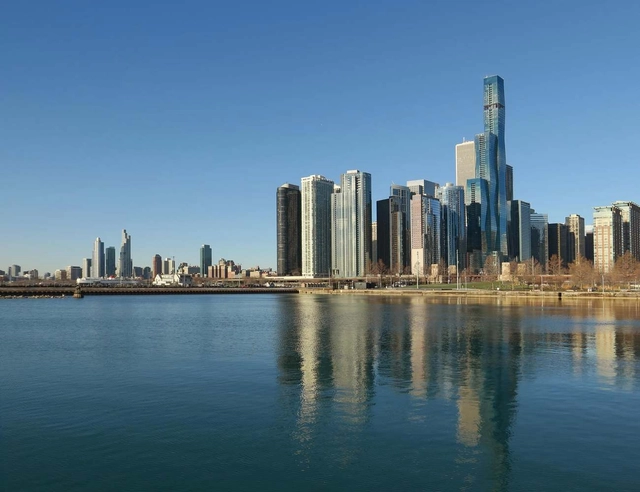
The tower aims to enhance rather than disrupt its surrounding urban fabric. Sitting between downtown Lakeshore East Park and the Chicago Riverwalk, the careful design of the lower levels allows for a porous connection between the two attractions. Innovative structural systems are implemented to achieve this by completely elevating the second volume from the ground.
Designed by Herzog & de Meuron, Tate Modern’s Switch House was Tate Modern’s latest extension in 2016, radical in form and surface, yet intimately relative to the vast building to which it joins, which opened as London’s foremost modern art gallery in 2000. Shot recently by Bahaa Ghoussainy, the building that opened in 2016, is a model for museums in the 21st century.
Photography is often likened to a visual language. The “most literary of the graphic arts”[i] is after all a formal system with commonly accepted structure and recognizable motifs.
If “nature” and “architecture” are commonly conceived as opposing entities, representative of human encroachment on the primordially physical image of the world, under which conditions do these two fundamental factors form a strong liaison and which is the ensuing by product? Can this often ignored bond between culture and nature be unearthed and put to light by the use of photography?
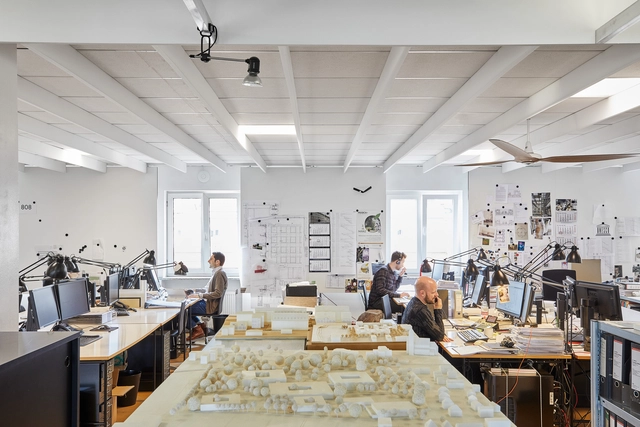
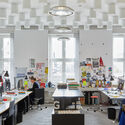
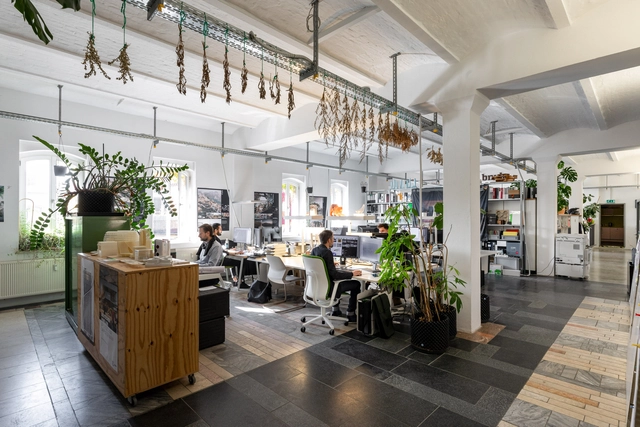
Documenting diverse architecture and design studios, Goodwin captured 13 different office spaces in Berlin, including Hesse, LAVA, JWA, Tchoban Voss, Richter Musikowski, Barkow Leibinger, FAR frohn&rojas, studio Karhard, Jasper, Kleihues + Kleihues, Graft, Bundschuh Architekten and Sauerbruch Hutton.
The degree to which a building engages with the culture or the landscape of a place is primarily controlled by the design intent i.e. the architectural concept and the success of its implementation. Photography reveals relations but it does not build them in the first place. Even in the extreme case where a structure is consciously designed to differentiate and separate itself from any sort of environment, cultural or natural, it is still inevitably situated into a context and perceived as part of it.
Architectural photography has developed into its own art form, and it might be as important as the built work itself. We consume architecture not only physically and spatially in a building but also through photographs. A good image reportage work can give the viewer a feeling of the atmosphere, senses, and design intentions the project may spark, without actually being in the place. Photography is also a way of documenting the project's process, the use of materials, lighting, and architectural elements, and as a result, tell a complete story behind a building.
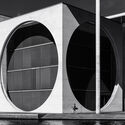
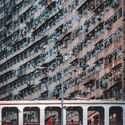
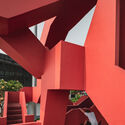
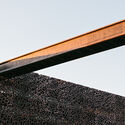
To celebrate World Photography Day, we've gathered a list of 25 architectural photographers from around the world who are worth knowing - and following on Instagram. These emerging photographers have been selected for their ability to capture architecture each in their own unique ways. Get to know them!
Exactly a year ago, on August 4, 2020, the third-largest non-nuclear explosion ever-recorded destroyed almost half the city of Beirut, ripping through the port and the eastern part of the capital. One of the biggest urban tragedies of modern times, killed more than 200 people, wounded thousands, and left an estimated 300,000 people homeless, damaging over 80,000 commercial, residential and public spaces. Felt across neighboring countries, the blast stripped the city’s constructions of their cladding, framing, and glass elements, while completely tearing down other buildings, leaving around US$15 billion in property damage, in times of Covid, political and social unrest, and economic collapse.
One year later, so little has changed. One year later, it only became harder for the people of Beirut. One year later, everything in the city still reminds them of that day. Major questions remained unanswered, no rescue or action plans have been taken by governmental institutions, instead, civil society rose to take into their own hands, reconstruction efforts, in the total absence of the state.
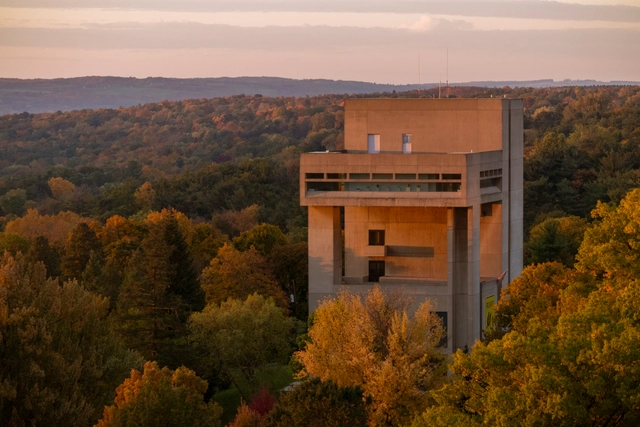
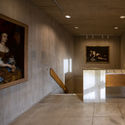
On the week commemorating American-Chinese architect I.M Pei’s birthday, Delhi-based photographer and photojournalist, Nipun Prabhakar, has shared with us a series of images of I.M Pei & Partners’ building, the Herbert F. Johnson Museum of Art. The firm was commissioned in 1968 by Cornell University to build the university’s museum that would also serve as a teaching facility and cultural center for the educational community. The building was completed in 1973 and was awarded the American Institute of Architects Honor Award in 1975.


.jpg?1607936801&format=webp&width=640&height=580)
.jpg?1607936823 "© Paul Clemence")
.jpg?1607936894 "© Paul Clemence")
.jpg?1607936835 "© Paul Clemence")
.jpg?1607937090 "© Paul Clemence")
.jpg?1607936801)












.jpg?1645645621&format=webp&width=640&height=580)




_Simone_Bossi.jpg?1629234719&format=webp&width=640&height=580)
_Maria_Gonzalez.jpg?1629145604 "© Maria Gonzalez")
_Triệu_Chiến_01.jpg?1629145656 "© Trieu Chien")
_Alex_shoots_buildings.jpg?1629229852 "© Alex Shoots Buildings")
_Leonid_Furmansky.jpg?1629230142 "© Leonid Furmansky")
_Simone_Bossi.jpg?1629234719)