Bjarke Ingels Group has launched an exhibition at the Danish Architecture Center, reflecting on the firm’s extensive history in design. “Formgiving – An Architectural Future History from Big Bang to Singularity” explores how the world around us has taken shape with 71 BIG projects.
The Centre Pompidou will host a year-long exhibition of MAD Architects in Paris, France. The exhibition, titled MAD X, showcases ten of MAD’s most significant projects to date. Exploring unchartered territory, the show is made to exhibit the evolution of MAD’s architectural practice and design philosophy since its establishment in 2004, led by Ma Yansong, Dang Qun, and Yosuke Hayano. The exhibition centers on how MAD reimagines the future of design.
Since graduating from the Cooper Union School of Architecture in 1996, Vladimir Belogolovsky has crossed disciplinary boundaries by transitioning from practicing architecture to becoming an exhibition curator and critic to evolving as a conceptual installation artist in his pursuit of continuously scrutinizing two fundamental questions – what is an exhibition and what is architecture?
I am Interested in Seeing the Future is Belogolovsky’s fifth installation of his 'Architects’ Voices' project for which he has interviewed over 300 leading international architects. Here, his focus is on five American and five Chinese architects who discussed with him their intentions, inspirations, dreams, frustrations, and hopes.
The Athens Architecture Club seeks to resurrect the historical architecture clubs of the 19th century, functioning as an “open forum, an infrastructural framework, and support platform for architects, artists, and writers to discuss, challenge and enrich a dialogue among practitioners and scholars.
https://www.archdaily.com/900323/drawings-by-tchoban-holl-and-calatrava-among-stunning-entries-for-the-first-athens-architecture-club-exhibitionNiall Patrick Walsh
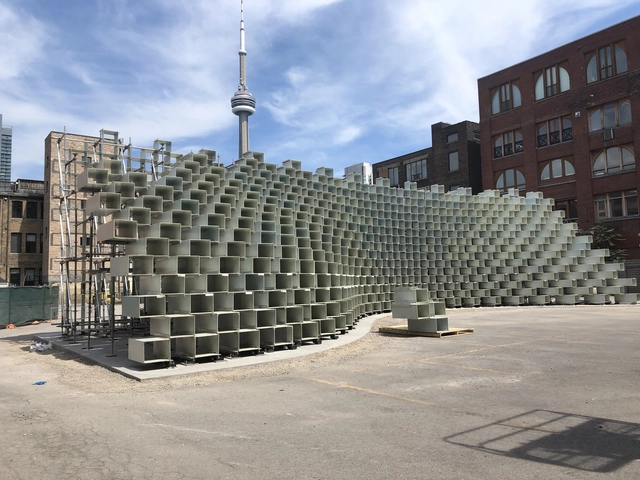
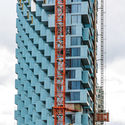
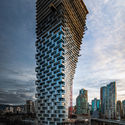
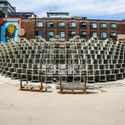
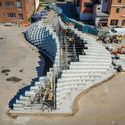
The two BIG-designed structures, located on opposite coasts, have both been recognized for their architectural innovation. The LEED-Platinum Vancouver House was awarded the World Architecture Festival’s Future Building of the Year in 2015, while the “unzipped wall” is the first Serpentine Pavilionto embark on a multi-city tour of this kind, before ultimately landing in a permanent home on the Vancouver waterfront.
https://www.archdaily.com/899563/bigs-relocated-serpentine-pavilion-nears-completion-in-toronto-as-landmark-tower-tops-out-in-vancouverNiall Patrick Walsh
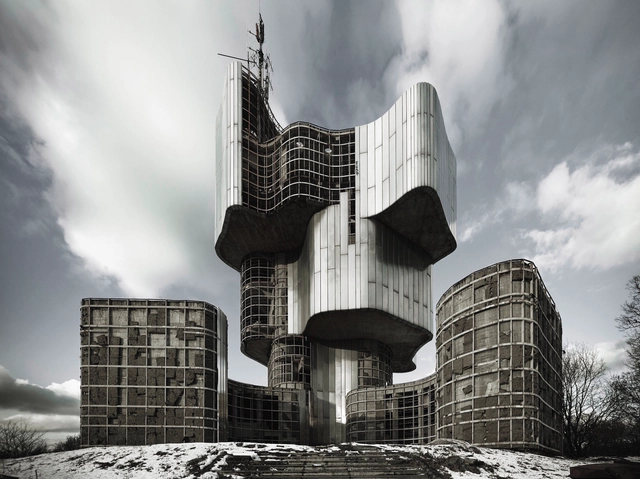
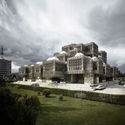
Berislav Šerbetić and Vojin Bakić. Monument to the Uprising of the People of Kordun and Banija. 1979–81. Petrova Gora, Croatia. Exterior view. Photo: Valentin Jeck, commissioned by The Museum of Modern Art, 2016
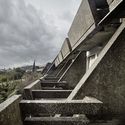
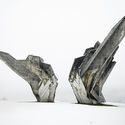
The Museum of Modern Art (MoMA) is set to open a new exhibition exploring the architecture of the former country of Yugoslavia. Toward a Concrete Utopia: Architecture in Yugoslavia, 1948–1980 will be the first exhibition in the United States to honor the peculiar architecture of the former socialist nation.
More than 400 drawings, models, photographs, and film reels culled from an array of municipal archives, family-held collections, and museums across the region will be presented to an international audience for the first time. Toward a Concrete Utopia will feature works by many of Yugoslavia's leading architects. It will explore "large-scale urbanization, technological experimentation and its application in everyday life, consumerism, monuments and memorialization, and the global reach of Yugoslav architecture."
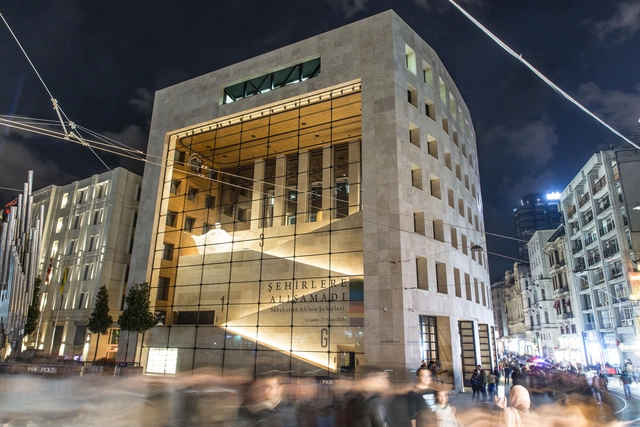
“Today, design has become a form of inquiry, power, and agency,” say Jan Boelen and Deniz Ova, curator and director of the 2018 Istanbul Design Biennial. “It has become vaster than the world itself, permeating all layers of everyday life.” Their curatorial statement for the 4th Istanbul Design Biennial, which opens later this year themed with the title “A School of Schools,” seeks to explore how design education, and education in general, can evolve and adapt in a new age of artificial intelligence.
The team is determined that the Biennial should not read as a two-year scheduled event, but should “reinvent itself and become a productive, process-orientated platform for education and design to research, experiment, and learn in.” The team is undoubtedly well equipped for the challenge.
https://www.archdaily.com/894670/jan-boelen-and-deniz-ova-curators-of-the-2018-istanbul-design-biennial-discuss-the-future-of-design-educationNiall Patrick Walsh
Future Space / Peter Pichler Architecture. Image Courtesy of Peter Pichler Architecture
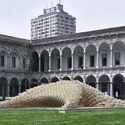
The 2018 Milan Design Week is now underway, a festival which this year is expected to attract over 300,000 visitors. Every year, the festival brings together a wide range of practitioners and design companies resulting in unusual yet fascinating collaborations and installations.
Below, we have compiled a list of collaborations to look out for throughout the week, including investigations into water, healthcare, and micro-living.
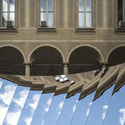
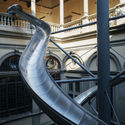
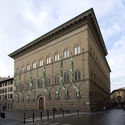
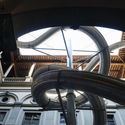
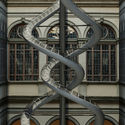
Throughout the spring and summer of 2018, the Palazzo Strozzi in Florence, Italy will host a new site-specific project seeking to further our understanding of ecology, and the relationship between humans and the natural world. “The Florence Experiment” will connect internal and external spaces of the famed Renaissance palace through two separate experiences: an intertwined set of 65-foot-high (20-meter-high) slides, and a “live analysis” of the impact of human emotion on plant growth.
The Florence Experiment has been devised by German artist Carsten Höller and plant neurobiologist Stefano Mancuso, with the vision of turning the Palazzo Strozzi’s façade and courtyard into engaging areas of scientific and artistic experiment. Inspired by the Renaissance alliance between art and science, the project aims to create a new awareness of the way we see, understand, and interact with plant life.
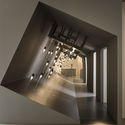
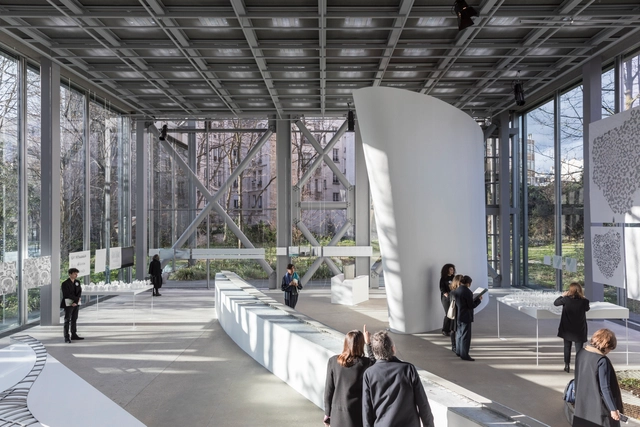
From March 30 to June 10, 2018, the Fondation Cartier pour l'art contemporain will host Junya Ishigami's exhibition, Freeing Architecture. This is the first major solo exhibition that the Fondation Cartier in Paris has devoted to an architect, and fitting that it would lend itself to an important and singular figure of Japan's young architecture scene.
Ishigami - winner of the Golden Lion award at the Venice Biennale in 2010 - has instilled this conceptual body of work with his trademark flair: calm, free fluidity, with bright tones and playful curves. The projects in the exhibition range from large scale models to films and drawings, and when placed in the context of the exhibition, they bring to life Jean Nouvel's iconic building as well.
Laurian Ghinitoiu gives us a glimpse inside the exhibition ahead of the opening day tomorrow. His photos reveal the lightness and ethereal quality of Ishigami's hand.
The Vatican has released details of the Holy See Pavilion for the 2018 Venice Biennale, marking the Vatican’s first ever entry to the architectural exhibition. Situated on the Island of San Giorgio Maggiore, the Holy See Pavilion will lead visitors on a journey through ten chapels designed by ten architects.
The beginning of the journey will be marked by the Asplund Chapel, designed by MAP Studio and built by ALPI, drawing inspiration from the “Woodland Chapel” built in 1920 by Gunnar Asplund at the Woodland Cemetery in Stockholm.
https://www.archdaily.com/891366/the-vatican-releases-details-of-first-ever-venice-biennale-entryNiall Patrick Walsh
While Moshe Safdie may be more well known for the bold forms defining his portfolio of built projects—ranging from the National Gallery of Canada and the horizontal Raffles City Chongqing to the iconic Habitat 67—the architect considers his unbuilt works as important, if not more. Safdie ponders the role of these projects and more in PLANE-SITE’s latest addition to the series Time-Space-Existence.
As part of our 2018 Venice Architecture Biennale coverage we present the proposal for the Greek Pavilion. Below, the participants describe their contribution in their own words.
Xristina Argyros and Ryan Neiheiser have been selected to curate the exhibition of the Greek Pavilion in the 16th International Architecture Exhibition – La Biennale di Venezia - under the general theme “Freespace,” commissioned by Yvonne Farrell and Shelley McNamara. Entitled “The School of Athens,” the project will examine the architecture of the academic commons - from Plato’s Academy to contemporary university designs. The selection was made by The Greek Ministry of Environment and Energy and the Secretary-General of Spatial Planning and Urban Design, Eirini Klampatsea.
https://www.archdaily.com/890480/greek-pavilion-at-the-2018-venice-biennale-to-explore-utopian-visions-of-learningAD Editorial Team
As part of our 2018 Venice Architecture Biennale coverage we present the proposal for the Turkish Pavilion. Below, the participants describe their contribution in their own words.
Curated by Kerem Piker and coordinated by Istanbul Foundation for Culture and Arts (İKSV), the Pavilion of Turkey will present Vardiya (the Shift) at the 16th International Architecture Exhibition of la Biennale di Venezia, taking place from May 26th to November 25th, 2018. Co-sponsored by Schüco Turkey and VitrA, the Pavilion of Turkey is located at Sale d’Armi, Arsenale, one of the main venues of the Biennale.
Conceived in response to the theme of Freespace, the title of the Biennale Architettura 2018, Vardiya offers a programme of public events with the Pavilion of Turkey, providing an open space for encounter, exhibition and production.
https://www.archdaily.com/890479/turkeys-entry-to-the-2018-venice-biennale-to-offer-space-for-creative-encounterAD Editorial Team
As part of our 2018 Venice Architecture Biennale coverage we present the proposal for the Nordic Pavilion. Below, the participants describe their contribution in their own words.
Finnish architect Lundén Architecture Company has been chosen to design the Nordic contribution to the 2018 International Architecture Exhibition in Venice. Eero Lundén’s proposal, entitled Another Generosity, explores the relationship between nature and the built environment.
The goal is to explore new ways of making buildings that emphasise the delicate but often invisible interactions between the built and natural worlds.
https://www.archdaily.com/890813/nordic-pavilion-at-the-2018-venice-biennale-to-explore-natures-relationship-to-the-built-environmentAD Editorial Team
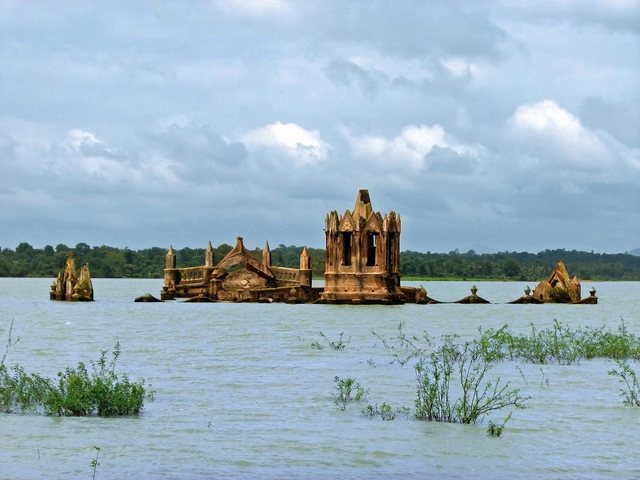
Holy Rosary Church at Shettihalli. Image Courtesy of Bhaskar Dutta
As part of our 2018 Venice Architecture Biennale coverage we present the proposal for the British Pavilion. Find the curator statement below.
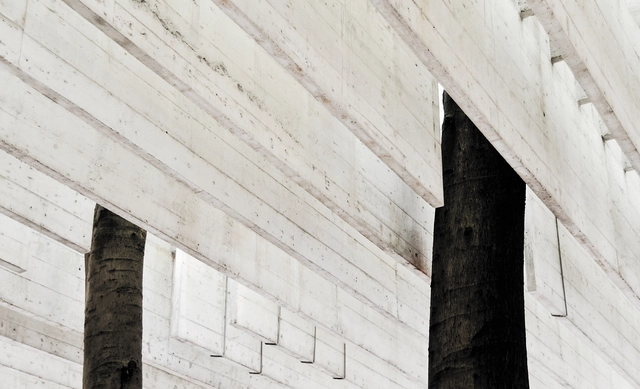
The British Pavilion for the 2018 Venice Biennale, entitled 'Island', was curated by Stirling Prize-winning Carusco St John Architects, working in collaboration with artist Marcus Taylor. Responding to the Biennale theme of ‘Freespace’ set by curators Yvonne Farrell and Shelley McNamara of Grafton Architects, ‘Island’ sees the construction of a new public piazza on the roof of the British Pavilion, leaving the building below empty of exhibits.
At the piazza's centre, the Pavilion’s roof protrudes upwards through the floor to represent both an island, and an undiscovered world beneath. The programme for the British Pavilion sees a series of events including poetry, performance, film and debate, all interpreting interpretations of ‘Island’ and ‘Freespace’.
https://www.archdaily.com/890476/caruso-st-john-to-construct-public-piazza-on-the-roof-of-the-british-pavilion-for-2018-venice-biennaleAD Editorial Team
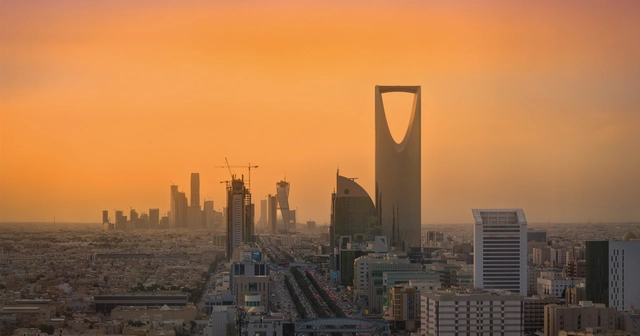
As part of our 2018 Venice Architecture Biennale coverage we present the proposal for the Saudi Arabia Pavilion. Below, the participants describe their contribution in their own words.
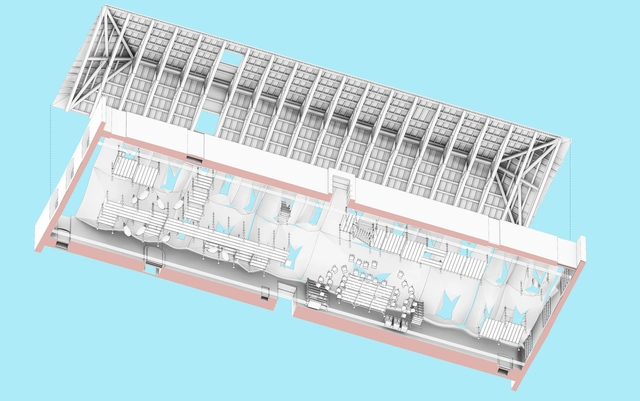
The first Saudi participation at the International Architecture Exhibition of La Biennale di Venezia will be located in the Arsenale and will feature an exhibition commissioned by the Misk Art Institute under the theme of “Un/Design.”
https://www.archdaily.com/889494/saudi-arabias-inaugural-entry-to-the-2018-venice-biennale-to-focus-on-design-procesesAD Editorial Team


.jpg?1562581239&format=webp&width=640&height=580)
.jpg?1562581175 "© Rasmus Hjortshøj")
.jpg?1562581122 "© Rasmus Hjortshøj")
.jpg?1562581191 "© Rasmus Hjortshøj")
.jpg?1562581141 "© Rasmus Hjortshøj")
.jpg?1562581239)


.jpg?1534440141&format=webp&width=640&height=580)
.jpg?1534440166 "Monster / Alessandro Mendini. Image Courtesy of The Chicago Athenaeum Museum of Architecture and Design")
.jpg?1534440176 "View of Lyon / James Von Klemperer. Image Courtesy of The Chicago Athenaeum Museum of Architecture and Design")
.jpg?1534440156 "Concept Sketch of Imperial War Museum North / Daniel Libeskind. Image Courtesy of The Chicago Athenaeum Museum of Architecture and Design")
.jpg?1534440147 "The Dance / Santiago Calatrava. Image Courtesy of The Chicago Athenaeum Museum of Architecture and Design")
.jpg?1534440141)