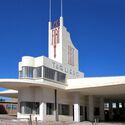
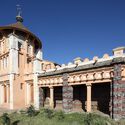
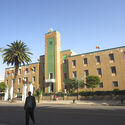
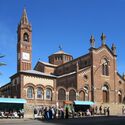
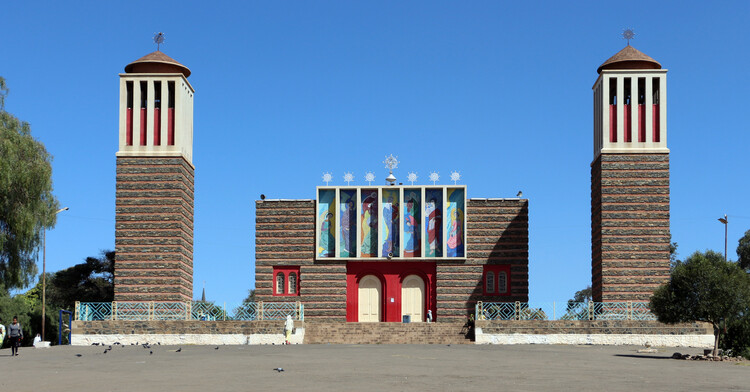
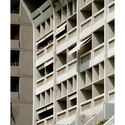
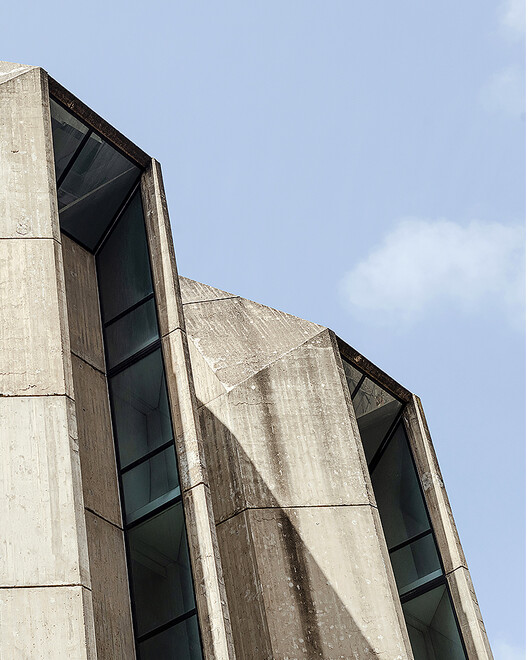
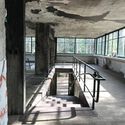
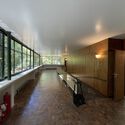
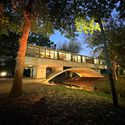
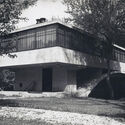
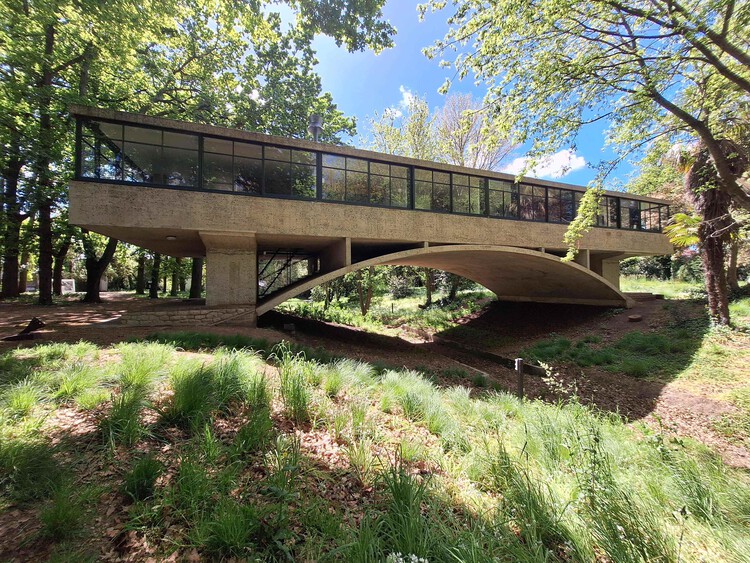
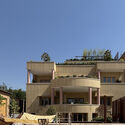
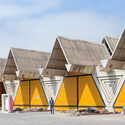
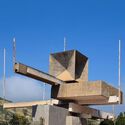
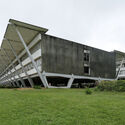
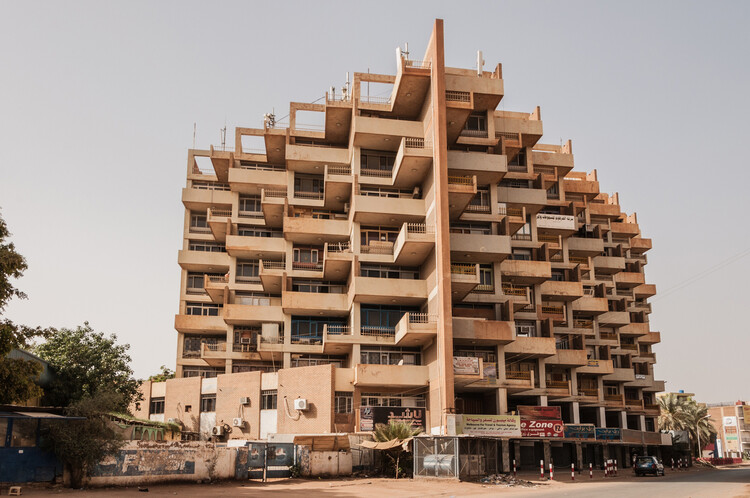
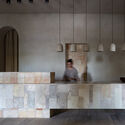
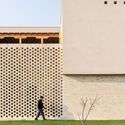
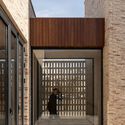
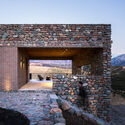
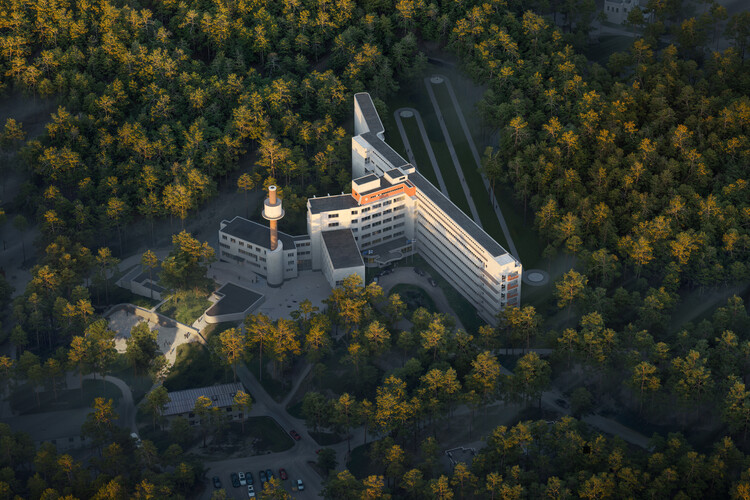
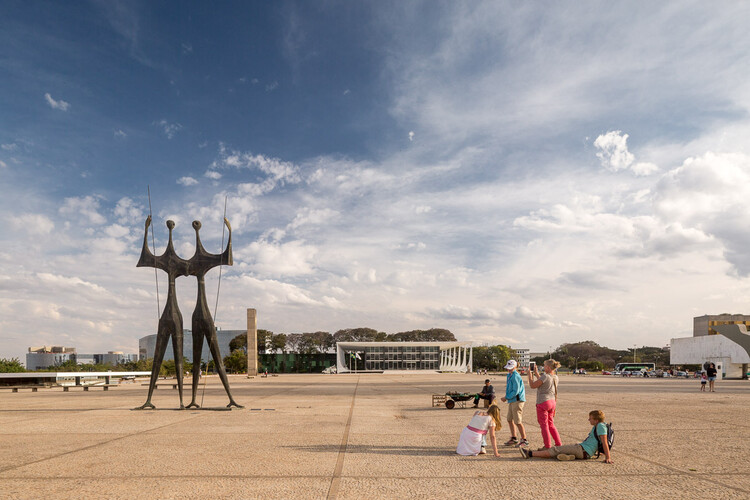
Image credit: Architecture of Coal in Modern Europe project, University College Dublin
We are excited to invite submissions for DARK MATTER: Revisiting the Architecture of Coal in Post-War Europe, an in-person conference hosted by the ACME (Architecture of Coal in Modern Europe) project (ERC Advanced Grant, 2024–2030), taking place at the Irish Architectural Archive, Dublin on 5+6 November 2026.
When Hong Kong's architectural story is told, it is often reduced to a handful of icons. Many people most readily name I.M. Pei—Pritzker Prize laureate and architect of the Bank of China Tower in Central (1990), as well as global works such as the Le Grand Louvre in Paris and the Miho Museum in Shiga. Looking elsewhere, one also encounters a long lineage of British and international architects whose imprints have shaped the city's institutional skyline: from Ron Phillips' civic works—most notably the former Murray Building (1969), now The Murray Hotel, and Hong Kong City Hall (1962)—to Norman Foster's infrastructural and corporate monuments, including the Hongkong and Shanghai Banking Corporation (HSBC) Tower (1986) and Hong Kong International Airport (1998), and, more recently, Zaha Hadid Architects' The Henderson (2024).
Yet within the same period as Pei and Foster, local architects were also producing buildings of enduring significance—works that carried the legacies of Bauhaus, but translated them into a language distinctly calibrated to Hong Kong's climate, density, and civic life. These projects may not always read as commercially prominent icons, yet they often register a sharper sense of social responsibility and public agenda. Among the most important figures in this lineage is the late architect Tao Ho, whose work and public role formed a quieter—but no less foundational—strand in Hong Kong's modern architectural heritage.
From 7 March to 31 May 2026, Brazilian architect Eduardo Longo's Casa Bola will open to the public for the first time. The futuristic ball-shaped house in São Paulo will host one of the two parts of the ABERTO5 exhibition, alongside a project on Faria Lima, a major avenue at the heart of the city featuring landmarks by architects such as Ruy Ohtake and Isay Weinfeld. Founded in 2022, ABERTO is an exhibition platform that promotes the encounter of architecture, art, and design in Brazil and internationally. After its first international exhibition at Maison La Roche in Paris, ABERTO returns to São Paulo for its fifth edition, presenting over 60 art and design pieces by 50 Brazilian and international artists. According to architect and curator Fernando Serapião, Casa Bola represents one of the most radical works of Brazilian architecture, challenging conventional domestic space and reflecting Eduardo Longo's experimental vision for housing.
The Southbank Centre is a cultural complex in London built between 1963 and 1968 and widely regarded as a representative example of British Brutalism. Today, the site hosts a wide range of events, including visual arts, theatre, dance, classical and contemporary music, literature, poetry, and debate. The building was designed by a team from the Architects' Department of the London County Council, led by architect Norman Engleback. It became a controversial example of modern architecture following its opening in October 1967, when engineers voted Queen Elizabeth Hall "the supreme ugly" in a poll of new buildings, and the Daily Mail referred to it as "Britain's ugliest building." Fifty-nine years later, on February 10, 2026, the complex was granted Grade II listed status by the UK government's Department for Culture, Media and Sport (DCMS), following a 35-year campaign advocating for its protection as modern architectural heritage.
Perched above the cliffs of Crimea, the Druzhba Thermal Sanatorium appears less as a building than as a landed spacecraft. Its circular forms, suspended decks, and spiraling ramps evoke a scene from Andrei Tarkovsky's Solaris (1972), where architecture and psychology merge into a single landscape. Built between 1978 and 1985 by Igor Vasilevsky, the complex was conceived as a thermal resort for workers of the oil industry, part of the Soviet Union's extensive network of sanatoria dedicated to health and recreation.
Beyond its function as a place of recovery, Druzhba, meaning "friendship", embodied a broader political and aesthetic ambition. It sought to merge technological prowess with the restorative ideals of socialist modernity, translating collective well-being into concrete form. Rising from a steep coastal slope overlooking the Black Sea, its massive structure defies gravity, supported by a central concrete core from which radial wings extend like the blades of an enormous gear. Seen from a distance, it feels simultaneously mechanical and organic, a hybrid of infrastructure and landscape.
Situated along the historic Silk Road in Central Asia, Tashkent is a city with a long history spanning thousands of years. Its historic architecture is known for its courtyards, domes, and blue ceramics, typical of its Timurid heritage. The capital of Uzbekistan today, it was absorbed into the Russian Empire in the 19th century, before becoming a Soviet republic. While part of the Soviet Union, the city became an example of modernization, celebrating socialist achievements in Asia. A devastating earthquake in 1966 accelerated this modernization as the city was reconstructed, leading to many of the modernist monuments for which Tashkent is known today.
"We know we are not born to die," often said Brazilian architect Paulo Mendes da Rocha. "We are born to continue." In architecture, this idea of continuity lies at the heart of heritage, not as a static inheritance, but as something that endures, transforms, and is constantly reinterpreted. Yet what continues, and what is allowed to disappear, is never neutral. Decisions about preservation are shaped by power, memory, and value, raising a fundamental question for contemporary practice: who defines what is worth carrying forward, and for whom?
Launched in September 2024, the Rediscovering Modernism in Africa series joined a growing worldwide interest in this topic. Previously underrepresented in architectural discussions, the work of architects and researchers on the continent and abroad has continued to tell the story of these high-quality modern works of architecture. These buildings represent designers striving to create locally suited architecture using global concepts and technologies, coinciding with huge political changes as most African countries gained their independence.
World Monuments Fund (WMF) is an independent organization dedicated to safeguarding significant places that enrich people's lives and foster mutual understanding across cultures and communities. Since 2008, the World Monuments Fund/Knoll Modernism Prize has been a biennial award recognizing outstanding achievements in the conservation of buildings emblematic of the modernist architectural movement. The prize honors individuals and organizations that revitalize modern built heritage through innovative and sensitive architectural interventions.
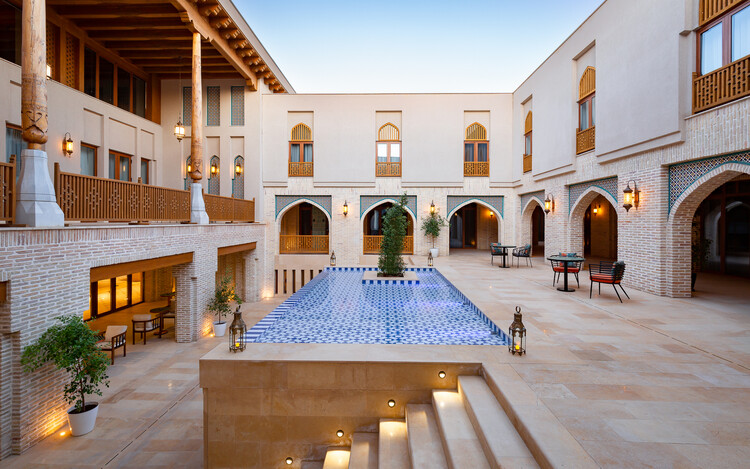
On January 22, 2026, WMF and Knoll announced the Australia-based architecture firm Architectus as the recipient of the 2026 World Monuments Fund/Knoll Modernism Prize for its conservation of the United Nations' Historic Africa Hall in Addis Ababa, Ethiopia. The jury recognized the project for reestablishing a significant work of African modernism as an active venue for diplomacy and cultural exchange. In addition to the main prize, the jury also awarded Paul Rudolph's Umbrella House in Sarasota, Florida, United States, with the Stewardship Award for Modernist Homes.
Once a Najdi settlement defined by mudbrick walls and courtyard houses, Riyadh has undergone one of the most radical urban transformations of the 20th and 21st centuries. The discovery of oil reserves, the consolidation of political power, and the rapid expansion of infrastructure reshaped the city from a regional capital into a sprawling metropolis almost within a single generation. As a result, Riyadh's urban fabric is marked by discontinuities, fragments of vernacular architecture coexist with mid-century institutional modernism, and a rapidly evolving contemporary skyline.
In recent decades, this layered condition has been further intensified by large-scale development strategies and cultural investment programs that position architecture as a tool for redefining national identity. International practices have played a decisive role in shaping key institutions, infrastructures, and landmarks, while local studios increasingly contribute projects that reinterpret climate, materiality, and social space within a contemporary framework.
Every architectural project is the result of deliberate choices. Beyond form and function, buildings embody technical, political, and cultural decisions that shape their relationship with both their surroundings and the people who inhabit them. ArchDaily’s AD Narratives series explores these processes by bringing together accounts that trace projects from initial conception to built realization. In parallel, the AD Classics series turns to works of historical significance, presenting not only the stories behind these buildings but also technical drawings that allow for a deeper, more informed reading of their architecture.
Indian modernism is often narrated through a narrow lens: a handful of iconic institutions, master architects, and formally radical experiments that came to symbolize the nation's post-Independence aspirations. Yet this version of history overlooks the far larger body of modernist architecture that quietly shaped everyday life across the country. Beyond celebrated campuses and canonical buildings exists a vast, dispersed landscape of housing blocks, offices, hostels, hospitals, markets, and townships — structures that were designed to function and endure.
On the southern edge of Vienna, a cluster of monumental terraces rises above the cityscape, their stepped balconies cascading with greenery and their rooftops crowned with swimming pools. This is the Wohnpark Alterlaa, one of the most ambitious social housing projects in postwar Europe. Designed by Austrian architect Harry Glück and built between 1973 and 1985, the complex was founded on a provocative principle: municipal housing should not only provide affordable shelter but also offer the pleasures and amenities usually reserved for the wealthy.
With more than 3,000 apartments housing nearly 9,000 residents, Alterlaa was conceived as a city within the city. Alongside its residential towers, it incorporates shops, schools, medical services, and cultural facilities, ensuring that daily life can unfold entirely within its boundaries. The project reflects a moment of optimism in Vienna's urban policy, when housing was understood as infrastructure for collective well-being rather than as a commodity.
The Egg is a performing arts centre located in Albany, within New York's Empire State Plaza, designed by the North American firm Harrison & Abramovitz. Construction began in 1966 and was completed twelve years later, in 1978, with the aim of hosting a broad range of cultural events and performances for New York State residents. Drawing inspiration from Brazilian modernism, the domed, egg-like concrete structure stands out as a striking counterpoint within an otherwise rational urban ensemble. Surrounded by state government towers set in an open plaza and clad in stone, the building's exposed concrete, its seemingly suspended form, and pronounced curved geometry position it as a late example of modernist Brutalism. The venue is currently undergoing restoration and, after six months of renovations, is set to reopen on January 8, 2026, in what has been described as a "refreshed and reimagined" space.
Park Hill, a large social housing complex in Sheffield, stands out as one of the most ambitious examples of modernist architecture in post-war Britain. Designed in 1961 by Jack Lynn and Ivor Smith, its innovative concept of "streets in the sky" aimed to combine high-density housing with the community spirit of traditional neighborhoods. By the late 20th century, the complex had fallen into severe neglect, marked by social problems and structural degradation that undermined both its functionality and reputation. Gradually, Park Hill became synonymous with the failure of modernism, carrying a heavy social stigma and marginalizing its residents.
Starting in the 2000s, significant efforts began to reverse this narrative through a two-phase revitalization process. The first phase, led by Urban Splash in collaboration with the architectural firms Hawkins\Brown and Studio Egret West, focused on preserving and enhancing the building's historical elements while introducing modern interventions to create a livable, functional, and attractive space. This stage demonstrated the potential of adaptive reuse in revitalizing communities and reclaiming architectural icons. The second phase of the renovation, carried out by the firm Mikhail Riches, sought to build on this initial work by introducing new elements that deepened the connection between the existing spaces and contemporary living. With an approach that combined historical sensitivity and architectural innovation, Mikhail Riches continued the process of transforming Park Hill into a landmark example of how modernist architecture can be adapted to meet current needs without losing its original identity.
As Syria is emerging from over a decade of conflict at the time of writing, it is an opportunity to rediscover its architectural gems. Just to the north of the country's principal port city of Latakia is a Modernist creation that is the Center for Marine Research. Its pyramidal structure is situated on a prominent headland surrounded by sea on three sides. To the east is a bay with hotels and beaches while to the north and west is the open Mediterranean Sea reaching Turkey and Cyprus beyond. Despite its importance both as a research institution and as a piece of architecture, it lies abandoned and isolated today.
Organized by ASF with Susan Chin of DesignConnects, in collaboration with the American Institute of Architects New York, and American Institute of Architects Continental Europe, Nordic American Connections: Conversations on Architecture and Design is a four-part series that presents prominent architects, critics and scholars to reflect on Scandinavian and Nordic design’s enduring impact in shaping modern American design since the 19th century.
Tashkent, the capital of Uzbekistan and one of the oldest cities in Central Asia, has long been shaped by a hybrid culture. Located at a strategic point along the Silk Road, the city developed an architectural tradition defined by inner courtyards, domes, decorative ceramics, and Islamic geometric patterns. The annexation by the Russian Empire in the 19th century introduced administrative buildings, orthogonal squares, and straight avenues, creating a dual urban fabric — between the “old” Eastern city and the “new” European one — in which contrasts and overlaps became the norm.
During the Soviet period, when Tashkent became the capital of the Uzbek Soviet Socialist Republic and received intense migration from across the union, the city was transformed into a modernist showcase. The coexistence between Islamic heritage and the ideology of socialist progress found a new inflection point with the 1966 earthquake, whose destruction triggered a large-scale reconstruction effort involving architects from across the USSR. Massive housing complexes, cultural institutions, and monumental buildings emerged, reinterpreting local motifs through ideological and technological language. It was in this context that the Palace of Peoples’ Friendship took shape.