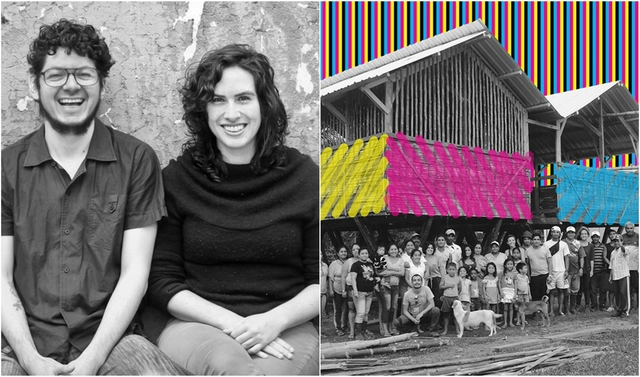
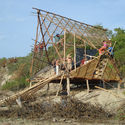
The Chilean firm of Jaime Larraín and Osvaldo Larraín is notable—among many other things—for treating facades as a unified compositional element. The architects' work includes completed buildings in the cities of Viña del Mar and Santiago, which are distinguished by the unique plastic composition of their street fronts, as well as their contribution to the urban image of their respective settings.
Their projects explore the creation of rhythm, the use of color, and repetition as compositional principles, standing out for an urban design approach that—informed by these considerations—is most clearly expressed in their collective housing projects.
Videos
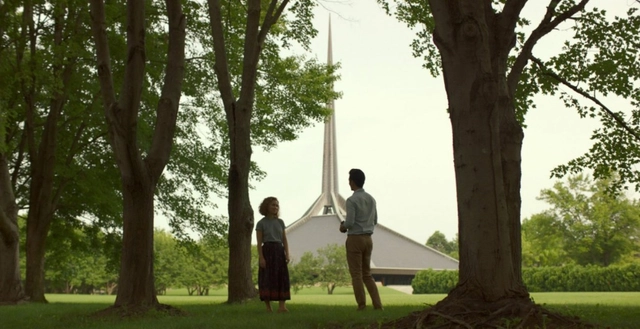
Iglesia Cristiana del Norte / Eero Saarinen. Image Cortesía de Versus Entertainment
Throughout the history of cinema, there are numerous examples of a close and deep relationship between film and architecture. The film 'Columbus', recently released in Spain and the feature debut of South Korean director Kogonada, is a magnificent example of how significant architecture can be an essential factor in the development of a film project. Set in the American city of the same name, the film serves as a genuine and wonderful tribute to its architecture and urban environment.
In the 1950s, through the Cummins Foundation and in collaboration with the city of Columbus, industrialist J. Irwin Miller launched a program to subsidize the construction of public buildings designed by prominent architects. In this way, Columbus, Indiana, became a sort of open-air museum, eventually coming to be regarded as a mecca of modern architecture. During those years, more than 60 buildings were constructed by great masters of the Modern Movement, such as Harry Weese, Cesar Pelli, I.M. Pei, Eero and Eliel Saarinen, Richard Meier, Robert Venturi and James Stewart Polshek, to name a few.
A few days ago, we reported that BD Bacatá, Colombia's tallest skyscraper, has yet to open after a series of delays, and new reports from the local press make it clear that the outlook for its 4,200 investors is not improving.
The developer BD Promotores owes its suppliers an estimated 4 billion Colombian pesos (1.46 million USD) "for finishes and leases." Following a lawsuit filed by three suppliers demanding the payment of 750 million Colombian pesos (273,750 USD) for services rendered, "the only way out after declaring insolvency was the seizure of the trademark" by the Superintendency of Industry and Commerce (SIC), according to a report by local newspaper La República.
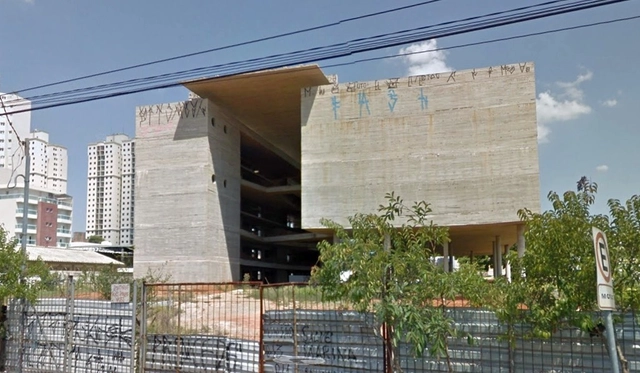
Museu do Trabalho e do Trabalhador in São Bernardo do Campo. Image via Google Street View
Designed by the firm Brasil Arquitetura, the Museum of Labor and the Worker is located in the city of São Bernardo do Campo. Once completed, it is set to house records of the "memory of the working world, from the arrival of the Portuguese to the present day." Although 5,500 square meters have already been built, construction has been halted and the site has been abandoned for about a year and a half.
In an op-ed published in the newspaper Folha de S. Paulo, Brazilian Pritzker laureate Paulo Mendes da Rocha and former UN Special Rapporteur Raquel Rolnik suggest that halting the museum's construction—officially blamed on suspected project overpricing—is actually more closely linked to an aversion to the cultural narrative surrounding the project.
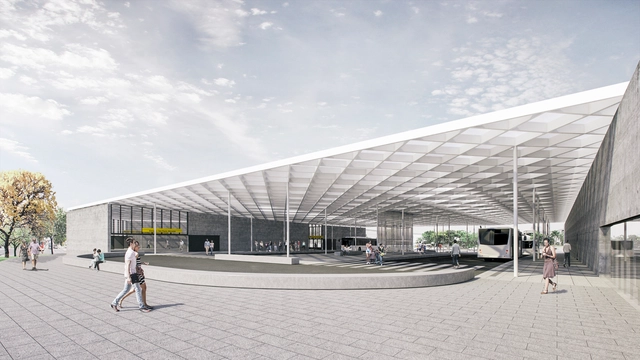
The São Paulo - Morumbi Station is part of the second implementation phase of the São Paulo Metro’s Line 4 – Yellow and is currently nearing completion. The project features two external entrances located at the intersection of Francisco Morato and Jorge João Saad avenues, as well as integration with the SPTRANS bus terminal.
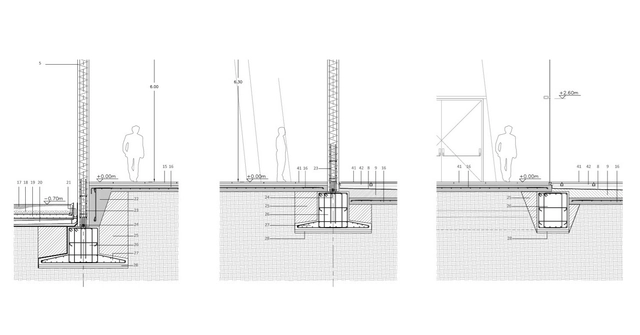
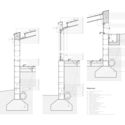
Foundations are certainly not the structural elements on which architects spend the most time during the design process. Since they are typically underground and serve a strictly technical purpose, this decision is usually left to structural engineers. However, foundations play a crucial role in construction, as they are the structural elements that transfer building loads to the ground.
"Architectural competitions represent the combination of the art of choosing and the craft of being chosen," says Roberto Fernández about an area of our discipline that is widely recognized as an excellent platform for firms and independent professionals to present their ideas as true manifestos. Meanwhile, in academic circles, competitions often serve as tools for formal, conceptual, and graphic experimentation.
These types of commissions undoubtedly inspire not only architecture and urban planning professionals but also the public as a key player in their evaluation. Whether or not these proposals are built, they demonstrate that we must constantly champion innovation, recognizing the immense effort behind these results. With this in mind, we have selected six award-winning projects that reflect the value of architectural competitions in Colombia.
Pabellón Amanita Plaza Escuelas Trevijano. Image Cortesía de Concéntrico 04
The Architecture and Design Festival "Concéntrico 04" is preparing for its fourth edition, taking place from April 27 to May 1, 2018. This public event invites residents and visitors to discover and rediscover key sites in the historic center of Logroño, Spain, through temporary urban installations.
Vista general del memorial sobre el cementerio . Image Cortesía de Fabián Leiva
The "Floating Cemetery of Alto Biobío" project, developed by Universidad de Chile architect Fabián Leiva, proposes a memorial for the Quepuca cemetery—one of 14 flooded following the construction of the Ralco hydroelectric plant. The design features a monomaterial concrete volume positioned over the flooded cemetery to establish a vertical communication between the living and the dead, creating a point of connection between them.
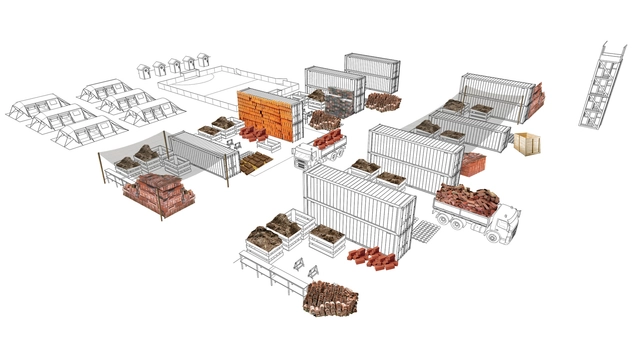
To mark the commemoration of the February 27 earthquake and tsunami, the creation of “Rubble Hospitals” is being promoted, drawing on recent earthquake experiences in Chile and Mexico.
A new guide for creating these spaces was announced in Concepción by Chile's Proyecta Memoria Foundation, coinciding with the anniversary of the February 27 earthquake and tsunami. The guide compiles experiences from earthquakes in Chile and Mexico, while promoting Rubble Hospitals as spaces to safeguard and reuse debris from large-scale seismic events.
The document is the result of three years of work and details memory rescue initiatives during the 2010 and 2015 earthquakes in Chile and the earthquakes in Mexico.
The “Welcome Mother Nature” project, winner of the June 2016 international competition to redesign Madrid's Plaza España, will ultimately not be allowed to alter the position of the Cervantes monument as initially planned.
The Community of Madrid announced at the Local Heritage Commission its intention to fast-track the declaration of the complex as an Asset of Heritage Interest (BIP). Consequently, the project designed by architects Fernando Porras Isla-Fernández, Aranzazu La Casta Muñoa, and Lorenzo Fernández-Ordóñez Hernández will not be allowed to rotate the statue of the Spanish writer to face the Edificio España, as reported by the Spanish newspaper El País.
https://www.archdaily.com/1113698/transformation-of-plaza-de-espana-in-madrid-must-respect-the-position-of-the-cervantes-monumentJavier García Librero
Removal of the overpass block and clearing of the area at Eixão Sul. Photo: Pedro Ventura/Agência Brasília
The Federal District office of Iphan did not approve the project submitted by the Federal District Department of Roads (DER-DF) for the reconstruction of the section of the Eixão Sul that collapsed in February of this year, burying two cars and the tables of a restaurant.
The agency responsible for Brazil's artistic and cultural heritage blocked the proposal, claiming that the DER-DF/Novacap project "significantly alters the original architecture and compromises the architectural and urban integrity and, by extension, that of the Plataforma Rodoviária complex and complementary road system."
Featuring references to his career, projects, and travels, the Ocupação Paulo Mendes da Rocha celebrates the 90th birthday, on October 25, of Brazil's most important living architect. Through sketches, technical drawings, models, and other materials selected from Mendes da Rocha’s personal archive, curator Guilherme Wisnik reveals some of the architect’s most radical ideas, which use ideology and technique to challenge and subvert colonial mindsets that still echo in Brazilian architectural design.
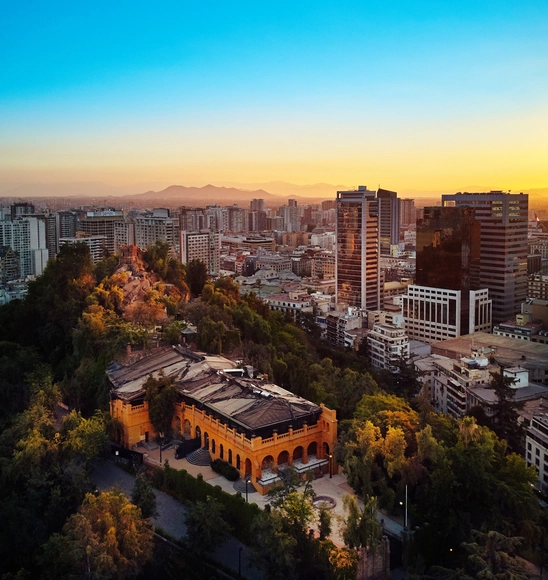
In the late 19th century, Santa Lucía Hill in Santiago, Chile, underwent a radical transformation, evolving from a rocky outcrop in the center of the capital into a vibrant green space. During the hill's redevelopment, the mayor of Santiago at the time, Benjamín Vicuña Mackenna, converted one of its structures, Hidalgo Fort, into a castle that housed a history museum. Reduced to an administrative warehouse during the 20th century, the fort—originally built in 1816—was converted into an event venue in 1997 and is now preparing for its most significant renovation since its construction.
According to the Chilean newspaper La Tercera, Castillo Hidalgo will be transformed into a cultural center featuring “a convention center and a laboratory.” This will allow the venue to open its doors for more than just private events, especially since Santa Lucía Hill receives over 600,000 tourists annually, according to figures from the Municipality of Santiago.
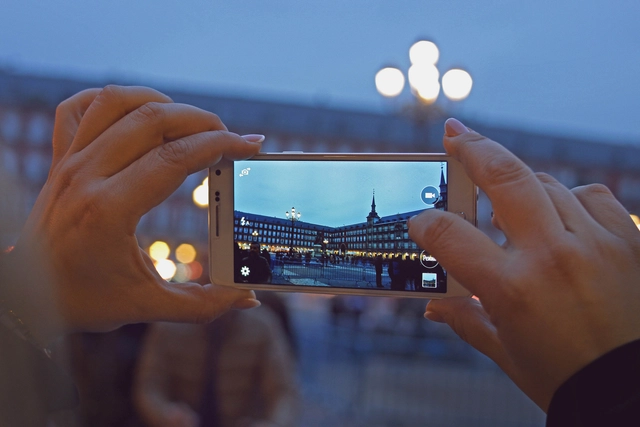
Yesterday, the Official Association of Architects of Madrid and the COAM Architecture Foundation presented the "Arquitectura de Madrid" mobile app, developed with the support of the Madrid City Council and the Foro de Empresas por Madrid.
This is arguably one of the most important and ambitious initiatives undertaken by COAM in recent years in a clear effort to connect architecture with society. In today's fully digitalized context, this app serves as a useful and powerful tool to promote Madrid's architecture, easily accessible to any citizen, student, professional, or visitor to the Spanish capital.
https://www.archdaily.com/1113732/discover-more-than-300-buildings-in-madrid-with-this-new-phone-appJavier García Librero
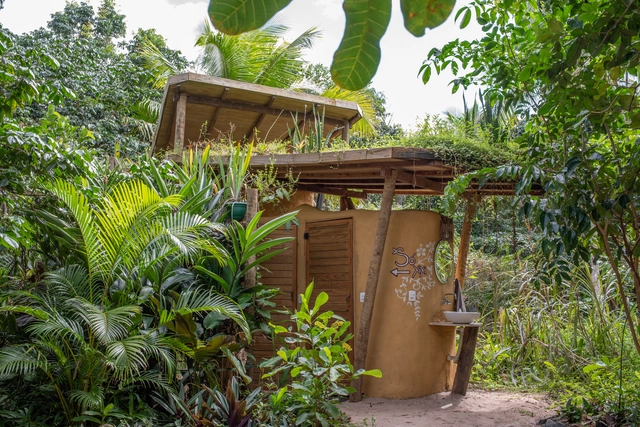
The dry toilet performs all the functions of a conventional toilet without using water, while also producing resources that can be used to fertilize crops and agroforestry projects. With various construction models available, this social technology is far more than just an alternative sanitation system. When approached as a solution within our closed-loop reality, it offers an answer to various public sanitation issues, as this single technology prevents both soil and water contamination.
Operating on the basic principle of using solar heat to raise the temperature inside the waste receptacle—thereby eliminating pathogens and producing fertilizer—ecological sanitation models are highly adaptable. They improve the environmental performance of homes and public spaces, successfully meet demands based on usage, and are easy to construct and maintain.
Spain is the European country with the most "Good Practices" recognized by the URBACT program. In total, 17 good practices have been recognized across 15 cities and municipalities throughout Spain. The themes addressed by these municipalities are highly diverse, ranging from the issues chosen for intervention to the methods of implementation and the solutions proposed.
The European URBACT program was established to foster sustainable urban development and urban innovation in municipalities across Europe. As such, any city or municipality, regardless of its size, can participate in the program. Currently, 550 cities from 29 different countries and 7,000 active local stakeholders are participating.
https://www.archdaily.com/1113728/spain-is-the-european-country-with-the-most-urbact-good-practices-in-its-citiesJavier García Librero
Wandenkolk Tinoco designed numerous projects after graduating in the late 1950s from the School of Fine Arts of Pernambuco: residences, institutional and residential buildings, as well as paintings and sculptures. Beyond his active practice, Wandenkolk taught for several years at the School of Architecture of Recife, which later became part of the Federal University of Pernambuco.
Today, we launch a series of publications showcasing open-access theses and dissertations that address issues relevant to Architecture and Urbanism. We recognized the need to share the remarkable academic output of our universities—which often goes unrecognized—with the widest possible audience.
In this first edition, we present the work of architect Jorge Isaac Perén Montero and his master's thesis entitled "Natural Ventilation and Lighting in the Work of João Filgueiras Lima, Lelé: Studies of the Sarah Kubitschek Network Hospitals in Fortaleza and Rio de Janeiro," advised by Professor Rosana Maria Caram at the São Carlos School of Engineering - EESC/USP.
https://www.archdaily.com/1113734/natural-ventilation-and-daylighting-in-the-work-of-joao-filgueiras-lima-lelePedro Vada
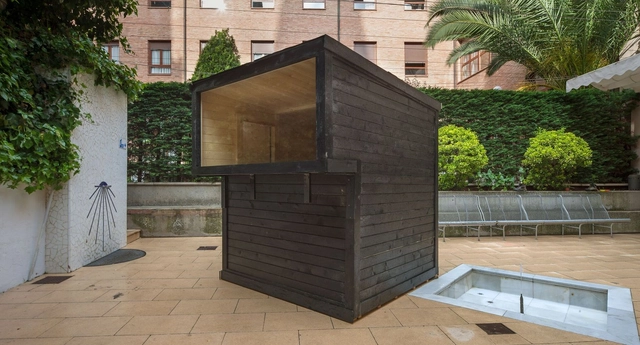
Conéntrico is an International Architecture and Design Festival that proposes to reflect on the city of Logroño (Spain) through the revitalization of undervalued public spaces. Its latest edition, Conéntrico 04, takes place between April 27 and May 1, 2018, in the Historic Center of Logroño. The festival invites visitors to explore the city through installations, exhibitions, meetings, activities, and performances that connect venues, plazas, streets, courtyards, and hidden spaces that usually go unnoticed in daily life. Jairo Rodríguez integrates the greatest number of senses in a sauna in the middle of the courtyard of the Municipal Pilgrims' Hostel.
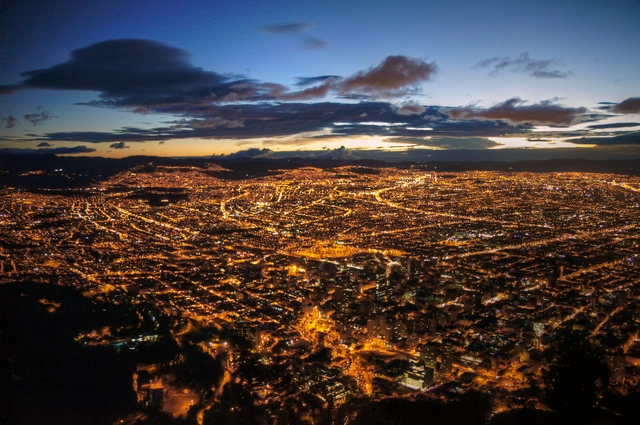
The identity of cities lies not only in their name, geographic location, or development. It is also found in the haptic perception we have of them as inhabitants—that is, how our senses interpret the elements within the city.
In this video, photographer Óscar Iván Núñez presents “How Does Bogotá Sound?”, an audiovisual compilation of both natural and artificial urban sounds from the Colombian capital. In it, he invites viewers to explore an area of the city in a different way, identifying everyday sounds that shape this capital's soundscape.
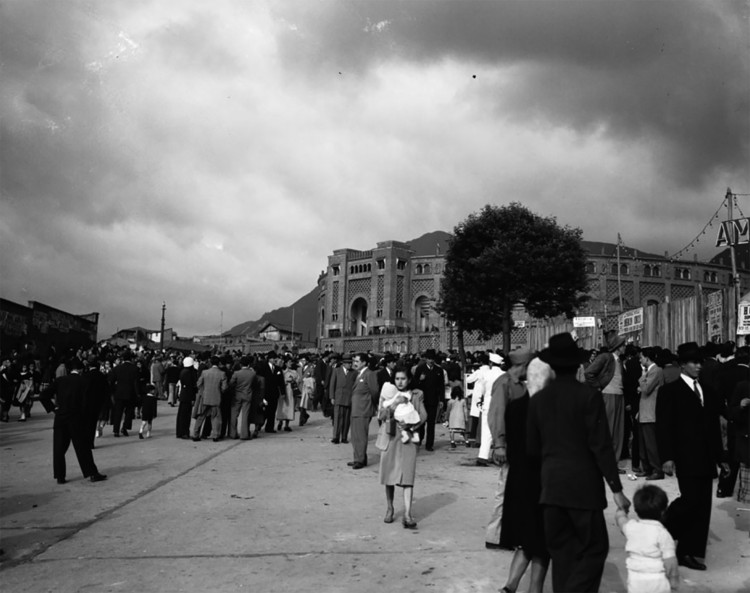
The modernization of Bogotá between 1940 and 1970, captured in urban and architectural photo essays, was documented in various books, magazines, and photobooks of the era, as well as in images from public and private archives across the city. These images reveal an intentional, and even critical, approach to how modern architecture reconfigured city centers, placing new buildings and urban spaces in relation to the existing cityscape.
In analyzing the impact of photojournalism, the work of Sady González, Manuel H. and Daniel Rodríguez is essential. Architecture and the city serve as the backdrop for scenes of urban life, characters, events, and daily activities. Their photographs offer an indispensable visual testament for understanding the city's transformation and its historical context.
The 2018 International Housing Finance Summit, organized by INFONAVIT, brought together experts from various disciplines to discuss the future of cities and the lessons learned to date. Held on May 2 and 3 at the Camino Real Polanco, the event hosted prominent figures who examined urban transformation processes to evaluate models that could guide us toward an integrated urban plan.








_20Wikimedia_Commons.jpg?1528296272&format=webp&width=640&height=580)


_at_Cuadra_San_C....jpg?1518020946&format=webp&width=640&height=580)
_at_Cuadra_San_Cri....jpg?1518020987 "Sean Scully Wall of Light Cubed, Mexico 2018 Stone sourced locally near Mexico City © Sean Scully. Image © Felix Friedmann")
_at_Cuadra_San_Cristobal__....jpg?1518020930 "Sean Scully Landline That Pink, 2017 Oil on Aluminum © Sean Scully")
_at_Cuadra_San_C....jpg?1518020946 "Sean Scully Wall of Light Cubed, Mexico 2018 Stone sourced locally near Mexico City © Sean Scully. Image © Felix Friedmann")
_at_Cuadra_San_Cristobal__....jpg?1518020961 "Sean Scully Brown Silver Tower, 2016 Corten and Stainless Steel © Sean Scully. Image © Felix Friedmann")
_at_Cuadra_San_C....jpg?1518020946)