In today's climate, energy and how we use it is a primary concern in the design of built spaces. Buildings currently contribute nearly 40% to global carbon emissions and with a projected growth of 230 billion square meters in construction before the end of 2060, the focus on construction decarbonization efforts should be paramount.
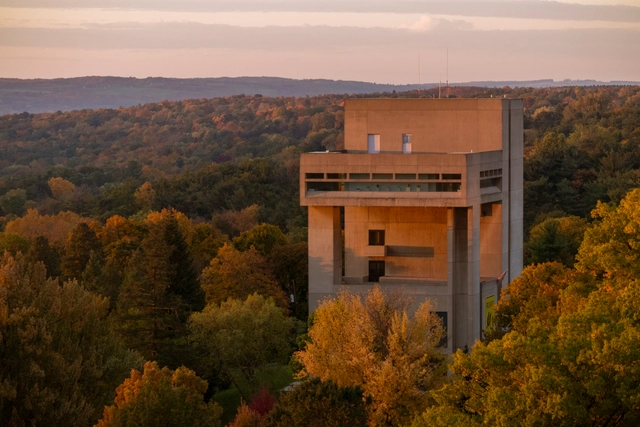
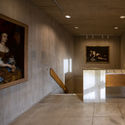
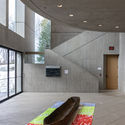
On the week commemorating American-Chinese architect I.M Pei’s birthday, Delhi-based photographer and photojournalist, Nipun Prabhakar, has shared with us a series of images of I.M Pei & Partners’ building, the Herbert F. Johnson Museum of Art. The firm was commissioned in 1968 by Cornell University to build the university’s museum that would also serve as a teaching facility and cultural center for the educational community. The building was completed in 1973 and was awarded the American Institute of Architects Honor Award in 1975.
Two years ago, Nathaniel Rich published Losing Earth, his account of the pivotal decade from 1979 to 1989 when the political consensus around climate change somewhat miraculously formed and then collapsed, hardening into an impasse that’s now more than three decades old. Though not explicitly a sequel, Rich’s new book, Second Nature: Scenes From a World Remade, is a follow-up of sorts.
The Design Educates Awards recognize, showcase, and promote globally the best ideas and implementations of architecture and design that can educate. DEAwards reach beyond the regular architecture contest priorities, it searches for something that will have a lasting influence beyond the ever-present effects of design and architecture.
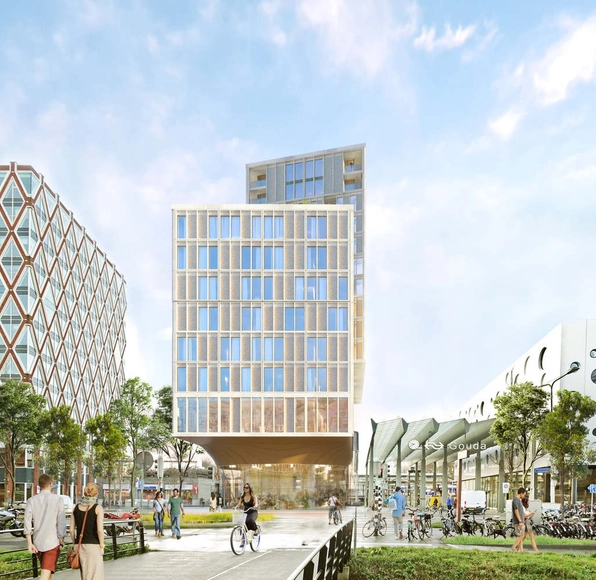
KCAP Architects & Planners have designed a new mixed-use building at the rail station of Gouda. The design takes the form of a public plinth with a program of hotel, apartments and amenities. Created for ABC Vastgoed, the project aims to enhance the areas surrounding the existing rail stop and its overall quality as the final piece in a larger redevelopment of the station's northern area.
As part of its first Virtual World Tour, Architects, not Architecture visited New York to meet Elizabeth Diller.
The international event format Architects, not Architecture is known for inviting some of the most influential architects of our time and asks them to talk about their path, influences, and intellectual biographies. With its new event series, „AnA“ brings the architecture community a bit closer together by taking attendees on tour around the globe to “visit” selected cities and virtually meet two of their renowned practices.
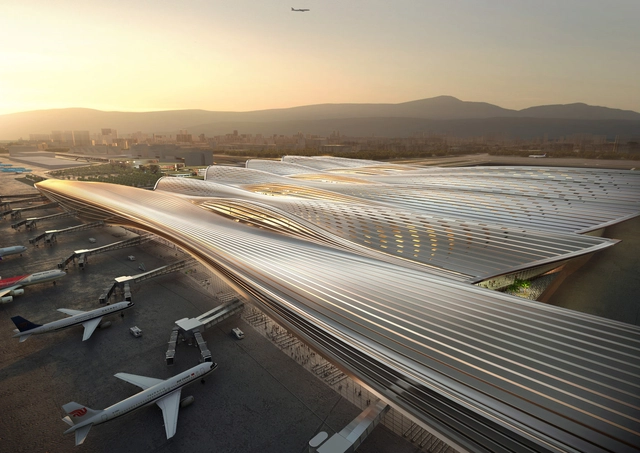
In a competition organized by Shenzhen Airport, Rogers Stirk Harbour + Partners (RSHP) and China Northeast Architectural Design & Research Institute (CNADRI) have won a competition to design the Terminal 4 Bao’an International Airport in Shenzhen, China. The winning design offers a new 400,000 sqm building with connections to existing and new transport infrastructure, as well as a space that promotes passenger interaction and wellbeing, all while maintaining a safe post-pandemic environment.
Slovenia's contribution to the 17th Venice Architecture Biennale explores interior public spaces as vital social infrastructure through the lens of the local cooperative centre typology. Titled "The Common in Community", the exhibition curated by Blaž Babnik Romaniuk, Martina Malešič, Rastko Pečar and Asta Vrečko details the architectural spaces of social interaction built after WWII in rural and suburban Slovenia, which continue to serve their purpose as local community centres to this day.
Wood is, without a doubt, one of the most versatile building materials there is. Treated lumber, boards, composites, or rustic hardwood, have structural and visual qualities that attract architects and clients searching for a wide range of possible applications and designs. Logs are one of the oldest ways of using this material since they require very little treatment and processing after the tree is cut and are the most natural form of lumber.
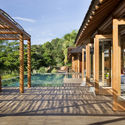
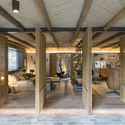
Rustic lumber is often used in vacation homes, but not only for this purpose. Below, we have gathered Brazilian houses that use rustic wood elements either in their structure or walls and finishings.
Around six years after the decision was made to renovate the Neue Nationalgalerie Berlin (New National Gallery in Berlin), the completed design is soon to reopen to the public. The extensive renovations, which were planned and implemented by David Chipperfield Architects, utilized product design brand Dornbracht for the interior fittings. These iconic fittings combined the iconic modern style of the gallery's architecture with Dornbracht's unique design language, which is equally reduced in form.
The awards entry deadline is next Friday, May 7th, 2021, allowing all completed and future projects up until this date to have the chance to compete in the awards program.
For the first time, the World Architecture Festival will take place in Lisbon, from the 1-3 December 2021. The annual global awards program is now open for entries to all international architects and designers. WAF attracts more than 1000 entries each year to compete in Completed Building, Future Project and Interior categories.
The Golden Lion for Lifetime Achievement of the 17th International Architecture Exhibition of La Biennale di Venezia was awarded to Spanish architect, educator, critic, and theoretician Rafael Moneo. Selected by the Board of Directors of La Biennale di Venezia, upon recommendation of the Curator of the Biennale Architettura 2021, Hashim Sarkis, the acknowledgment will be awarded to the architect on Saturday, May 22nd, 2021 together with the Special Golden Lion for Lifetime Achievement in memoriam to Lina Bo Bardi.
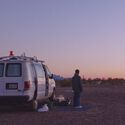
“No, I’m not homeless. I’m just houseless. Not the same thing, right?" Questioning the notion of home and house, Nomadland tells the story of a sixty-year-old woman who loses everything during the great recession, leaving her hometown after the collapse of the sole industry that supported the rural settlement and the death of her husband. She decides consequently to embark on a journey and experience life as a modern-day nomad, setting off in her van through the vast landscape of the American West.
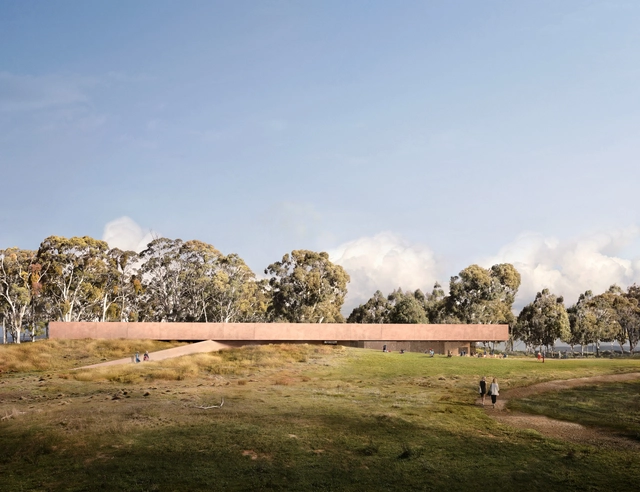
The internationally-acclaimed architecture firm Snøhetta has recently been selected to design two new art spaces in Australia and United States. Snøhetta will create the new Heysen Art Gallery in Adelaide- a rammed earth structure blending into the landscape and housing the works of renowned artists Hans and Nora Heysen. The studio was also selected to lead the expansion and re-design project for Dartmouth College Hopkins Center for the Arts, a vital creative hub for the New England Region.
Architects, landscape architects, and planning professionals have been working with GIS data for many years to great success in Vectorworks’ BIM workflows. Much of this work has involved georeferenced Shapefiles (SHP), Drawing Interchange Formats (DXF), and image files (JGW, BPW, TFW, etc.). Though georeferencing makes sense as a solution for aligning GIS data in a BIM environment, users did not immediately expect that it would also be the solution to maintaining accurate positioning of site CAD and BIM files within the project. This article will describe how users are finding success by incorporating georeferencing in Vectorworks Landmark to better collaborate with the external and internal project participants.
In theory, parking spaces serve only one function: park a car safely until it is used again, and in terms of design, car garages are flexible and straightforward, requiring minimal design interventions. However, parking spaces nowadays are no longer considered one-function buildings. The emptier the space, the more potential it has to integrate additional functions. Architects and urban planners have redefined traditional parking lots, adding recreational and commercial facilities to the structure. Instead of a typical structured grid plan with yellow and white markings on the floor, we are now seeing inviting structures that incorporate green facades and rooftop playgrounds, car washes, cafeterias, and work/study zones.
The international event format Architects, not Architecture is known for inviting some of the most influential architects of our time and asks them to talk about their path, influences, and intellectual biographies. With its new event series, „AnA“ brings the architecture community a bit closer together by taking attendees on tour around the globe to “visit” selected cities and virtually meet two of their renowned practices.
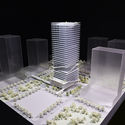
Ennead Architects have won the international competition to design a dynamic 32-floor commercial tower in the heart of Shenzhen’s high-tech Nanshan District. The architecture studio’s aim was to create a platform that “embraces creative exchange and the sharing of human experiences and ideas”, so they developed a design that offers a flexible working environment with a subtle use of color and materials, complimenting the spatial and functional needs of Chinese tech company ByteDance. The tower, which is expected to be completed by 2024, will employ co-working spaces, commercial, and recreational facilities in a dynamic-looking structure overlooking Shenzhen Bay.
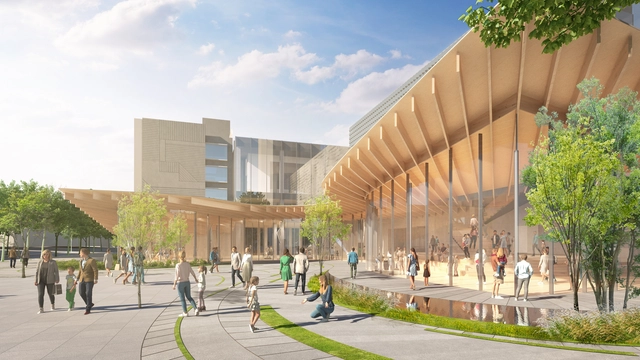
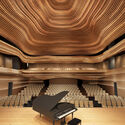
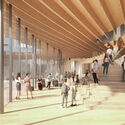
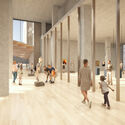
Kengo Kuma and Associates, together with Bekim Ramku and OUD+ Architects, has recently been awarded first prize in the competition to redesign the Gërmia building into a concert hall and will lead the conversion of Prishtina’s architectural icon into a cultural landmark for Kosovo. The proposal preserves the existing structures and articulates the program within and around the modernist buildings. The design envisions a canopy weaving together the different volumes and creating a new layer of public space.
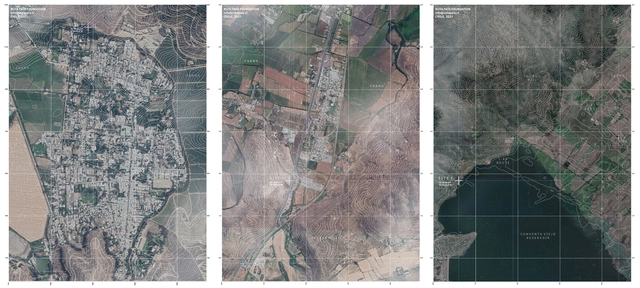
The Chilean organization Ruta Pais Foundation has invited international architects and local artisans to design a series of architectural interventions in order to create 3 artisan routes in the Chilean Central Valley: Wicker Route in Chimbarongo, Clay Route in Pomaire, and Stone Route in Pelequén.
In order to start integrating embodied carbon studies into projects to meet sustainability goals, it is important to consider many factors such as carbon (kgCO2e) values, and what typical ranges of values to be aware of when designing for embodied carbon reduction. This e-book presents an overview of how to start integrating embodied carbon studies in your projects.
Digital literacy is not a topic architects usually consider. For Aliza Leventhal, Head of the Technical Services Section, Prints & Photographs Division at the Library of Congress, the processes of literacy and design go hand-in-hand. Previously the corporate librarian and archivist for Sasaki, Aliza is leading national conversations on everything from born-digital design files and archiving to institutional memory and knowledge sharing. Today, she's working with architects and designers to reimagine digital workflows for future access and ideation.









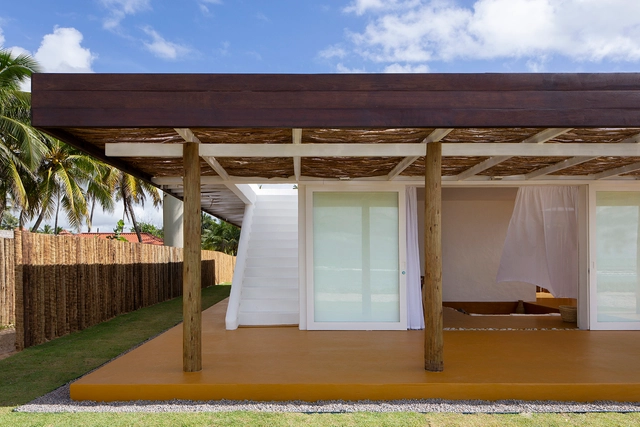
.jpg?1617310151 "Casa da Mata Azul / Studio Carlito e Renata Pascucci. Photo: © Monica Antunes")




.jpg?1619608987 "Columbia University Northwest Corner Building. Image. Image © Michael Moran Studio")

.jpg?1619608951 "Beirut Souks. Image © Bahaa Ghoussainy")












.jpg?1619505254&format=webp&width=640&height=580)
.jpg?1619505121 "© Ennead Architects")
.jpg?1619505163 "© Ennead Architects")

.jpg?1619505254)