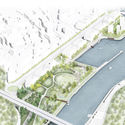
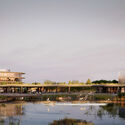
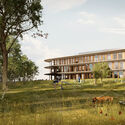
The winners of the design contest for the Nervión Riverside Park in Galindo Este (Barakaldo, Spain) have been announced. Organized by BILBAO Ría 2000, the competition invited participants to submit proposals for a space along the banks of the Nervion River that Baracaldo residents could utilize. Currently, the majority of Galindo Este (Urban-Galindo) is developed, however, space along the riverbanks provided a number of opportunities for growth. The goal of the contest was to lay out an integral design that would blend with and build on the already-existing space around it.
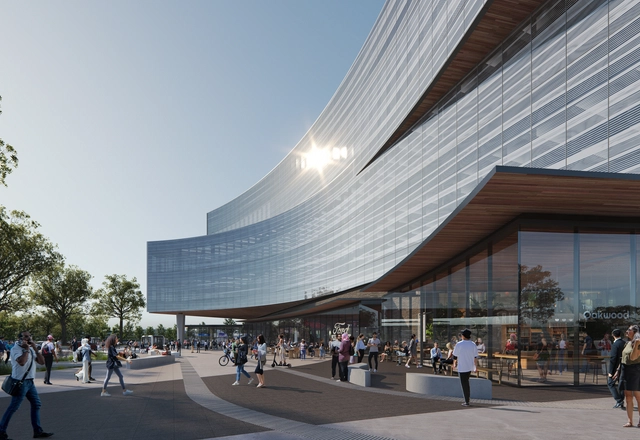
Snøhetta has unveiled a new Central Campus Building for Ford Motor Company, part of the transformation of its Research & Engineering (R&E) Campus in Dearborn, Michigan. As the result of a 3-year research and planning process, the project was created in collaboration with IBI Group as the Architect of Record, Ghafari as the Engineer of Record, and Arup leading sustainability and engineering.
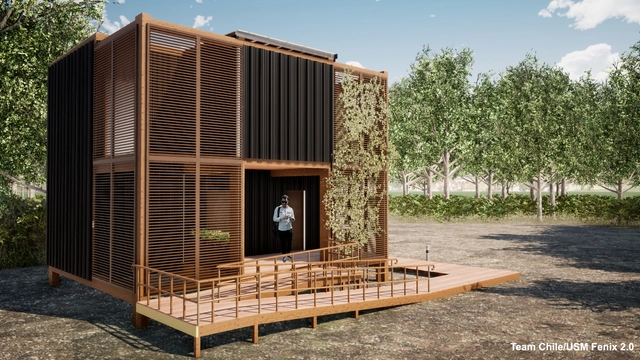
2020 Build Challenge – Universidad Técnica Federico Santa María, Valparaíso, Chile. Image Courtesy of Dept of Energy Solar Decathlon on Flickr
The United States Secretary of Energy Jennifer M. Granholm announced the winners of the 2021 U.S. Department of Energy (DOE) Solar Decathlon, a competition that challenges architecture and engineering college students from around the world to design and construct high-performance buildings powered by renewable energy. 72 competing teams hailed from 12 countries and designed energy-efficient residential and commercial spaces, nine of which were constructed and presented in the Solar Decathlon Virtual Village on the National Mall, a first of its kind, in Washington, D.C.
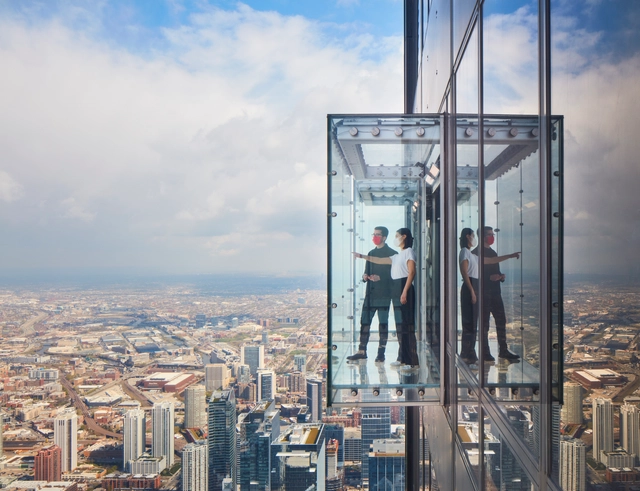
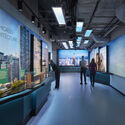
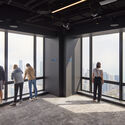
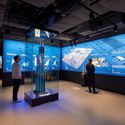
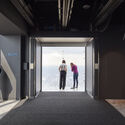
After an extensive renovation, Skidmore, Owings & Merrill (SOM) completes the transformation of the Willis Tower observation deck and inaugurates a new interactive exhibition showcasing how architecture shaped Chicago’s identity through the city’s history. Now reopened to the public, the Skydeck is part of SOM’s ongoing design stewardship of Willis Tower, which started with the building’s conception and continued in 2009 with the addition of the Ledge.
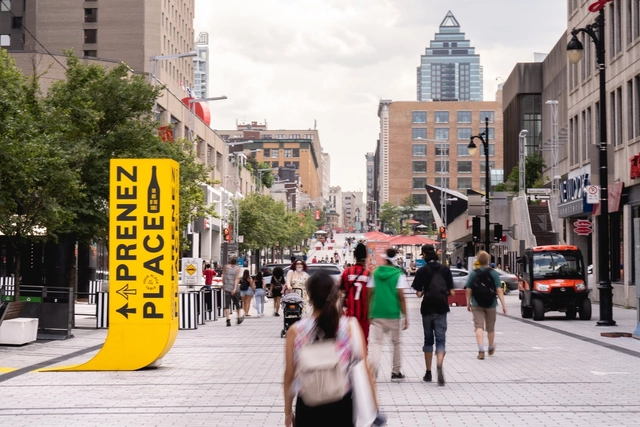
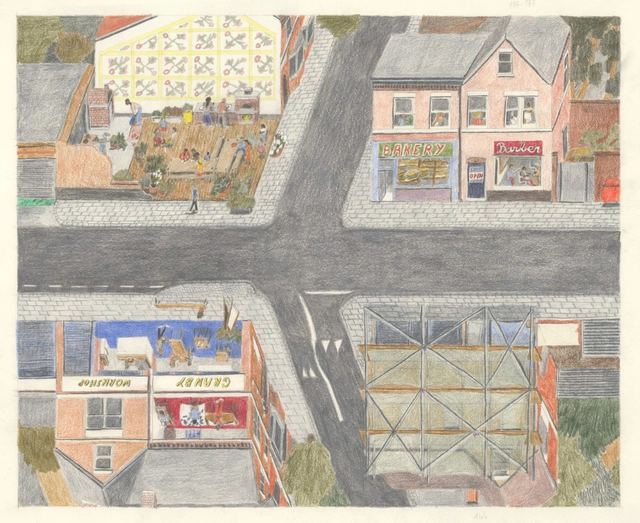
The City Prosperity Index, CPI, set by UN-Habitat, evaluates urban prosperity according to five parameters as productivity, infrastructure development, environmental sustainability, quality of life, and equity/social inclusion. To a greater or lesser extent, these five factors are represented in the street pattern of every city in the world. Streets have multiple functions as the mobility of people and goods, the supply of energy, water, and information, the collection of waste, the growth of trees, plants, insects or birds, the shadow and sun radiation, the bench where to sit, the place to salute and talk with your neighbors, a playground, or the access to the bakery where you buy the bread. In this sense, streets are public and vibrant spaces, which can perform multiple functions and activities.
The rising popularity of mass timber products in Canada and the United States has led to a rediscovery of fundamentals among architects. Not least Indigenous architects, for whom engineered wood offers a pathway to recover and advance the building traditions of their ancestors. Because timber is both a natural, renewable resource and a source of forestry jobs, it aligns with Indigenous values of stewardship and community long obscured by the 20th century’s dominant construction practices.
Design experts from the leading global bathroom-solutions and kitchen-fixtures manufacturer talk customer-centric and inclusive design, sustainability, and their new digital-experience platform, GROHE X.
People are the purpose and scale of the city. What does a people-oriented city look like? On April 8, 2021, sponsored by "LIFE WEEK ", the first Sanlian “City for Humanity Award” Ceremony was held in Chengdu. It takes "Rebuilding Connections" as its first theme, and hopes to promote a discussion on social values and humanistic care in Chinese cities through a professional and communicative approach, such as awards at this special moment after the epidemic.
The Second Studio (formerly The Midnight Charette) is an explicit podcast about design, architecture, and the everyday. Hosted by Architects David Lee and Marina Bourderonnet, it features different creative professionals in unscripted conversations that allow for thoughtful takes and personal discussions.
A variety of subjects are covered with honesty and humor: some episodes are interviews, while others are tips for fellow designers, reviews of buildings and other projects, or casual explorations of everyday life and design. The Second Studio is also available on iTunes, Spotify, and YouTube.
This week David and Marina address the question, "What Does an Architect Do?". The two cover the responsibilities and tasks an architect undertakes during a typical building process from research to the initial design phases, design development, construction documentation, contractor selection, and construction. Enjoy!
https://www.archdaily.com/960633/the-second-studio-podcast-on-what-architects-doThe Second Studio Podcast
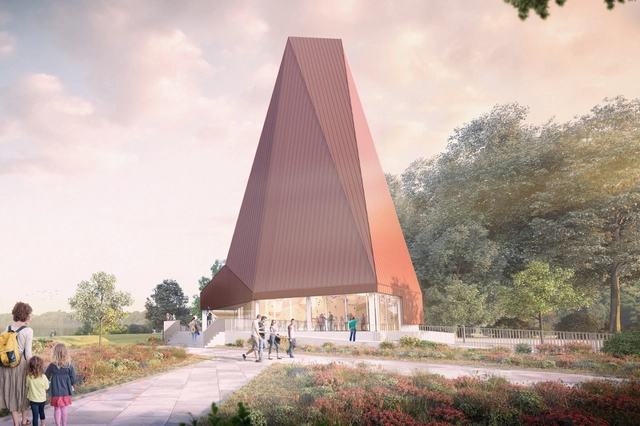
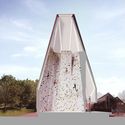
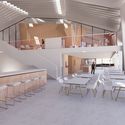
Glenn Howells Architects have won planning permission for a lakeside climbing center in Peterborough, England. The new Olympic standard climbing center aims to be a sustainable landmark for the 1,700-acre Ferry Meadows Park site. The center is made to be a central element of Nene Park Trust’s 2050 vision and 10-year masterplan. The indoor facilities are designed to complement the outdoor activities available across the Park.
Videos
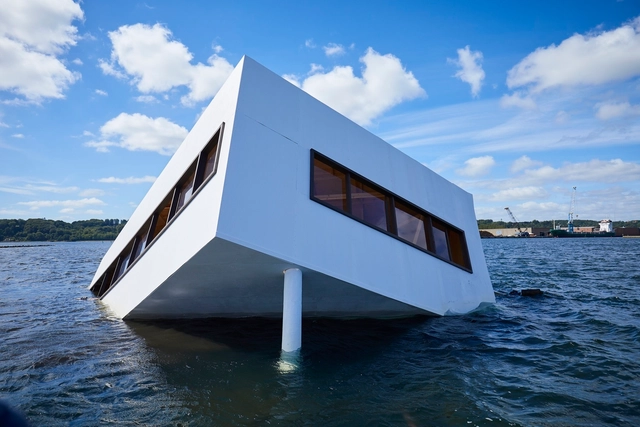
Flooded Modernity. Courtesy of Asmund Havsteen-Mikkelsen
There is a saying that ‘all good architecture leaks’. While likely not intended as an endorsement for water damage, this video takes the phrase seriously by playfully sorting through some of architecture’s greatest leaks. Frank Lloyd Wright was famously dismissive of the many unintentional leaks in his buildings, once telling Mr. Johnson to move his table if he didn’t like it getting rained on. However, there are a number of great intentional leaks throughout architecture as well, such as the entry hall of Peter Zumthor’s Therme Baths in Vals. The walls allow groundwater to seep in from the surrounding mountain while forming beautiful murals out of mineral deposits the water picked up while on its journey through the earth. Whether leaks are intentional or unintentional, they are an inevitable and important reality for architects. There should always be plans for the water that will get into our buildings and this video offers five humorous strategies for making those plans.
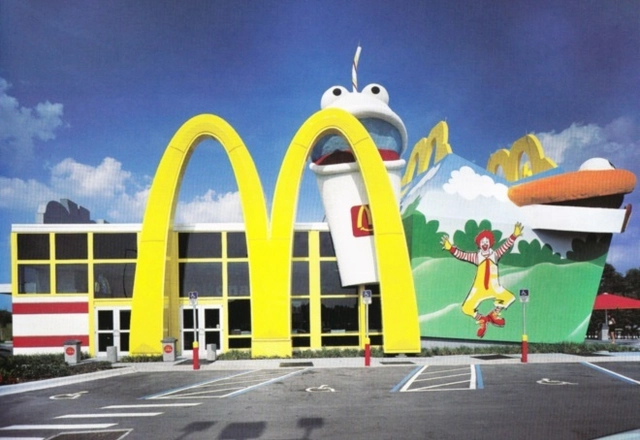
You might not think of McDonald’s as the pinnacle of architectural style, but even the world’s largest fast-food franchise has taken some bold design risks. While the literal “secret sauce” has largely remained the same since the inception of the iconic golden arches, McDonald’s has had its fair share of experimentation and has even hired some of the profession’s most prominent names to put their own spin on the design of these restaurants- turning the repetitive and mundane into one of a kind experiences.
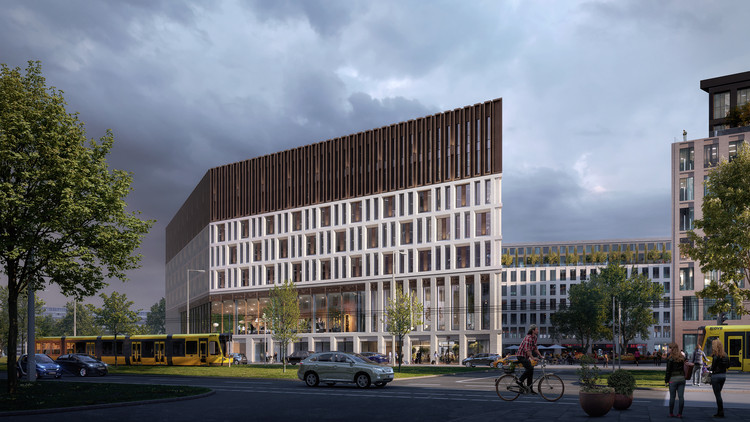
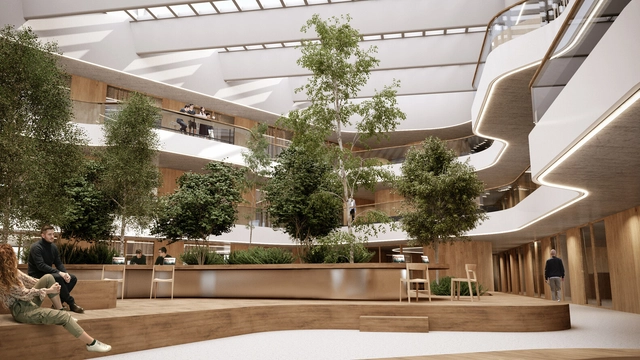
Barcode Architects and Tchoban Voss Architekten have landed the win of the Dresden City Public Administration Headquarters design competition. The proposed building will have a dynamic, three-layered façade that compliments Dresden's architecture and carefully embeds it with its surroundings. The 34,000m2 'Verwaltungszentrum' will be part of a larger urban transformation of the Ferdinandplatz, and is expected to be complete in 2025.
Designed by 3LHD Architects, the new campus for the Croatian electric hypercar manufacturer Rimac brings together a wide array of programs and spaces, from production plant and offices to kindergarten, dormitory and even a sheep meadow. Located in the outskirts of Zagreb, within a natural landscape, the Rimac Campus is organized around two main volumes that follow the site’s natural topography, with several accompanying facilities tucked underneath a green roof that stretches out, meeting the surrounding landscape.
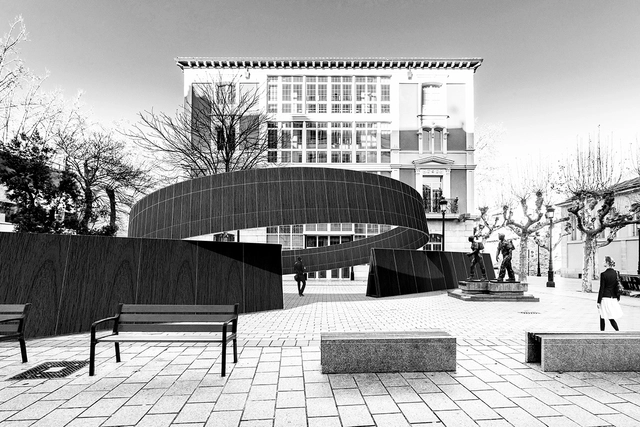
Concéntrico, Logroño's International Architecture and Design Festival, has announced the winning proposals for their three open competitions in three locations in the historic center of Logroño, in Spain.
This edition of the competitions sought to create a Pavilion in the Plaza de Escuelas Trevijano and two interventions, one in the River Ebro walk and the other in Viña Lanciano by Bodegas LAN.
In this episode of “Behind the Scenes”, where we showcase the work of visionary artists and ask about their experiences beyond what is seen by the public, we are presenting Nicolás Castagnola: an illustrator, animator, and architect born in Buenos Aires and based in Berlin. Through his illustrations and animations, he brings different meanings to architecture by opening an imaginative field about the infinite possibilities that the built environment can provide.
Corviale is one of Italy’s biggest postwar public housing projects and, arguably, one of the most controversial. Both revered and abhorred, the complex remains a pilgrimage site for architectural schools from around the world. Il Serpentone (The Big Snake), as it is affectionately called, stretches nearly a kilometer in a straight line, a monolithic, brutalist building that hovers over the countryside on the outskirts of Rome. But there is nothing sinuous about a construction made up of 750,000 square meters of reinforced concrete condensed into 60 hectares. This hulking horizontal skyscraper is formed by twin structures, each 30 meters high, connected through labyrinths of elongated hallways, external corridors, and inner courtyards. Divided into five housing units, each with its own entrance and staircase, it contains 1,200 apartments and houses up to 6,000 people.
https://www.archdaily.com/960563/chilometro-verde-five-women-architects-revitalizing-the-corviale-a-giant-public-housing-project-in-romeMarina Engel
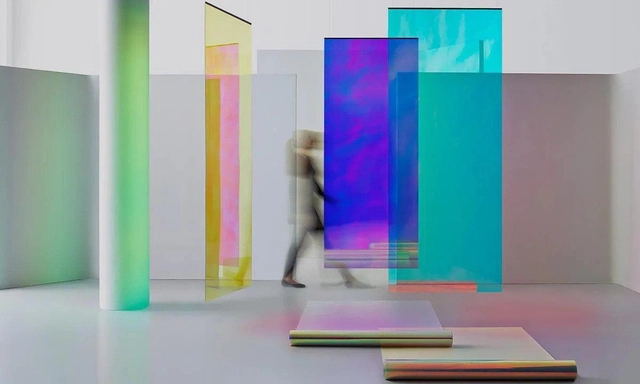
Durable, hygienic and easy to install, 3M Glass Finishes can bring creativity to glass in architecture and design. Image Courtesy of 3M
For total creative freedom in designing with glass, 3M has developed a diverse range of solutions for facades and interiors that change depending on the incidence of light.
The winners of the competition for the reform of the Barcelona Museum of Contemporary Art (MACBA) have just been announced.HARQUITECTES with Christ & Gantenbein have been selected to rethink and expand the exhibition areas of the original museum, designed by American architect Richard Meier in the 90s.
Designers have created civic institutions, governmental centers, public plazas, and many other spaces as testaments to individual and shared values. As spaces for gathering and exchange are necessary elements to urban life, architecture can also act as a vehicle to encourage understanding. Advocating knowledge while empowering the public, libraries celebrate ideas, curiosity and empathy.
For the 17th international architecture exhibition – la biennale di Venezia 2021, Denmark is creating a water cyclic system that connects people with each other and with nature. The national pavilion, titled “Con-nect-ed-ness”, is curated by Marianne Krogh and Lundgaard & Tranberg Architects, and will be on display from May 22nd to November 21st, 2021.
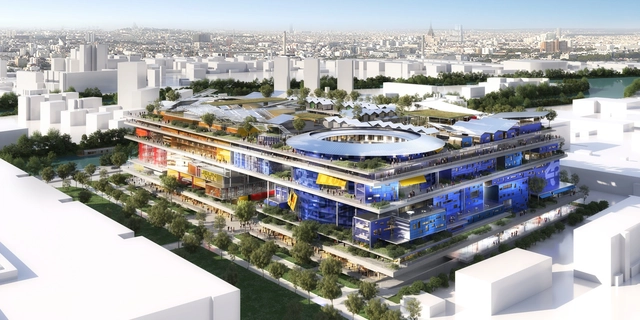
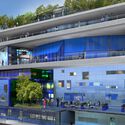
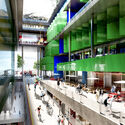
Ateliers Jean Nouvel's new mixed-use development in the Greater Paris area defines a complex vertical neighbourhood that caters to the latest changes in living, working and leisure. Located in the Gennevilliers Neighbourhood, on the banks of the river Seine, Jeuneville aims to create a sustainable and inspiring living environment, a place of synergy designed for a new generation of city dwellers and a new economy.


.jpg?1618080436&format=webp&width=640&height=580)
.jpg?1618080497 "Perspectiva. Image Cortesía de Burgos & Garrido Arquitectos")
.jpg?1618080406 "Perspectiva. Image Cortesía de Burgos & Garrido Arquitectos")
.jpg?1618080554 "Perspectiva. Image Cortesía de Burgos & Garrido Arquitectos")
.jpg?1618080436)






















.jpg?1619126725&format=webp&width=640&height=580)