Produce personalized presentation boards that distill complex concepts into simple visual representations with a few helpful tools and effects.


Produce personalized presentation boards that distill complex concepts into simple visual representations with a few helpful tools and effects.
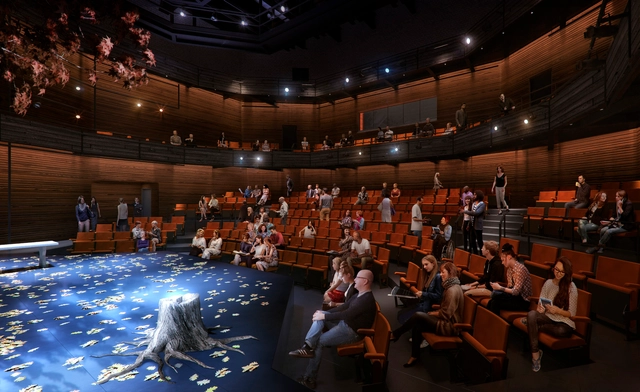
It’s no mystery why we put people in our designs. People are the quickest way to an emotional connection. With the right visual cues, you can evoke deep feelings, turning a simple image into a source of awe or aspiration. In architectural visualization, we try to shape those feelings, working off the perceptions most of us share. While we are all creatures of circumstance, using our experiential knowledge to guide us day-to-day, a lot of our conditioning is the same. Which is why it is so important to consider how you use people when you create visualizations of your designs.
Entourage are your visual guides, alerting the viewer to the story or feelings you want to convey. Sometimes that story is one of usage, an explanation of how someone interacts or moves about a space. Other times, it’s a bit more abstract. Whatever the direction, the art of entourage is really a study of composition, conditioning, and narrative. The more you know about each topic, the better your visualization will turn out—especially when you have a complicated brief.
In this piece, I’d like to show you how we approach entourage at Kilograph. Since our backgrounds are diverse—artists, architects, brand experts, and VR technicians—we are constantly having discussions about how to make people stand out, from a psychological and aesthetic perspective. Here’s what we’ve found.

A lot of things are said about Smiljan Radic. Some say that he belongs to an architecture that borders on the sculptural. It is also said that both his aesthetic and his silence is admired by his peers. It is also said that he is so hermetic that he doesn’t even have a website to promote his work. All these things are said about the 52 years old Chilean architect, before he starts his talk "more or less a year," at the Puerto de Ideas Festival in Valparaíso (Chile), where he reviews his latest projects.
"Saying something -and saying something else- has always seemed impossible or very difficult for me. I always collect things from everywhere. And that's what I do. There isn’t much more to it than that: there is little invention. In spite of everything, one has to end up talking, saying things. And today we are going to talk about what I could and could not do in the past year", he says at the beginning of his talk at the Cousiño Palace in Valparaíso.
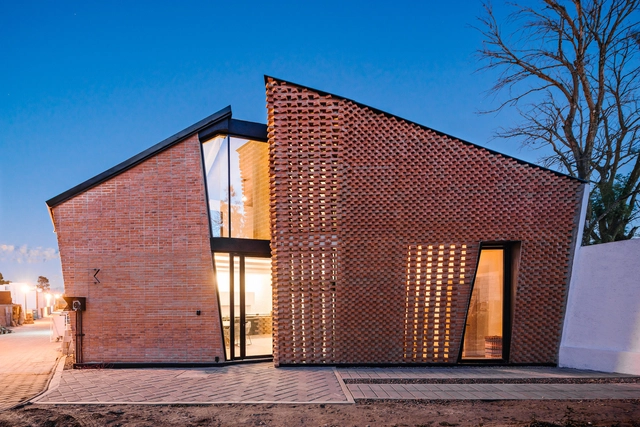
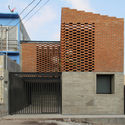
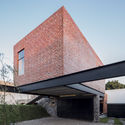
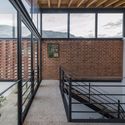
This week we present a selection of the best images of brick houses published on our site. These 11 Mexican projects reveal the diversity of expression that architects in the country have achieved through creative arrangements of the brick modules. read on for a selection of images from prominent photographers such as Carlos Berdejo Mandujano, Onnis Luque, and Patrick Lopez.
In their latest video from the Time-Space-Existence series, PLANE—SITE features acclaimed conceptual artist Lawrence Weiner and his ideas regarding the relationship between people and material objects, language as a gesture, and making art accessible to the public. Lawrence Weiner is known for his typographical art applied onto elements of the built environment, and he describes how architecture itself can become an alternative space to present art.

This project emerged during the summer of 2015, when CHOPEkE Collective, together with Paúl Pérez, a seminarian and active member of the group, visited the community of Santa Luisa de Marillac, located in the central periphery of Ciudad Juárez. At the time, members of the community had an "unworthy" space -as they called it- for their meetings and spiritual activities.

Not many architects will come across the challenge of building in outer space, but who knows what the future will hold... asteroid mining and space photobioreactors? In a recent article, Metropolis Magazine looks into the design of the International Space Station, examining how our conventional rules of architecture become obsolete in zero gravity. Walls, ceilings, and floors can be interchangeable, and "form follows function" is taken to the extreme.
2018 marks 20 years since construction first began on the International Space Station. The satellite is made up of 34 separate pieces, each of which was either delivered by space shuttle or self-propelled into space. With absolutely no room for error, the 13-year construction of the space station was perhaps one of the big success stories of the millennium, seeing 230 astronauts, cosmonauts and space-tourists visit over the past two decades.


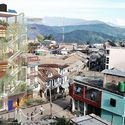
KTK-BELT Studio, a not-for-profit organization based in rural Nepal, is currently working with local communities to create a fascinating "Vertical University," which will teach students about biodiversity and environmental conservation in 6 "living classrooms" positioned along a vertical forest corridor that stretches from 67 meters above sea level to the top of an 8,856-meter peak. These 6 stops encapsulate the 5 climatic zones of Eastern Nepal: tropical, subtropical, temperate, subarctic and arctic.
The project explores the specific impacts of climate change in each climatic zone, creating “classrooms” where students can walk from Koshi Tappu to Mt. Kanchenjunga, the third tallest peak in the world, and learn onsite from indigenous farmers about the biological diversity of each area. By teaching place-based skills in these micro-conservation hubs, the project aims to conserve and activate local knowledge. Each of these “classrooms” responds to the visual and cultural cues of its unique landscape, with one campus focusing on a flood-proof design in a heavy monsoon area, and another mimicking the semi-nomadic lifestyle of local yak-herders.
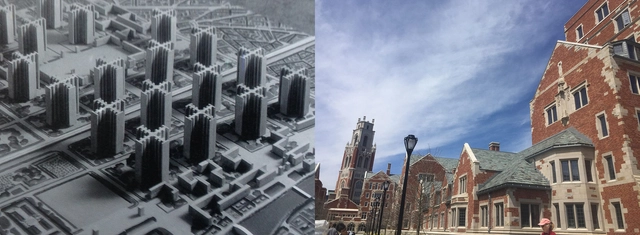
This article was originally published by Common Edge as "Architecture Ignores History At Its Own Peril."
Gravity is undeniable. We stand, lift packages, wince when we see our weight on the scale. For architects, gravity has special meaning: it is the essential force to be dealt with. Weather, energy, materials all matter too—but those all have local realities specific to their location.
Gravity is the forever constant. But there is another universal element in design: history, the role of what has passed from idea to reality in all things, everywhere. Whether there are “reasons” for a building being formed or finished in a certain way, the undeniable lens of history is always part of how designers think about what’s to be built.

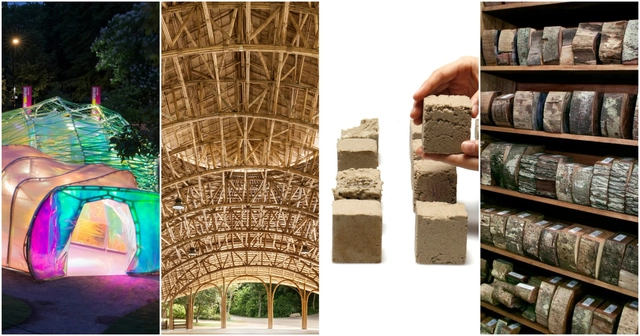
In architecture we are so caught up in creating something new, we often forget about what happens at the end of a building’s life cycle—the unfortunate, inevitable demolition. We may want our buildings to be timeless and live on forever, but the harsh reality is that they do not, so where is all the waste expected to go?
As with most non-recyclable waste, it ends up in the landfill and, as the land required for landfill becomes an increasingly scarce resource, we must find an alternative solution. Each year in the UK alone, 70–105 million tonnes of waste is created from demolishing buildings, and only 20% of that is biodegradable according to a study by Cardiff University. With clever design and a better awareness of the biodegradable materials available in construction, it’s up to us as architects to make the right decisions for the entirety of a building’s lifetime.

Whether it's to start analyzing a detail or impressing someone in conversation, understanding a classical building begins with an awareness of the different classical orders of architecture. In the historical records of architecture, the first account of the orders was written by Vitruvius: "[...] The orders came to provide a range of architectural expressions, ranging from roughness and firmness to slenderness and delicacy. In true classical design, order choice is a vital issue—it is the choice of tone," [1] which for the author, synthesizes the "architecture grammar." [2]
According to John Summerson, author of The Classical Language of Architecture, "[...] a classic building is one whose decorative elements derive directly or indirectly from the architectural vocabulary of the ancient world—the 'classical' world [...]. These elements are easily recognizable, such as, for example, the five standard types of columns that are used in a standardized way, the standard treatments of openings and pediments, or, still, the standardized series of ornaments that are employed in classical buildings." [3]
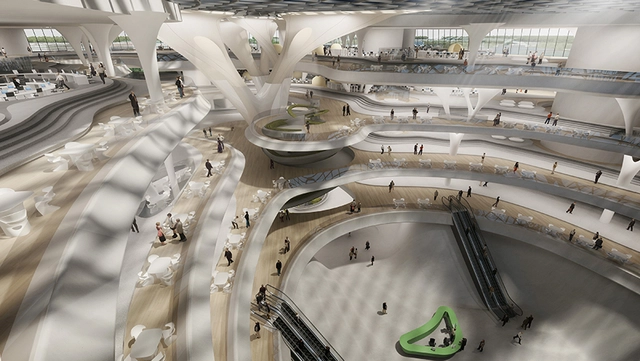
This article was originially published by Metropolis Magazine as "Architects, Armed with Data, Are Seeing the Workplace Like Never Before."
A workplace that improves employee productivity and efficiency has been a white whale of corporate managers for decades. But even before the office as we know it today was born, designers and innovators were already studying sites of labor, such as the factory, to devise strategies to boost worker performance. By the 1960s, Robert Propst, the inventor behind Herman Miller’s Action Office line of workplace furniture, and others were conducting workspace research that would ultimately lead to the creation of the modern cubicle.
These developments relied largely on observation and intuition to organize office workers in purportedly effective ways. Now, advances in technology allow designers to take a more sophisticated approach, using sensors, internet-connected furniture and fixtures, and data analytics to study offices in real time. “You can take into account every single employee, and people are very different,” says London architect Uli Blum. “It’s about solving the fundamental problems of getting people the environment they need. And the easiest way is to ask them,” he adds. But finding out the needs of hundreds, sometimes thousands, of workers can quickly become an exercise in futility.
The editorial notes on Arts & Architecture’s 11th Case Study House set out the “basic principles of modern architecture”: an emphasis on “order, fitness and simplicity.” Livability and practicality are key, and “sham” is frowned on. As with other houses in the series, this design by JR Davidson adheres to these goals with clean, horizontal lines, an open floor plan, and integration of the outdoor space.
It’s a modest, compact home, less high-concept than some of the other houses in the programme—no indoor plantings or reflecting pools; no complicated backstory for the imagined clients (think of the next two, #12 and especially #13)—but arguably more successful in providing a model for the average American home. Its value doesn’t depend on dramatic landscaping or views, but on thoughtful design and attention to solving everyday problems. Walking through Archilogic’s 3D model reveals the elegance of Davidson’s approach.

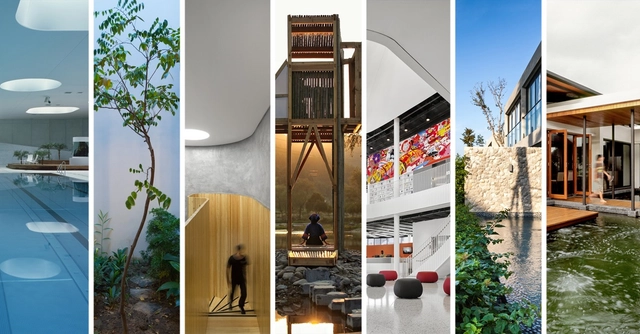
Feng Shui (in Chinese thought) is a system of laws considered to govern spatial arrangement and orientation in relation to the flow of energy (chi), and whose favorable or unfavorable effects are taken into account when siting and designing buildings.
We have selected seven projects that are based on the concepts of this Eastern wisdom to conceive their spaces.

Mercer released their annual list of the Most Livable Cities in the World last month. The list ranks 231 cities based on factors such as crime rates, sanitation, education and health standards, with Vienna at #1 and Baghdad at #231. There’s always some furor over the results, as there ought to be when a city we love does not make the top 20, or when we see a city rank highly but remember that one time we visited and couldn’t wait to leave.
To be clear, Mercer is a global HR consultancy, and their rankings are meant to serve the multinational corporations that are their clients. The list helps with relocation packages and remuneration for their employees. But a company’s first choice on where to send their workers is not always the same place you’d choose to send yourself to.
And these rankings, calculated as they are, also vary depending on who’s calculating. Monocle publishes their own list, as does The Economist, so the editors at ArchDaily decided to throw our hat in as well. Here we discuss what we think makes cities livable, and what we’d hope to see more of in the future.
Architecture requires patience. Seeing a building through from initial sketches to the first occupant is a process that in most cases takes years, sometimes decades. The various details required throughout the building process at times can be stressful, but the end result is nearly always worth the struggle. The finished form reflects the decisions made throughout the process, and thus becomes a contributing member to the surrounding environment.
If you are at the point in the process where you need a quick destresser, take a moment and watch land artist Pontus Jansson work his magic. The Swedish artist uses boulders and the surrounding nature to create balancing works of art.
This article was originally published by Common Edge as "Architecture, Aesthetic Moralism, and the Crisis of Urban Housing."
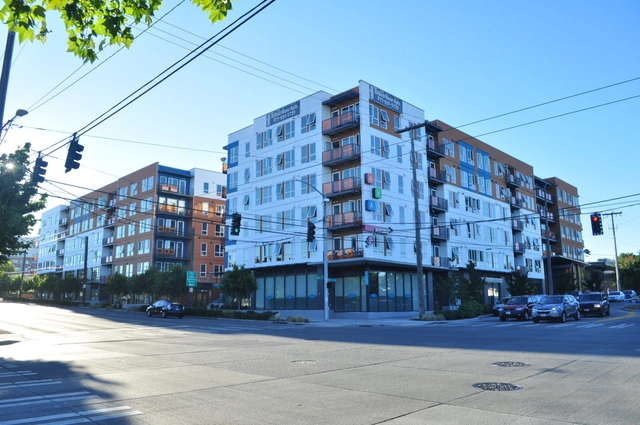
It may shock some people to hear this, but architecture is not urban planning. It is not transportation planning, sociology, political science, or critical geography. However, architecture, new-build apartment architecture specifically, has become a social media scapegoat for today’s urban housing crisis: escalating developer-driven gentrification.
Out of my own curiosity, I searched several academic databases for research that successfully correlates the architectural aesthetic of new build apartments with gentrification. While many writers and denizens of social media really want to blame today’s bland, boxy, cladding-driven style of multifamily urban housing for gentrification, I’m afraid the research isn’t there. In fact, one study featured in a paper on neighborhood early warning systems for gentrification cites historic architecture as one of five predictors of gentrification in the DC area.

The dream of universal affordable housing has been an idea tried and tested by architects throughout history. From the wacky Dymaxion House by Buckminster Fuller, an imagining of how we would live in the future, to mail-order houses able to be assembled like IKEA furniture, many proposals have tackled the challenge of creating affordable housing or dwellings which could be replicated no matter the time and place. However, although their use of techniques such as pre-fabrication and cheap materials seemed, in theory, to be able to solve pressing issues of homelessness and the global housing crisis, time and time again these proposals have simply failed to take off. But why?
IKEA’s research lab SPACE10 is attempting to find an answer to this question through open-source collaboration. By releasing their design of a micro-house that used only one material and one machine to make it and an accompanying website that catalogs the process and invites feedback, they are inviting architects, designers, and aspiring home-owners to work together in creating a solution which could improve the lives of millions. “The vision,” they say, “is that by leveraging the world’s collective creativity and expertise, we can make low-cost, sustainable and modular houses available to anyone and, as a result, democratize the homes of tomorrow.”
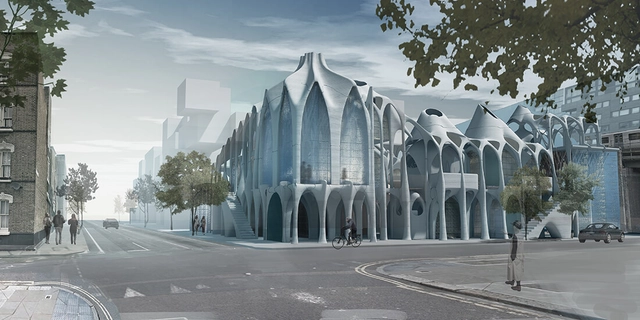
This article was originally published on Autodesk's Redshift publication as "Customizable Communities Could Be the Key to the Future of Urban Housing."
London has a fascinating history of urbanization that stretches back to Roman settlement in 43 AD. During the Industrial Revolution and Victorian Era, the city’s population peaked, as did its problems related to population density. The air was filled with soot and smoke, crowded slums were the norm in the inner city, and cholera and other epidemics spread quickly due to inadequate sanitation.
These conditions gave rise to modern urban planning and public-health policy, which now must define what “good density” might look like in the future of urban housing. The UN predicts that by 2050, 66 percent of the world’s population will live in metropolitan areas, up from 54 percent today.


Cape Town native Alexis Christodoulou is a winemaker by day but also dabbles in the art of 3D visualization. His Instagram (@teaaalexis) is a striking composition of intricate spaces rich with color, light, and materiality. Crafted entirely from scratch, each of Christodoulou's digital worlds appears to be influenced by many of the modernist masters. In a recent interview with Curbed, Christodoulou lists Aldo Rossi, David Chipperfield and Le Corbusier among his inspirations.
Much has been said about the new "Instagram aesthetic." Put that together with the emerging role of Instagram and other social media platforms in the design process, and the result is a new type of digital art form. Christodoulou's page is the creative collection of a year-long personal challenge to regularly create and publish images of his own fantasy worlds, which has resulted in a community of nearly 20K followers.
Get lost in more of the images below.

From ceramic tiles and metal sheets for roofs to wooden decks and floating cement tiles for roofing, roofing materials not only contribute to the drainage and protect the lower layers from solar radiation and wear, but also have an important aesthetic function.
Currently, when choosing the roof covering, you can find a wide variety of materials and dimensions, each with specific characteristics, determined by the type of roofing, the location of the project, and its future maintenance.
Review a catalog of options to incorporate creatively into your designs, below.
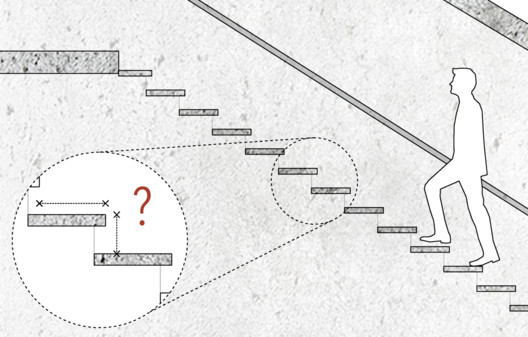
This question can be basic and you may know the answer, but it's always good to remember some elementary calculations that help us to streamline the design process.
As we know, a staircase consists basically of a series of steps, which in turn consist of a tread (the horizontal part, where the foot will rest) and a riser (the vertical part). Although it can vary in its design, each step must also have one or more landings, handrails, and a small nosing. The latter protrudes from the tread over the lower step, allowing to increase its size without adding centimeters to the overall dimensions of the staircase.
Check the effective formula developed by French architect François Blondel, which allows you to determine the correct dimensions of a comfortable and efficient staircase according to its use.

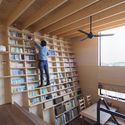
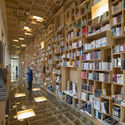
At first, books were kept in chests but as they became published in bulk they moved into the cupboard. The doors came off and the bookcase began to evolve. Today, bookcases can be integral architectural elements that shape space and, in some cases, even light. In celebration of International Day of the Book on April 23rd, ArchDaily compiled this round-up of architecturally, innovative bookcases.
Scroll down to see inventive architectural book storage from Alberto Kalach, ARCHSTUDIO, Toyo Ito, and more.
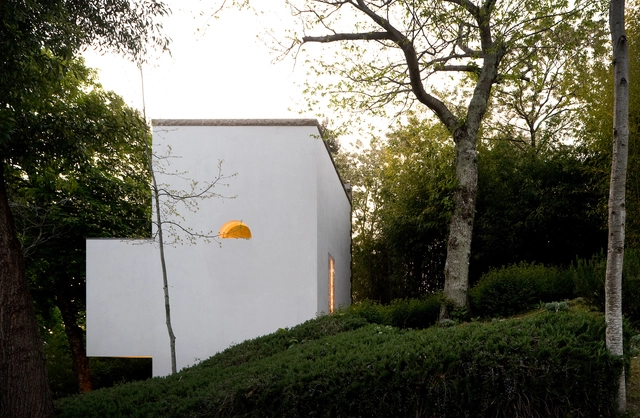
A pure volume, slightly lit, sits in the middle of a garden. It is a private chapel in Quinta de St. Ovídio in Lousada, built between 1989 and 2001 and designed by Álvaro Siza Vieira. The project starts from a path, where you can see the prismatic white volume from afar. As you pass through the building and some steps, you arrive at the entrance square. Here you will notice that Siza differentiated the main facade, in stone, from the other three, in white painted concrete, giving it importance.

In his latest photo series, "Viennametry," Hungarian photographer and printmaker Zsolt Hlinka captures the unexplored voids in Vienna’s patchwork of historical and contemporary architecture. After previously studying the symmetrical corner buildings of grandiose Budapest, Hlinka has moved north to Austria on his quest to find geometry and symmetry within the urban landscape.