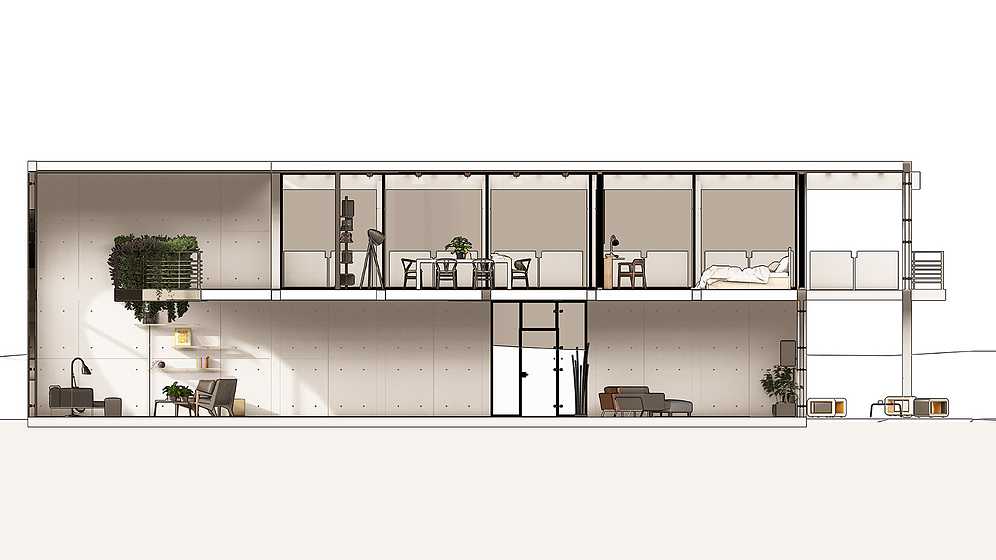
Produce personalized presentation boards that distill complex concepts into simple visual representations with a few helpful tools and effects.


Produce personalized presentation boards that distill complex concepts into simple visual representations with a few helpful tools and effects.
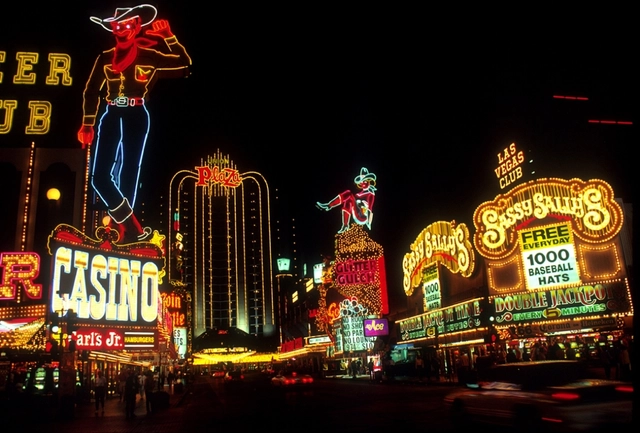
Which building is better, the duck or the ornamented shed? More importantly, what kind of architecture does the average American prefer? In their landmark 1972 publication Learning From Las Vegas, Denise Scott Brown and Robert Venturi probed these questions by turning their back on paternalistic modernism in favor of the glowing, overtly kitsch, and symbolic Mecca of the Las Vegas strip. From a chance encounter during a meeting in the Library of Fine Arts at the University of Pennsylvania and shared trips to the strip to critically shaping a new generation of architects, discover the hidden details of the romance and city that defined postmodernism in this latest episode from 99% Invisible.
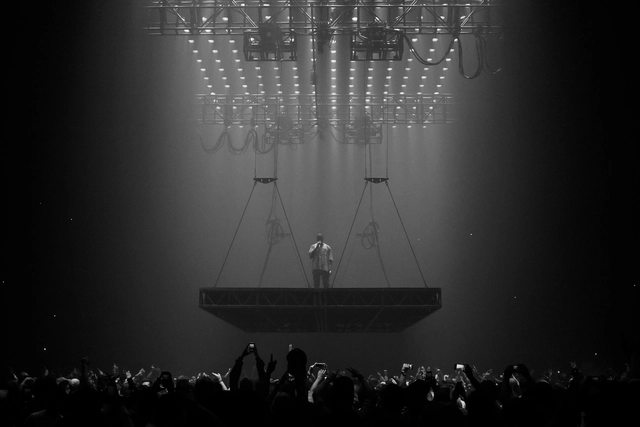
Since the publication of “Keep Talking Kanye: An Architect’s Defense of Kanye West” I have become an unwilling Kanye apologist. Each time he produces music that tempts us to use the moniker “creative genius” he quickly follows with an interview or tweet that makes him look like anything but. Invariably thereafter, a chain of text messages and emails with titles like “just to irritate you” or “come get your boy” begin to flood my inbox. My standard response is often no different from SNL’s Michael Che on Weekend Update: when presented with a headshot of Kanye and the caption “slavery was a choice” the comedian shakes his head and states simply, “Pass!” However, now that Kanye has once again entered the sphere of architectural discourse with a proposed new endeavor called “Yeezy Home” I am compelled to intervene once again with a more direct “put up or shut up” message.

When Walter Gropius created his renowned school of design and arts in 1919, he devised it as a place open to "any person of good reputation, regardless of age or sex," a space where there would be "no differences between the fairer sex and the stronger sex." His idea occurred in a period when women still had to ask permission to enter fields that were once off-limits. If women received an artistic education, it was imparted within the intimacy of their home. But at the Bauhaus and the Gropius school, they were welcome and their registration was accepted. Gropius' idea was so well-received that more women applied than men.
.jpg?1526900955&format=webp&width=640&height=580)
Architecture's reliance on digital tools is rapidly advancing. Building Information Modeling (BIM) and augmented and virtual reality are quickly becoming the industry standard, along with more and more design businesses putting more effort and money into creating a stronger online presence. Because of this recent shift in focus, many firms have also begun experimenting with digital marketing strategies.
Content creation is at the heart of any successful online business, so what does that look like in the field of architecture? These 4 examples of content could help you begin to monetize your designs and/or practice online. By no means are these 4 examples the only means to grow a design business, but all 4 take advantage of the present trajectory of architectural practice, leveraging the possibilities of an increasingly digital world.
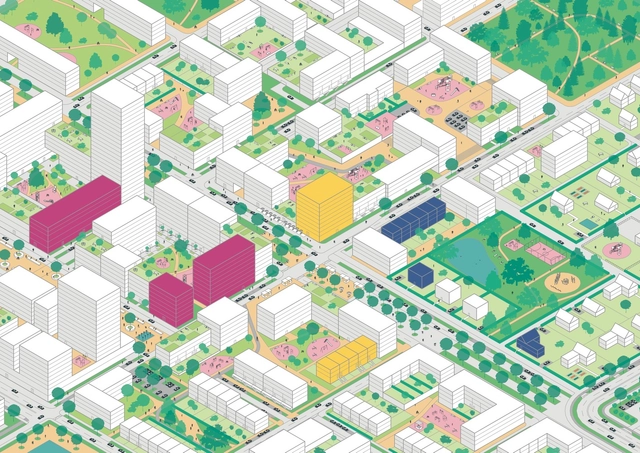
At the third meeting of the Living Environment Forum in Kaliningrad, Russia—this year centered on the theme "All About Housing"—the organizers presented the winning projects in the Open International Competition for Standard Housing and Residential Development Concept Design.
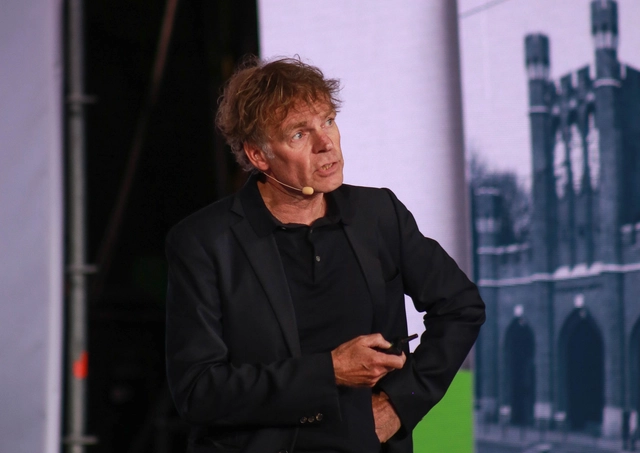
With a presentation by Dutch architect Winy Maas (MVRDV), the third edition of "Living Environment," organized by Russian Ministry of Construction Industry, Housing and Utilities Sector, DOM.RF and Strelka Institute for Media, Architecture and Design, was inaugurated today in the city of Kaliningrad, Russia. Also participating on the opening day are Martin Sobota (Holland), Elliot Eisenberg (United States), and Brian Mark Evans (United Kingdom).

A few weeks ago we published an article on a recent sustainability crisis that often goes unnoticed. The construction industry has been consuming an exorbitant amount of sand, and it's gradually depleting. When used for manufacturing concrete, glass, and other materials, it is a matter that should concern us. Construction is one of the largest producers of solid waste in the world. For instance, Brazil represents about 50% to 70% of the total solid waste produced. But how can we change this situation if most of the materials we use are not renewable, and therefore, finite?
Popularized in Europe and gradually gaining attention in the rest of the world, Cross Laminated Timber (CLT) stands out for its strength, appearance, versatility, and sustainability.
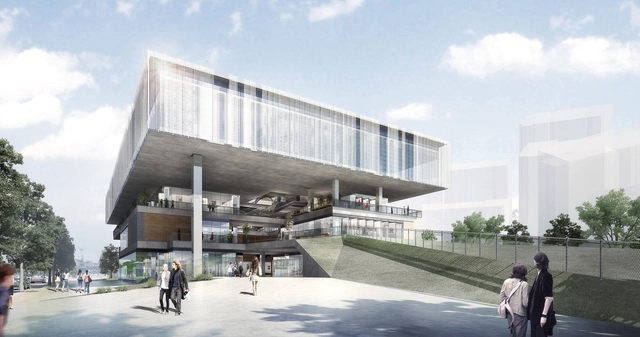
The global architects at Benoy have announced their design for The Hangzhou Canal Art Center — a new, green hub for local cultural events and art exhibitions. Located in the revitalizing, Gongshu district in Hangzhou, China, the art center will occupy the former site of a thermoelectric power plant.

The way we consume long-form content has transformed drastically in recent years. More and more parts of our everyday lives are now transitioning to new digital mediums to save us time.
If you are the type of person who enjoys plugging into a good hard rock or soft jazz playlist while hammering out those 10 sheets of section details, why not simultaneously gain some knowledge about self-motivation or the latest business tactics? These 6 audiobooks could be just what you need to hear to fuel your inner entrepreneur.
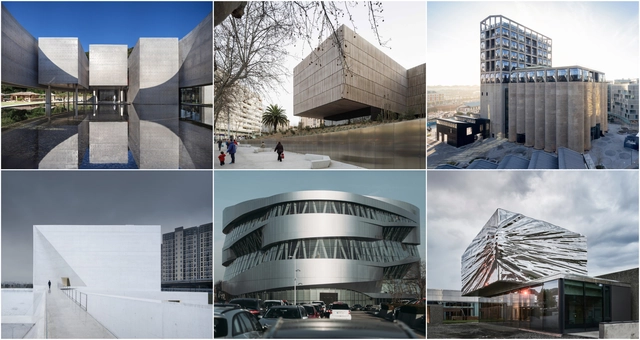
Not all architects get the opportunity to design a museum. Between budget, scale and factors external to the field of architecture, designing a museum--and actually getting it built-- may mark the pinnacle of one's professional trajectory.
These public buildings provide an invaluable service to the communities in which they are located; from education to commemoration and (occasionally) the provision of public space, museums are "shining lights" in which architecture plays a fundamental role.
.jpg?1526422043&format=webp&width=640&height=580)
This article was originally published by Common Edge as "The Genius, Heart and Humility of Indian Architect B.V. Doshi."
I’m sitting in a busy suburban coffee-and-donut shop with the quiet, grandfatherly Indian architect, Jitendra Vaidya. When I started my life as an architecture intern in the late 90s, Jitendra was one of the most experienced technical designers I knew. Equally comfortable weighing the relative merits of various flashing details as he is discussing abstract design concepts, Jitendra is an old-school, universal architect. After more than half a century in a profession famous for grinding deadlines, Jitendra still maintains a joyful twinkle in his eye when he talks about architecture. So it’s no surprise that Jitendra is visibly animated today as he tells me about his teacher, the man who was just recognized as one of the world’s greatest living architects, B.V. Doshi.
For the Pritzker Prize—the profession’s highest honor—to be awarded to a 90-year-old academic urbanist who spent his long career primarily teaching architecture students and serving poor communities in India is a stunning development. To be fair, the caricature of Pritzker winners as arrogant, scarf- wrapped, Euro-American, Starchitects, is overblown and outdated. Recent winners such as Alejandro Aravena, Wang Shu, and Shigeru Ban, are connected in their mutual dedication to serving poor and displaced communities through innovative, culturally authentic designs. But even accepting this nuance, Doshi is fundamentally different from recent winners.

.jpg?1526385880&format=webp&width=640&height=580)
After being knighted in 1990 for services to architecture, winning the 1999 Pritzker Prize and then gaining peerage in the same year, it could be argued that there is no living architect that has had a larger impact on urban life than Norman Foster. In a recent talk, Foster addressed a sold-out Barbican Hall on the future of our growing urban landscape, in the seventh installment of the Architecture On Stage series organized by The Architecture Foundation with the Barbican. While the content was full of grandiose statements and predictions, of a scale similar to the projects Foster's practice undertakes, it was the problem-solving approach he showed that gave more of an insight into the man himself. The following 5 lessons gleaned from the presentation won't guarantee Foster-like levels of success, but they may be able to help you navigate the challenges that architecture can present, both personally and professionally.
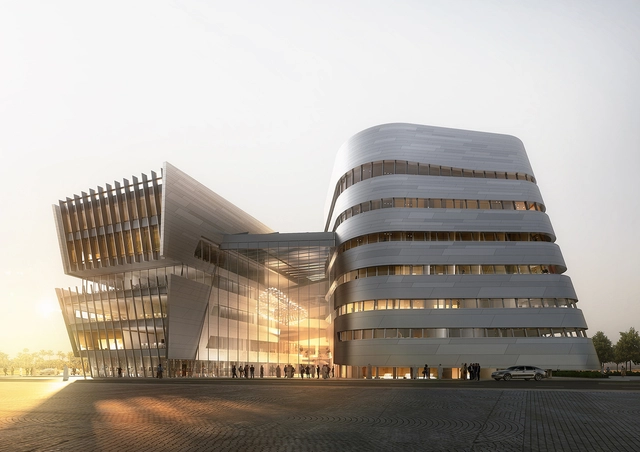
Slated to open in 2020, Benoy has released their design for a central academic building in Jeddah, Saudi Arabia. It will house the Global Business School, an educational hub that will attract Saudi and international business students through executive education programs in collaboration with Program on Negotiation at Harvard Law School of Harvard University (USA), SC Johnson College of Business of Cornell University (USA), and Imperial College Business School (UK).

Polished concrete is a versatile material that is easily customizable in its appearance, using stunning aggregates, quartz, and colors to create a sense of industrial sophistication in both homes and commercial buildings. Its reflective surface creates an evocative quality under light, which can be suitable for a variety of programs.
While still mainly used as a material for interior flooring, architects have been pushing the limits of polished concrete for years, using it for feature walls, patio floors and even large exterior panels such as in David Chipperfield’s extension to the Saint Louis Art Museum.

Architecture for Landscape: YACademy’s high-level training course offers 8 scholarships, and internships in internationally-renowned architectural firms. 110 hours of lessons, a 60-hour workshop and internships/lectures in internationally-renowned architectural firms like Eduardo Souto de Moura, Jean Nouvel Design, Snøhetta, HHF, Duque Motta & AA, Stefano Boeri Architetti.
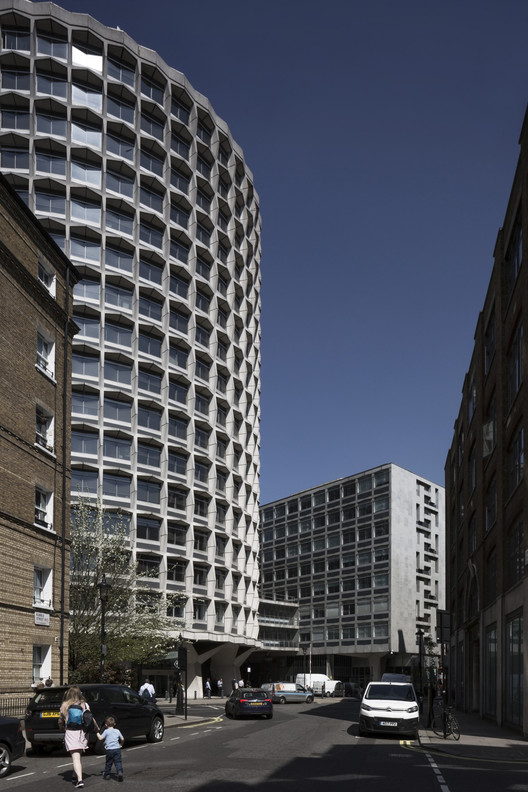
Appreciated within the industry but often maligned by the general public, brutalism came to define post-war architecture in the UK, as well as many countries around the world. In his 1955 article The New Brutalism, Reyner Banham states it must have “1, Formal legibility of plan; 2, clear exhibition of structure, and 3, valuation of materials for their inherent qualities as found.”
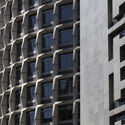
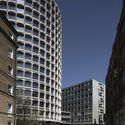
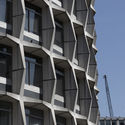
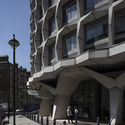
One Kemble Street, a 16-story cylindrical office block originally named "Space House" and designed by George Marsh and Richard Seifert, clearly exhibits all of these characteristics, creating a landmark in the heart of London that remains as striking today as it was upon its completion in 1968. Photographing the Grade-II listed building throughout the day, photographer Ste Murray manages to beautifully capture the building’s essence, celebrating its 50 year anniversary while also highlighting the intrigue of its form in a way that suggests parallels to contrasting ideologies.
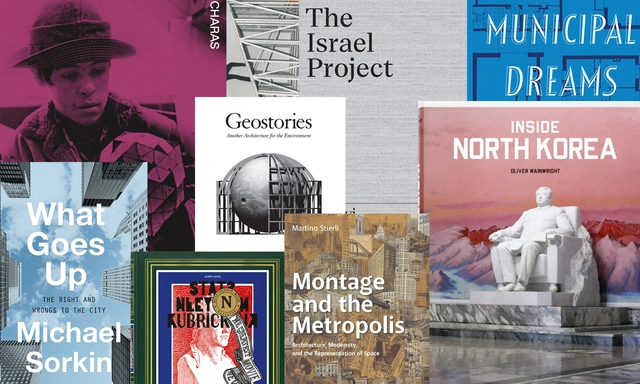
Metropolis Magazine has released a curated list of 19 new books to read this spring, with topics ranging from the evolution of social housing to Stanley Kubrick's unfilmed masterpiece to a fascinating tome on the architecture of Zionism. Not simply volumes detailing well-tread histories, these chosen titles explore every niche category through the lens of architecture. Ever wondered how Buckminster Fuller inspired six former gang members to construct his geodesic dome? Or what metro stations in North Korea look like?

Continuing their Time-Space-Existence series of monthly videos leading up to this year’s Venice Biennale, PLANE—SITE have released a new conversation with architect and former Harvard GSD chair of architecture Toshiko Mori. Each video highlights the ideas that drive the work of well-known designers, with this episode focusing on Mori’s philosophy of visual communication, dialogue with history and considering the future in her work.
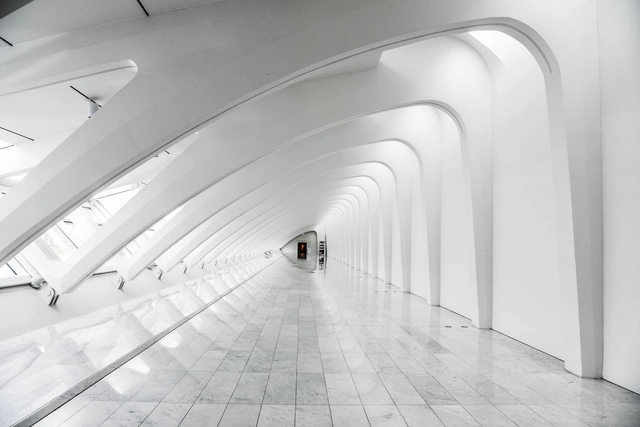
Published in partnership with The Greenhouse Talks, the following essay by Aaron Betsky examines limbo spaces and the opportunities presented by these ambiguous areas.
In the spaces where we wait, tarry, or just while away the time, the strictures and structures of good architecture dissolve. In the waiting rooms at airports, government bureaucracies, or doctors' offices, in the places to where we escape to do little to nothing, and in the cocoons we create by using either the latest technology or ancient meditation techniques to come to ourselves, boundaries dissolve. We spend more and more of our time in such spaces. They are the purgatory between the hell of everyday reality and the seamless heaven of virtual social space—or the other way around. What is the architecture of such not-quite-free spaces, and how should we design what is meant to fade away? What do such spaces tell us about the future of architecture?
Surrounded on all sides by "business blocks of architectural beauty and metropolitan dimensions," the intersecting planes of Pershing Square in Los Angeles provide a modernist retreat for many Angelinos in the downtown area. While to some, the square's large stucco tower and aqueduct-like water feature serve as a cultural landmark, the park has drawn negative press due to its lack of green space and abundance of drug-related activity. John Moody purposefully concentrates on the perception, memory, and identity of the space in his documentary Redemption Square—winner of the Best Urban Design Film 2017 at the New Urbanism Film Festival. Using the voice of strangers, residents and those who used to call it home, Moody guides you from the park’s formation in 1866 to its impending renewal: a “radically flat” redesign courtesy of Agence Ter and Gruen Associates.
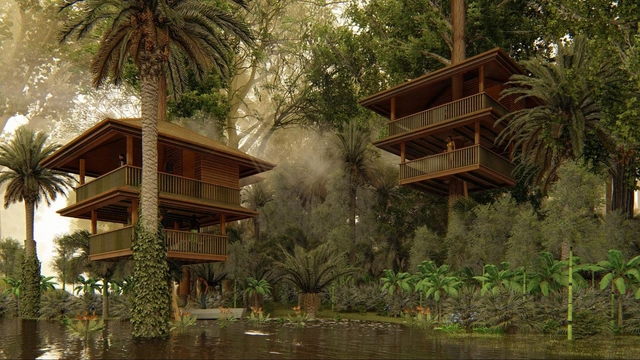
Since 2015, the tribal community of Apetina in the south Suriname jungle have added a women’s center and seven chicken coops to their village, and there are plans underway to realize a high school, elevated treehouses for ecotourism, a visitor center, housing projects, chicken coops, and more.
Paul Spaltman is the one-man operation behind the designs of these structures, but “everything started with these nice renders made in Lumion," he explains. "It wasn’t enough to show 2D drawings or simply tell them what the project was going to be. When they saw the actual 3D renders, it helped them believe the project was possible. They already had the design. They could see the construction and that the entire project was, more or less, thought out. They could see that the project wasn’t just a dream, but one step further.”
This article was originally published by Metropolis Magazine as "How a Small Mexico City Exhibition Fueled a Debate About Preservation and Power."
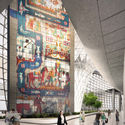
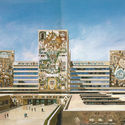
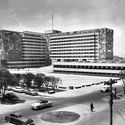
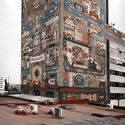
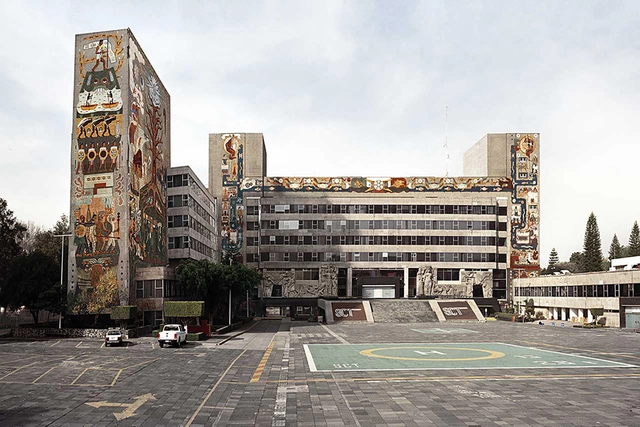
It’s a slate-gray day in Mexico City’s Colonia Narvarte neighborhood and mounting gusts signal imminent rain. Centro SCOP, a sprawling bureaucratic complex, rises sharply against this bleak backdrop. The building is a masterful, if not intimidating, example of Mexican Modernism, an H-shaped assemblage of muscular concrete volumes designed by architect Carlos Lazo, covered in an acre-and-a-half of vibrant mosaic murals.
At its peak, the building accommodated more than 3,000 workers for the Secretariat of Communications and Transportation (SCT). Today, save a security guard in its gatehouse, it is empty.

.jpg?1525869515 "Urban Man Cave / Inhouse Brand Architects. Image © Riaan West")