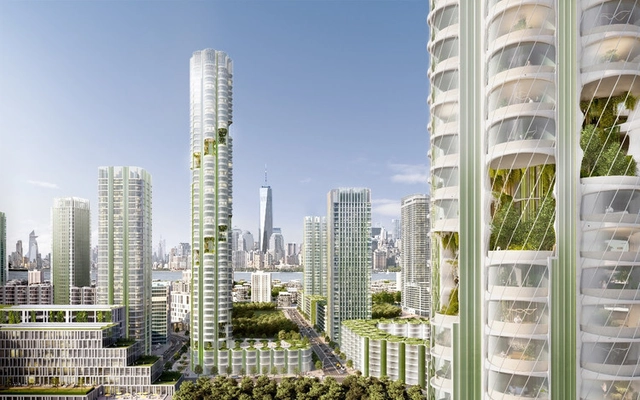
With the magnitude and urgency of the immediate Covid-19 crisis worldwide, efforts have been concentrated on saving lives, rather than focusing on concerns related to the road to Net-zero carbon. Net Zero carbon in regards to construction is defined as when the amount of carbon emissions associated with the construction of a building and its completion is zero. A zero-energy building will have an overall zero net energy consumption; the total amount of energy used by the building annually is equal to the amount of renewable energy generated on-site.
As the climate emergency presents itself as a severe and existential threat, it is crucial that the road to net-zero carbon is resumed large-scale in both an architectural and commercial sense. Around the globe, efforts have been renewed in an attempt to tackle the almost inconceivable. According to the 2019 global status report for buildings and construction, the buildings and construction sector accounted for 36% of final energy use and process-related carbon emissions in 2018. Although carbon emissions were temporarily reduced during the peak of the pandemic, they are set to swiftly return to previous figures.