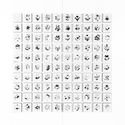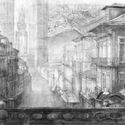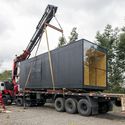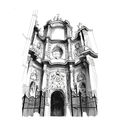
Produce personalized presentation boards that distill complex concepts into simple visual representations with a few helpful tools and effects.


Produce personalized presentation boards that distill complex concepts into simple visual representations with a few helpful tools and effects.

What do architectural drawings do? Convey visual information about the design of buildings. This much is certain. They do much else besides. They can be idiomatic and ideological, they can express the personality of those who make them and by whatever means—charcoal, pencil, pen, or computer program. They can inspire, provoke and radicalize. They might be realistic or the stuff of fantasy. Or, of course, they can instruct those charged with building a three-dimensional representation of what they see on paper or, in recent years, on computer screens. Intelligence visible, they can also be art.
So, judging an open competition of architectural drawings from around the world, like The Architectural Drawing Prize, can only ever be an exercise in open-ended judgment even when these have been sorted into three technical categories: Hand-drawn, Digital, and Hybrid. How do we begin to compare Chris Raven’s intriguing digital analysis of Publicly Accessible Spaces in St Paul’s Cathedral with Xinyuan Cao’s almost fond cross-section through the Renovation of Denggao Village, two commended entries in the Digital Drawings category?

Perhaps as a form of "abstract urbanism," artist Benjamin Sack uses pen and paper to build cities and worlds that come to life as he draws. Towers and low-rise buildings merge together to form familiar yet unimaginably intricate cityscapes with complex spatial arrangements, and, in some cases, in human form. This brand of "abstract urbanism" introduces a provocative perspective on urban context and its relation to those who inhabit it.
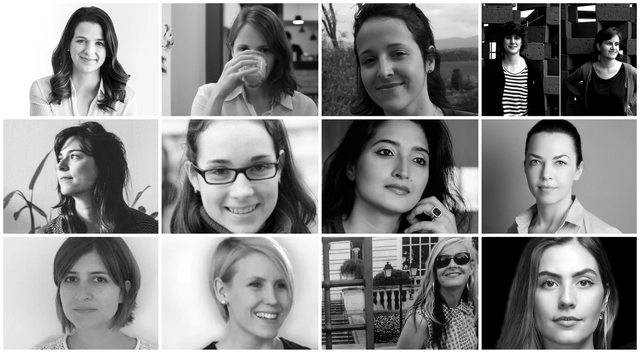
"Where are the women architects?" Despina Stratigakos, an architectural historian and professor, lamented in her book about women in the practice. (She even titled her book that very question.) The sentiment was certainly a resounding one, well-understood by many women who have worked in the profession and had to break through a male citadel. We know the number of women in architecture is small, and it gets smaller the higher up we look.
Which is why we wanted to recognize the women who are at the top, leading practices, and paving the way. To celebrate International Women's Day this month, we launched an open call to recognize women who run their own firms all around the world. And if their projects had never been published by us before, we were going to give them the spotlight.
What we found were an incredible group of women who impressed us with their designs, their work ethic, and their dedication towards the profession. Not only do these women design and build, but they lead teams, manage offices, and eventually took the leap to be their own bosses and do things their own way.
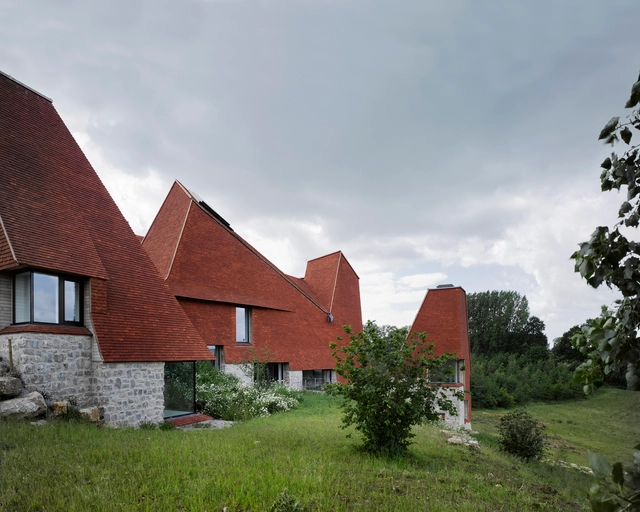
This article was originally published by Common Edge as "Why Homes Are the Original Architecture."
Homes may be the most powerful projection of architectural value. Because shelter is essential for all of us, the home is architecture’s universal function. We’re all experts on what our own home must be, to us.
But architects often have a different view of home. Twenty years ago—during the recession before the last recession—I remember hearing an architect declare that he could earn a living designing houses until “real work came along.” Another architectural meme is the classic first job: designing a house for your parents.

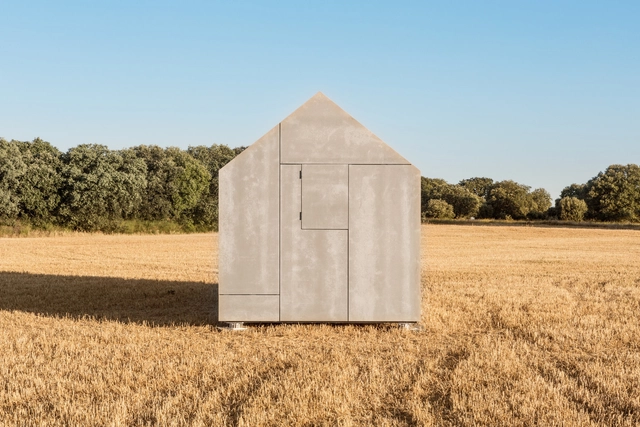
Tiny houses have become popular in recent years as housing prices continue to soar. Whether as an off-the-grid retreat or a way to live more simply and economically, tiny homes offer a more flexible way to live. They are even being used by charity organizations such as the Tiny Homes Foundation in Australia as a way to tackle the issue of homelessness in cities and the need for social housing. As the popularity and need for tiny homes become ever more prevalent, knowing the necessary skills to design a tiny house for yourself or a client is a useful skill to have.
Below are 6 tips to keep in mind when designing and building a tiny house:

Lorenzo Concas, an architect, photographer and light designer based in Florence, creates tiny sketches which are layered with an incredible amount of detail. The width of these drawings only spans the length of a fineliner, yet Concas manages to fit in detailed recreations of elaborate ornament. His drawings accentuate the play of light and dark on these Gothic cathedrals and other famous monuments.
Using fineliners and Copic sketch markers, Concas captures these works of architecture from unique angles, allowing us to see the beauty and potential of these buildings in new ways. From intimate details of the Basilica di Santa Maria Novella to low angles which bring attention to the awe-inspiring height of the Eiffel Tower, these drawings exhibit the power of the sketch and how architecture can come alive through pen and paper.

In the 1920s, Dutch-born artist Piet Mondrian began painting his iconic black grids populated with shifting planes of primary colors. By moving beyond references to the world around him, his simplified language of lines and rectangles known as Neo Plasticism explored the dynamics of movement through color and form alone. Though his red, yellow and blue color-blocked canvases were important elements of the De Stijl movement in the early 1900s, almost a century later Mondrian’s abstractions still inspire architects across the globe.
But, what is it about these spatial explorations that have captivated artists and designers for so long?

Spanish architect Anna Puigjaner has revealed how she is applying her “Kitchenless” housing typology within her own projects in a recent interview with Metropolis Magazine as one of their 2018 Game Changers. After receiving funding from the Harvard GSD Wheelwright Prize for her controversial proposition in 2016 (after which ArchDaily published an interview with her), Puigjaner talks about the time she spent traveling the world and visiting the many different cultures that share her idea of communal cooking, adding that millennials are more inclined to co-habit or share resources.
The kitchen is the most provocative part of the house. It has been used as a political tool for a long time, to the point that nowadays we can’t accept living without a kitchen.

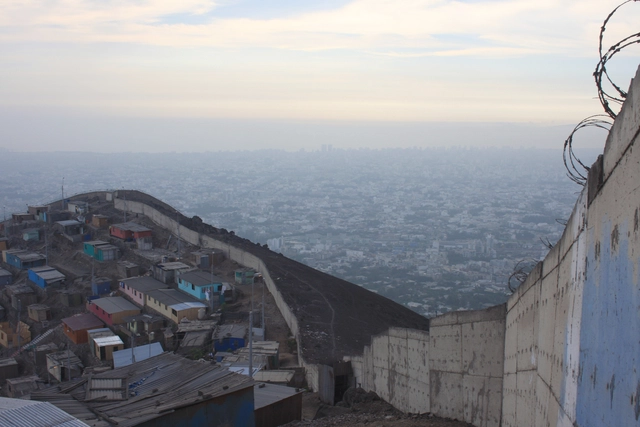
Warning: this article proposes a narrative according to the route taken from one side to the other of the wall, from the predictable to the most unpredictable. To better situate ourselves, the narrative will be told through my personal experience.
"Do you know the wall that divides the rich from the poor?," asked three Greek travelers who, after visiting the "pretty" side of Lima, suspected that something was hiding behind appearances. But, "how is it that from, even though you're from the other side of the world, you knew about the wall?" Well, news travels. And "why is this wall something that has to be seen in our city?" if it's not a cause for pride. I knew exactly what they were talking about. I spelled it out: the wall of shame. Certainly, I wasn't familiar with it in situ either, since I hadn't left my urban bubble, like many of those who live in these parts, so with the same curiosity, as a tourist of my own city, we made our way.
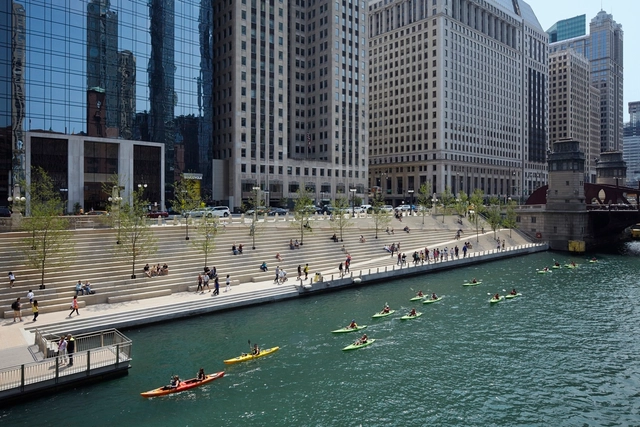
This article was originally published by Metropolis Magazine as "Carol Ross Barney is Chicago’s New Daniel Burnham."
As a lifelong Chicagoan, Carol Ross Barney has seen the Chicago River transition from an effluent-filled cargo highway to a vibrant recreational spot, one where her grandsons go fishing. “They can throw their line in and pull out two- to three-inch fish immediately,” she says. It has even become a habitat for otters. As for people, the river has become an alternative commuting path: Some kayak to work. In many ways, these historically polluted stretches of Chicago now form a corridor offering a rich range of experiences and visitors. This dramatic reversal is thanks in no small part to the Chicago Riverwalk, which might be Ross Barney’s career-defining project. “The attitude of the people toward the river is really changing, and I think that’s the biggest story,” she says.
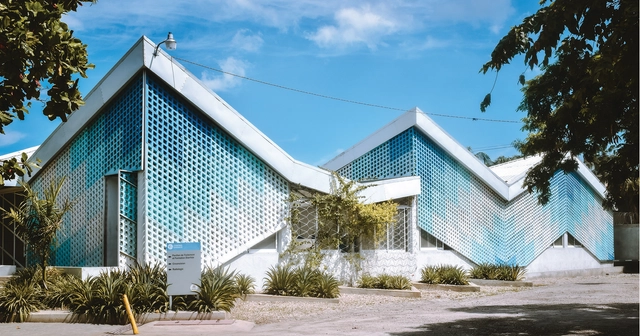
The role of the architect—and even architecture itself—in society today is changing. A lack of interest in critical social issues from a profession that holds such high responsibility within a community is a problem that should no longer be avoided.
In an exhibit currently on show at the Center for Architecture and Design in Seattle titled "In the Public Interest," Garrett Nelli Assoc. AIA challenges the profession of architecture to establish a focus on more community-engaged design. With the help of the 2017 AIA Seattle Emerging Professionals Travel Scholarship, Nelli traveled to Los Angeles, rural Alabama, Haiti, Italy and New Orleans, all the while analyzing how the built environment has the ability to influence social change.
Read on for an edited interview with Nelli about his research and how you can begin to implement elements into your design practice to help promote social change in your own communities.
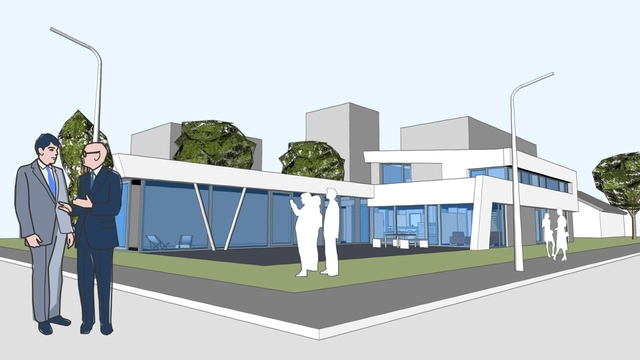
Get designs out of your head and in front of your client. In the normal world, a building project starts with a client interview. Then you go back to the office to develop your design and build a proposal. Then you meet to sell your concept. Rinse. Repeat.
Wouldn’t it be great if you and the client could sit for an interactive design session? To do this, you would need a tool that acts like “digital clay”. You would need software that is so easy to use, and so responsive, that you could capture, sculpt and modify your concept freely.
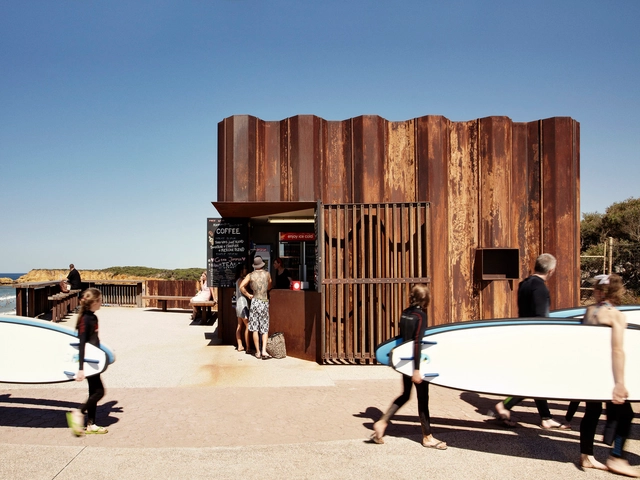
Often as architects we neglect how the buildings we design will develop once we hand them over to the elements. We spend so much time understanding how people will use the building that we may forget how it will be used and battered by the weather. It is an inevitable and uncertain process that raises the question of when is a building actually complete; when the final piece of furniture is moved in, when the final roof tile is placed or when it has spent years out in the open letting nature take its course?
Rather than detracting from the building, natural forces can add to the material’s integrity, softening its stark, characterless initial appearance. This continuation of the building process is an important one to consider in order to create a structure that will only grow in beauty over time. To help you achieve an ever-growing building, we have collated six different materials below that age with grace.

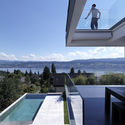
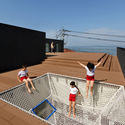
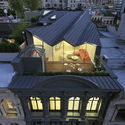
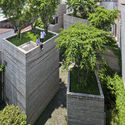
This week, we present a selection of 11 of the best images of rooftop spaces. These spaces, usually terraces conceived for the enjoyment of views and fresh air, can often be the most important element of a design. Some of these rooftops surprise us with wonderful gardens, others with impressive pools, and others even with fun games for children. Below is a selection of images from prominent photographers such as Nico Arellano, Hiroyuki Oki, and Amit Geron.

In a recent interview with Metropolis Magazine, Kenneth Frampton answered questions about his existing architectural influence and his opinion as it relates to the direction of architectural theory and criticism. Frampton has long been a prominent voice in the world of architectural theory and writing. He has taught at Columbia University's Graduate School of Architecture, Planning and Preservation (GSAPP) since 1972, all the while publishing a large collection of critical essays and books on the topic of 20th-century architecture—the most notable of those being his 1983 essay “Towards a Critical Regionalism: Six Points for an Architecture of Resistance.”
Even today, Frampton's evaluation of critical regionalism is still widely appreciated. In the interview, Frampton admits that he now sees the influence of critical regionalism primarily outside of "the Anglo-American world," but he believes that the implied importance of a "direct democracy" is what he sees as most beneficial.

This article was originally published by Archipreneur as "3D Printing is Making Its Way into Interior Design."
3D printing – also known as additive manufacturing – turns digital 3D models into solid objects by building them up in layers. The technology was first invented in the 1980s and has since found its way into our everyday life – and in architecture and interior design. Architecture firm DUS has a vast expertise in architectural 3D printing and is now applying its expertise to interiors and retail spaces.
“3D printing is an ideal technique to tailor-produce to a space or a brand,” says Inara Nevskaya, head designer at DUS. “We can link a furniture’s functionality with unique form features to create statement pieces, special focal points that frame new experiences for the consumer in the retail landscape.”


March 22 is World Water Day, an annual international celebration launched and organized by the United Nations. The goal of the day is to raise awareness about a wide range of water-based issues from around the world. This year’s theme is “Nature From Water”, which invites everyone to think about how nature can provide solutions to the water challenges we face today.
To celebrate World Water Day this year, we’ve rounded up 20 of our favorite projects that utilize water as a central design feature. Whether it be Zumthor's Thermal Vals or Chritso and Jeanne-Claude's Floating Piers, water has been playing an important role in architectural design and in demarcating the boundaries of nature against our built environment.
.jpg?1521632435&format=webp&width=640&height=580)
This article was originally published by Common Edge as "How Public Space Can Build Community and Rescue Democracy."
Public spaces are having a moment. People from outside the field of urban planning are beginning to notice the vital contributions that they make to our quality of life: inserting nature and cultural memory into the everyday, reminding us of our collective responsibilities, supporting democratic expression. People are also beginning to notice the subtle ways in which those contributions are being eroded by threats of privatization, corporate appropriation, and apathy.
Most acutely, this moment is brought to us by Apple, which has begun an aggressive retail rebranding effort to re-conceptualize its stores as “town squares,” and wrought a wave of well-founded concern. Technology continues to beckon us away from the need to leave our homes or interact face-to-face with other humans. If for every action there is an equal and opposite reaction, it would follow that opportunities for such interpersonal interaction become a luxury we begin to seek, a call to remember our origin as social beings.

This article was originally published on Autodesk's Redshift publication under the title "5 Technology Innovations Can Help Your Architecture Practice Work Smarter."
Before airplanes, it took mail carriers on horseback months to transport letters across the country. Before washing machines, it took a full day of physical exercise to wash and dry a family’s laundry. And before cranes, it took decades—sometimes centuries—to build large structures such as castles and cathedrals.
The point being: Whatever you do, technology probably gives you a better way to do it.

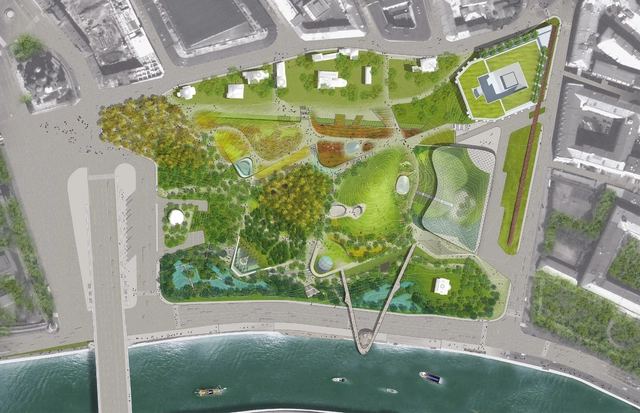
Frequently imperceptible to the inhabitant, the architectural plans of landscape designs are unquestionably the best tool for understanding certain relationships between elements and the strategic organization of the work. They are therefore an essential part of any good architecture project.
The distribution and type of vegetation, topography levels, the relationships between the preexisting urban or natural context, the possible routes and incorporated activities, and the materiality and the dimensional precision required for its construction are some of the considerations that are usually reiterated in this type of representation.
The result permits the communication of intentions in an organized way, while clearly exposing the concerns of the authors; for this reason, we invite you to review a series of different examples of architectural plans of public spaces that enables a comprehensive approach to the role of each project.

For some practitioners of architecture, the insatiable desire to draw everything, from the largest to the smallest to take full control of the project, echoes the famous phrase uttered by Mies Van Der Rohe: "God is in the details." Similarly, designing furniture provides another creative outlet for in-depth exploration of human-scale works of architecture.
Throughout the history of the Brazilian Architecture, and especially since the modernist movement, architects not only became known for their building designs, but also for their detailed chairs and tables. Several of these pieces of furniture were initially designed for a specific project and then went into mass production due to their popularity.
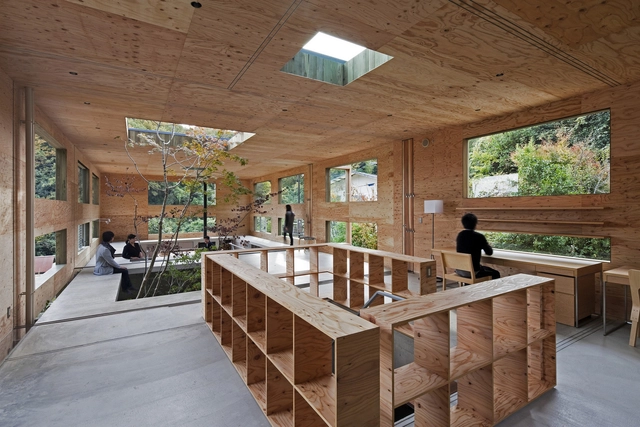
Living rooms are spaces dedicated to sharing time with family, receiving visitors, working, and carrying out a wide range of unpredictable activities. Regardless of their size, the key to an innovative design for this part of a house is in creative spatial organization, in its connection to other parts of the home and, above all, in programmatic flexibility. Here, we present a selection of exceptional living rooms captured by renowned photographers such as Hiroshi Ueda, David Foessel, and Wison Tungthunya.