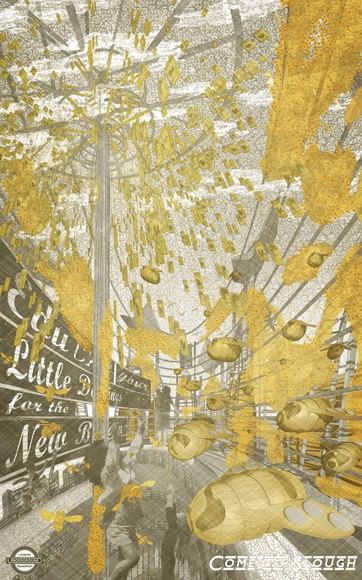
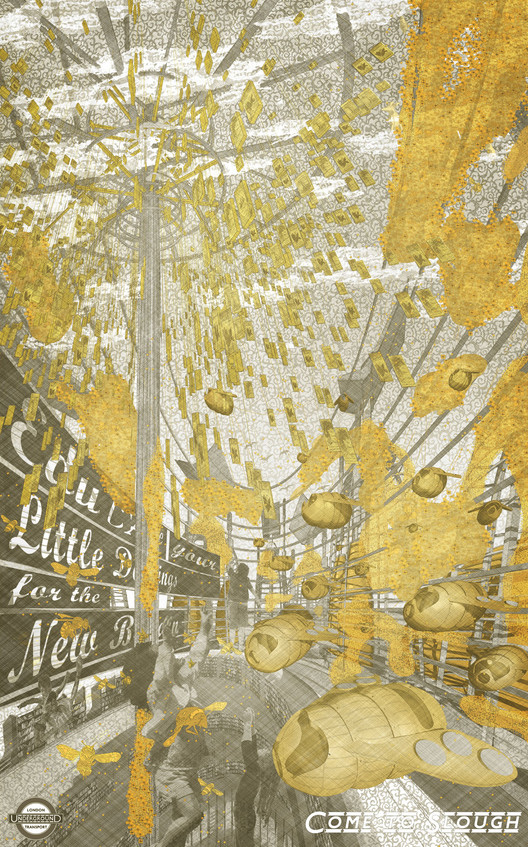
Winner of the RIBA Silver Medal: Nick Elias of the Bartlett School of Architecture. Image Courtesy of RIBA
The Royal Institute of British Architects (RIBA) have announced the President’s Medals Student Awards at a special event today in London. The awards, recognised as the world’s most prestigious set of awards in architectural education, were inaugurated in 1836 (making them the institutes oldest award, including the RIBA Gold Medal). Three medals in particular – the Bronze for a Part I student, the Silver for a Part II student, and the Dissertation Medal – are awarded to “promote excellence in the study of architecture [and] to reward talent and to encourage architectural debate worldwide.” In addition to these, the winners of the Serjeant Award for Excellence in Drawing and the SOM Foundation Fellowships are also announced.
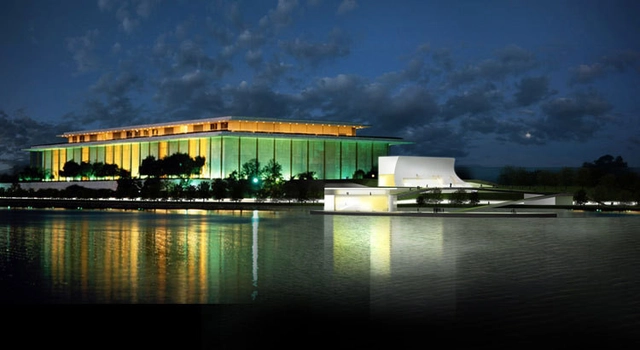
Almost 50 years to the day after President Lyndon B Johnson broke ground on Edward Durell Stone's design for the John F Kennedy Center for the Performing Arts in Washington DC, today Vice President Joe Biden will do the same for Steven Holl Architects' design of the Kennedy Center Expansion, a largely below-ground addition that will add an extra 60,000 square feet to the Center.
Have you ever wanted to see your un-built or fantasy project brought to life through the lens of a virtual reality headset? We’ve teamed up with IIDEXCanada and Invent Dev for the ArchDaily + IIDEXCanada Virtual Spaces Competition, which aims to find the best un-built and fantasy projects. Designers and architects can submit images of renderings of their un-built and fantasy projects across three square-footage categories. The winners will have their designs developed into virtual spaces by Invent Dev and exhibited using virtual reality headsets at IIDEXCanada 2015 in Toronto. Winners will also be featured on ArchDaily and flown to the 2015 awards ceremony.
IIDEXCanada and The Buildings Show are North America’s largest annual exposition, networking and educational event for construction, design, and real estate professionals.
Learn more and find out how to enter the competition after the break.
https://www.archdaily.com/574978/archdaily-iidexcanada-launch-virtual-spaces-competitionAD Editorial Team
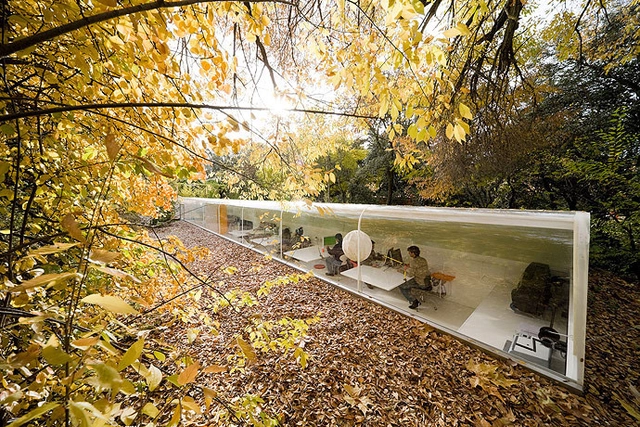
Spanish architects SelgasCano have been selected to design the 2015 Serpentine Gallery Pavilion, which has become one of the top-ten most visited architectural and design exhibitions in the world. The Pavilion will stand in Kensington Gardens during the summer and serving as a multi-purpose social space.
The award-winning studio is led by José Selgas and Lucía Cano and will be the first Spanish architecture practice to design a Serpentine Pavilion, with AECOM once again providing the engineering and technical design services. Although designs will not be revealed until February 2015, SelgasCano had this to say about designing the pavilion:
This is an amazing and unique opportunity to work in a Royal Garden in the centre of London. Both aspects, ‘Garden’ and ‘London’, are very important for us in the development of this project. We are in the middle of a garden, a ‘Royal’ garden indeed, once divided in two and separated by a Serpentine. That garden clings in the middle of London. Garden and London (which best defines London?) will be the elements to show and develop in the Pavilion. For that we are going to use only one material as a canvas for both: the Transparency. That ‘material’ has to be explored in all its structural possibilities, avoiding any other secondary material that supports it, and the most advanced technologies will be needed to be employed to accomplish that transparency. A good definition for the pavilion can be taken from J. M. Barrie: it aims to be as a ‘Betwixt-and-Between’.
A new, 40,000-seat stadium has been unveiled in preparation for the 2022 FIFA World Cup. Planned for Qatar’s Education City, the home of Qatar Foundation for Education, Science and Community Development (QF), the “Qatar Foundation Stadium” is the fourth stadium design that has been released by the Supreme Committee for Delivery & Legacy (SC).
The structure is intended to reference Islamic architecture. Both the interior and exterior will be clad in translucent triangular panels whose color and patterns will shift throughout the day, depending on the position of the sun and influence of artificial illumination which will reflect the events happening from within the stadium.
Cummins has released preliminary renderings of their new $30 million Indianapolis headquarters designed by New York-based Deborah Berke Partners. The news comes shortly after the diesel engine manufacture had announced plans to transform a four-acre downtown site in the heart of the Market East cultural district into a 10-story office building and public park.
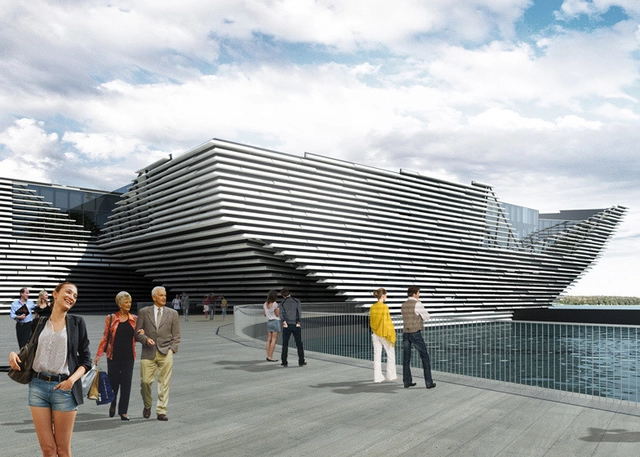
Dundee, Bilbao, Curitiba, Helsinki and Turin are often considered the cultural epicenters of their respected countries. Therefore it is no surprise that these five metropolises are the latest to achieve UNESCO’s City of Design status. Joining a list of 12 other cities, the newest City of Design selections are being recognized for the international influence on design. By awarding them “City of Design” status, UNESCO hopes to help further the development of creative industries and encourage cross-city cultural exchange in each selected metropolis.
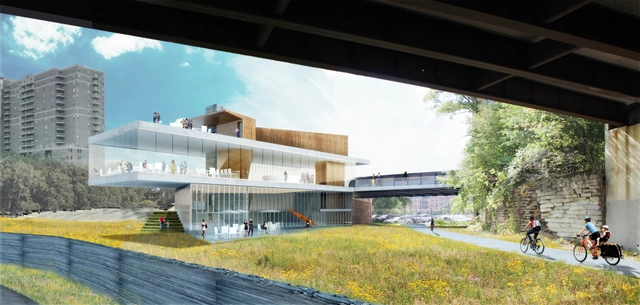
SCAPE / Landscape Architecture and Rogers Partners have envisioned a new public gateway for the Mississippi River’s “one true waterfall” - St. Anthony Falls in downtown Minneapolis. Named after being the city’s original site for its 19th-century water supply and fire-fighting pumping stations, “Water Works” is designed to “weave” together heritage ruins, local ecology, and recreational systems into a “coherent civic space” on four-acres of Central Riverfront.
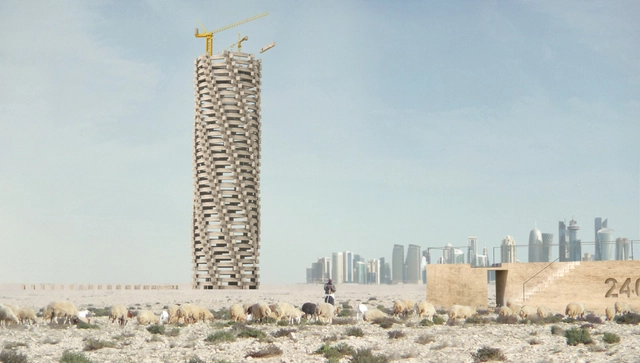
On one of Qatar's many World Cup construction sites, another Nepalese worker dies. The worker is not named; their death does not make the news, and work resumes on the site as soon as possible in order to make the 2022 construction deadline. But, in the desert outside Doha, a crane driver solemnly prepares to add one more concrete module to what has rapidly, and tragically, become one of Qatar's tallest towers.
This is the vision presented by Axel de Stampa and Sylvain Macaux, of the Paris and Santiago-based practice 1week1project, with their "Qatar World Cup Memorial." Designed as one of their week-long "spontaneous architecture" projects, the monument memorializes each deceased worker in the run-up to the 2022 World Cup.
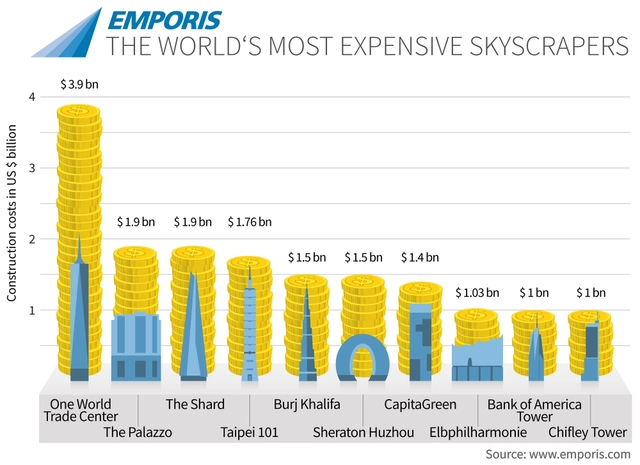
It may or may not be the tallest building in North America, but one thing's for sure: when it comes to costs, no other skyscraper comes close to New York's One World Trade Center. This is the conclusion of Emporis, whose list of the world's top ten most expensive buildings puts 1WTC way out in front at $3.9 billion. Originally estimated at just half that cost, this sets a trend in the top ten list, with many of the featured buildings suffering staggering overruns. The second-place Shard, for example, overshot it's original £350 million ($550 million) budget nearly four times over (although this is to be expected in London).
With 1,715 entries submitted, the Guggenheim Helsinki Competition has become the most popular architectural competition in history. Only six proposals have made it through to the final round, however we believe there is something to be learned from the hundreds of proposals that didn't make the cut. Therefore, if you participated in the Guggenheim Helsinki Competition and would like ArchDaily’s team of architects and editors to review your proposal for publication, we ask you to submit your proposal here (under "Submit an event, competition, award, news") by Wednesday, December 10. All proposals submitted after this deadline will not be considered. Take a look after the break for the required format for submitting project materials.
Foster + Partners has submitted plans for a new “Health Education Campus” in Cleveland, Ohio. The 485,000-square-foot quadrangle building is designed to foster collaboration between the students of Case Western Reserve University and the Cleveland Clinic on the medical campus’ existing 11-acre parcel at East 93rd Street between Euclid and Chester Avenues.
Videos
Courtesy of FR-EE / Fernando Romero EnterprisE
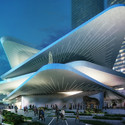
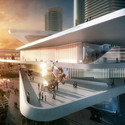
On the heels of President Barack Obama’s recent decision to reform US immigration policy, FR-EE / Fernando Romero EnterprisE has released designs for a new Latin American Art Museum (LAAM) in Miami. The four-story museum, characterized by elongated, cantilevering terraces and sculpture gardens, hopes to become “the most significant institution for displaying Latin American art in America.” Continue reading to learn more.
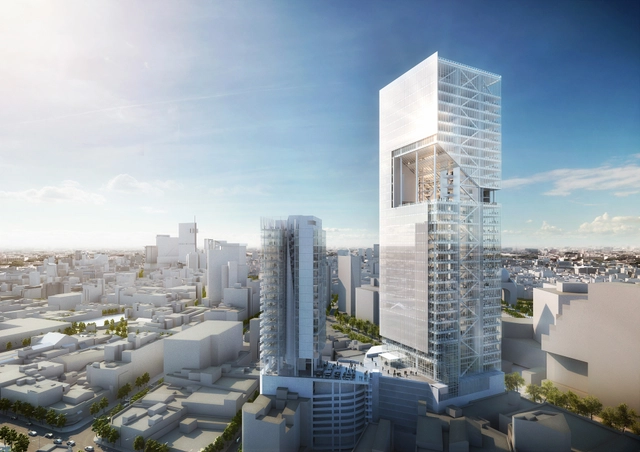
New York-based architect Richard Meier’s 180-meter “Reforma Tower” planned for Mexico City (click image for more)
A tri-national agreement between the United States, Canada and Mexico will now allow architects to work across borders in North America. As reported by the US National Council of Architectural Registration Boards (NCARB), in conjunction with the Canadian Architectural Licensing Authorities (CALA) and the Federacion de Colegios de Arquitectos de la Republica Mexicana (FCARM), representatives from the architectural regulatory authorities in all three countries have agreed to mutually recognize architect credentials.
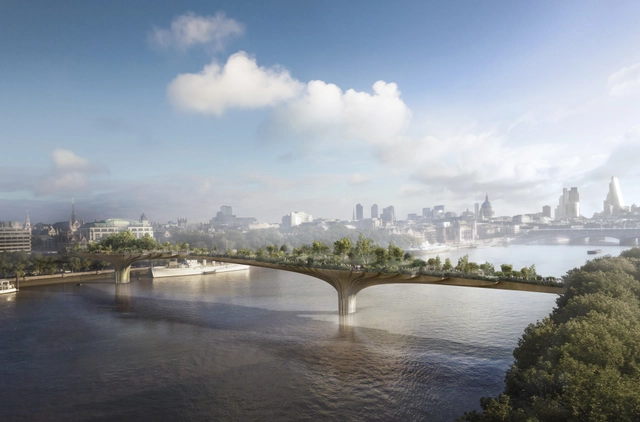
Update:Today Westminster Council approved the Garden Bridge proposals - the second of three required approvals - with councillors voting 3-1 in favour of the bridge. Though London Mayor Boris Johnson still has to officially rule on the plans, it is almost certain that he will ultimately give the go-ahead to the project as he has previously voiced his support for the idea. The following article was originally published on November 13th, after Lambeth Council granted the bridge its first approval.
Lambeth Council has awarded planning permission for the Garden Bridge, Thomas Heatherwick and Arup's planned crossing of the Thames which has been proposed and supported by actress Joanna Lumley. The approval is the first in a series that the bridge needs to become a reality, with Westminster City Council and London mayor Boris Johnson still needing to sign off on the project, according to the Architects' Journal.
To celebrate the first anniversary of our US Materials Catalog, this week ArchDaily is presenting a three-part series on "Material Masters," showing how certain materials have helped to inspire some of the world's greatest architects.
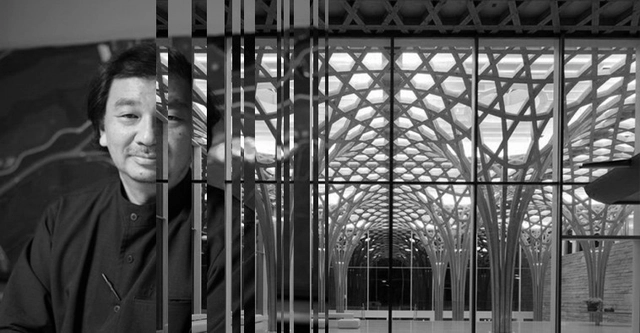
Shigeru Ban’s portfolio is a strange dichotomy, split between shelters for natural disaster refugees and museums commissioned by wealthy patrons of the arts. Even stranger is the fact that, in both cases, Ban’s material palette frequently incorporates recycled cardboard, paper, and old beer crates. The Pritzker prize laureate is unique in this regard, and so great is his predilection for recycled paper tubes (originally formwork for concrete columns), that he has become known as the “Paper Architect.” His work receives media attention worldwide for the unorthodoxy of its construction materials. Yet Shigeru Ban is not concerned with unorthodoxy, but with economy. It is for this reason that, when paper tubes are deemed unsuitable, Shigeru Ban constructs his buildings in wood. Inspired by the architectural tradition of his native Japan, Ban is not only the "Paper Architect," but also one of the most famous architects working in wood today.
Elevator manufacturer ThyssenKrupp has unveiled its latest technological advance, a cable free, multi-car, multi-directional elevator that has the potential to revolutionize the size and shape of future skyscrapers. Run using magnetic technology similar to that used by Maglev trains, with each cabin running its own individual motor, the "MULTI" elevator system opens up the potential for elevator cabins to move horizontally as well as vertically. This in turn offers the potential for multiple cabins to operate in a single system, with cabins going up one shaft and down an adjacent shaft.
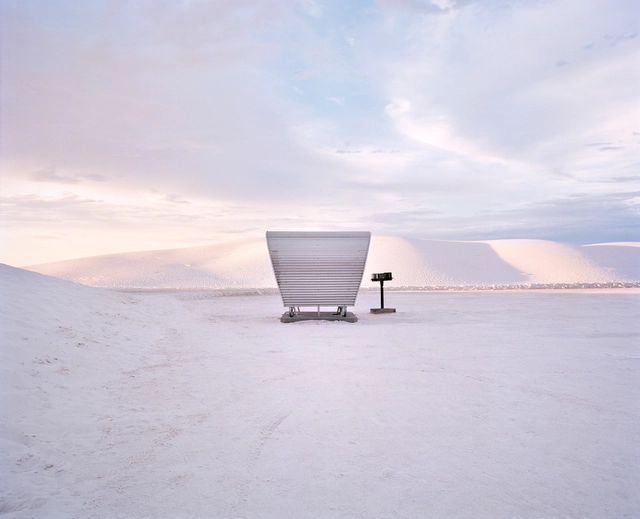
Rest stops are a disappearing sight in North America. Brought by tight highway budgets, and the increasing number of off-exit fast food outlets and gas stations, these roadside oases may soon become extinct. Photographer Ryann Ford wants to make sure they’re documented before this happens. Her project, “The Last Stop” is a series of photographs taken of unique rest stops across the nation. A Kickstarter campaign has been started to fund Ford’s work, and the ensuing publication of her photographs. Learn more, after the break!
Eugène Viollet-le-Duc, the French architect most famous for the 'restoration' of Notre-Dame de Paris, is a person we unequivocally associate with 19th century Gothic Revival. Although there is no doubt that his interpretive restorations of medieval French monuments were some of his greatest achievements, a new exhibition at Paris' Cité de l'architecture et du patrimoine seeks to uncover a "well-connected character who pursued an uninterrupted career drawing, building, teaching, restoring, and many other things."
In a review for Domus, Léa-Catherine Szacka examines this first major retrospective dedicated to the designer, theorist and artist since 1980 in celebration of the bicentennial of his birth. According to Szacka curator Jean-Michel Leniaud has, in this exhibition, shifted focus to Viollet-le-Duc's artistic output, thereby presenting "the less known and the more unexpected aspect" of his career.
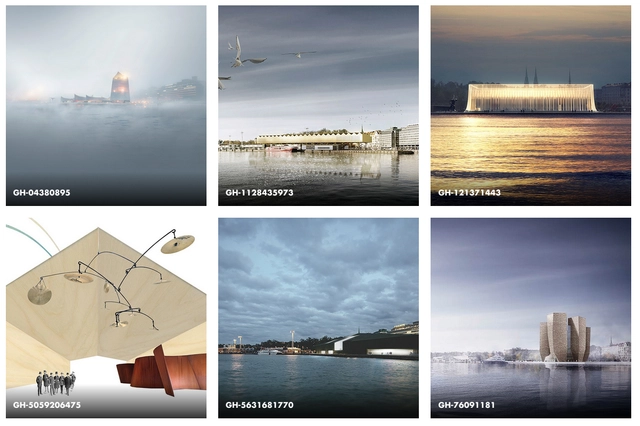
The Guggenheim has announced the finalists in the competition to design Guggenheim Helsinki, whittling down the entrants from a record-breaking 1,715 submissions to just six. Representing both emerging and established practices with offices in seven countries, the shortlisted entries show a variety of responses to the challenge of creating a world-class museum.
The six finalists are:
AGPS Architecture Ltd. (Zurich, Switzerland and Los Angeles, United States of America)
Are you currently enrolled in a NAAB-accredited architecture program or other degree-granting institution? You may qualify for the 2015 WIA (Women in Architecture) Fund's Emerging Professional Inspiration Award, now open to all US-based and international applicants. Working to inspire emerging professionals, one woman at a time, the WIA Fund will award one national and one international professional with a cash grant to help further their career. Depending on the quality and quantity of entries, other awards may also be given. Entries will be shortlisted and winners will be selected by both a committee and the public via the WIA Fund Facebook page. Submissions are due January 10, 2015. For more details, visit their page, here.
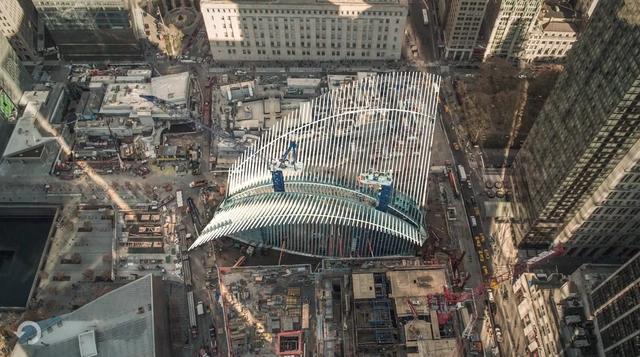
Santiago Calatrava’s head-turning World Trade Center Transportation Hub has assumed its full form, nearly a decade after its design was revealed. In light of this, the New York Times has taken a critical look at just how the winged station’s budget soared. “Its colossal avian presence may yet guarantee the hub a place in the pantheon of civic design in New York. But it cannot escape another, more ignominious distinction as one of the most expensive and most delayed train stations ever built.” The complete report, here.
Courtesy of Battersea Power Station Development Company
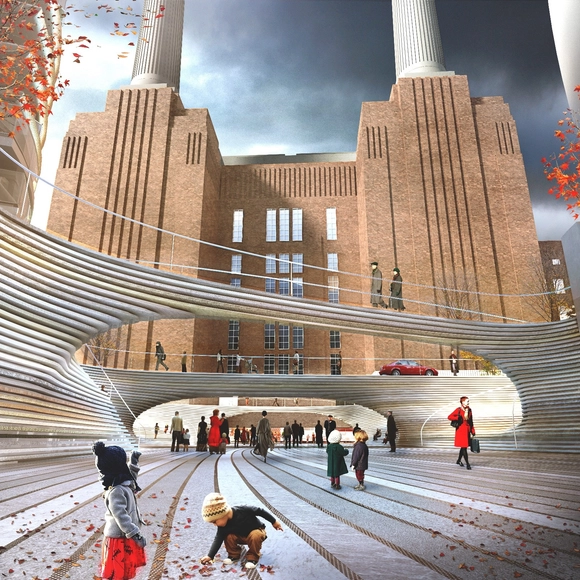
BIG has unveiled the design for their addition to the development at Battersea Power Station, a public square that will link the power station itself with the Electric Boulevard development designed by Norman Foster and Frank Gehry. Called Malaysia Square after the Malaysian development consortium behind the plans, the design features cascading steps that link the main public space at the lower level with the entrance to the power station above. The split-level design also provides for two pedestrian bridges and a road bridge that cross above the "urban canyon" of the public square.
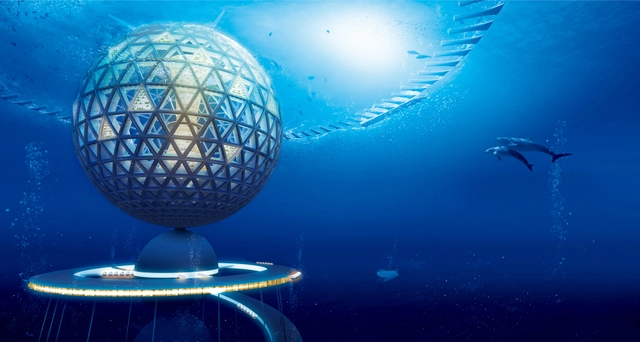
"Now is the time for us to create a new interface with the deep sea, the earth’s final frontier," says a brochure from Japanese development company Shimizu Corporation, presenting their outlandish proposal for the Ocean Spiral: a deep sea colony that can supposedly provide for up to 5,000 people in its 500m wide tethered sphere.
The proposal describes the Ocean Spiral as "safer and more comfortable" than existing land-based cities, thanks to the near constant temperature enabled by the ocean, the fact that it will be unaffected by typhoons or earthquakes, and the hope that the city's methods of oxygen generation will enable higher concentrations of oxygen then are found in the Earth's atmosphere.











.jpg?1417710383 "Courtesy of SC")






.jpg?1417636600&format=webp&width=640&height=580)
.jpg?1417636610 "Courtesy of FR-EE / Fernando Romero EnterprisE")
.jpg?1417636586 "Courtesy of FR-EE / Fernando Romero EnterprisE")
.jpg?1417636600)

_ThyssenKrupp.jpg?1417488198&format=webp&width=640&height=580)