Santiago Calatrava Again Faces “Leaky” Charges

The architect and engineer Santiago Calatrava has once again made the headlines of Spanish papers – and, once again, for less than favorable reasons.
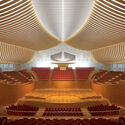
Calatrava’s latest controversy is a lawsuit filed against him by the famous Bodegas Domecq winery, property of the Ysios Laguardia in Rioja, Spain. Both the Valencian architect as well as those involved in the winery’s construction are being asked to pay two million euros to the winery, a sum that should help cover a renovation as well as the costs the winery has incurred over the last two years fixing the structure’s leaky roof. The owner claims that the leaks have been creating a damp atmosphere (in a building where moisture control is critical for the quality of the wine) and thus damaging his business.
Four Architects Enlisted to Reimagine Penn Station

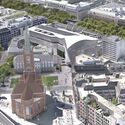
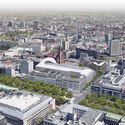
In an effort to “unlock people’s imaginations” about Penn Station and Madison Square Garden, the Municipal Art Society (MAS) of New York has challenged Santiago Calatrava, Diller Scofidio + Renfro, SHoP Architects and SOM to propose four new visions that exemplify the potential of the highly disregarded area.
The challenge comes amidst a heated debate on whether or not the city should restrict Madison Square’s recently expired special permit to 10 years, rather than in perpetuity as the arena’s owners – the Dolan family – has requested. This would allow time for the city to “get it right” and come up with a viable solution for the arena and station that, as NYTimes critic Michael Kimmelman states, would not only “improve the safety and quality of life for millions of people but also benefit the economy”. Think Kings Cross in London. With a thoughtful mix of public and private investments, the crime-ridden station was transformed into a thriving cultural destination that benefited all parties.
More after the break…
Calatrava Criticized for Valencia Complex

Praised for his masterful blends of architecture and engineering, yet criticized for rarely sticking to a budget, Valencia-native Santiago Calatrava is no stranger to controversy. His latest project making headlines is the largest landmark in Valencia and the second most-visited cultural complex in Spain: the City of Arts and Sciences.
The controversy after the break…
How Santiago Calatrava blurred the lines between architecture and engineering to make buildings move

American author Robert Greene has shared with us an excerpt about the work of Santiago Calatrava from his newly released book Mastery.
We live in the world of a sad separation that began some five hundred years ago when art and science split apart. Scientists and technicians live in their own world, focusing mostly on the “how” of things. Others live in the world of appearances, using these things but not really understanding how they function. Just before this split occurred, it was the ideal of the Renaissance to combine these two forms of knowledge. This is why the work of Leonardo da Vinci continues to fascinate us, and why the Renaissance remains an ideal.
So why did Santiago Calatrava, now one of the world’s elite architects, decide to return to school in 1975 for a civil engineering degree after asserting himself as a promising young architect?
Continue reading for the complete article.
Ground Zero Master Plan / Studio Daniel Libeskind

With last year’s opening of the 9/11 Memorial at Ground Zero and the near-completion of the World Trade Center One, Daniel Libeskind’s vision for the World Trade Center site is close to presenting the future of NYC’s downtown financial center, 11 years after the attacks. Studio Daniel Libeskind was selected to develop the master plan for the site in 2003, and since has been coordinating with NYC’s numerous agencies and individual architects to rebuild the site. The project, in Libeskind’s words, is a “healing of New York”, a “site of memory” and “a space to witness the resilience of America”.
Follow us after the break for more on the elements and progress of the master plan.
‘Santiago Calatrava: The Quest for Movement’ Exhibition

Today marks the opening of world-renowned architect, Santiago Calatrava’s unprecedented exhibition at the State Hermitage Museum in St. Petersburg, Russia. Not only will Calatrava become the first contemporary architect to have a retrospective exhibition at the Hermitage, but this will also be one of his largest and most extensive exhibitions to date. Curated by Cristina Carillo de Albornoz and Ksenia Malich, the exhibition will examine Calatrava’s innovative style through his various artistic realms. From never-before-seen paintings and sculptures to celebrated architectural models and sketches spanning Calatrava’s 30- plus year career, the exhibition will give individuals a unique opportunity to explore the inner workings and creative process of this celebrated artist. More images and information on the event after the break.
Margaret Hunt Hill Bridge / Santiago Calatrava

Architects: Santiago Calatrava
Location: Dallas, USA
Completion: 2012
Lenght of Bridge: 367,6 m (1,206 ft)
Height of Pylon: 136 m (446 ft)
Photographs: Alan Karchmer
Rising from Tragedy: A Conversation with Calatrava, Childs, and Libeskind by Andrew Caruso

National Building Museum and Metropolis Magazine contributor Andrew Caruso takes you “inside the design mind” of three prominent figures in the 9/11 rebuilding process with this recent interview conducted at the 2012 AIA National Convention.
Heroic. Contemplative. Grieving. Victorious. The rebirth of the former World Trade Center site in lower Manhattan has engendered significant public reaction and reflection. With implications as complex as they are profound, it is not surprising that it has taken more than a decade to heal the urban scars of September 11, 2001.
I had the rare opportunity to sit down with three architects working on the site, Santiago Calatrava, David Childs, and Daniel Libeskind, at the recent American Institute of Architects convention in Washington, D.C., where they were honored along with four others, as “Architects of Healing.” We discussed their experience of reshaping one of the most culturally significant sites in the history of the United States.
AIA 2012: Architects of Healing

After three days of inspirational keynote sessions, informative seminars, exclusive tours, invaluable networking opportunities and an impressive expo, the American Institute of Architects concluded the 2012 National Convention with a special tribute to the architects responsible for the post-9/11 memorials and rebuilding efforts. These “Architects of Healing” tirelessly worked together to transform the darkness of grief brought on by the 9/11 attacks into the triumph of hope in the wounded areas of Shanksville, Pennsylvania; the Pentagon; and the World Trade Center site.
AD Interviews: Santiago Calatrava

Earlier this week, Pratt Institute extended an invitation to the ArchDaily team to attend their 123rd commencement, celebrating the achievements of 1300 bachelor’s and master’s degree candidates at Radio City Music Hall. The event also marked a special day of recognition for four honorary degree recipients: artist/curator/critic Ai Weiwei, architect, engineer and artist Santiago Calatrava, patron on the arts and education Kathryn Chenault, and the Metropoitan Museum of Art’s longest-serving director Philippe de Montebello.
We were privileged to have an opportunity to congratulate Mr. Calatrava on his doctor of architecture degree, and pose ArchDaily’s traditional interview questions. Mr. Calatrava’s contributions to the professions of architecture and engineering can be found scattered across the world, and bring a sense of dynamism that result from the merge between art and technology, expression and functionality.
Calatrava’s charm and good humor made for a friendly conversation that we hope you enjoy.
Innovation, Science & Technology Building at Florida Polytechnic / Santiago Calatrava

Designed by renowned architect, Santiago Calatrava, the new Innovation, Science & Technology building at Florida Polytechnic University will establish the design scheme for all other structures within the campus’ master plan, which Calatrava is also responsible. Until the other structures within the master plan are built, the new Innovation, Science & Technology building, which just broke ground in March will also need to function as the campus itself; being able to accommodate various events and functions. More images and architects’ description after the break.
Thousands celebrate Santiago Calatrava’s new Dallas Bridge

Thousands gathered Saturday to celebrate the grand opening of Santiago Calatrava‘s Margaret Hunt Hill Bridge that connects east and west Dallas seamlessly over the Trinity River. A parade of builders, including everyone from those to poured the concrete to Calatrava himself, were the first to march across the new Dallas icon, followed by nearly 16,000 other people. Although the bridge is still not quite ready for vehicular traffic, the city celebrated its commencement with an impressive display of fireworks. Continue reading for more.
Yuan Ze University Project / Santiago Calatrava

The world-renowned architect, engineer and artist, Santiago Calatrava was recently commissioned by Yuan Ze University in Taiwan to design an ambitious new building complex for its campus. The ambitious project, which will consist of a Performing Arts Center, a new Art and Design School and the Y.Z. Hsu Memorial Hall, which is dedicated to the university’s founder, Mr. Yu-Ziang Hsu, will mark Mr. Calatrava’s architectural debut in the country. More project description after the break.
Trees of the Architects

We found this great image from The All Nighter – a tumblr dedicated to students who want to share and prospective students who would like to know about the architecture studio experience. The ArchDaily team would like to wish you a wonderful holiday season and a happy new year!
Calatrava Withdraws from Denver Airport Expansion

It was with much enthusiasm that Denver International Airport officials announced Santiago Calatrava as the architect for the new $650 million expansion that included a hotel, public plaza, and commuter-rail station. However, Calatrava is now withdrawing himself from the project only a year later. Numerous concerns have been cited as the reason for his departure including “financial constraints, unnecessary time delays, and deep divisions” between his design team, DIA, and Parsons International Group as quoted by his wife and business manager Robertina in a letter to DIA manager Kim Day.
Denver International Airport South Terminal / Santiago Calatrava

Spanish architect Santiago Calatrava has unveiled his preliminary designs for the Denver International Airport’s (DIA) south terminal redevelopment program. The concept for the redevelopment will not only enhance the airport’s connectivity and functionality, but is also expected to create more than 6,600 jobs.
WTC Transit Hub / Santiago Calatrava
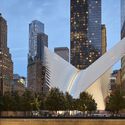
Check out the latest video of Santiago Calatrava’s transit hub at the World Trade Center site, courtesy of the Wall Street Journal and funded by Brookfield Properties. Back in 2004, Calatrava first unveiled his vision for the transportation hub – a “mega-station” which will include PATH services and 12 subway lines – and it seems that we’ll still have to wait until 2014 for the project to be fully completed. Although certain aspects of the design have been modified since 2004, the overall vision embodies Calatrava’s original conceptual ideas. At $3.2 billion dollars, the station is an expensive, but vital, component of the new WTC complex. Millions of commuters, tourists, and residents pass through the station every day, filtering in and out of one of the most powerful financial districts in the world. The video’s alluring imagery of the main concourse piques our interest as Calatrava has opened the roof to allow natural light to flood the interior. This strategy creates a more transparent and open space, which is unusual for a New York subway station, that can also be enjoyed from above as people in the towers look down upon the hub. We are anxious to wait on the sleek platforms and walk down the commercial connection between the hub and the Winter Garden, but we’ll just have to patiently wait to see the final result!
The Museum of Tomorrow / Santiago Calatrava

Calatrava’s talent has produced sculpturesque bridges and transportation hubs worldwide, and now, his sustainably-focused museum for Rio de Janeiro will also gain international attention. The architect/engineer has just unveiled his design which will be part of a larger urban design project to transform Rio’s waterfront into a thriving cultural and residential community.
More images and more about the museum after the break.
Peace Bridge / Santiago Calatrava
Santiago Calatrava is known for his elegant bridges that combine structure with a sculpture-esque touch. Yet, could his iconic style be changing? His latest design for Calgary, Canada is a red and white tubular structure, an aesthetic quite unlike of his earlier works. The new footbridge, slated for completion in 2010, will span the Bow River and aid approximately 5,000 people a day commuting in and out of the city on foot or on bike.
More about the bridge after the break.