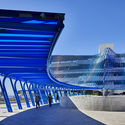
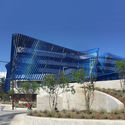
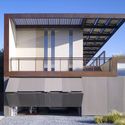
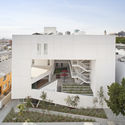
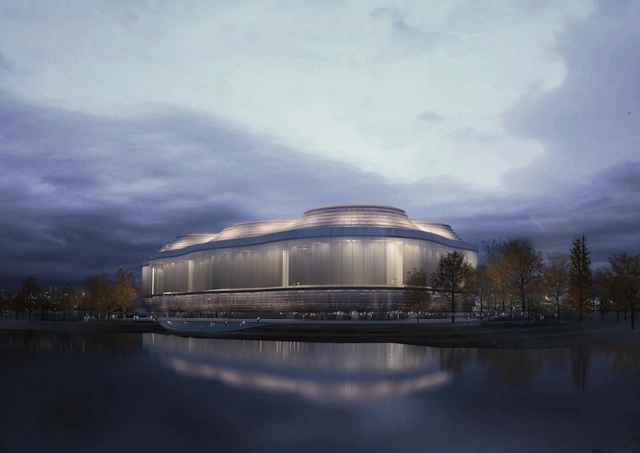
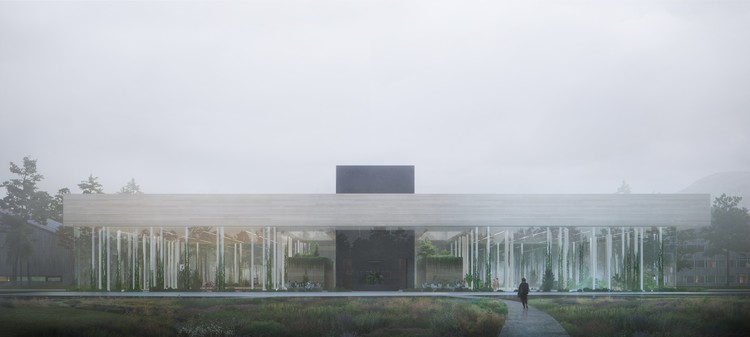
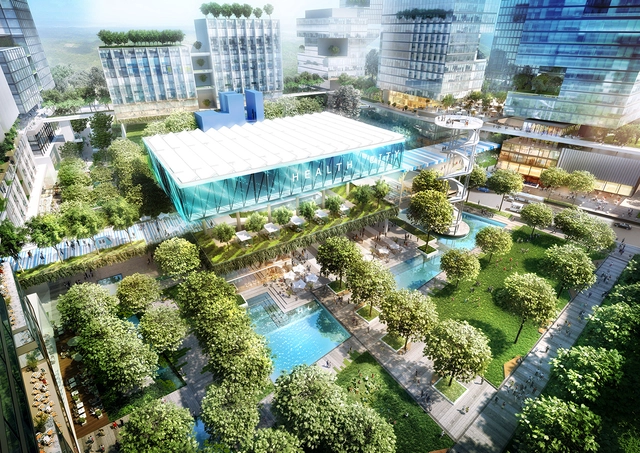
For their first major project in Australia, international design firm Broadway Malyan has been selected by the developers behind Greater Springfield, the continent’s largest master-planned community, to design a new health-focused district around the site of Mater Private Hospital Springfield outside Brisbane. Already a healthcare hub containing the hospital, Aveo Springfield Retirement Village and a hotel, the proposed development would expand the so-called “health city” to include a hospital expansion, medical offices, residential and retail space, as well as facilities for wellness, education, research, hospitality, aged care, and start-up businesses.
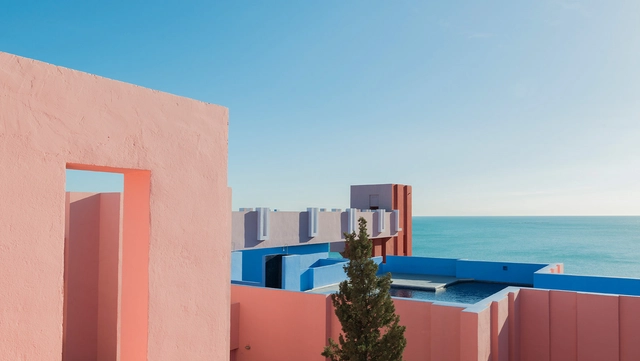
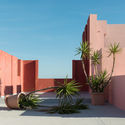
In recent years, the 1968 development has extended its popularity beyond architectural circles, having been featured in the music video for Martin Solveig’s hit “Do It Right.” Gallardo’s photoset, which you can see below or on his website, zooms in on the sharp, clean-cut, vibrant form of the development, informed partly by shadows cast from the hot Mediterranean sun. Despite the somewhat exact and pristine nature of the development, Gallardo also captures details of human habitation and everyday life, such as plants, vehicles, and furniture.
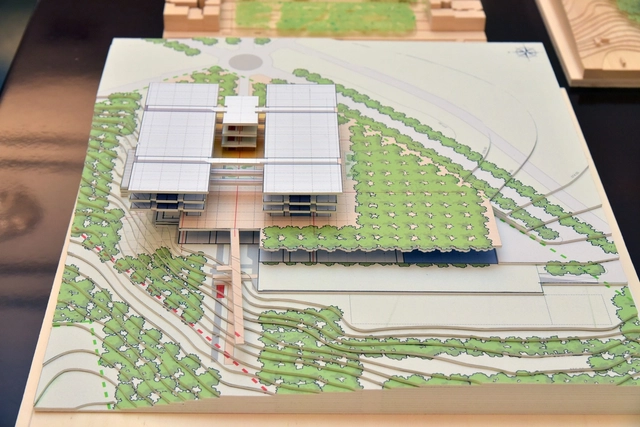
The Renzo Piano Building Workshop (RPBW) has presented their preliminary design approaches for three hospitals in Greece. Part of a €200 million ($240 million) healthcare initiative launched by the Greek government, RPBW will produce designs for a General Hospital of Kromotini, a Children’s Hospital in Thessaloniki, and the Evangelismos Hospital in Athens which will also form part of the University’s Faculty of Nursing.
The three schemes are united by a “people-centric” approach, with each project seeking to integrate into their natural environments with an emphasis on natural light. The projects will follow the design ethos of the Stavros Niarchos Foundational Cultural Center by RPBW, completed in 2016.
For years, there has been a lack of diversity in the field of architecture. Whether attrition numbers have been due to the lack of available information about promotion paths, firm hiring practices, or architects seeking out new career opportunities, this profession is one that has historically been stagnant in its representation. However, there is good news on this subject, as the National Council of Architecture Registration Boards (NCARB) revealed new data which shows that the profession is becoming more diverse and that the proportion of women staying in their careers is increasing.
According to NCARB's recently published By The Numbers report,although equity and diversity in the profession have been improving in recent years, data shows that attrition along the path to licensure remains much higher for non-white individuals. “NCARB has spent the past several years updating and aligning our programs to remove unnecessary burdens while maintaining the rigor needed to protect the public,” said NCARB CEO Michael Armstrong. “A key area for us to address is identifying how pinch points along the path to licensure may vary for candidates from different backgrounds.”
The growth and expansion of metropolitan areas has been evident over the past decade. Buildings are getting taller, and urban areas are getting larger. What if there was a way to predict this growth and expansion?
A new study by Spanish researchers from the University of A Coruna has discovered that the increase of skyscrapers in a city reflects the pattern “of certain self-organized biological systems,” as reported by ScienceDaily. The study uses "genetic evolutionary algorithms" to predict urban growth, looking specifically at Tokyo's Minato Ward. Architect Ivan Pazos, the lead author of the new study, explained the science behind the algorithm: "We operate within evolutionary computation, a branch of artificial intelligence and machine learning that uses the basic rules of genetics and Darwin’s natural selection logic to make predictions."
Read on for more about the study and what it could mean for the possibility of estimating vertical urban development.
The World Architecture Festival has announced the shortlist for their 2018 awards slate, featuring 536 projects ranging from small family homes, to schools, stations, museums, large infrastructure and landscape projects. The world’s largest architectural award program, the WAF Awards year saw more participation this year than ever before, with more than 1000 entries received from projects located in 81 countries across the world.
At the 2018 World Architecture Festival in November, the shortlisted teams will be invited to present their designs to a jury of more than 100 international judges, who will determine the best projects within the completed and future project categories. These finalists will then move on to present to the 2018 Super Jury who will determine the winners of for the 2018 World Building of the Year, Future Project of the Year and Landscape of the Year.
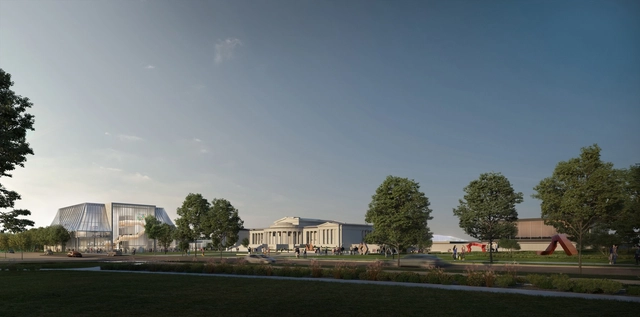
OMA has released new images of their proposed expansion project to the Albright-Knox Art Gallery in Buffalo, New York. The “bold, freestanding building” forms part of the AK360 expansion project, which also includes an OMA-led preservation and improvement project of the existing campus.
The new building will add 29,000 square feet of much-needed space for the display of exhibitions and the museum’s art collection, while also incorporating visitor amenities linked through a wraparound promenade.
https://www.archdaily.com/897099/oma-releases-images-of-albright-knox-art-gallery-expansion-in-new-yorkNiall Patrick Walsh
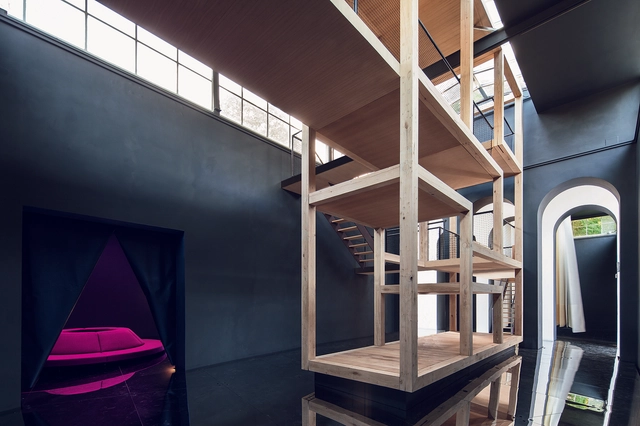
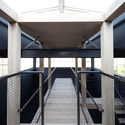
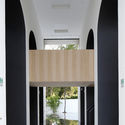
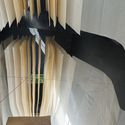
Part of the Austrian Pavilion at the 2018 Venice Biennale, Henke Schreieck’s “Layers of Atmosphere” installation creates two opposing but interconnected spaces; one features a simple wooden structure, whereas the other offers a simple light atrium whose walls are covered in thin layers of paper. Connected by a walking bridge, the spaces provoke questions about architecture as space and architecture that creates space.
Architectural Record released the 2018 edition of its annual list of the Top 300 Architecture Firms in the United States. Compiled by Record's sister publication Engineering News-Record, the list ranks firms based on architectural revenue from services performed in 2017. Gensler remains at the top for the seventh consecutive year. For more insight and comments from the leading firms' leadership, see Architectural Record's announcement.
https://www.archdaily.com/897029/top-300-architecture-firms-in-the-usa-for-2018AD Editorial Team
Emre Arolat Architecture has unveiled their design for the Nora Mosque and Community Center in Ajman in the United Arab Emirates. The 10,000 square meter site located just north of Dubai, is located near a massive high rise residence block. However, it creates its own unique ambiance and spatial setting with a composition of shell-like platforms that spring from the earth.
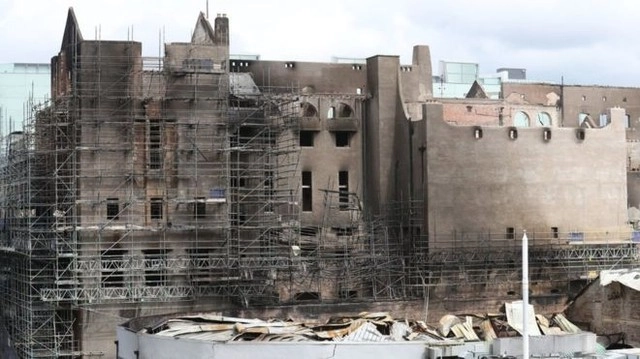
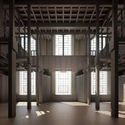
To keep you up to date on the situation, we have compiled the latest information arranged in three stages: the condition of the building before the latest fire, the current status of the building, and some views on the building’s fate.
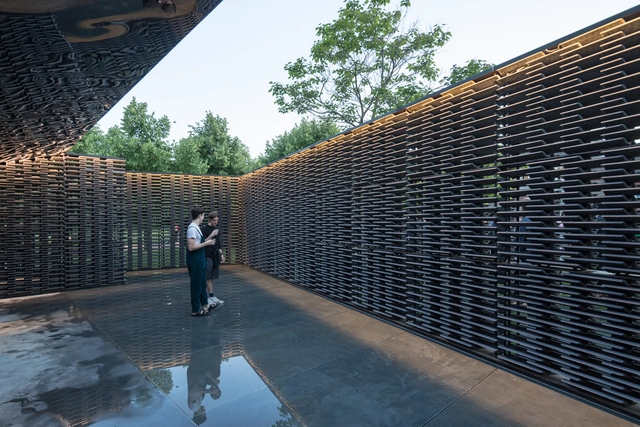
Similar to previous productions of BIG’s 2016 Pavilion, and SelgasCano’s 2015 Pavilion, Haval 360-degree virtual tour explores Escobedo’s pavilion to capture aesthetic delights such as the Mexican celosias façade, shallow water pool, and curving, mirrored roof element. When inside the courtyard, don’t forget to look up!
https://www.archdaily.com/897002/step-inside-frida-escobedos-serpentine-pavilion-with-this-360-degrees-virtual-tourNiall Patrick Walsh
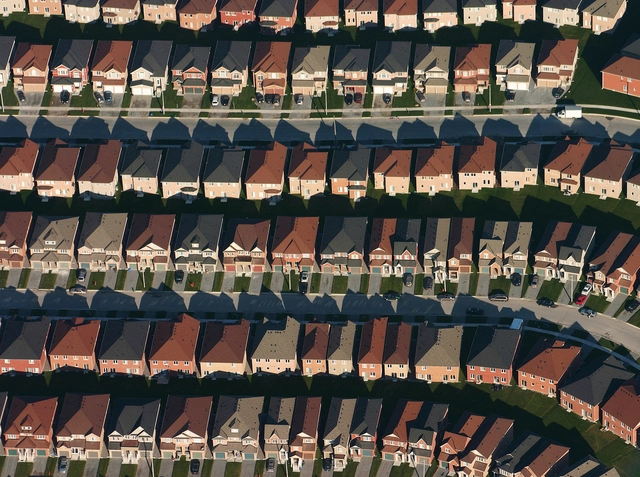
A recent survey done by Chicago-based digital marketing firm Digital Third Coast asked 2,000 current or prospective homeowners for their feedback on their realistic dream house, along with their opinions on homeownership in general. Commissioned by an Illinois fireplace company, Northshore Fireplace, the survey presented respondents with a list of multiple choice questions, as well as open response questions to come up with an in-depth analysis of the 'American Dream Home of 2018.' The survey was done via the Amazon Mechanical Turk platform and included people from all across the country and different age groups. The main qualifying criteria for respondents was that they either owned a home currently or were looking to purchase a new home within the next 5 years.
Findings from the survey include ideal exterior and interior styles, most desired luxury, most popular words used to describe a dream home, average square footage, and much more. Based on the survey data, you can even compare design and finance ideas of GenX and Millenial homeowners to that of the Baby Boomers generation.
Read on for the detailed infographic that displays the resulting criteria for the 'American Dream Home of 2018.'
Conceived by Commissioner Hanna Harris, Director of Archinfo Finland, and Curator Dr Anni Vartola, the Finnish Pavilion presents Mind-Building at the 2018 Venice Biennale, an exhibition that explores the importance of the public library in Finnish culture. With exhibition design by Tuomas Siitonen and graphic design by Johannes Nieminen, it showcases Finnish libraries through a thematic selection of architectural designs, objects and specially commissioned sound and video work.
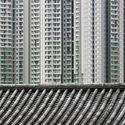
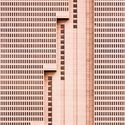
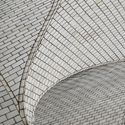
In his ongoing study, Nikola Olic - a Serbian photographer based in Dallas, Texas - focuses on “architectural photography and abstract structural quotes that reimagine their subjects in playful, dimensionless and disorienting ways.” Often isolating elements of a facade, which obscures the viewer's sense of scale and perspective, Olic provides short descriptions of each image, acting as a “demystifying tool” and reminding us of the everyday nature of his subject matter. In the third collection shared with ArchDaily, the photographs are taken in Dallas, Fort Worth, Las Vegas, New York, Los Angeles, Long Beach, and Hong Kong.
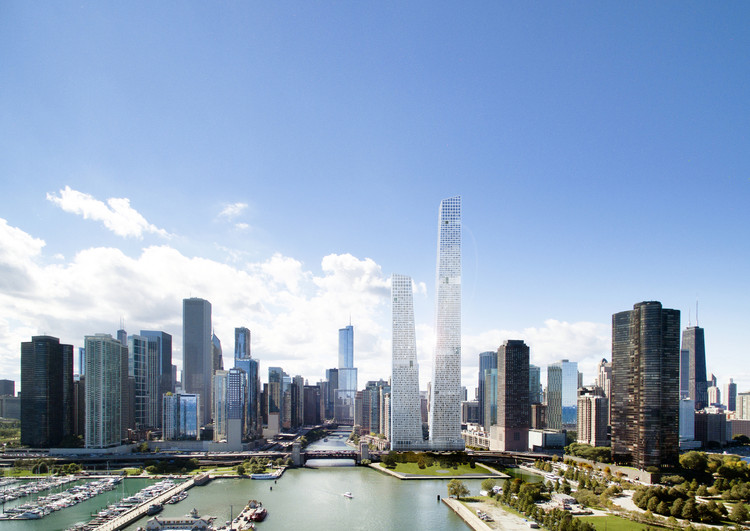
Chicago-based STLarchitects revealed their design for the former Chicago Spire site. The competition brief called for two towers: one supporting a mixture of apartments and condominiums and the other strictly for condominium use. Their design focused on "Chicago’s architectural character and essential virtues... thus iconic, innovative, and flexible.
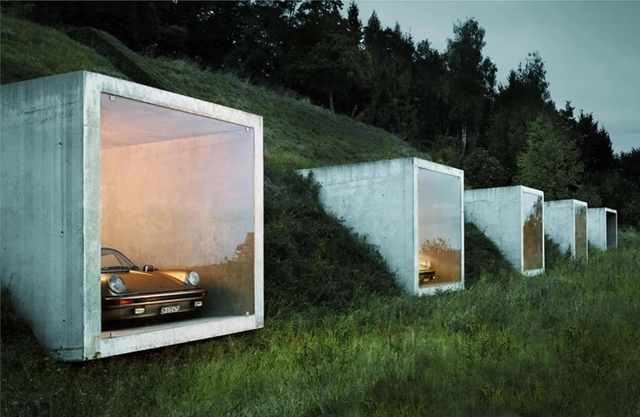
The parking garage: a loveless structure as necessary as it is unpopular. It can be easy for the architecture to reflect the unfancied nature, but sometimes, amidst all the mediocrity, beautiful design shines through.
Airport parking site Looking4.com has relaunched their award for the World’s Coolest Car Park, first published in 2013, that showcases some of the most innovative parking structures from around the world. Below is the 10 building shortlist—which one do you think deserves to take home the award?
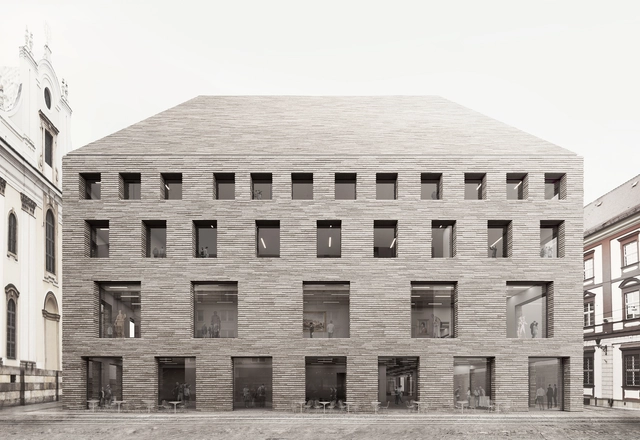
WXCA Architects’ proposed building has been chosen as the winning design of the Muzeum Książąt Lubomirskich in Wroclaw, Poland. Over 100 designs from all over the world were submitted for the project. However, the winning firm’s proposal provided a homogeneous balance of contemporary design with classical elements, a concept that led to their first-place prize.
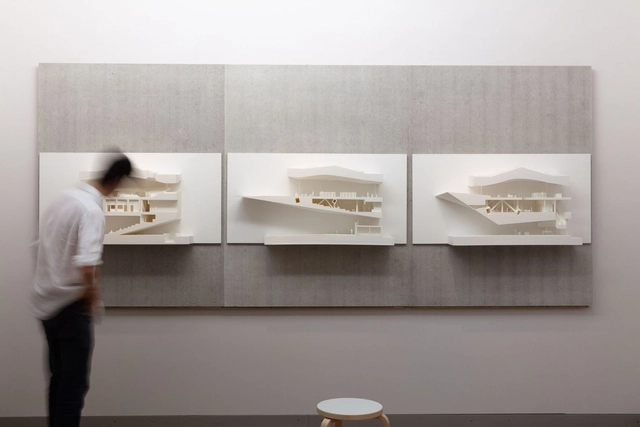
Why do we remember buildings, locations, and experiences? Even a place visited in our childhood can conjure emotions that make an impact on us through the memories they create. Angela Brooks and Larry Scarpa explain that the work of Brooks + Scarpa Architects aspires to make a lasting impression out of even a brief encounter. “We try to leave something behind,” says Scarpa, “something ingrained in people’s memory that sticks with them.”
The Donghua Chen & Partners proposal named the “Science Loop” sees a series of systems, including social, skyline, circulation, devolution, and recycling loops, organized as an integrated network.
The entries were judged by a jury of figures from Library and Desplans, with one winner and 12 honorable mentions selected. The winning entries were chosen with attention given to the relevance of the theme, dialogue between text and image, graphic research, and quality of reflection.
Snøhetta has released images of its proposed sustainable data center concept, named “The Spark.” The project seeks to address the typical high-energy-consuming typology of the data center, transforming it into an “energy-producing resource for communities to generate their own power.”
The proposal is adaptable for a wide range of contexts and can be scaled for any location around the world, fueling connected cities with energy from the center’s excess heat.
https://www.archdaily.com/896905/snohetta-designs-sustainable-data-center-as-the-body-and-brain-of-future-citiesNiall Patrick Walsh
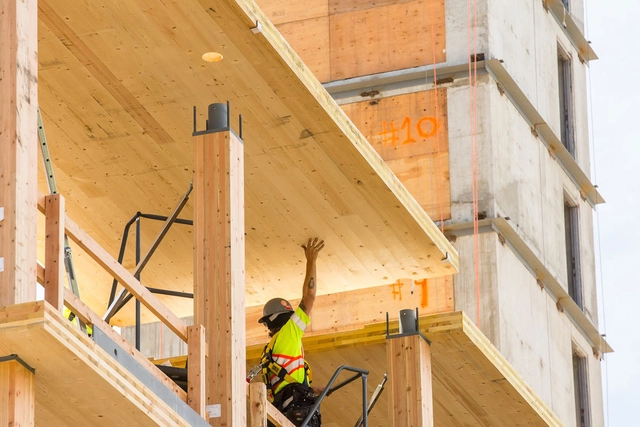
Brock Commons Tallwood House | Photo: KKLaw; Prefabricated panels aid in a project’s efficiency.
Wood as a building material is experiencing a bit of a renaissance. Though elemental and deceivingly simple, applied technology has transformed the building material. If you have questions about how to choose and use wood, Think Wood's mission is to provide access to the expanding pool of research and information.
In support of this year’s AIA theme, Blueprint for Better Cities, Think Wood is at the AIA Conference on Architecture to share research and resources on the benefits of wood and how it offers better solutions for the communities where we work, live and play. If you're at the conference be sure to stop by the Wood Pavilion at booth 757. If you can't make but are interested in learning more, read on to see the benefits of wood.
https://www.archdaily.com/896903/the-benefits-of-mass-timber-building-on-show-at-aia-conference-on-architecture-2018AD Editorial Team
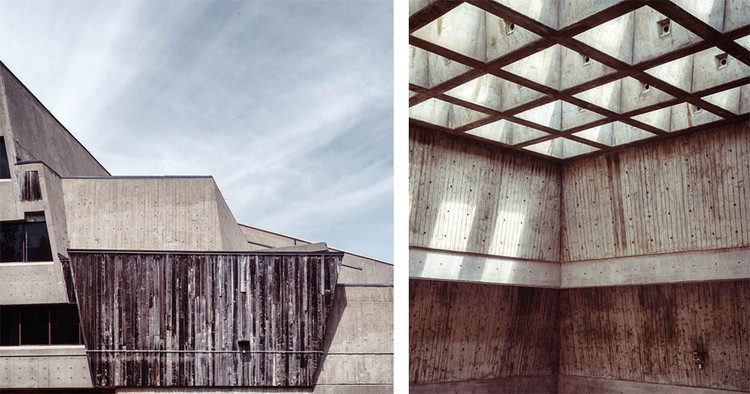
Toronto-based photographer Ruta Krau has captured stunning photographs of the Andrews Building, one of Canada’s most noted brutalist buildings, and a celebrated part of Toronto's concrete architecture. Designed by John Andrews, architect of Toronto’s iconic CN Tower, the Andrews Building embodies the Modernist ethos of connecting with the surrounding environment, balanced above a ravine and emerging as a stepped pyramid from a natural ridge.
Krau’s photographs capture the rough, natural aesthetic of the Modernist building, with béton brut concrete stamped with the patterns of the timber used to mold the poured-concrete structure. Visible on both the interior and exterior, this texture compliments terra-cotta-colored floor tiles and wood-paneled feature walls.





.jpg?1529938742&format=webp&width=640&height=580)
.jpg?1530043658&format=webp&width=640&height=580)


.jpg?1530043658)
















_Jean_Yves_Raffort_(1).jpg?1529242420 "© jean yves raffort")

.jpg?1529242378 "Courtesy of looking4.com")