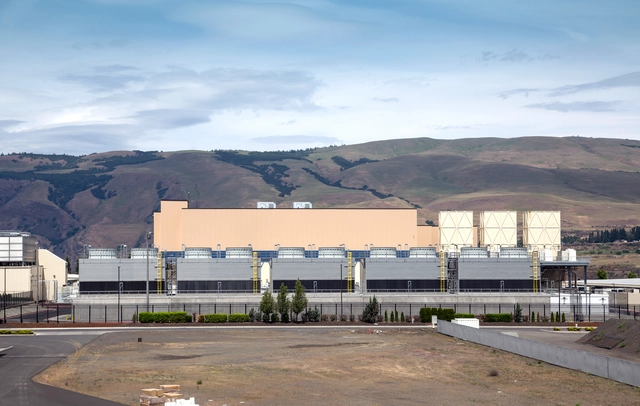
Before the digital turn, architecture's memory was largely tangible. It lived in the weight of drawings, the patina of models, and the thickness of books. To preserve architecture meant to preserve its traces, the documents, sketches, and photographs through which buildings could be remembered long after their material form had changed or disappeared. The modern architectural archive, as it developed in the 20th century, was both a refuge and a device of legitimacy. Institutions such as the Canadian Centre for Architecture, Casa da Arquitectura, or the Deutsches Architekturmuseum were built upon the conviction that to preserve architecture was to preserve its documents.
However, these archives didn't merely store knowledge. They determined what counted as architecture, who belonged to its canon, and how history would be told. To archive is to edit the past — to decide what enters, what is omitted, and how it will be interpreted. The archive, as theorised by Michel Foucault and later by Jacques Derrida, is never neutral; it is an instrument of power, a space that selects and excludes. In architecture, these dynamics are especially evident as they record the visible while silencing what falls outside their categories. The act of collecting has always been, implicitly, an act of judgment.
As artificial intelligence continues to disrupt sectors of the economy and reshape entire industries, institutions and individuals alike are bracing—and rapidly adapting—to the changes that machines seem to hold over our heads. Yet the more precise pressure is not simply AI altering the way people work and live, but the business models and investment logics of the companies developing these systems: the concentration of capital, the new requirements for compute, the race for compartmentalized talent, and the infrastructural footprint needed to sustain it. In the Greater Bay Area—anchored by Guangzhou, Shenzhen, and Hong Kong—this dynamic is especially pronounced. Government-led initiatives are actively accelerating the industry's growth, with policy and planning mechanisms beginning to translate an ostensibly intangible field into physical form: zoning updates, earmarked land, and the emergence of AI-oriented building types, from research laboratories to large-scale data centers.
How heavy is a house? In his 1965 essay A Home Is Not a House, Reyner Banham observed that modern American dwellings were becoming structurally lighter while growing heavier in mechanical services, such as plumbing, wiring, heating, and cooling. The true weight of architecture, he argued, was no longer in walls and roofs, but in the energy-intensive systems that sustained comfort.
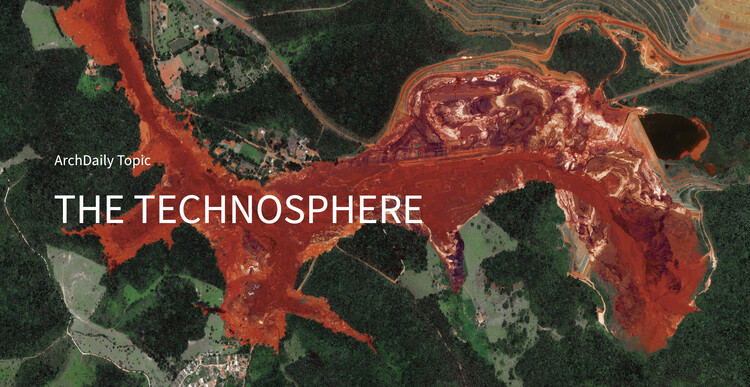
Decades later, the question was updated at the 7th Lisbon Architecture Triennale. Curators Ann-Sofi Rönnskog and John Palmesino asked: How heavy is a city? The scale shifted from the domestic interior to the territory. The technosphere, materialized in the estimated 30 trillion tons of human-made matter on Earth, reframes the discussion entirely. Cities, data centers, oil fields, logistics hubs, satellites, cables, and waste streams form a planetary system in which architecture is neither object nor backdrop, but participant.
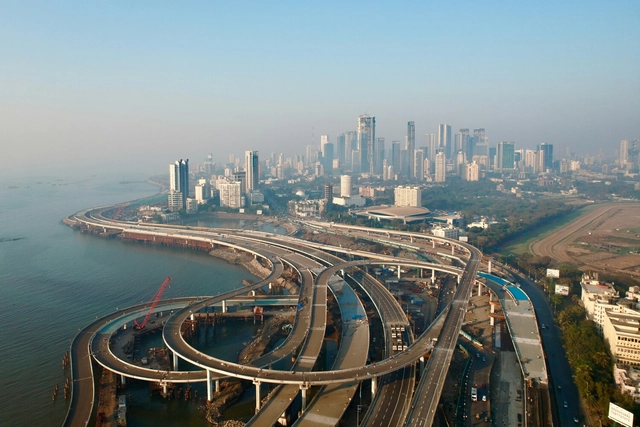
In 2025, India's most consequential design projects unfolded largely out of sight. While public attention gravitated toward museums, cultural landmarks, and visually arresting façades, the architecture that most decisively shaped daily life existed underground, at the city's edges, or inside secured compounds few citizens would ever enter. Sewage networks were rebuilt, flood tunnels bored beneath dense neighborhoods, substations lifted above floodplains, and data centers multiplied across peri-urban landscapes. These were not peripheral works of engineering; they were the spatial systems that allowed Indian cities to remain functional through record heatwaves, erratic monsoons, and accelerating urban growth.
As the AI fervor continues to reshape how people see the world, 2025 looms as yet another year in the march toward technological advancement. While some worry about the dominance of technology in society, architects are shifting their attention to the foundations of a digital future: data centers. The design of data centers challenges designers to reconcile the demands of technological functionality with the principles of architectural excellence. As the dependence on cloud computing, IoT ecosystems, and big data analytics deepens, data center architecture demands more attention. As data consumption skyrockets, data center consumption rates match the demand. These structures were once relegated to nondescript industrial zones, but are now becoming integral components of urban and suburban environments. While some community members are upset about the encroachment of data centers in their localities, others see them as indicators of economic development.
This article is the winning entry of the Epistle Writing Prize 2024, an annual competition dedicated to recognizing outstanding writing on design, architecture, and the environment.
We might be in the age of the digital cloud - however celestial or ethereal it may appear to be - but it is not only incontrovertibly material but also a powerful ecological force. In present times, data centers are mammoth powerhouses of modern information, communication, and technology industries with giant servers that store and process data. While their proliferation is in a sense, a consequence of our consumption patterns, and as the global demand for the digital grows, so does the data center footprint.
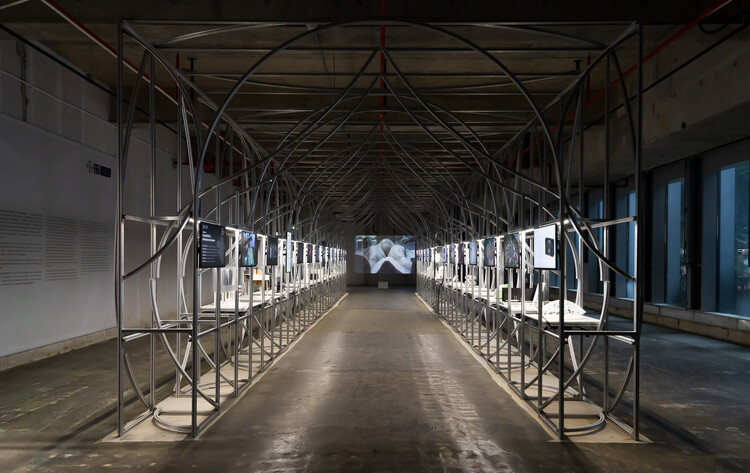
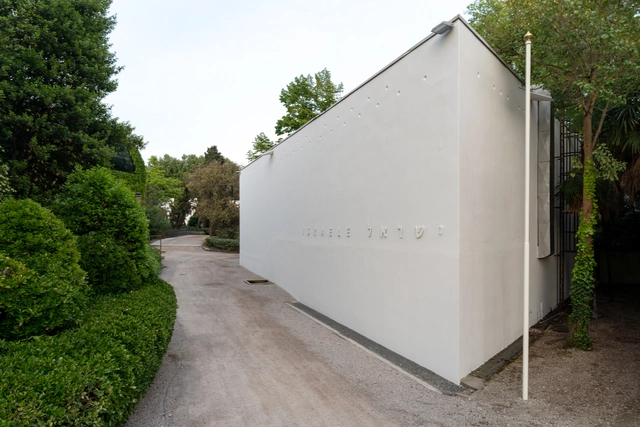
The National Pavilion of Israel presents “Cloud-to-ground,” an immersive installation exploring the nature of modern communication networks at the 18th International Architecture Exhibition of La Biennale di Venezia. The exhibition, curated by Arch. Oren Eldar, Arch. Edith Kofsky, and Hadas Maor, aims to initiate a multifaceted discussion regarding the physical aspects of virtual networks: the data centers and telephone exchanges commonly referred to as “black boxes.” The chosen theme is relevant for Israel due to its strategic location set at the intersection of continents and cultures. The pavilion in the Giardini will remain open for visitors until November 26, 2023.
In the contemporary context, as has been said a multitude of times, we seem to be living in what is classified as a digital age. A worldwide pandemic has enhanced the popularity of digital avenues to communicate — such as Microsoft Teams and Zoom, and the multiplatform messaging app WhatsApp is reported to have over 2 billion active users. From an environmental standpoint, we see the migration of businesses to the “cloud” heralded as a sustainability win. In simplified terms and to pick out a specific example, companies can refrain from storing data on external hard drives, opting instead to store their data on online file hosting services.
As the world slowly adjusts to the "new normal," so too does the architecture industry. Data related to market size and workloads shows that the profession continued to grow even after the pandemic struck. Other statistics show how architects are starting to be hit by the present crisis – such as the fall in full-time work and rising unemployment. While these statistics could take one down a road of despair (or enthusiasm), there is more to the numbers: Mobility, digital and managerial competencies are framing the profession in the 2020's. Not only as data for the sector to approach the market and retain talent but also as strategies in the face of crises and technologies to come.
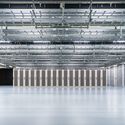
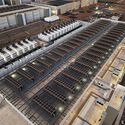
Facebook Data Centre. Image Courtesy of Liam Young
Data centers, automated assembly lines, telecommunications facilities, and warehouses represent a very utilitarian aspect of the built environment, and yet they compose a particular kind of infrastructure within contemporary society, one that is fundamental to the development of everyday life. Rarely discussed within the profession, these new typologies have more recently penetrated the architectural discourse, raising questions about the architectural significance and design potential of the spaces sustaining the mechanics of today's world.
For this edition of the Venice Architecture Biennale, the Irish Pavilion focuses on data technologies and their presence within the physical landscape, exploring the cultural end environmental implications of data production and consumption. Titled Entanglement and curated by the multidisciplinary research and design collective ANNEX, the exhibition challenges the presumed immateriality of the Cloud, highlighting the infrastructure of data production and its impact on everyday life while also examining Ireland’s role in the evolution of global communication.
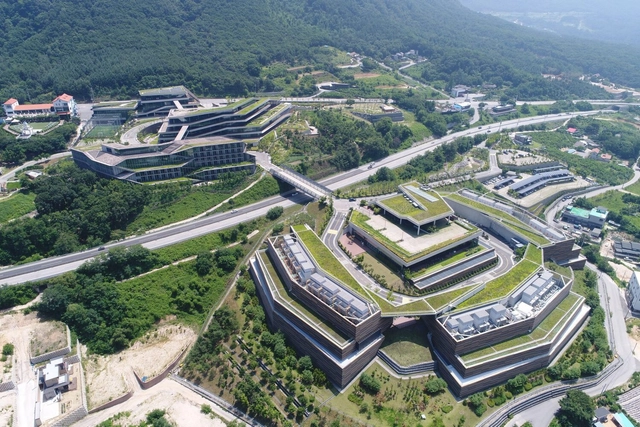
North Design Union Headquarters. Image Courtesy of SPIM Studio
Highlighting proposals presented in international competitions, this week’s selection of Best Unbuilt Architecture combines various functions, diverse conceptual approaches, and innovative ideas. Submitted by our readers, these projects include an awarded pavilion in Vietnam, a cantilevered-bridge proposal in New York, and a sustainable botanical center in Poland, amongst others from all over the globe.
With a lot of projects coming in from China, we have compiled in this roundup, a design for a children’s hospital and education building, as well as a national science center encompassing research buildings, laboratories, exhibition spaces, commercial use, and public facilities. On another hand, for the first time, a virtual project is featured, celebrating the LGBTQ community with a vessel of a layered and labyrinthine system of baths, showers, and pools.
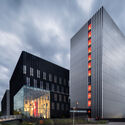
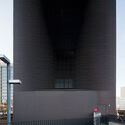
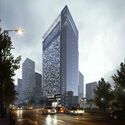
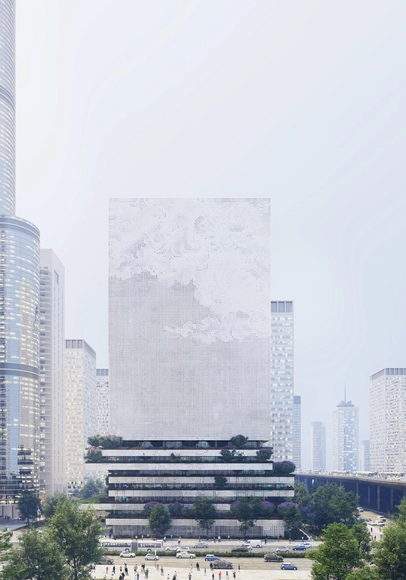
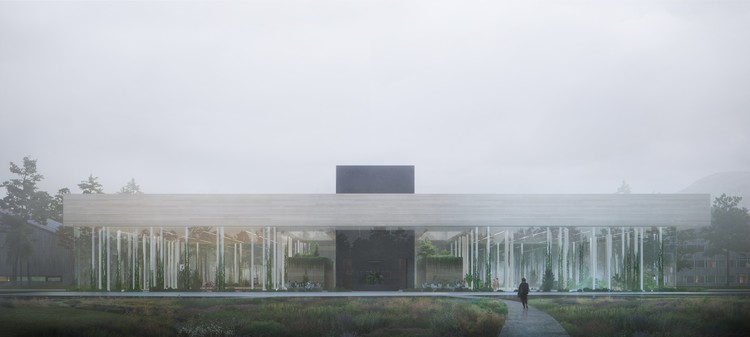
Mecanoo has unveiled their design for the Qianhai Data Center in Shenzhen, China, from which they received second prize in an international design competition. The 63,000-square-meter scheme, imagined as an urban beacon, consists of an opaque tower atop an open plinth with offices and support spaces.
The 113-meter-tall “digital lighthouse” is to be located within the 15-square-kilometer Qianhai Free Development Zone, where it will mark the arrival to the district and symbolize its innovative ambition.
Snøhetta has released images of its proposed sustainable data center concept, named “The Spark.” The project seeks to address the typical high-energy-consuming typology of the data center, transforming it into an “energy-producing resource for communities to generate their own power.”
The proposal is adaptable for a wide range of contexts and can be scaled for any location around the world, fueling connected cities with energy from the center’s excess heat.
https://www.archdaily.com/896905/snohetta-designs-sustainable-data-center-as-the-body-and-brain-of-future-citiesNiall Patrick Walsh
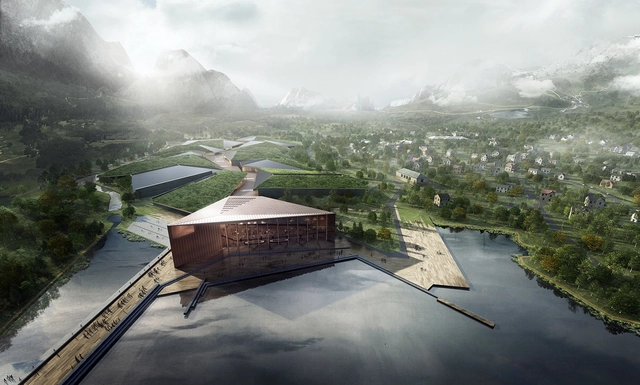
Plans have been revealed by American-Norwegian data company Kolos to construct the world's largest data center, a claim based on the amount of electrical power the site intends to draw from the grid to supply its banks of servers and cooling facilities. Located on a fjord in Ballangen, Norway, the proposed site sits within the Arctic Circle and would take advantage of the cold climate, low humidity, and the abundant supply of hydropower currently available in the area.
https://www.archdaily.com/877826/plans-unveiled-to-construct-the-worlds-largest-and-most-secure-data-center-in-northern-norwayAD Editorial Team
Videos
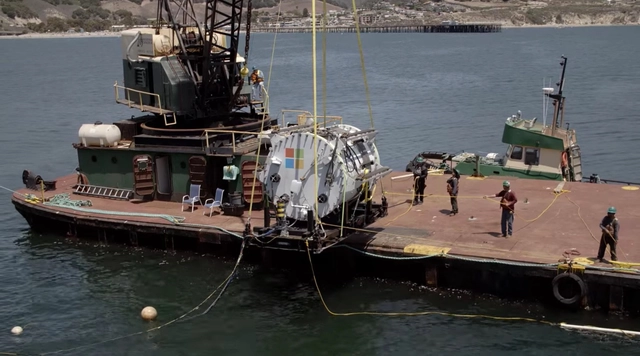
The Data Center being lowered into the water. A shot of the underwater data center. Screenshot via Microsoft
From giant squids to sunken treasure, the ocean has a way of hiding secrets better than any other place on Earth – so why not hide your personal information down there too?
That scenario may soon be our reality, as Microsoft has unveiled that, for the past year and a half, they have been testing a prototype data center that is completely submerged underwater. Devised by Microsoft engineer Sean James, the theory argues that placing the massive server farms underwater could dramatically reduce both construction and cooling costs, as well as provide a reliable source of renewable energy and even improve their performance.
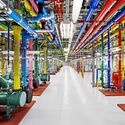
Have you ever wondered where your information goes when you save it to "The Cloud"? The answer is within giant data centers. According to reports, Facebook and Google's data centers resemble something from Science Fiction, while some could come straight from a Bond flick. In a new short film named Internet Machine, Filmmaker and Visual artist Timo Arnall takes us where few have been granted access, showing the world what "The Cloud" really is - a massive architectural space with extreme energy demands. To experience the power surging and hear the deafening hum of a data center, check out the trailer above.
The bank architect’s goal is to create a secure edifice. The bank robber’s? To subvert the edifice. And yet consider their commonality: their interaction with space. Both analyze plans and consider inefficiencies, both inhabit the space much differently than your average spectator. In fact, the Robber’s relationship with space is far more physical, urgent…nuanced. As Mehruss Ahi, a recent graduate from Woodbury University, puts it in his senior thesis: “The Architect is the Bank Robber…and the Bank Robber is the Architect.”
Ahi suggests a Robber-like “spatial hack” of the bank: an identification of its inefficiencies/vulnerabilities/paths of circulation. He also notes the necessity of giving priority to large storage space for goods rather than money (due to “the migration of banking services to the Web”). This new perspective, Ahi argues, will allow architects to design a smarter, more secure bank. The bank of the future.
Ahi’s assertion about the need for physical storage space (as banks turn to the Web), got me thinking. Our world depends less and less on physical storage, and more and more on the bits of information flying through the wires and cables of the internet. Ahi’s theory, while an interesting insight into bank design, is even more powerful when applied to the bank’s modern day equivalent: the Data Center.