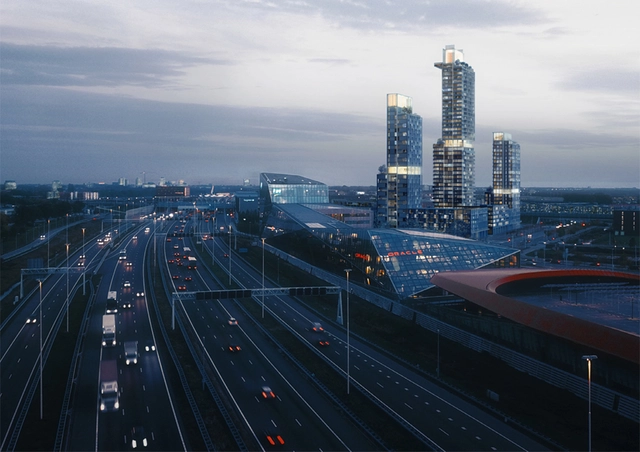
MARK Vertical Village. Image Courtesy of de Architekten Cie. Studio A2
A team of Dutch design studios have won the competition for a new high-rise development next to the Leidsche Rijn station in Utrecht. Architekten Cie, Karres en Brands, KCAP and Geurst & Schulze joined together to create a development of three towers with over 1,000 residences. Mixing social housing with medium to high rent apartments, the project weaves together collective spaces around sustainable urban living. Redefining high-rise design, the vertical village aims to bring Utrecht's landscapes into the sky.
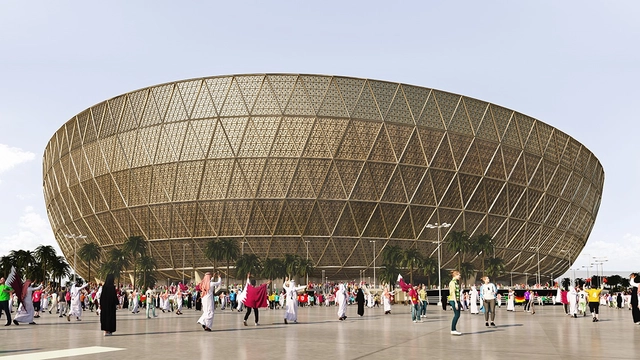
The organizers behind the FIFA 2022 Qatar World Cup have released new images of the Foster + Partners-designed Lusail Stadium. Merging contemporary and historical influences, the “sleek, bold shape” of the arena is inspired by the bowls and vessels used in the Middle East across centuries.
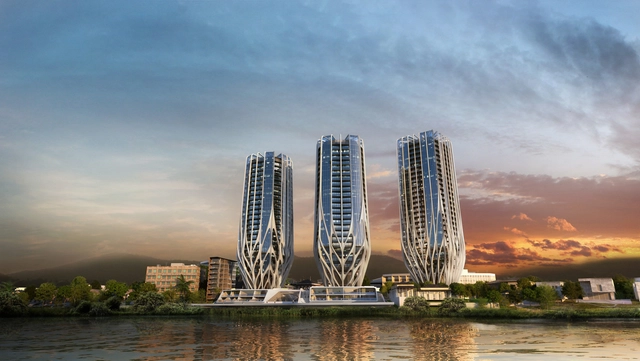
Plans for a set of skyscrapers for Brisbane, designed by Zaha Hadid Architects, have been scrapped following a long-running controversy. The "Grace on Coronation" scheme, lodged for application in 2014, consisted of three sculptural residential towers and sought to reinvigorate a historic site in Toowong, four kilometers west of Brisbane’s Central Business District.
However, the scheme has been criticized for a perceived lack of sensitivity to the surrounding area, with its proposed 27 stories breaching the city plan limit of 15 stories. In May 2018, a sole resident won an appeal against the development due to the height violation.
https://www.archdaily.com/907959/zaha-hadid-architects-champagne-flute-brisbane-towers-cancelledNiall Patrick Walsh
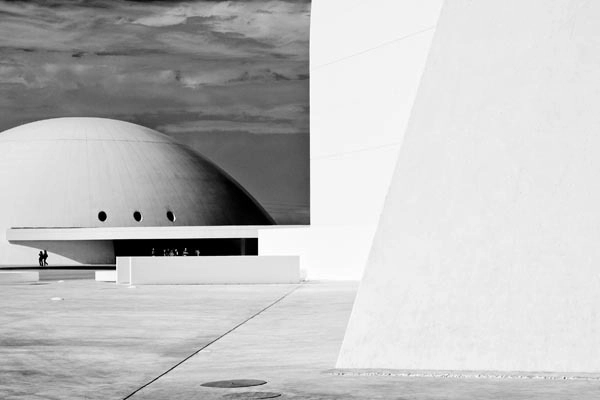
To honor renowned Brazilian architect Oscar Niemeyer’s birthday (December 15, 1907), Slovenian photographer Danica Kus published a series of black and white photographs highlighting Niemeyer’s surviving architecture. The architect, who passed in 2012 at the age of 104, is considered one of the greatest modernist architects of the 20th century.
Kus’ photographs accentuate the hyperbolic curves characteristic of Niemeyer’s design, while also highlighting the geometric harmony of rectilinear elements. In an exclusive interview with ArchDaily before his death, Mr. Niemeyer described his personal definition of architecture: “In my opinion, architecture is invention. And under this prism is how I do my projects, always searching for beautiful, expressive, different and surprising solutions.” This photo series encompasses the subtleties of Niemeyer’s premier works and spans his career.
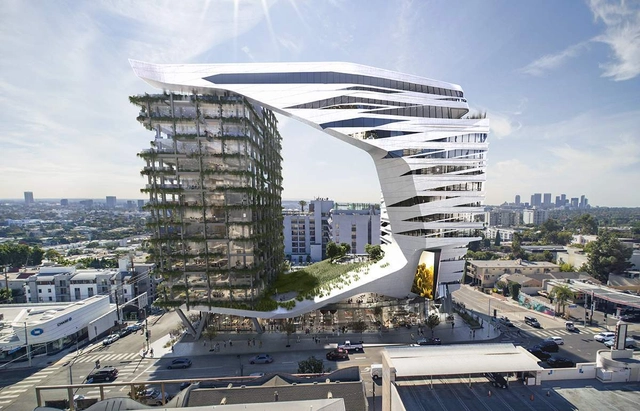
8850-8878 Sunset Boulevard. Image Courtesy of Morphosis
Morphosis has revealed a design for a new 15-story hotel along the Sunset Strip in Los Angeles. The design comes four months after Silver Creek Development purchased the property and the site of the landmark Viper Room night club. At nearly 200 feet in height, the mid-rise structure would feature an a large interior opening through two connected towers. The sinuous hotel would redefine one of L.A.'s most iconic streetscapes.
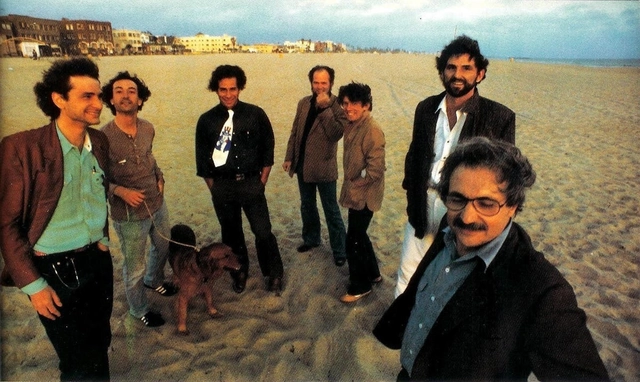
SCI-Arch Founders. From left to right: Frederick Fisher, Robert Mangurian, Eric Owen Moss, Coy Howard, Craig Hodgetts, Thom Mayne, Frank Gehry. Photograph C 1980 Ave Pildas, Courtesy of SCI-Arc
Pritzker laureate Thom Mayne goes back to SCI-Arc, the renowned school he cofounded back in 1972. More from their press release:
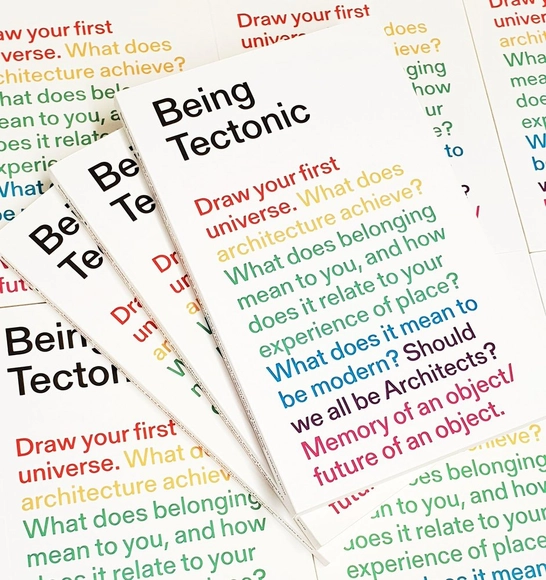
As part of the programming ahead of the 2019 Oslo Architecture Triennale, the “Degrowth” curatorial team have released a book in association with Oslo School of Architecture and Design (AHO.) The book, titled “Being Tectonic” was developed with students as part of a course focusing on domestic architecture.
https://www.archdaily.com/907896/oslo-architecture-triennale-releases-being-tectonic-publicationKatherine Allen
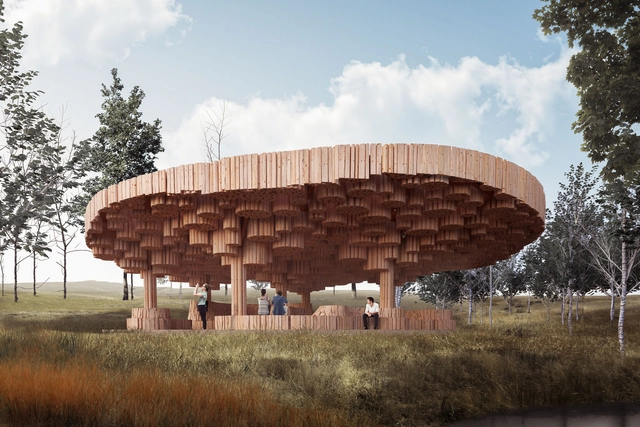
Tippet Rise Gathering Pavilion. Image Courtesy of Kéré Architecture
Berlin-based Burkinabé architect Diébédo Francis Kéré has designed a wooden pavilion for Tippet Rise Art Center in Montana. In addition to the pavilion, the Tippet Rise Fund of the Sidney E. Frank Foundation will also support Kéré's work to build an environmentally sustainable secondary school in Burkina Faso called Naaba Belem Goumma. Kéré designed the project in the Beartooth Mountains so visitors can experience a "rain of light" as sunlight filters through a structure of vertically stacked logs.
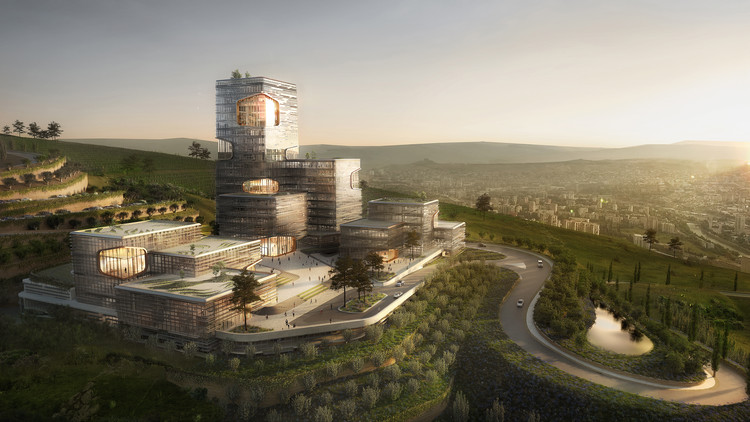
UNStudio has broken ground on their TBC Forum in Tbilisi, Georgia, exploring a “new open, flexible and interactive approach to financial institutions.” Departing from the traditional closed, introverted typology of historic banking structures, the TBC Forum is founded on the design principles of flexibility, and transparency.
Situated in the natural surroundings of the Lisi Lake resort, the TBC Forum is strategically placed to form a contemporary yet respectful interpretation of the historic highland stone-and-mortar village of Shatili.
In a year packed with headlines, you’d be forgiven for occasionally letting them pass you by. But even within the mass of project proposals, awards, competitions, and events, a few trends emerged in 2018 - trends that both tell us about the year past and suggest where things might be heading. These trends, below:
https://www.archdaily.com/907875/the-architectural-trends-that-dominated-news-stories-in-2018AD Editorial Team
The CTBUH has released its Year in Review, charting the year’s tall building developments around the world. 2018 saw a record-breaking 18 supertall buildings (over 300 meters tall) built across the world, and 143 buildings of over 200 meters in height completed.
To quantify the extent to which architecture reached to the sky throughout the year, the CTBUH estimate that if each tall building completed in 2018 was laid end to end, it would exceed the entire length of the island of Manhattan; some 13 miles (21.6 kilometers).
https://www.archdaily.com/907692/15-reasons-why-2018-was-a-record-breaking-year-for-tall-buildingsNiall Patrick Walsh
In the current iteration of our digital age, Instagram is king. With 1 billion active monthly users, Instagram has become the go-to visual platform for showcasing a wide variety of architectural typologies and styles, city views, and stunning edifices. Since its inception in 2010, the online space has provided constant and continuous inspiration for architects, designers, and lovers of photography. It is an entirely digital architectural community, free of bias, open to all. As Instagram continues to be a vital tool in the field of architecture, we take a look back on the year's 20 most-liked photos posted to our ArchDaily account.
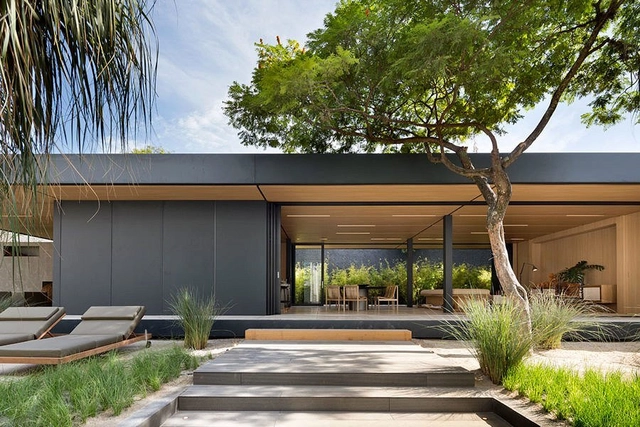
Brazilian startup SysHaus, in partnership with architect Arthur Casas, developed a project of sustainable, smart homes that are ready in half the time of other pre-fab works. The startup project, specializing in high-end real estate, is made only of pieces of recycled materials, such as aluminum and MDF. In addition, the house does not produce waste or wastewater.
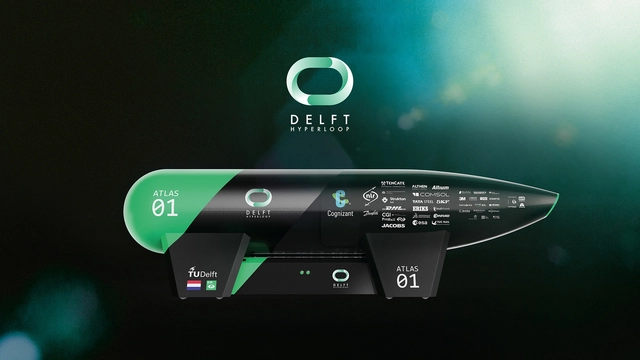
A team of students at the Delft University of Technology has proposed an innovative design for a Hyperloop pod. Winners of the SpaceX Hyperloop Pod Competition in 2016, the TU Delft team came in second place this year with a pod design for one of the most promising transportation systems that many countries hope to build in the near future. The Netherlands in particular, where the University is located, hopes to be the first country in Europe to conceive and build a functional Hyperloop system.
The team’s work will help jumpstart the Dutch Hyperloop system’s development and catalyzes the government's efforts to invest in research that will help make the Hyperloop a reality. The system would be able to decrease the number of vehicles on the road and accommodate the needs of individuals traveling a variety of distances.
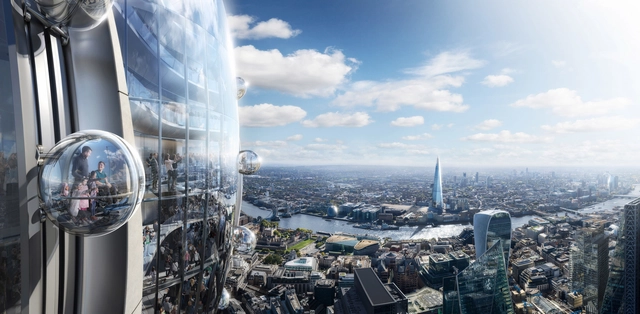
Blossoming alongside the iconic Gherkin building, Foster + Partners' Tulip Tower has been planning to join London's skyline since they released their proposal earlier in November. However, construction of the1,000-foot tower has been halted until officials can determine its impact on aircraft radar systems at London City airport, six miles away. Featuring mobile gondolas in the form of three-meter wide glass spheres intended for visitor rides on an elliptical journey around the tower, the proposed viewing platform is potentially highly problematic.
2019 will be a strong year for architecture and construction, moving between the challenges of building the cities of tomorrow and the fast digitalization of our industry. To face these challenges, we will work hard to continue being the main source of inspiration and discovery for the millions of architects who use ArchDaily every day, from all over the world.
https://www.archdaily.com/916086/the-year-in-numbers-looking-forward-to-what-2019-will-offerPola Mora
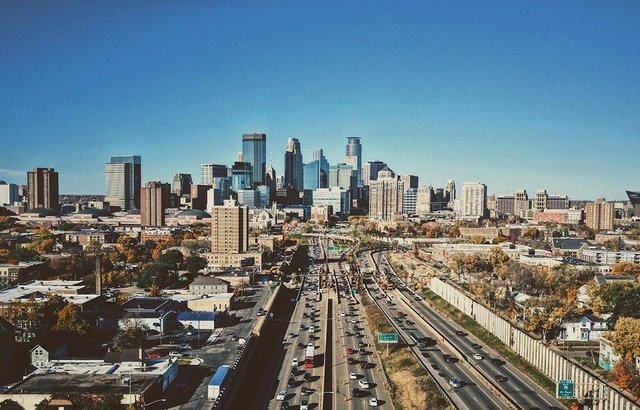
Minneapolis will become the first major U.S. city to end single-family home zoning. City Council passed Minneapolis 2040, a plan to permit three-family homes in the city’s residential neighborhoods. This significant zoning change will also allow high-density buildings along transit corridors and abolish parking minimums for all new construction. Hoping to combat high housing costs, segregation and sprawl, the plan is set to become a precedent for cities across the United States.
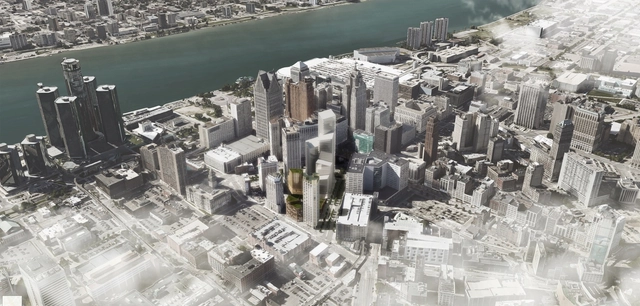
Schmidt Hammer Lassen Architects has broken ground on its first U.S. project, a mixed-use tower and associated masterplan in Detroit, Michigan. “Monroe Blocks” will stitch together the heart of one of America’s most storied cities with a mix of modern office space, residential units, restaurants, retail, and outdoor public areas.
The 12,500-square-meter site in Detroit’s Campus Martius Park, vacant for a generation, will be activated by 4,800 square meters of outdoor space, with the design team drawing on historical influences for the form and materiality of the new masterplan.
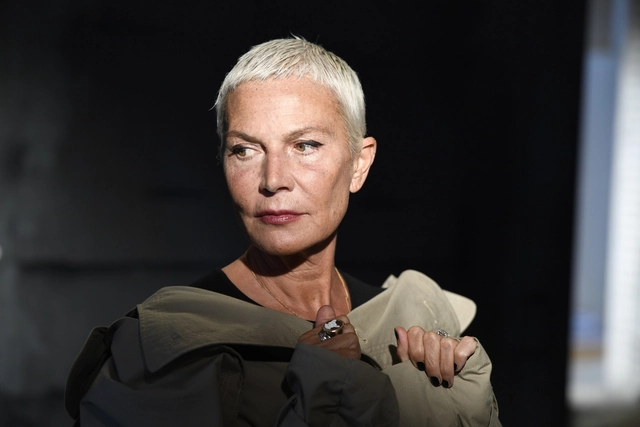
Italian activists RebelArchitette and VOW Architects, led by Louise Braverman, Caroline James, Arielle Assouline-Lichten and Francesca Perani, have launched a petition seeking equal recognition for Doriana Fuksas in the Lifetime Achievement Award recently given to her fellow partner and Director of Studio Fuksas, Massimiliano Fuksas.
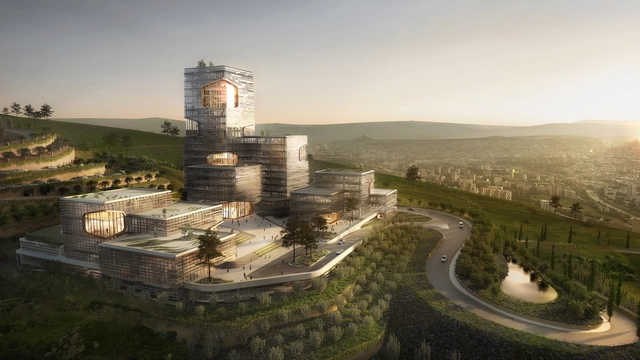
Either as singular outcroppings or as part of a bustling center, skyscrapers are neck-craning icons across major city centers in the world. A modern trope of extreme success and wealth, the skyscraper has become an architectural symbol for vibrant urban hubs and commercial powerhouses dominating cities like New York, Dubai, and Singapore.
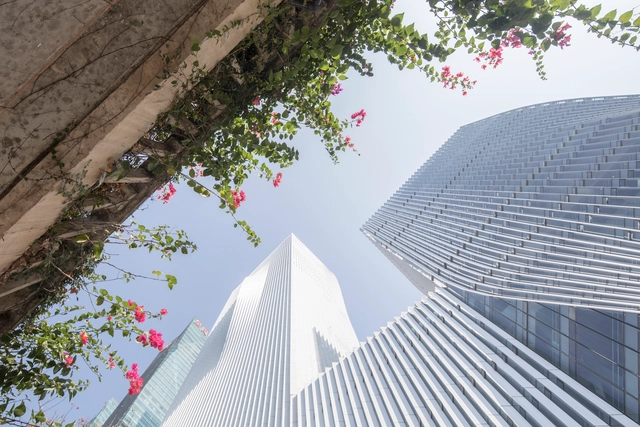
While skyscrapers are omnipresent, 2018 introduced new approaches, technologies, and locations to the high-rise typology. From variations in materiality to form, designs for towers have started to address aspects beyond simply efficiency and height, proposing new ways for the repetitive form to bring unique qualities to city skylines. Below, a few examples of proposals and trends from 2018 that showcase the innovative ideas at work:
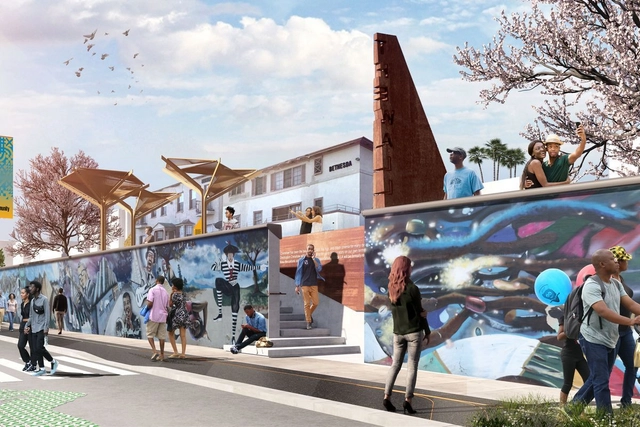
Destination Crenshaw. Image Courtesy of Perkins + Will
Perkins + Will have revealed a design for an open-air museum along the Crenshaw light-rail line in Los Angeles. Dubbed Destination Crenshaw, the project will run 1.1 miles and feature outdoor art and cultural spaces that celebrate black thinkers, activists, and performers of Los Angeles. Featuring works of public art as well as streetscape upgrades by Studio-MLA, the design was conceived as a response to Metro’s decision to put a section of the Crenshaw/LAX Line at ground level.
The government of Moscow has begun developing an existing district in the city to test nearly 30 new ‘smart’ technologies for urban development. Home to over 8,000 people, the district is testing ideas on smart lighting, smart waste management, and smart heating. The city intends to evaluate what impact technologies bring to residents and adjust its urban renewal plan once the pilot is complete.
First Prize: Tidal Terrains / Mary Denam. Image via Laka
Laka has published the results of the 2018 edition of their annual Architecture that Reacts competition, focusing on “architectural, design, or technological solutions that are capable of dynamic interaction with their surroundings.” This year saw 200 participants from more than 30 countries submit 130 designs, following an interdisciplinary approach reaching beyond typical building solutions.
This year’s winners hailed from the USA and Austria, confronting issues such as climate change, ubiquitous computation, and new ways of perceiving space in a machine-driven future. Below, we have rounded up the winners, special recognitions, and honorable mentions from the 2018 edition. For more information on the competition, and previous results, visit the official website here.
Half a century after the new suburban tract home was the dream of many a young American family, refurbished properties are gaining in popularity. This trend extends beyond North America, with exciting renovations of existing structures popping up all over the world, from Belgium to Kenya to China. The attraction to this typology likely lies in its multiplicity; renovations are both new and old, historic and forward-looking, generative and sustainable.
Nowhere is this trend more visible and popular than in housing, where the transformation is often led by the owners themselves. Loosely grouped under terms like “fixer-upper” and “adaptive reuse,” these projects begin with just the structural skeletons and the building’s history. At the personal scale, renovation/refurbishment is an opportunity to bring a part of yourself to your home - but do these small projects together have the potential to turn around a housing crisis?









.jpg?1544639813)


.jpg?1556570858&format=webp&width=640&height=580)


.jpg?1544768630)


.jpg?1544768953)

.jpg?1544705828&format=webp&width=640&height=580)
.jpg?1544704370 "Second Prize: Embodied Homeostasis / David Stieler . Image via Laka")
.jpg?1544704501 "Third Prize: Platform of Motion / Nusrat Jahan Mim, Arman Salemi. Image via Laka")
.jpg?1544704196 "Surftopia / Eduardo Camarena Estébanez, María Urigoitia Villanueva. Image via Laka")
.jpg?1544704181 "Platinum City / Sean Thomas Allen. Image via Laka")
.jpg?1544705828)