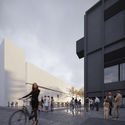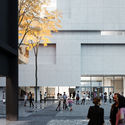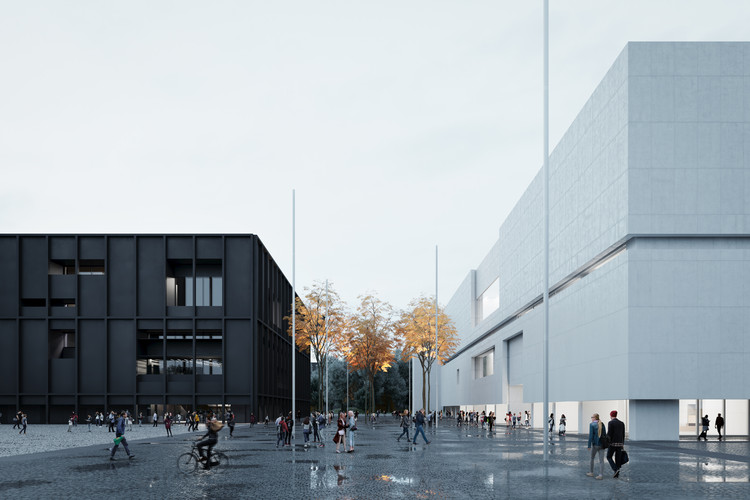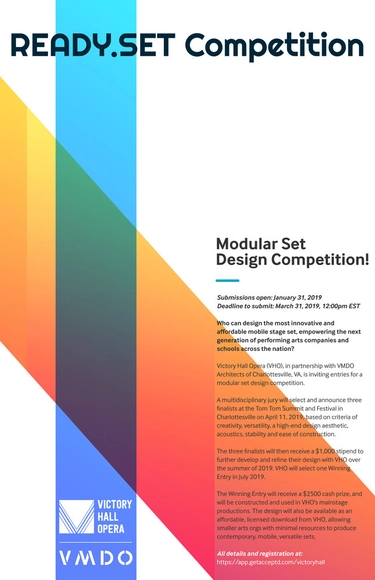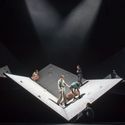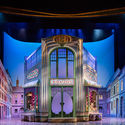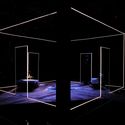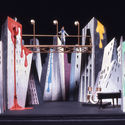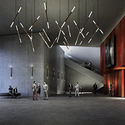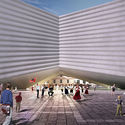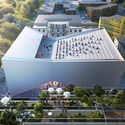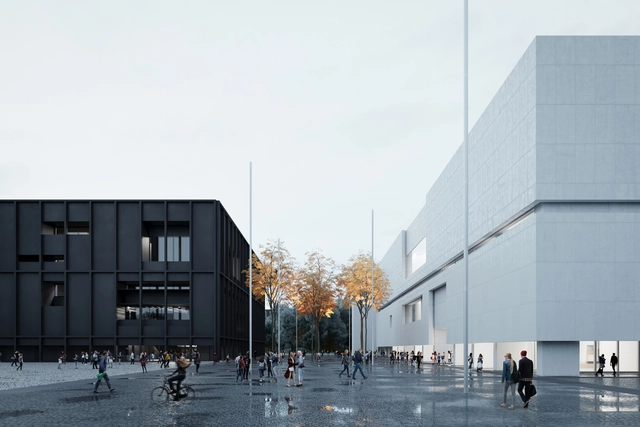
Victory Hall Opera [VHO]—in partnership with VMDO Architects of Charlottesville, Virginia—is inviting entries for a modular set design competition. VHO challenges all assumptions about the presentation and interpretation of opera, and is seeking a set design that will rethink what a set can be.

What do Kanye West and Frank Gehry have in common?
As a first impression, not much. However, they have both engaged on stages with striking design details: the use of exaggerated scale and dimensions to manipulate visual perception, bulky concrete walls and slabs to emphasize heavyweight and grandiosity, visible scaffolding to create an industrial, unfinished feel... Sounds familiar, doesn’t it?

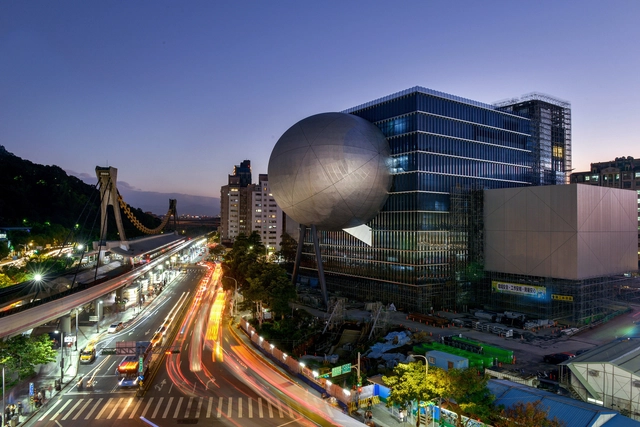
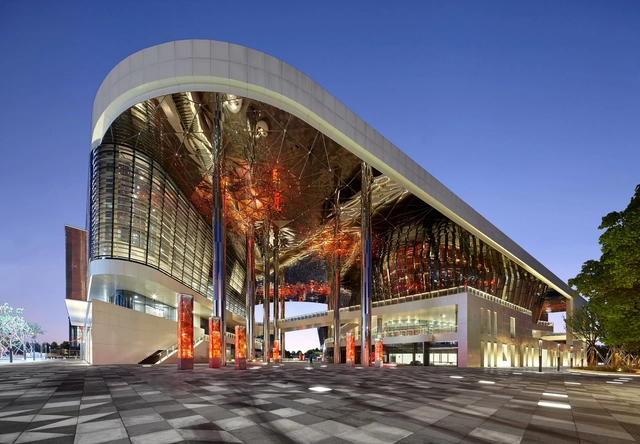
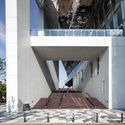
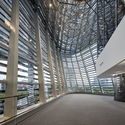
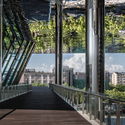
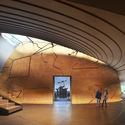
New photographs have been released of OMA’s Taipei Performing Arts Center (TPAC), as construction continues in Taiwan. Consisting of three theaters, each functioning autonomously of each other, the OMA scheme seeks to depart from the traditional consensus of performing arts centers as simply containing a large auditorium, medium-sized theater, and small-size black box.
OMA sees “no excuse for contemporary stagnation,” using the TPAC as an opportunity to experiment with the inner workings of theaters, leading to a dynamic external presence. Hence, the TPAC’s three theaters plug into a central cube combining stages, backstages, and support spaces into a single, efficient entity, allowing stages to be modified or merged for unforeseen scenarios.
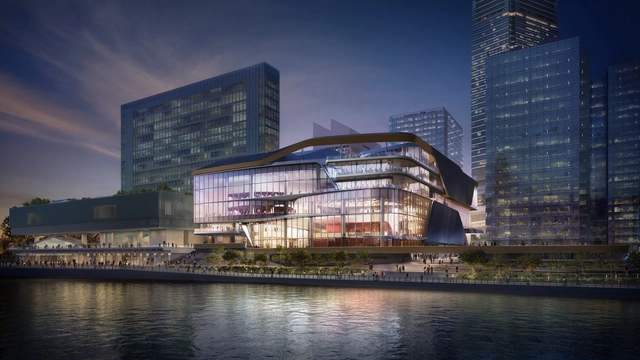
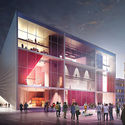
UNStudio has released images of their proposed Lyric Theatre complex in the West Kowloon Cultural District of Hong Kong. Intended as a “celebration of the world of theater,” the mixed-use scheme will house three theaters, rehearsal room, and dining, retail, and entertainment functions.
Designed to be open, inclusive, and welcoming, the compact scheme is comprised of a series of stacked transparent elements making the arts accessible to the general public. Open displays draw visitors inside from a series of reactivated plazas surrounding the scheme, supported by “an additional programme for the public to enjoy that is independent of performance timetable.”
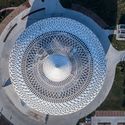
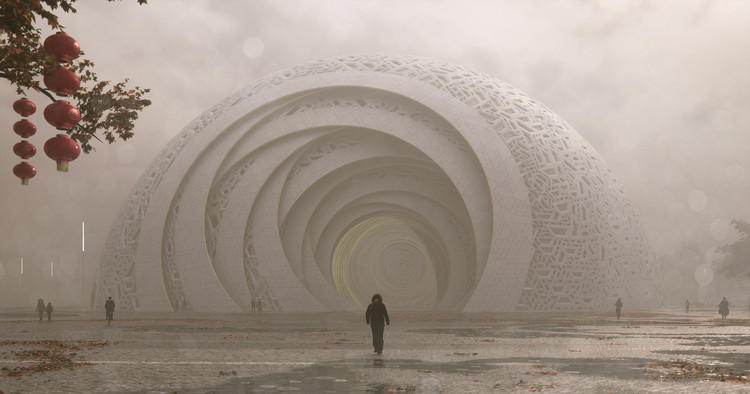
Steven Chilton Architects has released details of their proposed Puzzle Ball Theatre in the Huadu District of Guangzhou, China. The 2000-seat spherical scheme is influenced by the ancient art of puzzle balls; “intricately carved sculptural ornaments consisting of several concentric spheres, each freely rotating with the next and traditionally formed from a single block of material.”
The Chilton scheme, along with the original Yue-inspired show it will contain, seeks to evoke the characteristics and qualities of the ancient art, through a spherical massing, asymmetric overlapping patterns, and a complex surface geometry.
https://www.archdaily.com/906113/steven-chilton-architects-guangzhou-theater-is-inspired-by-the-ancient-chinese-art-of-puzzle-ball-carvingNiall Patrick Walsh
This article was originally published on July 29, 2016. To read the stories behind other celebrated architecture projects, visit our AD Classics section.
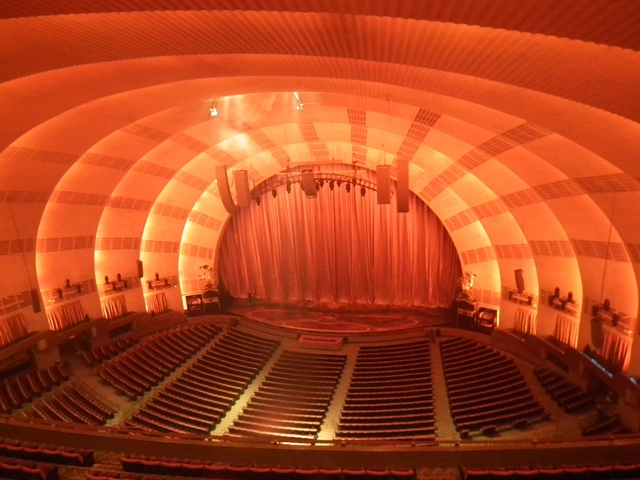
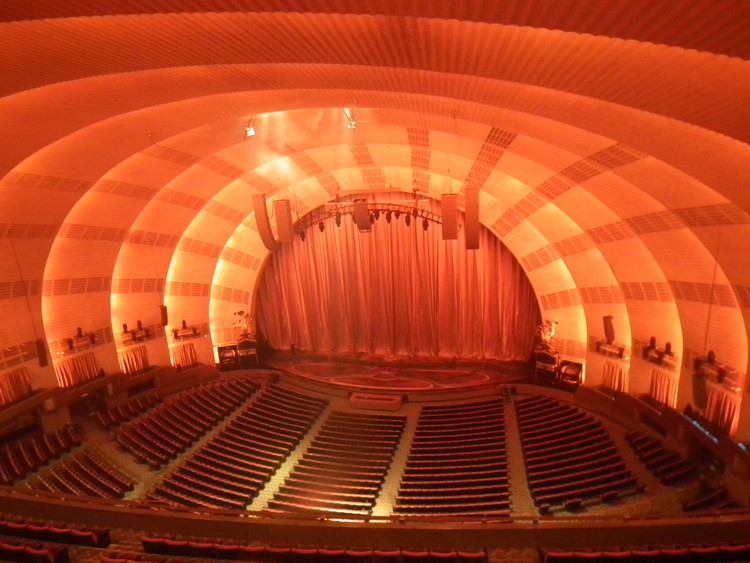
Upon opening its doors for the first time on a rainy winter’s night in 1932, the Radio City Music Hall in Manhattan was proclaimed so extraordinarily beautiful as to need no performers at all. The first built component of the massive Rockefeller Center, the Music Hall has been the world’s largest indoor theater for over eighty years. With its elegant Art Deco interiors and complex stage machinery, the theater defied tradition to set a new standard for modern entertainment venues that remains to this day.
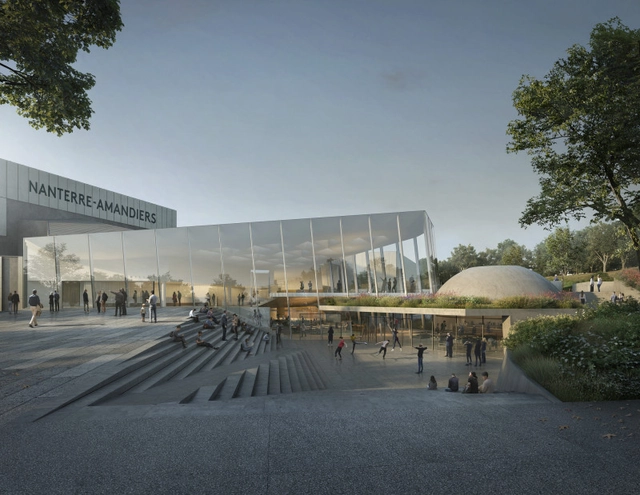
Snøhetta has been announced as the winner of a design competition for the renovation of the avant-gardist Théâtre Nanterre-Amandiers in Nanterre, France. The renovation seeks to breathe new life into the 1960s theater, known for its high-quality performances and global collaborations.
The renovations will include the addition of a 200-seat theater, and the reconfiguration of the building’s restaurant, bookshop, and atrium space, with an emphasis on flexibility and natural light.
https://www.archdaily.com/904425/snohetta-to-renovate-avant-garde-theater-in-nanterre-france-with-dynamic-extensionNiall Patrick Walsh
The City of Poznań invites to participate in an open international architectural competition on development of architectural conception for seat of the Musical Theatre in Poznan.
The area of the competition is located in the western part of the city, at the corner of Św. Marcin and Skośna streets, in the immediate vicinity of the Music Academy and the railway.
The Competition will be held in polish.
Participants: team composed of an architect, acoustician and stage technologist.
The link between architecture and cinema is unquestionable, as is the magic of seeing a film in a place structured specifically for this contemplative activity. The design requires architectural solutions that not only respond to the distribution of seats and visibility of movie-goers but also to acoustics and lighting.
Various projects published on our site highlight how architects have responded to this challenge in innovative ways. Below, stunning 10 movie theaters with their plans and drawings.
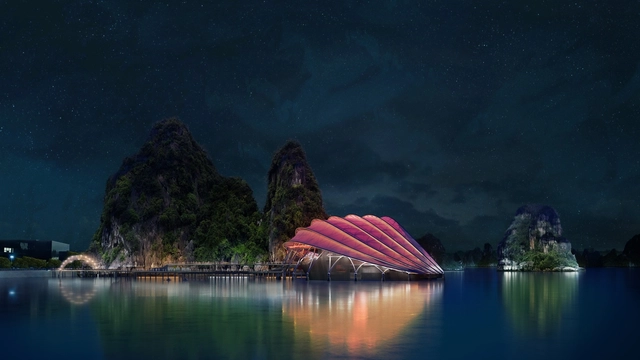
Sceno Light Architecture has released new images of their Ha Long Impression Theater, situated in the idyllic Ha Long Bay in North Vietnam. Drawing inspiration from various mythological and natural features, the soon-to-be-built scheme intends to offer a panoramic backdrop for visitors.
The theater is conceived as a “floating skin” intended to host 2600 people at a time, for two shows per day.
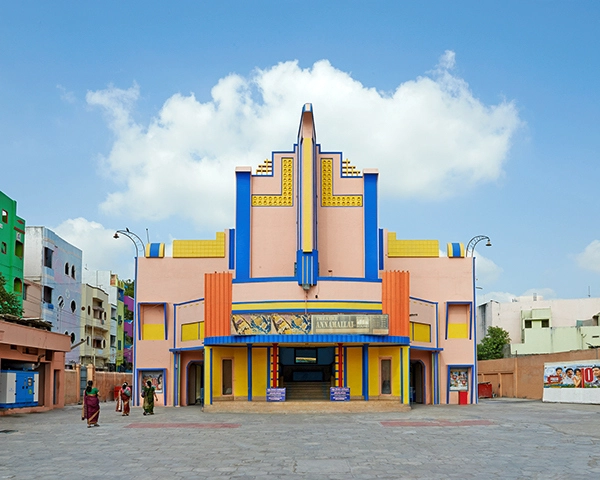
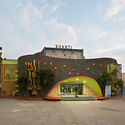
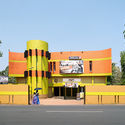
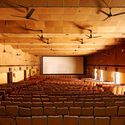
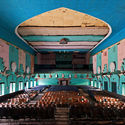
Photographer Stefanie Zoche of Haubitz-Zoche has captured a series of vibrant images showcasing the “hybrid modernist” movie theaters of Southern India. The images below, also available on the artist’s website, capture the large number of cinemas built in both rural and urban areas of South India in the 1950s, 60s, and 70s, all conveying an “unconventional mix of local building styles and Western influences."
As Zoche describes, the colorful facades, “suggestive of theatrical sets, provide a foretaste of the cinematic experience in the hall itself, in which extravagant shapes and ornamentation are continued and put the viewer in the right mood for the cinematic world before the screening itself.”
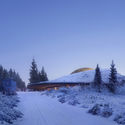
Snøhetta have released images of their proposed planetarium and visitor’s center for Norway’s largest astronomical facility. Nestled in a dense forest 28 miles (45 kilometers) north of Oslo, the scheme features a new 16,000 square foot (1,500 square meter) planetarium, and “interstellar cabins” mimicking small planets.
The facilities seek to offer a range of scientific activities to be experienced by the public, including astronomy, sun studies, and natural science, permitting the exploration of the night sky, and the Northern Lights.
In 1961, the architect Louis I. Kahn was commissioned by the Fine Arts Foundation to design and develop a large arts complex in central Fort Wayne, Indiana. The ambitious Fine Art Center, now known as the Arts United Center, would cater to the community of 180,000 by providing space for an orchestra, theatre, school, gallery, and much more. As a Lincoln Center in miniature, the developers had hoped to update and upgrade the city through new civic architecture. However, due to budget constraints, only a fraction of the overall scheme was completed. It is one of Kahn’s lesser-known projects that spanned over a decade, and his only building in the Midwest.
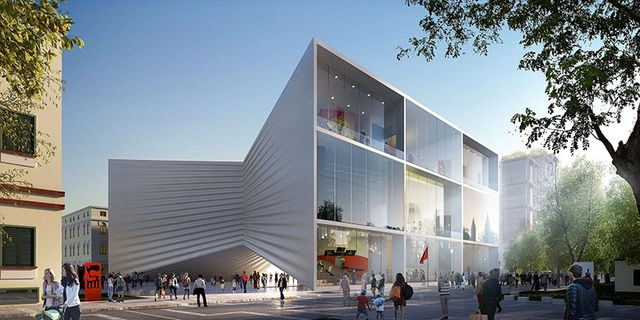
Bjarke Ingels Group (BIG) has released images of its bow-shaped National Theatre of Albania, responding to a thriving performance art scene in the nation’s capital. Situated in the cultural heart of downtown Tirana, the scheme seeks to create new urban gathering places for a pedestrian-focused district, while casting the theater as a performer in its own right.
Situated on a cultural axis, adjacent to public landmarks such as Skanderbeg Square, the National Opera, and the National Art Gallery, BIG’s scheme will replace the existing theater while adding three new performance spaces, a rooftop amphitheater, and a covered public space underneath the building.
Aerial view. Rendering by Flying Architecture. Image Courtesy of UNStudio
UNStudio has been selected as the winner of the largest ever private initiative architectural competition to be held in France – for the keystone ‘Centre Culturel’ of the new EuropaCity development currently being developed in the Triangle de Gonesse region just north of Paris.
As a brand new ground-up district, in 2017 EuropaCity launched a call for the design of 8 key buildings to be located within BIG’s competition winning master plan, including a concert hall, hotels, contemporary circus and exhibition hall. UNStudio was chosen to design the new Centre Culturel Dédié Au 7è Art, which will house a cinema complex and “cultural laboratory.”
SPF:a has revealed their design for the new Anaheim Performing Arts Center (APAC) to be located adjacent to Angels Stadium in Anaheim’s Platinum Triangle District. The $500 million, 500,000-square-foot cultural campus will contain three theaters and a range of culture and entertainment program elements, housed within striking buildings inspired by the orange tree.
After funding issues threatened to halt the project last year, plans for the Ronald O. Perelman Performing Arts Center at the World Trade Center are now back on track after an agreement made between the venue and the Port Authority of New York and New Jersey.