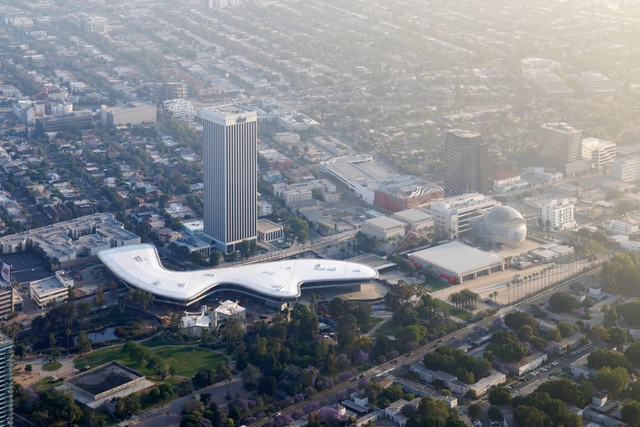
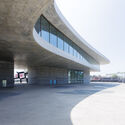
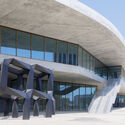
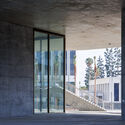
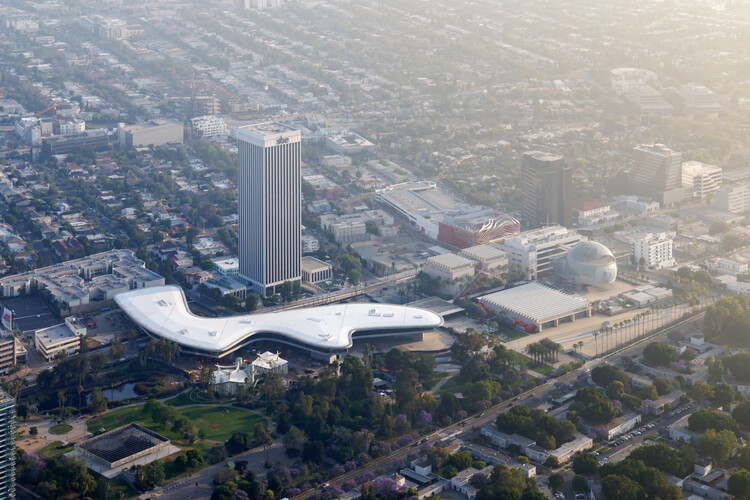
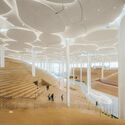
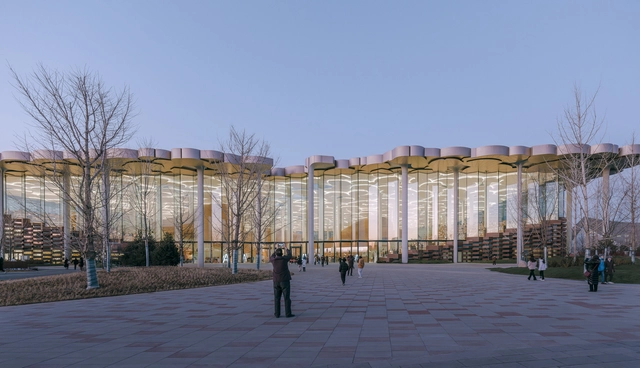
The first photographs of the long-anticipated David Geffen Galleries at the Los Angeles County Museum of Art (LACMA) have been unveiled, captured by architectural photographerIwan Baan. Designed by Pritzker Prize-winning architect Peter Zumthor, in collaboration with Skidmore, Owings & Merrill, the building marks the culmination of a process spanning more than two decades. The museum recently offered an exclusive preview of the building in its raw architectural state, ahead of the installation of artworks. Major construction was completed at the end of 2024, and portions of the lower levels are already accessible to visitors. The galleries are scheduled to officially open in April 2026, when they will house LACMA's permanent collection.
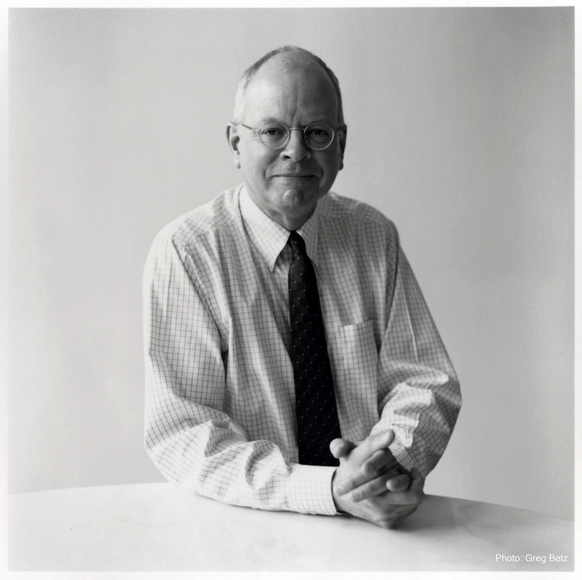
David M. Childs, the architect renowned for his significant contributions to the New York City skyline, passed away on March 26, 2025, in Pelham, N.Y., at the age of 83. His career, primarily spent at Skidmore, Owings & Merrill (SOM), was marked by a commitment to urbanistic values and a dedication to enhancing the civic good through architecture. Childs left an indelible mark on the built environment, balancing aesthetic considerations with the complex demands of large-scale urban projects.
As the global population continues to rise, dense cities face mounting challenges in catering to the needs of billions of people living and working in urban areas. Architects have long explored the skyscraper typology as a solution to these challenges, integrating commercial spaces and public amenities within residential buildings to create all-inclusive experiences for tenants. Over the years, skyscrapers have evolved into multifaceted vertical communities that aim to address the complexities of urban living.
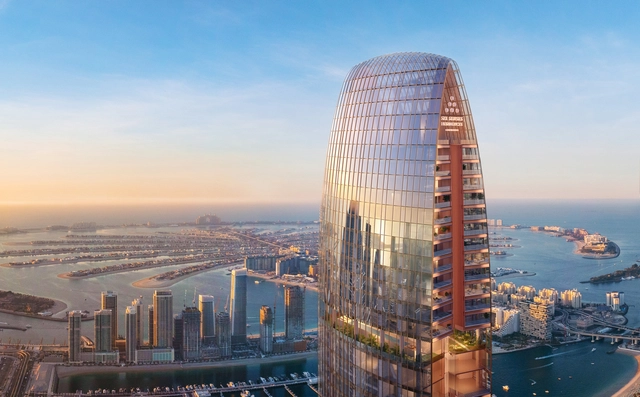
Every year, the Council on Tall Buildings and Urban Habitat (CTBUH) ranks the tallest buildings worldwide, encompassing completed projects, those under construction, and proposed developments. In this updated 2024 article, ArchDaily presents a list of the 25 tallest buildings currently under construction, along with their expected completion dates. These skyscrapers showcase the latest innovations in architecture, engineering, and urban planning.
Throughout the year, ArchDaily's team of curators works on expanding and populating our project library. Located all around the world, each curator carefully considers the best works emanating from their respective regions in an effort to have a diverse representation of the most inspiring and innovative built works. The team looks to new rising practices, new technologies, and the vernacular revival of traditional construction techniques. Seeking socially driven initiatives, as well as major works by renowned architects, the overall offers a holistic view of the built world today and is relayed through the yearly project review.
Beijing, as the cultural and political center of China, embodies a rich architectural language that bridges history and modernity, tradition and innovation, showcasing the city's profound depth and diversity. From monumental landmarks like CITIC Tower and Daxing International Airport to the hidden courtyard renovations nestled within the city's historic hutongs; from the dramatic revitalization of the Shougang industrial site to the refined transformations of Baiziwan and Baitasi, Beijing's architectural achievements continue to captivate and inspire. Every space tells a unique story of the city, blending heritage with contemporary vibrancy.
In this city, memories are preserved, and vitality thrives. Let us step into Beijing, rediscovering the "new Beijing" within the "old Beijing" through the lens of its architecture, and experience the depth of time and the pulse of the city in its dynamic spaces.
Humanity has become obsessed with breaking its limits, creating new records only to break them again and again. In fact, our cities’ skylines have always been defined by those in power during every period in history. At one point churches left their mark, followed by public institutions and in the last few decades, it's commercial skyscrapers that continue to stretch taller and taller.
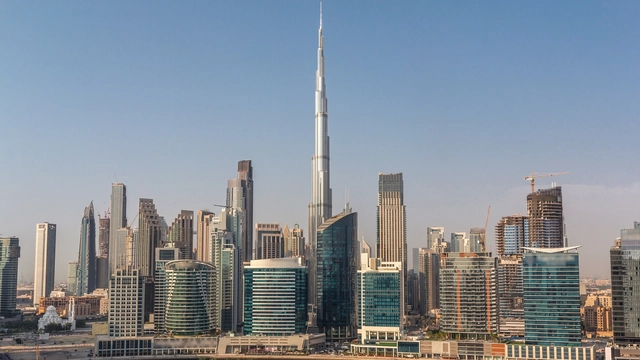
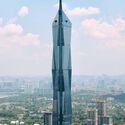
The Council on Tall Buildings and Urban Habitat (CTBUH) has developed its own system for classifying tall buildings, stating that the Burj Khalifa (828 m.) is the world’s tallest building right now. Read on for the 25 tallest buildings in the world today.
Air rights transactions have become essential in urban development, allowing cities to grow vertically while preserving limited land resources. Typically defined as the right to use or sell the space above a property, air rights enable property owners to transfer unused floor area ratio (FAR) to neighboring parcels, creating increased density and financial gain opportunities. However, the definition can vary based on locality and region, as each country interprets air rights and the ability to build or transfer them differently. As urban centers face mounting pressures from limited land supply and population growth, air rights continue to offer a creative solution that fosters architectural innovation and economic efficiency.
On January 21, 1958, three women sat down as contestants for an episode of the popular television show "To Tell the Truth", a quiz game in which a panel tries to guess which of the three contestants is who they say they are by asking them a series of questions. The announcer reveals the true identity of the person is a registered architect, has so far designed a Hilton hotel, and is a married mother of four. Each of the women, dressed formally in pencil skirts and blouses, introduces themselves as Natalie De Blois. As the panelists reveal their lack of knowledge about architecture, only firing off questions about Frank Lloyd Wright, one asks "What is the name of the building that was torn down to build Union Carbide?" The real Natalie De Blois, at the time a senior designer at SOM, firmly answers, "Hotel Margery."
Architecture is one of the oldest recorded professions, dating back to ancient eras when builders designed historic huts and constructed some of the great wonders of the world. When we think about women who have been known as trailblazers of the industry, it's astonishing that we often talk about women who we may interact with in the workplace day to day, or who our mentors may have learned from. Natalie De Blois was a modern-day pioneer of women in the design workforce, and although her legacy began only seventy years ago, it has significantly changed the way that women can participate in the profession today.
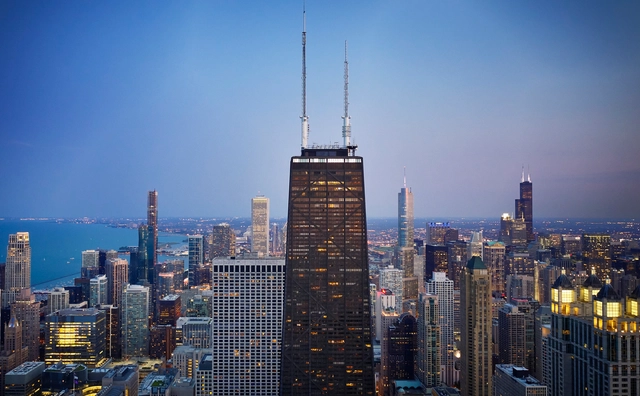
Skidmore, Owings & Merrill (SOM) have announced plans to redevelop the 95th and 96th floors of the iconic 875 N. Michigan Avenue, formally named the John Hancock Center. The building, originally designed by SOM in 1967 and completed in 1970, is recognized as the world's first mixed-use skyscraper, having become a recognizable feature of Chicago's skyline. The redesign endeavor aims to reimagine the two floors, measuring 30,000 square feet, into an observation deck and an attractive destination in the city.
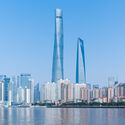
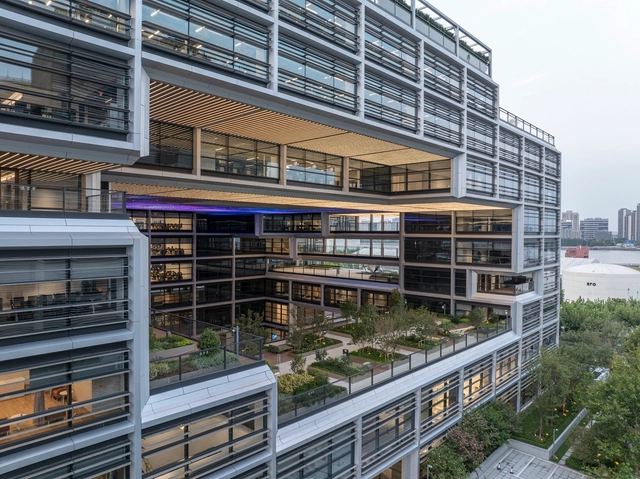
As humanity enters the AI-driven intelligent era, technology platform enterprises adopt more open and flexible modes of operation. Collaborative spaces such as creative incubators and informal exchange areas have become key places for practicing their operational philosophies. In the design of headquarters buildings, companies aim to engage with the public more deeply and convey their corporate culture and spirit, in addition to fulfilling daily office functions. Alibaba's new headquarters in Shanghai is located in the "Global Waterfront Lifestyle Demonstration Zone," at the heart of the West Bank Cultural Corridor. Positioned by the river and near the West Bank Media Port, Financial City, and other industrial hubs, the site integrates art with industrial heritage, bringing a unique historical and contemporary vibrancy to the area. The architecture around the park is "star-studded," with forward-thinking designs from renowned architectural firms worldwide. The three buildings of Alibaba Xuhui Riverside Campus, designed by SANAA, Foster + Partners, and SOM, are introducing new concepts and visions to Xuhui Riverside.
Skidmore, Owings & Merrill (SOM) has commenced construction on the global headquarters for China International Marine Containers Group (CIMC) in Shenzhen's Qianhai district. The 270-meter-tall structure, designed by SOM after winning an international competition, will stand as a 53-story tower. The project aims to serve as a corporate hub while also incorporating sustainable practices. The development is scheduled for completion by 2029.
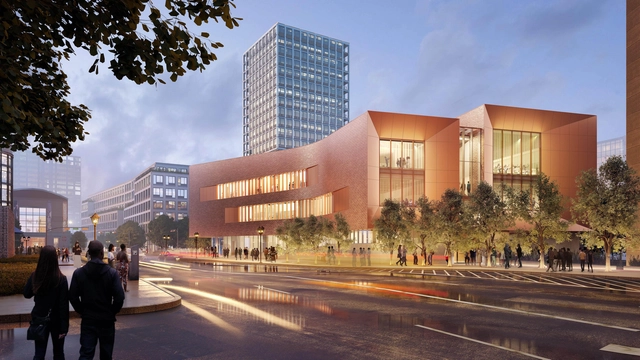
The New Jersey Performing Arts Center (NJPAC) has announced a three-year redevelopment of its 2-acre downtown Newark campus. The project, designed by architectural firms Skidmore, Owings & Merrill (SOM), and Weiss/Manfredi, has recently broken ground and is scheduled for completion in the fall of 2027. It integrates 350 mixed-income residential units, retail spaces, and a dynamic education and community center, in addition to rehearsal spaces, a new headquarters for jazz public radio station WBGO, and various outdoor gathering areas.
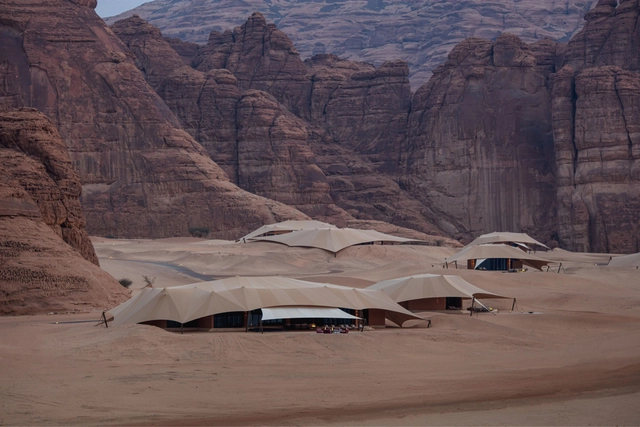
Banyan Tree Hotel AlUla by AW2 - Architecture & Interiors. Image Courtesy of Architecture and Design Commission
The King Salman Charter for Architecture and Urbanism Award is an initiative designed to recognize and celebrate architectural excellence aligned with the values of the King Salman Charter in Saudi Arabia. Established to honor King Salman’s vision, the Award promotes high-quality design by encouraging architects and designers to integrate the Charter’s principles into their work.
Deutsches Architekturmuseum (DAM) has announced the International High-Rise Award 2024/25. Selected from more than 1,000 new high-rises worldwide dating from the past two years, the nominated projects are located in 13 counties from 5 continents. In autumn, the five finalists will be announced, followed by the winner announcement scheduled for November 12, 2024. The main objective of the award is to highlight good practices in the ongoing trend of mixed-use high-rises.
With the increase in the construction of high-rises, special features such as the introduction of greenery in the design, unusual shapes, or the construction of clusters of towers, have become the new normal. DAM’s research this year also shows a growing eco-awareness, as the focus in high-rise construction is increasingly on the use of existing buildings. While the majority of tall buildings continue to be erected in China, followed by the USA, Australia, and Singapore have emerged as new hubs of high-rise architecture.
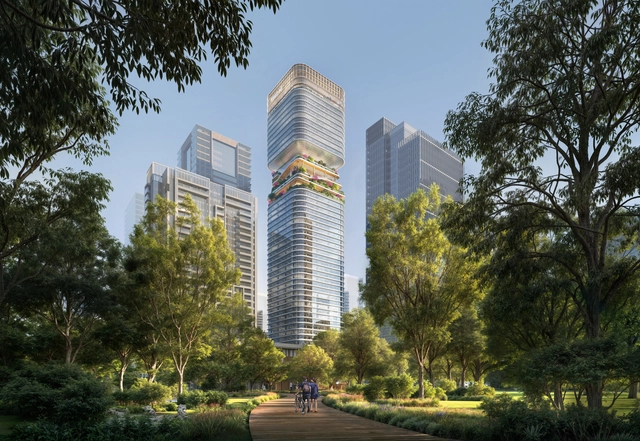
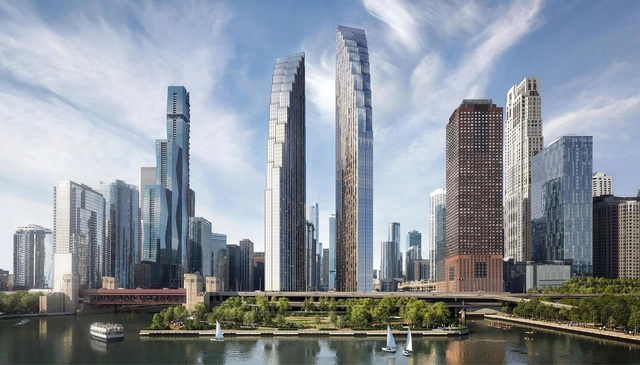
The Skidmore Owings & Merril (SOM) two-tower development in Downtown Chicago has just started construction. Situated at the intersection of Lake Michigan and the Chicago River, the new residential development seeks to redefine Chicago’s skyline. Composed of 635 residential units in its first phase, 20% of which are designated as affordable housing, the scheme also outlines the design of DuSable Park. Phase one of the project has officially commenced, occupying the last undeveloped waterfront parcel in the Streeterville neighborhood.
Brutalist buildings are a significant component of Washington, D.C.’s architectural identity. In the National Building Museum’s new exhibition, Capital Brutalism, this identity is explored further. Co-organized with the Southern Utah Museum of Art (SUMA), Capital Brutalism is a comprehensive exhibition of Brutalist architecture in Washington, D.C., to date, running until February 17th, 2025.
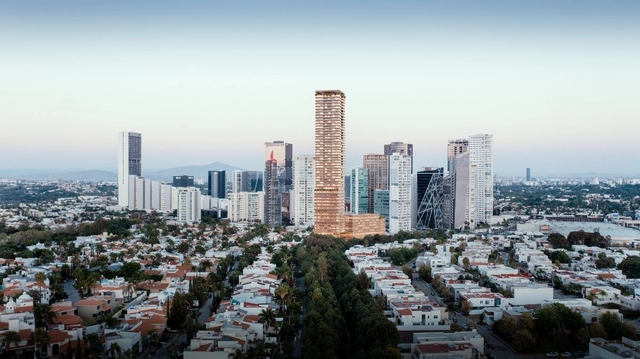
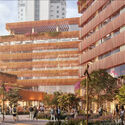
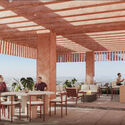
American architecture and engineering firm Skidmore, Owings & Merrill (SOM), in collaboration with Mexico City-based Estudio AMA and interior designer Esrawe Studio, has revealed a new 190-meter-tall mixed-use tower in Guadalajara, Mexico. The new addition, which broke ground on May 24, is slanted to become the tallest building in the Andares Zapopan district of the city, offering residential units, hotel rooms, and various amenities.