1. ArchDaily
  2. Modernism

Modernism: The Latest Architecture and News

Architectural Glass 101: Transparent Trends in 2024

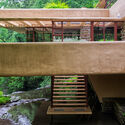
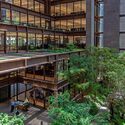
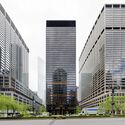
In the 21st century, Glass has become a cornerstone material for architecture. Once limited to apertures and openings, Glass now dominates entire facades, especially in high-rise buildings where transparent cladding material is preferred to maximize views. The technological advancements in Glass have been remarkable, transitioning from single-pane panels, such as those used in Bauhaus' iron window frames, to today's triple-pane systems with specialized gas infills, such as argon, designed to address Glass's long-standing thermal limitations.

Architectural Glass 101: Transparent Trends in 2024 - Imagen 1 de 4Architectural Glass 101: Transparent Trends in 2024 - Imagen 2 de 4Architectural Glass 101: Transparent Trends in 2024 - Imagen 3 de 4Architectural Glass 101: Transparent Trends in 2024 - Imagen 4 de 4Architectural Glass 101: Transparent Trends in 2024 - More Images+ 11

Eileen Gray Through the Lens: Film Sheds Light on the Architect and Her Vision of Modernism

Subscriber Access | 

A journey through the legacy of Eileen Gray and her most famous house in the French Riviera, "E.1027 – Eileen Gray and the House by the Sea," by directors Beatrice Minger and Christoph Schaub, invites viewers into the layered legacy of the pioneering Irish architect and her unique vision of modernism. Designed in the late 1920s, the villa not only embodies Gray's architectural genius but also bears the shadow of an uneasy narrative involving Le Corbusier and Jean Badovici. Through their docufiction, Minger and Schaub illuminate Gray's groundbreaking work and critique the prevailing narratives of male dominance in modernist history.

Eileen Gray Through the Lens: Film Sheds Light on the Architect and Her Vision of Modernism - Image 1 of 4Eileen Gray Through the Lens: Film Sheds Light on the Architect and Her Vision of Modernism - Image 2 of 4Eileen Gray Through the Lens: Film Sheds Light on the Architect and Her Vision of Modernism - Image 3 of 4Eileen Gray Through the Lens: Film Sheds Light on the Architect and Her Vision of Modernism - Image 4 of 4Eileen Gray Through the Lens: Film Sheds Light on the Architect and Her Vision of Modernism - More Images+ 2

The Continued Relevance of Models in Architecture's Digital Era

Subscriber Access | 

For centuries, models have been central to architectural design, providing architects with a tangible way to explore ideas, test concepts, and communicate their vision. From the Renaissance to Modernism, models have been instrumental in the construction and reflection processes, offering insights into form, proportion, and spatial relationships. However, in today's digital age, where 3D models and Virtual Reality (VR) have become powerful and efficient tools, the question arises: Are physical models still relevant in contemporary architecture?

The Continued Relevance of Models in Architecture's Digital Era - Image 1 of 4The Continued Relevance of Models in Architecture's Digital Era - Image 2 of 4The Continued Relevance of Models in Architecture's Digital Era - Image 3 of 4The Continued Relevance of Models in Architecture's Digital Era - Image 4 of 4The Continued Relevance of Models in Architecture's Digital Era - More Images+ 24

Exploring the Legacy of Modernism in Landscape Architecture

Modernist landscape architecture marked a radical shift from traditional garden designs, emphasizing simplicity, functionality, and a stronger connection between people and their environments. From the 1930s through the 1960s, this movement saw the emergence of visionary landscape architects who integrated form and function in ways that redefined outdoor spaces. Their designs responded to the rapidly evolving urban landscapes of the time, prioritizing usability and creating environments that could accommodate modern life. The enduring influence of these principles continues to shape contemporary practices, while also presenting unique challenges in preservation as these landscapes age.

Exploring the Legacy of Modernism in Landscape Architecture - Imagen 1 de 4Exploring the Legacy of Modernism in Landscape Architecture - Imagen 2 de 4Exploring the Legacy of Modernism in Landscape Architecture - Imagen 3 de 4Exploring the Legacy of Modernism in Landscape Architecture - Imagen 4 de 4Exploring the Legacy of Modernism in Landscape Architecture - More Images+ 18

Dakar, A City in Constant Reinvention

Subscriber Access | 

Dakar is a city of constant development. From colonial times, and on, the capital of Senegal has seen a lot of shifts in its societal definition which has, in turn, affected its architectural and urban fabric. Ever since the French mandate which somewhat forced a shift of local living traditions into a more 'European' lifestyle, the wheels of change have been set in motion. Afterward, a notable post-colonial attempt at re-defining Dakar was inevitable. It came about in many ways, still seen today, and it built a city of mixed architectural languages that defies most visitors' expectations.

Though the renowned African mid-century modernism was certainly present in the years after Senegal's independence in 1960, this was mostly due to its popularity with practicing architects in the region, not its relevance for the capital's rebuilding efforts. The modernist approach, which was mainly seen in the public, institutional, and cultural buildings, and which persists today in a more undefined contemporary style, was always aimed at showcasing Dakar to the world. It did not, however, reflect the reality of the city's development nor the way its dwellers live.

In an effort to refocus on Dakar, some of our more recent ArchDaily coverage has highlighted the many development and design efforts that look to provide a better means of living to inhabitants.