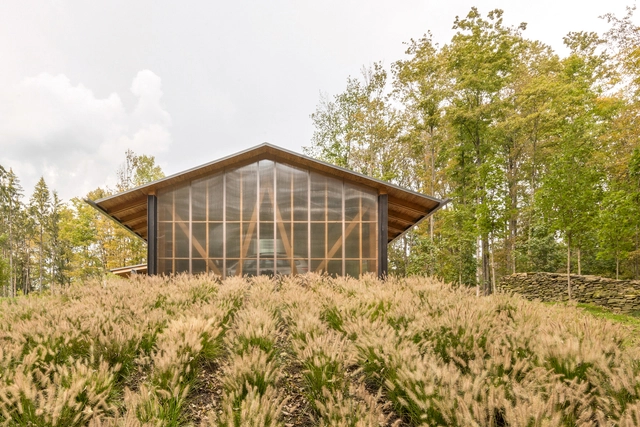
This year marked another milestone for Indian architects in pushing the boundaries of contemporary practice nationwide. A noticeable trend among the projects featured on ArchDaily has been the embrace of fluid forms, a subtle homage to vernacular practices that parallels a gradual departure from India's legacy of modernist design rhetoric. Indian architecture praxis has evolved to reflect a deeper engagement with local contexts alongside a willingness to experiment with global influences. This approach is likely to subsist in the coming years, opening the door for new architectural expressions in the country.
Where design moves beyond rigid geometries to celebrate fluidity, architects across the subcontinent reimagine spatial experiences with forms that flow, merge, and breathe. Challenging conventional architectural paradigms, these projects continue to draw inspiration and proliferate deeply rooted cultural narratives. In India's case, the embrace of fluidity in architecture reflects an interplay of themes: materiality, memory, craftsmanship, and the living context of space.
In the 21st century, Glass has become a cornerstone material for architecture. Once limited to apertures and openings, Glass now dominates entire facades, especially in high-rise buildings where transparent cladding material is preferred to maximize views. The technological advancements in Glass have been remarkable, transitioning from single-pane panels, such as those used in Bauhaus' iron window frames, to today's triple-pane systems with specialized gas infills, such as argon, designed to address Glass's long-standing thermal limitations.
Tallinn Architecture Biennale 2024 has officially opened to the public. Hosted at the Museum of Estonian Architecture and across multiple venues in the center of the city, the event is centered around the theme "Resources For a Future." The head curator Anhelina L. Starkova along with co-curators Daniel A. Walser and Jaan Kuusemets hope to open up conversations about emerging approaches to designing and building architecture, including the potential of reused and repurposed materials. The event is held between October and November 2024, with free participation.
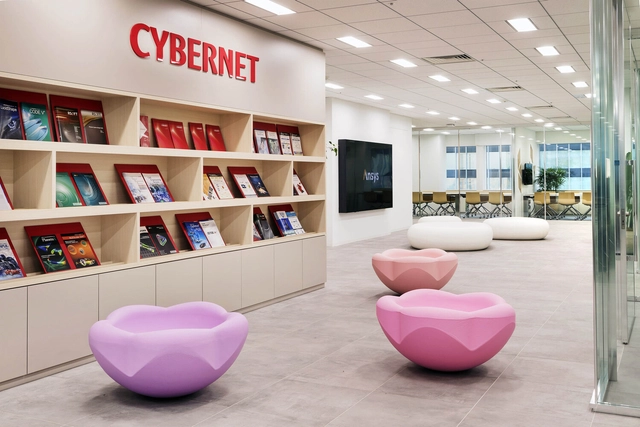
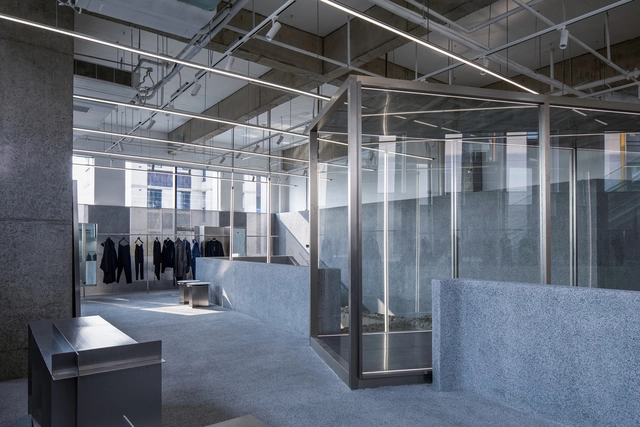
In recent years, continuous material finishes enveloping interior spaces have become increasingly prominent, particularly in branding-focused retail environments. A continuous interior refers to using what are typically liquid-applied materials that are cured to create seamless, uninterrupted surfaces, eliminating the appearance of joints and seams—at least during the initial application. A growing range of products now offer various color options, textures, and practical properties, making these finishes more versatile. Interestingly, the aesthetic effect of such interiors is uncanny to the rise of 3D rendering software, where the seamless, fluid look mirrors the smooth, idealized spaces typical of digital renderings. This effect also contributes to a sense of scalelessness, as the absence of visible seams or joints makes it harder to discern the actual size of a space, often giving the illusion that the interior is larger than it is.
The Kingdom of the Netherlands's pavilion, presented at the Expo 2025 Osaka, Kansai, Japan, features the theme, "Common Ground: Creating a New Dawn Together," emphasizing the Netherlands' dedication to fostering mutual understanding to address global challenges. Designed by RAU Architects, the pavilion's circular design features a prominent illuminated sphere at its center, symbolizing a new era of unlimited clean energy, akin to a "man-made sun" signaling a future powered by sustainable resources.
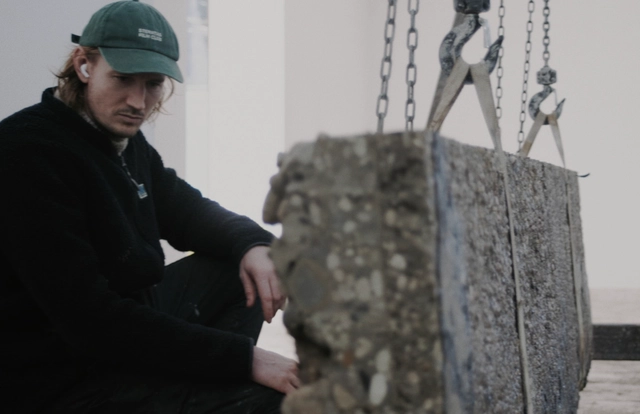
Throughout history, stone has been a vital building material because of its strength, beauty, and inherent appeal. Stone has been used to build long-lasting constructions for ages, from historic monuments to contemporary residences. Because of its resilience, it is suitable for both interior and exterior design projects, providing a diverse array of appearances. There are numerous varieties of stone, each with a distinct texture and color, including marble, granite, and limestone. Because of this diversity, stone may be creatively used by architects and builders to create accents or entire buildings. This curated selection of Unbuilt Architecture,submitted by the ArchDaily community, showcases how stone is still a dependable and adaptable building material that can combine old-world craftsmanship with contemporary style.
For decades, the construction industry followed a familiar rhythm: design came first, materials followed. The pressing need for sustainable buildings has shattered this routine. Material selection is no longer an afterthought, but a critical decision made at the outset, with the potential to dramatically reduce a project's environmental footprint. This shift is even more crucial given the construction industry's appetite for raw materials – a staggering 3 billion tons extracted annually. To navigate this new landscape, digital material libraries and data-driven evaluation are emerging as powerful tools, creating a culture where materiality takes center stage to shape a more sustainable built environment.
New York City’s skyline tells the tale of the region’s dated relationship with architectural innovation and style. Among the many materials that cloak the city’s built environment, terracotta has a distinct significance. The clay-based material was a prominent feature in buildings from the late 1800s to the 1920s and, after a brief pause, is experiencing a resurgence with contemporary design. The revival pays homage to The Big Apple’s architectural heritage while leading a movement for sustainable materials in the city.
The Feynan Ecolodge project. Image Courtesy of Dongola DAS 01 | Notes on Formation and Ammar Khammash
Ammar Khammash is a Jordanian architect, designer, and artist best known for his approach that focuses on the preservation of cultural and natural heritage while crafting an architecture that engages with its surroundings. With deep admiration for nature and its ecosystems, Khammash trusts that "the site is the architect”, a statement for which he is renowned that underscores the profound influence of context on his architectural design. With over three decades of experience spanning various disciplines and across several Middle Eastern countries such as Jordan, Oman, Palestine, Egypt, Syria, and the UAE, Ammar Khammash has consistently attempted to preserve and enhance the symbiosis between human constructions and the natural environment. His contributions include the Royal Academy for Nature Conservation, the Wild Jordan Center, and the restoration of the Church of Apostles.
In 2022, he was featured in the first edition of the Dongola Architecture Series, a biannual publication that offers unique perspectives into Arab culture by highlighting prominent contemporary architects. The issue, titled “Notes on Formation: Ammar Khammash,” written by Raafat Majzoub, explores "architecture as a transdisciplinary tool of expression, and as a method of imagining and reimagining the future," encapsulating the ethos of the publication. ArchDaily had the opportunity to talk to Ammar Khammash and Sarah Chalabi, founder of Dongola Limited Editions, to delve into the architect’s perspectives on site, materiality, and culture, along with his philosophy, notions on academia, and insights into the future of the profession.
For a long time, the construction industry has followed a linear process - extract raw materials, build structures, demolish them, and then dispose of the garbage in landfills. This approach has serious negative effects on the environment and society and is inherently unsustainable. Reconsidering traditional methods and workflows requires support from all stakeholders and a sense of urgency proclaimed by authorities. In the United States, city organizations have begun to implement new policies to keep construction waste out of landfills and support circular practices. Several cities like Seattle and Pittsburgh, have started implementing deconstruction ordinances that require older buildings to be carefully deconstructed rather than demolished. How might their key provisions influence circular practices in the country?
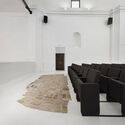
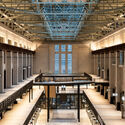
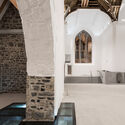
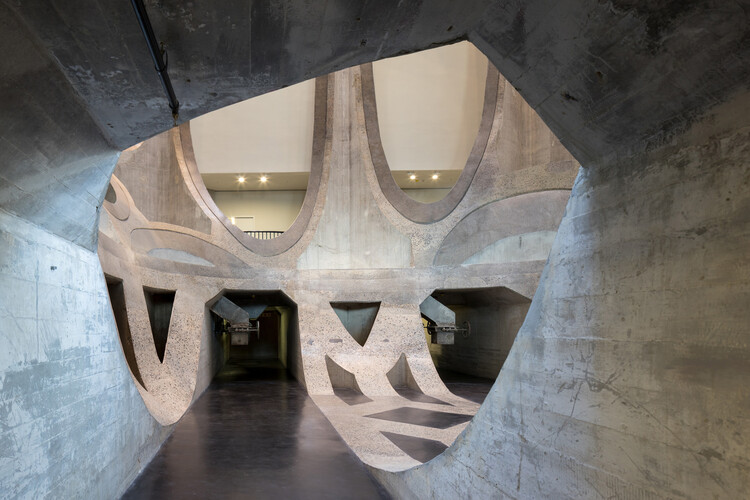
In recent decades, the term "adaptive reuse" has gained tremendous popularity as an eco-friendly construction approach. But what if there was something more poetic about reframing a space and its stories for new users? These architects show that once-deemed disposable facades, walls, and textures can obtain new meaning through bold and clever juxtapositions. These adaptations proudly display their conversions and layers of historical patina under them as a batch of honor and speak to the permanence of buildings and their impermanence in use and interpretation. Through subtle formal moves and daring material choices, they transformed structures that would have been otherwise demolished and reimagined them in new and intriguing ways.
The historical journey of construction also tells the story of humanity. The enduring examples from the past reveal insights into their specific contexts, and the remnants that have survived the elements and decay narrate the development of human technology. In the early days of construction, the common (and often the only) practice available to humans was to use locally available raw materials. For many, this meant building with clay.

The Second Studio (formerly The Midnight Charette) is an explicit podcast about design, architecture, and the everyday. Hosted by Architects David Lee and Marina Bourderonnet, it features different creative professionals in unscripted conversations that allow for thoughtful takes and personal discussions.
A variety of subjects are covered with honesty and humor: some episodes are interviews, while others are tips for fellow designers, reviews of buildings and other projects, or casual explorations of everyday life and design. The Second Studio is also available on iTunes, Spotify, and YouTube.
This week David and Marina of FAME Architecture & Design discuss the different ways contractor’s are hired and the pros and cons of each: Negotiated Agreement, Competitive Bidding, Design Build, and Pre-Construction. The two cover the processes, the role of the architect throughout, controlling project costs, and more.
https://www.archdaily.com/1011636/the-best-way-to-hire-a-contractor-pre-construction-and-other-methodsThe Second Studio Podcast
Some materials change the course of architecture from the moment they begin to be employed. The initial materials used in construction certainly did so: clay, stone, and wood. The ability to build is the origin of the discipline. With technological development, techniques were also refined, and in the 19th century, industrialization spread the use of other materials, transforming and expanding the realm of construction: iron and glass.
The built environment represents, for most of us, the background of everyday life, and yet, when we look at a building, we rarely understand what it is made of. In doing so, we also fail to understand its impact on us and on the larger systems of nature. Office Kim Lenschow aims to draw attention to this and to provoke critical thinking in relation to architecture and the materials that make it. By focusing on small-scale, mostly residential projects, the office seeks to reveal this hidden narrative of materials and cultivate more awareness and engagement with the structures surrounding us. For their involvement in the exploration of materials and sustainable development, Office Kim Lenschow has been selected as one of the ArchDaily 2023 New Practices. Every year since 2020, ArchDaily has curated and highlighted emerging offices that bring a new perspective to the field of architecture and design.
Given that the architects of modernity were in search of purity of form, it stands to reason that the image of this modern architecture is almost inevitably rendered in white in the collective imagination. Relieved of superfluous decorations, modern architecture became associated with the predominant use of white surfaces to highlight the volumetric composition. Combined with the concept of “material truth” first articulated by Victorian critic John Ruskin, white-colored architecture is often understood as straightforward, clear, and sincere.