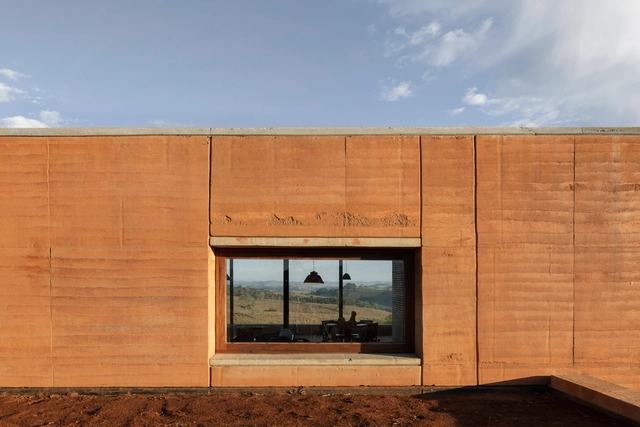
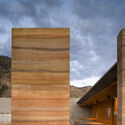
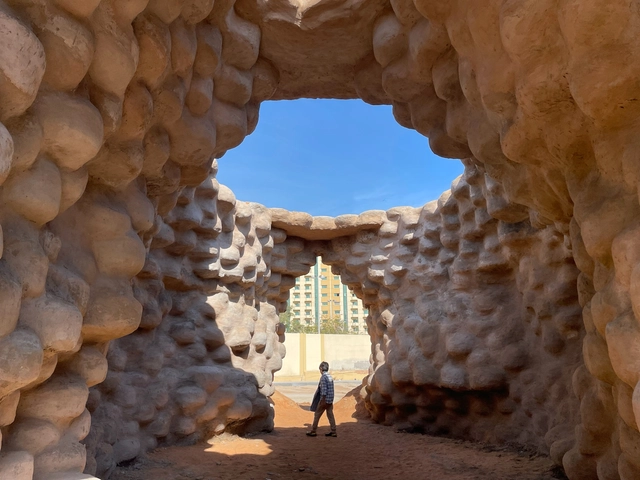
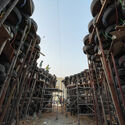
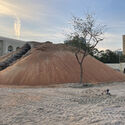
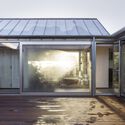
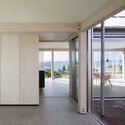
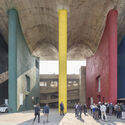
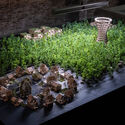
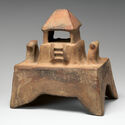
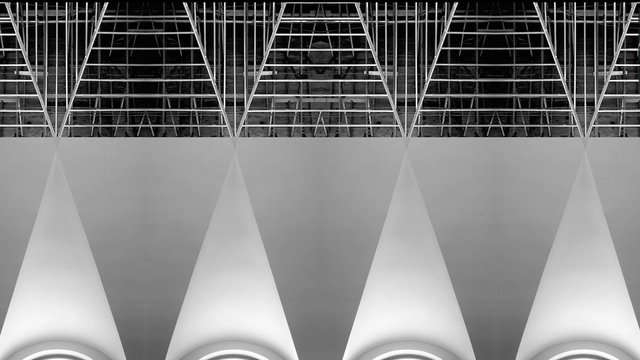
The historical journey of construction also tells the story of humanity. The enduring examples from the past reveal insights into their specific contexts, and the remnants that have survived the elements and decay narrate the development of human technology. In the early days of construction, the common (and often the only) practice available to humans was to use locally available raw materials. For many, this meant building with clay.
The Second Studio (formerly The Midnight Charette) is an explicit podcast about design, architecture, and the everyday. Hosted by Architects David Lee and Marina Bourderonnet, it features different creative professionals in unscripted conversations that allow for thoughtful takes and personal discussions.
A variety of subjects are covered with honesty and humor: some episodes are interviews, while others are tips for fellow designers, reviews of buildings and other projects, or casual explorations of everyday life and design. The Second Studio is also available on iTunes, Spotify, and YouTube.
This week David and Marina of FAME Architecture & Design discuss the different ways contractor’s are hired and the pros and cons of each: Negotiated Agreement, Competitive Bidding, Design Build, and Pre-Construction. The two cover the processes, the role of the architect throughout, controlling project costs, and more.
https://www.archdaily.com/1011636/the-best-way-to-hire-a-contractor-pre-construction-and-other-methodsThe Second Studio Podcast
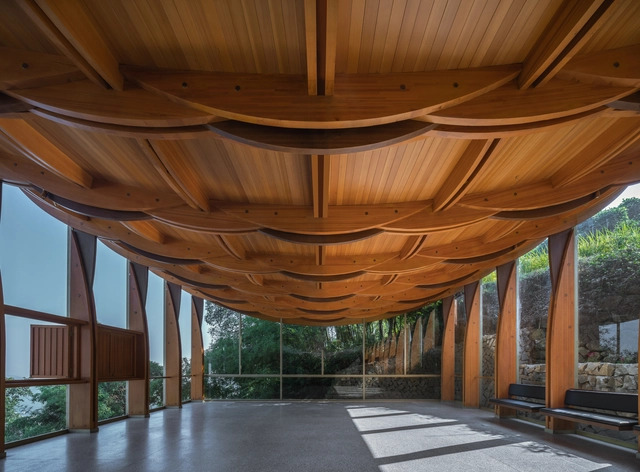
Some materials change the course of architecture from the moment they begin to be employed. The initial materials used in construction certainly did so: clay, stone, and wood. The ability to build is the origin of the discipline. With technological development, techniques were also refined, and in the 19th century, industrialization spread the use of other materials, transforming and expanding the realm of construction: iron and glass.
The built environment represents, for most of us, the background of everyday life, and yet, when we look at a building, we rarely understand what it is made of. In doing so, we also fail to understand its impact on us and on the larger systems of nature. Office Kim Lenschow aims to draw attention to this and to provoke critical thinking in relation to architecture and the materials that make it. By focusing on small-scale, mostly residential projects, the office seeks to reveal this hidden narrative of materials and cultivate more awareness and engagement with the structures surrounding us. For their involvement in the exploration of materials and sustainable development, Office Kim Lenschow has been selected as one of the ArchDaily 2023 New Practices. Every year since 2020, ArchDaily has curated and highlighted emerging offices that bring a new perspective to the field of architecture and design.
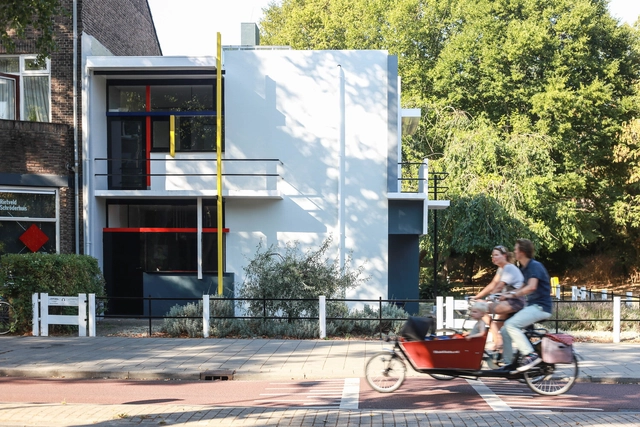
Given that the architects of modernity were in search of purity of form, it stands to reason that the image of this modern architecture is almost inevitably rendered in white in the collective imagination. Relieved of superfluous decorations, modern architecture became associated with the predominant use of white surfaces to highlight the volumetric composition. Combined with the concept of “material truth” first articulated by Victorian critic John Ruskin, white-colored architecture is often understood as straightforward, clear, and sincere.
Jingru (Cyan) Cheng . Image Courtesy of Wheelwright Prize
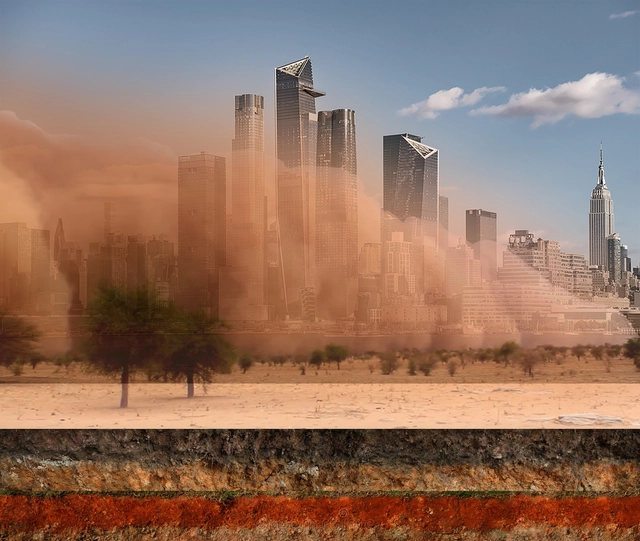
Harvard University Graduate School of Design (GSD) has announced Jingru (Cyan) Cheng as the recipient of the 2023 Wheelwright Prize, a study grant created to support globally-minded research and investigative approaches to contemporary architecture. The winning research project, titled “Tracing Sand: Phantom Territories, Bodies Adrift,” delves into the multifaceted impacts of sand mining and reclamation, understood from cultural, economic, and ecological perspectives. The unassuming material has become an indispensable element for our built environment and human communities, serving as a vital component in the production of glass, concrete, asphalt roads, and artificial land. Yet the process of dredging underwater systems and sand mining leads to the disruption of habitats in a process that simultaneously shapes one habitat while devastating another.
The Office for Political Innovation, led by Andrés Jaque, collaborated with a network of activists and community representatives from Xholobeni (South Africa), experts in seismographs and transduction from Poland, researchers, sound editors, and prop makers to bring a research-based installation at the Arsenale of the 18th Venice Architecture Biennale. Titled ‘XHOLOBENI YARDS. Titanium and the Planetary Making of SHININESS / DUSTINESS,’ the intervention addresses architecture’s problematic fascination with shininess.
Prime Seafood Palace / Omar Gandhi Architect. Image Courtesy of Omar Gandhi Architect
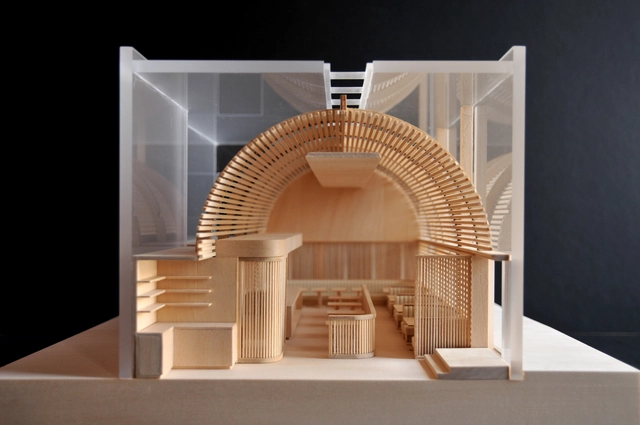
Ambitious and diverse, models are representative tools non-exclusive to architects. Peculiar fascination with miniatures – and what they tell us about our larger world- extends to all ages, cultures, and purposes. From scaled temples of clay from 200 B.C. found in Mexico, ceramic models carried during medieval Islamic journeys, Victorian doll houses, and LEGOS, models are more than baby buildings. Miniatures unveil the essentials, explain much larger concepts, contain intimate and historical data, and invite us to challenge our known selves and perspective.
Videos
A still from PLANE-SITE's video of Jorge Hernandez' installation at the Palazzo Bembo in Venice. Image Courtesy of PLANE-SITE
The European Culture Center’s Time Space Exhibition during the Venice Biennale 2018 features a new short film depicting the spatial qualities of light in architectural design, both as a material and metaphor.
This collaboration between architect and professor Jorge L. Hernández and photographer Carlos Domenech explores their endeavors in providing a lighting-based design solution for the Williamsburg, Virginia courthouse. Battling the issues of security and privacy of the court with the need for natural daylight, Hernández recreated the cupola, a vernacular roof turret intended for ventilation for illumination instead. Light, entering the courtroom from above, transforms the previously dull space and becomes, “an allegory for justice”.
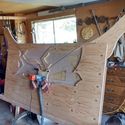
Young tech team (Bar Smith, Hannah Teagle, and Tom Beckett) has launched a Kickstarter campaign for Maslow, a four-by-eight-foot at home CNC cutting machine made to assist construction efforts by cutting user-specified shapes out of wood or any other flat material. Designed to be affordable—at under $500—easy to use, inclusive, and powerful, the project aims to share designs digitally so that you can build on the work of others or create your own from scratch.
Based on the design of the hanging plotter, Maslow “uses gear-reduced DC motors with encoders and a closed-loop feedback system to achieve high accuracy and high torque.”
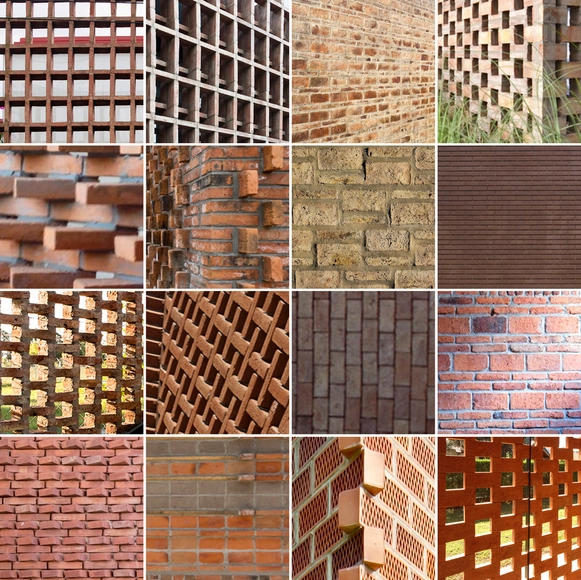
The wide range in which pieces of masonry can be arranged allows for multiple spatial configurations. Born in a furnace, the brick adorns and reinforces, protects and—to various degrees—brings natural light into spaces that need slight, natural illumination.
Throughout history, traditional brick-laying consisted of predetermined arrangement of parts, and lines of rope to guide the consistency and placement of each individual brick. But there are many other ways to exploit this multi-faceted, timeless material, so we've selected 16 projects that demonstrate the potential of the humble brick.
Below find 16 construction details from projects that use bricks in ingenious ways.
This article is part of our new "Material Focus" series, which asks architects to elaborate on the thought process behind their material choices and sheds light on the steps required to get buildings actually built.
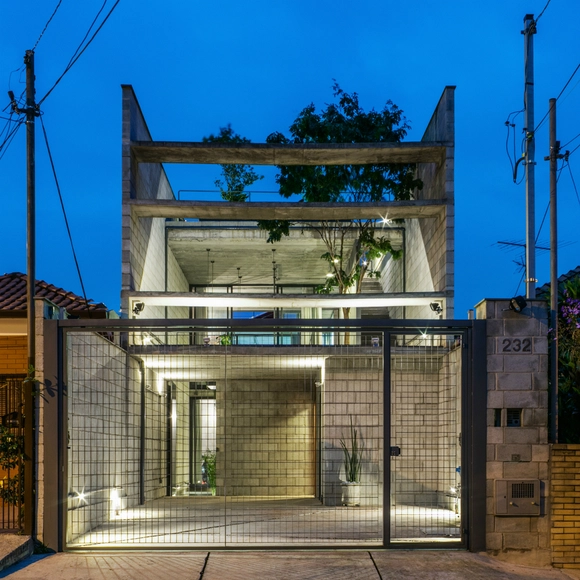
The Mipibu House, designed by Brazilian firm Terra e Tuma Arquitetos Associados, measures 170 square meters, and uses exposed concrete blocks to complement an expansive layout. Located in an unusually sized site in Brazil, a key element of the architects' design involved the consideration of the possible - or rather the inevitable - verticalization of nearby buildings. In response to this challenge, they designed a compact, complex design that answers the needs of their customer with creativity in the selection and use of materials. We talked with architect Danilo Terra to learn more about the choices of materials and the challenges of the project.
https://www.archdaily.com/792494/material-focus-casa-mipibu-by-terra-e-tuma-arquitetos-associadosEquipe ArchDaily Brasil
Videos
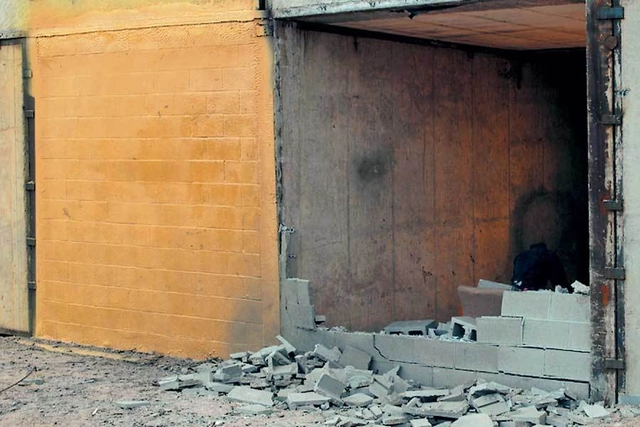
A wall coated with Paxcon (left) vs an untreated wall (right) after a TNT detonation. Image Courtesy of Line-X
A game-changing protective coating from Line-X has the power to make buildings virtually impenetrable. The spray creates a thin barrier which is watertight, abrasion and impact resistant and can withstand high temperatures; all of which combine to make it almost indestructible. The concoction deemed "Paxcon®," is stronger than steel, and can protect buildings from explosions or natural disasters such as earthquakes or storms.