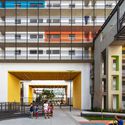
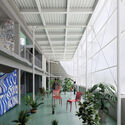
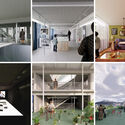
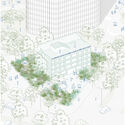
A year after the Viña del Mar mega-fire in Chile and with reconstruction efforts progressing at just 26%, the architecture firm ELEMENTAL and local authorities have begun construction on a prefabricated housing project in one of the residential neighborhoods most affected by the disaster. The project consists of a mid-density residential building with a modular steel structure, intended as a starting point for similar initiatives in response to what is now considered one of the most catastrophic events in Chile's recent history. As stated by Alejandro Aravena and the city's mayor, Macarena Ripamonti, the goal is for the technology and management model behind this project to set a precedent for delivering rapid and permanent housing solutions in emergency situations.
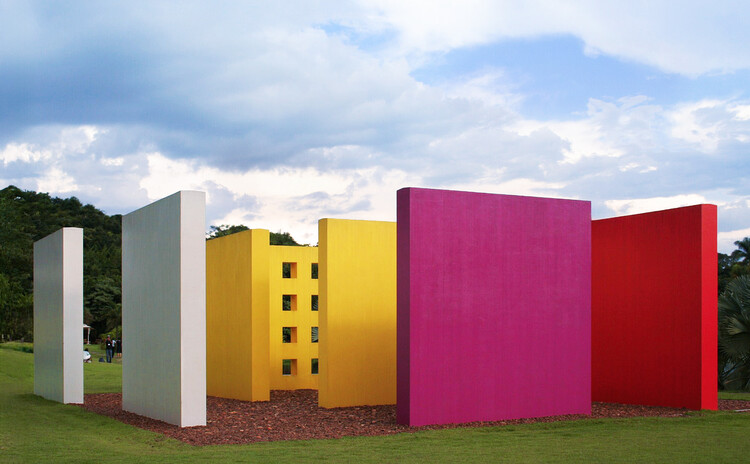
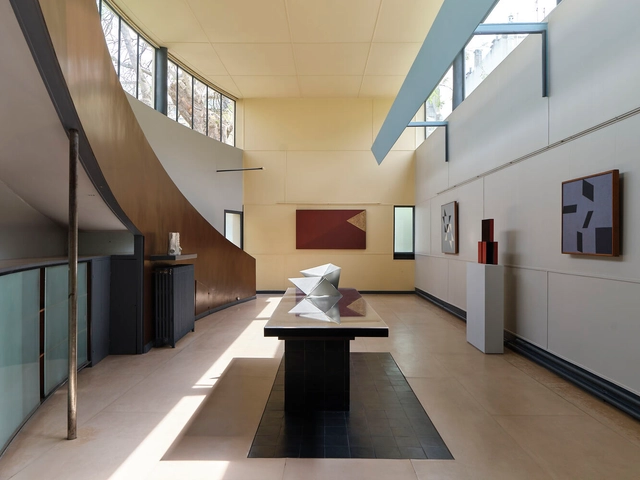
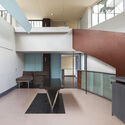
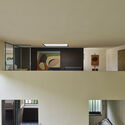
In October 2025, the Fernando Romero Foundation will officially open the doors of La Cuadra San Cristóbal, one of the late projects of Mexican architect and Pritzker Prize winnerLuis Barragán. The goal is to transform the architectural complex into a cultural campus open to the public, with a curatorial program focused on exploring the dynamic interaction between architecture and art.
The project, known as Cuadra San Cristóbal, was built between 1966 and 1968 and includes a house, a stables building, and auxiliary facilities such as the Fuente de los Amantes (Fountain of the Lovers). The complex showcases characteristic elements of Barragán's Latin American modernism, including his use of color and the integration of shadows, textures, and sounds into the experience of space.
In 1975, Honduras was under a military regime that had been in power for over a decade, led at the time by General Juan Alberto Melgar Castro. During this period, Tegucigalpa underwent several big and unprecedented changes. The influx of people from various parts of the country due to rural migration transformed the city from a compact urban area into an expanding metropolis. This unexpected growth prompted the government to implement a municipal development and planning scheme, a project that would define the city's future and the evolution of its old town. This article was developed with the collaboration of the Honduran architect Lisandro Calderón, who specializes in Urban Planning and is currently a professor at the Central American Technological University (UNITEC), located in Tegucigalpa, Honduras.
Annually, ArchDaily's curatorial team undertakes a rigorous selection process to identify exemplary projects in Latin American residential architecture. The goal is to share these works of architecture with our audience and highlight and promote good practices within contemporary architecture. This meticulous effort focuses on identifying projects that stand out for their design and their positive impact on the environment, innovative use of materials and techniques, and ability to address current needs.
Local Comunal San Martín de Orúe, en La Balanza, Comas. Image Cortesía de BIAU
Amid the dynamism and speed that characterize our life in the contemporary world, especially concerning our cities and built environments, it is inevitable to recognize the importance of preserving spaces for pause and reflection, essential for addressing and discussing the key issues of architecture and urbanism that our society urgently needs today. The latest edition of the 13th Ibero-American Biennial of Architecture and Urbanism, held from December 2 to 6 in Lima, Peru, provided a unique gathering for such reflections and dialogues. Under the theme 'CLIMATES: Actions for the Good Living,' the event brought together architects and key figures from the field, who, during a week of roundtable discussions and conferences, focused on the challenges of global contemporary habitation, especially those shared between Spain and Latin America, thus serving as a bridge of knowledge between both contexts.
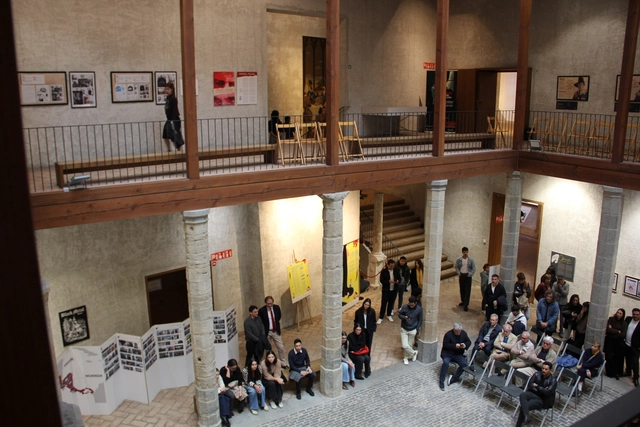
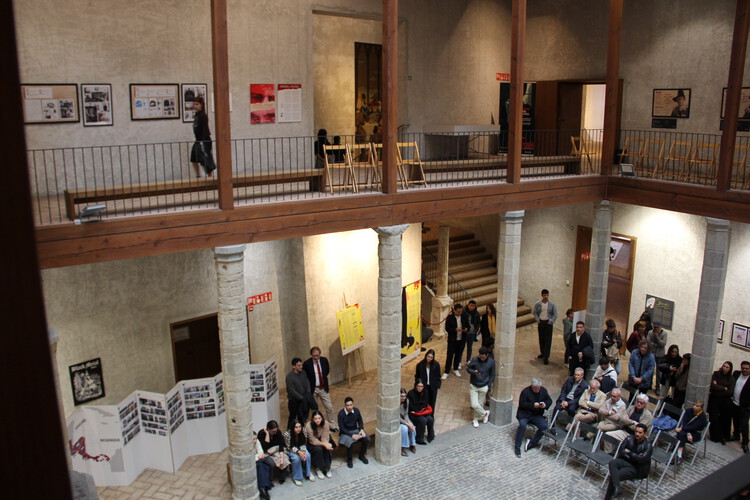
The Latin American Architecture Biennial (BAL), which has gained significant relevance in the contemporary architectural scene, will celebrate its ninth edition next year. This meeting gathers emerging Latin American architecture studios in Pamplona, Spain, to share their work, fostering dialogue and debate about the current state of the discipline, as well as acting as a bridge between the Latin American continent and the Spanish context. In this edition, Costa Rica will be the guest country, accompanied by Honduras, El Salvador, Panama, Guatemala, and Nicaragua. As part of this invitation, there will be an exhibition and specific seminars dedicated to analyzing the situation of architecture in these countries.
A look at most of the cities within Latin America reveals striking commonalities across countries, from Mexico down to Argentina: most cities have a well-defined area known as "El Centro" (The Center), anchored by a main plaza (Plaza Mayor), flanked by a church on one side and key buildings like the city hall on another. This is no coincidence, as it can be traced back to an urban planning system established during the Spanish colonization of the Americas in the 17th and 18th centuries. It gave standardized guidelines for city design across its viceroyalties. Unlike French and English colonies, Spanish settlements adhered to regulations that contributed to the emergence of a shared urban identity, with cities displaying similar spatial logic and architectural cohesion despite differing scales and contexts.
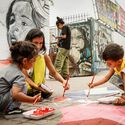
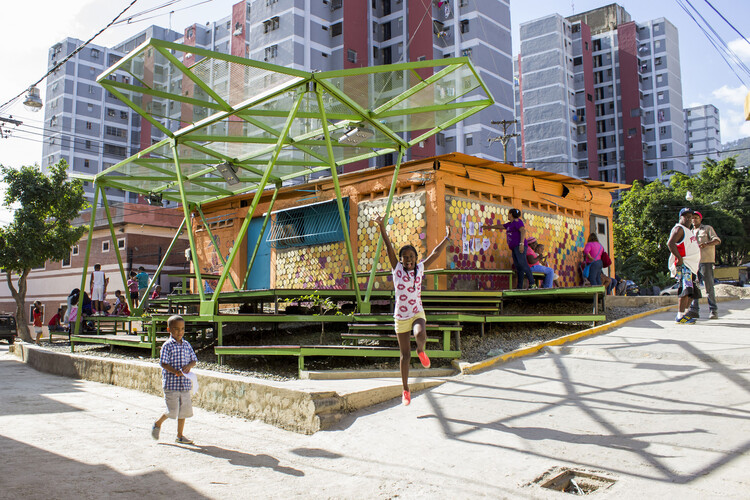
From November 20 to 23, São Paulo hosted the IV International Seminar on Favela Urbanization, bringing together discussions that bridged theory and practice to address interventions in these territories. Centered on Brazil’s realities, the seminar shed light on the political challenges and the struggle to recognize the potential of peripheral spaces. It also highlighted a shared issue across Latin America: the need for adequate funding to support transformative actions and the legitimization of these territories. Within this framework, the article underscores the critical role of high-quality public facilities in favelas and peripheral neighborhoods. These spaces not only provide access to opportunities but also foster community bonds, serving as essential hubs for social organization and collective efforts toward building a more inclusive future.
Located in the Central Mountains of Honduras, Tegucigalpa stands as the country's largest city. Being home to approximately 1.5 million residents, it is also one of the biggest urban centers in Central America, with origins that date back to 1578 when it was founded by Spanish colonizers. It was declared the capital in 1880 and has since developed into the political, cultural, and economic heart of Honduras. This history has endowed the city with a diverse architectural heritage, showcasing styles from various periods and influences.
Styles that range from colonial Baroque, Neoclassical, and Art Deco to Modernism and Post-Modernism, reflect its dynamic history. It is also home to several museums that celebrate both traditional and contemporary Honduran arts, such as the Museum of National Identity (MIN) and the National Gallery of Art. Beyond its urban attractions, the city's surrounding mountains are home to the hiking trails of La Tigra National Park and several colonial silver mining towns, which make it a great city to visit while traveling through Central America.
Latin American architecture is rich and diverse. This is reflected in the various stones used across different regions over the centuries. These materials highlight the varied geology of Latin America and illustrate how local cultures have adapted their construction methods to natural conditions, resulting in unique and meaningful architecture. In contemporary architecture, stone aligns with sustainability principles due to its durability, low carbon footprint, and local availability. Additionally, stone's aesthetic appeal enhances the creation of timeless spaces that strengthen the connection with nature and the surrounding landscape.
Organizing, shaping, stacking. Transforming raw materials from the soil into architecture. This is a challenge that many Latin American architects embrace, demonstrating that scarcity can be daunting but also a rich opportunity to unleash creativity.
The use of materials extracted from the local soil serves a dual purpose. In regions with limited industrialization, using locally sourced materials makes economic sense because industrial materials such as concrete and steel are expensive and often require long-distance transportation, adding to their cost. Environmentally, choosing locally sourced materials from the start of a project reduces transportation needs and carbon emissions, supporting sustainability efforts.
February 20th marks a new edition of the World Day of Social Justice. The theme, "Overcoming barriers and unlocking opportunities", is a perfect occasion to reflect on the importance of equity in all areas of society - and especially from architecture and urbanism. And yes: they both have a fundamental role in building accessible cities and are important tools for addressing the challenges of economic inequality and social exclusion.
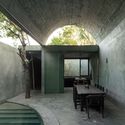
The great architect Luis Barragán, at 80 years of age, and after almost 10 years of inactivity, carried out his last work on a plot of land measuring 10x36 meters, between party walls in Mexico City. A work that reflects the influence of Mexican culture and painters Diego Rivera and Frida Kalho, where the most interesting thing, according to Barragán, was the challenge of the enormous jacaranda tree that had to be maintained, and the pool requested by the owner as part of the program.
The small pink house, which closes towards the street, reinforcing its interiority, is ordered on the longitudinal axis of the plot. Towards the back, the house is divided into two; the front volume, which contains the services and bedrooms, and the back, where the living room, dining room, and pool are located. These two volumes are joined by a corridor, forming a patio that surrounds the Jacaranda tree.

Although the circular economy involves other principles such as the regeneration of natural systems, the reuse or recycling of materials plays an important role in contributing to the reduction of waste generation by giving a second useful life to elements that could be considered waste. Wood, metal sheets, bricks, and stones, among others, can be reused, bringing sustainability and efficiency criteria to the projects, helping to consolidate this concept that still has a long way to go.

Within the Latin American territory, many architecture professionals have proposed to apply in their design and construction processes the implementation of strategies that collaborate with the use of resources, either by reusing, recycling, or restoring different materials and elements in search of satisfying the needs and concerns of those who inhabit the spaces.
Arquitectonica has refuted Koolhaas’ accusation that “Modern architecture had never achieved the promised alchemy of quantity and quality,” and Alistair Gordon’s enormous compendium of the firm’s work certainly disproves it.
But what of Rossi’s backhanded praise: “In America … quantity is quality!”? Although absolutely deserving of praise, the quantity of the work is not the basis for Arquitectonica’s achievement—even when associated with the virtuosity of design. The importance of Arquitectonica derives from certain specific contributions to modern architecture in the United States.